Building a Brand Spec Sheet for Repeat Umbrella Orders
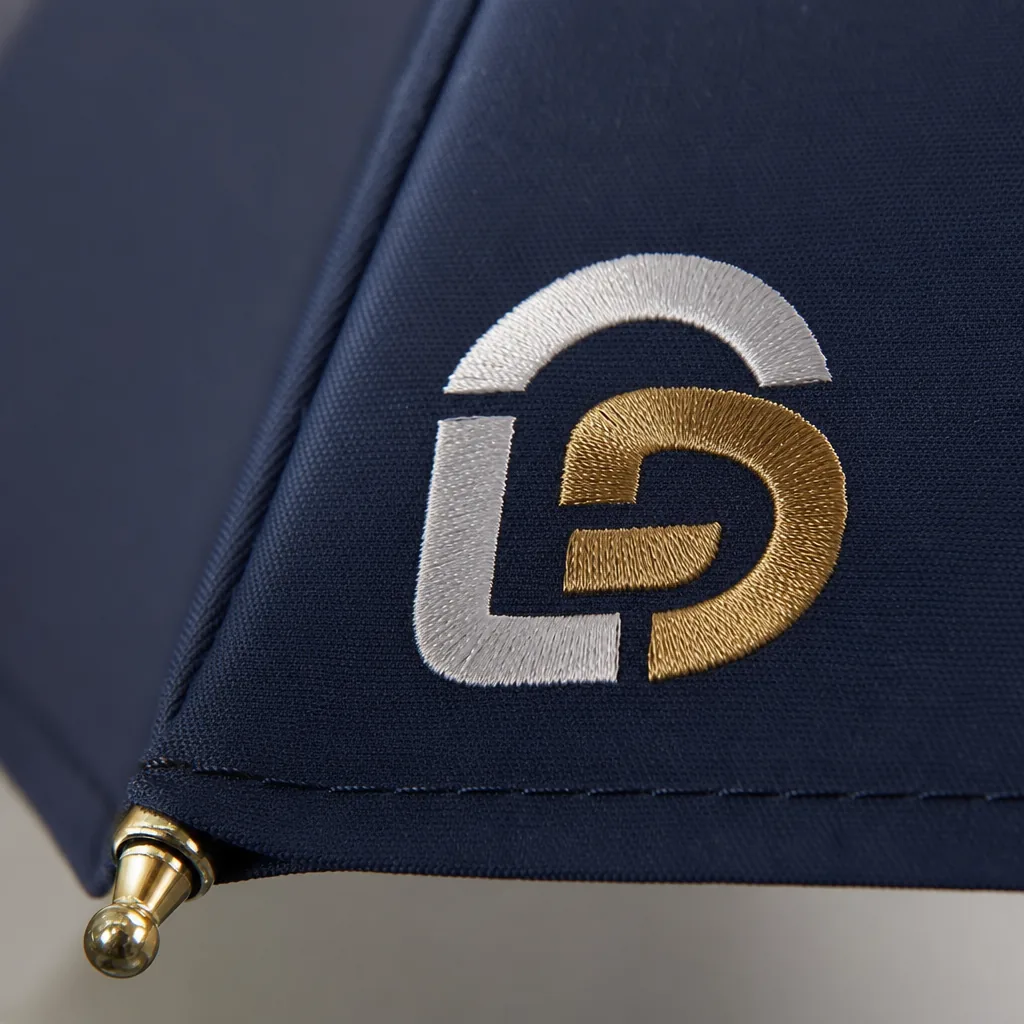
Repeat umbrella orders only stay consistent when the details are fixed before production starts. An umbrella brand spec sheet gives your factory one source of truth for logo colors, print size, fabric, panel layout, and inspection rules, so the second lot looks like the first. From the production floor, that means fewer approvals, fewer surprises, and less risk of small drifts turning into brand problems.
Define the Core Brand Data Once
An umbrella brand spec sheet starts with the files and measurements that stop arguments later. Lock down the logo source file first: AI, EPS, or SVG for vector work, plus a high-resolution PDF or PNG for reference. Then define the exact print size in mm, not “large” or “centered,” because OEM umbrella branding breaks down fast when a screen printer guesses placement. For repeat umbrella orders, I also record canopy color by Pantone or a physical swatch, rib count, handle finish, and the approved fabric construction. If the build calls for 190T pongee or 210T pongee, that needs to be written once and treated as the standard. Our standard practice is to list whether the canopy is polyester, POE, or pongee, because those materials behave differently under heat transfer, screen printing, and UV coating.
The control sheet should also capture the tolerances that matter in production, especially umbrella print tolerance and trim placement. I specify allowable shift in mm for logo position, panel seam alignment, and color matching expectations for repeat umbrella orders, because a buyer’s “close enough” usually becomes a reject at inspection. Add the rib count, such as 8K, 10K, 16K, or 24K, plus the frame material if the brand cares about feel or wind resistance. Handle finish should be stated in plain terms like matte black EVA, rubberized ABS, or wood look, not just “premium.” If the job is part of FOB DDP umbrella sourcing, the same sheet should travel with the PO, carton mark spec, and packing list so the factory, forwarder, and buyer are reading the same document instead of three different versions.
Set Tolerances the Factory Can Measure
For repeat umbrella orders, the spec sheet has to define tolerances in numbers the factory can check with a ruler, not adjectives. For OEM umbrella branding, I would lock logo placement to a centerline offset of no more than 2 mm on the panel and no more than 3 mm from the signed golden sample location, with print skew under 1 degree. Seam alignment should be stated as a maximum mismatch of 3 mm at any panel join, and canopy panel width variation should stay within 2 mm if you want the shape to repeat cleanly from lot to lot. ZheBrella’s standard practice is to tie those limits to the approved pre-production sample so there is no argument later about what “close enough” means on an umbrella brand spec sheet.
Color drift needs the same treatment, especially when buyers source FOB DDP umbrella sourcing through multiple production runs. State the accepted reference as a Pantone or physical lab dip, then set a measurable umbrella print tolerance, such as Delta E 2.0 maximum for logo ink and Delta E 1.5 for full-panel sublimation if brand colors are sensitive. Once those limits are written, classify any out-of-tolerance logo shift, visible seam mismatch, or color deviation as a major defect under AQL 2.5, and make that explicit in the inspection section. That way the inspector is not guessing whether a deviation is cosmetic or rejectable; the rule is already in the file, and repeat umbrella orders can be checked against the same acceptance standard every time.
Separate Standard Features from Upgrades
A proper umbrella brand spec sheet has to separate the lock-in items from the variables, or repeat umbrella orders will drift every time you reorder. Fixed features are the things the buyer expects to stay identical across batches: opening style, rib material, canopy fabric, coating, size, and panel count. If the first approved sample is an 23-inch auto-open model with fiberglass ribs, 190T pongee, double-canopy vented windproof construction, and UPF 50+ coating, that combination should be written as the baseline, not implied. In practice, we treat those as non-negotiable build points because changing any one of them changes hand feel, wind performance, print behavior, and landed cost. ZheBrella’s standard practice is to lock the mechanical structure first, then leave branding and decoration as the only flexible line items unless the buyer explicitly wants a revised model.
The upgrade section should be where you place options that affect price, lead time, or minimum order quantity, not core identity. That includes auto-open-close instead of auto-open, 10K or 16K rib counts instead of 8K, EVA handle upgrades, Teflon water-repellent treatment, reflective piping, contrast tip caps, and custom sleeve packaging. For OEM umbrella branding, decoration choices also need their own line: screen print, heat transfer, sublimation, woven label, or full-panel print. Each method has a different umbrella print tolerance, especially on seams, vents, and curved panels; a 1-2 mm shift may be acceptable on a flat silk-screen logo but not on a wraparound graphic. If the spec sheet does not call these out separately, people in procurement will assume they are included, and the factory will assume they are chargeable.
For FOB DDP umbrella sourcing, the spec sheet should also define what happens when a repeat umbrella order is reordered six months later. State the approved Pantone references, logo placement dimensions, panel count, canopy diameter, tolerance on shaft length, and acceptable sample-to-bulk variance. If the buyer wants a special finish, put it under an upgrade line with a clear surcharge and whether it requires a new pre-production sample. That is how you prevent disputes over a slightly darker canopy, a different ferrule, or a changed print position after approval. A usable umbrella brand spec sheet does not just describe the product; it sets the commercial rules so the second and third order match the first one without forcing a new round of negotiation.
Make the Quote Comparable Across Suppliers
A usable umbrella brand spec sheet has to force every supplier to quote the same build, not a loose interpretation of it. Put the MOQ in writing by size and by decoration method, because a 1,000-piece screen-print order and a 1,000-piece full-color transfer order are not priced the same on the factory floor. I also put sample charges on the sheet, including whether the fee is refundable after bulk production and who pays freight for pre-production samples. If you leave that out, one factory will quote a free blank sample, another will include a printed sample, and your comparison becomes meaningless. For repeat umbrella orders, the spec should also state whether artwork, panel layout, and packaging are already approved or need rework.
FOB versus DDP has to be explicit, or every quote will hide different assumptions about inland trucking, export paperwork, duties, and last-mile delivery. On a proper umbrella brand spec sheet, I list the named port for FOB, then define the DDP destination, delivery address format, and whether duties and VAT are included. That matters for OEM umbrella branding because two suppliers can quote the same unit price while one is only selling ex-factory and the other is covering all landed costs. I also require the lead time to be split into sample time, bulk production time, and shipment time. A supplier saying 25 days may mean 25 days after deposit, while another means 25 days including transit; those are not comparable quotes.
The same logic applies to umbrella print tolerance and approval control. If the sheet does not define acceptable registration shift, print coverage, and color matching method, one factory will price a tight spec and another will budget for a looser result, especially on curved panels and heat-transfer work. I specify the allowed variance for panel position, logo size, and edge clearance, then tie it to the approval sample so there is no argument later. For FOB DDP umbrella sourcing, that level of detail is what prevents surprises after the order is placed. ZheBrella’s standard practice is to lock MOQ, sample charge, term, and lead time before we price the canopy, handle, and printing, because that is the only way an umbrella brand spec sheet stays comparable across suppliers.
Keep Version Control After the First Run
The fastest way to lose control on repeat umbrella orders is to treat the first approved sample like a souvenir instead of a controlled reference. An umbrella brand spec sheet should point to one sealed approval sample, one dated photo set, and one revision number that never changes unless the buyer signs off. Our standard practice is to archive the physical sample in a labeled bag with the canopy fabric code, rib spec, handle type, coating, and print file name, then tie it to a folder of front, back, open, closed, and close-up photos shot under the same light. That matters because a black polyester canopy can look “close enough” in a phone photo and still be the wrong 190T pongee, the wrong matte finish, or the wrong ferrule color in production. For OEM umbrella branding, the reference should also lock the logo artwork format, Pantone or CMYK values, print method, and umbrella print tolerance so no one quietly shifts the mark 2 to 3 mm on the next run.
Revision control only works if every change is written down in one place and linked to the purchase order, artwork file, and carton label. I would keep a simple revision log on the umbrella brand spec sheet with fields for version number, date, approver, and what changed: logo size, panel color, UV coating, vented double-canopy construction, or handle finish. If the buyer wants repeat umbrella orders six months later, the factory should compare that log against the approved sample before cutting fabric or making screens, not after sewing has started. This is especially important for FOB DDP umbrella sourcing, where a small uncontrolled change can become a costly rework across shipping, packing, and customs paperwork. A clean version history also helps procurement teams separate true updates from production noise, so the next PO repeats the same 8K or 10K frame, the same canopy hand feel, and the same print placement instead of drifting by accident.
Frequently Asked Questions
What is the most important item in a repeat-order umbrella spec sheet?
The approved artwork and print specification matter most. If the file, color reference, and placement are locked, the factory can replicate the same look across multiple lots.
Should the sheet include material grades like 190T or 210T?
Yes. The canopy fabric changes print appearance, hand feel, and price, so the grade should be written into the spec instead of left open to interpretation.
What should a repeat-order umbrella spec sheet lock down first?
Start with logo files, Pantone references, print size, print position, canopy fabric, frame model, and handle style. Those are the items most likely to drift between lots if they are not written into the spec sheet and tied to an approved pre-production sample.
How tight should print tolerance be for branded umbrellas?
For repeat orders, many buyers set a print-position tolerance of about 3-5 mm and require color to match the approved standard within the agreed Pantone reference. If your artwork uses gradients or fine text, the tolerance should be stricter and confirmed on a physical sample before production.
Should the spec sheet include inspection rules for every shipment?
Yes. Include carton count, acceptable defect rate, logo alignment checks, canopy color variation limits, and water-repellent or opening-test requirements if they matter to your brand. This helps the factory and third-party inspectors judge each lot against the same standard.
Looking to Launch Your Custom Umbrella Line?
ZheBrella is a Zhejiang-based OEM/ODM umbrella manufacturer with 17 years of export experience. Free design, low MOQ from 100 pieces, windproof construction, full-color print.
Get Free Quote Now »People Also Search For
Related Articles
How to Standardize Umbrella Branding Across Sizes and Styles
Keep logo size, color, and placement consistent across folding, golf, and straight umbrellas with a repeatable brand spe...
Read More »Color Consistency Across Umbrella Branding Programs
Build repeatable umbrella branding with controlled canopy colors, trim rules, and approval steps that keep retail and co...
Read More »Branded UV Umbrellas: Print Choices for UPF 50+ Canopies
Learn how UPF 50+ coatings, pongee fabric, and print methods affect logo quality, MOQ, lead times, and approval risk for...
Read More »