How to Standardize Umbrella Branding Across Sizes and Styles
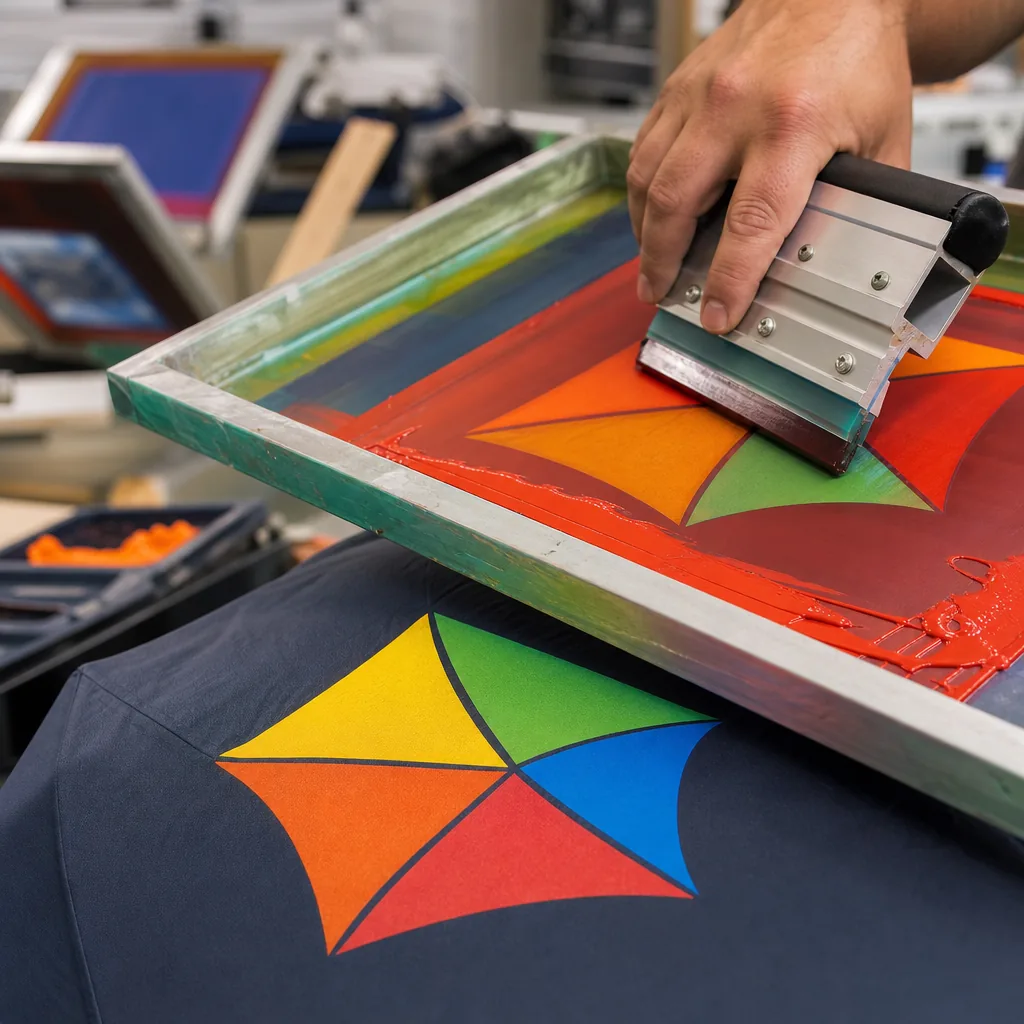
When a logo looks correct on a 21-inch folding umbrella but shifts, stretches, or changes color on a 30-inch golf model, the problem is usually not the artwork—it is the lack of a production-ready standard. On our Songxia factory floor, umbrella branding across sizes is controlled by matching panel geometry, print method, ink tolerance, and placement guides before bulk cutting and sewing begin.
Why umbrella size changes branding decisions
Canopy diameter is the first constraint because a logo that looks balanced on a 30" golf umbrella can look crowded on a 21" compact. A typical 21" 3-fold umbrella has narrow panels, short arc length, and more seam interruption near the crown, so folding umbrella branding usually works best with a smaller single-panel logo or a repeated mark kept away from rib seams. A 23" straight umbrella gives more vertical room and better logo visibility when carried upright, while 27" and 30" golf umbrellas allow larger artwork, event sponsor layouts, and multi-panel placements. For practical production, we do not judge logo size by umbrella diameter alone; we measure the printable trapezoid inside each panel after seam allowance, rib clearance, and top cap position are removed. That usable area is what should go into the brand spec sheet, not a generic “print 10 inches wide” instruction.
Panel count changes the visual scale even when the canopy diameter stays the same. On an 8K umbrella, the canopy is divided into eight wider panels, so a single logo has more horizontal breathing room and can often run 180–240 mm wide on a 23" straight style, depending on the artwork shape. On a 16K umbrella, the same canopy diameter is split into narrower panels, making each print zone slimmer; the same 200 mm logo may look oversized, distorted, or too close to the stitched edges. This is a common mistake when buyers try to standardize umbrella branding across sizes without adjusting for ribs. A 16K frame can look more premium because of the finer rib structure, but it forces tighter logo discipline, especially for long wordmarks. For golf umbrella branding, 8K and 10K layouts usually give cleaner sponsor visibility, while 16K works better for small crest logos or all-over sublimation.
The safest approach is to standardize by viewing distance and panel geometry, not by one fixed artwork dimension. Compact umbrellas are usually seen at close range, so a 70–100 mm logo may be enough; a 30" golf umbrella used at tournaments or outdoor activations may need 180–280 mm per panel to read clearly from 10–20 meters. Umbrella print tolerance also matters: screen printing on 190T or 210T pongee can usually hold tighter edges than printing near a folded seam on a compact frame, but placement can still shift 3–5 mm during sewing and canopy mounting. Our standard practice at ZheBrella is to create separate artwork boxes for 21", 23", 27", and 30" frames, with different limits for 8K, 10K, and 16K patterns. That keeps umbrella branding across sizes consistent in appearance, even when the actual logo dimensions vary by style.
How to build one master brand layout
A master layout starts with one controlled logo system, not a different artwork file for every SKU. The brand spec sheet should define the primary logo, one-color backup logo, approved Pantone/CMYK/RGB values, minimum clear space, minimum printable size, and minimum line thickness. For umbrella work, I do not approve hairlines under 0.4 mm for screen printing on 190T or 210T pongee because fabric movement, ink spread, and seam tension will close small gaps. Heat transfer can hold slightly finer detail, but on curved panels the carrier film still needs enough edge strength to survive folding. For umbrella branding across sizes, the fixed items should be logo proportions, color formula, clear space ratio, and orientation rules. If the logo is always centered between two ribs, or always placed on the lower outer panel, that rule should be written before sampling begins.
What changes by style is scale and placement geometry, not the identity system. A 30" golf umbrella has wide panels and long sight distance, so golf umbrella branding can use a 220–280 mm wide logo on one or two panels, depending on artwork weight. A 21" folding umbrella has shorter, steeper panels, so folding umbrella branding often works better at 120–160 mm wide, with simplified text and no fine taglines. Eight-rib frames divide artwork differently than 10K or 16K constructions; if a logo crosses a seam, the print tolerance must allow for panel sewing drift, usually plus or minus 3–5 mm after canopy assembly. I prefer to keep logos inside one panel whenever brand control matters more than billboard size. Double-canopy vented windproof umbrellas also need separate rules for top canopy, lower canopy, and vent overlap so the mark is not hidden when the umbrella opens.
The cleanest master layout is built as a matrix: rows for umbrella type and size, columns for logo width, position from panel tip, position from rib seam, printing method, color standard, and acceptable umbrella print tolerance. Our standard practice at ZheBrella is to lock the logo centerline to the panel center, measure placement from the canopy edge after cutting, and verify the first production piece against the approved PP sample before bulk printing. For POE, PVC, and EVA clear umbrellas, the same brand rules need different ink systems and usually bolder artwork because transparent material reduces contrast. For UV-coated UPF 50+ fabric or Teflon-treated pongee, adhesion tests matter before color approval. A good brand spec sheet also states what may be adjusted: proportional logo scaling, panel selection, and print method. It should also state what cannot change: logo distortion, unauthorized colors, rotated marks, squeezed typography, or placement that breaks clear space.
How to adapt placement without losing consistency
The safest way to keep umbrella branding across sizes consistent is to define placement from the panel centerline, not from the outer edge of the canopy. On an 8K umbrella, each panel is a wedge, and the visible center shifts slightly after sewing, stretching, and final tensioning on the frame. For a standard front-panel logo, I usually lock the artwork center to the panel’s vertical center seam-to-tip axis, then set the top of the print 80–120 mm below the crown depending on canopy size. On 21" and 23" folding umbrellas, that distance is tighter because the panel height is shorter; on 27" and 30" golf umbrellas, the logo can sit lower without looking like it is sliding toward the hem. A brand spec sheet should show the placement point, print size, rotation angle, and measurement reference, not just a flat PDF logo pasted onto a canopy drawing.
Seam-safe zones matter more than most buyers expect. Screen printing, heat transfer, and sublimation all behave differently near stitched seams, where the fabric is uneven and the panel is under tension. Our standard practice at ZheBrella is to keep logos at least 15–20 mm away from side seams and 25–35 mm away from reinforced tips or Velcro straps, especially on pongee 190T and 210T canopies. If the design crosses a seam, the umbrella print tolerance must allow for 2–3 mm panel-to-panel registration variation, sometimes more on double-canopy vented windproof models. Curved panels also distort straight horizontal text; a logo that looks level on a flat artwork file may arc upward once the canopy is mounted. For this reason, long wordmarks often need slight optical correction or reduced width so they do not look stretched across the curved fabric.
The same artwork should not be blindly shared between folding umbrella branding and golf umbrella branding. Auto-open folding models have shorter ribs, tighter panel curvature, more crown compression, and sometimes a strap that lands directly over the preferred logo panel. Auto-open-close frames add another issue: the canopy folds into smaller creases, so thick ink deposits or large heat-transfer patches can crack or leave pressure marks if placed too close to fold lines. Larger golf umbrellas give more print area, but the panel curvature is broader and the viewing distance is different, so a 180 mm logo that works on a 23" folding umbrella may need to become 230–280 mm on a 30" golf umbrella to feel visually equivalent. For real umbrella branding across sizes, create separate specs by frame size and mechanism, then approve one pre-production sample per major style before mass production.
How material and finish affect brand perception
Material finish changes the way a logo is perceived before anyone reads the brand name. 190T pongee has a slightly lighter hand and a softer sheen, which works well for folding umbrella branding where the product needs to feel compact, practical, and cost-controlled. 210T pongee is denser, smoother, and usually carries a cleaner surface for screen print or heat-transfer logos; it looks more retail-ready on 23-inch and 27-inch umbrellas because the canopy panels sit flatter after sewing. When buyers ask for umbrella branding across sizes, I usually warn them not to approve color from only one sample size. The same Pantone ink can look brighter on taut 210T golf panels and slightly duller on a smaller 190T folding canopy because panel tension, stitch lines, and viewing angle all affect perceived color.
Frame material is part of brand perception, even though it sits under the canopy. Fiberglass ribs flex better in wind and give a lighter, more premium feel, especially on 8K and 10K golf umbrellas where customers notice how the umbrella opens and recovers in gusts. Steel ribs feel solid but heavier; they can be acceptable for budget event umbrellas or short-term promotional use, but they do not communicate the same quality on higher-end retail pieces. For golf umbrella branding, fiberglass shafts and ribs also reduce the risk of bent ribs after transport or field use, which protects the brand after the first rainstorm. Our standard practice at ZheBrella is to match the frame to the brand tier before finalizing print method, because a sharp logo on a weak frame still feels like a cheap umbrella.
Matte and glossy finishes should be chosen by channel, not personal taste. Matte pongee, especially with a Teflon water-repellent finish, suits corporate gifts, banks, insurance companies, tech brands, and retail programs where understated color control matters. Glossy POE, PVC, or high-sheen coated fabrics can work for concerts, sports events, beverage campaigns, and fashion capsules where visibility matters more than subtlety. A good brand spec sheet should define fabric type, coating, logo size by panel, Pantone target, and acceptable umbrella print tolerance, typically within 2 to 3 mm for panel placement on standard production. Without that discipline, umbrella branding across sizes becomes inconsistent: the folding model looks muted, the golf model looks oversized, and the event umbrella looks like it came from a different supplier.
What to include in a repeat-order spec sheet
A repeat-order spec sheet should lock the variables that actually drift on the factory floor: approved vector artwork, logo size in millimeters, print position from the panel seam or tip, Pantone references, fabric code, canopy size, rib count, shaft material, handle type, and mechanism. For umbrella branding across sizes, I want one master artwork file plus separate placement callouts for 21" folding, 23" stick, 27" golf, and 30" oversized models because the same logo can look correct on a 190T pongee travel umbrella and undersized on a 210T pongee golf umbrella. Include the exact fabric color code, coating requirement such as Teflon or UPF 50+, and whether printing is screen, heat transfer, or sublimation. The brand spec sheet should also state the approved sample date and photo reference, not just “same as last order.” That phrase causes trouble when a buyer changes suppliers, fabric lots shift, or an old PDF gets reused without scale.
Print data needs to be more precise than most buyers expect. For screen printing, define Pantone C or U references, ink opacity, printable logo width, and umbrella print tolerance, usually plus or minus 3 mm for position and 5% for size unless a tighter standard is agreed before sampling. Folding umbrella branding often needs different limits because small 21" and 23" panels curve more sharply, especially on auto-open-close frames with 8K steel or fiberglass ribs. Golf umbrella branding can accept larger logos, but double-canopy vented windproof models need a note on whether the logo prints on the outer canopy only or repeats on both layers. If reflective ink, metallic ink, or full-panel sublimation is used, save the production file, not just a mockup, because RIP settings and heat-transfer temperature affect repeat color.
Commercial terms belong on the same sheet because they control whether the reorder moves fast or stalls. List MOQ by style and color, packing method, carton dimensions if fixed, AQL 2.5 inspection requirement, spare parts ratio, barcode or hangtag files, and shipping terms such as FOB Ningbo or Shanghai versus DDP to a U.S. warehouse. Our standard practice at ZheBrella is to keep the last confirmed PI, fabric swatch record, and approved pre-production sample photos tied to the spec sheet, so purchasing, printing, sewing, inspection, and export teams work from the same revision. A clean brand spec sheet can remove three to five days of back-and-forth on lead times because the factory does not need to re-confirm artwork, canopy cloth, rib count, or Incoterms before buying materials. That is the simplest way to keep umbrella branding across sizes consistent from one season to the next.
Frequently Asked Questions
Can one logo layout work for both golf and folding umbrellas?
Often yes, but it usually needs separate size and placement rules. A large golf canopy can carry a wider mark, while a compact folding umbrella may need a smaller logo to keep it readable.
What should a brand spec sheet include for umbrella orders?
It should include artwork files, color references, approved sample photos, fabric and frame details, rib count, print position, MOQ, and shipping terms. That gives the factory one reference for repeat production.
Should the logo be measured by absolute width or by percentage of panel width across different umbrella sizes?
For mixed-size programs, use percentage of usable panel width rather than a fixed inch measurement. Many buyers set the logo at about 18% to 24% of panel width, then add a print tolerance of ±3 to 5 mm to account for sewing and panel curvature.
How much variation is acceptable between a folding umbrella and a golf umbrella in the same branded set?
Most B2B buyers accept small visual variation as long as the logo position, scale rule, and Pantone target are standardized in one spec sheet. A practical factory control is color within commercial tolerance and placement variation within ±5 mm on straight umbrellas and ±7 mm on folding styles because seam bulk and panel tension differ.
What should be included in an umbrella brand spec sheet before bulk production starts?
Include logo file format, Pantone references, print method, panel location, orientation, logo size rule, placement tolerances, and a signed pre-production mockup. For OEM orders, buyers often also add handle, sleeve, hangtag, and carton marking requirements so every SKU follows the same approval standard.
Looking to Launch Your Custom Umbrella Line?
ZheBrella is a Zhejiang-based OEM/ODM umbrella manufacturer with 17 years of export experience. Free design, low MOQ from 100 pieces, windproof construction, full-color print.
Get Free Quote Now »People Also Search For
Related Articles
Building a Brand Spec Sheet for Repeat Umbrella Orders
Create a repeat-order spec sheet that locks logo colors, print size, fabric, and inspection rules so every umbrella lot ...
Read More »Color Consistency Across Umbrella Branding Programs
Build repeatable umbrella branding with controlled canopy colors, trim rules, and approval steps that keep retail and co...
Read More »
Logo Scaling on Folding and Golf Umbrellas for Brand Teams
Set practical logo sizes across folding, stick, and golf umbrellas while accounting for ribs, panels, print methods, mec...
Read More »