Building Backup Umbrella Suppliers to De-Risk Tariffs and Delays
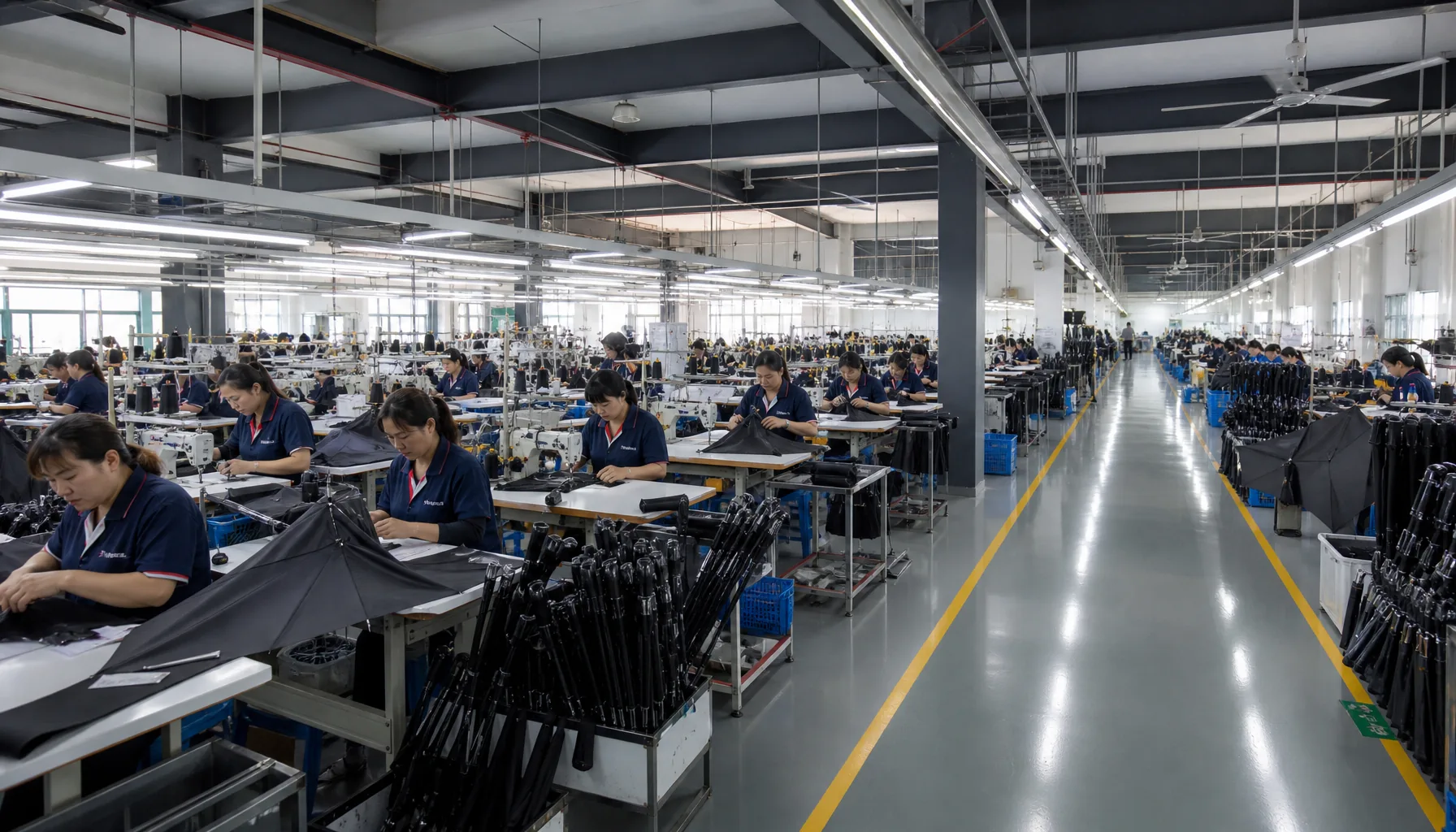
When tariffs shift, ports back up, or a primary factory slips on lead time, umbrella buyers feel the risk immediately: missed promotions, stockouts, and rushed air freight. Building a reliable backup umbrella supplier is not about adding overhead for its own sake, but about creating a second source that can match materials, construction, and packaging closely enough to take volume without disrupting quality or margins.
The case for a second source
A backup umbrella supplier is not a nice-to-have; it is basic risk control. When a factory gets slammed with seasonal volume, loses a key sewing line, or runs short on fiberglass rib stock, your purchase order does not wait politely. Umbrella programs are especially vulnerable because lead times stack up fast: frame tooling, canopy fabric dyeing, printing, sewing, and final AQL 2.5 inspection all depend on one another. If one step slips by even three to five days, the whole shipment window can move. A second source umbrella factory gives you a real fallback when the primary plant is at capacity, because you can split production by size, mechanism, or canopy material instead of betting the whole order on one site.
Dual sourcing umbrella programs also reduce quality risk, which is where many buyers get burned. A supplier can look fine on paper and still drift on rib gauge, ferrule fit, stitching density, or coating consistency once volume ramps up. I have seen 8K steel frame orders where one batch passed static tests and the next batch failed in wind because the wire diameter changed quietly. A backup umbrella supplier gives you leverage to compare samples, lock in reference standards, and keep a second approved BOM ready for POE, pongee 190T or 210T, and fiberglass vented styles. That matters when you need auto-open-close, UPF 50+ coating, or 50+ mph wind resistance without discovering defects after the shipment lands.
Tariff shocks and single-factory failure are the two ugly surprises that justify an umbrella supplier contingency plan. If duty rates change, freight spikes, or a primary plant suffers a power outage, fire, labor shortage, or local transport disruption, you need a clean transfer path to keep orders moving. The right structure is simple: pre-approve artwork, test reports, carton specs, and color standards with at least one alternate factory, then keep pilot samples on file for the top 21-inch and 23-inch SKUs. That way, a second source umbrella factory can start with a controlled trial instead of a full requalification. In practice, the buyers who stay on schedule are the ones who treat umbrella supply chain risk as a sourcing discipline, not an emergency reaction.
When dual-sourcing is worth it
Dual sourcing becomes worth the overhead once your annual umbrella volume is big enough that a single failure can break promotions, retail sets, or seasonal replenishment. In practice, I see the tipping point around 20,000 to 50,000 units a year, especially for programs with fixed ship dates, multiple SKUs, or a hard launch window. Below that, the management load of qualifying a second source umbrella factory, duplicating artwork approval, and maintaining two sets of specs can cost more than it saves unless the order is unusually urgent or margin-sensitive.
The real trigger is not volume alone; it is concentration risk. If one factory is doing 70% to 100% of your business, you have umbrella supply chain risk from raw material shocks, labor bottlenecks, mold damage, typhoon delays, customs holds, or a single bad AQL result that stalls the whole shipment. A backup umbrella supplier is justified when a missed delivery would cost more than the extra 3% to 8% you may spend on duplicate qualification, slightly different MOQs, and parallel sample runs. For promotional umbrellas with fixed event dates, I would not wait until a crisis to set up a dual sourcing umbrella plan.
The clean way to decide is to map cost of disruption against cost of redundancy. If a two-week slip can trigger chargebacks, lost shelf space, or air freight that wipes out margin, then the umbrella supplier contingency should already be in place. Standard practice at ZheBrella is to keep one primary factory and one approved secondary line on the same panel count, frame spec, canopy fabric, and print method, so the second source umbrella factory can absorb a PO without redesign. That only works if you are willing to re-approve samples, lock color standards, and place periodic test orders so the backup stays real instead of theoretical.
Qualifying a backup without disrupting the primary
The only sane way to qualify a backup umbrella supplier is to keep the primary line running and treat the backup as a parallel risk-reduction project, not a replacement panic move. In practice, that means issuing a small qualification PO—often 300 to 1,000 pieces depending on 21", 23", or 27" constructions—while the main factory keeps filling the forecast. For a dual sourcing umbrella program, I want the backup to copy the current spec exactly: frame gauge, fiberglass or steel rib mix, runner and shaft dimensions, canopy cloth at 190T or 210T pongee, and the same print method, whether screen, heat-transfer, or sublimation. If the backup cannot reproduce the same open/close feel, canopy tension, and tip alignment on a sample run, it is not a real second source umbrella factory; it is just a spare quote.
Qualification should include a real audit, not a slide deck. Review incoming IQC records, in-process controls, AQL 2.5 inspection results, and failure rates on rib riveting, stitch density, and coating adhesion for POE, PVC, or EVA canopies. I also check whether the factory can hit the same mechanism spec—manual, auto-open, or auto-open-close—without changing spring force or shortening cycle life. A good backup umbrella supplier should be able to show current material traceability, lead times in days, and what happens when one component is late; that is where umbrella supply chain risk shows up. If they cannot explain how they handle steel tube corrosion, fiberglass splintering, or Teflon and UV coating consistency, the audit is not complete.
The cleanest umbrella supplier contingency plan is to run the backup on non-peak colors or low-risk designs first, then move to production-critical SKUs only after the first two or three lots pass. Keep the primary supplier on the forecasted volume, but split a controlled slice—say 10% to 20%—to the backup so you can compare shade match, print registration, wind performance, and packaging damage rates without starving the main program. For vented double-canopy models rated to survive 50+ mph, I would also insist on side-by-side field testing, because lab samples can look fine and still fail at the hub after repeated gust loading. This is how you build a real backup umbrella supplier relationship: same drawing, same test methods, different factory code, and no surprise changes in material substitution or carton count.
Keeping specs and tooling consistent
If you want a backup umbrella supplier that does not create new problems, the first job is freezing the spec sheet down to details the factory can actually build against. That means fabric composition, panel count, rib count, shaft diameter, ferrule style, handle SKU, canopy seam allowance, thread type, printing method, and coating targets like Teflon or UPF 50+ UV finish. I have seen dual sourcing umbrella programs fail because one factory interpreted “black pongee” as 190T and the other used 210T, or because one side built 23-inch auto-open-close while the second source umbrella factory quietly substituted a lighter frame. If you do not lock those variables in a controlled document with revision numbers, your umbrella supply chain risk just moves from tariffs to inconsistency.
Color control is the next place buyers get burned. Pantone numbers help, but they are not enough for polyester or pongee because dye lots, coating thickness, and fabric base weight all shift the appearance under daylight and warehouse LEDs. For repeat programs, the better practice is to approve a physical master sample for canopy color, panel print placement, stitch thread, and handle finish, then keep a sealed reference sample at both factories. For logos, specify artwork size, placement tolerance in millimeters, and whether the print is screen, heat-transfer, or sublimation, because each process lands differently on POE, PVC, and pongee. A proper umbrella supplier contingency plan also defines what happens when a replacement mill runs a slightly different gray or navy lot: reject, reapprove, or separate by customer channel.
Components need the same discipline as cosmetics, because most “identical” umbrellas are only identical from five feet away. Make the frame BOM explicit: steel versus fiberglass ribs, 6K/8K/10K/16K construction, runner material, spring gauge, and whether the model is manual, auto-open, or auto-open-close. Then standardize the parts that people ignore, such as tips, stretcher rivets, shaft plating, and Velcro length, because those small differences change opening force and carton fit. Our standard practice is to issue a locked BOM, a golden sample, and an incoming-inspection checklist tied to AQL 2.5 so both plants are measured the same way. If one factory drifts on rib temper or canopy cut size, you will see it in wind performance and in packing density before the customer sees it.
For real dual sourcing, tooling consistency matters as much as paperwork. Keep one master CAD file for canopy panels, one die set for cutting, and one approved packing spec so both factories use the same artwork positions, polybag size, carton count, and master carton dimensions. If the backup umbrella supplier uses a different cutting knife or seam allowance, the canopy tension changes and the umbrella may wobble or rub at the tips. For event and retail orders, I would also freeze test standards such as spray resistance, open-close cycle count, and wind-tunnel target, especially if the product is supposed to survive 50+ mph gusts. That is the practical difference between a second source umbrella factory and a real hedge against disruption: the parts, the tooling, and the inspection rules all have to match before volume orders move.
Splitting volume strategically
A sensible split is usually 70/30 or 80/20, not 50/50. The main factory gets the forecasted volume so you keep price discipline, consistent color matching, and fewer changeovers on the sewing line; the backup umbrella supplier gets enough business to stay current on your specs, materials, and packaging. If you send zero volume for six months, that factory is no longer a real second source umbrella factory, it is just a name in your file. I’ve seen buyers keep a backup warm with the same core SKU family, then move promotional variants, odd sizes, or reorders to the secondary plant so the tooling, panel patterns, and print files stay active without forcing you to overpay on every unit.
For dual sourcing umbrella programs, the trick is to split by risk, not by emotion. Give the primary supplier the high-volume, low-variation styles like 23" manual straight umbrellas or standard auto-open 8K fiberglass folding models, then allocate the backup supplier the same canopy construction in a smaller tranche so you can compare frame life, seam consistency, and print alignment against the same benchmark. That approach reduces umbrella supply chain risk because both factories are already making the same pongee 190T or 210T spec, the same POE or UV-coated canopy, and the same carton configuration, which matters more than chasing the absolute lowest unit price on paper.
A practical umbrella supplier contingency plan is to rotate production windows every quarter or every two reorder cycles, not just when something breaks. For example, keep 70% of a PO at the primary source and 30% at the backup, then reverse that mix on one reorder if the secondary factory has proven it can hold AQL 2.5, packing accuracy, and the same FOB terms without delays. That small shift keeps both plants engaged, lets you catch fabric shrinkage, rib metallurgy, or handle-fit issues early, and prevents the expensive scramble that happens when tariffs move or a port backs up. The goal is not symmetry; it is to make the backup umbrella supplier useful enough to switch in a week, but not so heavily loaded that you lose leverage on price.
Frequently Asked Questions
When is a second umbrella supplier worth the overhead?
Once your volume is high enough that a stockout or a single-factory failure would seriously hurt — or once tariff and concentration risk is material. Below that, the management overhead of qualifying and maintaining two factories usually outweighs the benefit; a strong primary plus a vetted standby is enough.
How do I keep two factories making identical umbrellas?
Control the specification rigidly: shared spec sheets, identical component callouts (rib type, fabric GSM), retained physical color standards, and the same QC/AQL checklist. Run a qualification order at the backup and compare it side by side with the primary before splitting real volume.
What volume split works best when setting up a backup umbrella supplier?
A common starting point is 80/20 or 70/30 after the second factory passes sample approval and production QA. That keeps the primary line active while giving the backup supplier enough volume to stay calibrated on frames, fabric, and print placement.
What files should be locked before sending the same umbrella program to two factories?
Use a single controlled spec pack: finished dimensions, canopy fabric code, coating requirement, rib and shaft material, logo placement, carton spec, and AQL level. Keep one golden sample signed off by both factories so deviations are easier to catch in pre-production.
How much order volume does a second umbrella factory usually need to stay ready?
Most factories will stay engaged if they see a repeatable forecast and at least one trial PO per season. For a standardized private-label umbrella, many buyers start the backup line with 500 to 1,000 pieces per style, then increase once color and print accuracy are stable.
Looking to Launch Your Custom Umbrella Line?
ZheBrella is a Zhejiang-based OEM/ODM umbrella manufacturer with 17 years of export experience. Free design, low MOQ from 100 pieces, windproof construction, full-color print.
Get Free Quote Now »People Also Search For
Related Articles
How to Compare Umbrella Suppliers on MOQ, Incoterms, and Risk
Use a practical buyer framework to compare umbrella suppliers on MOQ, quote structure, inspection standards, and shippin...
Read More »
Mixed-SKU Umbrella Orders: Controlling MOQ and QC Risk
Learn how to combine umbrella models, colors, and logos in one factory order while keeping MOQ, lead time, carton labels...
Read More »Tariff-Risk Hedging Through Multi-Country Umbrella Sourcing
How umbrella importers use multi-country sourcing, valuation strategy, and contract terms to hedge tariff volatility — w...
Read More »