Care Cards and Warranty Inserts for Branded Umbrella Orders
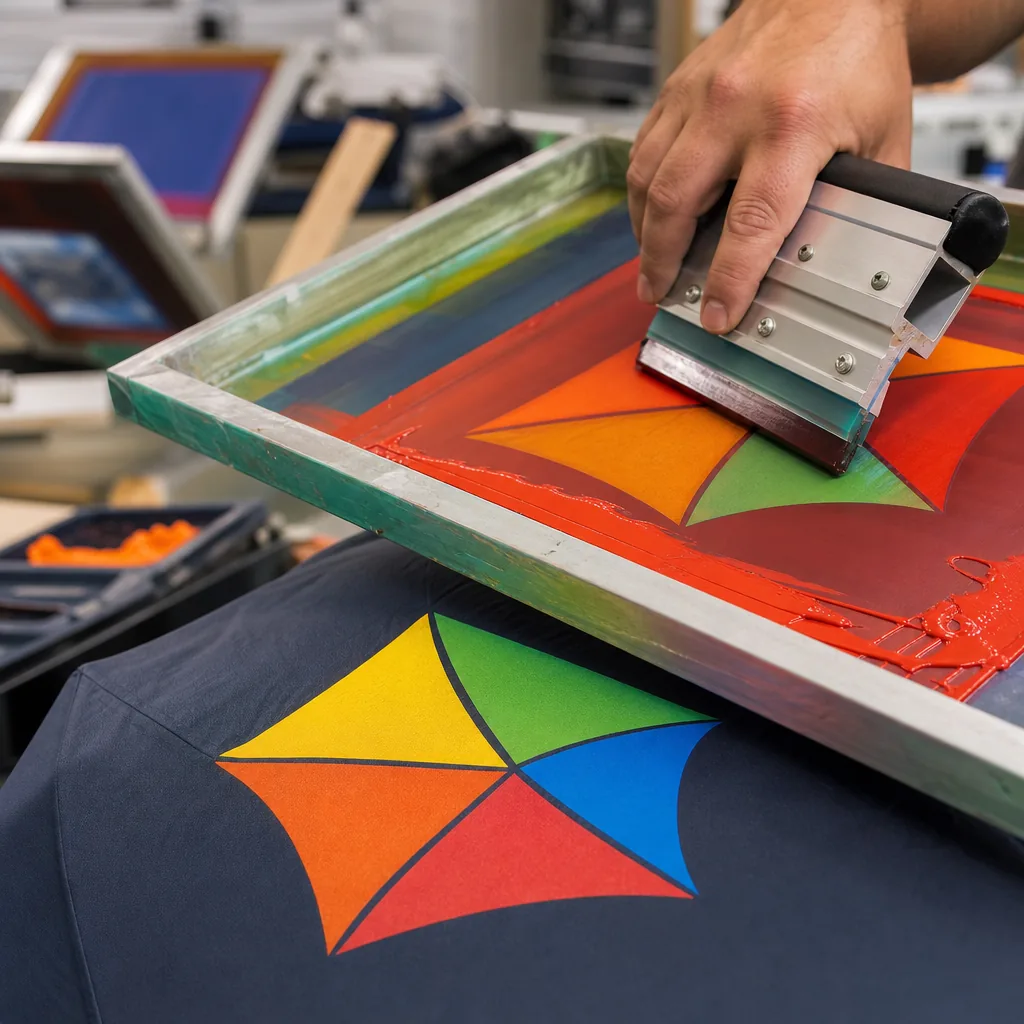
A branded umbrella order can look perfect at packing, then turn into emails about bent ribs, water spots, or unclear warranty coverage once it reaches the buyer’s customer. On our Songxia factory floor, we see that simple umbrella care cards and warranty inserts prevent many of these disputes by setting correct use, drying, storage, and claim expectations before the first rainy day. They also make bulk orders feel more finished for retail shelves, corporate gifts, and distributor programs.
How Inserts Build Trust After Purchase
The insert is the first service conversation after the buyer opens the umbrella, so it should do more than say “thank you.” Well-written umbrella care cards explain how to dry the canopy open, shake off standing water, keep the runner clear of sand or grit, and avoid forcing a rib that is caught under fabric. That prevents many of the failures we see in returns: bent 8K steel ribs from closing against the wind, damaged auto-open-close shafts from manual pushing, and mildew odor from packing wet 190T pongee into a sleeve. For retail umbrella instructions, I like one side with three clear use icons and the other side with brand tone, QR code, and warranty contact. A 23-inch auto-open corporate gift umbrella and a 30-inch golf umbrella need different language because the failure modes are different.
Branded warranty inserts also make private-label programs feel legitimate, especially when the umbrella is sold through hotels, museums, universities, or corporate events where the end user does not know the manufacturer. A concise warranty note should state what is covered, usually frame or mechanism defects under normal use, and what is not covered, such as inversion in storm wind, cuts in POE/PVC/EVA canopy, or color fading from chemical exposure. For higher-value models with fiberglass ribs, double-canopy venting, Teflon coating, or UPF 50+ fabric, the insert should name those features in plain language instead of hiding them in a spec sheet. Our standard practice at ZheBrella is to match warranty claims language to the actual AQL 2.5 inspection criteria, so the promise does not exceed what production and QC can consistently support.
Umbrella packaging inserts are also practical tools for channel control. Retail buyers want fewer confused returns, hotel purchasing teams want guests to understand that wet umbrellas should stay in the room stand, and corporate gift managers want the logo experience to last past the event. Private label umbrella inserts can carry a QR code for reorder pages, care videos, registration forms, or distributor contact details without printing too much text on the hangtag. For export orders, I recommend confirming insert size, paper weight, folding method, barcode placement, and language versions before mass packing; a 90 x 55 mm card may work in a sleeve, while a boxed gift set can take a larger 120 x 80 mm warranty card. The cost is small, but the trust signal is high when the buyer sees clear instructions, a real warranty path, and branding that matches the umbrella itself.
What Technical Information to Include
The most useful umbrella care cards start with mechanism instructions, because broken buttons and bent shafts are usually user-handling issues, not fabric failures. For manual umbrellas, say to slide the runner until the latch clicks and never force the canopy open when ribs are tangled. For auto-open models, instruct users to point the tip away from the body, press the button once, and let the spring finish the stroke; pulling the runner at the same time can damage the catch. For auto-open-close 21" and 23" folding umbrellas, explain that the button closes only the canopy, then the shaft must be pushed straight down until it locks. If the order uses 27" or 30" golf umbrellas, add a note not to open inside vehicles or low ceilings, since long fiberglass ribs can twist when blocked mid-stroke. These details belong on branded warranty inserts because they reduce avoidable claims before the product reaches customer service.
Fabric care should be specific to the canopy material, not a vague “keep dry” line. For 190T and 210T pongee, tell users to shake off water, leave the umbrella open until fully dry, and avoid packing it wet into a sleeve for more than a few hours; trapped moisture is what causes odor, coating marks, and rusty hardware on cheaper steel components. If the canopy has Teflon water-repellent treatment, say that repellency can weaken after abrasion or detergent exposure, so the user should wipe with a damp cloth rather than machine wash. For PVC, POE, or EVA clear umbrellas, retail umbrella instructions should warn against long storage under heavy weight because transparent film can crease or stick in hot containers. If the umbrella carries UPF 50+ labeling, use controlled wording such as “UPF 50+ canopy fabric helps block ultraviolet exposure” and avoid medical claims like “prevents skin damage.”
Windproof and frame notes need honest limits, especially for double-canopy vented umbrellas marketed for storms. State that a vented canopy is designed to release upward gust pressure, but the user should still face the canopy into wind and close the umbrella in severe conditions; a model that survives 50+ mph wind-tunnel testing is not indestructible on a city corner with rotating gusts. Fiberglass ribs can flex and return, so users should not manually bend them back unless a rib is visibly inverted; steel ribs are stiffer but can permanently kink if forced sideways. For 8K, 10K, or 16K frames, include a simple inspection note: stop using the umbrella if a rib tip detaches, a stretcher rivet loosens, or the runner no longer locks. Our standard practice at ZheBrella is to align umbrella packaging inserts with the actual BOM, so private label umbrella inserts do not promise fiberglass performance on a mixed steel-and-fiberglass frame.
Format, Paper, and Print Decisions
Format should be decided by how the umbrella is packed, not by what looks nice on a desk. For a sleeve-packed 21" or 23" folding umbrella, a credit-card insert around 85 × 54 mm slides cleanly into the polybag or gift box without creasing the 190T pongee canopy. For 27" golf umbrellas, patio umbrellas, and higher-ticket retail sets, I prefer a folded leaflet, usually 100 × 140 mm closed, because it gives enough room for opening steps, drying instructions, UV coating notes, and warranty terms without using 6-point type. Umbrella care cards also need to survive humidity during sea freight; cheap uncoated 80 gsm paper can curl inside POE/PVC packaging after 30 days in a container. For private label umbrella inserts, we usually spec 120–157 gsm art paper for standard orders and 250–300 gsm card stock when the insert doubles as a hangtag or warranty card.
Paper choice affects both brand feel and compliance claims. Recycled paper is useful for eco-positioned EVA canopies, bamboo handles, or RPET pongee programs, but buyers should confirm FSC or recycled-content wording before printing it; customs and retailer audits do not accept vague green icons. Coated stock gives sharper QR codes, barcodes, and full-color logos, especially when the umbrella packaging inserts include product photos or instruction diagrams. Matte coating looks more premium and reduces glare in retail packaging, while gloss coating is cheaper and makes CMYK colors pop. One-color printing is enough for basic retail umbrella instructions, drying warnings, and AQL 2.5 batch traceability codes; full-color printing makes sense when the insert carries brand story, UPF 50+ claims, care diagrams, or warranty registration steps. For mass promotional orders above 5,000 pcs, the price gap between black-only and CMYK is often small compared with the cost of reprinting unclear instructions.
QR codes are useful, but they should not replace the essential printed text. I have seen buyers put all warranty terms behind a QR code, then lose credibility when end users in another country cannot load the page or scan through a wrinkled sleeve. Put the basic care rules in print: open gently, dry fully before closing, avoid forcing auto-open-close shafts, rinse saltwater from steel ribs, and do not store wet in a sleeve. Use the QR code for videos, registration, spare-part requests, and multilingual pages. For branded warranty inserts going to the U.S., EU, Japan, and the Middle East, multilingual layouts should be planned before artwork approval, not squeezed in after translation. A clean four-language layout usually needs icons, short sentences, and separate warranty blocks by market. Our standard practice at ZheBrella is to lock the insert size, language count, QR destination, and paper weight before sample approval, because changing inserts after canopy printing can still delay FOB shipment by 3–5 days.
Compliance and Claim Control
Compliance language on umbrella care cards should be written like a claims-control tool, not a courtesy note. Warranty limits need hard edges: coverage period, what counts as manufacturing defect, and what is excluded after use in wind, salt air, improper drying, or commercial rental. For most branded orders, I recommend separating frame defects, canopy stitching, printing adhesion, and automatic mechanism failure because each has a different root cause and inspection method. Country-of-origin wording must match the physical label and shipping documents: “Made in China” is normally safest for umbrellas produced in Shangyu, while vague phrases like “Designed for” or “Imported by” cannot replace origin marking in the U.S., EU, or UK. If the insert says fiberglass ribs, 190T pongee, EVA, POE, recycled polyester, Teflon coating, or UPF 50+, those claims must be backed by the confirmed BOM, not the buyer’s catalog draft.
Material and performance claims create the biggest chargeback risk because retailers read inserts as consumer-facing proof. If branded warranty inserts mention UPF 50+, the factory file should include UV transmittance test documentation from SGS, Intertek, TÜV, or an accepted lab, ideally tied to the exact fabric color and coating lot. Black 210T pongee with UV coating and silver-coated polyester do not test the same, and a passing result on one color should not be used across a full retail assortment without buyer approval. Windproof wording also needs discipline: “double-canopy vented construction” is safer than promising storm resistance unless the model has documented wind-tunnel data, such as surviving 50+ mph in repeated open-close cycles. Our standard practice at ZheBrella is to freeze insert wording after pre-production sample approval, then check it again during AQL 2.5 final inspection against the packed umbrella.
Barcode and SKU matching should be treated as part of compliance, not warehouse housekeeping. Every insert, hangtag, polybag warning, master carton mark, and retail umbrella instructions sheet should carry the same SKU logic as the purchase order: size such as 21 inch, 23 inch, 27 inch, or 30 inch; mechanism such as manual, auto-open, or auto-open-close; canopy color; and print version. For private label umbrella inserts, mismatched UPC/EAN codes can stop an entire FOB shipment even when the umbrellas themselves pass inspection. Retailer approval steps should include artwork proof, legal text review, barcode scan test, printed sample sign-off, and carton drop or packing review if the insert affects presentation. Do not let the sewing line or packing line use old insert stock “just to avoid waste”; that is how mixed warranty terms and wrong origin wording end up in the same DDP delivery.
Bulk Packing and Quality Verification
Bulk insert planning has to start at MOQ confirmation, not at final packing, because a 5,000-piece umbrella order can quickly become three different insert jobs if the buyer has mixed SKUs, languages, or retail channels. For a basic promotional run, we usually pair one umbrella care card with each sleeve-packed umbrella; for retail or gift programs, the insert may go inside the color box, tied to the hangtag, or placed under the EVA/PVC window before carton sealing. Our standard practice at ZheBrella is to treat branded warranty inserts and private label umbrella inserts as controlled packing components, just like handles, wrist straps, and polybags. The BOM should state insert size, paper weight, print version, folding method, and placement rule, otherwise the line workers will make their own decision during peak production. For 21-inch folding umbrellas, inserts often fit in the sleeve; for 23-inch stick or 27-inch golf umbrellas, they usually go in the gift box or master carton document pouch.
Counting accuracy is where many factories lose money, because paper inserts are cheap but replacement shipments are not. We match issued insert quantity against the production traveler, then reconcile leftovers after packing: if 10,000 umbrellas are packed and 420 inserts remain from an issued 10,500, the variance is acceptable only if the line recorded 80 damaged or rejected pieces. During AQL 2.5 final inspection, carton sampling should include not only canopy defects, rib alignment, auto-open function, and 190T/210T pongee staining, but also insert presence, correct language, barcode match, and warranty term accuracy. Retail umbrella instructions must be checked against the actual model: manual, auto-open, and auto-open-close umbrellas need different safety wording, and vented double-canopy golf umbrellas should mention drying the lower canopy seam area before storage.
Lead time for umbrella packaging inserts is normally 5–7 days for simple CMYK cards and 8–12 days for folded booklets, foil stamping, matte lamination, or multi-language versions, so they should be approved before canopy printing enters mass production. If inserts arrive late, packed goods may need to be reopened, which adds labor, damages retail boxes, and can push shipment by 2–4 days. For FOB Ningbo or Shanghai orders, the packing list should identify carton count, units per carton, and whether inserts are inside each umbrella, each gift box, or packed separately as spares. For DDP shipments, the same detail matters even more because overseas customs, Amazon FBA prep, or distributor receiving teams may reject cartons when umbrella packaging inserts do not match the commercial invoice description. I recommend adding 1% spare inserts per SKU, but never mixing them loose into export cartons unless the buyer has approved that arrangement in writing.
Frequently Asked Questions
Should warranty inserts be packed inside the sleeve or gift box?
For retail boxes, place the insert on top of the umbrella or in a tray slot for immediate visibility. For sleeve-only orders, a small folded card inside the sleeve or under the strap keeps packing simple.
Can one insert cover several umbrella models?
Yes, if the wording is generic enough, but technical claims must match every model. Do not include UPF 50+, double-canopy windproof, or auto-open instructions unless all included SKUs have those features.
What information should be printed on umbrella care cards for retail orders?
A useful care card should include drying instructions, safe opening and closing steps, wind-use guidance, storage tips, and a short warning about misuse. For retail orders, many buyers also add a QR code for warranty registration or customer support.
Can warranty inserts be customized for different umbrella models in the same order?
Yes. For OEM orders, inserts can be versioned by model, such as compact, golf, reverse, or kids umbrellas, as long as the artwork is clearly matched to each SKU. Factories typically require final insert files before mass packaging begins to avoid mixing errors.
What paper size and material are commonly used for umbrella packaging inserts?
Common options include 90 x 50 mm cards, A6 cards, or folded leaflets printed on 250–350 gsm coated paper. For premium gift umbrellas, buyers often choose matte lamination or thicker card stock to match the retail packaging.
Looking to Launch Your Custom Umbrella Line?
ZheBrella is a Zhejiang-based OEM/ODM umbrella manufacturer with 17 years of export experience. Free design, low MOQ from 100 pieces, windproof construction, full-color print.
Get Free Quote Now »People Also Search For
Related Articles
Umbrella Insert Cards That Strengthen Private-Label Branding
Use insert cards to explain features, care, warranty, and brand story while supporting premium presentation for retail a...
Read More »QR Warranty Cards for Branded Umbrella Retail Programs
Build QR warranty cards that support after-sales service, authenticate retail umbrellas, and connect buyers to care, reg...
Read More »
Umbrella Insert Cards for Private-Label Brand Storytelling
Use insert cards to explain fabric, frame, care, warranty, and brand values while improving perceived value in private-l...
Read More »