Choosing the Right Logo Decoration for Umbrella Branding
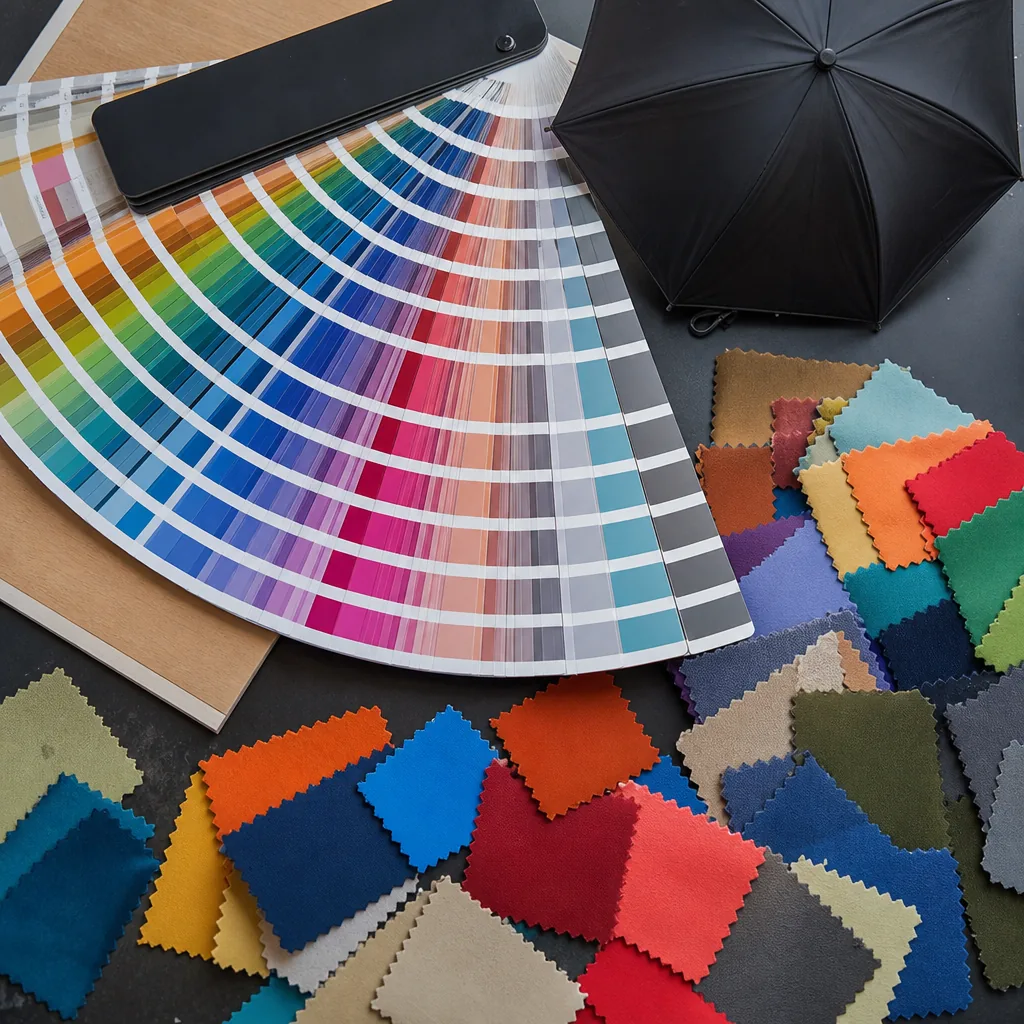
Choosing the right umbrella logo decoration is not just a design decision; it affects how the brand looks on curved panels, how well the mark survives rain and folding, and whether the project stays within budget and lead time. On the factory floor, the real constraints are material behavior, ink coverage, color matching, and the decoration method’s tolerance for repeated use, so buyers need options that hold up in production—not just on a proof.
Logo decoration methods by artwork type
For umbrella logo decoration, the first decision is not the method itself but the artwork geometry. Flat one- or two-color marks with bold shapes are the easiest to hold on a curved canopy, so screen printing umbrellas is usually the cleanest and lowest-risk option when the logo has solid fills, no gradients, and line weights above about 0.5 to 0.7 mm. On 190T or 210T pongee, a well-set screen can stay sharp through normal folding, while very small text tends to blur once the canopy is tensioned around the ribs. In branded umbrella production, this is the workhorse choice for club logos, corporate names, and simple icons.
Digital umbrella printing makes sense when the art has fades, multiple tonal steps, or photo-like detail that would require too many screens. It handles full-color files and complex artwork better than screen print, but the result depends on ink chemistry, fabric shade, and heat control; on dark canopies you often need a white underbase to keep colors from dying out. Fine text below roughly 0.4 mm stroke is still a bad idea because the fabric weave and panel seams will swallow it, so digital is best for gradient logos, soft edges, and small runs where setup cost matters more than unit price.
Heat transfer sits between the two: transfer logo umbrellas are useful when you need more detail than screen print can give, but you still want stronger edge definition than a direct digital laydown. For clean transfer work, I keep the minimum line thickness closer to 0.3 to 0.5 mm and avoid tiny reversed text, because the adhesive layer can close in on narrow gaps after pressing. Woven details are a different category entirely; they belong on trims, labels, straps, or sleeve patches, not on the canopy itself, and they work best for tiny brand marks that need texture rather than full-color illustration.
How canopy fabric changes print clarity
Pongee 190T and 210T behave differently under ink, and that matters more than most buyers expect when choosing umbrella logo decoration. On 190T, the weave is a little more open, so screen printing umbrellas usually need a heavier ink deposit or a tighter mesh to keep small text from breaking up at the edges. 210T gives you a denser face, better opacity under spot colors, and cleaner edge sharpness on logos with thin lines or knocked-out lettering. In branded umbrella production, I usually prefer 210T when the artwork has fine detail, because it holds registration better and gives you less fuzzing at the boundary of each color.
Surface finish changes the proof as much as the fabric count. A matte pongee grabs ink faster, so it can look slightly softer but more even, while a lightly coated surface makes the color sit higher and read brighter, especially for digital umbrella printing and transfer logo umbrellas. That coating can also make wet proofs look deceptively crisp; once the sample cures, some edges tighten and some inks lose a little density. I always tell buyers to approve the dried sample, not the fresh one, because umbrella logo decoration on coated fabric can shift after heat curing, and that is where disputes usually start.
For multi-color logos, the practical rule is simple: the smoother and denser the canopy, the easier it is to control halftones, small type, and solid fills. On 190T, oversized artwork hides minor spread better, but tiny details can close up if the ink is too heavy. On 210T, you get more predictable opacity for one- or two-color marks, which is why it is often the safer choice when the artwork has a strict brand Pantone target. If a buyer wants a proof that matches the finished umbrella closely, I usually recommend testing the exact fabric, coating, and print method together instead of treating them as separate decisions.
Durability, wash resistance, and color stability
Durability starts with where the mark lives. On umbrella logo decoration, an outside-canopy print takes the worst punishment: folding abrasion, wet rub from hands and bags, plus repeated contact with street grit. Inside printing is usually cleaner for premium retail pieces because it stays protected when the umbrella is closed, but the buyer still needs to check whether the ink will migrate, crack, or ghost through the fabric under sunlight. For screen printing umbrellas, I always ask for a real rub test on the exact canopy cloth, not just a paper sample, because 190T and 210T pongee behave differently after coating and heat-setting.
Rain exposure is where weak decoration shows up fast. If the logo sits on the exterior, request wet-rub and water-spray testing after curing, especially for dark colors on light canopies and for small text that can blur when the fabric gets saturated. Digital umbrella printing can look sharp at first, but some pigment systems lose density after repeated soak-dry cycles unless the supplier uses colorfast inks and a proper pre-treatment; that matters most for promotional runs that will be handed out at outdoor events or used daily in commuter markets. For transfer logo umbrellas, I’d only approve the method if the transfer film survives folding at the rib joints without edge lift.
Buyers should specify extra rub testing when the umbrella is a low-cost giveaway, a golf-style product with large exposed panels, or any design using fine lines, gradients, or brand-critical Pantone matches. In branded umbrella production, I usually recommend asking for dry and wet crocking results, a minimum 20–30 fold-cycle check on the finished panel, and an abrasion sample after at least one rain simulation if the logo will be outside. If the program must hold color for retail or corporate gifting, choose colorfast inks up front rather than trying to rescue fading later; that is cheaper than rework, and it avoids complaints about washed-out logos after the first season.
Production checks that prevent logo errors
The cleanest umbrella logo decoration jobs start before ink ever hits cloth: the artwork has to be vector, the panel map has to match the actual canopy count, and the shop drawing must show panel seam locations, logo centerlines, and the exact print face. On branded umbrella production runs, I insist on a hard proof against the real panel layout because a logo that looks centered on screen can land into a seam once the canopy is cut and stitched. For screen printing umbrellas, the usable print area is often smaller than buyers expect, especially on 21" and 23" folding models where rib curvature and vent seams steal margin.
Registration errors usually come from sloppy setup, not the press. The practical tolerance I allow is about 2-3 mm shift on standard logos, with anything over 5 mm treated as a reject if the mark crosses seams, trims, or edge binders; ghosting from double-hit screens or transfer bounce should stay below visible shadowing at normal viewing distance. Digital umbrella printing holds fine gradients better, but small type still needs a minimum stroke width of roughly 0.3-0.4 mm and clear spacing so the letters do not fill in on coated pongee or POE film. Transfer logo umbrellas are more forgiving on short runs, but the transfer edge must sit flat with no lift or wrinkling at the corners.
Our standard AQL 2.5 inspection checks logo position, rotation, color density, and panel-to-panel consistency, not just general canopy defects. Inspectors should measure against the approved mockup, then verify that the logo stays within the agreed safe zone on every sample lot, with special attention to the first and last panels where tension variation is highest. I also require a quick legibility test on small text, because a mark that passes from arm’s length can still fail once the umbrella is opened under indoor light; that matters most when the art uses thin sans-serif fonts or reversed-out copy. If the proof, panel map, and inspection sheet do not match, the run gets held before packing, which saves more money than trying to sort bad umbrellas after finishing.
Cost, MOQ, and lead time tradeoffs
Screen printing umbrellas is still the cheapest route when the artwork is simple and the color count stays low, because the screen setup is a one-time cost spread across volume. It usually wins on unit price at mid to high MOQ, but the tradeoff is that each extra color means another screen, more registration risk, and more scrap if the canopy fabric shifts during printing. For branded umbrella production, I normally expect lower setup cost to come with a stricter minimum order, while digital umbrella printing can accept smaller runs because there is no screen making, just file prep and print time. The catch is that digital units cost more per piece, especially on dark canopies where ink coverage and curing control matter.
Transfer logo umbrellas sit in the middle: setup is lighter than screen printing, but the labor is slower because each logo has to be cut, positioned, and heat-applied cleanly. That makes MOQ more flexible for pilots, seasonal programs, or mixed-SKU orders, but lead time can stretch if the factory has to do repeated placement checks or rework after press misalignment. If the umbrella logo decoration sits on a curved panel or near a seam, transfer work also carries a higher reject rate than flat-panel printing, so buyers should expect the quote to include some allowance for QC sorting and occasional replacement panels. In practice, the decoration choice changes not just cost but the whole production rhythm, especially when the canopy fabric is thin pongee and shows every flaw.
FOB and DDP quotes shift differently depending on the decoration route because the logo step affects both direct labor and hidden failure risk. On FOB, you mostly see the decoration cost added as a clean line item: screens, ink, heat transfer film, or digital print charge, plus any extra handling for folding and packing. On DDP, the supplier has to protect against delays, customs timing, and replacement shipments, so a slower or higher-risk umbrella logo decoration method usually gets a wider buffer in the landed price. My rule of thumb is simple: if the design is stable and the order is large, screen printing umbrellas usually give the best FOB value; if the order is small or multi-version, digital umbrella printing or transfer logo umbrellas can reduce setup pain, but the quoted price should reflect the extra labor and rework exposure.
Frequently Asked Questions
What logo method works best for small, detailed artwork on umbrellas?
Digital printing or heat transfer usually handles small details better than screen printing. For the cleanest result, the artwork should avoid ultra-thin lines and low-contrast colors on dark fabric.
How much do decoration choices affect order timing?
Simple one-color screen prints are usually fastest, while multi-step branding can add sampling and approval time. Buyers should confirm whether the factory can hold the same lead time under FOB or DDP terms.
Which logo decoration method is best for simple one-color umbrella logos?
Screen printing is usually the most cost-effective option for one-color or two-color logos on polyester pongee panels. It works well for bulk OEM orders and typically has lower unit costs once screens are made.
Can digital printing reproduce gradients or photo-style artwork on umbrella panels?
Yes, digital printing is suitable for gradients, photos, and complex full-color artwork, especially on white or light-colored fabric. Buyers should approve a strike-off sample because color results can vary by fabric coating and base color.
How much extra lead time should buyers allow for logo approval and production samples?
For branded umbrella production, allow about 3–7 days for artwork confirmation and logo sampling before bulk production. Larger OEM orders or multi-position logos may require additional approval time before the final production lead time begins.
Looking to Launch Your Custom Umbrella Line?
ZheBrella is a Zhejiang-based OEM/ODM umbrella manufacturer with 17 years of export experience. Free design, low MOQ from 100 pieces, windproof construction, full-color print.
Get Free Quote Now »People Also Search For
Related Articles
Choosing the Right Logo Decoration Method for Branded Umbrellas
Compare umbrella logo methods by cost, detail, wash durability, and MOQ so buyers can match the right decoration to each...
Read More »
Metallic and Foil Logo Effects for Branded Umbrellas
Compare metallic inks, foil transfer, and pearlescent effects for umbrella logos, with fabric limits, MOQ, lead time, an...
Read More »Screen Print, Digital Print, or Heat Transfer for Umbrella Branding
Compare umbrella logo printing methods by cost, MOQ, color range, and fabric compatibility so buyers can choose the righ...
Read More »