Metallic and Foil Logo Effects for Branded Umbrellas
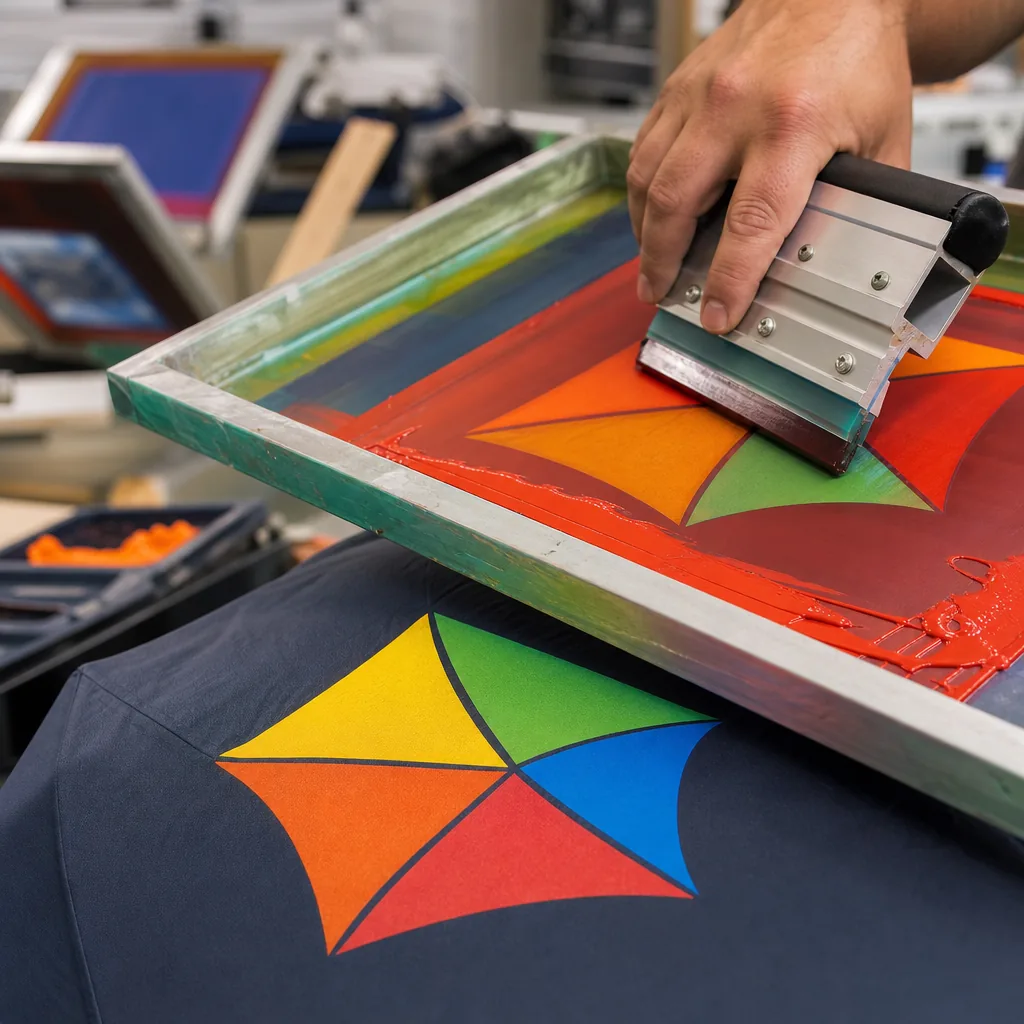
Premium buyers often ask for metallic shine on umbrellas, but the right process depends on fabric coating, panel color, logo size, and how the canopy will flex in rain and heat. On our Songxia production floor, metallic logo umbrella printing is tested differently from flat screen print because ink build, foil adhesion, and pearlescent coverage can all change after sewing, folding, and AQL inspection.
Where Metallic Branding Adds Real Value
Metallic effects earn their cost when the umbrella is part of a high-touch program, not a giveaway bin. I see the best results in luxury retail gift-with-purchase, VIP client gifting, five-star hotel loaner umbrellas, automotive launch kits, private banking events, and awards ceremonies where the umbrella is photographed, handled closely, and expected to feel heavier than a standard promo item. For these programs, metallic logo umbrella printing works because the shine catches light on a black, navy, burgundy, or deep green 190T/210T pongee canopy without needing oversized artwork. A 23" auto-open stick umbrella with fiberglass ribs and a curved EVA or wood handle can carry a small metallic crest far better than a cheap 21" folding model with loose canopy tension. The decoration should support the perceived value of the product, not compensate for poor construction.
Metallic branding performs best in controlled logo areas: one or two panels, a tight badge near the lower edge, a sponsor mark opposite the strap, or a small emblem on the sleeve. Large full-canopy coverage is usually the wrong place for foil transfer umbrella logos because umbrella fabric is cut, sewn, stretched over 8K or 10K ribs, then folded repeatedly; big reflective areas show wrinkles, seam distortion, and rubbing faster than standard screen print. Metallic ink on pongee also needs careful viscosity and curing control, especially on water-repellent or Teflon-coated fabric, because too much ink load can stiffen the panel and reduce clean folding. Our standard practice at ZheBrella is to test metallic artwork on the actual canopy cloth before bulk production, then run adhesion, wet-rub, and folding checks before approving mass printing.
For premium umbrella branding, the safest design rule is contrast plus restraint. A silver, champagne gold, rose gold, or gunmetal mark between 40 mm and 120 mm wide usually looks sharper than a giant foil logo stretched across two panels. On double-canopy vented windproof umbrellas, I prefer placing metallic decoration on the outer lower panel rather than near the vent overlap, where friction can dull the finish. For hospitality and automotive buyers, a 27" or 30" golf umbrella with 8K or 16K fiberglass ribs can carry a metallic dealer or hotel mark elegantly, while event planners often choose 23" auto-open models for guest distribution. If the order requires AQL 2.5 inspection, we define acceptable pinholes, edge breaks, and registration tolerance in the artwork approval stage, because branded umbrella decoration failures are easier to prevent before production than argue about after packing.
Metallic Ink, Foil Transfer, and Pearlescent Options
For metallic logo umbrella printing, the cleanest look usually comes from metallic screen ink on 190T or 210T pongee. On a plain weave polyester canopy, metallic ink gives a bright silver, gold, or champagne effect without the harsh reflectivity of foil, and it tracks well on curved panels if the artwork is not too fine. The downside is that metallic pigments sit in the ink film, so you can lose some sparkle after repeated flexing, especially on auto-open-close umbrellas where the canopy folds hard at the same points every day. In factory terms, this is still the most straightforward form of branded umbrella decoration because it uses standard screen equipment, but it needs tighter viscosity control and longer curing than ordinary plastisol or water-based prints. For retail programs, it is the most practical balance of cost, appearance, and production speed.
Foil transfer umbrella logos look more premium at first glance because the surface reflection is sharper and more mirror-like than metallic ink. They are good for high-visibility logos, event giveaways, and limited-edition premium umbrella branding, but the process is less forgiving. Heat-transfer foil needs a stable base print layer, controlled temperature and pressure, and a canopy fabric that can accept the adhesive without scorching or distortion. On 190T/210T pongee, foil usually works better than on rougher fabrics, but small details can bridge or lift at the edges after repeated opening. Durability is decent if the press parameters are right, yet abrasion from rubbing in a bag will wear foil faster than a properly cured metallic screen ink. For that reason, foil is more of a visual statement than a long-life decoration method.
Pearlescent finishes are the quietest option: they do not read as shiny metallic logo umbrella printing from across the room, but they add a soft, iridescent shift that works well when the logo should support the canopy rather than dominate it. This effect is usually done with translucent ink systems or additive pigments, so the result depends heavily on the base fabric color. On white or light 190T/210T pongee, pearlescent effects are consistent and clean; on dark fabric they can disappear unless overprinted on a lighter underbase. Coated UPF 50+ fabrics need extra testing because PU, silver, or black UV coatings can change adhesion and curing, and some coatings repel foil adhesives or make pearlescent films crack during folding. We normally insist on bend tests, adhesion tape checks, and wet-rub testing before approving any metallic ink on pongee or any foil transfer umbrella logos for production.
Design Limits for Sharp and Durable Metallic Logos
Sharp metallic marks need more breathing room than flat one-color printing. For metallic logo umbrella printing on 190T or 210T pongee, I normally reject artwork with strokes under 0.35 mm for screen metallic ink and under 0.5 mm for heat-transfer foil, because the aluminum or pearl particles do not flow like ordinary plastisol or water-based ink. Reversed-out lines are riskier; a 0.4 mm white gap inside a metallic block may close after curing or pressing. Small text below 7 pt is possible on paper, but not reliable on a canopy that stretches over ribs and folds into a tight roll. If the buyer insists on legal text or a fine tagline, I recommend moving that part to a sewn label or using a non-metallic ink. Metallic ink on pongee looks best when the logo has bold geometry, clean spacing, and no hairline gradients.
Logo size should match the panel structure, not just the brand guideline PDF. On a standard 8K umbrella, each panel gives more open printing area, so a 180–220 mm wide chest-style logo usually reads well without crossing high-tension zones. On a 16K frame, panels are narrower; the same logo may need to drop to 120–160 mm or be split into a more vertical layout. Foil transfer umbrella logos also need flatter positions than regular ink, because the adhesive layer and foil film are less forgiving when folded repeatedly. I keep metallic artwork at least 25–30 mm away from stitched seams, 40 mm away from rib tips, and clear of the top cap reinforcement where fabric curvature is strongest. Centering by eye is not enough; the cutting template and rib count must be checked before bulk printing.
Durability problems usually start where the logo fights the mechanics of the umbrella. Thick metallic ink and foil layers can crack, crease, or lift if they sit directly over fold lines, rib pressure points, or the moving stress path of an auto-open or auto-open-close frame. A manual 23-inch 8K umbrella is gentler on decoration than a compact 21-inch 8K folding model, because the compact canopy is compressed harder when closed. For premium umbrella branding, our standard practice at ZheBrella is to test the printed panel through open-close cycling before approving bulk production, not just check adhesion on a flat fabric swatch. A good branded umbrella decoration plan leaves quiet space around seams, accepts slightly larger text, and treats metallic finish as a structural decision, not a last-minute artwork effect.
Cost, MOQ, and Lead Time Factors
Metallic effects are not priced like a normal one-color screen print because the setup is different from the first strike-off. For metallic logo umbrella printing, the factory may need a dedicated mesh count, slower squeegee speed, extra curing control, and a separate wash-up process so metallic particles do not contaminate standard inks. Foil transfer umbrella logos add another cost layer: foil roll sourcing, heat-press tooling, temperature testing, and reject allowance for incomplete adhesion on panel seams or coated fabrics. On a 190T or 210T pongee canopy, metallic ink on pongee usually needs a production test because water-repellent or Teflon-type finishes can reduce ink bite. Buyers should expect artwork separation, screen charges, sample charges, and sometimes a higher unit price even when the logo area is small.
MOQ is often higher than standard branded umbrella decoration because metallic consumables are purchased in minimum rolls or batches, not by the exact logo size. A simple white screen print may be practical at 300 or 500 pieces, but metallic ink or foil can push the realistic MOQ to 500–1,000 pieces depending on color, canopy fabric, and umbrella type. Premium umbrella branding on 23-inch auto-open models, 27-inch golf umbrellas, or double-canopy windproof frames also needs more scrap allowance because every panel must stay visually consistent after sewing and final assembly. If the order uses custom gold, rose gold, silver, or holographic foil, the sourcing window matters; stock foil may be available in 2–3 days, while special foil or imported ink can add 7–12 days before sampling even starts.
Lead time should be confirmed from approved pre-production sample, not from deposit date, because metallic approvals take longer. A normal one-color print sample can often be finished in 3–5 days; metallic logo umbrella printing may require 7–10 days if adhesion, rub resistance, water spray, and folding marks must be checked. Bulk production also runs slower because operators reduce stacking pressure and extend drying or cooling time before panel cutting and sewing. Our standard practice at ZheBrella is to clarify FOB Ningbo/Shanghai or DDP terms before sourcing metallic materials, since late material arrival can affect vessel booking, carton labeling, and delivery commitments. For DDP orders, buyers should add buffer time for export documents, customs classification, and domestic last-mile delivery instead of assuming the same schedule as a basic promotional umbrella.
Inspection Standards for Premium Logo Effects
For metallic logo umbrella printing, the first inspection point is adhesion, not shine. A foil or metallic layer that looks good on the sampling table can fail after the canopy is flexed, folded, and packed under pressure. In our factory checks, foil transfer umbrella logos are tested with a cross-hatch tape pull on approved production panels, plus hand rubbing under dry and slightly damp conditions. For metallic ink on pongee, especially 190T and 210T polyester, we check whether the ink has properly cured into the coating surface instead of sitting as a brittle film. Any lifting at logo corners, powdering, or transfer onto the opposite panel after folding is treated as a major defect. On POE, PVC, or EVA umbrellas, adhesion must be tested separately because plastic film can reject certain inks or foils unless the surface is corona-treated or matched with the right adhesive layer.
Color consistency is where many premium umbrella branding projects lose control. Gold, silver, rose gold, gunmetal, and champagne tones shift noticeably under warehouse LED light, outdoor daylight, and photography light boxes, so bulk inspection should always compare against an approved physical metallic tone sample, not just a Pantone code or PDF artwork. During AQL 2.5 inspection, inspectors should pull umbrellas from different cartons and production time blocks, then compare foil brightness, ink density, and logo placement panel by panel. Edge cleanliness matters as much as color: ragged foil edges, saw-tooth screen lines, pinholes inside solid lettering, and missing strokes on small text all make branded umbrella decoration look cheap. For retail or distributor programs, I recommend keeping one sealed gold, silver, or metallic tone standard sample at the factory and one with the buyer, both signed and dated before bulk production.
Opening and closing tests are essential because umbrella logos are printed on fabric that moves, bends, and rubs against ribs, tips, and neighboring panels. We normally cycle premium logo umbrellas at least 20 to 30 times during in-line checks, and more for auto-open-close folding models because the canopy snaps under higher tension. After cycling, the inspector should examine high-stress areas near rib joints, panel seams, and fold lines for cracking, micro-flaking, dull streaks, and foil breaks. A metallic print that passes flat-panel inspection but cracks after packing is not acceptable for corporate gifts or retail shelves. For metallic logo umbrella printing on double-canopy vented windproof styles, both upper and lower canopy movement should be checked because friction between layers can scuff the decoration. Final QC should record defect type, location, and quantity under AQL 2.5, with clear classification of critical, major, and minor defects before shipment approval.
Frequently Asked Questions
Can metallic logos be printed on windproof umbrellas?
Yes, but the logo should be placed away from high-stress seam and fold areas. Double-canopy windproof umbrellas also need testing because airflow vents and extra stitching can limit printable space.
Do metallic umbrella logos cost more than standard screen printing?
Usually yes. Metallic ink, foil transfer, or pearlescent effects add setup, material, and sampling costs, especially when the order requires tight color approval or premium retail finishing.
Which umbrella fabrics handle metallic ink or foil transfer best for clean logo edges?
190T or 210T pongee usually gives the cleanest result because the weave is tighter and smoother than basic polyester. Foil transfer also benefits from stable heat tolerance, so coated or heavily water-repellent fabrics should be tested first with a pre-production strike-off.
What MOQ difference should buyers expect between metallic ink printing and foil logo decoration?
Metallic screen printing can often start around 300-500 pieces per colorway, while foil transfer programs more commonly begin at 500-1,000 pieces because of plate setup and yield control. Exact MOQ depends on logo size, panel count, and whether the order mixes multiple umbrella styles.
How are premium metallic or foil logos checked during AQL inspection?
For premium orders, factories typically inspect adhesion, edge sharpness, color consistency, and cracking after open-close cycle tests, then apply normal AQL sampling such as 2.5 for major defects and 4.0 for minor defects. Buyers often add an approved master sample standard for gloss level and placement tolerance, usually within 3-5 mm.
Looking to Launch Your Custom Umbrella Line?
ZheBrella is a Zhejiang-based OEM/ODM umbrella manufacturer with 17 years of export experience. Free design, low MOQ from 100 pieces, windproof construction, full-color print.
Get Free Quote Now »People Also Search For
Related Articles
Metallic Logo Effects on Umbrellas: Ink, Foil, and Limits
Compare metallic ink, foil transfer, and shimmer effects for umbrellas, with durability, fabric, MOQ, and approval check...
Read More »
Metallic Ink and Foil Logos for Premium Umbrella Branding
Compare metallic ink and foil logo options for premium umbrellas, including fabric limits, durability tests, MOQ, sampli...
Read More »
Metallic Ink and Foil Effects for Premium Umbrella Logos
Compare metallic ink, foil transfer, and subtle shine effects for premium umbrellas, including fabric limits, durability...
Read More »