Metallic Logo Effects on Umbrellas: Ink, Foil, and Limits
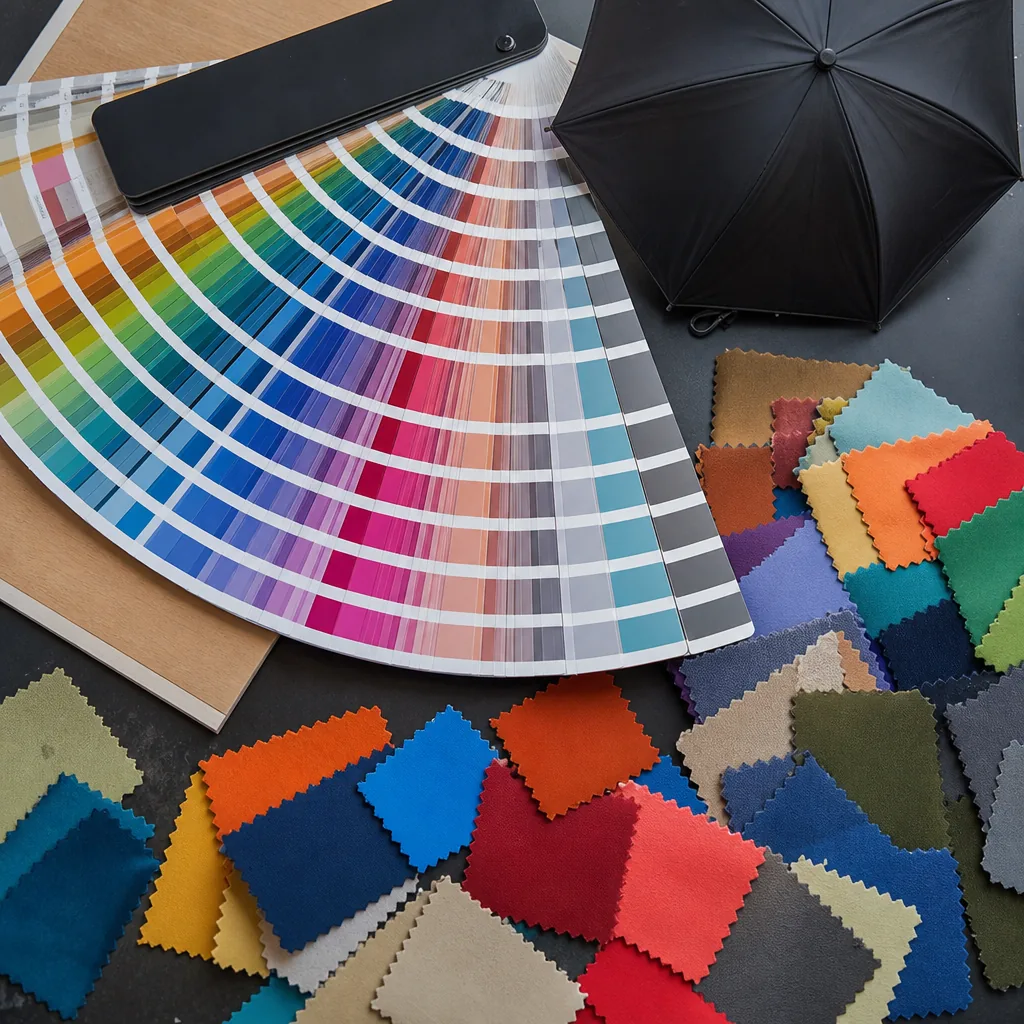
Choosing a metallic look on an umbrella is less about shine and more about how the logo survives flexing, wet handling, UV exposure, and repeated opening cycles. At our Songxia factory, the real decision usually comes down to print adhesion, heat tolerance, fabric finish, and the approval sample needed before a premium branded order can move into production. For buyers comparing metallic umbrella logo printing options, the best result is the one that still looks clean after the first storm, not just under showroom lights.
Compare Metallic Ink, Foil, and Transfer Effects
Metallic screen ink is the most straightforward way to get a logo to read as metallic without turning the umbrella into a specialty item. On pongee, especially 190T and 210T, metallic ink on pongee gives a muted sheen that looks best in daylight and under store lighting; it is still a printed effect, not actual metal. Foil logo umbrellas are different: the foil sits as a transferred layer, so the finish is brighter, smoother, and more reflective, but it also shows edges and registration errors more easily if the artwork is too fine. In factory terms, metallic umbrella logo printing is really a choice between softer ink coverage, sharper foil reflection, and the amount of detail the canopy fabric can hold without distortion.
Shimmer transfer films sit between those two options. They are usually less mirror-like than true foil but more uniform than metallic ink, which makes them practical for heat transfer umbrella logo applications on curved panels where a screen print would lose clarity. This is the better route when the logo has gradients, thin strokes, or a lot of negative space, because the film can hold a cleaner edge than direct metallic ink. For corporate gifts, I usually steer buyers toward metallic ink or shimmer transfer, because those programs need decent unit cost, repeatability, and acceptable branding from three feet away, not jewelry-level reflection.
For retail capsules and premium branded umbrellas, foil is the stronger choice when the concept depends on visual punch and shelf appeal. It works best on 21" to 23" folding umbrellas or compact promotional models with flatter panel areas, where the reflective finish can be seen without fighting large seams or vented double-canopy construction. For luxury promotional programs, foil or high-end shimmer film is usually worth the extra setup because the finish feels more deliberate, but I still cap expectations: fine serif text, micro-lines, and tiny QR-style details are poor candidates on any metallic treatment. If the buyer wants a clean, durable mark with less risk, metallic umbrella logo printing remains the safest default; if the brief calls for a more expensive look, foil logo umbrellas deliver it, as long as the art is simplified and the fabric color gives enough contrast.
Check Fabric and Coating Compatibility
Fabric compatibility decides whether a metallic mark looks premium after 500 open-close cycles or starts cracking at the fold lines. On standard 190T pongee, metallic ink on pongee usually anchors well because the weave has enough surface tooth, but the shine is slightly muted compared with a film transfer. 210T pongee is tighter and smoother, so it can give a cleaner edge on fine logo strokes, yet it needs more careful ink selection and curing because there is less mechanical grip. I always ask the buyer to confirm whether the umbrella canopy is plain polyester, silver-coated polyester, black-coated pongee, or UV-coated pongee before approving metallic umbrella logo printing, because the same artwork can behave very differently on each surface.
Waterproof and UV treatments are the main traps. A water-repellent finish, especially Teflon-style coating, lowers surface energy, so ordinary screen ink may bead, under-cure, or pass the first rub test but fail after wet folding. UPF 50+ treatments can also reduce metallic brightness because the coating sits between the ink and the fabric texture, making the surface less receptive and sometimes slightly gray under metallic pigment. For foil logo umbrellas, the adhesive layer needs a compatible landing surface; otherwise the foil releases cleanly from the carrier but not cleanly onto the canopy. Our standard practice at ZheBrella is to test metallic ink, heat-transfer film, and foil on the exact production fabric roll, not a similar swatch from the sample room.
Curing and transfer temperature must be adjusted for coated canopies because too much heat can soften PU, deform PVC/POE panels, or leave a press mark around the logo. A heat transfer umbrella logo that works at 150–160°C for 12–15 seconds on uncoated pongee may need lower temperature, longer dwell time, or a different adhesive on silver-coated or UV-treated fabric. For premium branded umbrellas, we run tape adhesion, dry/wet crocking, folding abrasion, and water-spray checks before bulk printing; passing a flat-panel test is not enough. Metallic effects should be approved after the fabric is sewn over ribs, because canopy tension changes reflection and exposes weak adhesion at seams and curved panels.
Size and Place Metallic Logos Carefully
Metallic umbrella logo printing works best when the mark has enough area to breathe. Thin legal copy, tiny QR codes, and hairline taglines are a bad match for foil or metallic ink because the effect depends on clean edges and light reflection; once the artwork drops below about 18–20 mm in letter height or uses lines thinner than 0.3 mm, the result usually turns muddy or loses legibility. For premium branded umbrellas, I push buyers toward medium-to-large chest logos, panel-center logos, or a single bold icon. On pongee, metallic ink can read well if the base fabric is smooth and the art is not overloaded with gradients or microtext.
Foil logo umbrellas need even more restraint on placement than the artwork itself. Keep the mark away from rib seams, vent cutouts, and the tight fold points where the canopy creases hard during closing; those spots crack foil first and make metallic ink on pongee look worn after a few hundred open-close cycles. On auto-open and auto-open-close models, I avoid the top third of the panel near the crown, because that area flexes aggressively when the shaft snaps open. The same logic applies to compact travel umbrellas: the closer the print sits to a high-compression fold line, the faster it shows whitening, edge lift, or adhesive failure.
For heat transfer umbrella logo applications, the cleanest placement is usually the broadest flat section of the canopy, at least 25–30 mm off a seam and clear of strap contact points when folded. That matters even more on compact umbrellas, where the folded bundle rubs against the strap, sleeve, and zipper every time the user packs it away. If the buyer wants metallic umbrella logo printing to survive retail handling, I specify a smooth panel, moderate logo size, and a layout that avoids repeated flex zones; otherwise the finish may still look good on day one but fail the first abrasion test.
Test Durability Before Confirming Bulk Production
Our standard practice at ZheBrella is to hold bulk approval until printed pre-production samples pass both visual and adhesion checks under AQL 2.5 criteria, with defects classified before packing instructions are finalized. For metallic umbrella logo printing, I recommend checking samples after 24 hours of drying, again after water spray, and once more after tight rolling for 48 hours in a carton to simulate warehouse compression. Inspect black, navy, red, and UV-coated fabrics separately because the same foil or ink can shift tone depending on background and coating chemistry. If the logo includes fine text under 1.5 mm, sharp corners, or large solid metallic blocks over 80 mm wide, test those details first; they are where cracking, pinholes, and uneven shine usually appear in production.
Plan Cost, MOQ, and Approval Timing
Metallic umbrella logo printing usually costs more than standard spot-color printing because the factory has to slow down and control three things at once: registration, curing, and ink load. A true metallic effect on pongee is not the same as a normal screen print; metallic pigment has to sit evenly or it streaks, and foil logo umbrellas add another step for adhesive, heat, and pressure control. In practice, that means higher setup cost, more machine time, and a higher MOQ than a simple single-color logo, especially when the artwork has fine type or thin strokes.
For premium branded umbrellas, I insist on a pre-production sample before bulk release. That sample is where you catch the real problems: dull metallic sheen, foil edge lift, color shift under different light, or a heat transfer umbrella logo that looks clean on paper but fails after canopy tension is applied. If the buyer needs retail packaging or seasonal delivery, the approval cycle should include sample sign-off, then enough production buffer for rework, because metallic effects are less forgiving than standard screen printing and usually add several days to lead time.
Quality control should be set at AQL 2.5 for bulk inspection, but buyers should not treat that as a substitute for sample approval or clear packaging specs. For FOB orders, plan freight after artwork approval and confirm carton marks, export cartons, and ship dates early; for DDP orders, leave even more time because customs, duties, and last-mile delivery can push premium programs off schedule. The most common mistake is approving metallic umbrella logo printing too late for a retail deadline, then expecting the factory to absorb the extra testing, reprints, and transit risk without changing the price or MOQ.
Frequently Asked Questions
Can metallic foil be used on a windproof double-canopy umbrella?
Yes, but placement should avoid high-flex areas and overlapping vent edges. A sample is important because the outer canopy moves more during wind release and folding.
Does metallic printing match Pantone metallic colors exactly?
Not exactly. Metallic ink and foil reflect light differently from a Pantone chip, so buyers should approve a physical strike-off under the lighting conditions used for retail or event display.
What is the usual MOQ for metallic logo printing on umbrellas?
For most factory programs, metallic ink or foil logo orders start around 300 to 500 pieces per design and color. If the artwork requires a special foil film or multi-step transfer, the MOQ may be higher because of setup and material waste.
Which umbrella fabric gives the cleanest metallic effect?
Pongee usually gives the sharpest result because the weave is tight and the surface is smooth. Coarser fabrics like recycled polyester can reduce shine and make fine details less crisp, especially for foil transfer.
How many proofing steps should a buyer expect before production?
A typical approval process includes artwork confirmation, a digital mockup, and one physical strike-off or sample if the logo effect is critical. For premium branded orders, this can add 5 to 10 days before mass production starts.
Looking to Launch Your Custom Umbrella Line?
ZheBrella is a Zhejiang-based OEM/ODM umbrella manufacturer with 17 years of export experience. Free design, low MOQ from 100 pieces, windproof construction, full-color print.
Get Free Quote Now »People Also Search For
Related Articles
Metallic and Foil Logo Effects for Branded Umbrellas
Compare metallic inks, foil transfer, and pearlescent effects for umbrella logos, with fabric limits, MOQ, lead time, an...
Read More »
Metallic Logo Effects for Premium Branded Umbrellas
Compare metallic print and foil-style logo options for premium umbrellas, including durability, fabric fit, sampling, MO...
Read More »Metallic Logo Printing on Umbrellas for Premium Brands
Compare metallic ink, foil-look transfers, and thread-tone choices for premium umbrellas, with fabric, MOQ, and QC point...
Read More »