Metallic Logo Printing on Umbrellas for Premium Brands
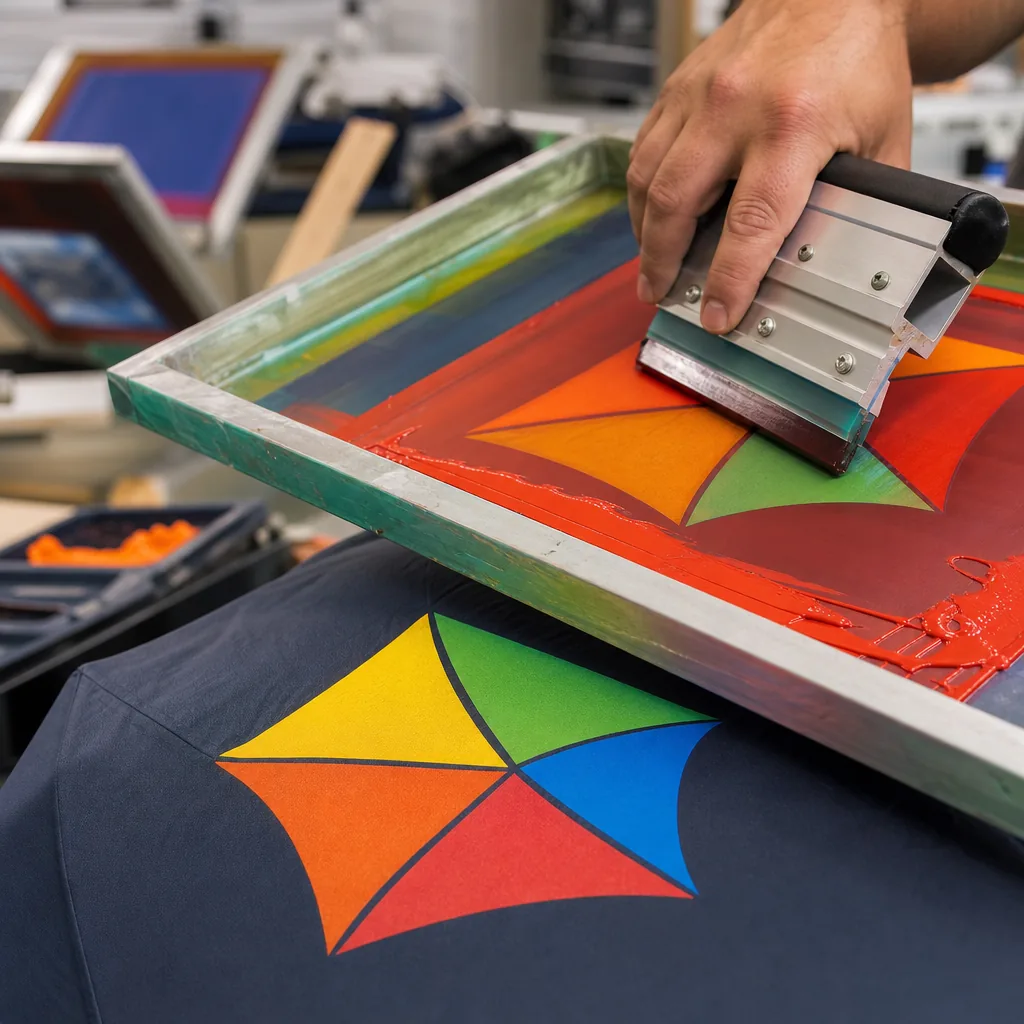
Premium buyers often ask for a metallic logo, but the right method depends on canopy fabric, order size, and how the umbrella will be packed and handled after printing. On our Songxia production floor, metallic logo printing umbrellas usually means balancing true metallic ink, foil-look heat transfers, or matching thread tones against adhesion, rub resistance, and color consistency before bulk production.
When Metallic Branding Makes Sense
Metallic branding makes sense when the umbrella is meant to be kept, photographed, or handed to a guest who notices finish quality. For retail capsule runs, hotel concierge umbrellas, luxury gift sets, and VIP event umbrellas, a silver, champagne gold, or gunmetal mark can lift a plain 190T or 210T pongee canopy without turning it into a loud promotional item. I usually recommend metallic logo printing umbrellas when the base canopy is black, navy, charcoal, burgundy, forest green, or cream; these colors give enough contrast for the shine to read under lobby lighting or outdoor daylight. On a 23" auto-open hotel umbrella or a 27" golf umbrella with fiberglass ribs, metallic ink should be treated like a controlled accent: a 60–90 mm chest-position logo, handle-end badge, or single-panel crest, not a full-panel billboard.
Buyers need realistic expectations, because metallic ink on pongee is not the same as hot foil on a rigid gift box. Woven pongee has texture, water-repellent finish, and slight stretch during sewing, so foil effect umbrella logos look more like a refined satin shimmer than a mirror chrome surface. Screen-printed metallic ink can work well on 190T/210T polyester pongee, especially with a white or clear underbase depending on the artwork, but very thin serif type below 1.0 mm stroke width will fill in or lose sparkle after rubbing tests. If a brand wants a stronger metallic effect, we often use a heat-transfer patch or PU label sewn onto one panel; that gives cleaner edges, higher opacity, and a more jewelry-like reflection, but it changes the hand feel and adds cost.
For premium branded umbrellas, the decision should be made together with frame, canopy, and inspection standards, not as decoration at the end. A 16K stick umbrella with a wood shaft, 210T pongee, UPF 50+ black coating, and a small metallic crest feels intentional; the same logo on a thin 8K steel frame may look over-specified. Our standard practice at ZheBrella is to approve metallic strike-offs under both D65 daylight and warm indoor light, then run adhesion tape tests, wet-rub checks, fold-line review, and AQL 2.5 final inspection against agreed logo QC standards. For FOB orders, allow 7–10 extra days for metallic ink matching and transfer sampling before bulk cutting, especially when the brand color is not standard gold or silver.
Print Methods: Metallic Ink vs Foil-Look Transfer
Screen-printed metallic ink is the workhorse for metallic logo printing umbrellas when the buyer wants durability without turning the canopy into a sticker board. We usually print silver, gold, copper, or gunmetal metallic ink on pongee 190T/210T, then cure it hard enough to pass wet rub and tape-pull checks without cracking at rib fold lines. The hand feel is slightly raised but still flexible, which matters on 8K and 16K layouts where the logo crosses tension zones near the ribs. On black or navy pongee, metallic ink gives a clean premium look; on light colors, the effect is softer because the aluminum or bronze pigment has less contrast. It is best for single-panel logos, repeating panel marks, and retail-grade premium branded umbrellas where the canopy still needs to fold neatly into a sleeve. Cost is moderate: more than standard plastisol or water-based ink, but usually cheaper than transfer when the artwork is one or two colors.
Heat transfer gives sharper edges than screen printing, especially for small serif text, gradients, or multi-color crests with a metallic highlight. For foil effect umbrella logos, transfer film can mimic a polished metal surface better than metallic ink on pongee, but it adds a noticeably smoother patch feel and can become the weak point if the umbrella is folded aggressively while damp. I do not recommend large transfer blocks across a 27" or 30" golf umbrella canopy unless the brand accepts some stiffness. It works well for single-panel logos, umbrella sleeves, EVA or PVC pouch branding, woven straps, and compact 21" auto-open-close models where the logo area is small. Heat transfer is also practical for lower MOQ programs because there is no screen setup per color, but unit cost rises on large panels. For 16K canopies, keep transfers centered inside one panel; bridging over seams or rib channels is asking for edge lift after repeated opening cycles.
Foil-look labels are different from true canopy printing: they are sewn, welded, or heat-applied badges used on straps, sleeves, handles, hang tags, or a small canopy position. They give the most luxury effect, especially with debossed gold or brushed silver film, but they are not the right choice for a big logo on flexible pongee because every label edge becomes a wear point. For metallic logo printing umbrellas aimed at department stores or hospitality gifting, I like a mixed specification: metallic ink on the canopy, foil-look label on the sleeve, and a matching metal plate or laser-marked handle insert. Logo QC standards should include Pantone metallic reference approval, 3M tape test after curing, wet/dry rub checks, seam alignment tolerance within 3 mm, and AQL 2.5 final inspection. The cheapest failure is caught before bulk printing: test one full umbrella, fold it into the sleeve for 24 hours, then open it and check whether the metallic layer creases, flakes, or transfers onto adjacent panels.
Fabric and Canopy Color Factors
Dark canopy colors make metallic artwork look expensive, but they also expose every weakness in opacity control. On black, navy, forest green, and burgundy 190T/210T pongee, metallic ink on pongee needs a clean white or light-gray underbase if the buyer expects a true champagne gold, silver, copper, or rose-gold tone. Without that underbase, the fabric absorbs visual brightness and the logo turns muddy, especially after the panels are stretched over 8K or 10K frames. PU-coated fabric is trickier than plain pongee because the coating changes surface energy; the metallic layer may sit on top instead of biting into the yarn. For metallic logo printing umbrellas, I prefer a two-pass setup: first an underbase matched to the artwork shape, then a controlled metallic pass with a 0.1–0.2 mm choke to avoid white edges after sewing tension pulls the canopy.
UPF 50+ layers and silver/blackout coatings improve sun protection, but they reduce light transmission and can make foil effect umbrella logos look flatter than the same artwork on uncoated fabric. A silver UV backing under a dark face fabric gives strong opacity, but heat-transfer foil can show pressure marks if the platen temperature or dwell time is too aggressive. PVC, POE, and EVA transparent canopies behave differently; they show shine well, but adhesion and cracking at fold lines become the main risk. For premium branded umbrellas, I would not approve a metallic logo larger than about 180–220 mm wide on a standard 23" panel unless the artwork is simple. On 27" or 30" golf umbrellas, 250–300 mm can work, but large solid metallic blocks are more likely to crease, flake, or look wavy over rib valleys.
Bulk production should not start until the exact fabric lot, coating, ink system, and curing method have passed a small adhesion test. Our standard practice at ZheBrella is to print strike-offs on the buyer’s approved canopy material, cure them under production settings, then run tape pull, wet rub, dry rub, fold-flex, and 24-hour resting checks before cutting bulk panels. For logo QC standards, we inspect metallic coverage under both daylight and cool-white factory light because gold and silver shift color badly under mixed lighting. AQL 2.5 inspection should define acceptable pinholes, edge sawtooth, registration drift, and color tolerance before shipment, not after cartons are packed. If the order uses auto-open or auto-open-close frames, I also test printed panels after repeated opening cycles because canopy snap tension can reveal poor adhesion faster than a flat table test.
Sampling, MOQ, and Lead Time Planning
MOQ should be planned around the decoration method first, not the umbrella model. For metallic logo printing umbrellas with a one-position metallic ink print on 190T or 210T pongee, a realistic factory MOQ is usually 300–500 pieces per color when the frame is a stock 21", 23", or 27" auto-open model. The setup is mainly screen making, ink mixing, curing tests, and print alignment, so we can keep the threshold lower if the buyer accepts standard black, navy, or gray canopy fabric and an existing handle. Foil effect umbrella logos are different: custom heat-transfer film, die-cut registration, and press temperature tuning normally push MOQ to 1,000 pieces or more, especially when the logo has thin strokes or large solid metallic areas that may wrinkle on panel seams.
Pre-production samples need 7–10 days after artwork approval because metallic decoration cannot be judged from a PDF mockup. We normally test logo position on the actual panel, check metallic ink on pongee for adhesion after wet rubbing, and open-close the umbrella 20–30 cycles to see whether the print cracks near folded stress lines. For premium branded umbrellas, I recommend approving both an opened-view sample and a folded-view sample; many logos look clean on the canopy but disappear into pleats when the umbrella is strapped. Our standard practice at ZheBrella is to record Pantone target, metallic ink batch, film type if transfer is used, curing temperature, and logo distance from rib seams before releasing bulk cutting.
Bulk lead time is typically 25–45 days, but the spread matters. A stock 23" 8K steel frame with one metallic logo position can often ship in 25–30 days after sample approval. A 27" or 30" golf umbrella with fiberglass ribs, double-canopy venting, UPF 50+ coating, or custom EVA handle can move closer to 35–45 days if frame parts or dyed pongee must be scheduled. Buyers should lock artwork, canopy color, Incoterm, and packing method before the sample is made; late carton changes or DDP labeling requirements can add several days. For logo QC standards, specify AQL 2.5 for major defects, define acceptable pinholes or edge sawtooth in millimeters, and require random checks for foil lift, off-center placement, and metallic color drift under daylight and warehouse lighting.
QC Checks for Premium Metallic Logos
For metallic logo printing umbrellas, I would not approve shipment on a normal “looks fine from one meter” check. Metallic ink, foil transfer, and pearlized silver/gold layers expose every small mistake because the surface reflects light unevenly. Our standard QC is AQL 2.5 for major defects, with visual inspection under consistent white light at roughly 600–800 lux, not beside a window where the logo can look better than it is. Inspectors check registration first: metallic layer to base artwork should stay within ±0.5 mm for simple one-color logos and ±0.3 mm for tight text or crest marks. On panels, logo placement tolerance is usually ±5 mm from approved sample position, measured from rib seam or lower hem depending on the artwork file. For premium branded umbrellas, I also require left/right panel orientation checks because a perfectly printed logo on the wrong panel is still a commercial reject.
Rub resistance is where many foil effect umbrella logos fail. A quick thumb rub is not enough; we use dry rub and damp rub checks on random samples after curing, especially on 190T and 210T pongee with water-repellent or Teflon coating. Metallic ink on pongee needs proper adhesion balance: too much curing heat can dull the shine, while too little curing leaves transfer marks on polybags or neighboring panels. Inspectors should open and close the umbrella at least 10 cycles before final logo judgment because cracking often appears along rib pressure lines only after the canopy is tensioned. Color consistency is checked against an approved production sample, not just a Pantone number, because metallic gold can shift warm or green depending on ink batch, mesh count, transfer film, and fabric coating. Serious logo QC standards should classify flaking, pinholes, ghost edges, visible scorch marks, and uneven metallic density as major defects.
Premium logo QC cannot stop at the canopy because a beautiful metallic mark on a weak frame will still damage the brand. For fiberglass ribs, check rib recovery, cap seating, runner smoothness, and whether the ribs twist under canopy tension; fiberglass should flex back without white stress marks. For steel ribs, inspect plating, rivet burrs, rust points, and rib symmetry, because a slightly bent 8K or 10K frame will distort logo placement when the umbrella is open. Auto-open units need functional testing on sampled pieces: one-hand release, full canopy lock, no runner kickback, and no delayed opening caused by tight sewing at the notch. I like testing metallic logo printing umbrellas after frame operation, not before, because the real customer sees the logo under full tension. For retail or corporate gift orders, keep sealed golden samples, inline inspection reports, and final AQL photos so disputes are based on measurable tolerances rather than opinions.
Frequently Asked Questions
Can metallic logos be printed on windproof double-canopy umbrellas?
Yes, but the logo position must avoid vent overlap and heavy seam areas. A pre-production sample should be opened repeatedly to check cracking, especially on double-canopy windproof constructions.
Is metallic ink suitable for outdoor promotional umbrellas?
It can be suitable if adhesion and rub tests pass on the chosen pongee fabric. For long outdoor use, buyers should approve a sample after wet testing and specify AQL 2.5 inspection for print defects.
What is the practical MOQ for metallic logo printing on premium umbrellas?
For metallic screen printing or foil-look transfers, many factories start around 500–1,000 pieces per design, depending on umbrella type, logo size, and fabric color. Lower quantities may be possible, but setup cost per unit is usually higher.
Which umbrella fabrics work best for metallic logo effects?
190T pongee is the most common choice for premium umbrellas because it has a smoother surface than polyester and supports cleaner metallic ink edges. Dark navy, black, burgundy, and forest green fabrics usually give the strongest gold or silver contrast.
What QC points should buyers define for metallic umbrella logos?
Specify logo position tolerance, usually within ±3 mm, color approval against a physical sample, rub resistance, adhesion after opening and closing cycles, and no cracking on panel seams. For retail orders, request pre-production samples and inline logo checks before bulk packing.
Looking to Launch Your Custom Umbrella Line?
ZheBrella is a Zhejiang-based OEM/ODM umbrella manufacturer with 17 years of export experience. Free design, low MOQ from 100 pieces, windproof construction, full-color print.
Get Free Quote Now »People Also Search For
Related Articles
Metallic Ink and Foil Logos for Premium Umbrella Branding
Compare metallic ink and foil logo options for premium umbrellas, including fabric limits, durability tests, MOQ, sampli...
Read More »
Metallic Gold and Silver Logos on Branded Umbrellas
Specify metallic gold or silver umbrella logos with realistic shine, fabric limits, sample checks, MOQ, cost factors, an...
Read More »
Metallic Ink Umbrella Logos for Premium Brand Programs
Plan metallic umbrella logos with the right fabric, ink, placement, and QC controls so premium brand programs look consi...
Read More »