Metallic Logo Effects for Premium Branded Umbrellas
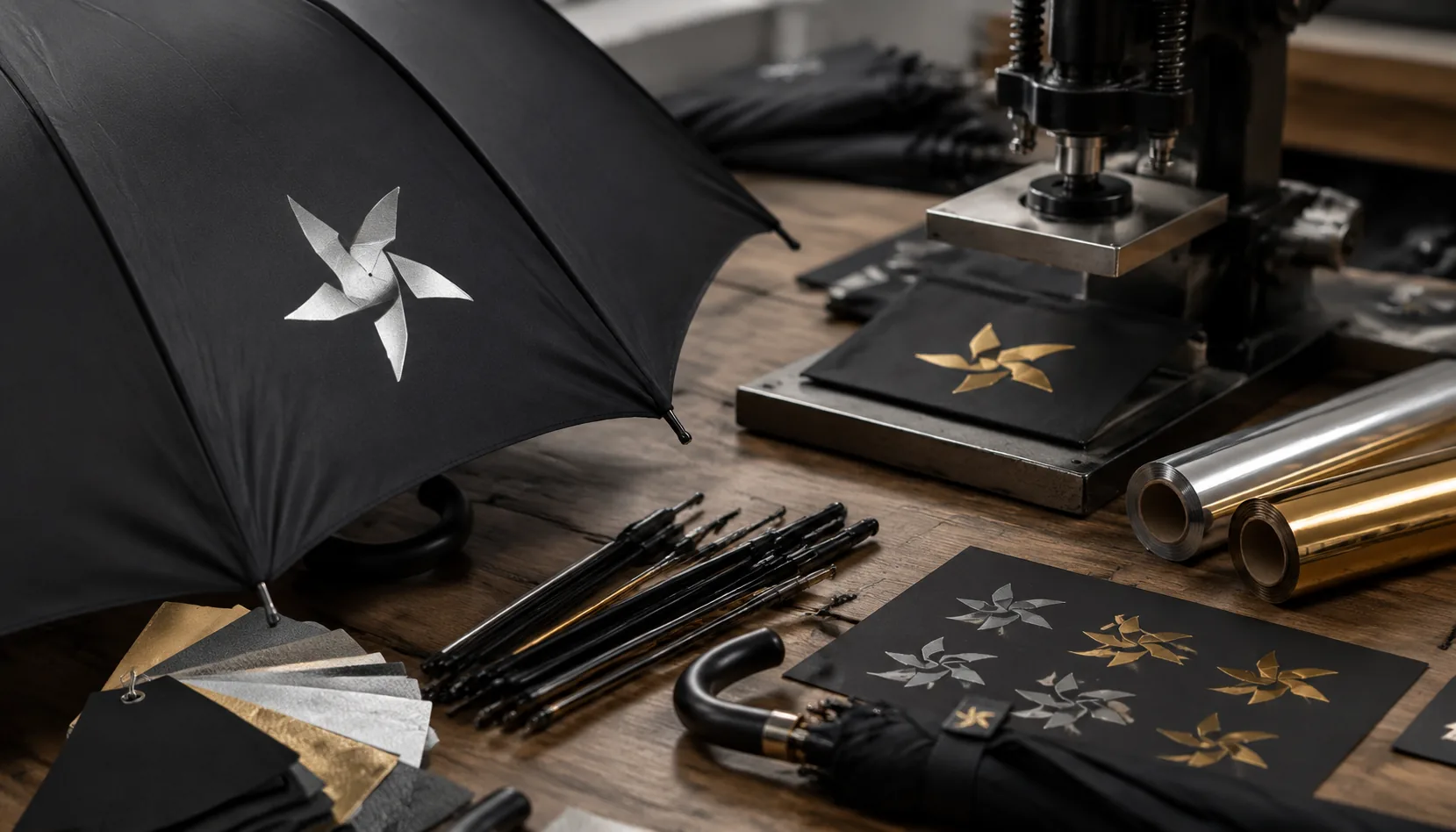
Premium umbrella buyers often like the shine of a metal logo, but the wrong process can crack, dull, or bleed once the canopy is folded and packed. On our Songxia factory floor, we treat metallic logo umbrellas as a materials-matching job first: fabric coating, panel tension, curing temperature, and rub resistance all decide whether metallic print or a foil-style effect will survive sampling, bulk production, and final inspection.
Where Metallic Branding Works Best
Metallic branding works best when the umbrella already feels premium before the logo is added. A foil umbrella logo on a 23" or 27" auto-open stick umbrella with a 190T or 210T pongee canopy, fiberglass ribs, and a matte EVA or rubber-coated handle makes sense for executive giveaways, bank client gifts, and board-level event kits. On compact models, I prefer 21" auto-open-close frames with 8K fiberglass ribs and a dense black, navy, or charcoal canopy because the metallic mark stays sharp and visible when the umbrella is folded. For corporate gift umbrellas, gold, silver, champagne, and gunmetal effects read as higher value than ordinary white screen print, but only if the base construction is not cheap. A metallic logo on thin 170T fabric or a loose steel frame looks like decoration trying to hide weak product quality.
Luxury retail lines and hotel umbrellas are the strongest fit for metallic logo umbrellas because the user sees them at close range: in a lobby stand, in a gift box, at a concierge desk, or while opening the umbrella beside a car door. Hotels usually place a small crest on one or two panels of a 27" or 30" straight umbrella, often with a wooden J-handle, black metal shaft, fiberglass ribs, and a Teflon-coated pongee canopy. Retail brands may use a heat transfer umbrella logo near the lower panel edge, matched with woven labels, custom sleeves, and color-matched tips. In production, our standard practice at ZheBrella is to test metallic transfer adhesion after wet rub, folding, and 24-hour recovery because a logo can look perfect on a flat panel but crack after repeated rib contact.
Metallic effects should be treated as controlled accents, not full-canopy coverage. Large foil areas fight the fabric: pongee stretches slightly during sewing, ribs press against the back side during opening, and rainwater plus folding friction will expose weak adhesion faster than a small emblem. Full-panel metallic coverage also increases reject risk under AQL 2.5 because pinholes, wrinkles, transfer edge lift, and color unevenness become easy to see under angled light. For premium branded umbrellas, the better specification is usually a 60-120 mm logo on one or two panels, or a narrow metallic wordmark aligned away from major seam tension. If a buyer wants more drama, I would rather add contrast piping, a custom sleeve print, plated handle trim, or a debossed grip badge than cover six panels in foil. The result feels more expensive and survives real use better.
Decoration Methods and Material Limits
Metallic screen ink is the most durable choice when the buyer wants a true production-friendly logo, not a photo-studio trick. We mix aluminum or pearl metallic pigment into a flexible screen-print binder, then cure it through a drying tunnel so it keys into 190T or 210T pongee instead of sitting as a brittle crust. Adhesion is strongest on uncoated or lightly water-repellent pongee; on heavy UV-coated fabric, especially silver-backed UPF 50+ panels, we run a tape test and wet-rub test before approving bulk. The shine is satin-metallic rather than mirror chrome, but it bends well over 8K and 10K panels without cracking at the fold lines. Dark canopy colors help contrast, so gold, copper, and silver ink read better on navy, black, forest green, and burgundy than on white or pale gray. For metallic logo umbrellas ordered above 1,000 pieces, this is usually the best cost-to-durability method.
A heat transfer umbrella logo gives sharper edges and brighter reflectivity than metallic screen ink, but the film must be chosen carefully because umbrella fabric flexes, folds, and rubs against ribs every time it closes. PU-based metallic transfer film performs better than cheap PET film because it stretches slightly and resists lifting on curved canopy panels. We press at controlled temperature and dwell time, usually after panel cutting but before sewing, so the film bonds evenly without flattening seam allowance. It works well on 190T/210T pongee and selected polyester oxford, but coated UV fabrics can be risky because the transfer adhesive may bond to the coating instead of the yarn surface. For corporate gift umbrellas where the logo has thin lettering or a small foil umbrella logo effect, transfer film gives a cleaner retail look than screen ink, but unit cost rises and oversized graphics can feel stiff.
Foil-look finishes are not one single process; factories use metallic ink, metallic transfer film, or foil-lamination effects depending on the shine level the buyer expects. True mirror foil looks attractive in sampling photos, but on premium branded umbrellas it has limits: hard foil can crease at canopy folds, show scratches after packing, and fail faster on auto-open-close models because the fabric compresses tightly around the shaft. Dark canopies make foil-look logos pop, but they also expose every pinhole, registration shift, and adhesive edge, so AQL 2.5 inspection should include logo alignment, peel resistance, and folded-panel abrasion, not just open-canopy appearance. Our standard practice at ZheBrella is to recommend metallic screen ink for large logos, PU metallic transfer for fine detail, and to avoid rigid foil on vented double-canopy golf umbrellas unless the logo is small and placed away from stress points.
Frame and Canopy Pairing for Premium Feel
A metallic logo reads expensive only when the frame underneath has enough visual weight to support it. For premium branded umbrellas, I usually pair a foil umbrella logo or heat transfer umbrella logo with fiberglass ribs and a steel shaft on 23" or 27" stick umbrellas, not the cheapest all-steel 21" compact frame. Fiberglass ribs flex better in wind and keep the canopy surface flatter after opening, which matters because metallic films show every wrinkle and pressure mark. A wood crook handle gives the strongest executive-gift signal, especially with black, navy, burgundy, or forest green 190T/210T pongee. EVA handles are better for golf and outdoor staff programs where grip comfort matters more than boardroom appearance. Auto-open is worth specifying for corporate gift umbrellas because buyers notice the one-hand opening action before they inspect the print.
Rib count changes the logo layout more than many buyers expect. An 8K umbrella gives eight larger fabric panels, so a centered metallic logo umbrellas design can sit cleanly on one panel at 7" to 9" wide without crossing a seam. That is the safest layout for foil because seams, rib tips, and panel tension can create uneven adhesion or distorted reflection. A 16K frame has a more rounded, premium silhouette and better visual density, but each panel is narrower; the logo may need to shrink to 4.5" to 6" wide or be split into a repeating pattern. For 16K executive umbrellas, I prefer one restrained logo panel plus a matching sleeve mark rather than printing every alternate panel, which can make a premium item look like event merchandise.
Mechanism and canopy fabric should be chosen before approving metallic artwork. Manual open frames allow slightly softer canopy tension, while auto-open frames snap the runner up hard; if the transfer film is too thick, poor curing or low-temperature pressing can lead to edge lift after repeated opening cycles. Our standard practice at ZheBrella is to test metallic transfer on production fabric, then run open-close cycling and basic tape adhesion before bulk sewing, especially on Teflon-coated pongee or UPF 50+ coated canopies where surface treatment affects bonding. Double-canopy vented golf umbrellas can work well for metallic logo umbrellas, but the logo should stay on the outer lower panel, away from vent overlap. For FOB orders, I would build in 3 to 5 extra approval days for strike-off samples, because metallic effects cannot be judged accurately from a PDF mockup.
Durability Testing and Buyer Approval
Durability testing for metallic logo umbrellas should be written as a buyer-control step, not a decorative afterthought. Metallic ink, foil film, and PU-backed heat-transfer film all behave differently on 190T and 210T pongee, especially when the canopy has Teflon water-repellent treatment or UV coating rated UPF 50+. A proper sample check starts with dry and wet rub testing: 20 to 50 cycles with white cotton cloth is enough to reveal weak foil release, gray smearing, or edge powdering. I also like a fingernail adhesion check at the logo edge, because promotional umbrellas are often folded before the print has fully stabilized. For a foil umbrella logo, any lifting at sharp corners, small text, or registration seams should be rejected before mass production, not negotiated after AQL 2.5 inspection.
Fold-line checks matter more on umbrellas than on flat textiles because the logo is repeatedly bent around 8K, 10K, or 16K frame geometry. Writers should tell buyers to open and close the sample at least 30 times, then inspect the logo where the canopy creases naturally against the ribs and tips. A heat transfer umbrella logo may look perfect on a flat panel but crack after auto-open-close compression on a 21-inch compact umbrella, while the same artwork may survive better on a 27-inch golf umbrella with a looser fold. Water exposure should include both static dripping and a quick soak-and-dry cycle, because metallic finishes can dull after contact with canopy coating, heat pressing, or residual moisture trapped during packing. Our standard practice at ZheBrella is to check metallic samples after 24 hours before approving bulk cutting.
Buyer approval should include indoor and outdoor light review because metallic finishes are angle-dependent. A champagne gold logo can look refined under office LED lighting but become too yellow in sunlight; silver foil can turn mirror-bright outdoors and make fine brand text harder to read. For premium branded umbrellas and corporate gift umbrellas, I recommend approving one physical pre-production sample under three conditions: white office light, shaded daylight, and direct outdoor light. The approval record should note canopy color, coating, pressing temperature, dwell time, film or ink supplier, and final artwork size in millimeters. Do not approve from a phone photo alone, because compression and exposure settings hide foil texture, pinholes, and uneven pressure marks. Once the buyer signs off, keep the approved sample beside the production line so operators can compare gloss, color shift, adhesion, and placement during in-line inspection.
MOQ, Lead Time, and QC Planning
Metallic logo umbrellas need earlier MOQ planning than standard one-color screen print because the consumables are not always stock items. For common silver or gold heat-transfer film, a practical factory MOQ is usually 500–1,000 pieces per design on 23" or 27" stick umbrellas and 1,000–2,000 pieces on compact 21" auto-open-close models, where panel handling is slower. Custom champagne, rose gold, holographic, brushed metal, or tinted foil umbrella logo materials often require buying a full roll of film or mixing a dedicated metallic ink batch, so the real MOQ can move to 2,000–3,000 pieces. I advise buyers not to split too many canopy colors at the start; a 190T or 210T black pongee canopy gives the cleanest metallic contrast and reduces rejected panels. For premium branded umbrellas, confirm whether the logo sits on a single panel, two opposite panels, or all eight panels, because multi-panel placement changes both film consumption and sewing alignment risk.
Sampling needs more time than a normal heat transfer umbrella logo because metallic finishes show pressure marks, edge lift, and temperature variation very clearly. A standard strike-off for screen print can be ready in 3–5 days, but metallic film or metallic ink sampling is usually 7–10 days after vector artwork, Pantone target, and canopy fabric are confirmed. If the umbrella uses Teflon coating, UV UPF 50+ treatment, POE/PVC clear panels, or EVA inserts, we run adhesion checks before approving bulk because some coatings reduce transfer bonding. Bulk lead time is typically 25–35 days after sample approval for 1,000–3,000 pieces, and 35–50 days if the order combines fiberglass 8K/10K windproof frames, double-canopy vented construction, custom handles, and metallic printing. Our standard practice at ZheBrella is to keep one approved printed canopy panel sealed in the production file so the sewing line, printing room, and final QC compare against the same physical reference.
Final QC should be stricter than for low-cost promotional umbrellas because metallic defects are visible from several feet away. For corporate gift umbrellas, we inspect under AQL 2.5 for major defects and commonly use AQL 4.0 for minor appearance issues, but metallic logo orders need defined checkpoints: no foil cracking after opening and closing cycles, no pinholes in solid logo areas, no offset beyond about 2 mm from the approved position, no glue shadow around the transfer, and no rubbing loss after a dry cloth test. We also check the umbrella itself: auto-open or auto-open-close function, rib symmetry, runner locking, canopy tension, stitch density, tip attachment, and frame performance where fiberglass ribs or windproof double-canopy construction are specified. For higher-value FOB or DDP orders, carton protection matters: individual polybags, tissue over the printed panel if needed, 5-ply export cartons, corner protection, dry cartons below roughly 15% moisture, clear shipping marks, HS code, packing list, commercial invoice, and any brand-owner documentation required before customs release.
Frequently Asked Questions
Do metallic umbrella logos crack when the canopy is folded?
They can if the logo is too large, placed across fold lines, or applied with the wrong transfer settings. A pre-production sample should be folded, opened, rubbed, and checked before bulk approval.
Can metallic branding be used on UPF 50+ umbrellas?
Yes, but the coating and heat sensitivity of UPF 50+ fabric must be tested first. Heat-transfer and foil-look applications need careful temperature control to avoid damaging the canopy coating.
Which umbrella fabrics work best for metallic or foil-style logos?
Pongee and polyester panels usually give the most consistent metallic logo finish because they have a smooth, stable surface. Coated fabrics should be tested first because water-repellent treatments can reduce transfer adhesion.
What MOQ should buyers expect for metallic logo umbrella production?
For OEM orders, metallic ink or heat transfer logo umbrellas commonly start around 500–1,000 pieces per style, depending on fabric, frame, and packaging requirements. A pre-production sample is recommended before bulk production.
How should metallic umbrella logos be inspected before shipment?
Check logo position, edge sharpness, color consistency, adhesion after opening and folding, and any cracking on curved panel areas. For premium gift orders, buyers should approve a sample under both indoor and daylight conditions before mass production.
Looking to Launch Your Custom Umbrella Line?
ZheBrella is a Zhejiang-based OEM/ODM umbrella manufacturer with 17 years of export experience. Free design, low MOQ from 100 pieces, windproof construction, full-color print.
Get Free Quote Now »People Also Search For
Related Articles
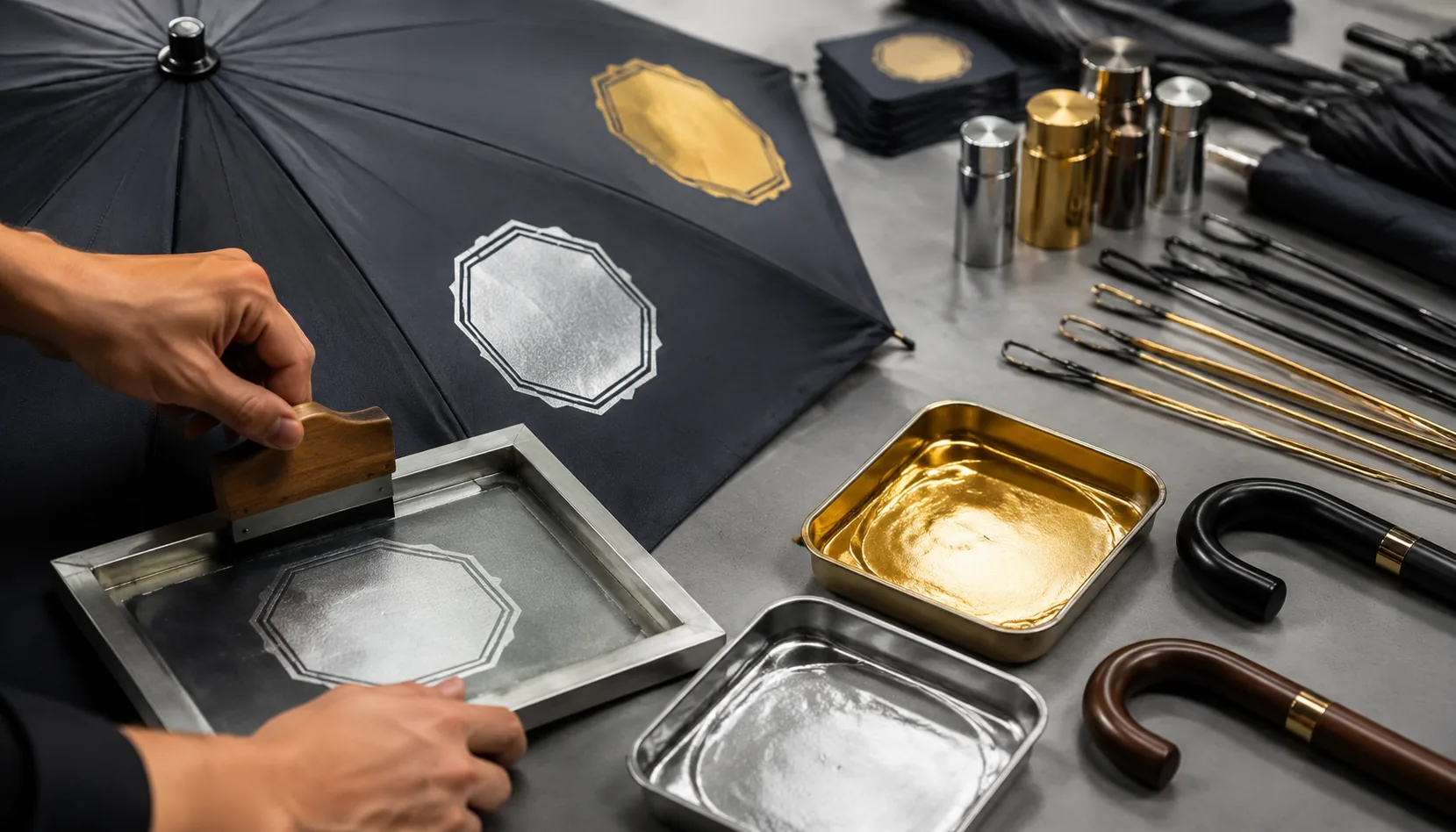
Metallic Logo Printing on Umbrellas for Premium Brand Programs
Compare metallic ink, foil transfer, and reflective effects for premium umbrellas, with durability, fabric, MOQ, and QC ...
Read More »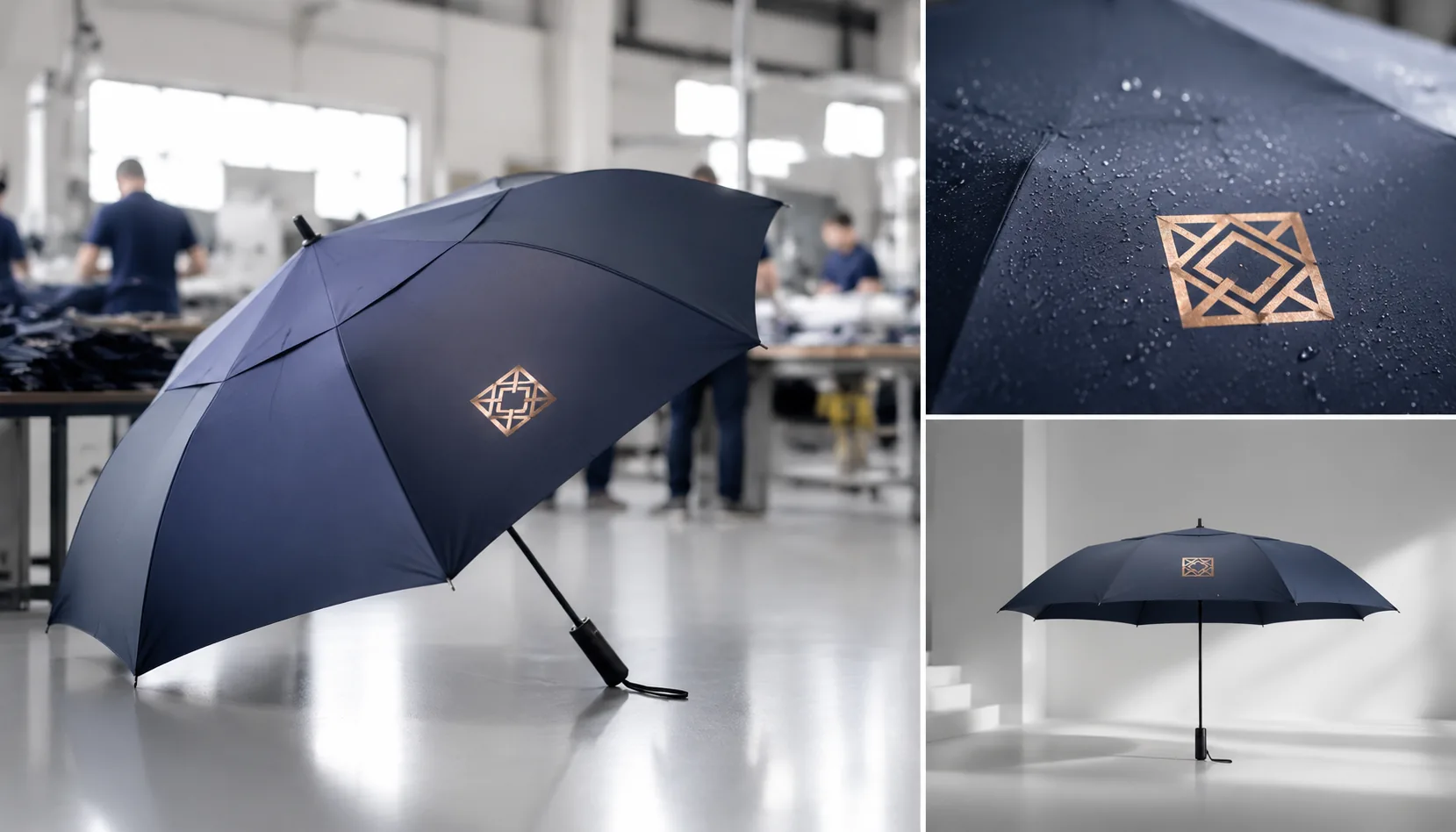
Metallic Logo Printing on Umbrellas for Premium Branding
Plan metallic logo umbrellas with the right fabric, print area, QC checks, MOQ, and lead time for premium corporate gift...
Read More »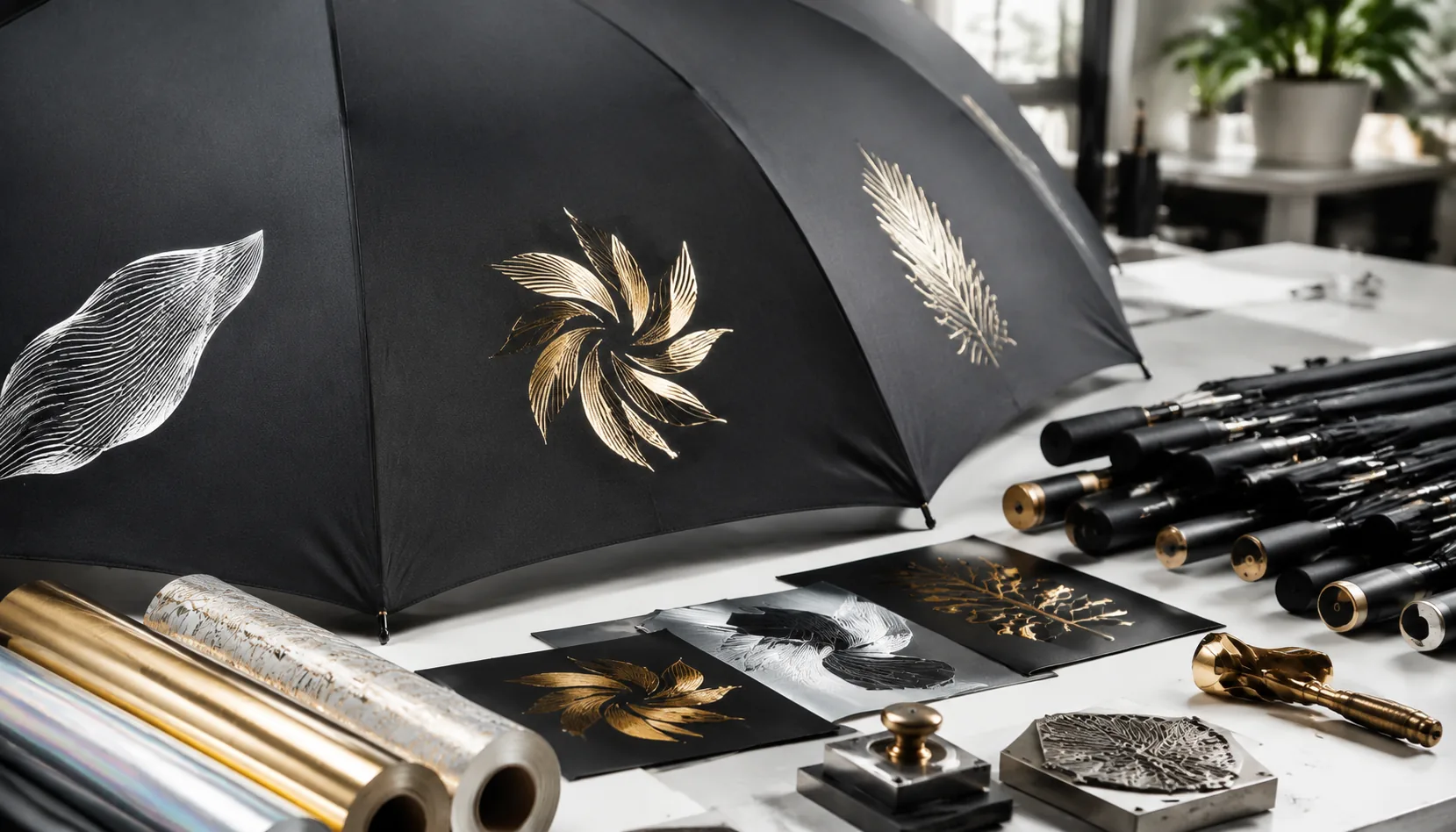
Metallic Logo Effects on Premium Branded Umbrellas
Compare metallic ink, foil transfer, and subtle premium logo effects for umbrellas, including fabric limits, durability ...
Read More »