Metallic Logo Printing on Umbrellas for Premium Brand Programs
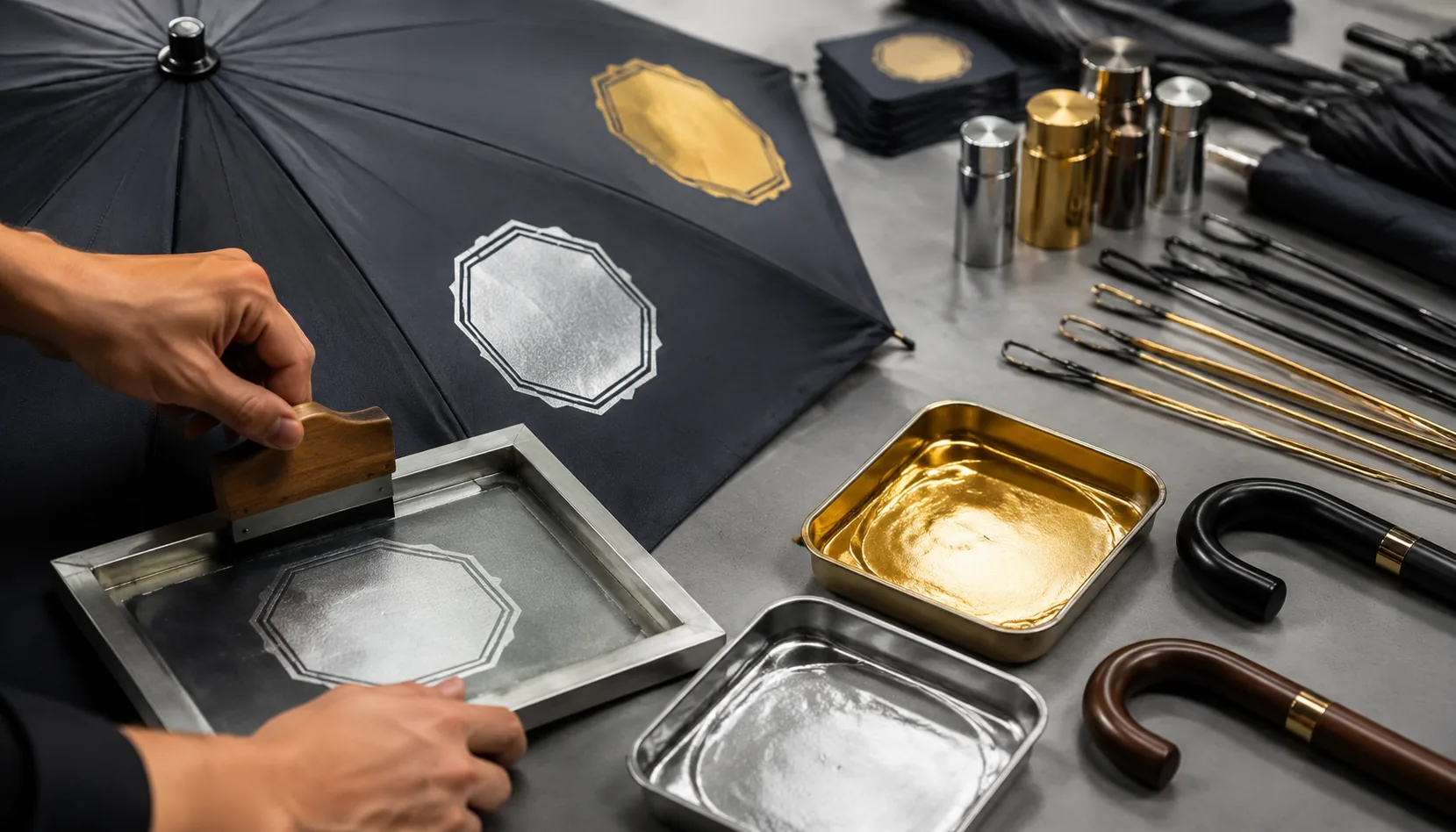
Premium umbrella programs often fail at the decoration stage: a gold mark that looked sharp on a sample can dull after curing, crack on coated pongee, or vary panel to panel under bulk production pressure. For metallic logo umbrellas, we look first at fabric coating, ink system, heat tolerance, and rub testing before choosing metallic ink, foil transfer, or reflective print—because the right effect is the one that survives packing, rain, and repeat brand use.
Where Metallic Branding Works Best
Metallic branding works best when the umbrella is treated like a premium accessory, not a walking billboard. For executive gifts, VIP event merchandise, boutique hotel programs, and retail capsule lines, a small foil print umbrella logo on one panel or on the sleeve gives a higher perceived value than a large flat-color print. We usually place metallic artwork at 80–120 mm wide on 23" and 27" stick umbrellas, or 60–90 mm on 21" folding umbrellas, so the logo catches light without cracking across seam lines. Premium branded umbrellas using 190T or 210T pongee with a matte black, navy, charcoal, or deep green canopy show gold, silver, rose-gold, and gunmetal effects more cleanly than bright fabrics. On corporate gift umbrellas, I prefer a fiberglass 8K or 10K frame, auto-open shaft, and matching sleeve because the hardware quality must support the metallic finish story.
Metallic heat transfer is strongest as an accent: small chest-style logos, border trims, handle medallion graphics, sleeve marks, or a restrained repeat near the canopy edge. Full-panel metallic coverage looks attractive in a rendering but creates production risk on real umbrellas because the canopy flexes, folds, and rubs against ribs during packing. Large metallic films can show crease whitening, edge lifting, or uneven reflection after the umbrella is opened and closed 20–30 times, especially on compact auto-open-close models where the canopy is tightly compressed. For metallic logo umbrellas, we normally avoid crossing stitched seams and keep a 15–20 mm clearance from panel edges, rib tips, and vent openings. If the design needs more shine, it is better to combine one metallic logo with woven label trims, plated handle rings, or a printed sleeve instead of forcing metallic film across multiple panels.
Hotel programs and luxury retail drops also need practical durability, not just showroom appeal. A double-canopy vented 27" golf umbrella with fiberglass ribs may survive 50+ mph wind-tunnel testing, but the metallic decoration still needs its own adhesion and rub checks before bulk production. Our standard practice at ZheBrella is to test metallic heat transfer on the actual canopy lot, then inspect production under AQL 2.5 for registration, foil breaks, pinholes, and heat marks. Metallic effects do not behave like normal screen printing: gold and silver reflect differently under warm banquet lighting, outdoor daylight, and hotel lobby LEDs, so buyer approval should use a physical pre-production sample rather than only a PDF mockup. For MOQ planning, metallic decoration is usually most economical above 500–1,000 pieces, with sampling in 7–10 days and bulk lead time around 25–35 days depending on umbrella frame stock and packaging complexity.
Metallic Ink, Foil, and Transfer Options
Metallic screen ink is the most practical route when the buyer wants metallic logo umbrellas with repeatable color, moderate cost, and decent wash/rub resistance. On 190T or 210T pongee, we normally print after the canopy panels are cut but before sewing, using a mesh that can carry enough aluminum or bronze pigment without flooding the weave. Curing is usually 130–150°C for 60–90 seconds, but the real control point is dwell time: under-cured metallic ink looks fine on day one and starts powdering after folding cycles. The hand feel is slightly raised and drier than standard plastisol or water-based ink, so very fine serif text under 1.2 mm can lose sharpness. Teflon-coated pongee is the troublemaker; the water-repellent finish reduces surface energy, so we either specify non-Teflon print zones or run a pre-test with 3M tape pull and wet-rub checks before approving mass production.
A foil print umbrella logo gives the brightest gold, silver, or rose-gold mirror effect, but it is less forgiving than metallic ink. The process uses adhesive printed on the pongee, partial curing, then foil pressing around 135–155°C under controlled pressure; too little heat gives weak transfer, too much heat can glaze 190T pongee or distort panels near seam allowances. Foil has a smoother, more premium hand than thick metallic ink, but it is also more sensitive to repeated folding because umbrella fabric creases harder than flat garment fabric. For premium branded umbrellas, I avoid large solid foil blocks across rib contact points, especially on 23-inch and 27-inch auto-open models where the canopy is under more mechanical stress. A broken-up logo, border, or monogram pattern survives better than a 180 mm solid metallic rectangle.
PU transfer labels and reflective silver print solve different problems. Metallic heat transfer on PU film gives clean edges, strong opacity, and a controlled satin-metal look; it bonds well to 210T pongee when pressed around 140–160°C, but the film edge can be felt by hand and may lift if the fabric has heavy PU, UV, or Teflon finishing that blocks adhesive flow. Reflective silver print is not a true luxury foil effect; it uses glass-bead or reflective pigment systems and is chosen for visibility on corporate gift umbrellas, golf umbrellas, and night-event programs. It usually feels grittier and thicker than metallic ink, and the logo should be kept away from high-fold zones if the buyer expects long retail life. Our standard practice at ZheBrella is to test adhesion after 24 hours, because a transfer that passes hot off the press can fail after the adhesive fully cools and the canopy coating relaxes.
Design Limits Buyers Should Approve Early
Approve the artwork limits before sampling, because metallic ink and foil do not forgive thin details the way a matte screen print does. For metallic logo umbrellas, I usually push buyers to keep positive strokes at 0.6 mm minimum and reversed-out gaps at 0.8 mm or wider; below that, the foil edge starts breaking after canopy tension and folding. A foil print umbrella logo should avoid hairline serifs, micro taglines, and fine radial gradients. Metallic heat transfer can hold a cleaner edge than wet metallic ink, but it still reflects light unevenly if the file depends on soft shading. Send vector AI, EPS, or PDF files with Pantone references, then approve a 1:1 print proof on the actual canopy fabric, not just a paper mockup. 190T pongee, 210T pongee, POE, and PVC all take metallic decoration differently, and a shiny logo that looks sharp on black pongee can look muddy on translucent EVA or POE.
Logo size should be tied to panel geometry, not copied from a tote bag layout. On a standard 23 inch 8K umbrella, a safe single-panel logo is often 180–220 mm wide and 70–110 mm high, depending on the shape and how close the design sits to the rib line. On 27 inch or 30 inch golf umbrellas, 240–300 mm wide is workable, but only if the logo does not cross high-tension fold zones. Premium branded umbrellas with large metallic marks need breathing room: keep at least 20–25 mm from stitched seams and 35–45 mm from the bottom hem where the canopy curves and sewing tolerance stacks up. For corporate gift umbrellas, I prefer one strong mark on one or two panels over repeating a delicate foil logo on every panel; it gives better AQL 2.5 inspection results and fewer buyer complaints about slight angle differences.
Panel count changes the approval rules. An 8K umbrella gives wider triangular panels, so a horizontal logo has more usable print area and fewer seam interruptions. A 16K umbrella looks upscale because the canopy is rounder, but each panel is narrower, seams are closer, and registration becomes less forgiving; metallic heat transfer placed near a seam can skew 2–3 mm after sewing and tensioning even when the print itself was accurate. Multi-panel layouts should be avoided unless the buyer accepts visible registration tolerance at every rib. Auto-open and auto-open-close frames add another limit: the runner, spring, and rib tips create clearance pressure when the canopy snaps open. On compact 21 inch or 23 inch frames, thick metallic transfers placed close to fold lines can crease, stick, or show pressure marks after cycling. For production approval, test at least 30 open-close cycles, then check cracking, edge lifting, and rub marks before releasing the bulk order.
Spec Choices That Support a Premium Feel
A metallic logo only feels premium when the umbrella underneath has the right weight, snap, and wind behavior. For premium branded umbrellas, I usually steer buyers away from thin steel ribs unless the target price is doing all the talking. Steel is strong on paper, but it adds weight and can take a permanent bend after a gust. Fiberglass ribs, especially on 8K or 10K frames, flex back better and keep a 23" or 27" golf umbrella comfortable to carry. If the program is for executives, hospitality, finance, automotive, or luxury retail, a fiberglass shaft with fiberglass ribs gives the foil print umbrella logo a better platform because the product does not feel cheap before the user even opens it. For compact models, a 21" auto-open-close frame can still work, but the spring, runner, and rib joints need tighter control because metallic decoration draws attention to every other detail.
Double-canopy windproof construction is the other spec that supports metallic logo umbrellas, especially when the logo sits on a dark navy, black, charcoal, or deep green 190T or 210T pongee canopy. A vented double canopy lets wind escape instead of flipping the frame inside out, and a properly built golf umbrella can survive 50+ mph wind-tunnel testing when the rib geometry, stretchers, and tips are matched correctly. The canopy fabric should be smooth enough for metallic heat transfer, but not so slippery that adhesion becomes unreliable after folding cycles. We normally test metallic transfer on the actual coated fabric, not just a lab swatch, because Teflon water-repellent finishing, PU backing, and UV coatings can change peel strength. For high-value corporate gift umbrellas, I would rather approve one slightly smaller metallic mark with clean edges than a large reflective logo that cracks at panel seams.
Handle choice matters because the hand confirms what the eye expects from the metallic decoration. EVA handles work well for golf umbrellas because they are light, grippy, and comfortable in wet weather, while wood handles suit 23" stick umbrellas where a more classic retail feel is needed. Rubberized plastic can be acceptable, but glossy low-grade PP handles fight against the premium story. If the umbrella is for outdoor events, resorts, or travel programs, UPF 50+ coating is worth considering because it adds a functional reason for the higher unit cost, not just a decorative one. For metallic logo umbrellas, I would pair UPF 50+ black-out coating with 210T pongee, fiberglass ribs, and a manual or auto-open mechanism depending on market preference. Final inspection should include AQL 2.5 checks for logo alignment, transfer adhesion, canopy tension, frame opening force, and handle fit, because premium failure is usually a stack of small misses.
Sampling, Inspection, and Shipping Terms
For metallic logo umbrellas, I do not let production start from a PDF mockup alone. The first control point is a strike-off on the actual canopy cloth: usually 190T or 210T pongee with the specified waterproof, Teflon, or UV UPF 50+ coating already applied. Metallic inks and foil films behave differently on coated fabric, especially after heat pressing at 130–150°C, so the buyer should approve color, gloss level, edge sharpness, and hand-feel under normal daylight and indoor LED light. A foil print umbrella logo that looks rich on black pongee can look weak on navy or burgundy if the foil opacity is not tested first. For repeat retail or corporate gift umbrellas, I recommend one approved strike-off, then a full pre-production sample using the real frame, handle, sleeve, hangtag, and carton marks before bulk cutting begins.
Inspection has to focus on abrasion, not just appearance. Our standard practice at ZheBrella is to run dry rub and wet rub checks on the metallic heat transfer area, then fold the umbrella 20–30 cycles to see whether the logo cracks along rib pressure points. Compact 21" auto-open-close umbrellas are tougher on metallic decoration than 23" stick umbrellas because the canopy folds tighter and the logo may sit directly on a crease. For double-canopy vented windproof models, the logo position must also avoid seam ridges and vent overlap. Final inspection should follow AQL 2.5 for major defects and AQL 4.0 for minor cosmetic issues, with specific checks for missing foil, pinholes, scorch marks, misregistration over 2 mm, transfer film residue, crooked panels, loose tips, and open/close function. Premium branded umbrellas should also be checked after sleeve insertion because cheap sleeves can scratch metallic surfaces during packing.
MOQ depends more on logo process and frame type than on the umbrella itself. For metallic logo umbrellas, a realistic MOQ is usually 500–1,000 pcs per design for metallic heat transfer, higher if custom foil color or special packaging is required. Lead time should be planned as 5–7 days for strike-off, 7–10 days for pre-production sample approval, and 25–40 days for bulk production after deposit and artwork confirmation; add more time before Q4 gift season or before major trade shows. FOB Ningbo or Shanghai is better for distributors who already consolidate promotional products or control their own import clearance. DDP is better when the buyer needs landed-cost certainty for corporate gift umbrellas going to multiple offices, but it must include carton dimensions, HS code, delivery ZIP codes, and whether duties, VAT, and residential surcharges are included.
Frequently Asked Questions
Is metallic umbrella printing as durable as standard screen printing?
Metallic screen ink is usually durable when cured correctly, while foil effects need more careful abrasion testing because folding can rub the print.
Can metallic logos be matched to Pantone colors?
They can be approximated, but metallic reflection changes with light angle. Buyers should approve a physical strike-off rather than relying only on a digital proof.
Which metallic logo method works best on umbrella fabric?
Metallic ink is usually best for polyester pongee panels when the design needs flexibility and repeat orders. Foil transfer gives a brighter gold or silver effect, but it requires tighter heat, pressure, and adhesion control during sampling.
What MOQ should buyers expect for metallic or foil logo umbrellas?
For OEM programs, metallic ink printing often starts around 500–1,000 pieces per design, while foil transfer may require 1,000 pieces or more due to setup, testing, and material waste. MOQ can increase if each colorway needs a separate logo approval.
How should metallic umbrella logos be checked before mass production?
Buyers should approve a pre-production sample after rub testing, wet cloth testing, open-close testing, and fabric adhesion checks. For premium gift orders, QC should also inspect logo placement tolerance, color consistency, foil cracking, and panel-to-panel alignment.
Looking to Launch Your Custom Umbrella Line?
ZheBrella is a Zhejiang-based OEM/ODM umbrella manufacturer with 17 years of export experience. Free design, low MOQ from 100 pieces, windproof construction, full-color print.
Get Free Quote Now »People Also Search For
Related Articles
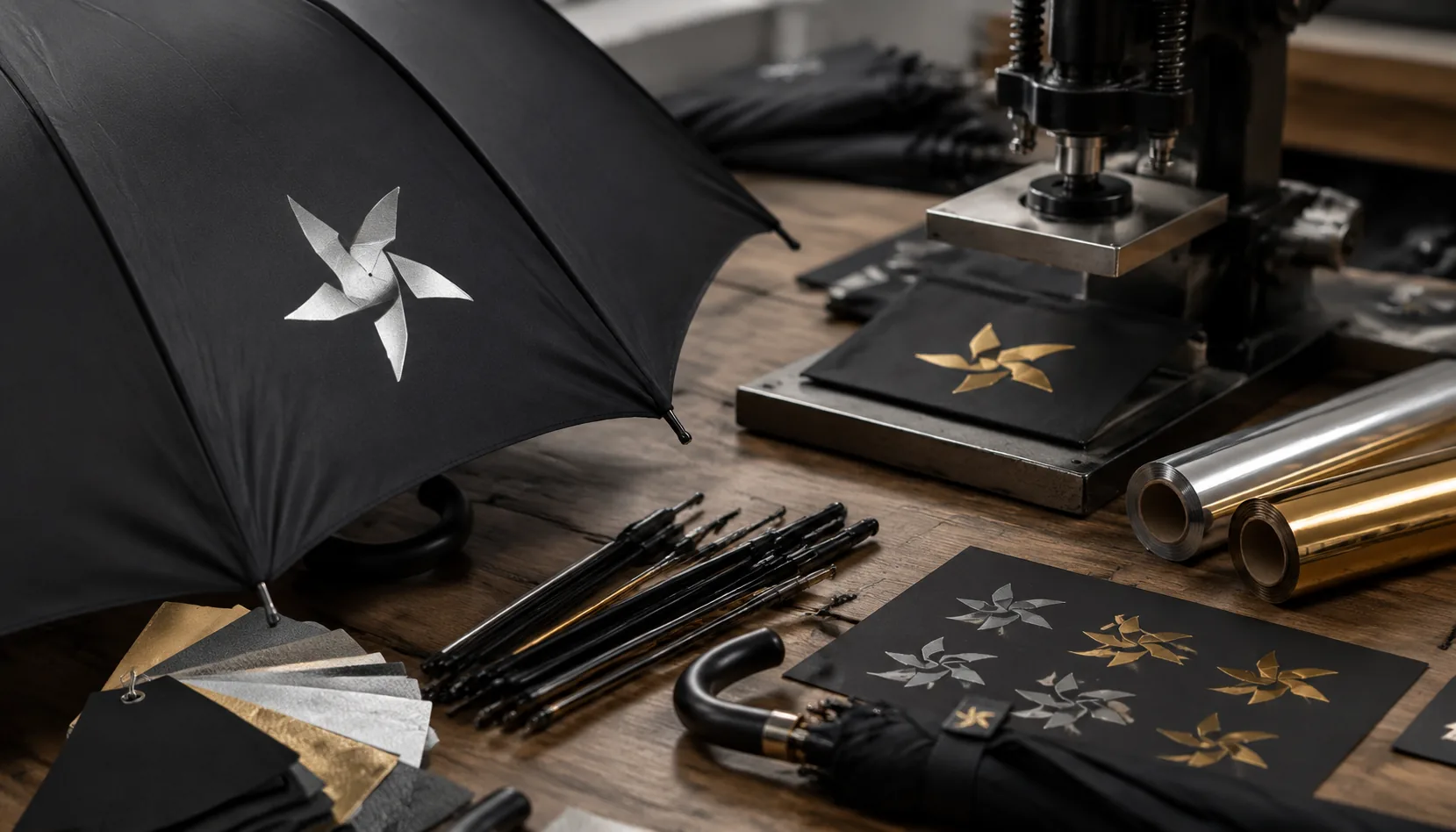
Metallic Logo Effects for Premium Branded Umbrellas
Compare metallic print and foil-style logo options for premium umbrellas, including durability, fabric fit, sampling, MO...
Read More »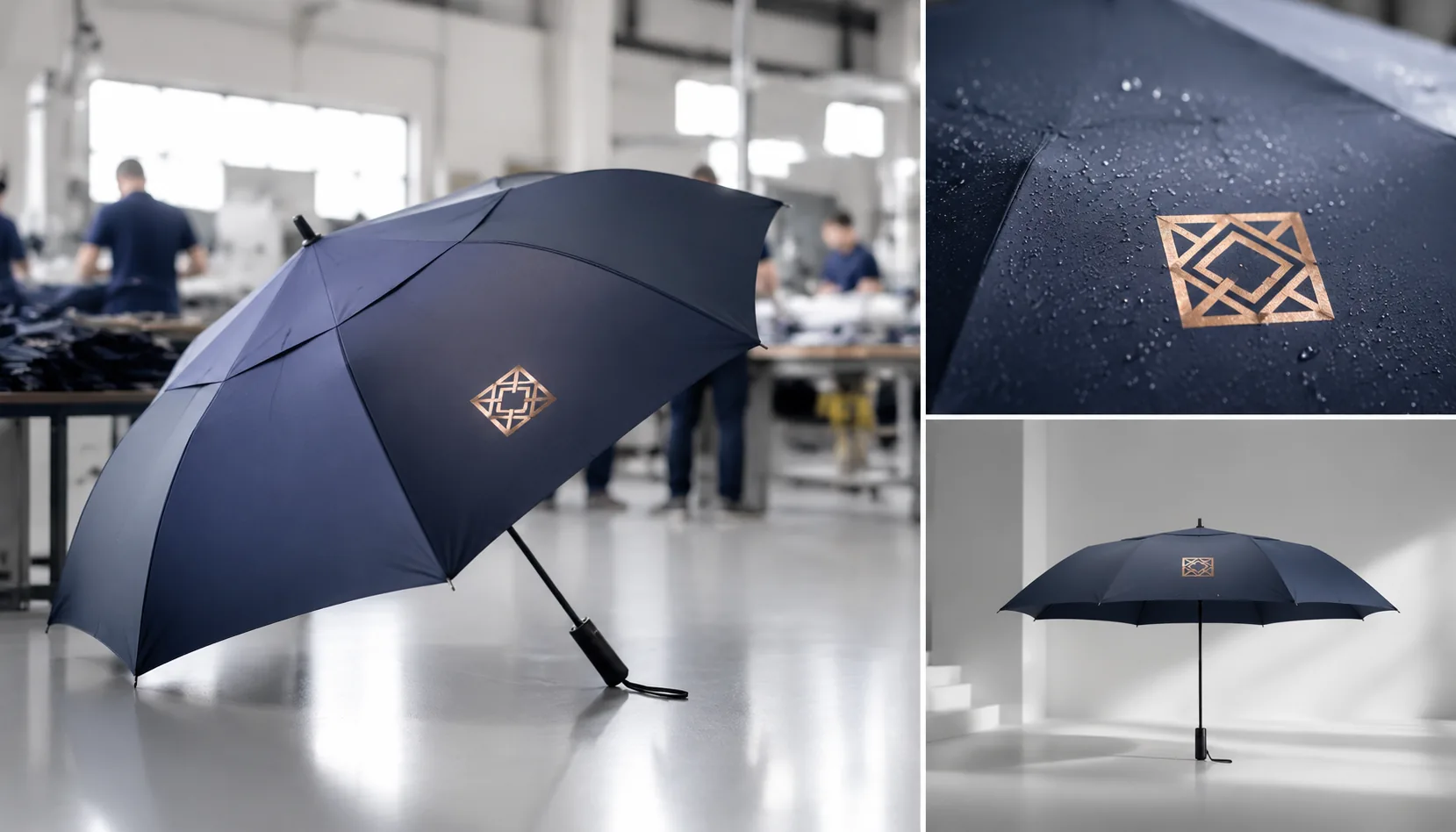
Metallic Logo Printing on Umbrellas for Premium Branding
Plan metallic logo umbrellas with the right fabric, print area, QC checks, MOQ, and lead time for premium corporate gift...
Read More »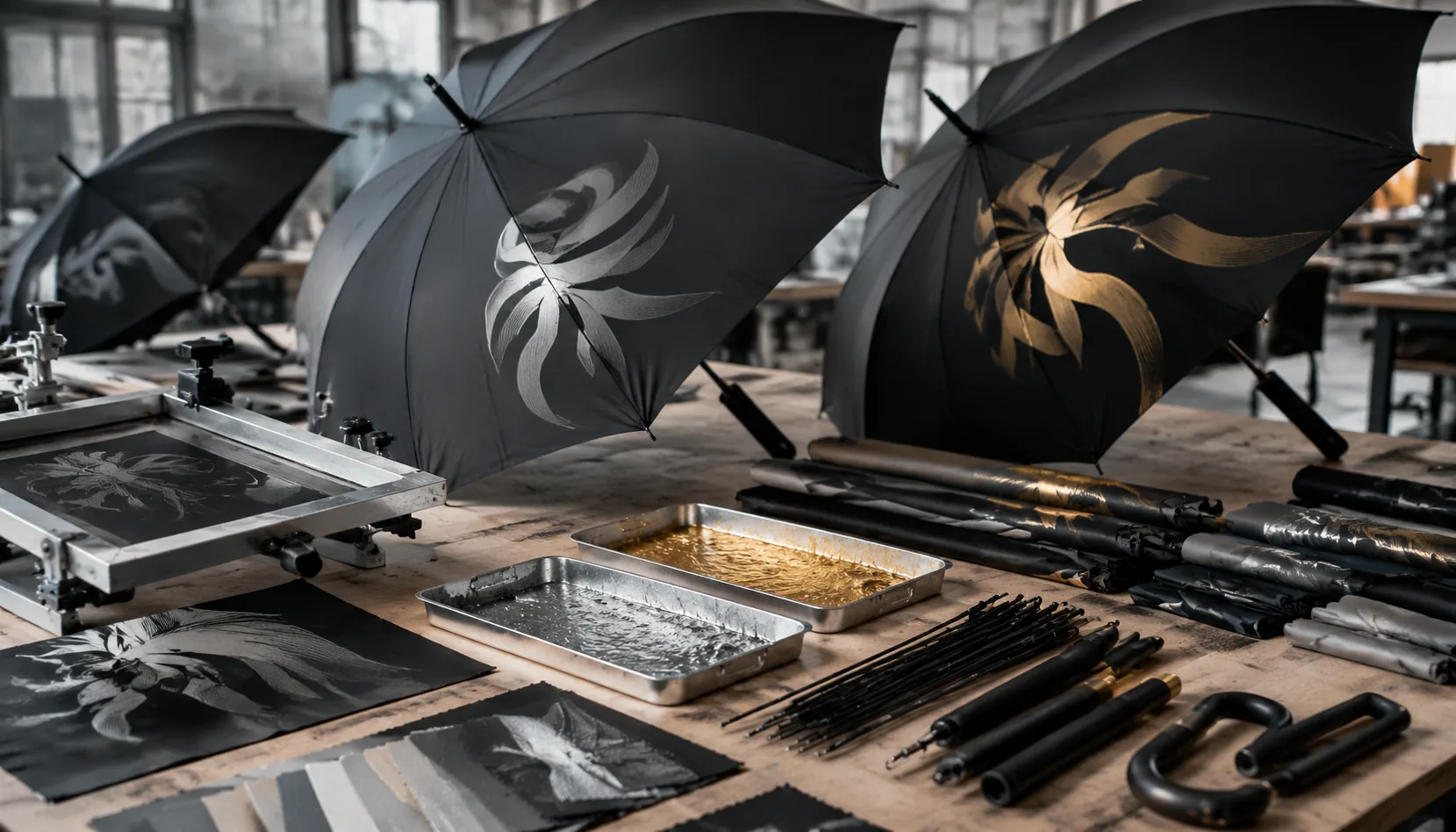
Metallic Ink Umbrella Logos for Premium Brand Programs
Plan metallic umbrella logos with the right fabric, ink, placement, and QC controls so premium brand programs look consi...
Read More »