Metallic Logo Printing on Umbrellas for Premium Branding
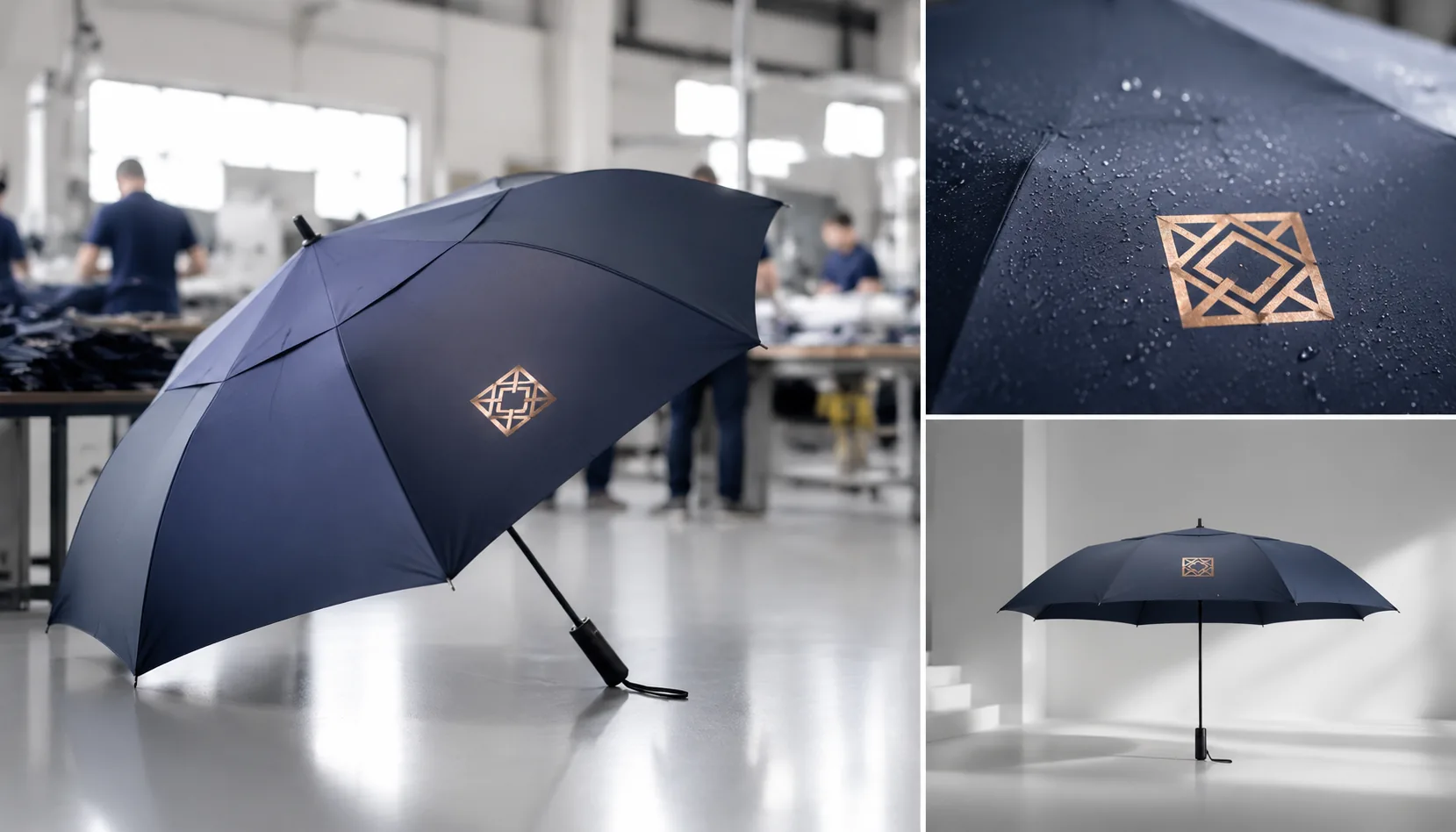
Premium buyers often approve a shiny logo sample, then discover the real challenge is keeping that metallic finish sharp across curved panels, mixed fabrics, and bulk production tolerances. On our umbrella lines in Songxia, metallic logo umbrellas require early decisions on fabric coating, print position, ink or foil system, curing, abrasion checks, MOQ, and lead time so the finished gift looks consistent from carton one to carton last.
Where Metallic Branding Adds Value
Metallic branding adds the most value when the umbrella is meant to feel kept, not handed out and forgotten. For corporate gift umbrellas, a silver, champagne gold, gunmetal, or rose-gold logo on black 190T/210T pongee gives a stronger executive look than ordinary white screen print, especially on 23" auto-open sticks, 27" golf umbrellas, and compact auto-open-close models. I like it for banks, real estate launches, automotive dealers, luxury hotels, and annual sales conferences where the buyer is already paying for fiberglass ribs, rubberized handles, Teflon coating, or UPF 50+ fabric. Metallic ink umbrella printing works best on dark, matte canopies because the contrast is clean and the shine is controlled. On clear POE/PVC domes it can look interesting, but adhesion testing matters more because slick films do not behave like woven pongee.
A foil-look transfer is better when the logo needs a sharper mirror effect than metallic ink can deliver. A true foil logo umbrella can look premium for retail capsules, VIP event merchandise, and hotel welcome programs, but it is less forgiving on curved panels and folded stress points. The artwork should avoid tiny serif text, thin outlines under 0.4 mm, and oversized solid blocks across seam areas, because repeated opening and closing can crease the transfer edge. For premium branded umbrellas, we usually recommend placing metallic artwork on one or two panels only, not all eight, so the product stays elegant and the unit cost remains reasonable. A double-canopy vented 30" golf umbrella with fiberglass 8K ribs and a restrained metallic mark often looks more expensive than a noisy full-panel print.
The tradeoff is setup discipline. Metallic logo umbrellas usually need a higher screen or transfer setup charge, extra ink-mixing control, and slower sampling than standard spot-color printing. A normal screen-print sample may take 5–7 days after artwork approval; metallic ink or foil-look transfer often needs 7–12 days because we test opacity, rub resistance, folding marks, and color shift under indoor and outdoor light. For bulk production, add 2–4 days if the order has multiple logo positions or mixed canopy colors. Our standard practice at ZheBrella is to run pre-production samples before mass cutting, then inspect print alignment, adhesion, and canopy stains under AQL 2.5. For corporate gift umbrellas with tight event dates, confirm artwork, Pantone metallic target, MOQ, FOB/DDP terms, and carton marks early; the premium impact is real, but rushing metallic work is how buyers get dull shine, poor registration, or late delivery.
Fabric, Canopy Color, and Logo Contrast
Metallic finishes look expensive only when the canopy surface is smooth enough to hold a clean edge. For metallic logo umbrellas, I normally steer buyers toward 190T or 210T pongee because the yarn is tight, the hand feel is flat, and the panel tension after sewing is predictable. 190T is common for promotional and corporate gift umbrellas because it balances cost and print stability; 210T gives a slightly denser face and better drape, which helps on premium branded umbrellas where the logo sits across one or two panels. On a 23" auto-open or 27" golf umbrella, a metallic logo printed over a well-cut pongee panel will keep sharper corners than the same artwork on oxford, jacquard, or heavy textured polyester. If the artwork includes thin serif type, hairline borders, or small registration marks under 0.5 mm, fabric choice matters more than rib count, handle finish, or packaging.
Canopy color changes the way metallic ink reads under daylight, showroom lighting, and event photography. Silver, champagne gold, rose gold, and gunmetal effects show strongest on black, navy, bottle green, burgundy, and charcoal canopies because the contrast is immediate. On white, beige, sky blue, or light gray fabric, metallic ink umbrella printing can look flatter unless the ink deposit is heavy or backed with a darker underbase. A foil logo umbrella can give a brighter flash than metallic screen ink, but foil transfer is less forgiving on curved panel seams and larger logos, especially when the logo crosses the bias tension of a canopy. Our standard practice at ZheBrella is to test metallic artwork on actual dyed pongee, not just a flat lab swatch, because the same gold can look warm on navy and slightly green on forest.
Textured fabrics and functional coatings create real limits that should be handled before bulk cutting. Jacquard, slub polyester, ribbed RPET, and matte rubberized surfaces scatter metallic particles, so the logo edge looks broken even when the screen mesh and squeegee pressure are correct. UPF 50+ coatings, black-out layers, PU back coatings, and some Teflon water-repellent finishes can also reduce ink bonding or foil adhesion; on those canopies, we run tape tests, wet rub tests, and opening-cycle checks before approving production. For premium jobs, I prefer keeping metallic logos under moderate size, away from seam peaks, and on single-color panels with enough blank space around the mark. If a buyer wants a very large metallic crest across a 30" double-canopy vented golf umbrella, I would sample both metallic screen print and heat-transfer foil, then inspect under AQL 2.5 criteria for pinholes, cracking, and uneven reflectivity.
Choosing the Decoration Method
Metallic screen ink is the most durable choice when the artwork is simple enough to hold on fabric. On 190T or 210T pongee, we normally print metallic silver, gold, gunmetal, or champagne ink through a 120–160 mesh screen, then cure it hard enough that it will survive folding abrasion better than most shiny transfer films. It is the right method for premium branded umbrellas when the logo has solid strokes above about 0.4 mm and no tiny reversed text. The weakness is edge sharpness: metallic particles make the ink thicker, so very fine lines can fill in, especially across seam allowance near the rib tips. For an 8K umbrella, one logo per alternate panel is economical because each panel is wide and easy to register. On 16K frames, panels are narrower, so oversized logos distort visually unless the artwork is split smaller or moved closer to the panel center.
Heat transfer is better for small logos, gradients, and multi-color marks because the image is printed on film first and pressed onto the canopy with controlled temperature and dwell time. For metallic logo umbrellas with a detailed corporate crest, a foil logo umbrella effect, or a PMS-color mark plus metallic outline, transfer gives cleaner edges than direct metallic ink umbrella printing. The tradeoff is hand feel and aging: a thick transfer can feel plasticky on 210T pongee and may crack sooner if the umbrella is repeatedly folded along the printed area. We keep transfers away from heavy crease lines and test adhesion after wet rubbing and 24-hour canopy recovery. Unit cost is higher than screen ink because every logo needs printed film, cutting, positioning, and heat-press labor, but it avoids multiple screens when the artwork has three or more colors.
Foil-effect decals give the brightest mirror finish, but I treat them as a decorative choice, not the strongest outdoor solution. Real foil shine comes from a laminated or hot-stamped film layer, and it looks excellent on black, navy, burgundy, and dark green canopy colors used for corporate gift umbrellas. It is the best option when the buyer wants a luxury retail look for an event giveaway, but it needs honest limits: fine serif text below 2.5–3 mm height may break, sharp corners can lift after repeated folding, and large foil blocks show wrinkles on curved panels. For 8K layouts, a 90–120 mm wide chest-style logo on one or two panels is safe. For 16K layouts, reduce the mark to 60–80 mm or repeat a smaller emblem across more panels so the foil sits flat between seams and ribs.
Frame Specs That Support Premium Positioning
A metallic logo looks expensive only if the umbrella frame feels expensive in the hand. For premium branded umbrellas, I recommend fiberglass ribs over painted steel because fiberglass flexes back after gust loading instead of taking a permanent bend. On a 23" or 27" straight umbrella, an 8K fiberglass frame is the safe baseline; 10K gives a denser, more stable canopy profile for retail or executive gifts, while 16K is mainly for luxury visual weight rather than true necessity. Pair that with a 190T or 210T pongee canopy so the metallic ink umbrella printing sits on a smooth, tight weave without the cheap shine of low-grade polyester. If the buyer wants windproof positioning, use a double-canopy vented construction with reinforced runner, tips, and rib joints, rated in our internal checks to survive 50+ mph wind-tunnel cycles without rib inversion failure.
Auto-open is worth the cost on corporate gift umbrellas because the mechanism is one of the first quality signals the recipient notices. A clean push-button open on a 23" straight umbrella or a 21" folding umbrella feels more premium than a basic manual slider, especially when the spring force is controlled and the runner does not slap against the notch. For folding models, auto-open-close adds perceived value, but it also needs stronger shaft sections and better QC on the closing spring, otherwise returns rise quickly after a few hundred cycles. Handles should match the brand tone: matte black EVA for tech clients, rubberized ABS for daily commuting, natural wood or leatherette wrap for executive programs. Matching the strap, sleeve piping, snap button, or handle ring to a foil logo umbrella is a small detail, but it makes the product look designed rather than assembled from stock parts.
Steel ribs still have a place when the order is cost-sensitive, especially for event giveaways, short campaign runs, or large MOQ distributor programs where the umbrella is used more as media space than as a long-term product. A steel 8K frame with a 190T pongee canopy can support metallic logo umbrellas at a lower FOB cost, but I would avoid promising serious windproof performance unless the shaft, stretcher, and rib thickness are upgraded. Steel is heavier and can rust if plating is weak, so nickel or black electrophoresis treatment should be checked during AQL 2.5 inspection, including salt-spray expectations if the umbrellas ship to coastal markets. Our standard practice at ZheBrella is to separate these tiers clearly: fiberglass and vented double canopy for premium positioning, steel frame builds for price-driven corporate gift umbrellas, with matching print method, handle, and packaging selected before sampling.
Sampling, QC, MOQ, and Shipping Terms
Pre-production sample approval is not optional for metallic ink umbrella printing because the same artwork can look very different on 190T pongee, 210T pongee, PVC, or POE panels. We normally make one physical PP sample using the confirmed canopy fabric, rib color, handle finish, and exact logo process before bulk cutting starts. For metallic logo umbrellas, the buyer should approve three things in writing: logo position relative to panel seams, metallic density under daylight and indoor light, and adhesion after opening and closing the frame several times. A silver ink that looks clean on a black 23-inch auto-open umbrella may look weak on navy 30-inch golf umbrellas unless we adjust the mesh count, squeegee pressure, or add a white underbase. For a foil logo umbrella, we also check edge sharpness because foil can break at fine serif text or small QR-code-style details.
QC should include rub testing, tape testing, and finished-goods inspection under AQL 2.5, not just a quick visual check at packing. On the line, I like to test metallic prints with 20 dry rubs and 10 wet rubs on a printed panel, then run an opening/closing cycle because the canopy folds exactly where ink layers are most likely to crack. For premium branded umbrellas, inspectors should check print registration, pinholes, metallic flaking, panel stains, frame alignment, rib tips, runner smoothness, and carton drop protection. Printed panels need more careful carton handling than plain umbrellas: each umbrella should be sleeved, high-gloss or foil prints should not be pressed face-to-face without tissue or OPP protection, and export cartons should use five-layer corrugated board if the shipment is moving by sea or mixed truck delivery. Our standard practice at ZheBrella is to pull packed cartons for final inspection before sealing the shipment, not after the goods are already palletized.
MOQ depends heavily on the process. Standard screen-print metallic ink can usually start around 300 to 500 pieces per design, while heat-transfer metallic logos often make sense from 500 to 1,000 pieces because film setup and positioning time are higher. Foil stamping on umbrella panels is more selective and usually starts around 1,000 pieces, especially when the logo spans multiple panels or needs tight repeatability. Lead time is typically 5 to 7 days for artwork confirmation and PP sampling, then 20 to 35 days for bulk production after sample approval, depending on whether the umbrella is a 21-inch folding model, 23-inch straight umbrella, or 27/30-inch golf frame with fiberglass ribs. For corporate gift umbrellas, buyers should request both FOB Ningbo or Shanghai and DDP destination quotes. FOB is cleaner when the buyer controls freight; DDP is better for event deadlines because duty, inland delivery, and customs clearance are priced upfront.
Frequently Asked Questions
Can metallic logos be printed on dark umbrella canopies?
Yes. Metallic ink and foil-effect transfers usually show strongest on black, navy, charcoal, and deep green 190T or 210T pongee. A strike-off sample is recommended before bulk production.
Do metallic umbrella prints last as long as standard screen prints?
They can perform well, but metallic effects need correct curing, adhesion checks, and rub testing. For high-use retail umbrellas, request AQL 2.5 inspection plus print adhesion checks during production.
What umbrella fabrics work best for metallic logo printing?
Pongee and high-density polyester usually give the cleanest metallic ink result because the surface is smoother than oxford fabric. For premium corporate gifts, 190T or 210T pongee is commonly used, with a pre-production print sample recommended before bulk production.
What MOQ should buyers expect for metallic logo umbrellas?
A typical factory MOQ is 500–1,000 pieces per design, depending on umbrella type, canopy color, and logo process. Metallic ink or foil effects may require a higher setup cost than standard screen printing because color matching and curing tests are needed.
How long does production take for custom metallic logo umbrellas?
Sampling usually takes 5–10 days after artwork confirmation, and bulk production commonly takes 25–40 days after sample approval and deposit. Extra time may be needed for PMS metallic color matching, special fabric sourcing, or retail packaging.
Looking to Launch Your Custom Umbrella Line?
ZheBrella is a Zhejiang-based OEM/ODM umbrella manufacturer with 17 years of export experience. Free design, low MOQ from 100 pieces, windproof construction, full-color print.
Get Free Quote Now »People Also Search For
Related Articles
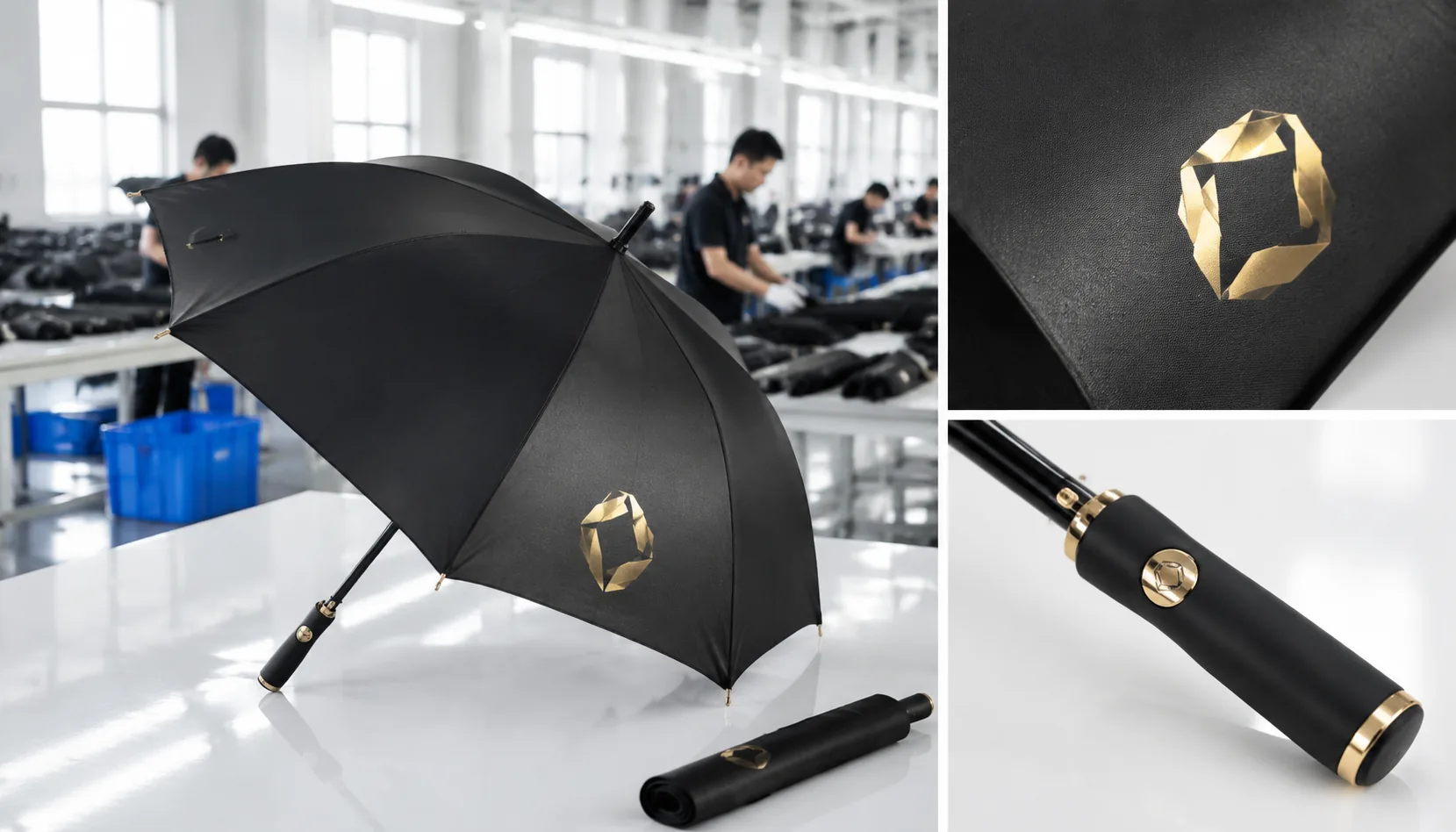
Metallic Logo Printing on Premium Branded Umbrellas
Compare metallic inks, foil transfers, and shimmer logos for premium umbrellas, with durability, MOQ, lead time, and ins...
Read More »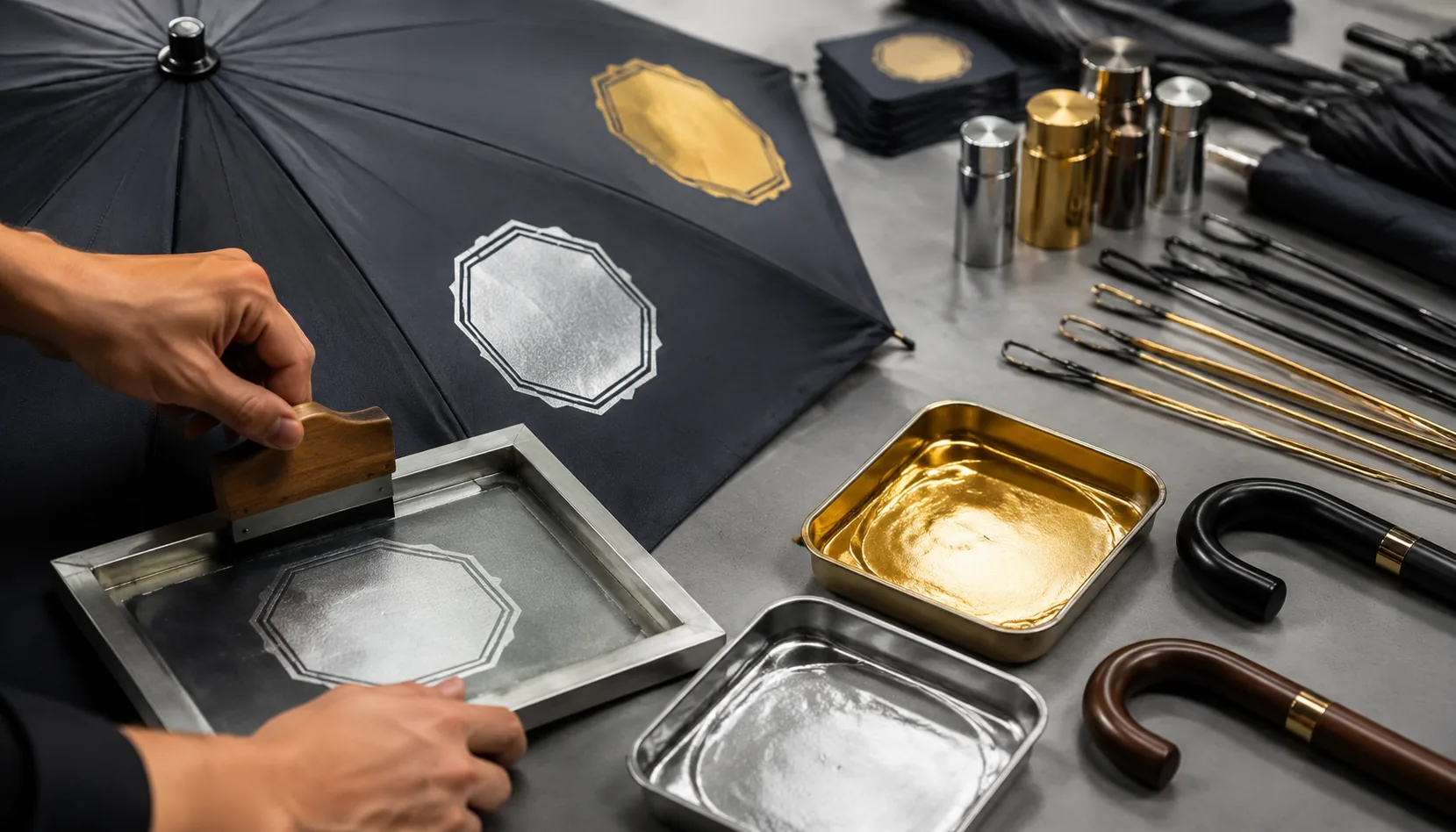
Metallic Logo Printing on Umbrellas for Premium Brand Programs
Compare metallic ink, foil transfer, and reflective effects for premium umbrellas, with durability, fabric, MOQ, and QC ...
Read More »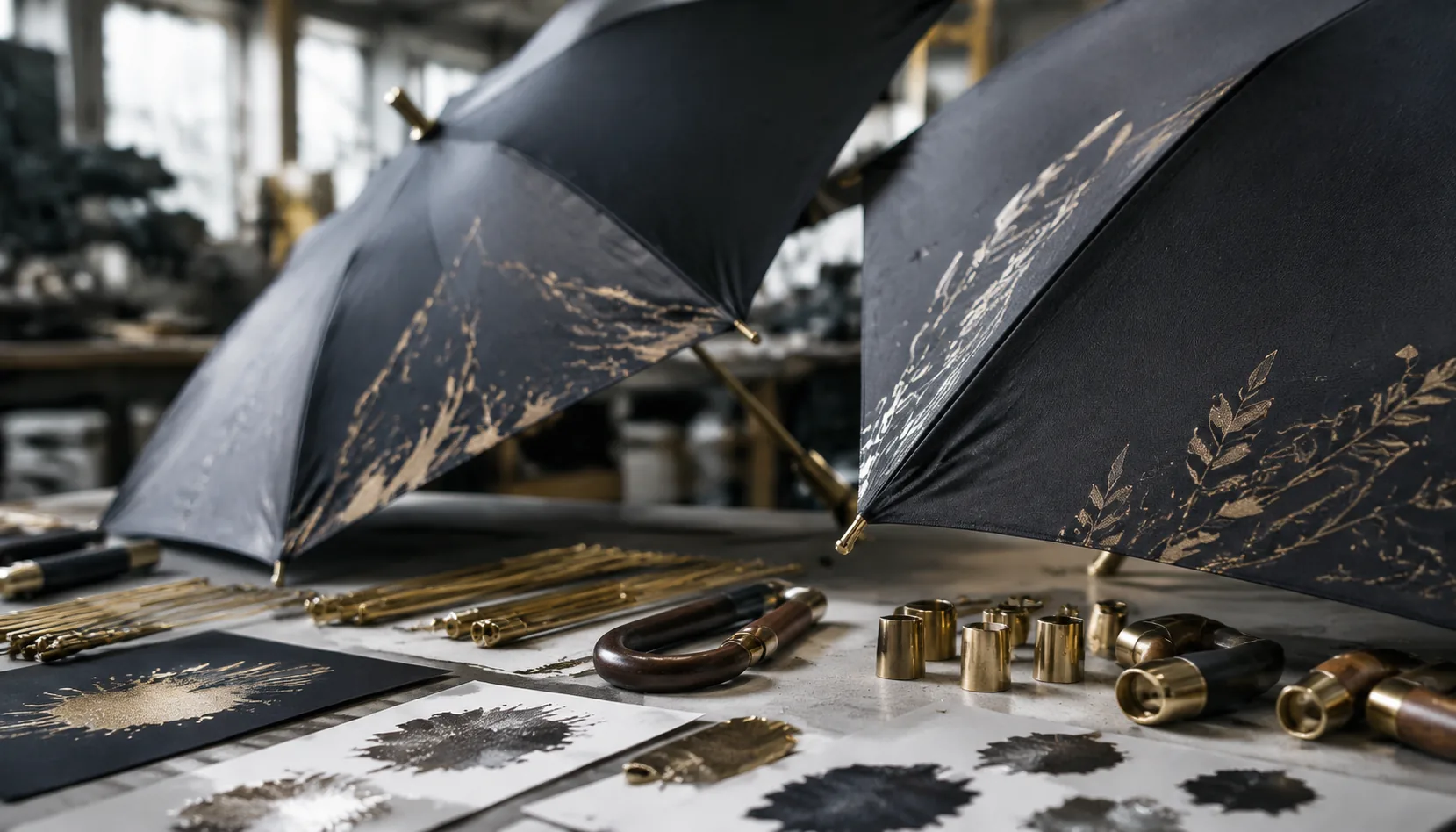
Metallic Ink and Foil Logos for Premium Umbrella Branding
Compare metallic ink and foil logo options for premium umbrellas, including fabric limits, durability tests, MOQ, sampli...
Read More »