Choosing the Right Umbrella Canopy Size for B2B Buyers
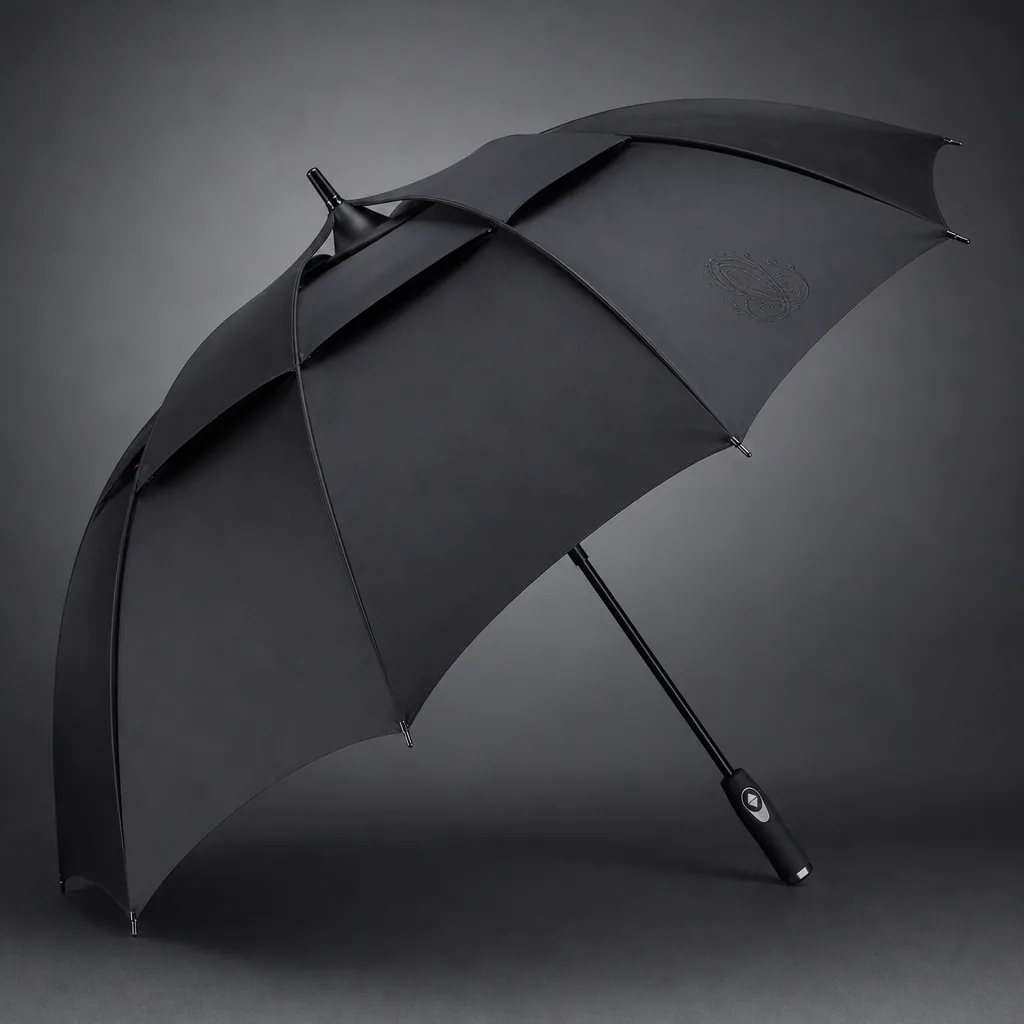
On the factory floor, canopy size is never just a diameter on a spec sheet; it affects coverage, frame load, carton size, freight cost, and how the umbrella feels in a customer’s hand. For B2B buyers ordering for events, retail shelves, or corporate gifting, an umbrella canopy size guide helps connect the intended use with the right arc, rib length, and packing plan before production starts.
How canopy diameter translates to real coverage
Use finished open diameter, not rib length, as the buying metric because dome depth changes real coverage. Two 23" frames can have similar ribs yet differ by 2" or more across the canopy. As an umbrella canopy size guide, a 21" compact umbrella usually opens to about 37"-39" and fits one commuter in mostly vertical rain, but coverage drops when the user carries a backpack or wide laptop bag. A 23" stick or folding umbrella typically finishes at 40"-42", giving one adult better shoulder protection plus a larger, cleaner print panel for a custom umbrella canopy. A 27" frame moves into shared coverage at roughly 48"-52", practical for two people over short walking distances or one staff member protecting samples. A 30" golf umbrella diameter can finish at 60"-68", depending on dome shape, and suits two adults, a golfer with bag, or temporary booth-side cover in light rain.
Procurement teams should treat diameter, dome depth, and frame specification as one decision. A shallow 30" canopy may look strong in promotional umbrella specs but shed side rain poorly; a deeper dome improves runoff and shoulder coverage. Once finished diameter exceeds about 54", specify 8K or 10K fiberglass ribs and consider a vented double canopy. Steel ribs at that span add weight and can bend after repeated gust loading. For commuter programs, 21" and 23" models usually beat larger frames because folded length, weight, and auto-open-close reliability drive daily use. A 21" 3-fold with 190T pongee carries easily but limits logo area. A 23" auto-open stick in 190T or 210T pongee usually gives better print balance and fewer wet-sleeve complaints.
For outdoor events, do not substitute a handheld umbrella for a patio umbrella. A 27" or 30" golf model can cover a registration chair, product sample case, payment terminal, or one staff member during light rain, but it will not protect a full 6-foot table unless mounted and angled. If staff escort guests from parking to entrance, 27" is often the lower-risk choice: large enough for two people, easier to control in crowds, and more carton-efficient than 30". ZheBrella confirms finished open diameter at pre-production because buyers often quote rib size while expecting coverage performance. For a clean umbrella canopy size guide in RFQs, list rib length, finished diameter, folded length, canopy fabric, frame material, rib count, and intended user count in the same line item.
Matching size to frame type and rib count
Start frame selection before changing rib count. For a 3-fold compact umbrella size, the practical canopy arc is 21" to 23", usually on an 8K frame so folded length, hinge load, and auto-open-close speed stay acceptable. Pushing a 3-fold design to 24" or larger overloads the short rib segments and joints, especially when wet 190T pongee adds fabric weight. A 2-fold frame can carry more canopy because it has longer rib sections and fewer flex points; 23" to 25" with 8K or 10K ribs suits most retail and travel programs. Straight umbrellas give buyers the widest range: 23" works for city use, 27" fits executive, hotel, and hospitality orders, and 8K or 10K frames cover most promotional umbrella specs without making the shaft feel heavy. A useful umbrella canopy size guide checks frame geometry first, then rib count, fabric weight, and opening force.
Rib count affects panel shape, sewing labor, wind-load distribution, and defect exposure; it is not a shortcut to durability. An 8K custom umbrella canopy has wider panels, fewer seams, and lower assembly time, which helps control unit cost, MOQ pricing, and AQL 2.5 appearance risk on 21", 23", and many 27" umbrellas. A 10K layout gives larger straight umbrellas a rounder profile and tighter fabric tension, useful when logos cross multiple panels and need a flatter surface for screen printing or heat transfer. A 16K frame creates a premium look and reduces canopy flutter, but it also adds rib tips, seam lines, and assembly steps. On low-cost painted steel ribs, that added hardware can increase weight without delivering proportional wind resistance. For cost-sensitive giveaways, 8K usually protects lead time; for retail, hotel, or gift programs, 10K or 16K can justify the higher FOB cost.
Golf umbrellas should be specified by coverage and frame strength, not only by catalog diameter. A typical golf umbrella diameter is 60" to 68" across the arc, often using 30" or longer ribs with 8K or 10K construction. At that span, fiberglass ribs are the safer choice when buyers need wind resistance because they flex and recover better than painted steel, especially on double-canopy vented models tested around 50+ mph under controlled conditions. Reinforced steel still works well in the shaft, runner, and stretcher system, but full steel ribs on a large canopy add carrying weight and deform more easily after inversion. For 210T pongee, UPF 50+ coated canopies, or vented golf models, ZheBrella pairs fiberglass ribs with stronger rib tips, then checks opening force, rib balance, and AQL 2.5 appearance defects before bulk approval. That keeps the umbrella canopy size guide tied to production risk, not just nominal size.
Fabric, coating, and weight trade-offs at each size
Fabric choice should follow diameter, frame strength, and decoration method. On a 21" compact umbrella size, 190T pongee is usually the best cost-weight option for promotional umbrella specs that prioritize high carton counts, low FOB unit price, and simple logo printing. At 23", 190T still fits giveaway and event programs, but 210T pongee is the safer choice when artwork has heavy ink coverage, the handle is upgraded, or the frame uses stronger fiberglass ribs instead of basic steel. For 27" and 30" golf umbrellas, use 210T as the baseline because the larger custom umbrella canopy has longer seam runs and more unsupported span between 8K or 10K ribs. The denser weave holds panel tension better after cutting and sewing, reduces post-rain sag, and keeps tip alignment cleaner. A practical umbrella canopy size guide should connect diameter with fabric behavior, not treat canopy size as a catalog label.
Coatings should be specified only when they reduce buyer risk or improve the end user’s experience. DWR coating adds value on 190T or 210T pongee for commuter, hotel, insurance, bank, and staff umbrellas because faster water shedding means fewer complaints about dripping in cars, lobbies, and offices. UPF 50+ is easier to justify on golf, outdoor retail, beach event, school sports, and long-exposure staff programs, especially 27" and 30" models where shade coverage is part of the product value. It is harder to defend on a basic 21" giveaway unless the campaign is tied to health, travel, or summer use. Coating also affects decoration risk. ZheBrella checks compatibility before mass printing because heat-transfer logos, sublimation panels, and silver UV backings can react differently under press temperature, folding stress, and repeated opening. Coated canopies should pass practical rub-resistance checks; a UV or water-repellent claim does not protect the buyer if the print scuffs during packing or use.
Larger canopies raise landed cost faster than many FOB or DDP comparisons show. A 21" compact umbrella may pack 50 or 60 pieces per carton depending on handle shape, while a 30" double-canopy golf umbrella may fall to 12 or 24 pieces per carton with much higher CBM per unit. Moving from 190T to 210T adds fabric weight, but carton volume is often the larger freight driver: shaft length, rib arc, handle bulk, and vented canopy construction all reduce container efficiency. For courier or air DDP, a golf umbrella diameter that looks efficient in a catalog can become expensive once dimensional weight exceeds actual weight. For sea freight, the same model can still work if MOQ, full-carton loading, pallet height, and warehouse handling are planned early. Ask suppliers to quote open diameter, folded length, unit weight, carton size, gross weight, and CBM together so the umbrella canopy size guide supports landed-cost decisions, not just product selection.
What procurement teams should confirm before sampling
Before approving samples, lock five dimensions on the spec sheet: open diameter, arc, rib length, shaft length, and folded length. Open diameter is the straight-line span across the fully opened umbrella; arc is measured over the canopy curve and will be larger. Mixing the two creates bad comparisons, such as matching a 23 inch stick umbrella against a 46 inch arc quote, or accepting a golf umbrella diameter of 60, 62, or 68 inches without knowing the measurement method. Rib length verifies the frame class: 21 inch for compact, 23 inch for standard stick, 27 inch for golf, and 30 inch for oversized event umbrellas. Shaft length and folded length affect carton size, shelf fit, courier limits, and freight cost, especially on auto-open-close designs. A usable umbrella canopy size guide should show all five measurements beside the drawing, not only a sales diameter.
Sampling must prove that the custom umbrella canopy, frame, and print layout work as one product. Check canopy symmetry from the top: rib tips should land evenly, the center cap should sit straight, and panels should not spiral around the shaft. On 8K and 10K frames, weak panel tension often shows first near the rib tips; on 16K promotional umbrellas, small cutting errors repeat across more panels and can shift a logo off center. Confirm fabric and finish before sign-off: 190T or 210T pongee, POE, PVC, or EVA, plus any Teflon coating, UPF 50+ requirement, or heat-transfer print process. Compact umbrella size samples need repeated open-close cycling because an overtight canopy can overload the spring. For golf umbrellas, state whether a double-canopy vent changes the effective coverage diameter the buyer will receive.
Tie sample approval to production inspection criteria. The runner should slide, lock, and release smoothly without scraping, wobble, or excessive hand force on manual, auto-open, and auto-open-close frames. Ribs should sit evenly; fiberglass ribs should recover after flexing, while steel ribs should have no burrs at stretcher joints. Use AQL 2.5 targets for major defects such as broken ribs, failed locks, severe canopy skew, exposed stitching, poor print registration, and water leakage after coating. Define these defects before the pre-production sample, then repeat the same checks during inline and final inspection. Complete promotional umbrella specs should also state MOQ, FOB or DDP terms, carton dimensions, and lead time, typically 25 to 45 days depending on printing method and order volume. This turns an umbrella canopy size guide into a purchasing control document that reduces cost, durability, and delivery risk.
How MOQ and lead time change with custom sizing
Nonstandard sizing raises MOQ because the factory is changing the physical build, not just the diameter on the spec sheet. A custom umbrella canopy can require new panel cutting markers, different fabric yield calculations, adjusted rib length, shaft balance checks, runner travel validation, revised carton dimensions, and sometimes a new frame mold or assembly jig. Stock 21 inch folding models, 23 inch straight umbrellas, and common 27 to 30 inch golf frames typically support 500 to 1,000 pcs per color on manual or auto-open frames with 190T pongee. A 24.5 inch arc, oversized 30 inch golf umbrella diameter, deeper dome, 10K fiberglass rib layout, POE/PVC/EVA canopy, UPF 50+ coating, or double-canopy windproof construction tested above 50 mph can move MOQ to 2,000 to 5,000 pcs because fabric cutting, frame sourcing, packaging, and QA setup must be locked before bulk production.
Lead time increases for the same reason: custom sizing adds engineering and approval steps before fabric cutting starts. Standard promotional umbrella specs using stock frames, 190T or 210T pongee, and simple screen or heat-transfer printing can often move from artwork approval to bulk production in 25 to 35 days. OEM/ODM custom sizes usually need 7 to 12 days for sample development, covering frame fit, canopy tension, opening-force checks, print-position review, and carton drop estimate. Buyers should also allow 3 to 5 days for comments or revisions, then 35 to 55 days for bulk production depending on rib count, fabric treatment, and packaging. For DDP shipments to the U.S. or EU, plan from vessel cutoff or air booking, not the factory completion date, especially when delivery is tied to a retail launch or event.
Use an in-stock size when the priority is lower unit cost, faster replenishment, or fixed event delivery. Stock 21 inch compact umbrella size, 23 inch stick umbrellas, and 27 to 30 inch golf models usually give better pricing, cleaner AQL 2.5 inspection scheduling, and fewer FOB carton surprises. Choose a custom spec only when it protects margin or brand position: a retail line needs a distinct silhouette, a golf buyer requires a defined coverage diameter, or the product must match a premium handle, fiberglass 16K frame, Teflon finish, or UV positioning. A practical umbrella canopy size guide should start with selling channel, target landed cost, and delivery deadline. If those three factors cannot absorb higher MOQ plus 10 to 20 extra days, select the closest proven stock size and reserve custom tooling for a larger OEM/ODM program.
Frequently Asked Questions
What canopy size is most cost-effective for corporate giveaways?
A 21" to 23" canopy is usually the best balance of cost, portability, and print area. It keeps freight lower than a golf-size umbrella while still giving enough branding space for logos.
Does increasing canopy size automatically improve wind performance?
No. A larger canopy can catch more wind unless the frame is upgraded with fiberglass ribs, stronger stretcher joints, or a double-canopy design. Buyers should evaluate size and construction together.
How do arc size and open diameter affect umbrella specifications?
Arc size measures the curved canopy edge from tip to tip, while open diameter measures the straight-line width across the opened umbrella. For example, a 48-inch arc umbrella may have an open diameter around 41-43 inches, so buyers should confirm which measurement is used before approving samples.
Which canopy size is most practical for corporate gifting orders?
For general corporate gifting, 42-48 inch open diameter umbrellas are common because they balance coverage, unit cost, and carton efficiency. Larger 54-62 inch golf umbrellas create stronger perceived value but increase freight volume and are better suited for executive gifts or outdoor events.
Does a larger umbrella canopy significantly change shipping cost?
Yes. Larger canopies usually require longer ribs and shafts, which increases carton length and cubic volume. For sea freight this may affect CBM more than unit weight, so buyers should compare packed size, pieces per carton, and total CBM before finalizing a bulk order.
Looking to Launch Your Custom Umbrella Line?
ZheBrella is a Zhejiang-based OEM/ODM umbrella manufacturer with 17 years of export experience. Free design, low MOQ from 100 pieces, windproof construction, full-color print.
Get Free Quote Now »People Also Search For
Related Articles
Choosing the Right Umbrella Canopy Size for Each Buyer Segment
Compare canopy sizes by buyer segment so you can match coverage, portability, branding space, and shipping efficiency to...
Read More »
How to Specify Umbrella Canopy Sizes for B2B Orders
Learn how canopy diameter, arc, and open coverage affect use cases, freight, and branding when specifying umbrellas for ...
Read More »
Choosing Umbrella Sizes for Retail, Events, and Travel Use
Compare umbrella sizes by use case, canopy diameter, and packaging needs so buyers can match specs to retail, event, and...
Read More »