Choosing UV Umbrellas for Events, Retail, and Outdoor Use
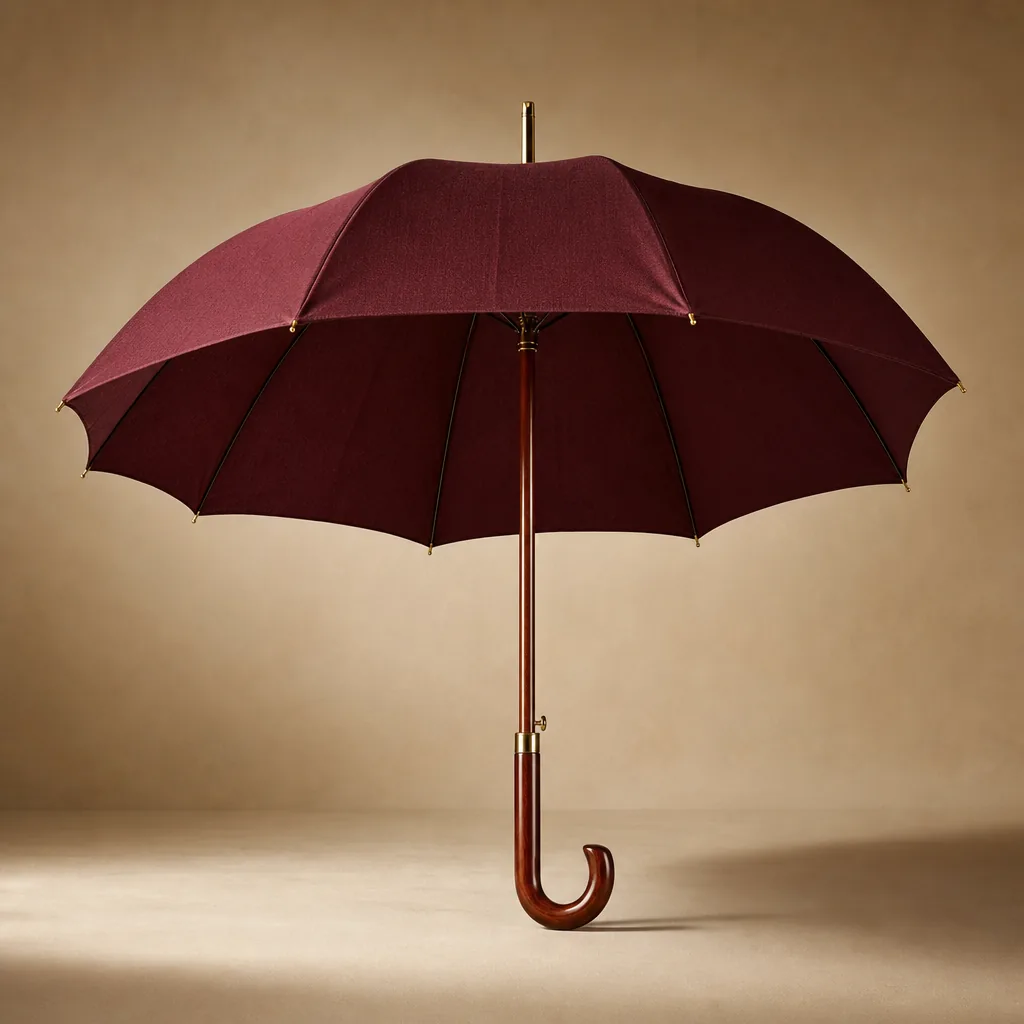
Buying a UV protection umbrella looks simple until you have to match fabric, coating, frame strength, and price to very different use cases like event giveaways, retail shelves, and outdoor operations. On the factory floor, the real issues are consistent UPF performance, color fastness, wind resistance, opening smoothness, and whether the build can survive bulk handling and repeated use without turning into returns. The right choice depends less on appearance than on how the umbrella will actually be packed, carried, opened, and sold.
What Makes an Umbrella a True UV Model
A true UV protection umbrella is defined by its canopy system, not by the logo, frame color, or a dark-looking fabric. A basic rain umbrella may use standard 190T polyester or pongee mainly for water shedding; a UV-focused build typically uses tighter 190T or 210T pongee plus a functional layer such as black PU, silver coating, acrylic, or laminated film on the face or underside. That added layer blocks and reflects ultraviolet radiation; visual darkness alone does not. In sun umbrella sourcing, buyers should request the exact fabric spec, coating type, and rib count—such as 8K or 16K—before comparing packaging or branding. A dark canopy with no UV coating can still transmit UV through weave gaps, especially on lower-density fabric, so “looks opaque” is not a usable buying standard.
Visual opacity is not proof of protection. A proper UPF 50+ umbrella should be supported by a lab test showing at least 98% UV blockage under measured conditions, because a thick-looking or black canopy can still underperform if the weave is loose, the coating is thin, or seam coverage is inconsistent. For outdoor event umbrellas and retail umbrella specifications, ask whether the darker underlayer runs continuously across seams, corners, and stitch lines; those are common leak points in low-grade UV builds. The safest spec ties appearance to measurable construction: 190T or 210T pongee, a coated underside, continuous seam coverage, and a documented UPF result. If a supplier cannot explain how the canopy achieves a test-backed UPF 50+ rating, they are selling a rain umbrella with sun styling, not a true UV model.
Fabric and Coating Specs Buyers Should Compare
Start with the canopy build, because the fabric spec drives both perceived quality and service life. For a UV protection umbrella, 190T pongee is the standard entry-level option: lower material cost, lighter carry weight, and a flatter surface for logo printing. The tradeoff is hand feel and durability. It can read thin at retail and is more likely to show wrinkling or pinholes after repeated folding if seam quality is inconsistent. 210T pongee uses a denser weave, gives a fuller drape, and usually looks more premium on shelf; it also tends to recover its shape better after open-close cycles. For sun umbrella sourcing, do not stop at the fabric name. Ask for the exact pongee spec, seam construction, color fastness grade, and sample photos after folding tests. Those details matter more than a carton label when umbrellas will sit in a storefront, travel in cars, or be used daily at outdoor events where sun, sweat, and handling accelerate wear.
Coating choice changes heat control, appearance, touch, and long-term claim risk. Silver UV coatings typically reflect more heat and can keep the space under the canopy cooler during prolonged direct-sun use, which makes them practical for outdoor event umbrellas. The downside is cosmetic: silver surfaces show scuffs, fold abrasion, and coating wear earlier, especially on high-contact panels. Black coatings usually create a cleaner interior look, block visible light more effectively, and hide staining and fold marks better, so they fit retail programs where presentation matters. They can also feel less harsh to the touch, depending on coating weight, but they absorb more heat on the exterior. A true UPF 50+ umbrella depends on the full canopy system—base fabric, dye, and coating—not a sprayed finish alone. Buyers should request UV test data, lightfastness results, rub resistance, and confirmation that the coating passes flexing and heat-aging checks without chalking, peeling, or turning sticky. That is the difference between a sample that sells well and a program that survives one full summer season.
Frame, Size, and Mechanism Choices for Sun Use
Match the frame to how the umbrella will be carried and how often it will be used outdoors. A straight-frame UV protection umbrella is the safer specification for daily sun duty because the shaft is more rigid, the canopy opens more evenly, and the frame can support thicker fiberglass ribs without making the grip awkward. For event ushers, golf-course staff, and queue teams, a 23-inch or 27-inch straight umbrella with 8K ribs is the practical baseline. In wind-exposed settings, fiberglass ribs are the better buy: they flex and recover after gusts, while plated steel is lower cost but more likely to take a permanent bend. A steel shaft can still work for cost-sensitive programs, but a full fiberglass frame lowers corrosion risk and improves durability over repeated outdoor use. For commuter use, travel retail, or handbag carry, a 21-inch compact is easier to carry and store. The tradeoff is service life: folding frames have more joints, runners, and wear points, so they usually do not last as long as straight frames in outdoor event umbrellas used every day.
Mechanism choice affects failure risk, user convenience, and how well the frame handles a heavier sun canopy. Manual open remains the lowest-risk option for tight-budget promotional orders and low-MOQ programs. For retail umbrella specifications, auto-open is usually the better balance because it allows one-hand deployment without the extra spring stress of auto-open-close. That matters on a UPF 50+ umbrella using 190T or 210T pongee with a black UV undercoating, since the added fabric weight and coating increase opening resistance. On compact frames, especially 10K designs, that higher load puts more wear on the notch, runner, and rib joints, so opening-cycle and rib-tension testing should be completed before mass production. Canopy size also changes cost and logistics. A 30-inch straight umbrella gives better shoulder and bag coverage than a 21-inch compact, and a 16K frame creates a rounder retail silhouette, but both add weight, fabric consumption, and packed volume. A 23-inch 8K packs efficiently for sun umbrella sourcing; 27-inch and 30-inch units reduce carton efficiency and increase FOB or DDP freight because cube rises, not just total kilos.
Best Specs by Buyer Scenario
For outdoor event umbrellas, start with exposure time and wind, not canopy color. If guests or staff will stand in direct sun for more than 20 to 30 minutes, specify a UV protection umbrella with black- or silver-coated 190T or 210T pongee tested to UPF 50+. For queue lines, wayfinding, and general crowd control, a 27-inch straight model with 8K fiberglass ribs is the practical baseline: about 450 to 520 grams, rust-resistant, and light enough for repeated use by staff. If the venue is exposed and afternoon winds regularly reach 25 to 35 mph, step up to a 30-inch golf-style frame with double-canopy venting. Better wind-rated builds can keep their shape past 50 mph before inversion, which lowers replacement risk more than upgrading the handle. For one-day activations, screen printing on solid pongee is usually the safest branding choice. If the design includes gradients or destination imagery, heat transfer or sublimation gives cleaner output, but lead time typically shifts from about 25 days to 35 to 45 days after artwork approval and fabric booking.
Resort and tourist retail has different economics: the umbrella must sell after the trip, not just at the beach gate. A UPF 50+ umbrella usually earns its added cost in high-UV destinations, open promenades, and pool or beach retail, where shoppers notice a denser canopy, a labeled underside coating, and a larger open diameter that shades shoulders instead of only the head. The safest retail umbrella specifications are 23-inch or 27-inch stick models in 8K or 16K with fiberglass ribs, 190T pongee, and EVA or wood-look handles; POE and PVC fit transparent rain styles better than prolonged heat exposure. For souvenir shops, avoid golf-umbrella weight unless the target retail price supports it, because heavy units get handled and put back. Require AQL 2.5 inspection, barcode placement that scans without rebagging, and carton counts sized for limited back-room space. For corporate summer promotions, a lower-cost auto-open frame is usually enough if it uses fiberglass ribs and a genuine UV coating; custom MOQ commonly starts at 500 to 1,000 pieces per colorway, FOB is standard, and DDP helps control landed cost. Daily commuters are the opposite case: if sun exposure is occasional, a standard 21-inch or 23-inch rain umbrella in 190T pongee is usually sufficient, and budget is better spent on smoother auto-open-close action, tighter frame tolerances, and fewer rib-joint failures.
How to Validate Claims Before Placing the Order
Do not buy a UV protection umbrella on brochure copy alone. Ask for the finished-fabric UPF 50+ test report and verify the test was run after coating, lamination, and printing, not on untreated 190T or 210T pongee. For sun umbrella sourcing, check coating consistency across the full roll: resin loading, pigment dispersion, and any heat-aging or colorfastness notes. If the canopy is POE or PVC, the report must match the exact construction you will receive. Also ask for sample photos or lab notes showing whether the same fabric passed both UV and rain-use conditions, since a canopy that looks fine in a dry demo can fail after folding, wet-dry cycling, or heat exposure.
Sample approval should cover both rain and sun-use evaluation before you release the PO. Test open-close cycling, spray or shower resistance, seam and stitch quality, and one UV exposure check on the actual sample. For retail umbrella specifications, define AQL 2.5 inspection points in advance: canopy seam straightness, panel alignment, print placement, shaft finish, rib symmetry, tip attachment, and mechanism function. If you are comparing 8K, 10K, or 16K frames, state the acceptable cosmetic tolerance and confirm the rib material, because fiberglass and steel change cost, weight, and wind performance. For outdoor event umbrellas, this is where most disputes are prevented: the buyer and factory need the same defect standard before mass production starts.
Before you issue the order, lock MOQ, replenishment lead time, and Incoterms in writing. Confirm the minimum order quantity for each SKU and the number of days needed for replenishment after sample approval; first orders and repeat orders often differ in fabric, handle, or frame options. Get a clear FOB or DDP quote and define what is included. FOB should name the port handoff, usually Ningbo or Shanghai. DDP should state duty, inland delivery, and who pays port-delay charges. Put the inspection plan in the PO as well: AQL 2.5, carton count, defect categories, and whether third-party inspection is required. That keeps cost, lead time, and quality risk under control before production starts.
Frequently Asked Questions
Does a silver-coated umbrella always provide better UV protection than a black-coated one?
Not always. UV performance depends on the full material system and test result, not coating color alone. Buyers should ask for UPF 50+ documentation from the factory or lab.
Are UV umbrellas suitable for both rain and sun?
Many are, especially when built with pongee canopies and standard water-repellent finishing. Buyers should still confirm whether the coating, frame, and seam construction were designed for dual-use rather than sun-only merchandising.
What umbrella fabric construction is best for consistent UV protection in retail and event programs?
For reliable UV performance, buyers usually choose polyester or pongee with a UV coating or laminated backing rather than a standard printed canopy. Ask for UPF test data on the finished canopy, not just the raw fabric, since stitching and panel construction can affect real-world protection.
What frame features should procurement teams request for outdoor event umbrellas?
For outdoor event use, look for fiberglass ribs or a reinforced metal frame, plus a wind vent if the umbrella will be used in open areas. Many programs also specify 190T or 210T canopy fabric, 8-rib construction, and a manual or auto-open mechanism depending on user volume.
What is a typical MOQ and lead time for custom UV umbrellas?
A common MOQ for OEM/ODM UV umbrellas is 1,000 to 3,000 pieces per color or design, depending on canopy material and printing method. Sample lead time is often 7 to 10 days, while bulk production usually takes 25 to 40 days after sample approval.
Looking to Launch Your Custom Umbrella Line?
ZheBrella is a Zhejiang-based OEM/ODM umbrella manufacturer with 17 years of export experience. Free design, low MOQ from 100 pieces, windproof construction, full-color print.
Get Free Quote Now »People Also Search For
Related Articles
Choosing a Sun Umbrella for Outdoor Retail and Events
Learn how to specify UV protection, canopy fabric, and wind-resistant construction when sourcing sun umbrellas for retai...
Read More »UPF 50+ Sun Umbrella Materials for Outdoor Retail Buyers
Compare fabrics, coatings, and frame specs for UPF 50+ sun umbrellas so buyers can source durable products for retail an...
Read More »
UPF 50+ Umbrellas: Choosing Fabrics, Coatings, and Frames
Learn how to specify UPF 50+ umbrellas with the right fabric, coating, frame, and venting for outdoor retail, events, an...
Read More »