Classic Stick Umbrellas: OEM Specs for Retail Rain Lines
For retail rain lines, the wrong stick umbrella spec often shows up late: ribs that feel undersized, J handles that loosen after carton testing, or logo panels that distort after sewing. When we build classic stick umbrellas OEM programs on the factory floor in Songxia, we lock the 23–25 inch frame, auto-open action, pongee weight, handle fixing, MOQ plan, and AQL checks before sampling so buyers can price cleanly and avoid production surprises.
Where Classic Stick Umbrellas Fit in a Product Line
Classic stick umbrellas belong in the part of a rain line where perceived value matters more than pocket convenience. A 23 inch stick umbrella with a straight or J handle gives a full walking canopy, usually around 102 to 105 cm arc coverage depending on rib curvature, so it feels like a proper city umbrella rather than an emergency item. For department stores, hotel lobbies, museum shops, and corporate gift programs, that longer silhouette also photographs better and presents a cleaner brand surface than most 3-fold models. When buyers ask for classic stick umbrellas OEM, I usually steer them toward 8K fiberglass ribs for better recovery after gusts, a steel center shaft for cost control, and 190T or 210T pongee with water-repellent finishing. That combination keeps the item solid in hand without pushing it into luxury pricing.
Compared with compact folding umbrellas, stick umbrellas win on frame simplicity and walking comfort. A 3-fold frame has more joints, more rivets, and more sliding parts; every added hinge is one more place for looseness after repeated opening. A stick frame is longer, but the rib geometry is cleaner, the canopy tension is easier to control, and the umbrella tracks better when walking in wind. For retail, 23 inch umbrella specs are the safe middle ground: big enough for adult use, not too long for carton packing, and easier to merchandise than oversized 27 inch golf models. J handle umbrellas also give hotels and offices a practical advantage because users can hang them on counters, coat racks, and luggage handles instead of laying wet umbrellas on the floor.
Shelf presentation is another reason a long handle umbrella supplier will keep stick models in the core range. A straight shaft with a wood-look crook handle, matte black EVA handle, or ABS color-matched J handle gives retailers a visible “good, better, best” structure without changing the whole canopy pattern. Auto open stick umbrellas are especially strong for corporate gifts and commuter retail because the mechanism feels premium, yet the cost increase over manual open is controlled if the spring, runner, and tips are standardized. Our standard practice at ZheBrella is to test opening force, runner lock security, rib symmetry, and canopy seam alignment before AQL 2.5 final inspection, because stick umbrellas are displayed open more often than compact umbrellas. If the frame is crooked or the logo panel pulls off-center, the defect is immediately visible on a sales floor.
Size, Rib Count, and Coverage Specs
For classic stick umbrellas OEM programs, the first spec I lock down is rib length, because it drives both coverage and carton size. The common retail range is 23 to 25 inches measured along the rib, not across the open canopy. A 23 inch stick umbrella usually gives about a 46 to 48 inch arc and a true open diameter around 39 to 41 inches, depending on canopy depth and panel curve. A 25 inch model may show a 50 to 52 inch arc but only about 43 to 45 inches of usable diameter. Buyers often confuse arc with diameter on spec sheets; arc follows the fabric curve over the top, while diameter is the straight-line shade width. For 23 inch umbrella specs, I normally suggest 8K ribs, 190T or 210T pongee, a 14 mm steel shaft or fiberglass shaft, and a J handle for department-store and promotional rain lines.
Rib count changes the look and stability more than many buyers expect. An 8K frame is the standard for J handle umbrellas because it balances weight, cost, and easy canopy tension; it is also faster to assemble and inspect on a production line. A 16K frame gives a rounder, more premium canopy profile and spreads wind load across more ribs, but it adds labor, more tips, more stitches, and usually 8 to 15 percent higher frame cost. For auto open stick umbrellas, I prefer 8K or 10K unless the buyer is deliberately building a premium retail item, because 16K plus an auto-open spring can make the umbrella feel heavy if the shaft and runner are not selected properly. A long handle umbrella supplier should confirm rib material early: steel is economical and straight, fiberglass improves rebound, and mixed steel shaft plus fiberglass ribs is common for windproof retail lines.
Choose a standard single-user canopy when the umbrella is for daily commuting, gift-with-purchase, hotel rooms, or supermarket retail. In that lane, 23 inches is usually enough, the closed length stays manageable around 34 to 36 inches, and FOB cost remains predictable even with Teflon coating, UPF 50+ coating, or one-position screen printing. Move to a larger premium stick umbrella when the buyer wants stronger shelf presence, better shoulder coverage, or a product positioned above basic convenience umbrellas. A 25 inch 8K or 16K model works well for executive gifts, golf-adjacent retail, and high-end department stores, but it increases fabric consumption, frame torque, and shipping volume. In our ZheBrella spec reviews, we also check whether the open diameter matches the target user: around 40 inches is comfortable for one person, while 44 inches and above starts to feel like a premium coverage umbrella rather than a compact urban rain tool.
Frame Materials and Opening Mechanisms
For classic stick umbrellas OEM programs, the frame choice should be made before canopy artwork, because it drives weight, failure rate, carton size, and retail price. A steel shaft with steel ribs is still the lowest-cost build for 23 inch umbrella specs, especially for supermarket and promotional rain lines, but it is heavy and can permanently bend after a strong gust. A common 8K steel frame with 190T pongee usually lands around 430–480 g depending on handle material. Fiberglass ribs on a steel shaft are the better mid-range option: the shaft keeps the umbrella straight and affordable, while fiberglass outer ribs flex instead of kinking. For J handle umbrellas aimed at department stores, I prefer a 14 mm steel shaft with fiberglass ribs and stretchers over thin all-steel frames, because returns from bent ribs cost more than the small material saving.
Full fiberglass builds are not automatically premium unless the geometry is right. A 23 inch 8K full fiberglass frame is lighter in the hand and more corrosion-resistant, but if the rib wall is too thin, the umbrella feels loose after 500–800 open-close cycles. For windproof positioning, a hybrid frame with fiberglass ribs, steel stretchers, and a double-canopy vent often performs better than a cheap full fiberglass frame in a 50+ mph wind-tunnel test. On larger 27 inch and 30 inch stick umbrellas, fiberglass becomes more important because longer ribs multiply wind load; steel ribs on big golf-style stick umbrellas are false economy. A practical long handle umbrella supplier should quote frame weight, rib diameter, shaft diameter, and cycle-test standard, not just say “windproof.” Our standard practice at ZheBrella is to match rib count to use case: 8K for retail basics, 10K for stronger shelf appeal, and 16K only when the buyer accepts extra weight and cost.
Auto open stick umbrellas need more attention than many buyers give them. The spring should open the canopy cleanly without a violent snap, and the runner must travel smoothly on the shaft without scraping, wobbling, or sticking halfway. For retail AQL 2.5 inspection, I like to test at least 20–30 open-close cycles per sampled unit, plus check button rebound, runner lock engagement, and spring noise. A weak spring makes the umbrella feel cheap; an overpowered spring increases pinch risk and can tear the runner notch after transport vibration. For classic stick umbrellas OEM orders, specify a plastic safety runner, rounded notch edges, and a pinch-prevention sleeve or wider runner grip, especially for family retail channels. Manual open is still acceptable for low-price J handle umbrellas, but auto-open mechanisms sell better in North America because customers expect one-hand operation when leaving a car or storefront.
Canopy Fabric, Coatings, and Handle Styles
For classic stick umbrellas OEM programs, canopy fabric is usually where retail quality is won or lost. A basic 190T pongee is acceptable for price-point rain lines, especially on 23 inch umbrella specs with 8K steel ribs, but it has a slightly looser hand and less premium drape than 210T. I usually recommend 210T pongee for department-store or branded retail because it prints cleaner, sheds water faster after coating, and holds panel tension better after sewing. Polyester taffeta can reduce cost, but buyers should expect more shine, more noise in rain, and weaker perceived value on shelf. For transparent fashion lines, POE is better than PVC because it stays softer in cold weather and has less odor, though it needs careful heat control during packing to avoid panel distortion.
Waterproof performance comes from both fabric density and finishing, not fabric alone. A standard PU or PA coating is enough for daily rain, while Teflon-style water-repellent finishing improves bead-off and drying speed, which matters for retail returns because customers judge an umbrella within the first three uses. If the line is positioned for sun and rain, specify black UV coating or silver UV coating with tested UPF 50+ rather than vague “UV protection” wording. On 23 inch and 27 inch stick models, darker outer colors with UV backing hide coating variation better than pale colors. Our standard practice at ZheBrella is to confirm coating hand-feel after printing, because heavy screen ink, heat transfer logos, or all-over sublimation can change how the canopy folds into the strap.
Handle style changes the whole retail message of J handle umbrellas. A curved plastic J handle is the safest mass-market choice for grocery, drugstore, and promotional rain lines because it hangs well on racks and feels familiar to shoppers. Wood-look PP or real wood raises the perceived value for classic stick umbrellas OEM orders, especially with a matching ferrule and darker canopy colors like navy, black, burgundy, or forest green. Straight handles and EVA grips look more sport-oriented; they pair better with fiberglass ribs, double-canopy vented frames, and windproof claims. For auto open stick umbrellas, check the button position against the handle shape before approving PP samples, because a nice-looking handle that pinches the thumb or fires too hard will fail buyer evaluation even if the canopy sewing is perfect.
Sampling, MOQ, Packaging, and QC Priorities
For classic stick umbrellas OEM programs, MOQ depends less on the stick shape and more on fabric color, printing method, and handle tooling. A plain 23" 8K pongee model with a stock black or navy canopy can usually start around 500–1,000 pcs per color, while custom Pantone 190T/210T pongee, molded J handle umbrellas, or private-label ferrules push the practical MOQ to 1,200–3,000 pcs. Pre-production samples should not be treated as photo props; they must lock the rib material, shaft diameter, runner fit, spring strength, canopy tension, logo position, and packaging before bulk cutting starts. For 23 inch umbrella specs, I normally confirm arc diameter, closed length, panel count, rib length tolerance, fabric GSM, coating requirement such as Teflon or UPF 50+, and whether the buyer wants manual open or auto-open stick umbrellas.
Logo placement is where many retail rain lines lose time. Panel printing gives better shelf impact, but each panel must be registered before sewing, especially on 8K or 16K layouts where artwork crosses seams. Strap logos are cheaper and safer for replenishment orders because the strap can be printed separately by heat transfer, woven label, or screen print with lower rejection risk. A long handle umbrella supplier should provide a marked sample showing top notch, strap direction, handle grain or coating, and sleeve fit, not just a digital mockup. Retail packaging usually includes a matching fabric sleeve, barcode sticker, hangtag, silica gel when required, and 12/24/36 pcs inner or master carton packing. Carton size should match the umbrella length tightly; too much empty space causes handle rubbing, bent tips, and crushed runner buttons during sea freight or courier DDP delivery.
QC priorities should be written into the PO, not argued after shipment. Our standard practice at ZheBrella is AQL 2.5 for major defects, with function testing on auto-open springs, runner locking, rib alignment, canopy symmetry, seam leakage, fabric stains, pinholes, skipped stitches, cracked handles, loose tips, and sharp burrs on metal parts. For auto open stick umbrellas, the open force must be strong enough to lock cleanly but not so aggressive that it shocks the notch or tears the top cap after repeated cycles. I also require water spray testing on random samples and a carton drop check on at least one export-packed carton per SKU, especially for retail cartons with display hangers. A classic stick umbrella looks simple, but a weak carton or misaligned rib will create returns faster than a minor shade difference in the canopy.
Frequently Asked Questions
What is the most common size for a classic stick umbrella?
A 23 inch 8K stick umbrella is a common retail and promotional baseline. Premium programs may move to 24 or 25 inch ribs, 16K ribs, or fiberglass components for stronger positioning.
Should a stick umbrella use steel or fiberglass ribs?
Steel ribs keep cost lower and provide a solid traditional feel, while fiberglass ribs improve flexibility in wind. Many OEM buyers choose a steel shaft with fiberglass ribs as a balanced mid-range specification.
What rib lengths are most common for retail stick umbrella programs?
For classic retail rain lines, 23 inch and 25 inch rib lengths are the most common. The 23 inch size is easier to merchandise for everyday carry, while 25 inch models give more coverage and a slightly more premium feel.
How much print area is available on a J handle stick umbrella?
Most OEM stick umbrellas allow logo printing on 1-2 panels, with each panel typically offering enough space for a 1-color or 2-color logo. If you need larger branding, the canopy placement and panel count should be confirmed before sampling.
What inspection standard is typical for bulk umbrella orders?
Many importers use AQL 2.5 for major defects and 4.0 for minor defects on umbrella shipments. For retail programs, it is also common to check opening/closing function, rib alignment, fabric tension, and handle fit during final inspection.
Looking to Launch Your Custom Umbrella Line?
ZheBrella is a Zhejiang-based OEM/ODM umbrella manufacturer with 17 years of export experience. Free design, low MOQ from 100 pieces, windproof construction, full-color print.
Get Free Quote Now »People Also Search For
Related Articles

Best Stick Umbrella Specs for Retail and Corporate Buyers
Compare stick umbrella frames, canopies, handles, and QC checkpoints for retail, corporate gift, and uniformed service s...
Read More »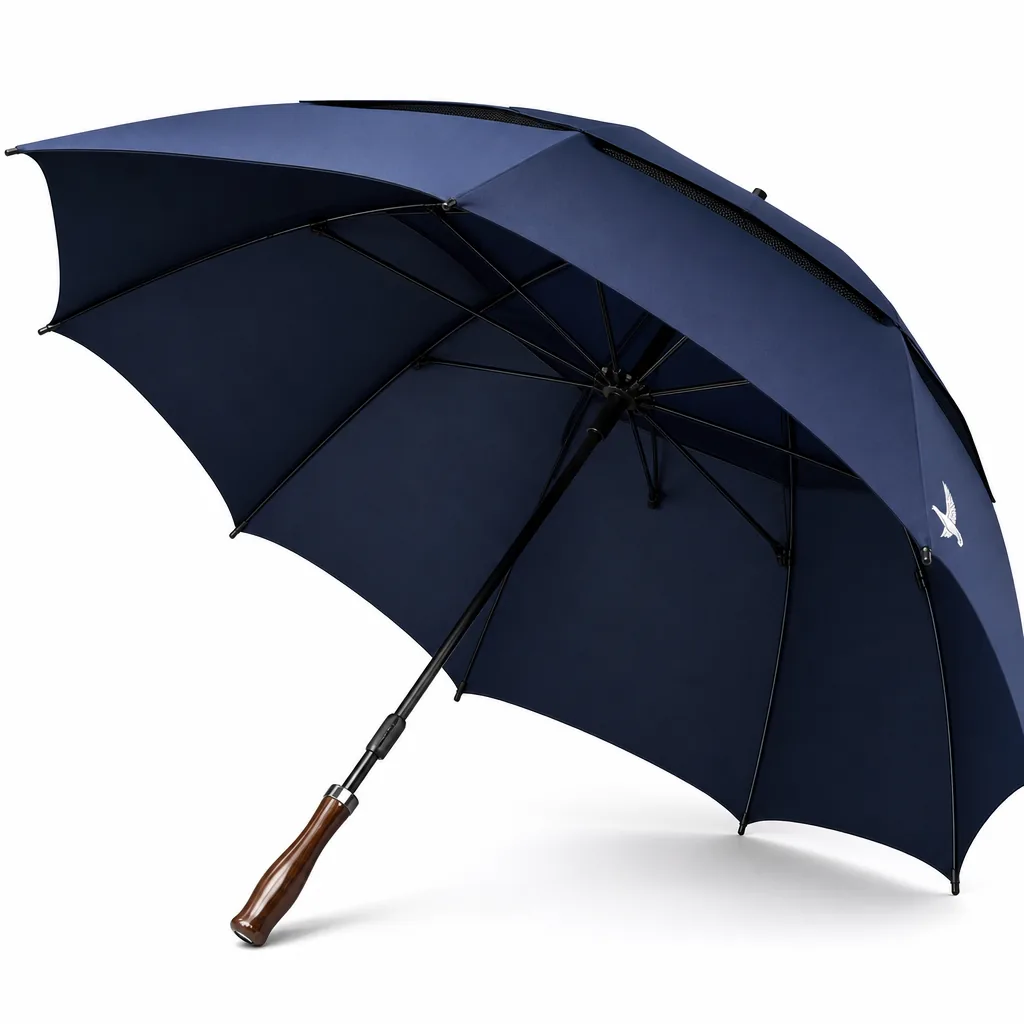
Long Stick Umbrellas: Buyer Guide to 23-Inch Retail Builds
Compare 23-inch stick umbrella specs for retail programs, including ribs, shafts, fabric, handles, MOQ, QC, and shipment...
Read More »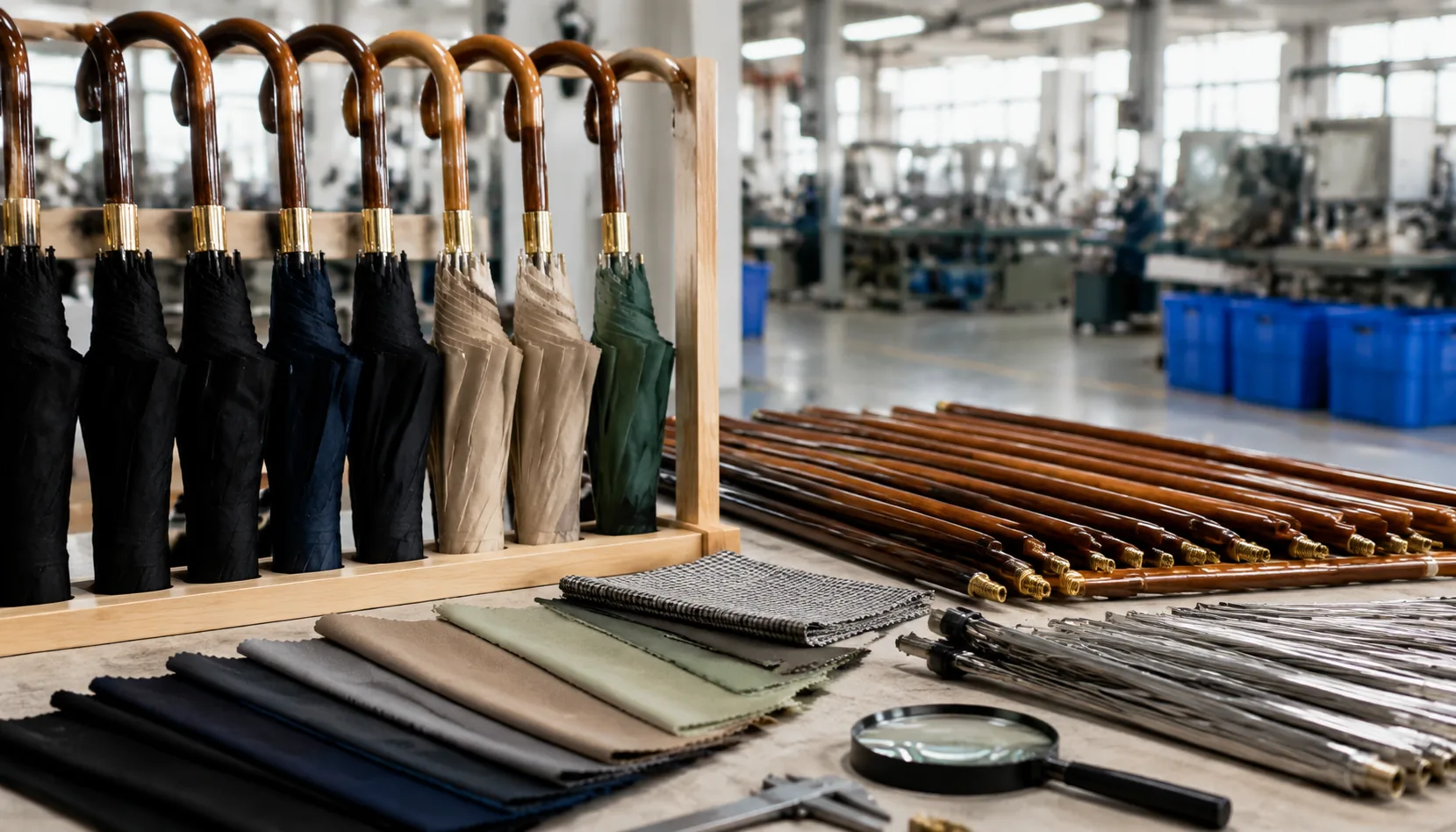
Cane Handle Stick Umbrellas: Buyer Specs for Retail Brands
Specify cane handle stick umbrellas with 8K frames, 190T/210T pongee, auto-open options, and QC checks for retail and gi...
Read More »