Long Stick Umbrellas: Buyer Guide to 23-Inch Retail Builds
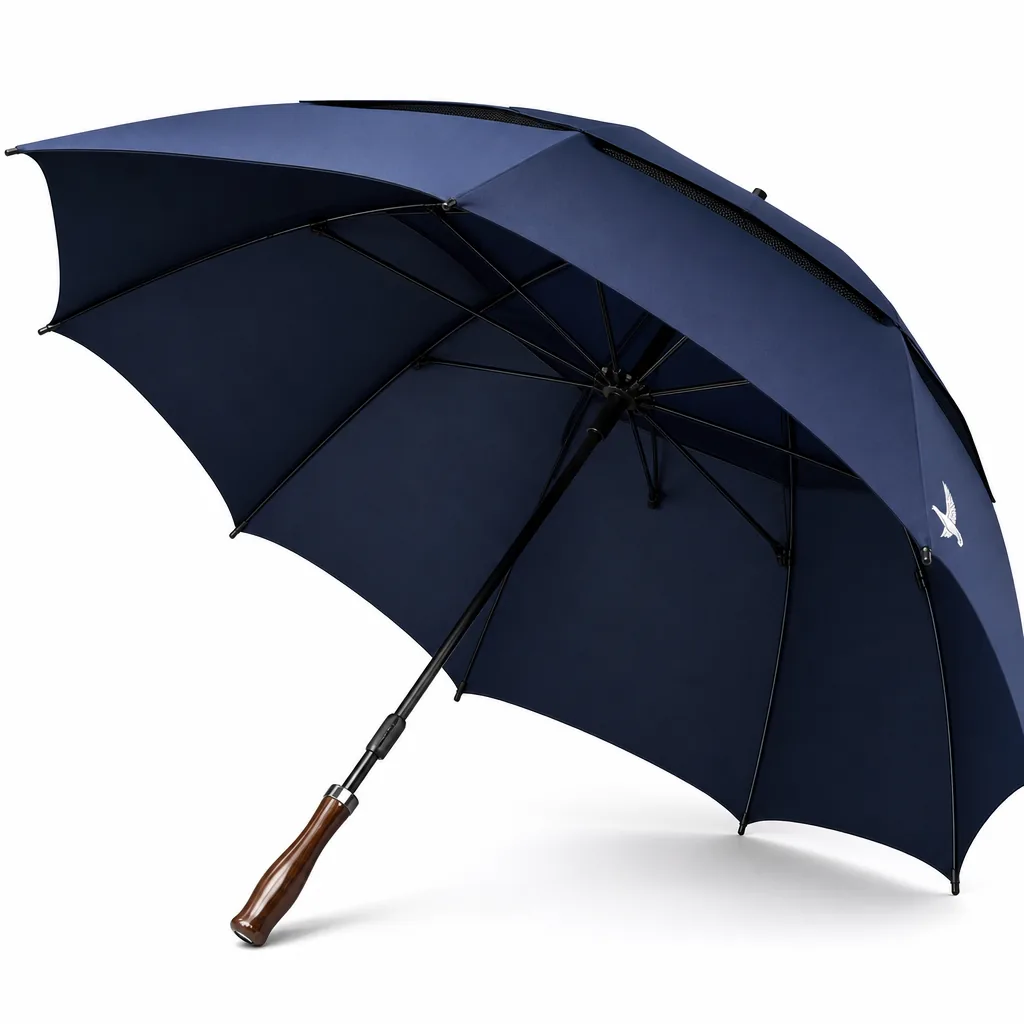
For retail buyers, the hard part is not finding 23 inch stick umbrellas; it is knowing which build will survive store returns, mixed weather, and repeated shelf handling at the target price. On our factory floor in Songxia, we judge a 23-inch long stick program by the full spec stack: rib material and count, shaft strength, pongee density, handle fixing, print control, carton packing, MOQ, QC checkpoints, and shipment terms.
Define the 23-Inch Stick Umbrella Use Case
Specify 23 inch stick umbrellas when the program needs a full-size retail rain umbrella for one adult, not a golf canopy or a folding bag umbrella. The 23-inch dimension refers to rib length; a standard 8K frame typically opens to about 39-41 inches across the arc and closes at roughly 33-35 inches, depending on ferrule, tip, and handle selection. Finished weight usually lands at 420-560 g with a steel shaft, or 360-480 g when fiberglass ribs are paired with a lighter aluminum or fiberglass shaft. That size works for department-store fixtures, corporate gift programs, hotel front desks, and commuter rain use because it covers an adult plus a laptop bag without creating problems in sidewalks, subway entrances, elevators, or lobby traffic.
The 23-inch stick build sits below golf umbrellas in coverage, frame load, carton cube, and daily carry friction. A 27-inch or 30-inch golf umbrella may open 48-60 inches wide, but that added canopy increases shelf space, shipping volume, and wind load on the frame. For retail rain umbrellas, the 23-inch format keeps the long-handle profile while allowing clear cost tiers: 8K steel ribs for price-sensitive programs, fiberglass rib umbrellas for better rebound after gusts, and 10K frames when the buyer wants a fuller canopy presentation without moving into golf size. A 190T pongee umbrella is the usual retail baseline because it sheds water faster and feels cleaner than polyester taffeta; 210T pongee, Teflon coating, or UPF 50+ treatment can support a higher shelf price when the target FOB cost allows it.
For long umbrella OEM orders, the 23-inch stick frame also gives cleaner branding and fewer mechanism risks than compact frames. Straighter canopy panels accept screen printing, heat transfer, or sublimation with less logo distortion than folding ribs create, while J-handles and straight EVA handles can carry logo plates, hangtags, and barcode labels. Manual open is the lower-risk choice for hotels and value retail because it avoids spring and push-button failures; auto-open fits corporate gifts where perceived value matters. Compared with 21-inch compacts, 23-inch long umbrellas have fewer moving joints, less frame play, and usually fewer AQL 2.5 mechanism defects when the spring, runner, rib rivets, and shaft fit are locked before sampling.
Choose Frame Materials and Rib Count
For 23 inch stick umbrellas, the frame choice that matters most in retail is not shaft diameter alone but how the shaft and ribs behave together under gust load. A full steel frame is the cheapest route: steel shaft, steel stretcher, steel ribs, usually with black electroplating to slow corrosion. It gives a crisp open-and-close feel and keeps unit cost down, but it also adds noticeable weight and tends to take a permanent set once the umbrella is blown inside out. The better-balanced build for retail rain umbrellas is a steel shaft with fiberglass ribs. You still get a rigid center pole for straight tracking and good tip alignment, but the fiberglass outer ribs flex and recover instead of kinking. On the factory floor, that difference shows up during wind testing: a mixed frame will usually survive repeated inversion cycles that would leave a full steel frame visibly bent even if no parts actually break.
If the target is entry-price retail, 8K is usually enough. An 8-rib 23-inch umbrella opens cleanly, holds a stable round shape, and controls material consumption on canopy panels, tips, and sewing time. With a standard 190T pongee umbrella canopy, 8K also prints more efficiently because each panel is wider, so logos and repeats can be scaled without getting crowded by seam lines. Moving to 16K changes the visual message more than the weather performance. Customers read more ribs as "premium" because the canopy looks denser and the silhouette more refined, but every extra rib adds hardware, labor, and alignment points. In long umbrella OEM programs, a 16K frame can raise unit cost materially even before you upgrade the fabric or handle, simply because assembly time is slower and reject risk is higher.
My rule is straightforward: use 8K for mass-market daily carry, 10K when you want a small step up in shape retention, and 16K only when shelf presentation is doing part of the selling. A 16K build can feel smoother in the hand because the canopy drape is more even and the closed profile looks slimmer, but it is not automatically stronger than a well-made 8K with fiberglass rib umbrellas construction. What matters is rib thickness, joint fit, runner quality, and whether the ferrule and notch are properly seated. At ZheBrella, our standard practice is to reserve 16K for gift, department-store, or fashion-led programs where buyers accept a longer lead time by several days and a higher MOQ for custom tooling or color-matched components. For most 23 inch stick umbrellas, steel shaft plus fiberglass ribs in 8K remains the most defensible cost-to-performance choice.
Specify Canopy Fabric and Rain Performance
For 23 inch stick umbrellas, specify canopy fabric as a return-risk item, not only a cost line. 190T pongee is the practical baseline for retail rain umbrellas because it supports clean screen or heat-transfer logos, wraps neatly around a long shaft, and feels better than low-grade polyester promo fabric. It is the right choice for entry and mid-volume long umbrella OEM orders when the factory controls coating consistency, panel cutting, and stitching. Move to 210T pongee when the retail price point is higher, the canopy uses solid dark colors, the logo has broad coverage, or opacity matters on shelf. The denser fabric gives a smoother print face and better coverage, but it increases material cost and adds slight bulk when closed. For a 190T pongee umbrella, require a consistent water-repellent finish, even fabric lot color, and panel matching before mass production approval.
Rain performance comes from finishing control more than the 190T or 210T label. Ask the factory to quote the exact water-repellent treatment: a Teflon-style finish normally gives faster runoff and a cleaner hand feel than basic PU, while fluorine-free finishes should be checked for durability after repeated open-close cycles. Inspect seam quality before approving bulk production. Saleable canopies need straight seams, no skipped stitches, no puckering, and no enlarged needle holes near rib tips. Panel tension should stay even from the top cap to each rib pocket; backlighting the canopy quickly shows rippled edges, distorted panel symmetry, and pull points where water can pool. If the same 23 inch stick umbrellas must serve both sun and rain markets, lock that requirement in the quotation. A black underside coating improves shade perception on dark models, while UPF 50+ fabric is the stronger technical option when the finished canopy is tested after printing. For higher-spec fiberglass rib umbrellas, an 8K frame suits normal city use; 10K holds canopy shape better under gust load.
Match Handles, Tips, and Opening Mechanisms
Handle selection changes both freight math and shelf position on 23 inch stick umbrellas. A molded PP J handle remains the practical choice for department-store, school, and uniform programs: it hangs cleanly on retail hooks and is comfortable for wrist carry in steady rain. Its cost is carton efficiency. Compared with a straight grip, a large J handle typically adds about 8-15 mm of packed width per unit, reducing nest efficiency in 24-piece or 36-piece export cartons and pushing up freight cost per piece. Straight EVA grips fit commuter and sport-oriented retail rain umbrellas better and pack tighter because there is no hook-to-hook dead space. Wood-effect handles sit in the middle on brand positioning. They raise perceived value, but if the part is ABS with hydro-dip or transfer grain instead of solid wood, require abrasion and sweat testing before sign-off; low-grade film finishes often show visible wear after one selling season.
Specify the opening system with the frame, shaft, and trim as one build, not as an isolated upgrade. For long umbrella OEM programs, auto-open is the standard mid-tier option because it gives one-handed use without the added cost and return exposure of auto-open-close hardware. On 23 inch stick umbrellas, auto-open works best with fiberglass rib umbrellas when the goal is fewer bent-frame complaints; steel ribs are cheaper, but they recover less reliably after inversion unless wire gauge is increased. A 190T pongee umbrella canopy is also a better retail choice on a 23-inch frame because it gives sharper panel definition and cleaner print registration than lower-density polyester. Finish with functional trim, not decorative trim: the ferrule should match shaft diameter and resist rotation, rib-end safety tips need smooth radii and consistent cap seating, and the runner should maintain safe pinch clearance. Check tip pull strength and open-close cycle performance before AQL 2.5 final inspection. If the budget is tight, spend on an anti-scratch plated ferrule and safe tip geometry before ornate handle shapes that add cube without improving comfort.
Confirm MOQ, QC, and Shipping Terms
Lock commercial terms before artwork approvals. For 23 inch stick umbrellas, a stock-frame sample with a solid canopy typically takes 3-5 days. A custom sample using 190T pongee umbrella fabric, color matching, and trims such as a woven label, handle badge, or hangtag usually needs 7-10 days. If the program adds new screen-print films, heat-transfer placement, or custom ferrule and tip colors, allow 10-14 days for a sealed pre-production sample. Bulk production for repeat retail rain umbrellas is commonly 25-35 days after sample approval and deposit; a new long umbrella OEM build with custom molds or unusual packaging can stretch to 40-50 days. State MOQ by SKU, canopy color, and print method in the quote and PO. A standard body often starts at 1,000 pieces per color, while multi-panel prints, split assortments, or tighter retail carton packs can push the workable minimum to 1,200-3,000 pieces per SKU.
Put QC and shipping terms in the purchase order, not in email shorthand. AQL 2.5 is the standard final inspection level for retail builds, with checkpoints for open-close force, runner travel, rib alignment, canopy stitching, print registration, and weight variance versus the approved sample. On fiberglass rib umbrellas, add flex testing on ribs and stretchers; weak resin content often shows up only after repeated inversion. For metal shafts, springs, caps, and pins, require rust checks such as 24-hour salt-spray or accelerated humidity verification, then a wipe test on plated parts. Cartons need export handling tests too: drop testing, compression strength, and puncture risk on 12-piece or 24-piece master cartons, since long frames can break weak sidewalls. For pricing, FOB Ningbo or FOB Shanghai is the cleanest comparison. Use DDP only when the quote states whether tariffs, customs clearance, bond, port surcharges, and final delivery are included. Before approval, confirm carton dimensions, GW/NW, pieces per carton, loading quantity, and sample courier timing of 4-8 days door-to-door; sea freight usually adds 3-7 days for booking and drayage after production.
Frequently Asked Questions
Is a 23-inch stick umbrella large enough for retail adult use?
Yes. A 23-inch rib length usually gives enough coverage for one adult while staying easier to carry than a 27-inch or 30-inch golf umbrella.
Should buyers choose fiberglass ribs for a 23-inch stick umbrella?
Fiberglass ribs are recommended for mid-range and retail programs because they flex better in gusts than steel ribs. Steel can work for budget orders if wind performance is not the main selling point.
What rib count is most practical for a 23-inch retail stick umbrella?
For most retail programs, 8 ribs is the standard because it balances cost, opening stability, and carton efficiency. A 16-rib build looks more premium, but it increases unit cost, weight, and often raises the MOQ for non-stock frames.
How should importers choose between fiberglass ribs and metal ribs for this size?
Fiberglass ribs are usually preferred for mid-range and premium retail because they flex better in wind and reduce breakage claims. Metal ribs can lower the FOB price, but they are more likely to deform if the umbrella is inverted or handled roughly in transit.
What shipment terms and lead times are typical for a 23-inch custom retail umbrella order?
For OEM retail builds, factories commonly quote FOB Ningbo or Shanghai, with sample approval to production taking about 35-45 days. Typical MOQs start around 1,200-3,000 pieces per color or design, depending on fabric color, handle mold, and packaging requirements.
Looking to Launch Your Custom Umbrella Line?
ZheBrella is a Zhejiang-based OEM/ODM umbrella manufacturer with 17 years of export experience. Free design, low MOQ from 100 pieces, windproof construction, full-color print.
Get Free Quote Now »People Also Search For
Related Articles
Classic Stick Umbrellas: OEM Specs for Retail Rain Lines
Plan classic stick umbrella ranges with 23–25 inch rib options, J handles, auto-open frames, pongee fabric choices, logo...
Read More »Wooden Shaft Umbrellas: Retail Buyer Spec Guide
Source wooden shaft umbrellas with clear specs for canopy fabric, rib count, handle finish, logo placement, MOQ, and fin...
Read More »Buyer Guide to Sun and Rain Umbrella Specs for Dual Use
Specify one umbrella for sun and rain with the right fabric, frame, coating, and testing so retail and promo programs me...
Read More »