Colorfast Umbrella Branding Specs for Outdoor Promotions
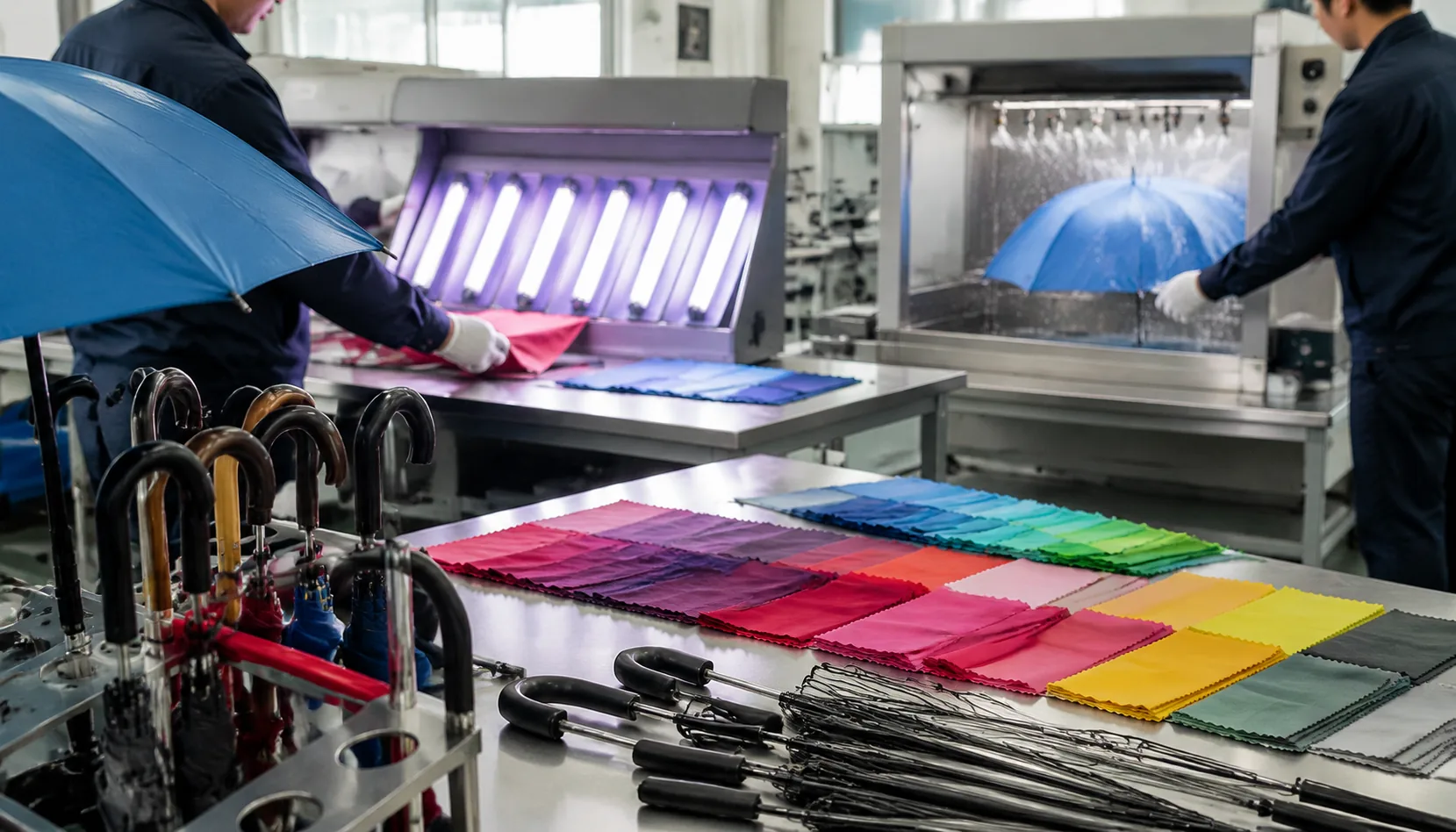
Outdoor promotion buyers usually find out too late that a good logo approval is not the same as a durable umbrella spec. On our Songxia factory floor, colorfast branded umbrellas start with the right fabric dyeing route, ink system, UV and water tests, AQL checkpoints, and reorder controls so the second batch matches the first after sun, rain, handling, and storage.
Define the Outdoor Use Case First
The first spec decision is not ink or logo size; it is whether the umbrella must survive one afternoon or three selling seasons. For short event giveaways, a 21" or 23" manual compact with steel shaft, 8K steel ribs, and 190T pongee can be acceptable if the buyer only needs clean logo exposure at a trade show, campus event, or parking-lot activation. I still avoid ultra-thin polyester because wet transfer and crocking show up fast when people fold a damp canopy into a sleeve. For colorfast branded umbrellas used in retail, golf, resort, or hospitality programs, the baseline should move to 23" stick, 27" golf, or 30" oversize canopy with fiberglass ribs, 8K or 10K construction, and 190T/210T pongee with a water-repellent finish. The bigger the canopy and the longer the service life, the more the frame matters because a perfect logo on a bent rib is still a failed promotion.
Rain exposure, sun exposure, and handling frequency should set the decoration method. Screen printing is efficient for 1–3 spot colors on outdoor promotional umbrellas, but the ink system must be matched to pongee, POE, PVC, or EVA; otherwise adhesion passes on day one and fails after repeated folding. Heat transfer gives sharp gradients and small text, but poor low-temperature bonding can crack at rib contact points. Sublimation is strong for all-over polyester graphics, though buyers must accept fabric and color limitations. For weather resistant umbrella printing, I like to define targets before sampling: no visible dye bleeding after a 24-hour wet stack test, no logo peel after 20 open-close cycles, and acceptable color shift after UV exposure testing when UPF 50+ or silver coating is specified. Umbrella logo durability is not one test; it is ink adhesion, fabric dye fastness, coating compatibility, and fold-line abrasion working together.
Mechanism choice also changes the durability target. A manual umbrella has fewer failure points and is fine for budget giveaways, but an auto-open 23" stick umbrella is usually better for hotels, conferences, and retail because users expect one-hand operation at entrances. Auto-open-close compact umbrellas need tighter branded umbrella QC because spring force, runner alignment, and shaft lock tolerance affect both safety and perceived quality. For golf and hospitality use, a double-canopy vented windproof frame with fiberglass shaft and ribs should be tested beyond normal walking rain; our common benchmark is stable performance in 50+ mph wind-tunnel conditions, not just a showroom shake test. For multi-season colorfast branded umbrellas, I would set AQL 2.5 inspection with checks for print registration, wet rub, dry rub, canopy coating defects, rib tip security, and carton moisture control before FOB or DDP shipment. That is how the use case becomes a measurable production spec instead of a vague request for “good quality.”
Choose Fabric and Dyeing Standards
For colorfast branded umbrellas, fabric choice starts with density and yarn stability, not the logo method. 190T pongee is the common promotional baseline: light, cost-efficient, and smooth enough for screen printing or heat transfer on 21" and 23" folding umbrellas. 210T pongee has a tighter weave, better hand feel, and less ink spread on detailed logos, especially on 27" and 30" golf umbrellas where large panels flex more in wind. If the buyer expects repeated outdoor use, I prefer 210T with disperse-dyed polyester yarn and a water-repellent finish, because it holds darker navy, black, forest green, and burgundy more evenly after rain, drying, and packing cycles. For short campaigns or event giveaways, 190T can pass AQL 2.5 inspection comfortably, but the color tolerance should be written into the spec, such as Delta E under 1.5 for solid panels and no visible shade jump between adjacent cut panels.
Yarn-dyed panels outperform piece-dyed panels when the umbrella body itself is part of the brand color. In yarn dyeing, the polyester filament is colored before weaving, so abrasion at rib tips, seam folds, and strap contact points shows less whitening after 500 to 1,000 open-close cycles. Piece-dyed pongee is cheaper and faster for MOQ runs, often 500 to 1,000 pieces per color, but it is more sensitive to uneven heat setting and batch variation; two rolls that look acceptable under factory LED light can shift outdoors under noon UV. Our standard practice at ZheBrella is to cut one umbrella from bulk fabric before mass cutting, expose half the canopy to UV for 24 to 48 hours, then compare it against the approved lab dip and printed logo strike-off. That simple check prevents most branded umbrella QC disputes before sewing starts.
UPF 50+ coating is useful, but buyers should understand what it changes. A silver or black UV backing improves sun protection and makes outdoor promotional umbrellas feel more substantial, yet it can stiffen the canopy and affect folding memory on compact auto-open-close frames. Clear UV absorbers preserve the fabric face better, but they cost more and do not hide translucency on white or yellow panels. Dark colors usually resist visible fading better because pigment load is higher, though black can brown out if low-grade dye is used. Neon yellow, fluorescent green, and safety orange are the weakest under UV because optical brighteners burn off quickly. Red tones are also risky: scarlet, crimson, and warm PMS reds often fade toward pink or orange unless specified with high-lightfast disperse dyes. For weather resistant umbrella printing, pair the fabric standard with logo testing: tape pull, wet rub, dry rub, and at least 24 hours of UV exposure before approving umbrella logo durability.
Specify Print Durability Requirements
Print durability should be specified as testable performance, not as “good logo quality.” For colorfast branded umbrellas, require the supplier to state the print method—screen ink, digital pigment/latex, dye sublimation, or heat transfer—and the matching canopy fabric, because 190T pongee, 210T pongee, Oxford polyester, and POE/PVC panels all behave differently under rain and folding pressure. On polyester pongee, properly cured screen ink normally gives the best wet-rub and folding-abrasion performance for 1–3 spot colors, while heat transfer is useful for gradients but must be checked at the film edge. Digital print is acceptable for photo artwork, but buyers should ask for coating compatibility if the canopy uses Teflon water repellent or UV UPF 50+ treatment. A practical spec is wet rub 20 cycles with no major color bleed, dry rub 50 cycles with no visible flaking, and tape adhesion at cross-hatch cuts with no more than 5% ink lift.
Curved canopy panels create a tougher problem than flat fabric swatches, especially near rib tips, seam allowances, and the crown where the fabric flexes every time a 23 inch or 30 inch umbrella opens. Writers should tell buyers to request folding-abrasion testing on finished umbrellas, not only printed cloth before sewing. I usually check the logo after 50 open-close cycles on manual, auto-open, and auto-open-close frames, then rub the folded printed area where the 8K or 10K ribs press into the canopy. For outdoor promotional umbrellas used at golf events, campuses, trade shows, and resorts, the standard should include no cracking along fold lines, no transfer onto adjacent panels, and no whitening when the print is bent around the panel curve. Straps need separate testing because hook-and-loop, snap buttons, and tight rolling create shear that is worse than normal rain exposure.
A good branded umbrella QC checklist links print durability to production controls: ink batch number, curing temperature, dwell time, film pressure, peel timing, and inspection frequency. For weather resistant umbrella printing, ask for pre-production samples, then inspect mass production under AQL 2.5 with defects classified clearly: slight registration shift may be minor, but ink peeling, sticky transfer, logo bleed, or strap-film delamination should be major defects. At ZheBrella, our standard practice is to inspect both open canopy appearance and folded contact points because many failures only appear after packing compression. Buyers should also specify packaging conditions, since a wet-looking logo can be caused by uncured ink trapped inside a polybag for 20–30 days during FOB or DDP transit. These requirements protect umbrella logo durability better than vague phrases like “waterproof logo” or “long-lasting print,” and they give the factory a measurable target before bulk cutting starts.
Test Before Bulk Production
Bulk production should not start until the buyer has approved both the fabric lab dip and the printed strike-off, because color problems get expensive after 5,000 panels are already cut. For colorfast branded umbrellas, we normally match the canopy fabric first under D65 light, then check the logo print separately on the same 190T or 210T pongee that will be used in production. A Pantone callout alone is not enough; navy on raw fabric, Teflon-coated fabric, and UV-coated UPF 50+ fabric can shift differently after heat pressing or screen curing. For outdoor promotional umbrellas, I prefer a signed physical strike-off or a high-resolution approval sheet showing canopy color, logo size, logo position, ink system, and drying/curing method. Our standard practice at ZheBrella is to keep one approved sample in the sewing line and one in QC, so inspectors are not judging color from memory or phone photos.
Water spray and UV checks catch most weak branding before it reaches an event site. A simple spray test should wet the printed panels for 10 to 15 minutes, then the inspector rubs the logo area with a clean white cotton cloth to look for bleeding, transfer, or edge softening. For weather resistant umbrella printing, we also expose printed samples to UV light for a controlled period, commonly 24 to 48 hours for promotional orders and longer for retail programs, then compare fading against the approved strike-off. Heat-transfer logos need special attention at the corners, while screen-printed logos should be checked for cracking when the canopy is folded tightly around the shaft. Sublimation on white polyester is usually strong for color penetration, but it still needs a shade check after UV exposure if the artwork uses reds, oranges, or bright blues.
Frame testing belongs in the same pre-production approval, because umbrella logo durability is affected by how the canopy flexes in real use. Steel ribs are economical and stable for 23 inch straight umbrellas, but repeated open-close cycling can stress the sewn logo area if the canopy tension is too high. Fiberglass ribs on 8K, 10K, or 16K windproof frames flex better, especially on double-canopy vented models rated for 50+ mph wind-tunnel tests, but they still need cycle checks before mass production. I like to run at least 300 open-close cycles on manual and auto-open samples, and 500 cycles on auto-open-close folding umbrellas, while watching for print abrasion at folds and seam intersections. Final buyer sign-off should cover the lab dip, strike-off, rib material, mechanism, packing method, and branded umbrella QC standard, normally AQL 2.5 before FOB or DDP shipment.
Control Quality Across Reorders
Repeat orders fail when the buyer treats the first shipment as “approved” but never freezes the physical standard. For colorfast branded umbrellas, I want one signed pre-production sample, one retained factory sample, and one buyer-held control sample from the same approval lot. The inspection file should record Pantone codes under D65 light, print method, fabric batch, coating, rib count, handle material, and packaging layout. For canopy color, a realistic tolerance is usually within Delta E 1.5–2.0 for solid 190T or 210T pongee; metallic, fluorescent, RPET, and dark navy fabrics may need a wider practical range because the yarn dye and coating shift the reading. Logo print tolerance should be tighter: screen print registration within 1–2 mm, heat-transfer edge lifting at zero tolerance, and sublimation checked for ghosting, banding, and bleed-through after wet rub and dry rub tests. This is where umbrella logo durability becomes a measurable spec, not a sales promise.
AQL 2.5 is the right default for branded umbrella QC on outdoor promotional umbrellas because it catches production drift without turning inspection into a full sort. On a 3,000-piece order, inspectors usually pull samples by ANSI/ASQ Z1.4 general inspection level II, then classify defects as critical, major, or minor. Critical defects include unsafe sharp rib tips, failed runner locks, broken auto-open springs, or severe chemical odor. Major defects include wrong Pantone shade outside tolerance, cracked logo ink, mismatched panel direction, frame rust, crooked print over 3 mm, or canopy leakage at the seam. Minor defects include small thread ends, light handle scuffs, or carton label alignment issues. Our standard practice at ZheBrella is to open umbrellas fully during inspection, operate each mechanism multiple cycles, check logo adhesion with tape pull where applicable, and compare fabric against the retained sample under controlled light rather than under warehouse skylights.
MOQ affects color consistency more than many buyers expect. If the order is below the mill’s dye-lot MOQ, the fabric may come from available stock rolls, and the next reorder can land half a shade different even with the same Pantone reference. For weather resistant umbrella printing, this matters because Teflon treatment, PU backing, black-out coating, or UPF 50+ finishing can dull the canopy color after dyeing. A clean reorder file should state whether the order used custom-dyed fabric or stock fabric, the roll lot numbers, ink formula, transfer film type, carton marks, and approved artwork revision. FOB and DDP documentation also protect consistency: commercial invoices, packing lists, HS codes, carton dimensions, and material descriptions create a traceable baseline for repeat purchasing. When a brand changes from FOB Ningbo to DDP Los Angeles, the product spec should not change with the freight term; the same BOM, retained sample, AQL 2.5 checklist, and Pantone tolerance sheet must travel with the PO.
Frequently Asked Questions
What causes umbrella logos to fade or crack outdoors?
Common causes include poor ink adhesion, UV exposure, repeated folding on the same crease, and mismatched coating or fabric finish. Testing the actual logo on the final pongee fabric reduces this risk.
Should buyers choose fiberglass or steel ribs for outdoor branded umbrellas?
Fiberglass ribs are generally better for wind resistance and reduce frame failure in outdoor promotions. Steel ribs can lower cost, but they are less forgiving in gusts and may not fit premium durability specs.
What colorfastness level should we specify for outdoor promotional umbrellas?
For outdoor promotions, specify fabric colorfastness of Grade 4 or above for rubbing and water exposure, and Grade 3-4 or above for UV/light fastness depending on campaign duration. For long outdoor use, request lab testing before bulk production.
Which logo printing method is best for weather resistant umbrella branding?
Silk screen printing with outdoor-grade ink is common for large solid logos, while heat transfer works better for detailed multi-color artwork. For repeated rain and sun exposure, ask for adhesion, water soak, and UV aging tests on a pre-production sample.
How should branded umbrella QC control color consistency on reorders?
Keep approved fabric swatches, Pantone references, ink formulas, and a signed production sample for each order. On reorder, compare bulk fabric and printed panels against the retained standard before assembly, with AQL inspection typically set at Level II and defects classified by severity.
Looking to Launch Your Custom Umbrella Line?
ZheBrella is a Zhejiang-based OEM/ODM umbrella manufacturer with 17 years of export experience. Free design, low MOQ from 100 pieces, windproof construction, full-color print.
Get Free Quote Now »People Also Search For
Related Articles
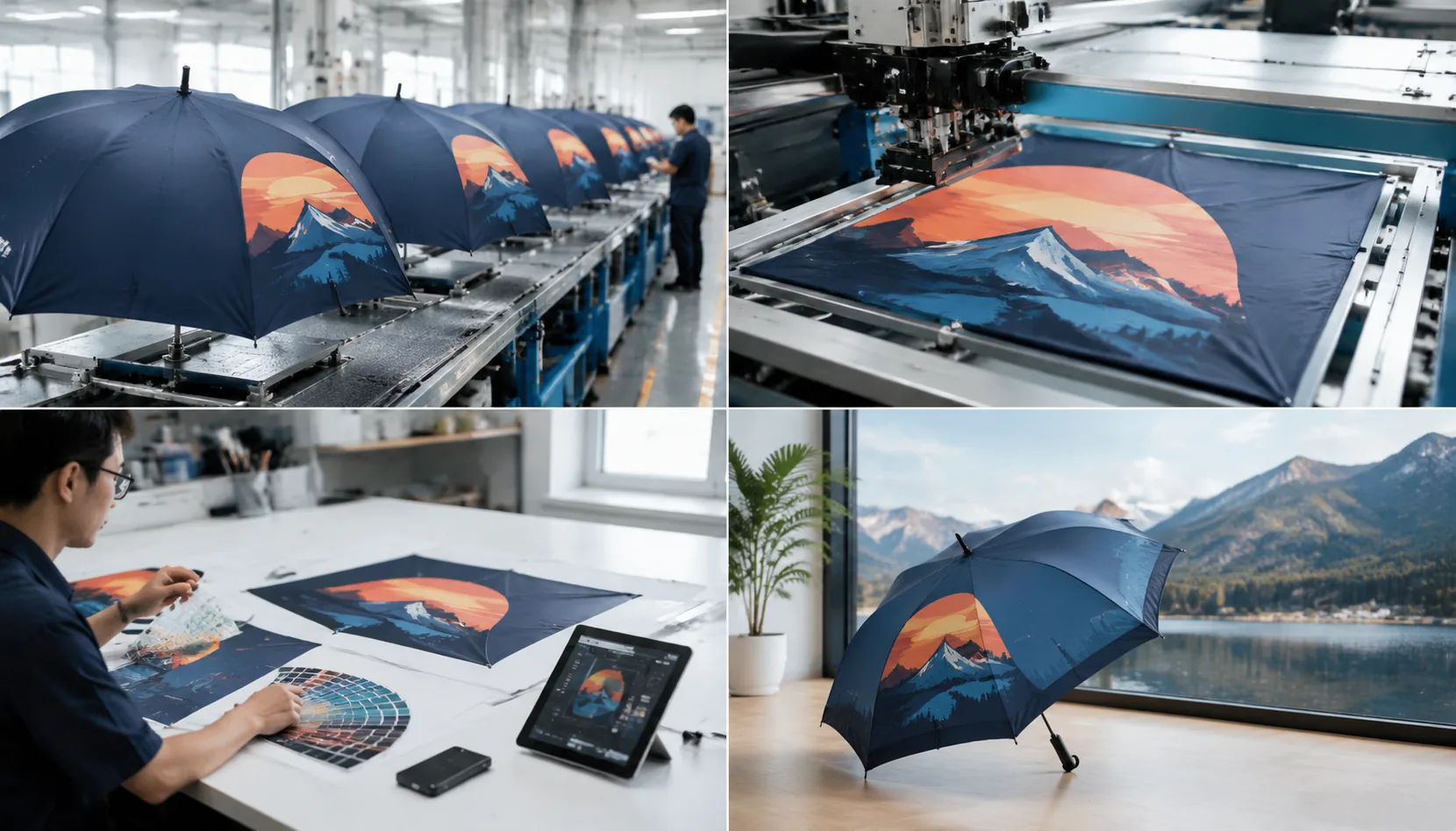
Colorfast Umbrella Printing Specs for Outdoor Brand Use
Specify fade-resistant umbrella prints with fabric, ink, coating, and AQL checks suited for outdoor campaigns, retail, a...
Read More »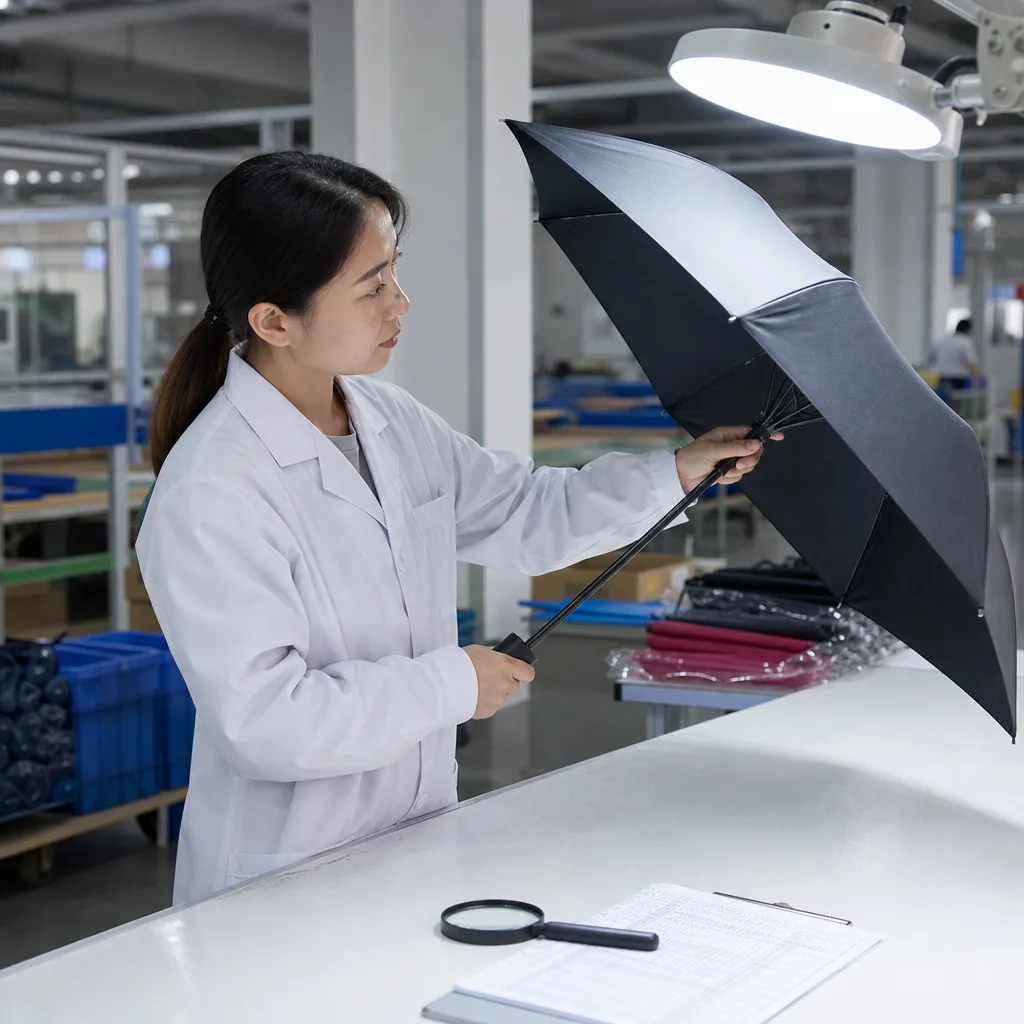
Colorfast Umbrella Printing Standards for Outdoor Promotions
Avoid fading and dye transfer on printed umbrellas by specifying fabric, ink, curing, rub tests, UV exposure checks, and...
Read More »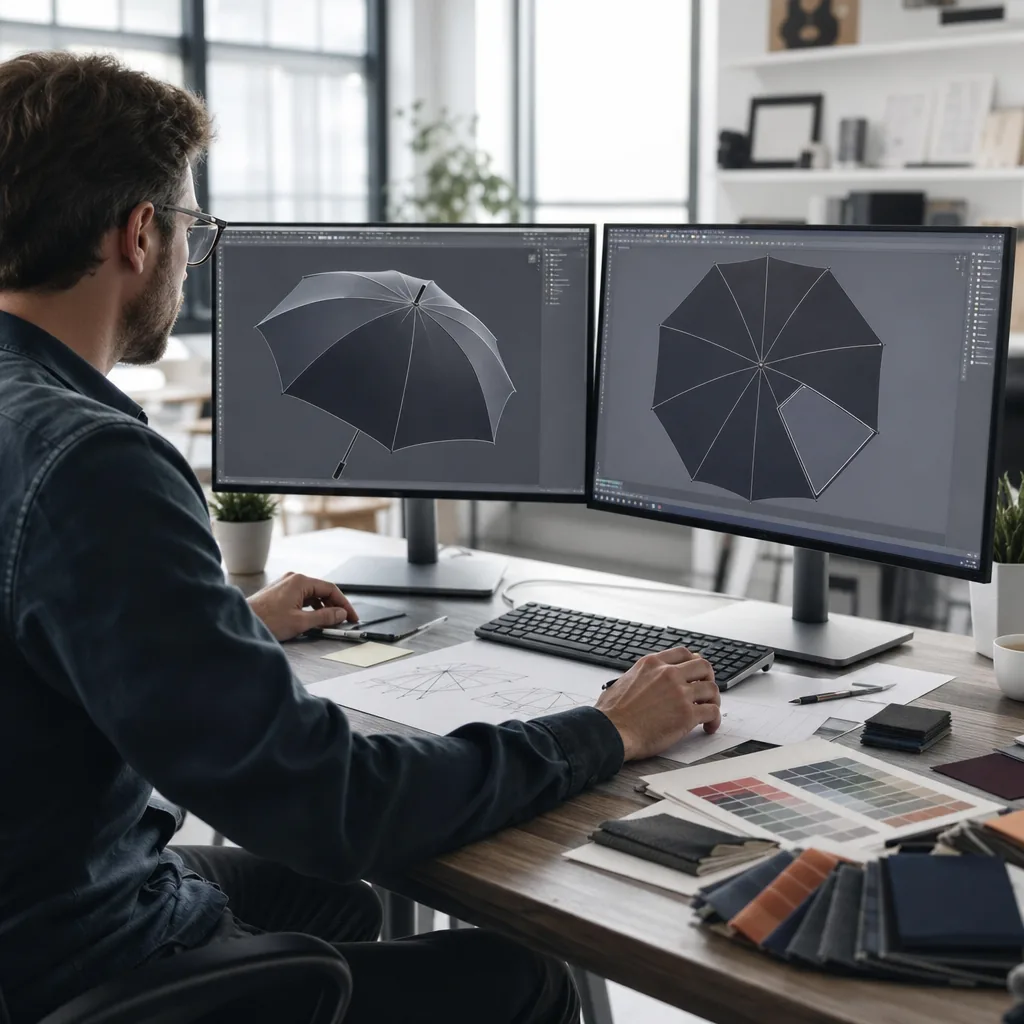
Scaling Umbrella Logos Across Folding, Stick, and Golf Models
Set logo sizes that translate across folding, stick, and golf umbrellas while protecting readability, print quality, app...
Read More »