Scaling Umbrella Logos Across Folding, Stick, and Golf Models
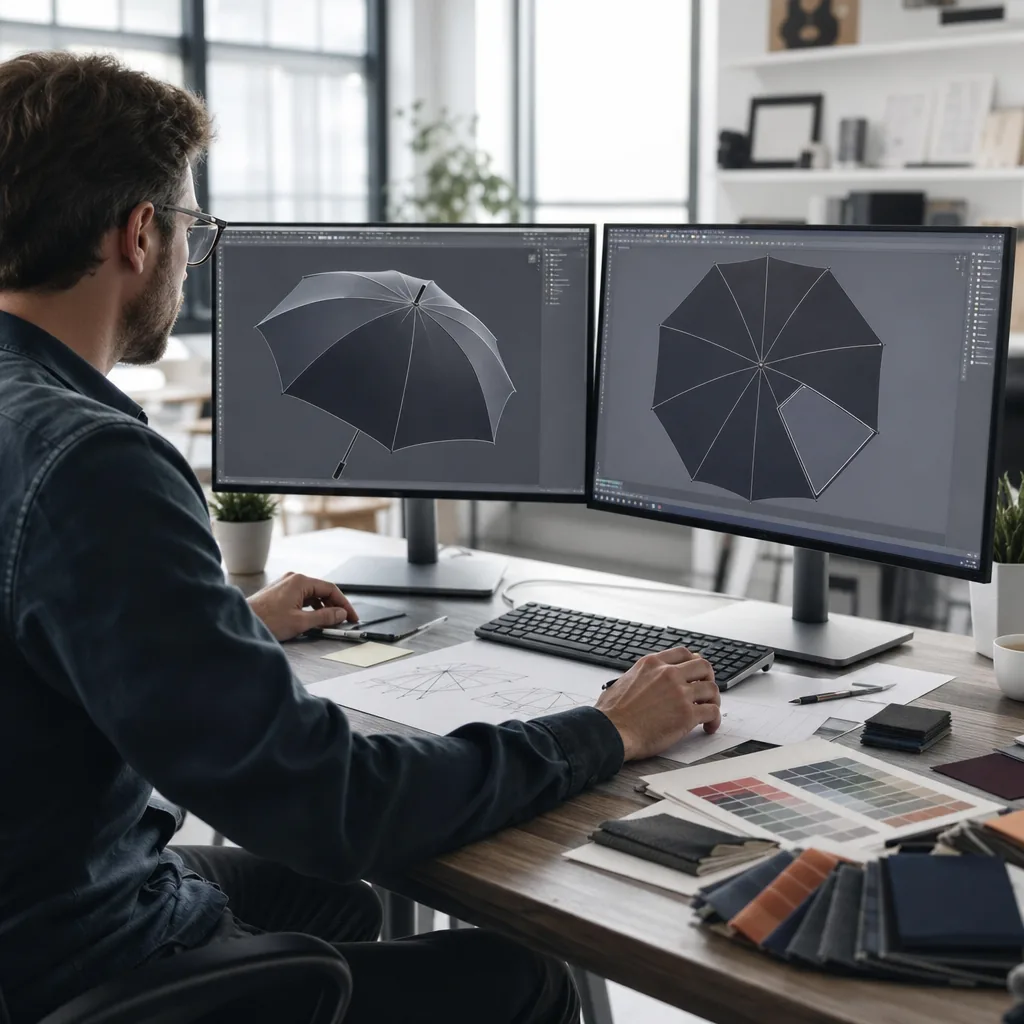
A logo that looks balanced on a 23-inch stick umbrella can turn crowded on a folding panel and undersized on a golf canopy, especially after seam allowances, panel curvature, and print tolerances are applied. On our factory floor in Songxia, we treat umbrella logo size standards as a production control point, not a design guess, because the right scaling prevents reproofs, weak ink coverage, and mismatched branding across model lines.
Why One Logo Size Does Not Fit Every Umbrella
The first mistake I see in branded umbrella specs is taking a logo approved for a 30" golf umbrella and shrinking it onto a 21" compact folding umbrella without changing the artwork. Umbrella logo size standards have to start with geometry: canopy diameter, panel height, rib count, and the usable print window between seams. A 21" 8K folding umbrella usually gives a panel height around 33-36 cm, but the lower arc is broken by strong curvature and stitch tension, so a practical logo may be 12-16 cm wide on one panel. A 23" stick umbrella often allows 18-22 cm, while a 30" golf canopy can take 28-35 cm if the artwork is simple. Rib count matters too. On 16K models, each panel is narrower, so a wide horizontal logo may look cramped even when the total canopy diameter is large. For 190T or 210T pongee, we also keep print away from seam ridges to avoid ink buildup and transfer distortion.
Compact folding umbrellas are viewed close-up: at a subway entrance, in a hotel lobby, or inside a conference gift bag. That means folding umbrella logo size should favor sharp, high-contrast marks over oversized graphics. On a 3-fold auto-open-close frame with steel shaft and fiberglass ribs, the canopy has more tension changes than a straight stick model, especially near the tips after repeated closing. For screen printing, I prefer one-panel placement with a simplified logo, minimum 1.5-2 mm line weight, and no tiny registration marks. Heat transfer can handle gradients, but the film edge becomes visible on coated pongee, especially with Teflon water-repellent finish. Straight stick umbrella printing is more forgiving because a 23" or 27" manual or auto-open frame holds a smoother panel, so retail logos, sponsor names, or club crests can sit larger without bending across the canopy curve.
Golf umbrella branding works under different rules because the umbrella is seen from 10-30 meters away on a course, at an outdoor event, or in a dealership lot. A 27" or 30" double-canopy vented windproof model, often 8K or 10K with fiberglass shaft and ribs, can survive 50+ mph wind-tunnel testing, but the vent seam creates a second boundary that limits print placement. For large golf models, I usually recommend two or four alternating panels rather than printing every panel; the logo reads cleaner, and AQL 2.5 inspection catches fewer alignment disputes. Umbrella logo size standards should also account for color contrast: white ink on navy 210T pongee reads far better than dark gray on black, even at the same width. Our standard practice at ZheBrella is to confirm logo scale with a digital panel mockup, then a pre-production sample before bulk cutting, especially for MOQ 500-1,000 piece B2B orders with FOB or DDP delivery deadlines.
Recommended Logo Zones by Umbrella Type
Logo zones should be set by panel geometry first, not by what looks good on a PDF mockup. For a 21" or 23" folding umbrella with 8K ribs, I usually keep the main mark at 110–150 mm wide and 35–55 mm high on one panel, with at least 25 mm clearance from the rib seams and 35–45 mm from the lower hem where stitching and curvature distort straight baselines. A compact folding umbrella logo size above 160 mm often starts to wrap visually around the canopy, especially on 190T pongee with a Teflon finish where screen ink sits slightly raised. For 16K folding frames, each panel is narrower, so a 75–105 mm wide mark is safer; if the buyer insists on a long horizontal lockup, split it into a symbol on one panel and wordmark on the sleeve instead of forcing it across ribs.
Stick umbrellas give more breathing room, but stick umbrella printing still needs discipline around rib pockets and panel tension. On a 23" or 27" 8K stick model, a clean corporate logo normally sits at 140–190 mm wide by 45–70 mm high, centered in the lower-middle third of the panel. For 16K stick frames, reduce the width to 90–130 mm and avoid fine text under 6 pt because the seam frequency breaks visual rhythm. These are practical umbrella logo size standards we use before artwork approval: keep 30 mm from left and right seams, 40 mm from the hem, and never place registration-critical graphics over a vent seam on double-canopy windproof styles. If the canopy is POE, PVC, or EVA, use bolder marks and fewer colors because transparent materials show every overlap and squeegee pressure change.
Golf umbrella branding can carry the largest mark, but bigger is not always better on a 30" double-canopy model. For 8K golf frames, a front-panel logo at 200–280 mm wide and 70–110 mm high reads well from event distance while staying inside a 35–45 mm seam safe zone; on 16K golf umbrellas, 130–180 mm wide is more reliable unless the artwork is a simple icon. Strap logos work best at 45–70 mm wide by 12–18 mm high, usually woven label, heat transfer, or small screen print depending on strap fabric. Sleeve prints can take a longer lockup, often 180–260 mm wide, because the surface is flatter than a tensioned canopy. For detailed branded umbrella specs, I often recommend using the primary logo on one canopy panel, a secondary monogram on alternating panels, and the full legal or campaign line on the sleeve where small text survives inspection better under AQL 2.5.
Frame and Fabric Variables That Affect Scaling
Fabric density decides how clean the edge looks after scaling. Standard 190T pongee is economical and works well for one-color screen printing, but fine text below about 4 mm stroke width can feather slightly because the weave opens more under tension. 210T pongee gives better edge definition for small registered colors, heat-transfer labels, and retail brand marks because the yarn count is tighter and the coating surface is smoother. For branded umbrella specs, I normally ask buyers to confirm fabric, coating, print method, and panel count together: 190T with water-repellent coating, 210T with Teflon finish, or UV-coated UPF 50+ canopy all accept ink differently. POE, PVC, and EVA clear canopies need separate sizing judgment because transparent materials show rib shadows and adhesive borders. Good umbrella logo size standards should therefore state printable area by model, fabric, and mechanism, not just say “logo: 15 cm” on a tech pack.
Building a Cross-Model Approval System
The approval system should start with one master artwork pack, not three separate email chains for folding, stick, and golf umbrellas. I ask buyers to approve a PDF layout that includes the panel template for each model, exact logo width and height in millimeters, safe distance from rib seams, and print position measured from the canopy tip or lower edge. For umbrella logo size standards, the same brand mark may run 120–160 mm wide on a 21" folding umbrella, 160–220 mm on a 23" stick umbrella, and 240–320 mm on a 30" golf umbrella, but the visual weight must be checked against the panel curve, not just scaled by percentage. The pack should include AI or EPS vector files, Pantone Solid Coated references, CMYK backup values, and notes for screen printing, heat transfer, or sublimation depending on the fabric. A 190T pongee canopy takes ink differently than coated POE or PVC, so the approval sheet must name the material and coating, especially for Teflon or UPF 50+ treatments.
For buyer sign-off, sample photos are not optional; they prevent expensive arguments later. Our standard practice at ZheBrella is to photograph the first print strike-off under neutral light, with a ruler beside the logo and one close-up showing ink edge sharpness near the seam. For stick umbrella printing, I also want one open-canopy photo from above and one side-angle photo because a logo that looks centered on a flat template can appear low after sewing tension pulls the 8K or 10K panels into shape. For golf umbrella branding, double-canopy vented models need separate approval for the upper and lower canopy if the logo crosses a vent layer. Pre-production samples usually take 7–10 days after vector artwork and Pantone numbers are confirmed, while revised samples add another 4–7 days if screens or heat-transfer films must be remade. Mass production should not start until the buyer signs the physical sample or a photo approval form with model code, canopy size, fabric, handle, rib count, and print method.
MOQ planning changes when several models share one brand program, and this is where branded umbrella specs need to be written commercially, not just graphically. If a buyer orders 500 folding umbrellas, 500 stick umbrellas, and 500 golf umbrellas with the same one-color logo, the factory may combine ink mixing, Pantone matching, carton marks, and export paperwork, but the MOQ for frames and canopies still follows each model’s material flow. A 21" auto-open-close folding frame, a 23" straight steel shaft, and a 30" fiberglass golf frame do not share components, so buyers should not expect one blended MOQ unless the factory confirms it. The approval sheet should list MOQ by SKU, shared logo tooling costs, and any reduced setup charge when the same screen artwork is reused. In practical umbrella logo size standards, I prefer approving a logo family: small for folding umbrella logo size, medium for stick models, and large for golf, all tied to one Pantone and one vector master so AQL 2.5 inspection can verify measurements consistently before FOB or DDP shipment.
QC Checks for Logo Consistency in Bulk Orders
Open-close performance belongs in the logo QC routine because a clean print is useless if the umbrella twists, jams, or presents the logo backward when opened. Sampling should include manual, auto-open, and auto-open-close mechanisms, with repeated cycles to catch rib interference, runner drag, loose tips, and canopy tension problems. Folding models should be checked for print cracking after closing, especially where a large logo crosses fold lines; golf and stick models should be opened fully to confirm panel tension does not warp the artwork. For mixed-model deliveries, carton labels should separate 21", 23", 27", and 30" sizes by SKU, print method, and handle color so replacement claims can be traced quickly. Shipment terms matter here: under FOB, buyers often arrange consolidation and need clear inspection reports before container loading; under DDP, the factory or forwarder must coordinate mixed cartons, customs paperwork, and last-mile delivery without mixing approved and reworked goods. Good umbrella logo size standards reduce disputes only when QC records include photos, measurements, and carton references.
Frequently Asked Questions
Should the same logo file be used on all umbrella models?
The same vector master file should be used, but the print size and placement should be adjusted by model. A compact folding umbrella often needs a simplified mark to stay readable.
How many samples are needed for a mixed umbrella program?
Buyers should approve at least one sample per frame type, such as folding, stick, and golf. If fabric color or print method changes, additional strike-offs reduce bulk production risk.
Can the same logo size be used on folding, stick, and golf umbrellas?
Usually not exactly. A folding umbrella may use a logo around 6–8 inches wide, while stick umbrellas often support 8–10 inches and golf umbrellas may allow 10–14 inches depending on panel size and curvature.
What artwork files should buyers provide for consistent logo scaling?
Vector files such as AI, EPS, or PDF are preferred because they scale cleanly across different umbrella models. Buyers should also provide Pantone colors, logo placement instructions, and any minimum clear-space rules.
How does logo size affect sampling and production approval?
Oversized or low-resolution artwork can delay approvals because the factory may need to adjust placement, stroke thickness, or color separation. Confirming print dimensions before sampling can typically save 2–5 business days in the approval process.
Looking to Launch Your Custom Umbrella Line?
ZheBrella is a Zhejiang-based OEM/ODM umbrella manufacturer with 17 years of export experience. Free design, low MOQ from 100 pieces, windproof construction, full-color print.
Get Free Quote Now »People Also Search For
Related Articles
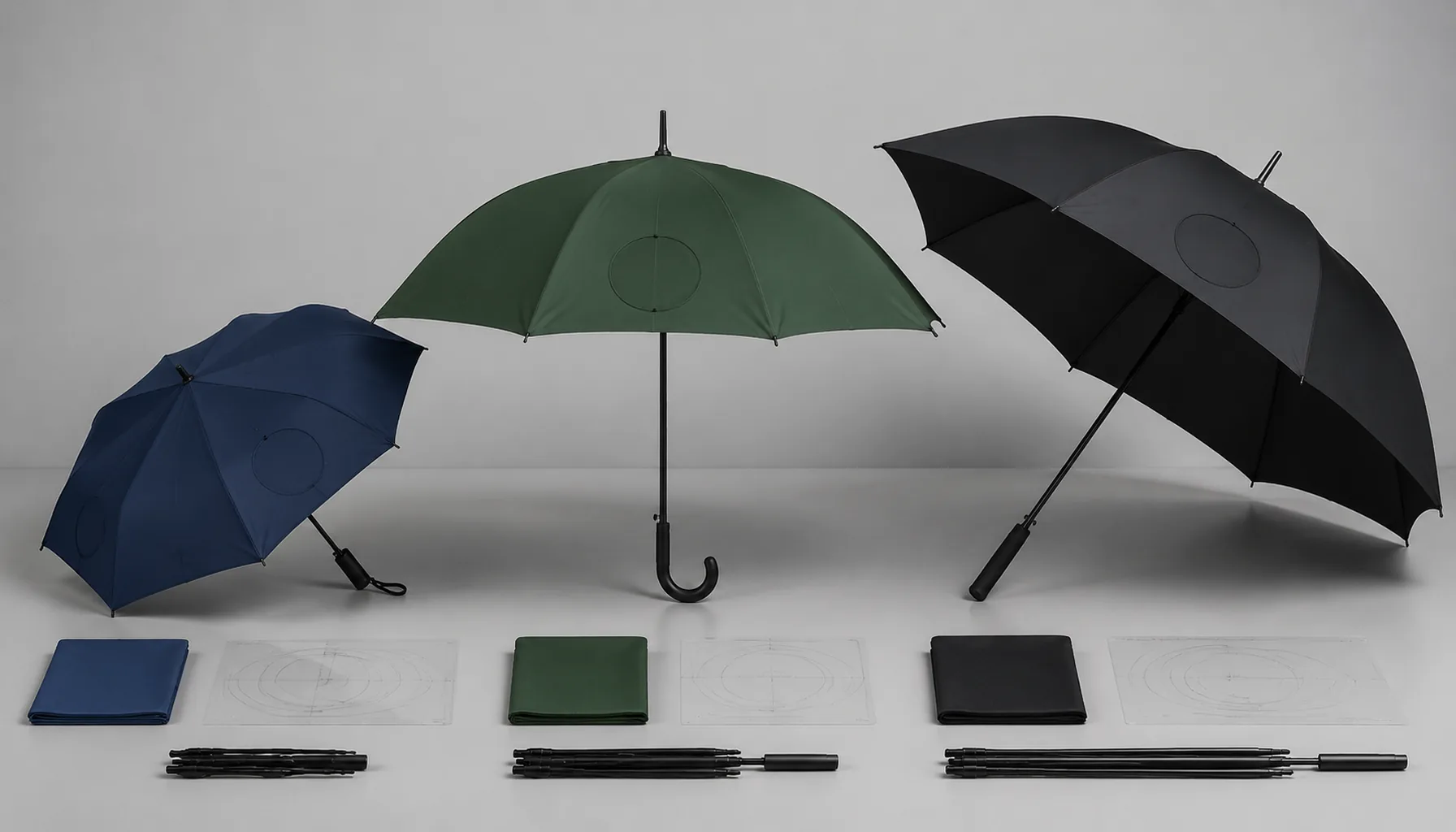
Logo Scaling Across Folding, Stick, and Golf Umbrellas
Set logo size rules across 21-inch folding, 23-inch stick, and 30-inch golf umbrellas so brand assets stay consistent th...
Read More »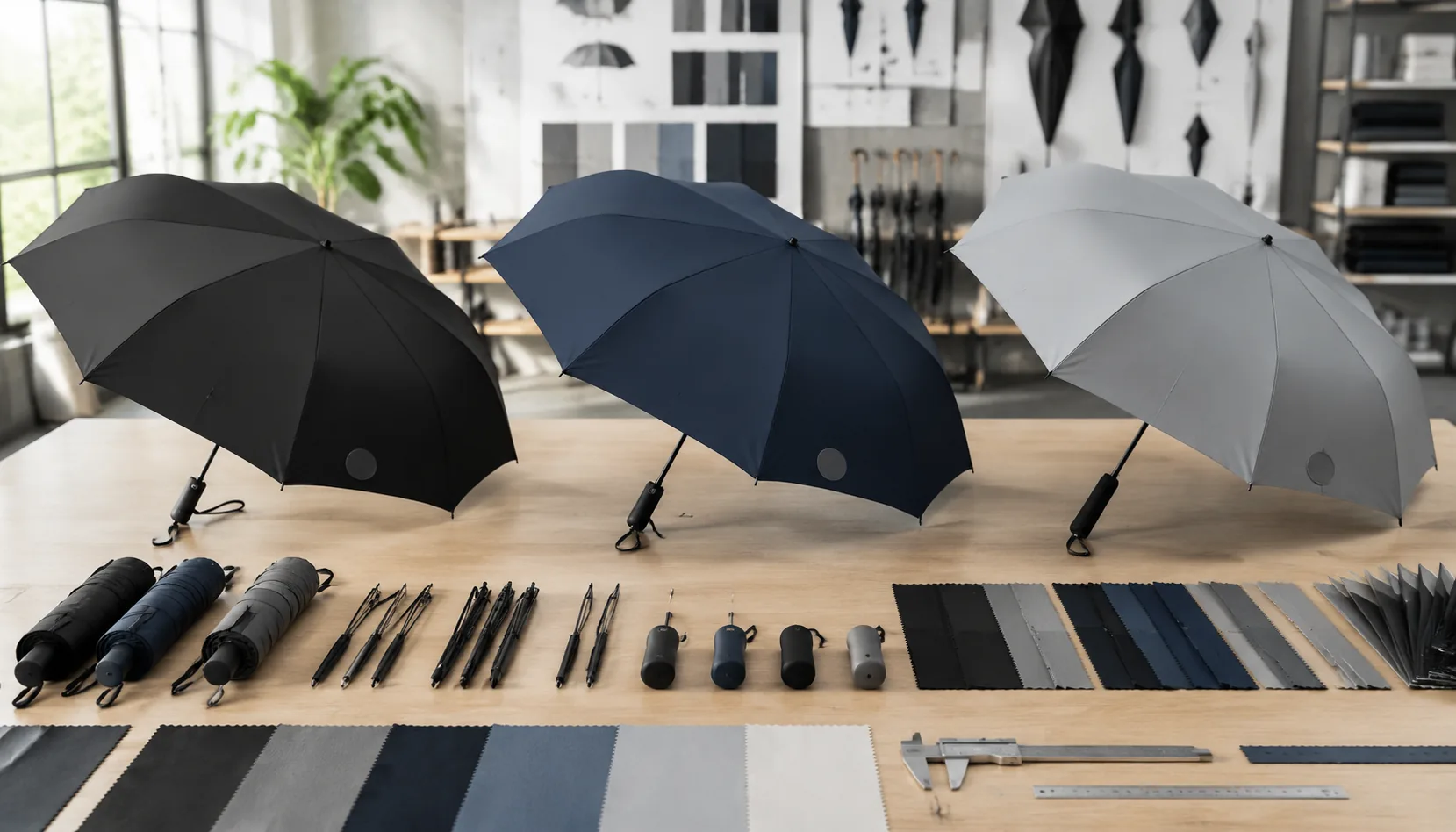
Scaling Logo Sizes Across Folding, Golf, and Stick Umbrellas
Set practical logo size rules across 21-inch folding, 23-inch stick, and 30-inch golf umbrellas without losing visibilit...
Read More »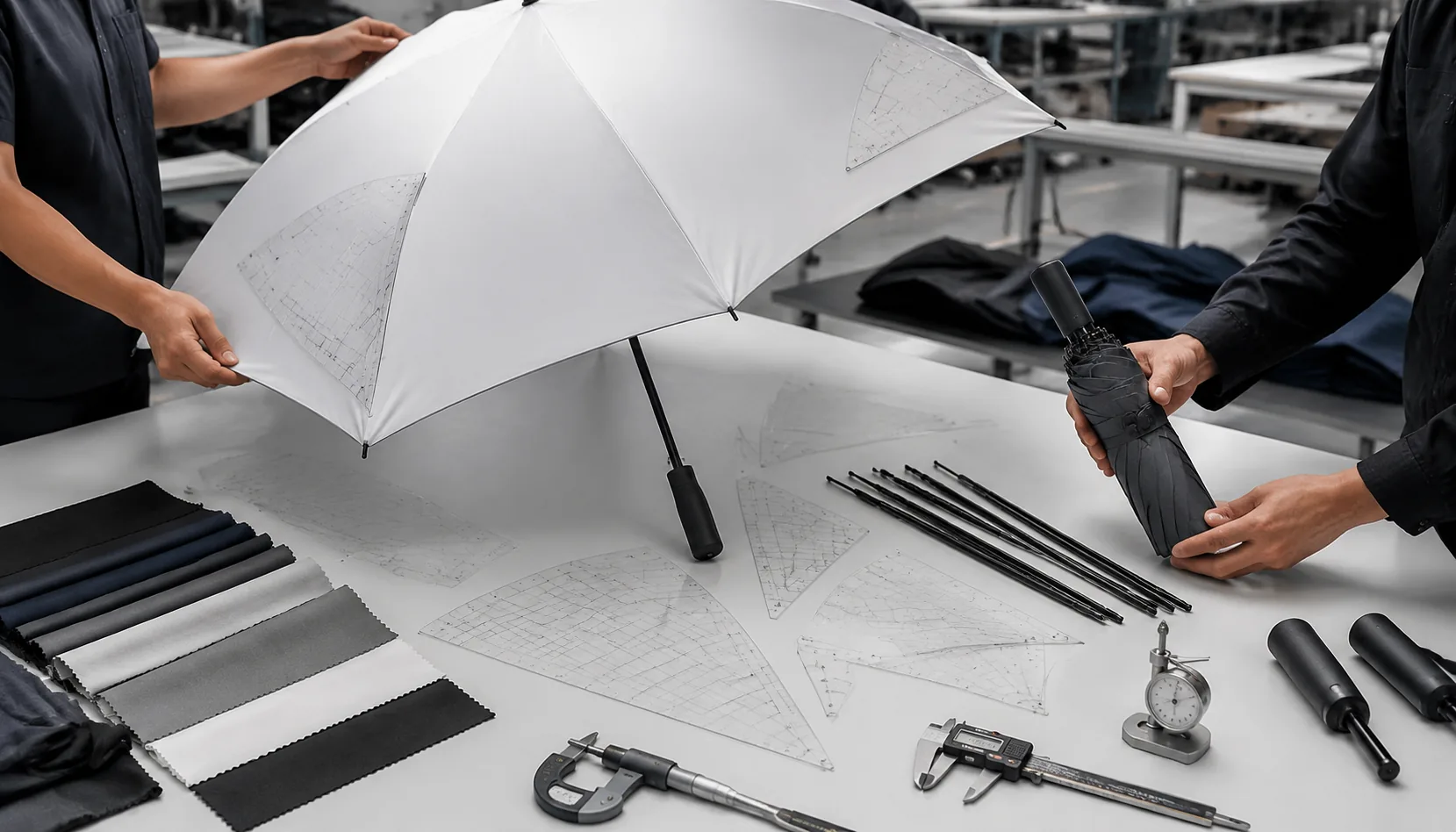
Logo Scaling on Folding and Golf Umbrellas for Brand Teams
Set practical logo sizes across folding, stick, and golf umbrellas while accounting for ribs, panels, print methods, mec...
Read More »