Colorfast Umbrella Printing Specs for Outdoor Brand Use
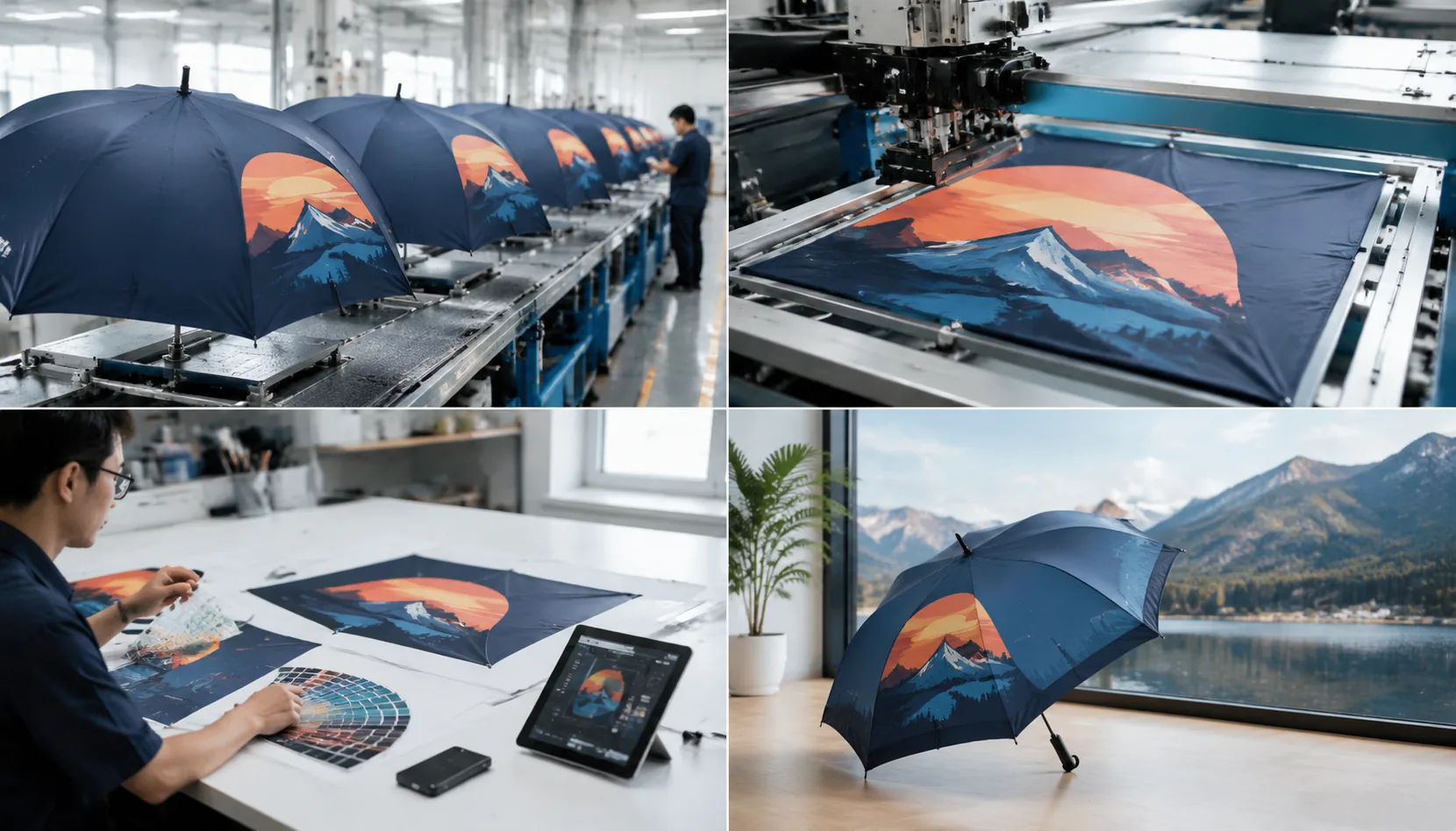
When an outdoor brand orders printed umbrellas for retail, events, or seasonal campaigns, the risk is not just a blurry logo—it is color drift after sun, rain, rubbing, and storage. On our Songxia factory floor, colorfast umbrella printing starts with matching the fabric, ink system, coating, curing temperature, and AQL inspection points before bulk cutting, because once panels are sewn, fixing fade or crocking problems is expensive and slow.
Why Colorfastness Matters for Branded Umbrellas
Colorfastness is not a cosmetic detail on outdoor branded umbrellas; it is the difference between a logo that still looks controlled after a season and one that makes the buyer question the whole order. Umbrellas sit in the worst combination for ink: direct UV, alkaline rainwater, hand oils, strap rubbing, wet folding, and storage humidity inside cartons or car trunks. A red screen-printed logo on 190T pongee can look perfect at pre-shipment inspection, then turn pink after 40 hours of strong sun if the pigment system is weak. Heat-transfer films can crack along fold lines, and sublimation on light polyester can migrate if the base fabric or coating is not matched correctly. For real colorfast umbrella printing, we check both the ink method and the fabric finish, because a Teflon-coated 210T canopy behaves differently from plain polyester or PVC/POE panels.
Poor umbrella print durability usually shows up in ugly, visible ways: white logos yellow, navy logos fade unevenly across canopy panels, and black artwork becomes gray where ribs press during folding. Rain adds another risk because low-grade inks can bleed into adjacent fabric, especially on light-colored panels. Rubbing from the tie strap, sleeve, and user handling is just as important as sunlight; a print that passes a dry rub test but fails wet rub will not survive event use. Storage humidity is the hidden killer for repeat orders. If 5,000 umbrellas are packed slightly damp after production or inspection, ink transfer can appear between folded panels within weeks. That is why promotional umbrella quality control should include colorfastness to light, water, wet/dry rubbing, and folding checks, not only a visual logo placement review under factory lighting.
Brand damage is the real cost of weak colorfastness. A procurement manager may tolerate a slightly late shipment, but not fade resistant umbrella logos that fail in public at a golf event, campus rollout, hotel entrance, or retail promotion. When the same PMS color looks different between the first 1,000 pieces and the reorder, buyers lose confidence and distributors spend time handling claims instead of selling the next campaign. At ZheBrella, our standard practice is to lock fabric lot, ink formula, curing temperature, and print position before bulk production, then inspect under AQL 2.5 with extra attention to dark ink on light canopy and large solid artwork. Good colorfast umbrella printing reduces returns, protects repeat-order consistency, and prevents the common factory-floor mistake of approving a beautiful sample that cannot survive normal outdoor use. For serious outdoor programs, colorfastness should be written into the spec sheet before price negotiation, not argued after delivery.
Fabric, Coating, and Ink Variables
Fabric density is the first variable I check before approving colorfast umbrella printing for outdoor branded umbrellas, because the same logo behaves differently on 190T and 210T cloth. A 190T pongee is lighter, common on 21" and 23" promotional umbrellas, and accepts screen printing cleanly when the yarn is tight and the fabric is pre-shrunk. It keeps cost down, but heavy ink deposits can sit slightly raised on the surface. A 210T pongee has a smoother, denser face, better for retail-grade 23", 27", and 30" golf umbrellas where buyers expect sharper edges on small text and more consistent Pantone matching. Plain polyester is cheaper but usually has a harsher hand feel and less stable dye quality unless the mill controls disperse dyeing properly. For fade resistant umbrella logos, I prefer solution-dyed or well-finished pongee over bargain polyester, especially for black, navy, red, and royal blue canopies that will sit outside at resorts, car dealers, or sports events.
Coating choice changes both umbrella print durability and the way the logo looks after curing. Silver coating is common for sun umbrellas because it reflects heat and can help the canopy reach UPF 50+, but it is usually applied to the inner side; if the logo is printed outside on pongee, adhesion is still predictable. Black coating gives better shading and a more premium blackout effect, but it can stiffen the canopy and make folding marks more visible after compression packing. When buyers ask for printing on coated surfaces, I push back unless the ink system is tested, because PU, acrylic, silver, and black coatings all change surface energy. A logo that passes a thumb rub on uncoated 190T may fail cross-hatch tape testing on a slick coated panel. Our standard practice at ZheBrella is to run a small strike-off, cure it, then do wet rub, dry rub, and folding abrasion checks before bulk cutting.
Ink selection should match the fabric and coating, not just the artwork file. Screen printing with solvent or plastisol-type systems gives strong opacity for white logos on dark 210T pongee, but too much ink can reduce softness and make the panel crack along fold lines after repeated opening. Heat transfer gives bright gradients and photo detail, but the transfer film can feel plasticky on lightweight 190T and may lift if the canopy has a water-repellent or Teflon-style finish that was not plasma or primer treated. Sublimation is excellent on white polyester or light pongee because the dye bonds into the fibers, but it cannot print true white and loses brightness on dark canopies. For promotional umbrella quality control, I normally specify Pantone tolerance under D65 light, AQL 2.5 inspection, 24-hour cured sample approval, and at least 3M tape, wet rub, and 4-hour UV exposure comparison before confirming colorfast umbrella printing for a bulk PO.
Durability Tests Buyers Should Specify
The most useful durability tests are the ones that copy how outdoor branded umbrellas are actually abused: opened wet, folded dirty, rubbed against sleeves, and left in sun between events. For colorfast umbrella printing, I ask buyers to specify dry rub and wet rub results before sampling is approved. A practical target is ISO 105-X12 grade 4 or better for dry rubbing and grade 3-4 or better for wet rubbing on 190T or 210T pongee; darker inks on white fabric should be checked more strictly because migration shows fast. Water resistance should be tested after printing, not only on blank fabric, because screen ink or heat-transfer film can disturb the coating. For a standard rain umbrella, require no obvious ink bleeding after 30 minutes of continuous spray or immersion-side contact, and no staining transfer when the printed panels are pressed against white cotton while wet.
Light exposure is where many cheap logos fail, especially red, orange, and fluorescent inks. If the order is for outdoor brand use, specify a xenon arc or UV exposure test with an agreed reference, such as 24 to 48 hours accelerated exposure or a buyer-approved equivalent outdoor hang test. The acceptance standard should be visual and measurable: no major hue shift, no cracking, and Delta E preferably under 3 to 5 depending on the brand color tolerance. Fade resistant umbrella logos also depend on ink system selection. Sublimation on white polyester usually outlasts low-cost heat transfer on dark fabric, while good screen printing with matched catalyst can perform well if the ink is cured correctly. For UPF 50+ or Teflon-coated canopies, test the final coated and printed fabric together, because coating chemistry can change adhesion and color appearance.
Folding abrasion is the factory-floor test I trust most for umbrella print durability because every umbrella fails first along rib contact lines and fold creases. Open and close the umbrella at least 200 cycles, then inspect logo edges where the 8K or 10K ribs press into the canopy; for retail programs I prefer 500 cycles on production samples. Adhesion checks should include a cross-hatch tape test for screen or transfer prints, plus a fingernail scrape at the ink edge after the canopy has been wetted and dried. Our standard practice at ZheBrella is to put these limits into the pre-production sample sheet and AQL 2.5 inspection checklist, not argue about them after shipment. Promotional umbrella quality control works only when the PO states acceptable tolerance levels: maximum 1 mm logo registration shift, no visible peeling at arm’s length, no ink transfer to adjacent panels, and approved shade variation against a signed color standard.
Frame and Use Case Considerations
Frame choice sets the real ceiling for colorfast umbrella printing because a logo that survives UV exposure still looks bad if the umbrella flips inside out after two events. For budget giveaways, I’m comfortable using 8K steel ribs on 21" or 23" compact umbrellas with 190T pongee when the use case is commuting, trade shows, or one-season campaigns. Steel is cheaper and gives a crisp shape, but it bends before it rebounds, so I do not sell it as windproof. For outdoor branded umbrellas expected to sit in parking lots, school sports days, or resort check-in carts, fiberglass ribs are the safer specification. A 23" auto-open stick umbrella with fiberglass ribs and a steel shaft is a good middle ground; a 27" or 30" golf umbrella should move to fiberglass shaft plus ribs if wind exposure is part of the buyer’s complaint history.
Rib count matters, but only when matched to canopy size and fabric tension. An 8K compact umbrella is fine for daily commuting because the canopy span is small and the print area is usually one or two panels. A 10K frame gives a rounder canopy and reduces panel flutter, which helps umbrella print durability on large heat-transfer logos near the panel center. For outdoor events, I prefer 16K double-canopy vented golf umbrellas using 210T pongee with UV coating, especially when buyers request fade resistant umbrella logos on black, navy, red, or royal blue fabric. The vent reduces inversion pressure, and the extra ribs keep the canopy from pumping in gusts. In our floor testing, a properly tensioned fiberglass 16K vented frame can survive repeated 50+ mph wind-tunnel cycles far better than a decorative 8K steel golf frame.
Functional QC should be tied to the printing spec, not treated as a separate checklist. Auto-open and auto-open-close mechanisms need 20 to 30 cycle checks during inline inspection because a hard-opening runner can shock the canopy and crack thick screen-print ink or poorly cured heat-transfer film. For promotional umbrella quality control, I also check panel alignment against rib seams, logo distance from the stitch line, and whether the print crosses high-stress fold points on compact models. ZheBrella’s standard practice is to combine AQL 2.5 final inspection with fabric rubbing, tape adhesion, water-spray, and opening-force checks before carton sealing. If the order is DDP for a fixed event date, I would rather extend lead time by 3 to 5 days for proper curing and mechanism rework than ship umbrellas that look good in the carton but fail after the first rainy weekend.
Production Controls, Lead Times, and Shipping Terms
Colorfast umbrella printing is controlled before bulk cutting, not after cartons are packed. For outdoor branded umbrellas, we start with lab dips on the actual canopy base: 190T or 210T pongee for most retail and promo jobs, POE/PVC for clear panels, and EVA only when the buyer accepts a softer hand feel and different ink behavior. A Pantone number alone is not enough; the same navy logo shifts on black pongee, white pongee, and silver UV-coated fabric. We require printed swatches using the real process—screen print for solid logos, heat transfer for gradients or small text, sublimation for full-panel artwork—then check wet rub, dry rub, tape pull, and basic UV exposure. For fade resistant umbrella logos, the ink system must match coating chemistry, especially on Teflon-treated or UPF 50+ canopies where poor surface energy causes edge lifting after rain cycles.
Pre-production samples are where umbrella print durability and construction quality meet. A logo that looks correct on a flat swatch can distort across an 8K, 10K, or 16K canopy because seam allowance, panel curvature, and rib tension all change the visual result. Our standard practice at ZheBrella is to approve one complete pre-production umbrella with final frame, handle, canopy, print position, hangtag, sleeve, and master carton marking before bulk sewing starts. MOQ planning matters here: 300–500 pieces may use semi-manual printing and longer setup time per unit, while 1,000–3,000 pieces can justify dedicated screens, fixtures, and more stable color repeatability. For promotional umbrella quality control, final inspection should be AQL 2.5 for major defects, with print-specific checks for logo placement tolerance, ink cracking at fold lines, color deviation against the approved swatch, and contamination from sewing oil or frame dust.
Lead time depends less on the umbrella shape than on approval discipline. A normal custom 23-inch auto-open umbrella with steel shaft, fiberglass ribs, 190T pongee canopy, and one-position screen print usually needs 7–10 days for lab dips and artwork setup, 5–7 days for printed swatches or pre-production samples, and 25–35 days for bulk production after approval. Complex 30-inch golf umbrellas, double-canopy vented windproof builds rated around 50+ mph, or full sublimation panels can add 7–15 days. Finished cartons should be stored dry, upright, and off the floor, with no compression against printed panels; high humidity and stacked weight can cause ink blocking, carton softening, and handle deformation. Under FOB Ningbo or Shanghai, the buyer controls ocean freight, insurance, destination customs, and final delivery timing once goods pass the port handover. Under DDP, the factory or forwarder manages freight, duty, customs clearance, and last-mile delivery, but buyers must allow more buffer for customs exams and appointment-based warehouse receiving.
Frequently Asked Questions
Will darker umbrella fabrics make printed logos more durable?
Darker fabrics can hide dirt and slight fading better, but durability depends more on ink type, coating compatibility, and curing. Light logos on dark canopies should be tested for opacity and rub resistance.
How should buyers define acceptable fading before production?
Set a color tolerance using approved samples, Pantone references, or a gray scale rating where applicable. The same standard should be used during AQL 2.5 inspection and retained for repeat orders.
What print method is best for umbrellas used outdoors for more than one season?
For multi-season outdoor use, screen printing or heat-transfer systems with UV-stable inks usually perform better than basic digital prints. Ask for lightfastness testing results and target at least 24–48 hours of accelerated UV exposure verification before mass production.
What inspection points should be included for umbrella logo durability?
Check ink adhesion, color consistency, edge sharpness, and rub resistance after curing. Many B2B buyers also require AQL sampling on print defects, with separate limits for misregistration, cracking, and visible fading.
Can I specify a minimum fade-resistance standard for branded umbrellas?
Yes, you can request a defined lightfastness target such as ISO 105-B02 or an internal UV test standard. For outdoor campaigns, buyers often specify acceptable color shift limits and require pre-production strike-offs for approval.
Looking to Launch Your Custom Umbrella Line?
ZheBrella is a Zhejiang-based OEM/ODM umbrella manufacturer with 17 years of export experience. Free design, low MOQ from 100 pieces, windproof construction, full-color print.
Get Free Quote Now »People Also Search For
Related Articles
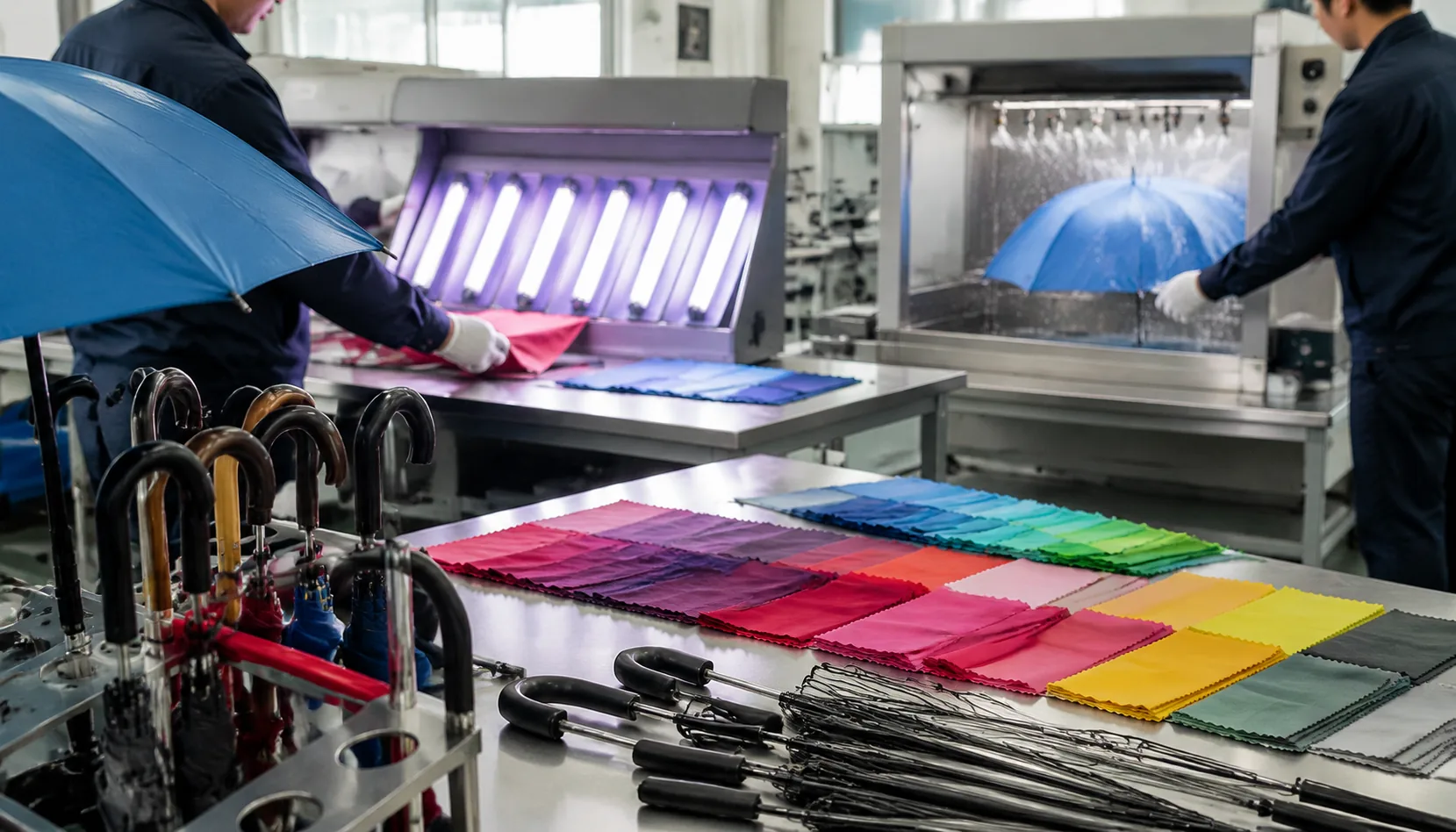
Colorfast Umbrella Branding Specs for Outdoor Promotions
Build colorfast umbrella specs for outdoor promotions, covering fabric dyeing, ink durability, UV exposure, water testin...
Read More »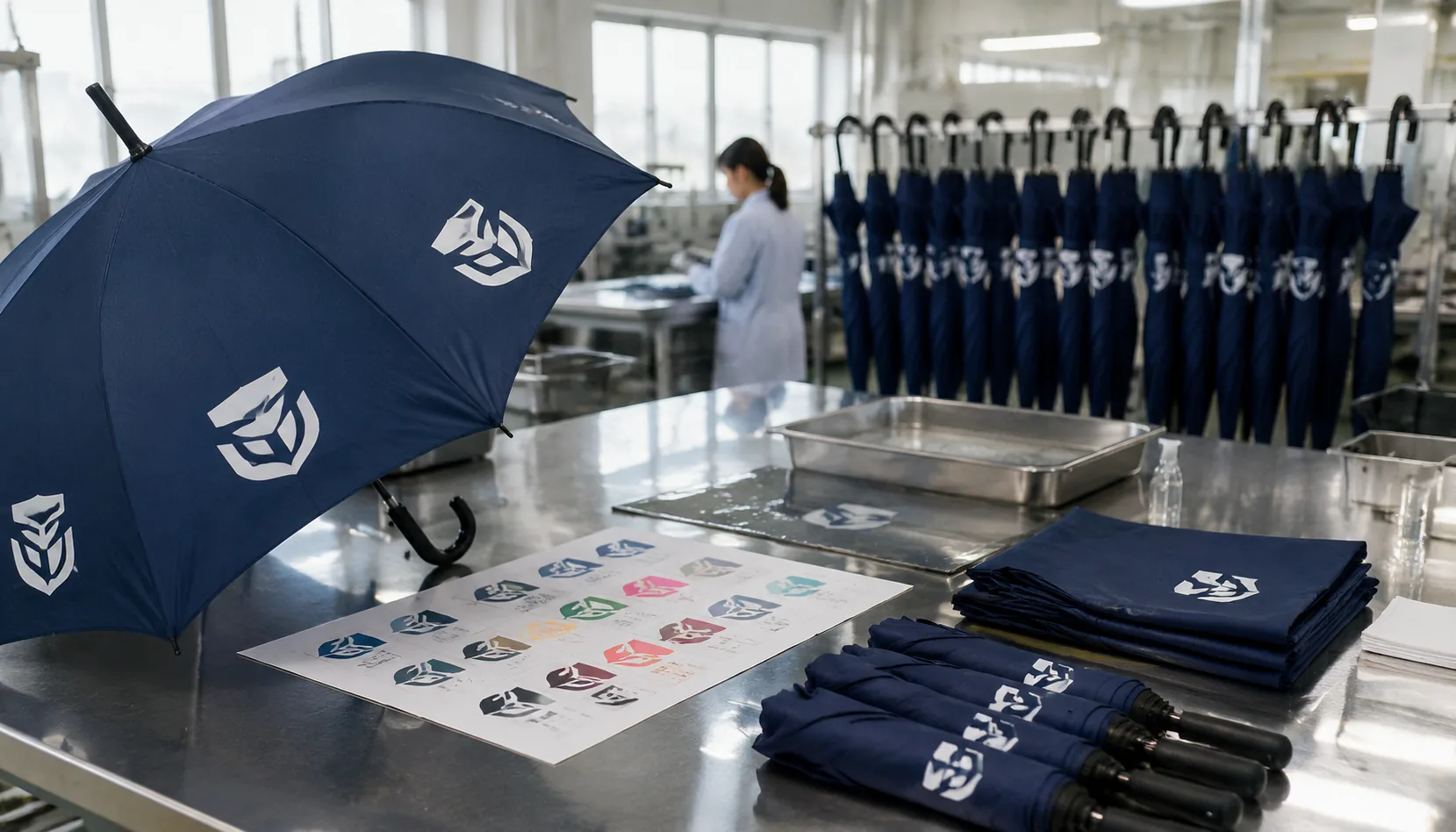
Colorfast Logo Printing Tests for Branded Rain Umbrellas
Define rub, rain, UV, and adhesion checks so printed umbrella logos survive wet use, sun exposure, packing friction, and...
Read More »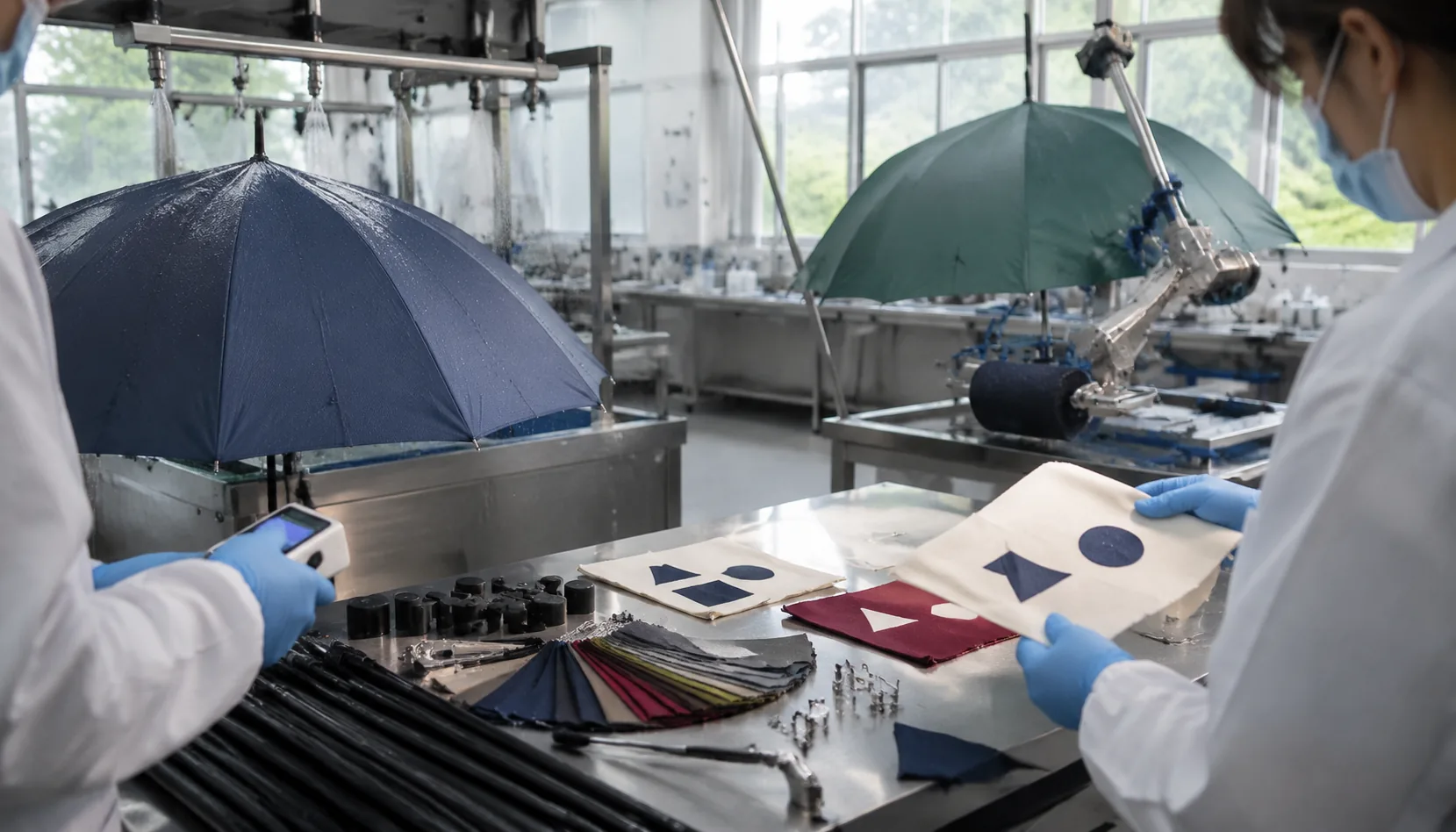
Logo Durability Testing for Branded Umbrella Programs
Plan branded umbrella orders with logo durability checks, AQL 2.5 inspection points, fabric tests, and approval steps be...
Read More »