Colorfast Logo Printing Tests for Branded Rain Umbrellas
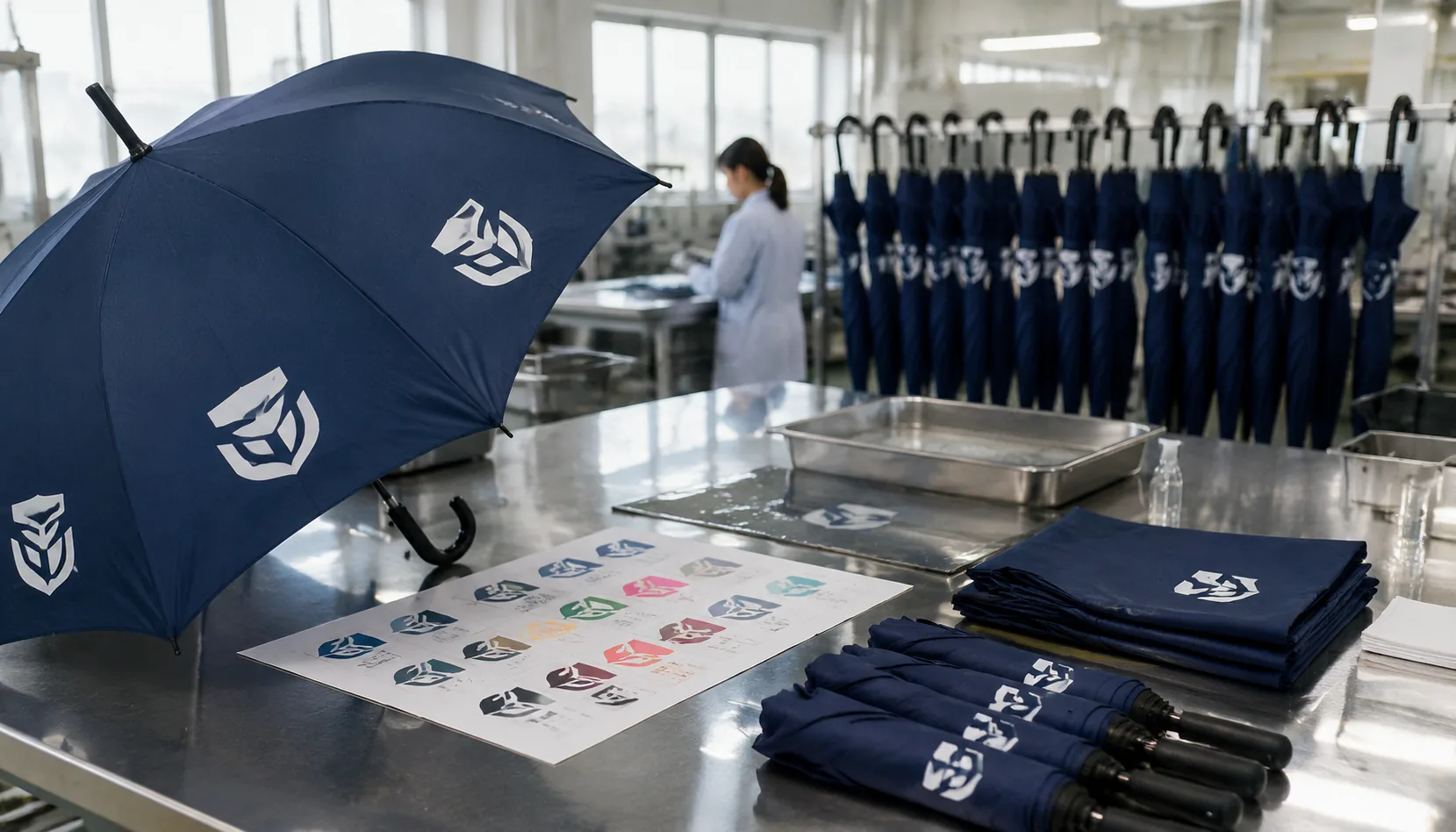
A logo that looks sharp at press approval can still fail after rain runoff, sleeve friction, or a week of summer sun, and buyers usually discover it when cartons are already in AQL 2.5 inspection. On our umbrella line in Songxia, we treat colorfast logo printing tests as production controls, not paperwork: rub checks, simulated rain, UV exposure, and tape adhesion all need clear limits before bulk printing starts.
Identify Where Logo Failure Usually Starts
Logo failure usually starts on the fold lines, not in the open flat panels where buyers first inspect the sample. On a 23" auto-open umbrella with 8K steel ribs, the canopy is folded into the same valleys every time, so screen-printed ink can crack if the paste sits too thick or the 190T pongee has a slick water-repellent finish that was not corona-treated or properly cleaned. Heat-transfer logos fail differently: the carrier film may look sharp on day one, then the corners lift after repeated folding because the press temperature, dwell time, or peel timing was wrong. In colorfast logo printing tests, I always check the logo after wet folding, dry folding, and sleeve insertion, because a flat rub test alone misses the stress that real users create in the first week.
Color bleeding after rain is usually a chemistry and drying problem, not just a “bad ink” problem. Dark navy, red, and black can migrate into white or yellow logos when low-grade disperse dye in the canopy fabric is combined with insufficient curing, especially on budget 170T/190T polyester. PU, silver UV, and Teflon-type coatings also change ink adhesion; the same logo formula that bonds well to plain 210T pongee may sit on top of a coated surface and wash off after a 30-minute rain soak. For rain umbrella logo testing, we wet the printed area, press it against white cotton or white paper under light pressure, then inspect for staining, haloing, and edge blur. This is where umbrella print durability has to be judged together with fabric lot approval, because two black pongee rolls from different dye houses can behave differently.
Abrasion from sleeves and export packing compression is the defect many office inspections underestimate. A printed canopy that passes initial branded umbrella quality control can still arrive with scuffed logos if the umbrella is forced into a tight matching sleeve before the ink fully cools or cures, then compressed 48 to 72 hours in cartons during FOB or DDP transit. Rubberized handles, PVC nameplates, and plastic tips can also press against the same logo area when cartons are overfilled. Our standard practice at ZheBrella is to include sleeve rub, carton pressure, and folded-storage checks before AQL umbrella inspection, especially for promotional orders above 3,000 pieces. For AQL 2.5 final inspection, inspectors should open samples from inner cartons, not only top cartons, and compare logo edges, fold-line cracking, and color transfer against the approved pre-production sample.
Choose Tests Based on Use Case and Climate
The right colorfast logo printing tests depend on how the umbrella will be abused after delivery, not on what looks good in a sample photo. For a one-day event giveaway, I normally focus on dry/wet rub testing, tape adhesion, and a short artificial-rain check because the buyer mainly needs the logo to survive handling, packing, and a few storms. For retail umbrellas, the threshold should be higher: 190T or 210T pongee with screen print, heat transfer, or sublimation should pass wet rub after soaking, tape pull at the ink edge, and repeated folding without cracking at rib contact points. POE and PVC domes need separate checks because ink sits differently on plastic film than on woven polyester; a tape test that passes on pongee can fail badly on clear PVC after humidity exposure.
Water soak and artificial rain are not the same test, and confusing them is a common mistake in rain umbrella logo testing. A 30-minute water soak tells us whether pigment bleeds, transfer film lifts, or white ink turns gray under standing water. Artificial rain, usually sprayed at multiple angles while the canopy is opened on a 23 inch, 27 inch, or 30 inch frame, shows whether water impact and runoff attack the printed edge. For hotel loaner umbrellas, I add folding-cycle checks because staff will open, close, shake, and strap the umbrella several times per day; 300 to 500 folding cycles is more meaningful than a perfect flat-panel print test. On double-canopy vented windproof models, the logo position should also be checked near seams and vents where tension changes during gusts.
UV exposure matters most for umbrellas sold through retail or used in resorts, outdoor cafés, golf events, and coastal hotels. A UPF 50+ black-coated canopy may protect users, but the printed logo still needs accelerated UV checks to confirm red, navy, yellow, and metallic inks do not fade unevenly. For branded umbrella quality control, our standard practice at ZheBrella is to combine umbrella print durability checks with AQL umbrella inspection, usually AQL 2.5 for major defects, so print failures are judged together with frame, rib, shaft, runner, and sewing issues. Event buyers can accept lighter durability if the MOQ price target is tight; retail brands should not. Hotel loaner umbrellas need the toughest standard because every failed logo becomes visible in the lobby, not hidden in a customer’s closet.
Account for Fabric, Coating, and Ink Compatibility
Fabric choice changes the whole print-risk profile before the first squeegee touches the panel. Standard 190T pongee is usually the easiest canopy for spot-color screen printing because the weave is tight enough for clean logo edges but not so dense that ink sits like a brittle film. 210T pongee gives a smoother retail feel, but its higher yarn density can reduce ink penetration, so adhesion depends more on surface energy and curing discipline. Basic polyester can vary widely; a low-cost 170T/180T polyester may drink ink unevenly and show fuzz at small text, while a denser promotional-grade polyester behaves closer to pongee. For umbrella print durability, I trust test panels more than fabric names on a quote sheet. Two mills can both call a canopy “190T pongee,” yet one has a softer hand and the other has heavier water-repellent finishing that rejects the same ink system.
Coatings are where many failed logos start. Teflon-type water repellency, PU backing, silver UV coating, and black glue UPF 50+ layers all change ink holdout, drying, and rub resistance. A UV canopy printed on the coated side may need a different ink binder than a plain rain umbrella, and some silver-coated fabrics show cracking when the print crosses fold lines near the rib tips. Our standard practice at ZheBrella is to run pre-production strike-offs on the actual bulk fabric, not a warehouse substitute, especially for heat-transfer logos, silicone inks, metallic inks, and large solid blocks over 120 mm wide. Water-repellent finishes can require adjusted mesh count, slower flash-off, higher catalyst ratio, or a switch from conventional plastisol-style transfer to a polyurethane-based transfer film. Without that adjustment, the logo may pass a desk review and still peel after 20 wet-fold cycles.
Good colorfast logo printing tests should simulate how the umbrella is used: rain, folding pressure, hand contact, and storage while damp. For rain umbrella logo testing, we normally check dry rub, wet rub, tape pull after full cure, water soak, accelerated folding, and color migration on light canopies such as white, beige, and sky blue 190T pongee. A practical branded umbrella quality control plan also compares printed panels before and after water-repellent spray testing, because some finishes bead beautifully but weaken surface adhesion. For bulk orders, I tie these checks into AQL umbrella inspection rather than treating printing as a separate art approval; logo defects are still product defects. On a 23" auto-open umbrella or 30" golf umbrella, a small adhesion failure becomes highly visible because the canopy is under tension. That is why colorfast logo printing tests belong before mass cutting, not after 5,000 finished umbrellas are packed for FOB shipment.
Set Inspection Standards Before Bulk Production
Inspection standards must be locked before bulk production, not argued over after 20,000 panels are printed. For branded umbrellas, I like to approve a signed print standard sheet that shows logo size, exact placement, Pantone or LAB color target, print method, and viewing distance. Logo position tolerance should be numeric: for most 21" and 23" folding umbrellas, ±3 mm from the approved mark is realistic; for 27" and 30" golf umbrellas, ±5 mm is usually fair because panel arc and sewing tension move the artwork. Color tolerance should also be defined before production, not judged by phone photos. A common rule is Delta E ≤2.0 for retail brands and ≤3.0 for promotional orders, checked under D65 light. These are the basic colorfast logo printing tests that prevent disputes between buyer, printer, and QC team.
Defect limits need plain language. A pinhole under 0.5 mm outside the logo’s main visual area may be cosmetic; three pinholes inside a white letter on a dark 190T pongee canopy should be major. Smudging, ink bleeding, ghosting, missing strokes, poor opacity, and jagged transfer edges must be classified by severity. For heat-transfer logos, the edge halo should normally stay within 0.5–1.0 mm; lifted corners, cracked film, or adhesive marks visible at arm’s length are not acceptable. For screen printing, registration drift over 1 mm on two-color artwork should be a major defect. This is where umbrella print durability connects directly with branded umbrella quality control: a logo can look acceptable on the packing table but fail badly after flexing over fiberglass ribs in rain.
Use AQL 2.5 for major print defects in final inspection, with a separate list for minor cosmetic issues so the factory does not hide weak workmanship behind vague wording. In AQL umbrella inspection, I separate functional print issues from cosmetic ones. Functional failures include ink transfer when rubbed wet, logo cracking after open-close cycling, delamination on POE or EVA canopies, and color bleeding onto adjacent panels. Cosmetic issues include tiny dust spots, slight edge roughness, or marginal color variation that does not change brand recognition. Rain umbrella logo testing should include dry rub, wet rub, tape pull for transfer adhesion, and water exposure for at least 30 minutes before shipment approval. Our standard practice at ZheBrella is to keep the approved pre-production sample, print standard sheet, and defect boundary photos together at the inspection table.
Document Results for Reorders and Claims
The strongest defense in a reorder dispute is not an email promise; it is a retained approval package. For every branded umbrella program, keep one signed pre-production sample, one bulk-production sample, Pantone references, print artwork files, ink or transfer-film specs, canopy fabric lot details, and photos from each stage of rain umbrella logo testing. I prefer photos shot under consistent light with a gray card, because a navy 533C logo on black 190T pongee can look acceptable in a warehouse and wrong under retail lighting. For screen print, record mesh count, ink type, curing temperature, and rub-test results. For heat transfer and sublimation, record press temperature, dwell time, pressure, and peel method. These records turn colorfast logo printing tests into evidence, not opinion, especially when the second order ships six months later using a new fabric lot or a revised logo file.
Batch records should connect the umbrella to the exact production reality: PO number, SKU, rib structure such as 8K steel or 10K fiberglass, canopy material like 190T/210T pongee or POE, coating details such as Teflon or UPF 50+, print position, carton marks, inspection date, and inspector name. In branded umbrella quality control, we attach test photos for dry rub, wet rub, tape pull, folded-abrasion checks, and simulated rain exposure, then file them with the AQL umbrella inspection report. If the agreed standard is AQL 2.5 for major defects, print smearing, logo cracking, wrong Pantone, and off-center placement must be classified before shipment, not argued after delivery. Our standard practice at ZheBrella is to keep approved samples and digital batch records for repeat-order reference, because umbrella print durability depends on the whole combination of fabric, coating, ink, and curing—not the logo artwork alone.
Clear documentation also changes the tone of FOB and DDP claim negotiations. Under FOB, once goods pass inspection and load at Ningbo or Shanghai, the buyer needs strong proof to claim a production fault instead of warehouse damage, transit abrasion, or poor storage. Under DDP, the supplier may control more logistics, so photos of export cartons, inner polybags, moisture condition, and random sample tests help separate print failure from handling damage. Distributors move faster when they can show end clients a clean trail: approved sample, Pantone target, bulk photo, test result, AQL report, and corrective-action proposal. For reorders, the same file prevents silent drift in logo color, placement, and adhesion. Good colorfast logo printing tests do not eliminate every claim, but they make replacement quantities, credit notes, and remake schedules much easier to negotiate without damaging the buyer-supplier relationship.
Frequently Asked Questions
What print defects should be treated as major in umbrella inspection?
Major defects usually include peeling logos, severe color bleeding, incorrect logo placement, missing prints, and stains visible at normal viewing distance. Minor shade variation may be acceptable if it stays within the approved tolerance.
Do windproof frames affect logo durability testing?
Indirectly, yes. Double-canopy windproof umbrellas and fiberglass ribs flex more during use, so printed areas near folds and vent seams should be checked after repeated opening and closing cycles.
What logo printing tests should be included before mass production?
For branded rain umbrellas, approve a pre-production sample after dry rub, wet rub, cross-hatch tape adhesion, water exposure, and basic UV aging checks. Buyers should confirm the test method, fabric type, ink system, and acceptable color change before bulk printing starts.
How are logo print defects judged during an AQL umbrella inspection?
Under AQL 2.5, common major defects include logo peeling, incorrect color, obvious misregistration, ink bleeding, or print transfer after rubbing. Minor defects may include small pinholes, slight edge roughness, or tiny color variation if they do not affect brand readability.
Can printed umbrella logos survive packing friction during sea shipment?
Yes, but the factory should test folded umbrellas with sleeve contact and carton compression to simulate transport. For bulk OEM orders, use tissue separation or adjusted curing time if dark prints, metallic inks, or large logo areas show scuffing after 24–48 hours of packed storage.
Looking to Launch Your Custom Umbrella Line?
ZheBrella is a Zhejiang-based OEM/ODM umbrella manufacturer with 17 years of export experience. Free design, low MOQ from 100 pieces, windproof construction, full-color print.
Get Free Quote Now »People Also Search For
Related Articles
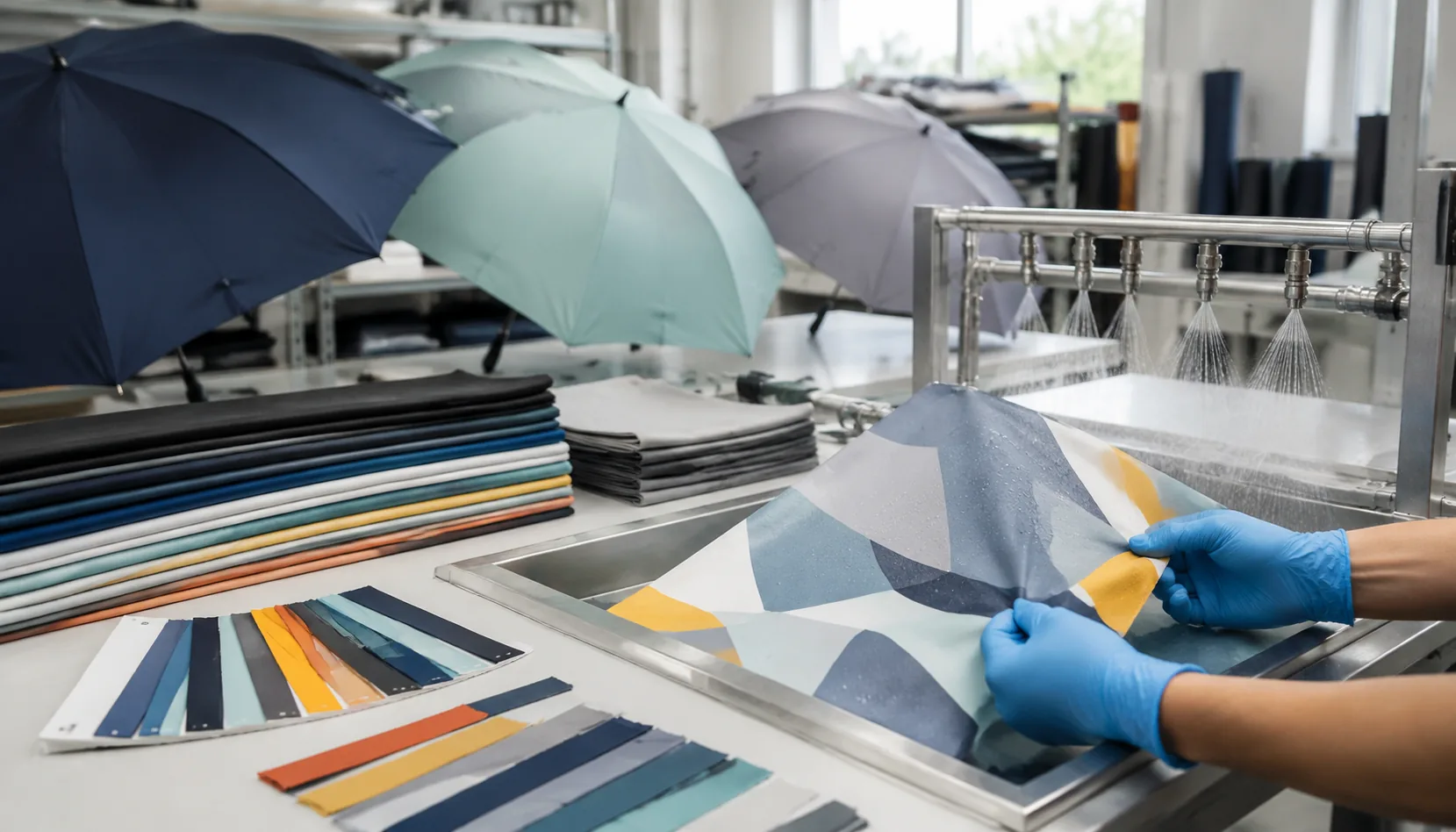
Colorfast Logo Printing Tests for Bulk Branded Umbrellas
Reduce logo fading, rubbing, and color drift with practical colorfastness tests, fabric choices, AQL inspection, and app...
Read More »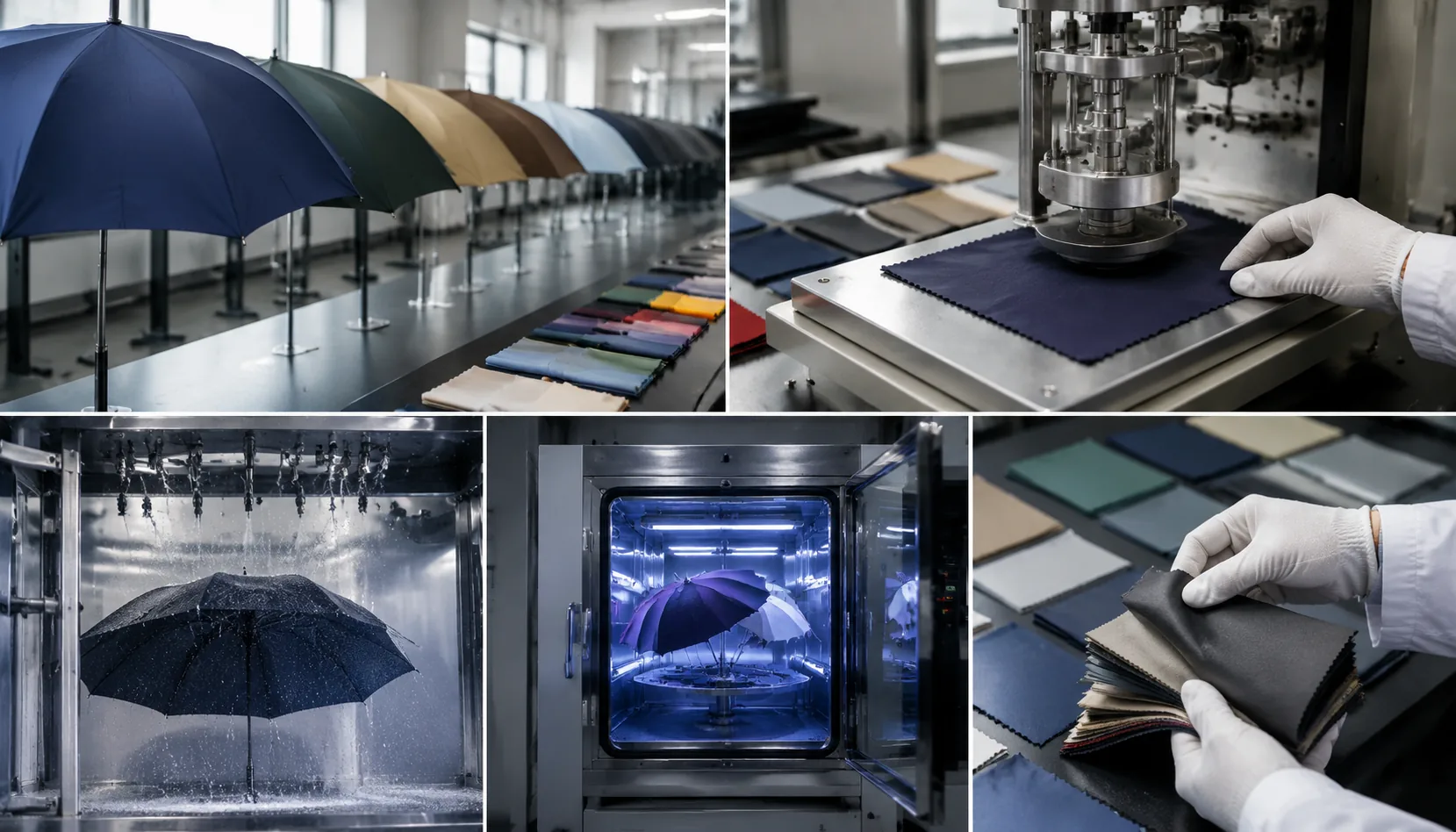
Logo Print Durability Tests for Branded Umbrella Orders
Learn which rub, tape, fold, and wet tests help buyers confirm umbrella logo durability before bulk production and final...
Read More »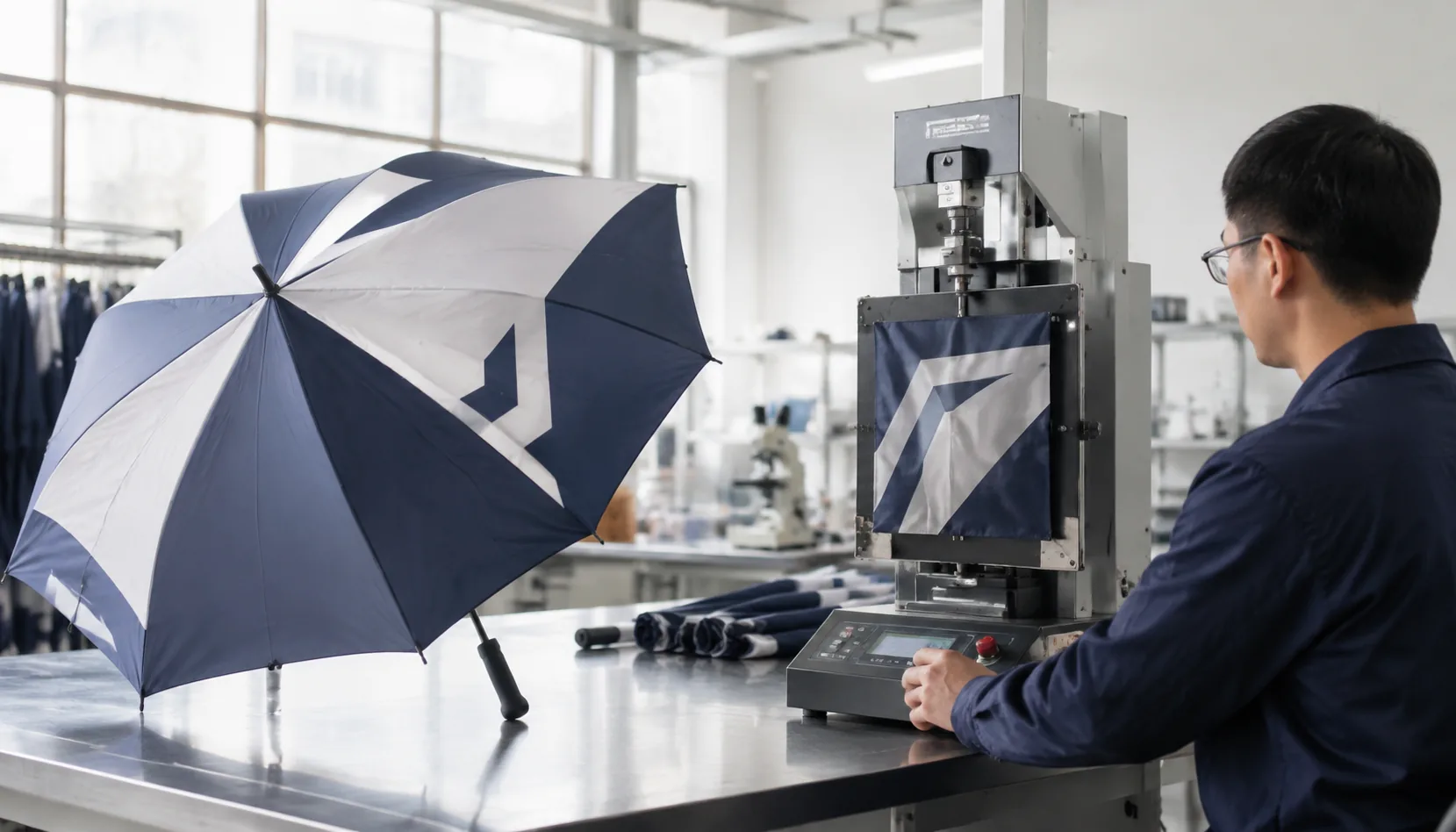
Print Durability Testing for Branded Umbrella Programs
Compare rub, adhesion, rain, UV, and folding tests for umbrella prints, with practical specs for 190T/210T pongee and AQ...
Read More »