Colorfast Logo Printing Tests for Bulk Branded Umbrellas
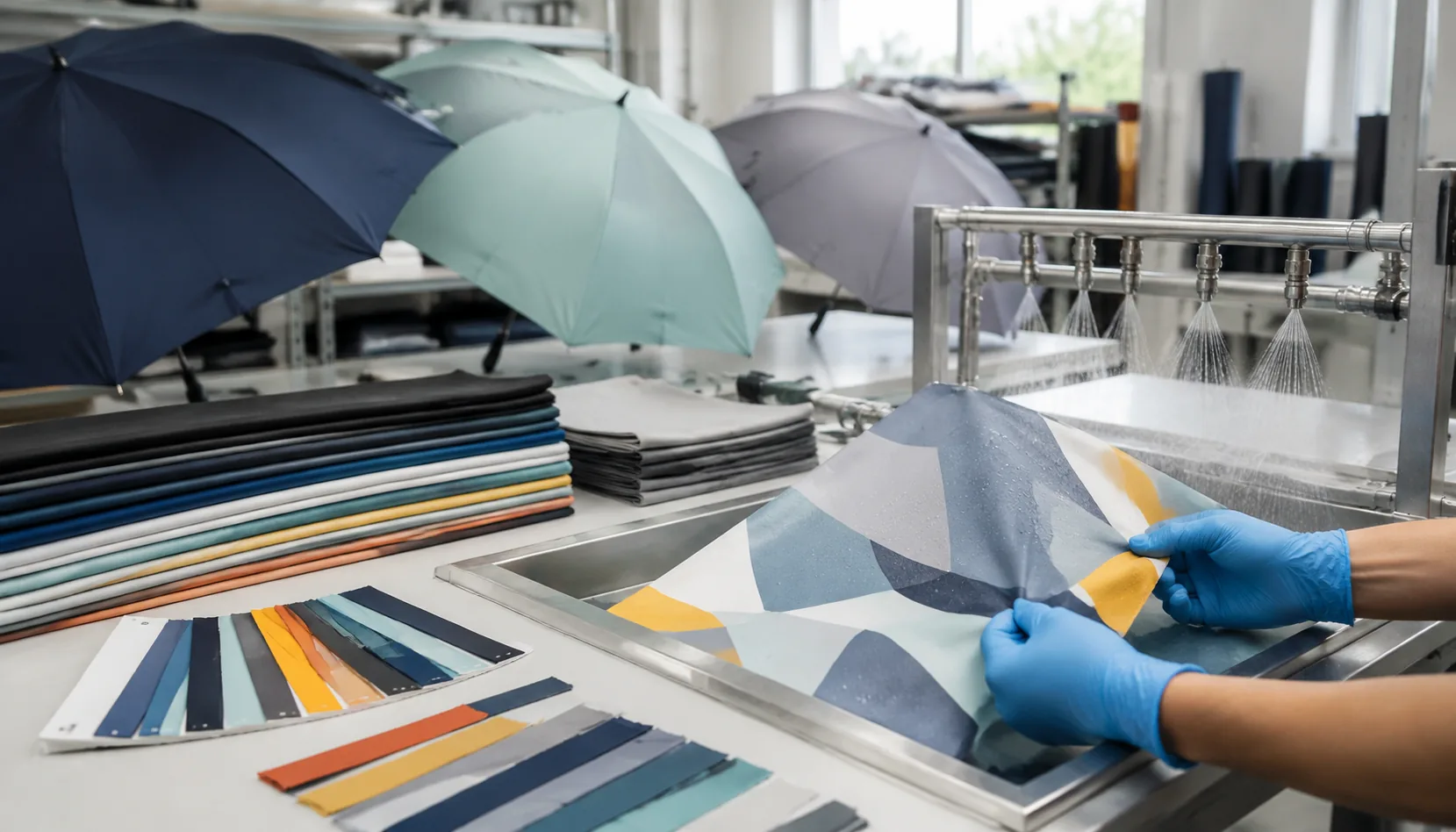
When a branded umbrella order fails in the field, the complaint is rarely about the frame first; it is the logo fading, rubbing onto hands, or shifting color after rain and sun. On our Songxia production floor, colorfast umbrella logo printing is checked before bulk cutting and again during inline inspection, because fabric coating, ink system, curing time, and packing friction all affect the final result.
Why Colorfastness Matters for Branded Umbrella Programs
Colorfastness is where a cheap umbrella program usually fails first: not in the frame, but in the logo after the first wet weekend. For colorfast umbrella logo printing, we test against rain rub, dry rub, folding pressure, and UV exposure because each failure mode looks different in the buyer’s hands. A screen-printed white logo on 190T black pongee may look clean at packing, then gray out after two storms if the ink film is under-cured. A heat-transfer mark can pass visual inspection, then crack at the fold lines on a 23" auto-open canopy. Sublimation is safer for all-over polyester graphics, but it still needs shade control because navy, red, and corporate orange drift easily between fabric lots.
The bigger commercial risk is ink transfer during bulk packing. Umbrellas are compressed 12 or 24 pcs per inner carton, often while the canopy still carries humidity from sewing, steaming, or rainy-season storage in Zhejiang. If the print surface is not fully cured, the logo can ghost onto the sleeve, the next umbrella panel, or a light-colored POE/PVC window insert. That is why branded umbrella print testing should include wet crocking, dry crocking, tape pull, and stacked-pressure checks, not just a nice approval photo. Our standard practice at ZheBrella is to hold printed panels 24 hours before final sewing when the ink system requires it, then inspect logo edges, opacity, registration, and transfer marks before carton sealing.
Repeat orders create another problem: the logo may not fail physically, but the brand color can shift between shipments. A 10,000 pc retail order split across U.S. and EU deliveries needs the same Pantone target on every lot, whether the canopy is 190T pongee with Teflon coating, 210T pongee with UPF 50+, or transparent EVA. Umbrella logo quality control should lock the approved strike-off, ink formula, mesh count or transfer film spec, curing temperature, and fabric batch reference. During bulk umbrella inspection, we check shade bands under D65 light and apply AQL umbrella inspection rules, commonly AQL 2.5 for major defects, so faded logos, color mismatch, and ink transfer are caught before FOB or DDP shipment instead of becoming distributor returns.
Fabric, Ink, and Coating Factors That Change Results
Fabric density changes logo test results more than many buyers expect. A 190T pongee canopy has a slightly more open weave than 210T, so screen ink can sit deeper in the yarn valleys and show better dry-rub resistance, while fine digital details may look less sharp. On 210T pongee, the smoother face gives cleaner edges for small text, QR codes, and gradient artwork, but the ink film is more exposed during wet rubbing. For colorfast umbrella logo printing, I always want the buyer to confirm fabric spec before approving the artwork proof, because the same Pantone 186C red can test differently on navy 190T than on black 210T. During branded umbrella print testing, we check dry rub, wet rub, tape pull, folding abrasion, and water spray after curing, not only the first sample appearance under showroom lighting.
Coatings are the usual hidden variable in umbrella logo quality control. UPF 50+ coatings, especially silver, black-out, or PU-backed layers, can block ink penetration and make adhesion depend almost entirely on surface treatment and curing temperature. Teflon-type water-repellent finishes create another problem: they do their job by lowering surface energy, which is exactly what makes some inks bead, crawl, or peel after wet rubbing. On coated pongee, our standard practice at ZheBrella is to print test swatches before bulk cutting when the logo is large, metallic, or close to a seam line. A logo that passes on untreated 190T may fail after a C6/C0 water-repellent finish, so the print route must be chosen after the canopy fabric and coating are locked, not before.
Screen ink, digital ink, and heat transfers fail in different ways, so one generic test report is not enough for bulk umbrella inspection. Screen printing gives strong opacity and good cost control for 1–3 spot colors, but thick ink can crack near fold lines if the curing tunnel is too hot or too fast. Digital printing handles gradients and photo artwork, yet wet-rub resistance depends heavily on pretreatment and post-cure. Heat-transfer logos are clean for small MOQs and multicolor marks, but edges can lift on highly water-repellent pongee or after repeated opening and closing. For AQL umbrella inspection, we normally separate appearance defects from functional print failures: minor pinholes may fall under AQL 2.5, but logo peeling, severe color migration, or failed wet-rub testing should be treated as critical for retail and promotional orders involving colorfast umbrella logo printing.
Practical Tests Buyers Should Request
Sun exposure testing is the one buyers skip most often, then complain about after a summer retail season or outdoor event. Put printed samples under UV exposure for 24 to 48 hours, or at minimum place them in direct sun for several days and compare color shift against the approved Pantone reference. Fluorescent inks, white logos on dark navy pongee, and metallic gold/silver transfers are the usual troublemakers. For bulk umbrella inspection, request a written test log tied to the production batch: fabric roll number, ink batch, curing time, operator, test result, and retained sample photo. Final inspection should still include dry rub, wet rub, visual registration, pinhole checks, and carton pull samples, but it should confirm process control rather than discover basic failure. For colorfast umbrella logo printing on rush promotional orders, I would rather spend 2 extra days on strike-off testing than ship a 10,000-piece DDP order where the sponsor logo smears after the first rain. That cost is small compared with chargebacks, rework, and missed event dates.
Using AQL 2.5 to Control Print Defects
AQL 2.5 is useful for print control because it forces the inspection team to open cartons across the shipment, not just the clean samples sitting on top. For colorfast umbrella logo printing, we normally pull units by ANSI/ASQ Z1.4 general inspection level II, then apply AQL 2.5 for major print defects and tighter internal judgment for brand-critical issues. The inspector checks logo position against the approved artwork file and golden sample: center distance from rib seam, distance from panel edge, rotation angle, and whether the print crosses a stitch line. On a 23" 8K straight umbrella, I usually allow only small position drift, because a 5 mm shift is already visible when the canopy is open. For repeat orders, the carton sampling must include early, middle, and late production cartons, since screen tension, heat-transfer platen temperature, and operator handling often change during a 3,000- or 10,000-piece run.
Color consistency is not judged by memory; it should be checked against a Pantone target, approved strike-off, or printed fabric swatch under consistent light. In branded umbrella print testing, we look for shade variation between panels, between cartons, and between print methods, especially when one logo uses both white underbase and CMYK layers. Pongee 190T and 210T absorb ink differently after Teflon or UV UPF 50+ coating, so the same ink formula can look duller on coated navy fabric than on uncoated white fabric. Pinholes are checked by holding the open canopy toward light and flexing the printed panel slightly; tiny missed ink spots often appear around rib pressure points and folded creases. Smudges and ghosting usually come from stacking panels before the ink is cured, while blurred logo edges point to loose screens, wrong squeegee pressure, or heat-transfer film movement during pressing.
Peeling and contamination are where umbrella logo quality control must be practical, not polite. During bulk umbrella inspection, the inspector should rub the logo with a dry white cotton cloth, then do a light wet rub if the buyer’s spec requires it; for heat-transfer logos, we also pick gently at the edge and fold the panel over the print area to expose weak adhesion. Panel contamination includes ink dots, adhesive marks, dirty handprints, fabric oil, loose threads trapped under transfer film, and PVC/POE sticking marks on transparent umbrellas. Under AQL umbrella inspection, one or two minor specks may pass if they are outside the brand area, but peeling, wrong logo color, serious smudging, or a logo printed on the wrong panel should be treated as major or critical depending on the contract. Our standard practice at ZheBrella is to record defect photos by carton number, because carton-level clustering tells production whether the problem came from one print table, one sewing line, or poor packing before final QC.
Linking Test Requirements to MOQ, Lead Time, and Terms
Extra colorfast umbrella logo printing tests should be tied to the buyer’s order size and approval path, not treated as a free add-on after artwork is confirmed. For a normal repeat logo on 190T pongee with screen printing, we usually need 3 to 5 days for strike-off sampling after vector artwork and Pantone numbers are locked. If the buyer asks for wet rub, dry rub, tape pull, salt-spray exposure on metal trims, or 24-hour water soak checks, add another 2 to 4 days because the ink must cure before testing. Heat-transfer logos on 210T pongee or coated polyester need separate checks for edge lifting after folding, especially on compact 21" auto-open-close umbrellas where the canopy is under more compression. Sublimation is faster for full-panel graphics, but only works properly on light polyester; it is not a shortcut for dark navy or black promotional umbrellas.
MOQ changes when branded umbrella print testing requires dedicated ink mixing, fixture setup, or destructive testing. A 500-piece promotional order can often share standard fabric stock, but custom Pantone canopy fabric, UPF 50+ coating, Teflon water-repellent treatment, or POE/PVC/EVA transparent panels may push the practical MOQ to 1,000 or 3,000 pieces. The writer should explain that failed print tests are not just a lab issue; they can trigger re-cutting panels, reprinting canopies, or replacing a whole batch before rib assembly. For bulk umbrella inspection, the print standard should be written into the purchase order before production: acceptable Pantone tolerance, logo position tolerance, rub-test method, and whether AQL 2.5 covers cosmetic print defects as major or minor defects. Loose wording creates arguments at final inspection when cartons are already packed.
Lead time must include approval buffers differently for FOB and DDP terms. Under FOB Ningbo or Shanghai, the buyer’s risk starts after shipment, so umbrella logo quality control should be closed before container loading; I would add 3 to 7 days if the importer needs internal brand approval on pre-production samples. Under DDP, the supplier controls export booking, customs, duty, and final delivery, so failed approvals can also miss vessel cutoffs or courier delivery windows. For a typical 3,000 to 10,000-piece order, standard production may run 25 to 35 days after deposit and sample approval, but colorfast umbrella logo printing tests and buyer sign-off can stretch that to 35 to 45 days. AQL umbrella inspection should be booked only after the tested standard is frozen; inspecting against a moving target wastes time and usually costs more than doing the print test properly at the start.
Frequently Asked Questions
Do UPF 50+ coatings affect printed logo durability?
They can. Some UV-blocking or silver coatings change ink adhesion, so the factory should test the exact fabric, coating, and print method together before bulk production.
What print defects should be checked during final inspection?
Common checks include logo position, color drift, ink cracking, peeling transfers, smudges, stains, and rubbing marks. These should be listed in the approved QC checklist.
What colorfastness tests should be approved before bulk branded umbrella production?
For most branded umbrella orders, approve dry rub, wet rub, light exposure, and basic water-spray tests on the final fabric and logo method. The approved pre-production sample should match the confirmed Pantone reference before mass production starts.
How many printed umbrellas are usually checked during AQL inspection?
Most importers use AQL Level II with critical defects at 0, major defects around 2.5, and minor defects around 4.0. The exact checked quantity depends on lot size, but logo placement, print clarity, rubbing, stains, and color drift should be included in the inspection checklist.
Which printing methods are more stable for bulk umbrella logos?
Screen printing is commonly used for solid-color logos on polyester pongee and offers good consistency at volume. Heat transfer or digital printing may be better for gradients or complex artwork, but both should be tested for adhesion and rubbing before confirming bulk production.
Looking to Launch Your Custom Umbrella Line?
ZheBrella is a Zhejiang-based OEM/ODM umbrella manufacturer with 17 years of export experience. Free design, low MOQ from 100 pieces, windproof construction, full-color print.
Get Free Quote Now »People Also Search For
Related Articles
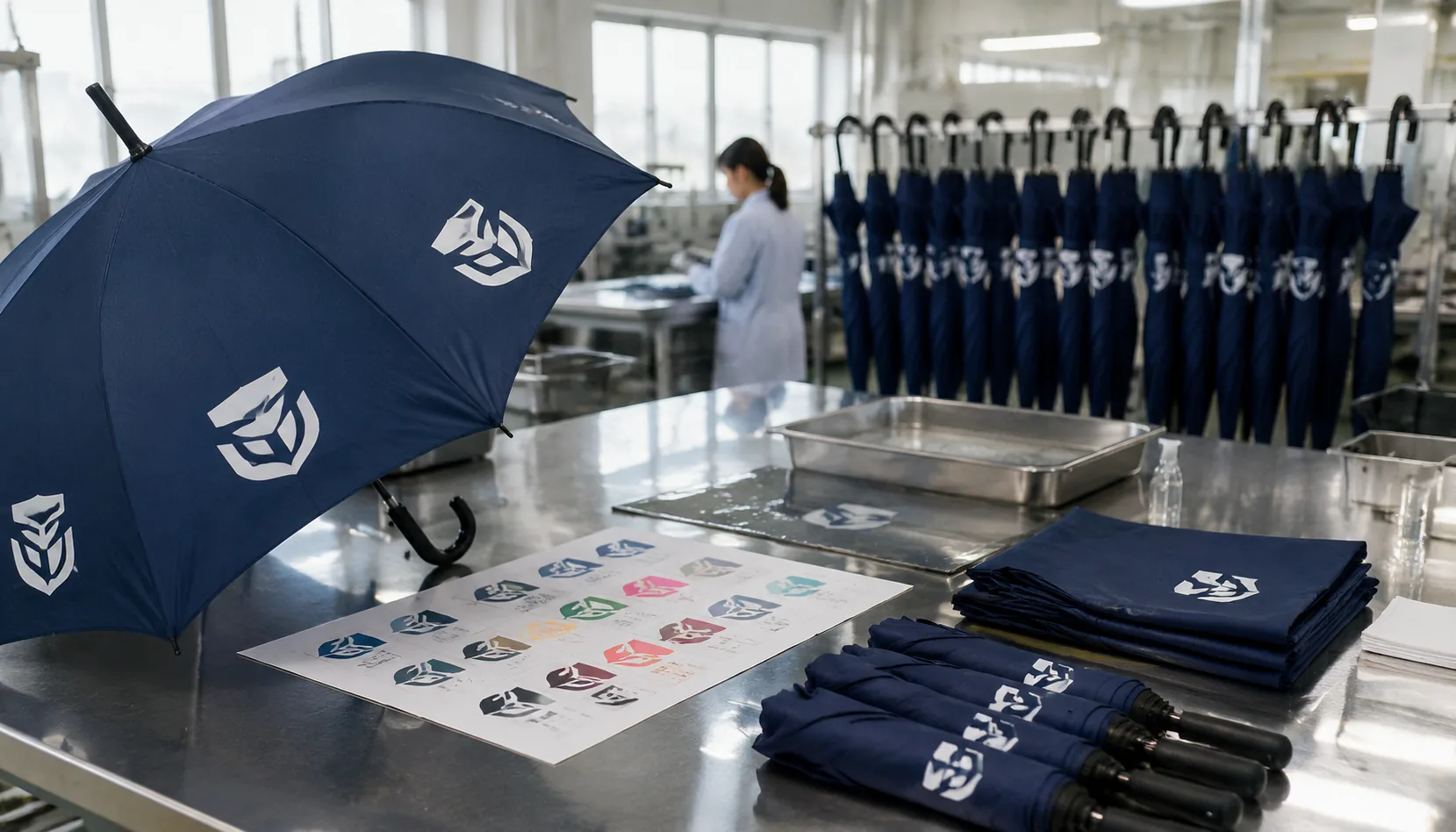
Colorfast Logo Printing Tests for Branded Rain Umbrellas
Define rub, rain, UV, and adhesion checks so printed umbrella logos survive wet use, sun exposure, packing friction, and...
Read More »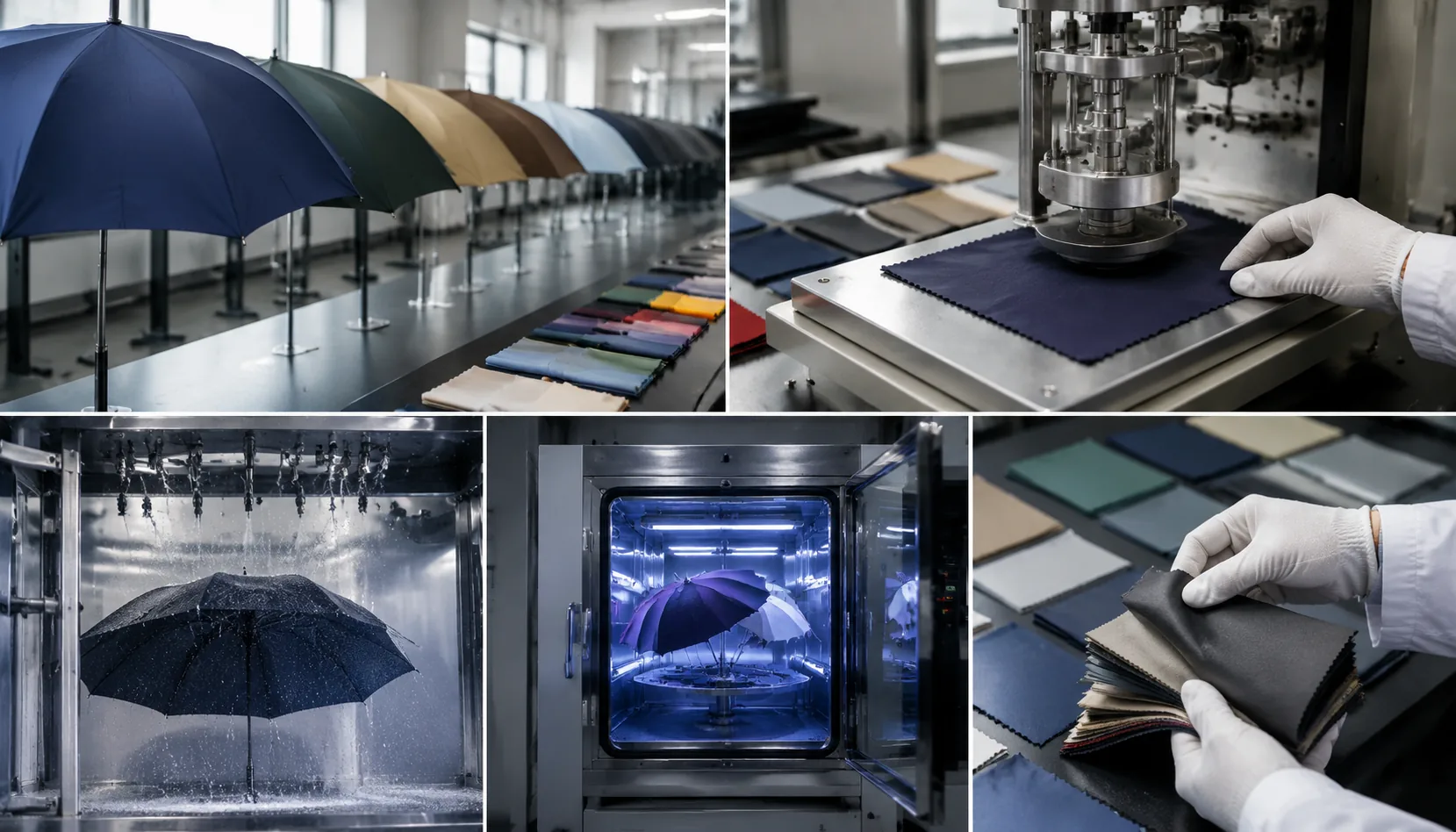
Logo Print Durability Tests for Branded Umbrella Orders
Learn which rub, tape, fold, and wet tests help buyers confirm umbrella logo durability before bulk production and final...
Read More »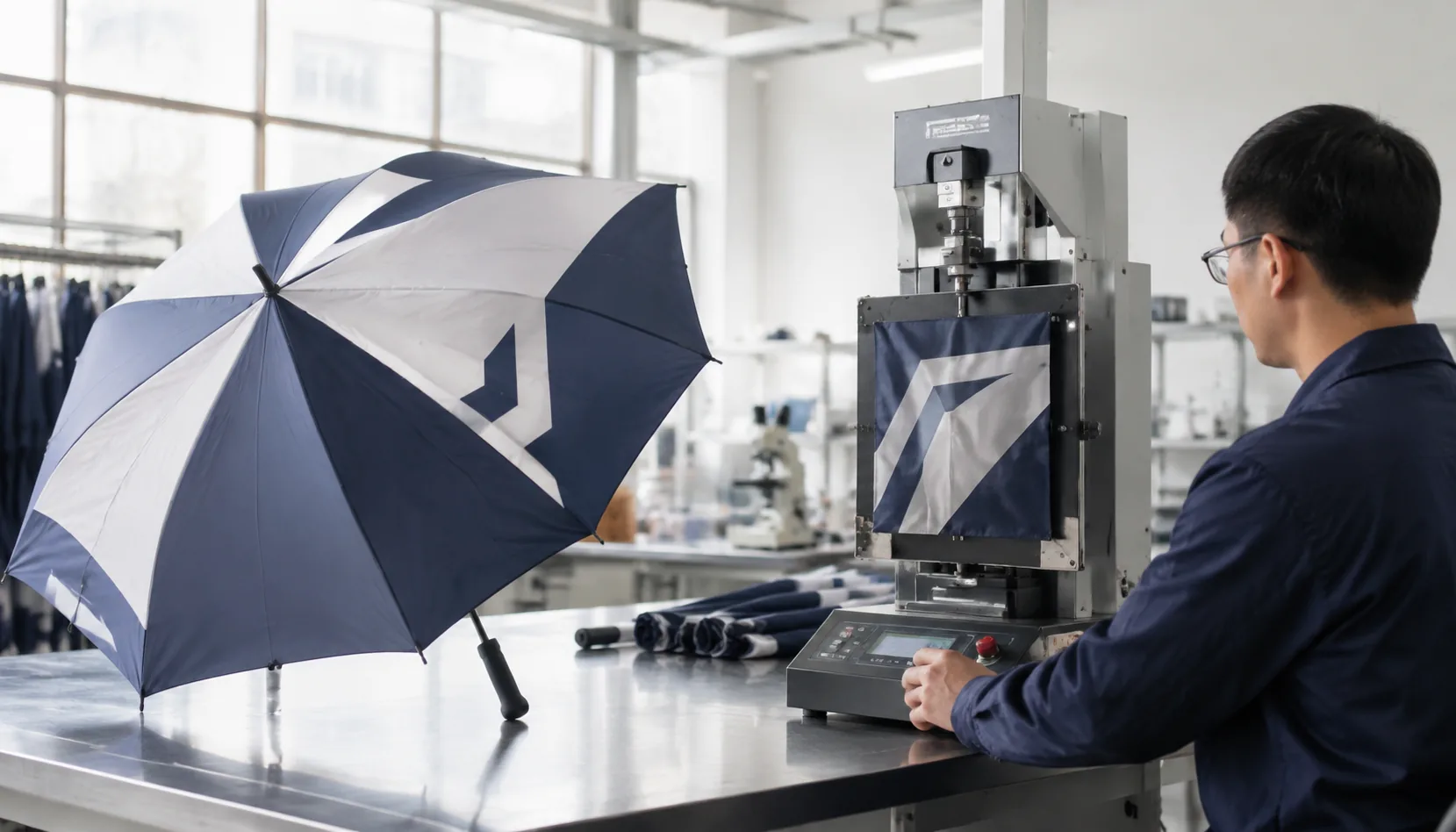
Print Durability Testing for Branded Umbrella Programs
Compare rub, adhesion, rain, UV, and folding tests for umbrella prints, with practical specs for 190T/210T pongee and AQ...
Read More »