Custom-Dyed Umbrella Fabric for Consistent Brand Programs
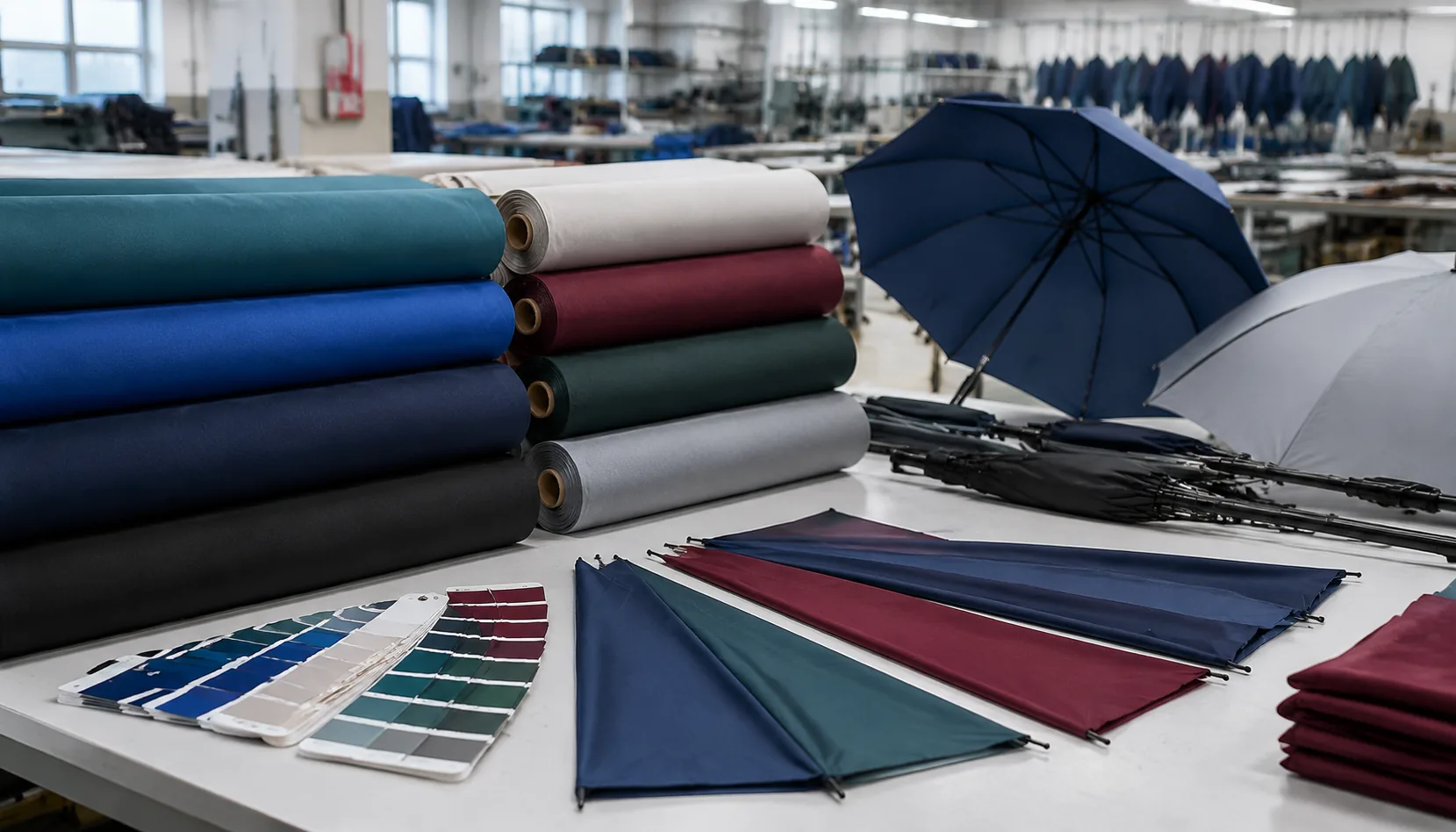
When a brand program runs across golf, folding, and promotional umbrellas, stock fabric colors rarely hold the same shade under different coatings, weights, and production dates. With custom dyed umbrella fabric, the real challenge is controlling lab dip approval, MOQ, dye-lot separation, UPF or water-repellent finishing, and final shade inspection before cutting. On our Songxia factory floor, those decisions determine whether repeat orders match the first shipment or become a color dispute.
When Custom Dyeing Beats Stock Fabric
Custom dyeing is worth paying for when the umbrella is part of a controlled brand system, not a one-off giveaway. If a hotel group needs navy umbrellas at the concierge desk for three years, or a retail chain wants seasonal shelves to match Pantone 186C red across 21-inch folding, 23-inch auto-open, and 27-inch golf models, stock fabric will drift too much. Mills change yarn lots, finishing tension, and coating recipes; what looked close in January may look warmer or duller in August. With custom dyed umbrella fabric, we approve a lab dip first, then bulk dye the pongee roll lot against the buyer’s standard under D65 and TL84 light boxes. That is the safer route for brand color umbrellas, uniforms, franchise programs, airport lounges, resorts, banks, and private label umbrella colors where the umbrella sits beside signage, apparel, bags, or packaging.
Stock fabric still has its place, and I push buyers toward it when speed, MOQ, or budget matters more than exact color control. For a 500-piece event order, available 190T or 210T pongee in black, navy, royal blue, red, or white can cut 7–12 days from the schedule and avoid dye-lot charges. Custom dyeing usually needs a practical fabric MOQ, often enough for several thousand umbrellas depending on size, canopy panels, and wastage from cutting. A dyed pongee umbrella canopy also needs extra time for lab dips, buyer approval, bulk dyeing, water-repellent finishing, colorfastness checks, and shade-band sorting before sewing. Our standard practice at ZheBrella is to reserve retained fabric swatches from each lot, because umbrella color consistency is not judged only at shipment; it matters when the buyer places the next replenishment PO six months later and expects the new batch to sit cleanly beside the old one.
Specifying Pongee Weight, Coating, and Color Target
Start the specification with pongee weight because fabric density changes both hand feel and color depth. A 190T pongee is common for promotional 21" and 23" auto-open umbrellas where budget and foldability matter; it takes disperse dye cleanly but can look slightly lighter over steel ribs because the weave is thinner. A 210T pongee gives a tighter dyed pongee umbrella canopy, better opacity, and a smoother retail-grade surface, especially on 27" golf umbrellas or double-canopy windproof styles with 8K or 10K fiberglass ribs. For brand color umbrellas, I do not recommend choosing fabric weight after color approval, because the same Pantone target can read differently on 190T versus 210T under D65 light. If the program includes compact, stick, and golf umbrellas, approve the shade on each fabric weight instead of assuming one lab dip covers all constructions.
Surface finish is the second trap in custom dyed umbrella fabric. Matte pongee usually shows the truest textile shade, while high water-repellent finishing, Teflon treatment, silver UV backing, black UV coating, or UPF 50+ layers can shift the final appearance. A navy may look deeper after water-repellent finishing; a red can lose brightness when paired with a silver UV underside; a white or pale yellow canopy may turn slightly cooler if the back coating is heavy. For private label umbrella colors, specify whether approval is for face side only, underside only, or both, because customers often judge the umbrella while open, not flat on a cutting table. Our standard practice at ZheBrella is to review finished coated panels after heat setting, not only raw dyed fabric, because coating temperature and resin pickup can move the shade.
Pantone codes are useful, but a physical standard is safer for umbrella color consistency. The purchase order should list the Pantone TPX or TCX reference, fabric weight, coating type, viewing light source, and acceptable tolerance, such as Delta E under 1.5 for strict retail programs or under 2.0 for promotional orders. Before bulk dyeing, approve lab dips on the exact pongee base, then request a pre-production canopy panel after coating and sewing, especially if logos will be screen printed, heat transferred, or sublimated. For repeat programs, keep a sealed master swatch from the approved lot and compare every incoming fabric roll before cutting. This matters more than buyers expect: one 5,000-piece order can use multiple dye vats, and mixed rolls without shade-band control will show panel-to-panel variation once the umbrella is assembled under daylight. Good custom dyed umbrella fabric starts with lab control, but it is protected by roll inspection before cutting.
Managing Dye Lots Across Repeat Orders
Dye-lot control starts before bulk fabric is booked, not after the umbrellas are sewn. For custom dyed umbrella fabric, we normally request a physical Pantone reference, brand standard swatch, or approved product sample, then run lab dips on the actual base cloth: 190T or 210T pongee, recycled PET pongee, polyester oxford, or POE/PVC/EVA if the program is transparent. A lab dip is a small dye trial, usually 3 to 5 color options, reviewed under D65 daylight and TL84 store lighting because navy, burgundy, gray, and warm beige can shift badly under mixed light. For brand color umbrellas, I recommend setting the target as Delta E 1.0 to 1.5 for premium retail programs and Delta E 2.0 as a practical ceiling for most promotional umbrellas. Anything looser than Delta E 3.0 will be visible when umbrellas are opened side by side at an event or displayed in the same retail rack.
After lab dip approval, the factory should run a bulk dip before cutting the canopy panels. Bulk dip means dyeing the actual production lot, then checking the roll head, middle, and tail for shade drift, color fastness, and coating compatibility. A dyed pongee umbrella canopy with Teflon water-repellent finish or UPF 50+ coating can look slightly darker after finishing, so approval must happen after the same finishing process planned for production. Our standard practice at ZheBrella is to keep an approved master swatch, one retained lab dip, and one retained bulk roll cutting from each order, sealed with PO number, fabric weight, coating, dye recipe, and date. For repeat orders, the dye house compares the new lab dip against that retained master instead of relying only on Pantone paper, which fades, soils, and varies between guide editions.
Buyers should understand that umbrella color consistency is a controlled tolerance, not a promise that every component will match like molded plastic. Fabric, webbing strap, sleeve cloth, hook-and-loop tape, binding, plastic tips, EVA handles, rubber-coated handles, and painted shafts all absorb or reflect color differently. Black steel ribs, fiberglass ribs, and powder-coated aluminum shafts may also read warmer or cooler next to the same canopy color. For private label umbrella colors, specify what must match exactly and what is allowed to be tonal: canopy-to-sleeve within Delta E 1.5 to 2.0, strap within Delta E 2.0 to 3.0, plastic parts by nearest available resin color unless tooling volume justifies custom compounding. On repeat orders, reserve enough greige fabric or finished dyed fabric when possible, especially for 23-inch auto-open, 27-inch golf, and 30-inch double-canopy programs where one brand may reorder across seasons and expect shelf consistency.
Building the Umbrella Around the Brand Color
The canopy color should be locked before the frame is finalized, because the rib material changes how the finished umbrella reads in hand. A dyed pongee umbrella canopy in a deep navy or bottle green looks sharper on black fiberglass ribs than on shiny galvanized steel, while bright promotional colors can tolerate white powder-coated steel if cost is the driver. For 23" stick umbrellas, we usually specify 190T or 210T pongee with 8K fiberglass ribs for a balanced retail feel; for golf umbrellas at 27" or 30", a 16K frame gives the canopy more segment lines, so any brand color umbrellas program needs panel matching checked under daylight, LED, and warehouse lighting. Custom dyed umbrella fabric is only half the job if the runner, top notch, rib joints, and stretchers visually fight the canopy.
Panel count also affects color discipline. An 8K umbrella has larger panels, fewer seams, and fewer opportunities for shade variation, which is useful for private label umbrella colors that must match packaging, web images, and previous replenishment orders. A 16K canopy looks more premium and rounder, but it doubles the number of cut panels and sewing joins, so fabric roll control and bundling become more important. On the sewing floor, we keep panels from the same dye lot together and mark roll numbers before cutting; mixing lots can create a barely visible difference indoors that becomes obvious in outdoor event photos. Matching straps, snap buttons, tips, ferrules, and handles should be approved against the canopy swatch, not chosen from a generic catalog page.
Auto-open and windproof umbrellas add more parts that need color decisions, and this is where many brand programs get untidy. An auto-open shaft introduces a push button, spring housing, runner, and sometimes a plastic safety cap; a double-canopy vented windproof design adds an underside canopy, binding tape, mesh vent gap, and extra seam exposure. If the outer canopy uses custom dyed umbrella fabric but the lower vent is stock black, the umbrella may pass a simple AQL 2.5 inspection yet still fail brand color consistency in a retail display. Our standard practice at ZheBrella is to build one pre-production sample with the exact ferrule, handle, strap, rib finish, and printed logo position before bulk dyeing, because correcting component color after 3,000 canopies are sewn is slow, expensive, and never as clean as approving the full build first.
MOQ, Quality Control, and Delivery Planning
For custom dyed umbrella fabric, MOQ is driven less by the umbrella frame and more by the dye lot economics at the fabric mill. For 190T or 210T pongee, a realistic starting point is 1,000 pieces when the model is stable, such as a 21" auto-open compact or 23" straight umbrella using a standard 8K steel or fiberglass frame. Once buyers move into less common constructions—27" golf umbrellas, double-canopy vented windproof builds, 10K/16K rib counts, or separate colors for inside and outside panels—the MOQ usually rises to 2,000–3,000 pieces per color. POE, PVC, and EVA clear canopies are a different discussion because color matching depends on film formulation, not textile dyeing. For private label umbrella colors, I always recommend consolidating SKUs early: one approved navy across 21", 23", and 30" models is easier to control than three near-identical blues ordered in separate lots.
Lab dips normally take 7–14 days after we receive Pantone, TCX, or physical swatches, and I do not trust a color approval based only on a screen image. A proper lab dip should be checked under D65 daylight and TL84 store lighting, then compared again after coating if the canopy needs Teflon water repellency, black UV backing, silver coating, or UPF 50+ treatment. A dyed pongee umbrella canopy can shift slightly after calendaring and water-repellent finishing, especially in red, orange, khaki, and deep bottle green. Our standard practice at ZheBrella is to lock one master color standard before cutting, then inspect incoming rolls by lot number, shade band, GSM, yarn density, and coating hand-feel before they reach the cutting table. For brand color umbrellas, this step prevents the classic problem where one carton looks correct and the next carton looks half a shade lighter.
Bulk production lead time is usually 35–55 days after lab dip approval and deposit, assuming normal capacity and no late artwork changes. Color quality control should be written into the purchase order, not argued after shipment: AQL 2.5 for major defects, with specific color checks on canopy panels, binding tape, sleeve fabric, handle logo, and printed artwork. Umbrella color consistency also depends on cutting discipline; mixed dye lots in one canopy are unacceptable, especially on 8-panel layouts where shade variation is obvious in daylight. For FOB Ningbo or Shanghai, buyers should reserve vessel space early during April–July and before holiday peaks. For DDP delivery to the U.S. or Europe, add time for export packing, customs data, duties, trucking appointments, and carton drop tests. I suggest approving pre-production samples at least 10 days before bulk cutting, then scheduling final inspection 3–5 days before container loading.
Frequently Asked Questions
What is the minimum order for custom-dyed umbrella fabric?
Most programs start around 1,000 pieces per color and model, but complex colors or special coatings may require higher fabric-yardage commitments.
Can the canopy, sleeve, and strap all be the same brand color?
Yes, but they should be approved as a component set because fabric weight, coating, and printing can shift the shade. Keep a master swatch for repeat orders.
What MOQ is typical for custom-dyed umbrella canopy fabric?
For most OEM programs, the MOQ is set by color and fabric base, often around 500 to 1,000 yards per color. If the umbrella uses multiple panels or a special weave, the factory may require a higher minimum to cover dyeing and setup costs.
How do you keep brand colors consistent on repeat umbrella orders?
Lock the Pantone target first, then approve a physical lab dip before bulk dyeing. For reorders, ask the factory to keep the same dye formula and match the same dye lot or a controlled substitute lot within an agreed color tolerance.
Should color approval happen before or after UPF coating?
After coating is safer, because some UV treatments can slightly change the final shade or gloss. The finished coated sample should be the approval standard if color accuracy and UPF performance both matter.
Looking to Launch Your Custom Umbrella Line?
ZheBrella is a Zhejiang-based OEM/ODM umbrella manufacturer with 17 years of export experience. Free design, low MOQ from 100 pieces, windproof construction, full-color print.
Get Free Quote Now »People Also Search For
Related Articles
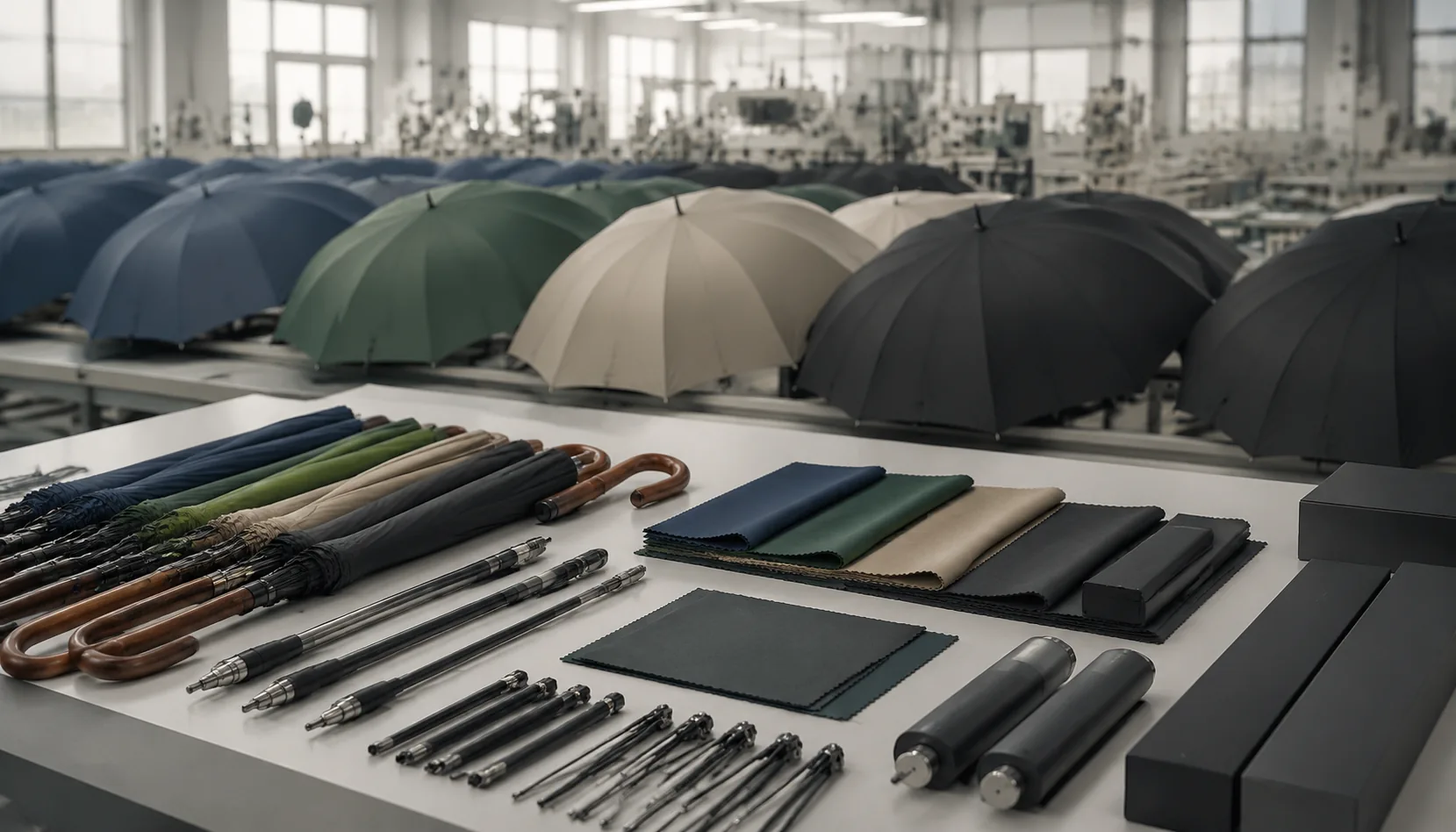
Private Label Umbrella Programs for Retail Brand Owners
Build a retail-ready private label umbrella line with the right SKUs, fabrics, frame specs, packaging, MOQ, and inspecti...
Read More »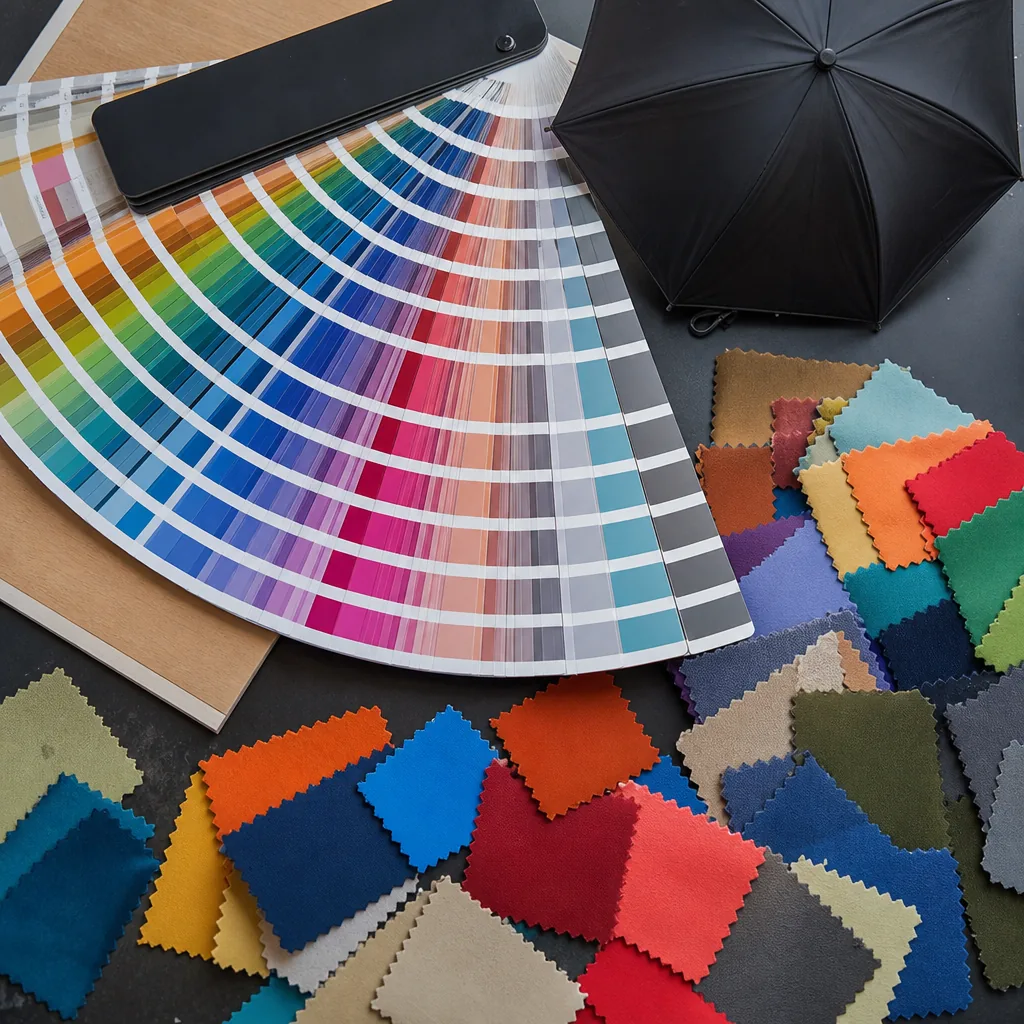
Pantone Color Matching on Custom Umbrellas: Getting Brand Colors Right
How umbrella factories match Pantone brand colors on canopy fabric and prints, why dye lots vary, and how to lock color ...
Read More »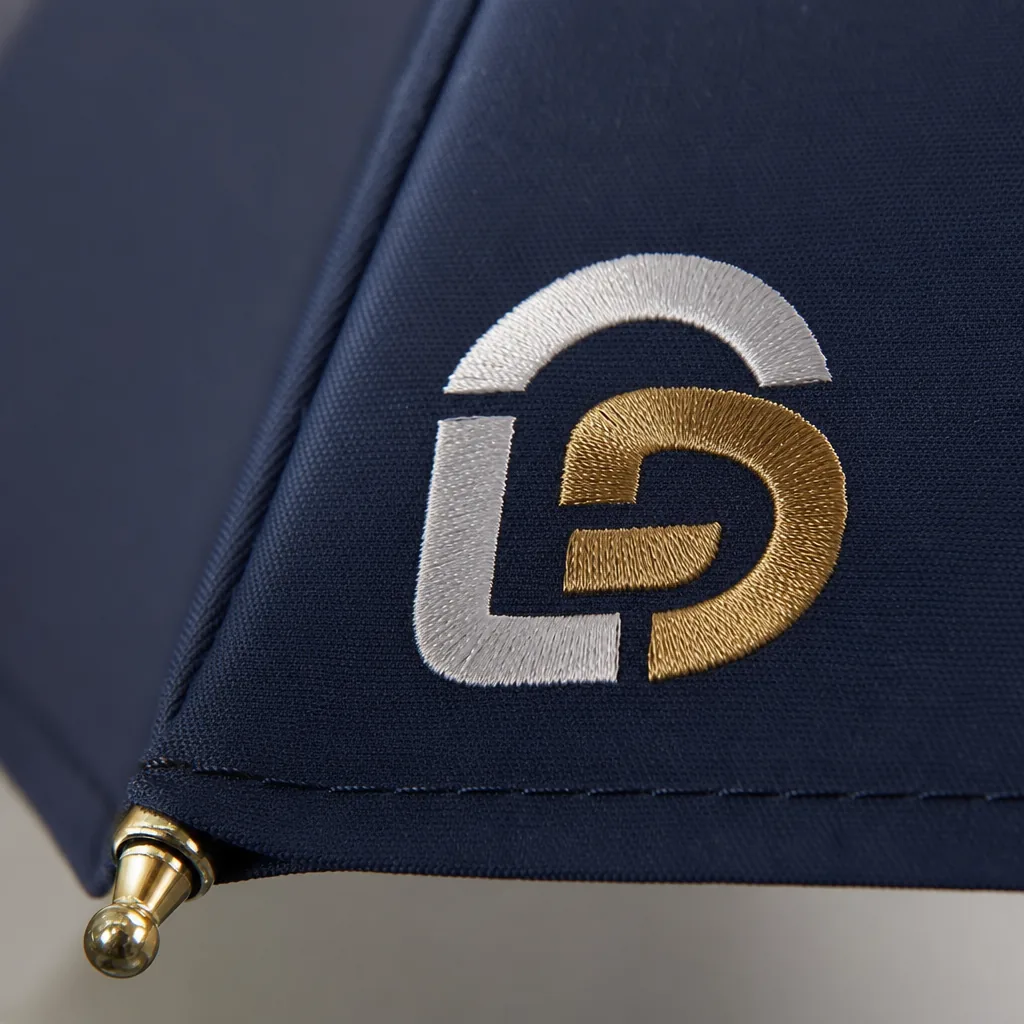
How Fabric Choice Changes Logo Sharpness on Custom Umbrellas
See how 190T, 210T, and other canopy fabrics affect logo sharpness, ink hold, and color visibility before you approve an...
Read More »