Custom Stick Umbrellas: Buyer Guide for Premium Brand Programs
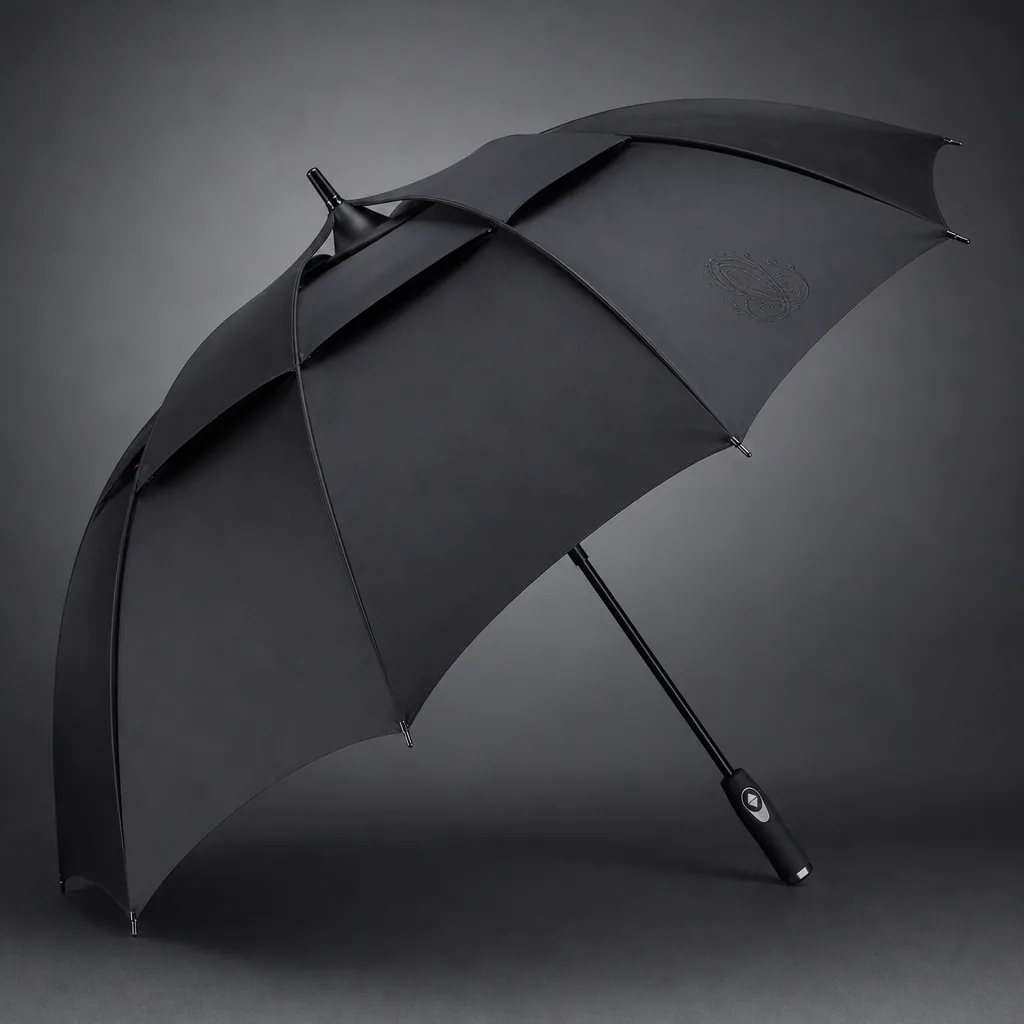
For premium retail, hospitality, and corporate programs, the risk is not just choosing a good-looking umbrella; it is approving a frame, fabric, handle, and opening system that can survive real use while matching brand standards across thousands of pieces. On our factory floor in Songxia, we see how custom stick umbrellas succeed or fail at the details: rib temper, shaft straightness, canopy tension, print registration, handle bonding, and final rain-test discipline before packing.
When Stick Umbrellas Are the Better Choice
Stick umbrellas are the better choice when the umbrella is part of the customer experience, not just an emergency rain item. Hotels, golf clubs, luxury retail stores, universities, and executive gift programs usually care about how the product looks in a lobby stand, pro shop, reception desk, or VIP welcome kit. A 23" or 27" straight umbrella with a clean canopy, matched binding, and a real wooden crook or straight handle simply presents better than a compact folding model. For branded stick umbrellas, the long shaft also gives the product a more formal silhouette, which is why premium hospitality buyers still specify stick styles for doorman service and guest loaner programs. If the use case involves walking from a clubhouse to a parking lot, greeting guests at an event entrance, or handing over a corporate gift in a box, custom stick umbrellas feel intentional rather than disposable.
The practical advantage is frame stability. A stick umbrella can use a longer central shaft, cleaner runner movement, and stronger rib geometry without the extra hinge points required in a folding frame. For premium promotional umbrellas, we often recommend 8K or 10K fiberglass ribs for wind resilience, or a steel-and-fiberglass combination when the buyer wants a sharper price but still needs dependable field performance. A 27" or 30" golf-style stick umbrella also gives noticeably more coverage than a 21" folding umbrella, which matters for hotel guests with luggage or golfers carrying gear. Double-canopy vented construction is common when wind is a concern; a properly tensioned 190T or 210T pongee canopy with a vent layer can survive 50+ mph wind-tunnel testing when the rib length, stretcher angle, and top spring are correctly matched.
Branding is another reason to choose a straight stick umbrella supplier carefully. Stick models offer wide, uninterrupted panels for screen print, heat transfer, or sublimation, and the canopy stays flatter during use than many compact umbrellas, so logos distort less in photos. For luxury retail and university programs, I would avoid overcrowding all eight panels; one large logo panel plus a woven label, color-matched sleeve, and engraved wooden handle often looks more expensive than full-panel printing. Wooden handle umbrellas also allow small details such as laser marking, metal end caps, or PU leather straps, which raise perceived value without changing the frame tooling. Our standard practice at ZheBrella is to confirm print position on a finished pre-production sample, then inspect bulk production under AQL 2.5 for canopy stains, rib alignment, print registration, runner function, and tip security before FOB or DDP shipment.
Frame and Rib Specifications to Decide First
Frame choice should be locked before artwork, because it controls weight, retail feel, wind performance, and even the carton size. For custom stick umbrellas, the basic split is steel, fiberglass, or mixed construction. Full steel frames are the traditional choice for formal programs: a plated or black steel shaft, steel ribs, and a straight wooden crook or J-handle give the umbrella a clean executive look. The downside is memory under wind load; once a steel rib bends, it usually stays bent. Full fiberglass frames are lighter and more flexible, especially on 23" and 27" canopies, but they can look too sporty for luxury hospitality or financial-service gifting. The mixed build is often the best compromise: steel center shaft for a crisp straight profile, fiberglass ribs and stretchers for flex, and metal runner parts where wear is highest. A serious straight stick umbrella supplier should tell you the rib material, shaft diameter, wall thickness, and runner material, not just say “windproof frame.”
Most branded stick umbrellas use 8K construction, meaning 8 ribs, because it balances canopy shape, production speed, and cost. A 23" 8K stick umbrella with 190T or 210T pongee, fiberglass ribs, and a steel shaft is the common premium promotional umbrella specification for banks, hotels, universities, and conference gifts. Move to 27" or 30" golf-style stick umbrellas and the rib choice becomes more important, because the larger canopy catches much more wind. A 16K frame gives a rounder canopy and a heavier, more substantial hand feel, which can suit retail or VIP programs, but it also adds rib assembly time, fabric seam length, and inspection points. Do not assume 16K automatically means stronger; a poor 16K steel frame can fail faster than a well-made 8K fiberglass frame. Our standard practice at ZheBrella is to test opening tension, rib joint clearance, and canopy symmetry before confirming bulk production, especially when wooden handle umbrellas are being matched to formal brand guidelines.
A double-canopy vented windproof design is worth the added cost when the umbrella will be used outdoors in exposed places: golf events, resort entrances, campus tours, stadium parking, or rainy-season retail markets. The vent lets pressure escape through the top layer instead of forcing the canopy to invert, and with fiberglass ribs it can survive 50+ mph wind-tunnel tests when the frame geometry is correct. The extra cost comes from more fabric panels, more sewing operations, tighter vent alignment, and slower final inspection; on a 27" stick umbrella, it can add several days to sampling and bulk sewing compared with a single canopy. For indoor-to-car executive gifting, a single-canopy 8K frame with a steel shaft may look sharper and pack cleaner. For premium promotional umbrellas where the user may actually rely on the product in bad weather, I would rather reduce logo size or simplify handle finishing than remove the vented double canopy.
Canopy Size, Fabric, and Weather Performance
For custom stick umbrellas, canopy size should be selected by real coverage, not just the rib length printed on a quotation. A 23-inch stick umbrella usually opens to roughly a 102–105 cm arc and works for retail gifts, hotel rooms, and city commuting. A 25-inch version gives noticeably better shoulder coverage without becoming awkward in a lobby stand or restaurant cloakroom. A 27-inch straight stick model is better for golf-adjacent events, resort staff, valet teams, and premium brand programs where two-person coverage matters. The tradeoff is carton size, freight cost, and wind load on the frame. If the buyer wants branded stick umbrellas that feel premium but still ship efficiently, I normally start with 25 inches and then adjust after checking handle length, rib material, and canopy depth.
Fabric choice affects both hand feel and print result. 190T pongee is the common baseline for premium promotional umbrellas: tight enough for smooth screen printing, soft enough to fold cleanly, and less noisy than polyester taffeta. 210T pongee has a denser weave and a better drape, which helps dark corporate colors look richer and reduces light show-through on large logo panels. For luxury retail or executive gifting, 210T is usually worth the small upcharge, especially with wooden handle umbrellas where the buyer expects the whole product to feel consistent. Water repellency comes from the finishing, not the fabric name alone, so we check spray rating after coating and again after printing because heavy ink coverage can change how water beads on the panel.
Weather performance depends on the canopy, frame, and finishing working together. A good straight stick umbrella supplier should specify whether the fabric has standard water-repellent treatment, Teflon-style finishing, or added UV coating. UPF 50+ is a practical option for outdoor staff uniforms, resort programs, golf events, school campuses, and tourist attractions where the umbrella is used for shade as much as rain. The coating slightly changes fabric hand feel and can affect sublimation or heat-transfer color, so artwork tests should be done before bulk production. At ZheBrella, our standard practice is to pair larger 25- and 27-inch canopies with stronger ribs, such as fiberglass or reinforced steel, because a bigger arc catches more wind; otherwise the umbrella may look premium in a showroom but fail during a 40–50 mph gust test.
Handle, Tip, and Brand Detail Options
Handle choice changes the perceived price of custom stick umbrellas more than most buyers expect. A wood crook handle, usually beech, maple, or rubberwood with clear or dark stain, gives the classic retail look and pairs well with 23" and 27" straight umbrellas for hotels, golf clubs, and financial brands. The weak point is finish consistency: cheap lacquer chips at the hook end and around the ferrule after carton vibration, so we specify smoother sanding and a thicker topcoat for premium promotional umbrellas. EVA grips are lighter and comfortable in rain, but they look more sporty than executive. Rubberized handles provide better wet-hand traction and can be color-matched, though low-grade rubber can become sticky after heat aging. Straight handles suit fashion or minimalist programs, especially with matte black shafts, but they need enough diameter to feel balanced on an 8K or 10K frame.
Tips and finishing hardware should match the use case, not just the rendering. Metal tips, often nickel, gunmetal, or matte black plated, add weight and a sharper premium detail on branded stick umbrellas, but plating must pass basic rub and salt-spray checks if the umbrellas ship to coastal markets. Plastic tips are safer and cheaper for schools, mass events, and large MOQ giveaways; ABS is better than brittle recycled PP when the umbrella will be dropped on pavement. For wooden handle umbrellas, the runner, top notch, cap, tip, and strap snap should be kept in one finish family, otherwise the product looks assembled from leftover parts. Matching sleeves are worth adding for retail and corporate gifting, but they need a wider mouth and reinforced seam, because wet 190T or 210T pongee can jam inside a tight sleeve after use.
Logo placement should be engineered before the canopy is cut, because panel printing, strap branding, handle badges, woven labels, and hangtags all have different tolerances. Screen printing works well for one- or two-color logos on 190T pongee panels, while heat transfer handles gradients better but can feel plasticky if the film is too thick. Sublimation is best for full-panel artwork on white polyester, not dark navy or black. Strap logos are subtle and visible when closed, but the usable area is small, typically around 70–90 mm wide, so fine text gets lost. Handle badges can be domed epoxy, debossed metal, or laser-engraved wood; they look premium but require tighter incoming inspection for glue alignment. As a straight stick umbrella supplier, ZheBrella normally checks logo position, color tolerance, strap stitching, and hangtag barcode readability under AQL 2.5 before packing.
Sampling, Production, and Inspection Checklist
Lock the pre-production sample before you release the deposit, because stick umbrellas hide most mistakes until they are opened in the buyer’s hand. For custom stick umbrellas, I want the approved sample to confirm the 23", 27", or 30" frame size, shaft material, rib count, canopy fabric, handle shape, tip color, sleeve construction, and exact logo position. A wooden J-handle looks simple, but the grain, stain color, varnish thickness, and hook radius can vary if they are not written into the sample comments. For branded stick umbrellas, approve the actual print method, not just a digital mockup: screen print for solid logos, heat transfer for multi-color marks on pongee, and sublimation only when the whole panel artwork justifies it. Keep one signed sample at the factory and one with the buyer; those two pieces become the standard when production workers and QC inspectors disagree.
MOQ planning should be tied to material availability, not only the catalog price. Standard 190T or 210T pongee, black steel shaft, fiberglass ribs, EVA or wooden handle, and common colors can usually run at 500 to 1,000 pieces per design. Custom dyed fabric, special plated shafts, FSC-style wooden handle umbrellas, or non-stock tip and runner colors may push the practical MOQ to 1,500 or 3,000 pieces because dye lots and hardware suppliers have their own minimums. A realistic lead time is 30 to 45 days after sample approval and deposit: about 7 to 10 days for material preparation, 10 to 18 days for cutting, printing, sewing, and frame assembly, then several days for inspection, carton packing, and export booking. If you are buying premium promotional umbrellas for an event date, build in another week for print rework risk or vessel schedule changes.
Final inspection should use AQL 2.5 for major defects, with a checklist that treats function and appearance separately. For custom stick umbrellas, inspectors should open and close the sampled units multiple times, checking shaft straightness, runner movement, spring lock engagement, rib tension, cap security, ferrule alignment, and whether the canopy sits evenly without twisting. Fabric inspection needs bright light: stains, oil marks, needle holes, loose threads, panel color variation, and uneven seam tension are common problems when production is rushed. Print placement should be measured from the panel seam or tip, not judged by eye; I usually allow tight tolerance for luxury programs because a 5 mm logo shift is visible on a plain canopy. Shipment terms should also be decided early: FOB Ningbo or Shanghai gives the buyer freight control, while DDP is cleaner for smaller retail or distributor orders needing landed cost certainty.
Frequently Asked Questions
Are stick umbrellas usually manual or automatic?
Both are common, but auto-open is often preferred for corporate and hospitality use. Manual open can reduce cost and may suit wood-shaft or vintage-style designs.
What is the best stick umbrella spec for a premium hotel brand?
A common premium spec is 25 or 27 inch ribs, 8K or 16K fiberglass ribs, 210T pongee canopy, auto-open mechanism, and a wood or rubberized handle. Add AQL 2.5 inspection to control finishing quality.
What frame specification is typically used for a premium straight stick umbrella program?
A common premium spec is a 23 to 27 inch straight umbrella with 8 ribs, a fiberglass shaft or fiberglass ribs, and auto-open function. For retail and hospitality programs, buyers often choose fiberglass over all-metal frames to reduce inversion and rust claims.
How should logos be applied on wooden handle umbrellas to keep a premium retail look?
For canopy branding, importers usually choose 1 to 4 panel silk screen printing or heat transfer when artwork has gradients. On wood handles, laser engraving or a small metal badge is more durable and upscale than large pad-printed logos.
What QC points matter most before shipping branded stick umbrellas for a corporate or hotel rollout?
Ask for open-close cycle testing, rib alignment checks, canopy tension review, print position approval, and carton drop testing. Many buyers also require an AQL inspection with random sampling, plus rust and water-spray checks before final shipment.
Looking to Launch Your Custom Umbrella Line?
ZheBrella is a Zhejiang-based OEM/ODM umbrella manufacturer with 17 years of export experience. Free design, low MOQ from 100 pieces, windproof construction, full-color print.
Get Free Quote Now »People Also Search For
Related Articles
Wooden Stick Umbrellas for Premium Retail and Hotel Programs
Choose wooden stick umbrellas for hotels and retail with the right shaft, handle, rib material, canopy fabric, logo meth...
Read More »Wooden Shaft Umbrellas: Buyer Guide for Premium Retail
Compare wood shaft, crook handle, pongee canopy, and frame specs for premium umbrellas, with MOQ, QC checks, and FOB/DDP...
Read More »
Wooden Stick Umbrellas for Retail Brands: Spec Guide
Learn how to specify wooden stick umbrellas with frame, fabric, handle, print, MOQ, and QC details for premium retail pr...
Read More »