Custom Umbrella Branding Areas Beyond the Canopy Print
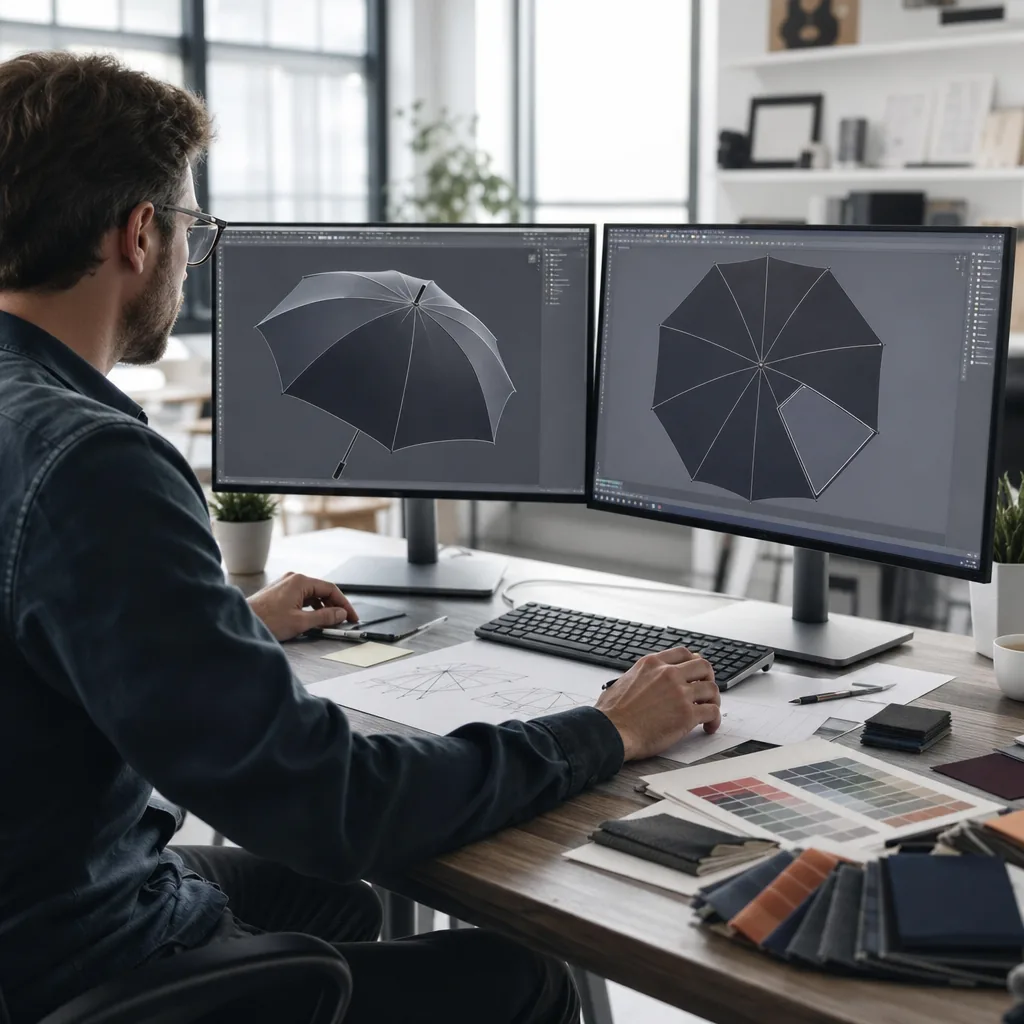
When buyers think about custom umbrella branding, they usually focus on the canopy and miss the places that actually shape shelf appeal, unboxing, and repeat use. In the factory, the most effective programs are built across the handle, sleeve, strap, tag, and carton, because each surface has different limits for artwork, durability, and cost. Getting those details right is what separates a logo placement from a retail-ready product.
Why branding should go beyond canopy printing
A strong canopy print gets the umbrella noticed outdoors, but it is only one touchpoint. For custom umbrella branding, the smarter programs also use umbrella handles, sleeves, hang tags, and retail packaging because those are the parts buyers see on a shelf, in a gift set, or when the product is handed out at an event. A logo on a 23" or 27" canopy can be readable in use, but once the umbrella is folded, the branding disappears unless you build in other surfaces that stay visible in the store and in the box.
Secondary logo placement options matter because different sales channels reward different details. Retail buyers want packaging that looks intentional from three feet away; corporate buyers want the item to feel finished when it lands on a desk or in a hotel room. Sleeve branding and printed retail packaging add that first impression, while a mark on the handle or ferrule keeps the brand visible when the canopy is closed. On molded EVA or rubberized handles, pad print is usually cleaner than trying to force a wraparound graphic onto a curved part.
This is where promotional product branding often fails: a good canopy print alone can look cheap if the rest of the umbrella ships in a plain OPP bag or an unprinted sleeve. In practice, the best programs use the canopy for the main message and then reinforce it with a small logo on the handle, a branded sleeve, and packaging that matches the price point. ZheBrella’s standard approach is to treat those elements as part of the same spec, because that is what raises gifting value and keeps the product from looking like a one-off giveaway.
Brandable parts buyers often overlook
The canopy is only one line item in custom umbrella branding; the handle often gives better recall because people touch it every time they open the umbrella. Straight EVA and rubberized handles can take pad print or a small debossed insert, while wooden handles usually work better with laser engraving or a foil-stamped plaque, and metal hooks can accept a tiny etched tag if the shape allows it. Among logo placement options, the handle is usually the cheapest extra when the decoration is simple, but costs rise fast if you need a molded insert, full wrap print, or a special handle shape that adds tooling.
Sleeve branding and pouches are where buyers waste money by specifying artwork too late. A plain polyester sleeve can take screen print, heat-transfer, or woven labels; a zip pouch gives more room for a large logo but adds sewing labor and more material, so unit cost climbs more than a canopy print. Straps and ferrules are smaller surfaces, but they still matter: straps can take woven labels or printed size tabs, while ferrules are usually limited to a tiny pad print or foil detail because the surface area is short and curved. For promotional product branding, these details are low-cost only when they are standard placements; once you ask for mixed methods on one SKU, setup time becomes the real cost.
Retail packaging is the other overlooked part because it changes how the umbrella is sold, not just how it looks. A printed carton, hangtag, or belly band can carry product copy, care instructions, and SKU codes, and cartons are the best surface for full-color printing plus matte or gloss lamination; foil stamping works well on premium retail packaging but raises both print and finishing cost. Labels are the cheapest option for most orders, especially on folded sleeves or polybags, while rigid cartons and window boxes push costs up through paperboard weight, die-cutting, and packing labor. If the buyer wants consistent custom umbrella branding across the product and box, the cleanest approach is to pick one premium touchpoint and keep the rest simple.
Matching branding areas to order type
Promotional giveaways are usually the worst place to overcomplicate custom umbrella branding. If the order is cheap, fast, and meant for mass handout, the smartest move is a small one-color mark on the sleeve, ferrule strap, or lower panel near the seam, because those logo placement options survive handling and folding better than a crowded full-canopy print. On 23" and 27" manual or auto-open umbrellas with pongee 190T, that approach keeps decoration cost under control and avoids the registration issues that show up when a logo stretches across multiple panels. For event teams and distributors, sleeve branding often delivers better repeat visibility than a big graphic that looks good in a photo but wears poorly in daily use.
Premium gifts and hotel programs justify more aggressive decoration, but only if the construction supports it. A 10K or 16K fiberglass frame with a double-canopy vented windproof build can handle larger graphics, while a simple sleeve mark still makes sense when the umbrella is being presented in a room or at check-in and the packaging does most of the selling. In those orders, umbrella handles become part of the branding conversation: rubberized, EVA, or wood handles can take laser, pad print, or small metal inlay work, and that detail usually reads more expensive than another oversized canopy logo. ZheBrella’s standard practice is to match decoration to the failure point, not the wish list, because a clean handle mark and quality retail packaging often outlast heavy ink coverage on the fabric.
Retail launches need the most disciplined custom umbrella branding, because the umbrella has to hold up under shelf display, e-commerce photography, and consumer handling. For those programs, promotional product branding should be coordinated across the canopy, sleeve branding, and retail packaging so the buyer sees one system instead of three disconnected messages. If the umbrella is sold in a boxed set or polybag with insert card, the packaging can carry the full story while the canopy uses a restrained logo on one or two panels; that is often more effective than flooding every panel with artwork. The rule I use on the factory floor is simple: if the umbrella is an impulse giveaway, keep it small; if it is a retail SKU or brand gift, build a branding stack across the fabric, handle, sleeve, and carton so the mark still works after the first month of use.
How branding choices affect production details
Extra decoration changes the job in ways buyers usually underestimate. Once you move beyond a simple canopy print into custom umbrella branding, the factory has to lock down logo placement options, artwork size, ink or transfer method, and whether the mark sits on the panel, the tie strap, the umbrella handles, the sleeve branding, or the carton. Each extra touch point can force a different jig, plate, or sewing step, and that is why MOQ often rises for decorated versions compared with blank stock. On a real production line, a handle imprint on rubber or EVA is not handled the same way as screen print on pongee 190T, and a sleeve print can slow finishing if the sewing order has to be changed to leave space for the mark.
Sampling time also stretches once color accuracy matters. If the brand color has to match Pantone closely, the factory should confirm whether it will be done by panel printing, heat transfer, or sublimation, because each method lands differently on 190T, 210T, POE, or PVC. A good approval sample should show the exact logo placement options, the final artwork size, and the actual material under the right lighting, not just a digital proof. For promotional product branding, I always tell buyers to confirm whether the logo must stay visible when the umbrella is folded, because that changes where the print can go on the canopy, sleeve branding, or handle tag and can add several days to sampling and pre-production.
Before approval, the factory should confirm the packing spec in writing: polybag, hanging tag, color box, master carton, barcode label, and whether the retail packaging needs a printed insert or warning card. Those details sound minor, but they affect folding method, carton count, and whether workers need to insert the sleeve in a specific position so the logo faces out. ZheBrella’s standard practice is to freeze artwork, Pantone targets, carton marks, and packing sequence before bulk starts, because late changes are what actually push lead times. If the buyer approves the sample without checking those items, even a simple custom umbrella branding order can lose a week while the factory redoes labels, rechecks shade approval, and rebuilds the pack-out line.
Spec sheet details to lock before mass production
Before mass production, custom umbrella branding only works when the spec sheet freezes the artwork file format, placement dimensions, Pantone references, and the exact decoration method for each part. For logo placement options, I want buyers to define whether the mark goes on a canopy panel, the strap, the sleeve, the umbrella handles, or the retail carton, because each surface has different print limits and distortion. Send vector files in AI, EPS, or editable PDF, plus linked fonts and a clean outline version; for raster art, 300 dpi at final size is the bare minimum, and low-resolution screenshots are where jobs start drifting.
Dimension control matters more than people expect. A 25 mm logo on a curved canopy panel is not the same as a 25 mm mark on a flat sleeve, and promotional product branding usually fails when nobody writes the exact print area, centerline, and tolerance on the spec sheet. Lock Pantone references in C or TCX terms before sampling, and confirm whether the factory is matching the ink, the transfer film, or the thread color. If the order includes sleeve branding or retail packaging, specify bleed, safe zone, carton print position, barcode size, and whether the packing is polybag, OPP, gift box, or master carton labeling.
The fastest way to reduce errors is to approve a decorated sample before release and to write the inspection standard into the PO, not leave it as a verbal note. Our standard practice is to get signoff on the decorated sample, then inspect against AQL 2.5 with written checkpoints for artwork position, color tolerance, spelling, seam interference, and packaging count. Buyers should also confirm whether minor shade variation is acceptable on molded umbrella handles, because glossy plastic, matte EVA, and rubberized grips all take ink differently, and that difference becomes a chargeback if it is not agreed up front.
Frequently Asked Questions
Which umbrella parts offer the best branding value besides the canopy?
Sleeves, hangtags, handles, and retail boxes often deliver strong branding value because they are seen before the umbrella is opened. For premium programs, combining two or three surfaces usually works better than using only one.
Do extra branding areas increase MOQ or lead time?
Often yes, because each added decoration step needs setup, proofing, and QC. Buyers should confirm whether the supplier can combine branding processes in one production flow or if they require separate runs.
Which umbrella branding areas hold up best with frequent handling and shipping?
For durability, molded handle badges, woven sleeve labels, and printed hang tags usually outperform small decorative prints on hard parts. If the umbrellas will be packed in export cartons and handled multiple times, ask for abrasion testing on handle logos and colorfastness testing on sleeve prints before mass production.
Can I combine multiple branding areas on one umbrella without slowing production too much?
Yes, but each added process affects lead time. A canopy print plus sleeve print is usually straightforward, while adding handle decoration, hang tags, and custom retail boxes can add about 5-10 days depending on tooling needs, print method, and packaging assembly requirements.
What is the typical MOQ for custom packaging and accessory branding on umbrellas?
Standard printed sleeves and hang tags can often start around 500-1,000 pieces, while custom gift boxes, molded handle logos, or fully private-label retail packaging often require 1,000-3,000 pieces. Exact MOQ depends on box size, tooling, print colors, and whether inserts or barcode labels are included.
Looking to Launch Your Custom Umbrella Line?
ZheBrella is a Zhejiang-based OEM/ODM umbrella manufacturer with 17 years of export experience. Free design, low MOQ from 100 pieces, windproof construction, full-color print.
Get Free Quote Now »People Also Search For
Related Articles
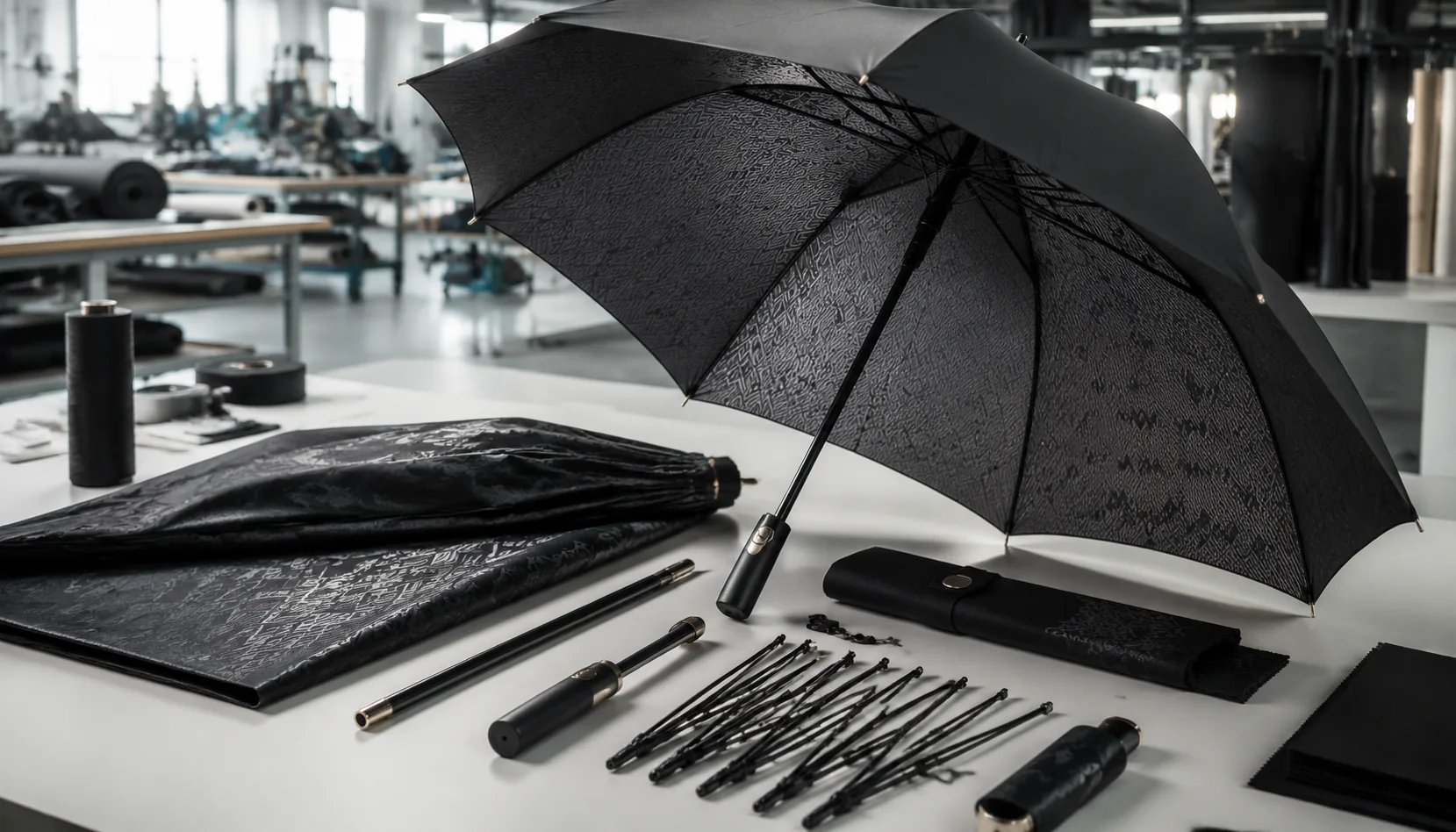
Choosing Print Areas Beyond the Canopy for Branded Umbrellas
Extend umbrella branding beyond the canopy with practical guidance on straps, sleeves, ferrules, and tips that improve v...
Read More »
Umbrella Logo Placement Strategies for Different Brand Goals
Learn how logo placement changes visibility, resale value, and repeat use on branded umbrellas, with print-area and pane...
Read More »Umbrella Logo Size Guide for Retail and Promo Orders
Plan readable branding across compact, golf, and stick umbrellas with practical logo size ranges, panel limits, and fact...
Read More »