Custom Umbrella Programs for Retail Pharmacy Chains
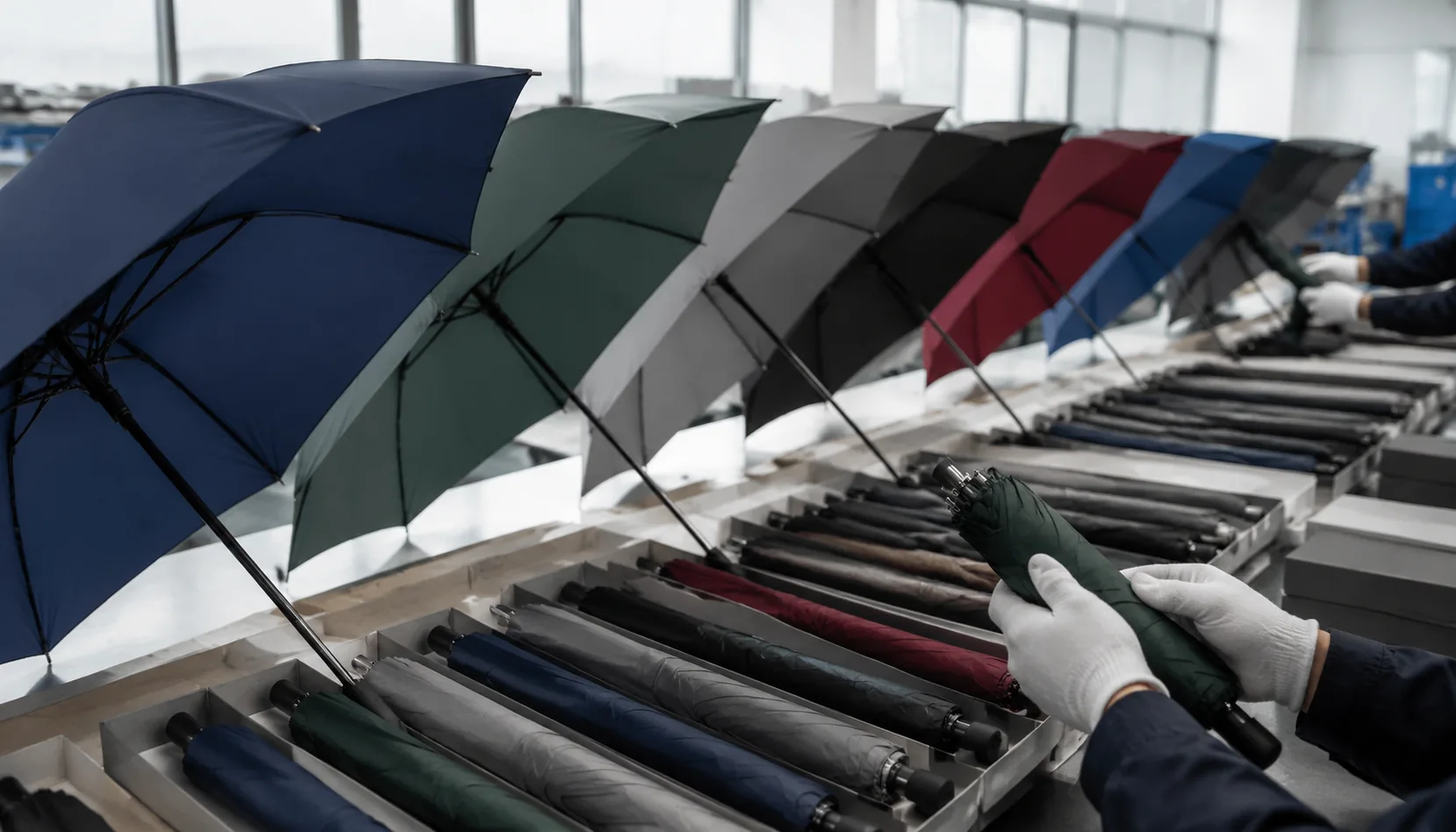
Pharmacy buyers need umbrellas that sell through on wet mornings, look credible as loyalty gifts, and survive daily staff use without creating packaging or compliance headaches. When we build custom umbrellas for pharmacies on our Songxia production floor, the real work is balancing canopy fabric, UPF claims, frame strength, case-pack efficiency, barcode labeling, and MOQ against a chain’s planogram and replenishment rhythm.
Where Umbrellas Fit Pharmacy Retail and Loyalty Programs
Umbrellas make sense in pharmacy retail because they sit between necessity and goodwill: customers understand the value without education, and the product does not drift into medical-claim territory. For front-end seasonal retail, I would not overcomplicate the SKU wall. A 21" folding auto-open umbrella in 190T pongee, a 23" straight manual or auto-open umbrella, and a 27" golf umbrella for caregivers are enough to cover most ticket sizes. Pharmacy retail umbrellas should use clean health-and-wellness color language: white/navy, teal/gray, soft green, or high-visibility yellow for rainy-season merchandising near checkout, seasonal aisles, or travel-size health products. For chain store umbrella sourcing, the important factory detail is carton consistency: a 21" folding model usually packs 48 pcs/carton, while 23" straight umbrellas commonly pack 24 pcs/carton, which affects store allocation, replenishment, and DDP landed cost more than buyers expect.
For prescription loyalty gifts, flu-shot campaigns, and senior-care outreach, the best umbrella is usually not the cheapest one. A 190T or 210T pongee canopy with a Teflon-style water-repellent finish, fiberglass ribs, and an auto-open button feels safer and easier for older users than a thin steel-frame manual fold. Custom umbrellas for pharmacies used as branded pharmacy gifts should avoid loud promotional printing; a one-color pharmacy logo on one panel, plus a small wellness message on the sleeve, looks more credible than full-panel advertising. For flu-shot or adherence programs, I have seen buyers choose 23" straight umbrellas with 8K fiberglass ribs because they are simple, durable, and visible when carried through parking lots. If the program requires compact distribution at the counter, a 21" auto-open folding umbrella with a matching sleeve is easier for staff to store behind pharmacy pickup windows.
Staff use is a separate SKU decision, especially for curbside pickup, rainy-day prescription handoff, and parking-lot assistance. Here I prefer a 27" or 30" double-canopy vented golf umbrella with fiberglass shaft and ribs, 8K or 10K construction, and wind testing around 50+ mph, because a staff umbrella gets abused far more than a giveaway item. Reflective piping can help visibility in dusk or storm conditions, but I would keep the copy neutral: store name, pickup team, or “pharmacy curbside,” not anything implying treatment or clinical performance. These health retail promotional products should be specified with practical inspection points: smooth auto-open function, rib-tip security, no dye migration on light panels, and AQL 2.5 for major defects. Typical MOQ is 500–1,000 pcs per design for folding models and 300–500 pcs for golf umbrellas, with production lead times around 25–35 days after artwork approval, depending on printing method and peak-season capacity.
Selecting SKUs for Shelf Space and Customer Segments
Checkout space in a pharmacy is expensive, so the first SKU should be a compact 3-fold auto-open umbrella that fits a counter display, clip strip, or narrow seasonal endcap without blocking OTC impulse items. For most chain programs, I would spec a 21" or 23" canopy, 8K steel or steel/fiberglass mixed ribs, black electroplated shaft, and 190T pongee canopy for the value tier. That construction keeps the retail price approachable while still feeling better than the thin 170T umbrellas that fail after two storms. Auto-open matters at checkout because customers can understand the mechanism in two seconds; auto-open-close is better for commuters but adds cost and more return risk if the spring and runner are not tuned well. For custom umbrellas for pharmacies, the packaging should show diameter, water-repellent coating, and logo placement clearly, because many shoppers are buying in a hurry after seeing rain outside the store.
Premium loyalty tiers need a different umbrella, not just the same folding model in a gift sleeve. A 27" or 30" stick umbrella with an 8K frame, fiberglass ribs, metal shaft, EVA or rubberized J-handle, and 210T pongee canopy has the weight and hand feel that patients associate with a real reward. I prefer 8K over 16K for most pharmacy retail umbrellas because 16K looks rich but adds assembly cost and makes the canopy busier for logo printing; 8K gives enough structure for daily rain use and cleaner brand panels. If the chain wants a “health retail promotional products” angle, add a vented double canopy and test it to 50+ mph in a basic wind tunnel protocol, then print the rating on the hangtag only if the frame has passed repeated open-close cycling. For loyalty redemptions, AQL 2.5 inspection should focus on rib symmetry, runner lock strength, handle scratches, and logo registration.
Sun-care cross-merchandising is where pharmacies can justify better fabric. A 210T pongee canopy with black UV coating can reach UPF 50+, making it a natural add-on near sunscreen, dermatology, baby care, and travel-size toiletries. For lower-price displays, 190T pongee with Teflon-style water repellency is enough, but do not claim sun protection unless the coating and lab report support it; buyers should request test reports before approving packaging. Branded pharmacy gifts can also include white or pastel outer canopies with a black inner UV layer, because customers recognize the cooling effect immediately when they stand under the sample. For chain store umbrella sourcing, I would separate the program into three SKUs: 3-fold auto-open value model at checkout, UPF 50+ compact model near sun-care, and 8K stick umbrella for loyalty or seasonal premium campaigns. That mix protects shelf space while covering commuters, caregivers, seniors, and gift buyers.
Packaging, Barcodes, and Store-Ready Carton Requirements
Store-ready packaging matters more than the umbrella itself once a retail pharmacy DC starts moving cartons at speed. For custom umbrellas for pharmacies, I usually specify a printed hang tag with fiber content, care warnings, country of origin, model number, and a scannable UPC-A or EAN-13 label placed on the sleeve, not only on the hang tag, because sleeves get separated during shelf handling. For folding 21" auto-open umbrellas, a common retail pack is one umbrella in a clear OPP sleeve or color-matched pongee sleeve, 12 pcs per inner carton, and 48 pcs per master carton. A typical master carton is about 54 x 32 x 28 cm, 13–16 kg gross weight depending on steel versus fiberglass ribs. Stick umbrellas at 23" or 27" usually run 24 pcs per master carton, often around 92 x 22 x 20 cm, because handle shape and shaft length waste space fast if the carton is not engineered from the sample stage.
Planogram control is where pharmacy retail umbrellas often fail. If the buyer wants black, navy, red, and a seasonal print in one shelf bay, the inner cartons should be color-coded on two adjacent sides with large style, color, and quantity markings, not just a small export label. For branded pharmacy gifts and health retail promotional products, we often pack mixed-color inners, such as 3 black, 3 navy, 3 red, and 3 patterned units in a 12-pc PDQ-ready tray, so store staff can replenish without sorting loose inventory. PDQ displays should be tested with the real umbrella weight, especially for auto-open-close compact models using 8K steel ribs or heavier rubberized handles. A practical countertop PDQ for compact umbrellas is 12 pcs, with a reinforced E-flute tray, front lip under 60 mm, and individual UPCs facing upward or outward for fast POS scanning.
Retail distribution centers punish weak cartons. For chain store umbrella sourcing, I recommend a 5-ply K=A or K=K corrugated master carton for export and domestic DC handling, with edge-crush strength matched to stacking height; 3-ply cartons are false savings when mixed pallets get cross-docked. Drop-test expectations should be written into the PO: one corner, three edges, and six faces from 76 cm for cartons under 10 kg, or 61 cm for heavier cartons, with no broken handles, bent shafts, crushed PDQs, or unreadable barcodes after testing. Carton labels normally need PO number, SKU, UPC, color assortment, gross/net weight, carton dimensions, country of origin, and carton sequence, such as 1 of 120. Our standard practice at ZheBrella is to run barcode scan checks during final AQL 2.5 inspection and photograph the master carton markings before shipment, because pharmacy buyers do not tolerate relabeling delays at the DC.
Compliance and QC for Chain-Store Procurement
Compliance for chain-store umbrella sourcing has to be locked before mass production, not argued about during final inspection. For U.S. pharmacy chains, I normally ask the buyer to confirm whether Prop 65 labeling is required for the specific sales states, especially when PVC, PU coating, black rubberized handles, plated metal tips, or printed inks are used. For EU-bound pharmacy retail umbrellas, REACH review should cover azo dyes, phthalates, PAHs, lead, cadmium, nickel release on metal parts, and SVHC updates. If the program includes children’s 19" or 21" models, CPSIA becomes relevant: lead in substrate and paint, small-parts risk, sharp points, and tracking labels need review. Adult 23" auto-open stick umbrellas and 21" folding models are usually simpler, but mixed assortments can create compliance traps if one SKU has a PVC canopy or cartoon child positioning while another is standard 190T pongee.
QC for custom umbrellas for pharmacies should be written around retail failure points, not only factory appearance. Our standard practice at ZheBrella is AQL 2.5 for major defects and tighter internal checks on safety-related items before the third-party inspector arrives. Inspection should include 190T/210T pongee stains, oil marks from rib riveting, skipped stitches, seam slippage, crooked heat-transfer logos, exposed fiberglass splinters, sharp steel rib ends, loose top caps, and handle burrs. Mechanism testing needs repeated manual, auto-open, or auto-open-close cycling, because a sticky runner or weak spring becomes a return-counter problem in a pharmacy environment. For double-canopy windproof models, inspectors should check vent alignment and rib seating, not just open one sample and call it acceptable. Barcode readability also matters: UPC/EAN labels on hangtags, belly bands, or polybags should scan through normal retail distance, with correct SKU, color, case pack, and country-of-origin data.
Sample retention is one of the most practical controls for health retail promotional products because pharmacy chains often reorder the same approved item across seasons. Keep one signed golden sample for every approved SKU, including canopy color, rib count such as 8K or 10K, handle finish, logo size, barcode placement, warning label, packaging, and carton mark. I prefer retaining both a pre-production sample and a shipment sample pulled from packed goods, then photographing key measurements such as 23" arc size, closed length, logo position, and hangtag location. This prevents quiet substitutions: 190T becoming lighter fabric, steel ribs replacing fiberglass, a Teflon coating being omitted, or a UPF 50+ claim appearing without test backup. For custom umbrellas for pharmacies, the retained sample also protects the supplier when a store team compares branded pharmacy gifts across different batches and expects the second order to match the first exactly.
Forecasting, MOQ, and Distribution Timing
Forecasting custom umbrellas for pharmacies should start with store count, not a guessed carton quantity. For a 200-store chain, I usually ask whether the umbrella is a loyalty gift, a paid seasonal item, or an associate-use item at the entrance. A loyalty campaign might need 24–48 pieces per store for a two-week push, while a checkout retail SKU may need 12–24 pieces per store for the first allocation plus DC reserve. Regional climate matters: stores in Florida, the Gulf Coast, Pacific Northwest, and Northeast commuter markets turn inventory faster than dry inland stores. Rainy-season timing also changes the order curve; March–June for much of the U.S. is different from hurricane-season promotions in August–October. If the umbrella is tied to flu shots, senior health days, or rewards-member coupons, lock the artwork and PO calendar around that campaign date, not around an abstract “spring” launch.
MOQ planning is where many pharmacy retail umbrellas programs either become efficient or expensive. A clean factory MOQ for a standard 23-inch auto-open stick umbrella with 190T pongee canopy is often 1,000–3,000 pieces per color, but mixed store allocations can push buyers toward 5,000–10,000 pieces for better fabric purchasing, printing setup, and carton utilization. If the chain wants 2–3 canopy colors, 8K fiberglass ribs, UV coating, or individual barcode labels, split the MOQ carefully so each SKU still has enough volume to justify production. For branded pharmacy gifts, we normally separate the master forecast into launch quantity, DC safety stock, and reorder trigger. A practical rule is to hold 10–15% extra at the distribution center for late store requests, damaged cartons, and weather-driven spikes, especially when the item supports a dated circular or app-based coupon.
Production timing should be counted from approved pre-production sample, not from the first email inquiry. For chain store umbrella sourcing, 30–45 days after sample and artwork approval is realistic for fabric cutting, panel printing, sewing, frame assembly, final packing, and AQL 2.5 inspection; add 7–10 days if the program uses multiple logos, UPC stickers, PDQ trays, or retailer-specific carton marks. FOB Ningbo or Shanghai works when the pharmacy chain controls ocean freight and DC booking, but DDP is often cleaner for health retail promotional products going to multiple U.S. distribution centers because duty, drayage, delivery appointments, and inland freight are bundled into one landed cost. Our standard practice at ZheBrella is to confirm carton dimensions, case pack, GS1 label placement, and DC routing guide requirements before bulk packing, because changing carton marks after umbrellas are boxed can burn several days for a program that already has no calendar slack.
Frequently Asked Questions
What umbrella size is easiest for pharmacy checkout retail?
A 21 inch 3-fold umbrella is usually the easiest to merchandise because it fits compact displays and handbags. Auto-open models add convenience but cost more than manual-open value SKUs.
Should pharmacy umbrellas include UPF 50+ fabric?
UPF 50+ is useful when the umbrella is positioned near sun-care or wellness products. The claim should be supported by fabric testing and clearly tied to the canopy material, not general medical protection.
What umbrella styles work best for pharmacy retail assortments?
Most pharmacy chains use a mix of 3-fold compact umbrellas for checkout displays, auto-open stick umbrellas for higher-ticket retail, and UPF-coated umbrellas for wellness or sun-care promotions. A practical assortment is usually 2–4 colors with one shared logo or private-label package design.
What MOQ should a pharmacy chain expect for custom umbrella sourcing?
Typical MOQ starts around 500–1,000 pieces per style for standard logo printing and 1,200–3,000 pieces for custom fabric colors, retail packaging, or private-label carton marks. Larger chain programs can be split by store allocation if the total production quantity meets MOQ.
What compliance details should buyers check for pharmacy umbrella programs?
Buyers should confirm fabric composition, colorfastness, nickel content on metal parts where applicable, packaging warnings, and restricted substance requirements such as REACH or Prop 65 if selling in the EU or U.S. For children’s or family-focused promotions, request age-grade labeling and testing documentation before mass production.
Looking to Launch Your Custom Umbrella Line?
ZheBrella is a Zhejiang-based OEM/ODM umbrella manufacturer with 17 years of export experience. Free design, low MOQ from 100 pieces, windproof construction, full-color print.
Get Free Quote Now »People Also Search For
Related Articles
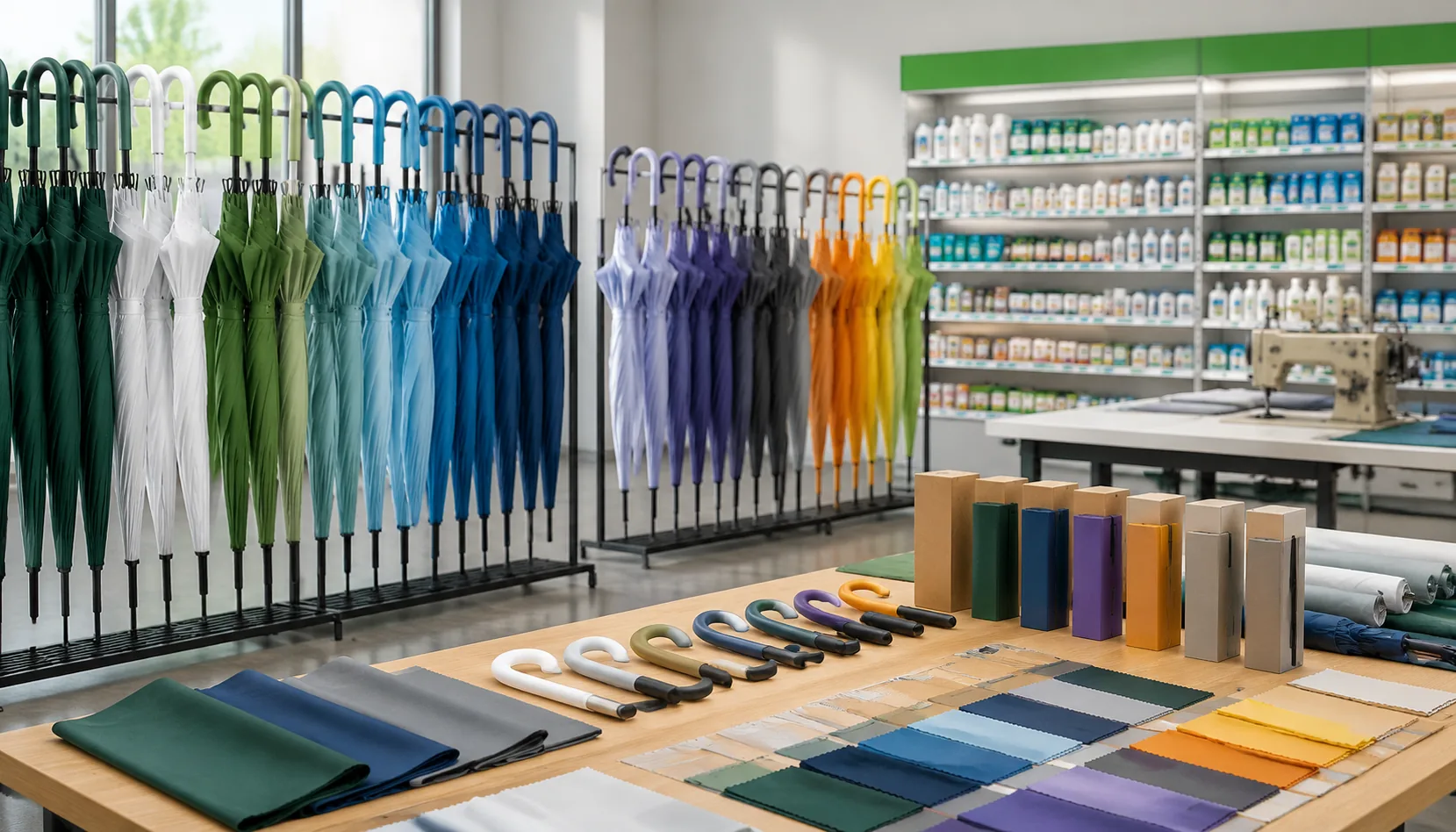
Umbrella Programs for Pharmacies and Convenience Chains
Plan pharmacy and convenience-chain umbrella assortments with practical specs, packaging, and replenishment logic for we...
Read More »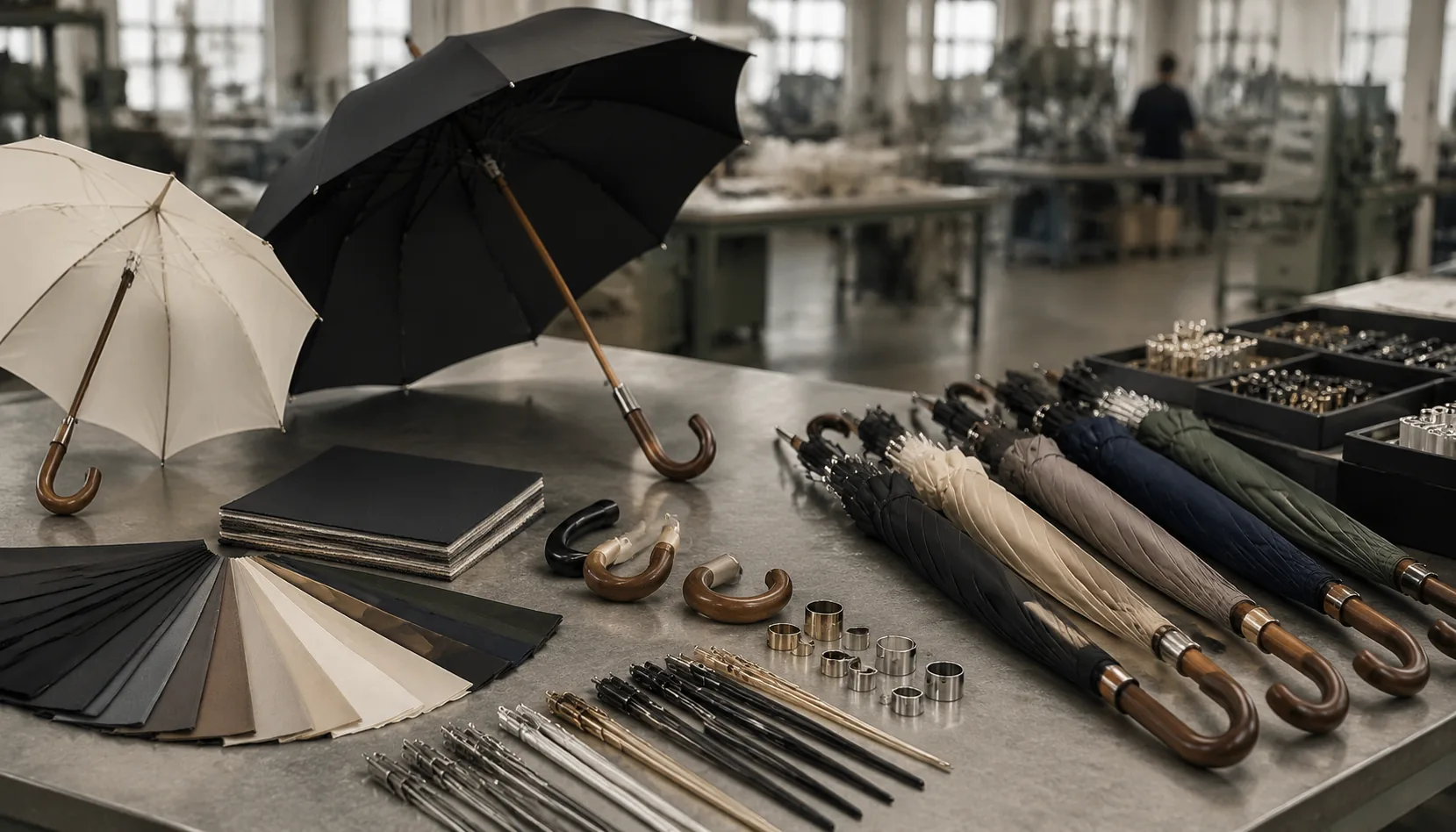
Umbrella Sourcing for Luxury Fashion and Beauty Launches
Build premium umbrella programs for fashion and beauty launches with materials, branding, QC, packaging, and timelines a...
Read More »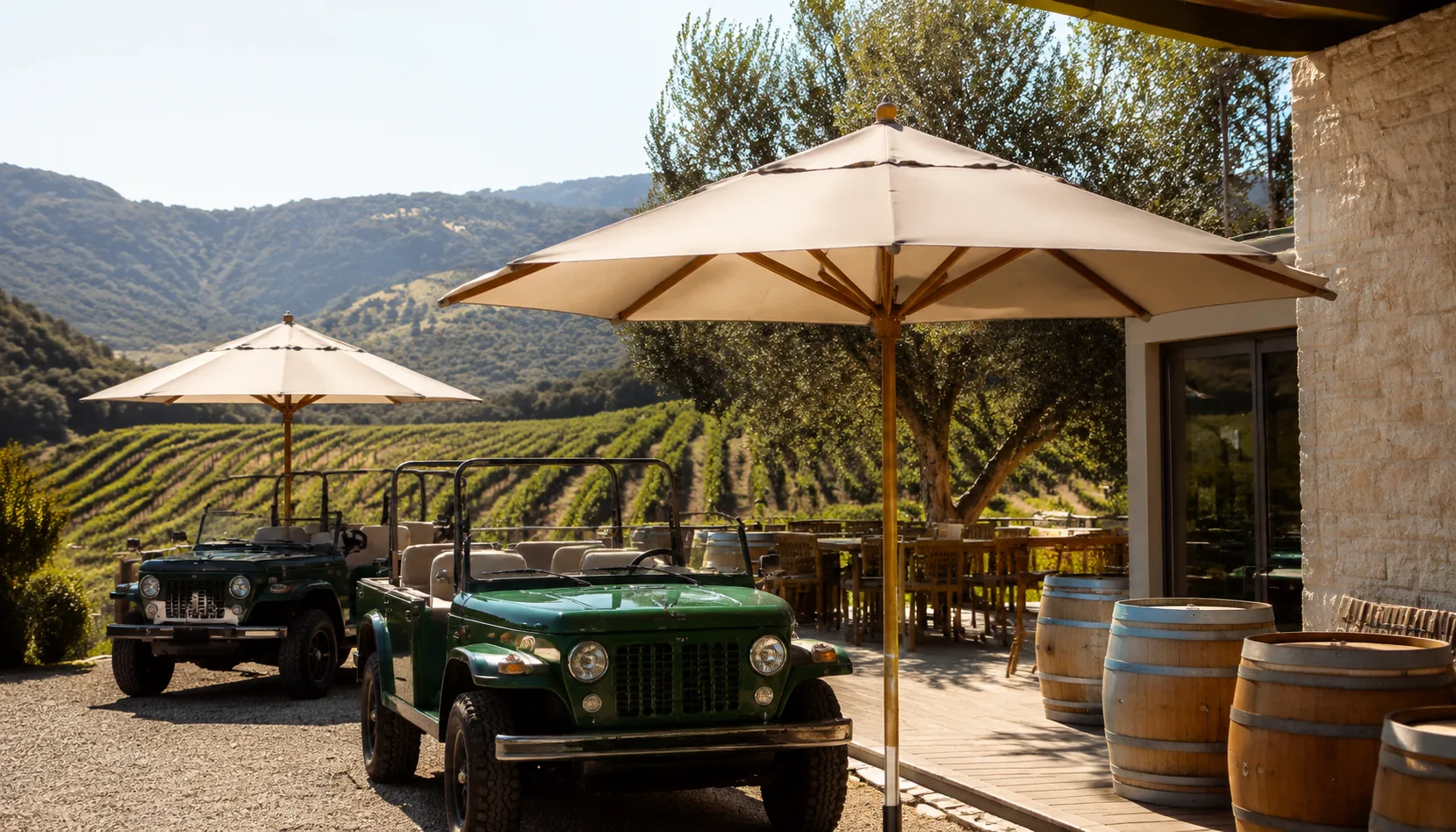
Custom Umbrellas for Winery Tours and Vineyard Hospitality
Build vineyard umbrella programs for tours, tasting rooms, and wine clubs with premium fabric specs, UV options, logo pl...
Read More »