Custom Umbrellas for Insurance Claims and Roadside Teams
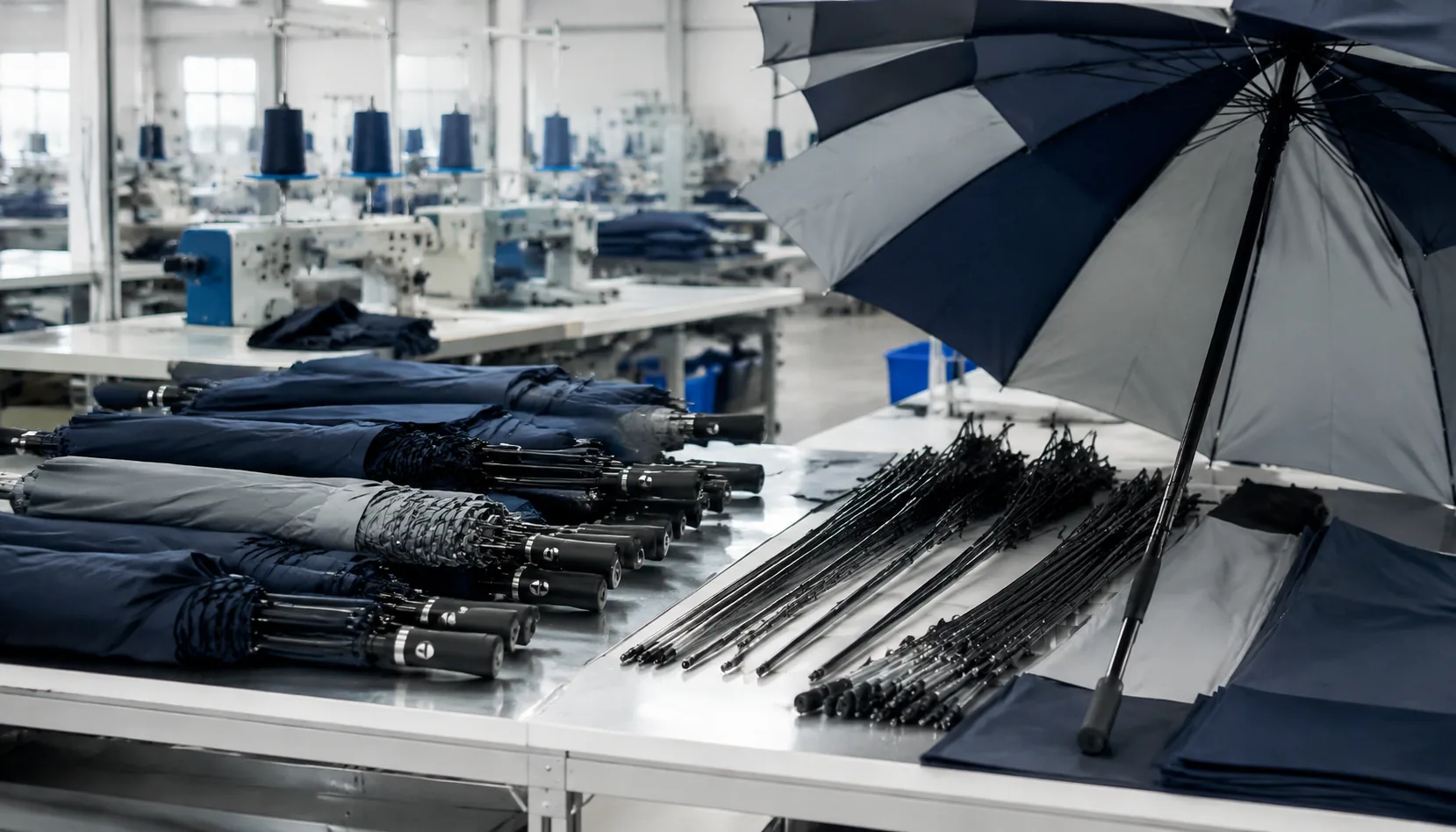
For insurance adjusters and roadside-assistance crews, an umbrella is not a giveaway item; it has to open fast beside traffic, hold shape in wind and rain, and keep branding readable during a claim visit. When we build custom insurance umbrellas on the Songxia factory floor, we look first at shaft strength, rib springback, runner smoothness, canopy tension, and final QC checks, because small failures in production become real problems in storm response.
Define Insurance and Roadside Use Cases
Claims adjusters need umbrellas that behave like field equipment, not trade-show giveaways. When an adjuster is photographing hail dents, measuring roof-edge damage, or writing notes beside a wet vehicle, one hand is already occupied with a tablet, laser measure, clipboard, or phone. For this job I prefer 23" or 27" auto-open stick umbrellas with fiberglass ribs, 8K or 10K frames, and 190T or 210T pongee canopy fabric with a Teflon water-repellent finish. Steel ribs are cheaper, but they bend after repeated trunk storage and gusty parking-lot use. Custom insurance umbrellas should open cleanly with one thumb, carry a clear logo panel for policyholder recognition, and use darker canopy colors that hide road grime while keeping the brand visible in rain photos and inspection reports.
Roadside assistance umbrellas have a different failure point: wind from passing traffic. A stranded driver on the shoulder does not stand in calm air, so compact promotional umbrellas usually disappoint here. For roadside assistance umbrellas, I would specify a 27" or 30" golf-style frame, double-canopy vented construction, fiberglass shaft and ribs, and a wind-tunnel target of at least 50+ mph. Reflective piping or a safety-color panel can help crews stay visible without turning the whole canopy into a neon sign. Bulk auto-open umbrellas also make sense for dispatcher-issued vehicle kits because the mechanism is simple, fast, and easier to operate with gloves than a manual runner. If the umbrella is stored in a service van, use a molded straight handle or EVA grip rather than a soft-touch coating that gets sticky in heat.
Storm-response staff meeting policyholders after hurricanes, hailstorms, or heavy rain need professional visibility without looking like they are selling something at the worst possible moment. Branded field service umbrellas should keep the logo controlled: one or two panels, clean PMS-matched ink, and enough blank canopy area to look official. For custom insurance umbrellas, our standard practice at ZheBrella is to test print placement against rib seams before mass cutting, because a logo crossing a seam can distort after sewing and tensioning. For large deployments, I would set AQL 2.5 inspection on opening function, rib alignment, canopy stains, print registration, and tip security. Typical MOQ is 500 pieces per colorway, with 25–35 days production after artwork approval, plus FOB Ningbo or Shanghai routing, or DDP delivery if the buyer needs direct distribution to regional claim centers.
Choose Frames for Storm Response Conditions
For storm-response work, fiberglass ribs are usually the safer choice than painted steel ribs because they flex instead of taking a permanent bend when a gust hits a parking lot or open shoulder. A good 23" or 27" claims adjuster umbrella with 8K fiberglass ribs, reinforced fiberglass stretchers, and a steel or aluminum shaft will handle daily field use better than a cheap all-steel frame that looks strong on paper but distorts after one hard inversion. Steel ribs still have a place when budget is tight, especially for bulk auto-open umbrellas used as leave-behind items, but I would not spec them for crews inspecting hail damage, flood sites, or roadside incidents in 30–50 mph gust exposure. For custom insurance umbrellas, the frame should be tested open, closed, and re-opened after inversion; many failures show up only when the runner jams or the stretcher rivets loosen after the canopy snaps back.
Rib count matters, but only when the material and geometry are right. An 8K frame is lighter, easier to store in a claims vehicle, and fast to deploy, which is why many adjusters prefer it for walking around homes, lots, and repair shops. A 16K frame gives a rounder canopy profile and better load distribution under rain, but it adds weight and more joint points, so poor riveting can create more failure locations. For roadside assistance umbrellas, I like 8K fiberglass for compact auto-open models and 16K fiberglass for larger 27" or 30" golf-style coverage when two people may stand under the canopy beside a disabled vehicle. Double-canopy vented windproof construction is worth the extra sewing cost: the upper panel releases pressure instead of forcing the ribs backward, especially when trucks pass and create side gusts.
Frequent vehicle storage changes the shaft decision. A wood shaft looks traditional but swells, scratches, and is not ideal when umbrellas are thrown into vans or claim-response trunks with cones, tablets, and measuring tools. Steel shafts are strong but heavier and more prone to cosmetic rust if wet umbrellas sit overnight; aluminum shafts reduce weight but need thicker wall spec to avoid denting. Our standard practice at ZheBrella is to pair branded field service umbrellas with fiberglass ribs, metal or fiberglass-reinforced shafts, nickel-plated rivets, and a runner that passes repeated open-close cycling before printing approval. For custom insurance umbrellas, I would also specify a 190T or 210T pongee canopy with a secure tie wrap, because a loose wet canopy gets crushed in door pockets and storage bins. Frame durability is not just wind resistance; it is whether the umbrella still opens cleanly on the fiftieth rainy callout.
Specify Fabric, Safety Features, and Branding
For claims and roadside crews, I would specify 190T pongee when the job is cost-controlled and the logo is simple, but move to 210T pongee when the buyer wants cleaner panel printing, stronger hand feel, and better water shedding after repeated use. 190T is fine for one- or two-color screen printing on 23" auto-open umbrellas, especially for insurance catastrophe teams ordering 1,000–5,000 pieces before storm season. 210T gives a tighter weave, so heat-transfer logos and edge-to-edge sublimation hold sharper lines, which matters when a carrier’s blue, red, or green must match fleet graphics. For custom insurance umbrellas used at sunny roadside inspections, add a silver or black UV coating rated UPF 50+; it keeps adjusters cooler while they photograph VIN plates, hail dents, glass damage, or tow scenes. Our standard practice at ZheBrella is to test coated pongee for rub resistance before bulk cutting, because cheap UV back-coating can crack around sewn seams after folding.
Safety details are not decoration on claims adjuster umbrellas; they decide whether a driver sees the technician before stepping out onto a shoulder. I recommend reflective piping around the canopy edge, plus reflective print on one or two panels if the brand allows it. Bright canopy colors—safety yellow, orange, lime, royal blue, or white—are easier to spot than black, especially in rain spray under headlights. For frame choice, 8K fiberglass ribs are the minimum I trust for roadside assistance umbrellas, while 10K fiberglass with a vented double canopy is better for open lots and highway wind gusts; a properly built 23" or 27" model should survive 50+ mph wind-tunnel cycling without ribs inverting permanently. Auto-open is usually the right mechanism because workers often hold a tablet, phone, clipboard, or flashlight in the other hand. Bulk auto-open umbrellas also pack efficiently for branch distribution, with cartons labeled by region or fleet unit.
Branding should be designed for fast recognition, not showroom vanity. Put the main logo on two opposite panels so it reads from either side of a vehicle, then use smaller panel text for claim hotline, QR code, or “Roadside Assistance” service wording. Sleeve printing is worth the small extra cost because branded field service umbrellas are usually stored in vans, tow trucks, and claims vehicles; a printed sleeve helps supervisors issue the correct carrier or contractor umbrella without opening every piece. For custom insurance umbrellas, I prefer woven label plus sleeve logo for retail-like control, but screen print is still the most economical for large fleet programs. If the umbrella will sit wet in a trunk, specify colorfast pongee, rust-resistant shaft treatment, and a plastic or rubberized handle that will not get slippery with oil, rain, or sunscreen. Before shipment, set inspection at AQL 2.5 for printing alignment, open-close function, sleeve fit, and broken rib defects.
Match Mechanisms to Field Workflow
Auto-open folding umbrellas make the most sense when an adjuster is already managing a tablet, laser measure, camera, clipboard, or wet claim forms. A 21" or 23" three-fold model with a one-touch shaft lets the user step out of a vehicle and open coverage before electronics get spotted with rain. For claims adjuster umbrellas, I prefer an auto-open frame over full auto-open-close if the team values durability; the simpler spring and runner system usually survives more field abuse, especially when users toss it into a door pocket or trunk tray. Steel ribs keep cost down for bulk auto-open umbrellas, but fiberglass ribs reduce permanent bending when the canopy flips in a 35–45 mph gust. A 190T pongee canopy with Teflon water repellent is enough for daily route work, while 210T pongee feels better for branded field service umbrellas issued to senior adjusters or catastrophe-response teams.
Compact folding models belong in glove compartments, center consoles, and roadside kits because availability matters more than maximum shade. A 21" three-fold umbrella packs to roughly 11–12 inches, so it can be issued across a fleet without changing vehicle storage layouts. For custom insurance umbrellas, we usually specify dark navy, black, or charcoal 190T pongee because dirt, asphalt spray, and trunk wear show less than on white panels. If the umbrella carries a carrier logo, use a single-panel screen print or heat transfer on two opposite panels; all-over printing looks sharp at delivery but adds cost and is easier to scuff in field use. For roadside assistance umbrellas, consider reflective binding or a reflective sleeve label, but do not rely on the umbrella as safety equipment near traffic.
Stick umbrellas are the better tool when the inspection requires standing outside for 20 minutes, photographing hail damage, walking a property perimeter, or protecting paperwork while talking with a homeowner. A 27" or 30" stick umbrella gives noticeably more shoulder and equipment coverage than a compact folder, and a straight shaft is easier to control in wind because the handle, ribs, and runner are not divided by folding joints. For storm-prone regions, an 8K or 10K fiberglass frame with a double-canopy vent is worth the added FOB cost; properly built, it can survive 50+ mph wind-tunnel testing without rib failure. The tradeoff is storage: stick umbrellas fit better in cargo vans, adjuster pool vehicles, and field office racks than in sedan glove compartments. A practical program often issues compact custom insurance umbrellas to every driver and keeps larger stick units for property teams, CAT deployments, and supervisor vehicles.
Procure with Compliance and Reorder Control
For national insurance and roadside programs, MOQ should be controlled by umbrella model and logo setup, not by a vague total quantity. A 23" auto-open stick umbrella in 190T pongee with steel shaft and fiberglass ribs may start at 500–1,000 pcs per canopy color, while a 21" auto-open-close folding model usually needs 1,000 pcs because the frame, sleeve, and handle logo all require tighter batching. If the logo is one-color screen print, MOQ is lower; a 3–4 color panel print, heat-transfer badge, or reflective safety print can push MOQ up because each print position needs film, fixture alignment, and color matching. For custom insurance umbrellas, I would separate claims adjuster umbrellas from roadside assistance umbrellas: adjusters usually need larger 27" coverage, while roadside teams often prefer compact bulk auto-open umbrellas that fit in a vehicle door pocket.
Sampling should be locked before any national rollout. A realistic sample window is 7–10 days after artwork approval, including one printed canopy panel, handle logo proof, and fabric swatch if the buyer is choosing between 190T pongee, 210T pongee, or POE/PVC transparent canopy. Production should be planned at 30–45 days after deposit and sample sign-off, with the longer end used for double-canopy vented windproof frames, 10K or 16K rib counts, UPF 50+ coatings, or Teflon water-repellent finishing. FOB Ningbo or Shanghai works when your logistics team consolidates with other safety gear; DDP is cleaner for distributed field offices because cartons can be routed directly to regional claim centers. For branded field service umbrellas, carton labels should show model code, logo version, canopy color, and destination region so warehouse teams do not mix adjuster stock with roadside assistance umbrellas.
Inspection terms need to be written into the PO, not discussed after production. Our standard practice at ZheBrella is AQL 2.5 for major defects, with checks on frame symmetry, rib tip stitching, open/close function, print registration, packed quantity, and carton strength. I also recommend opening-cycle tests on random units, at least 300–500 cycles for manual and auto-open frames, plus fabric repellency checks where water should bead and roll after coating rather than darken the canopy. Windproof claims should be tied to construction, such as fiberglass ribs, vented double canopy, and a tested 50+ mph rating, not just the word “stormproof.” Reorder control is just as important as first delivery: assign SKUs by size, mechanism, canopy fabric, logo color, and region. That prevents the next order of custom insurance umbrellas from accidentally changing handle shape, sleeve print, or shade of corporate blue.
Frequently Asked Questions
What umbrella is best for claims adjusters working from a car?
A compact auto-open folding umbrella with fiberglass ribs and 190T or 210T pongee stores easily in a vehicle while allowing quick one-hand opening during inspections.
Can roadside umbrellas include reflective safety details?
Yes. Reflective piping or reflective logo elements can be added to improve visibility near vehicles, though placement should be approved during sampling to protect print quality.
What umbrella features matter most for insurance claim inspections?
For claim work, buyers usually prioritize one-handed auto-open operation, wind-resistant fiberglass ribs, and a canopy large enough to cover a clipboard or tablet. A 62-66 inch canopy is common for field inspection teams that need quick coverage in rain and wind.
Can roadside assistance umbrellas be ordered with high-visibility branding?
Yes. Many buyers choose bright canopy colors, reflective accents, and screen-print or digital logo placement on one or more panels. For night or storm response use, high-visibility colors help crews stay noticeable at accident scenes.
What is a typical MOQ for custom field service umbrellas?
For OEM/ODM orders, MOQ is often 300-500 pieces per style, depending on canopy size, print colors, and handle options. Lead time is commonly 30-45 days after sample approval and deposit, with rush production possible on repeat orders.
Looking to Launch Your Custom Umbrella Line?
ZheBrella is a Zhejiang-based OEM/ODM umbrella manufacturer with 17 years of export experience. Free design, low MOQ from 100 pieces, windproof construction, full-color print.
Get Free Quote Now »People Also Search For
Related Articles
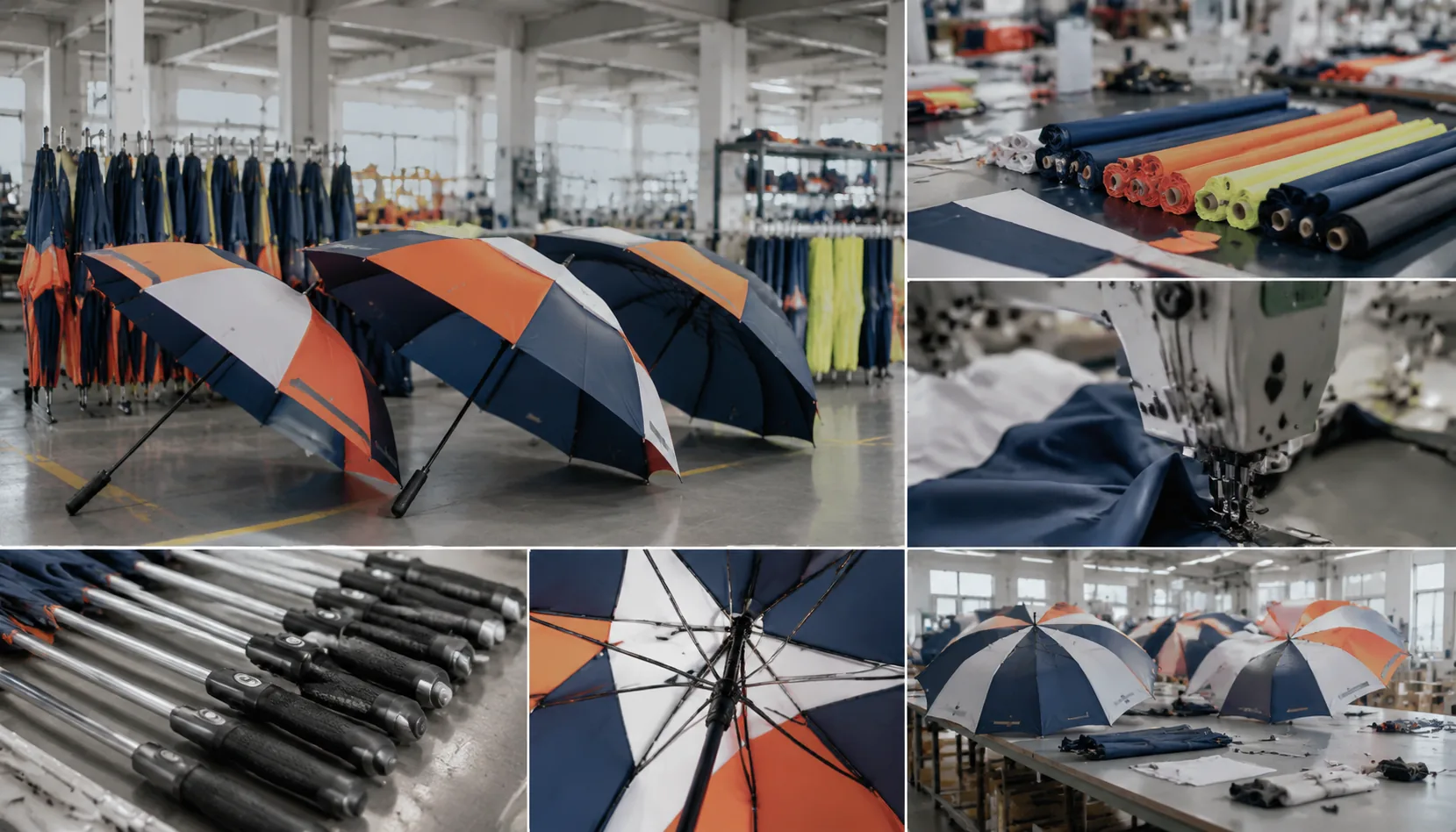
Branded Umbrellas for Insurance Claims and Roadside Teams
Plan umbrellas for insurance adjusters and roadside crews with windproof frames, fast reorders, compliant logos, and rea...
Read More »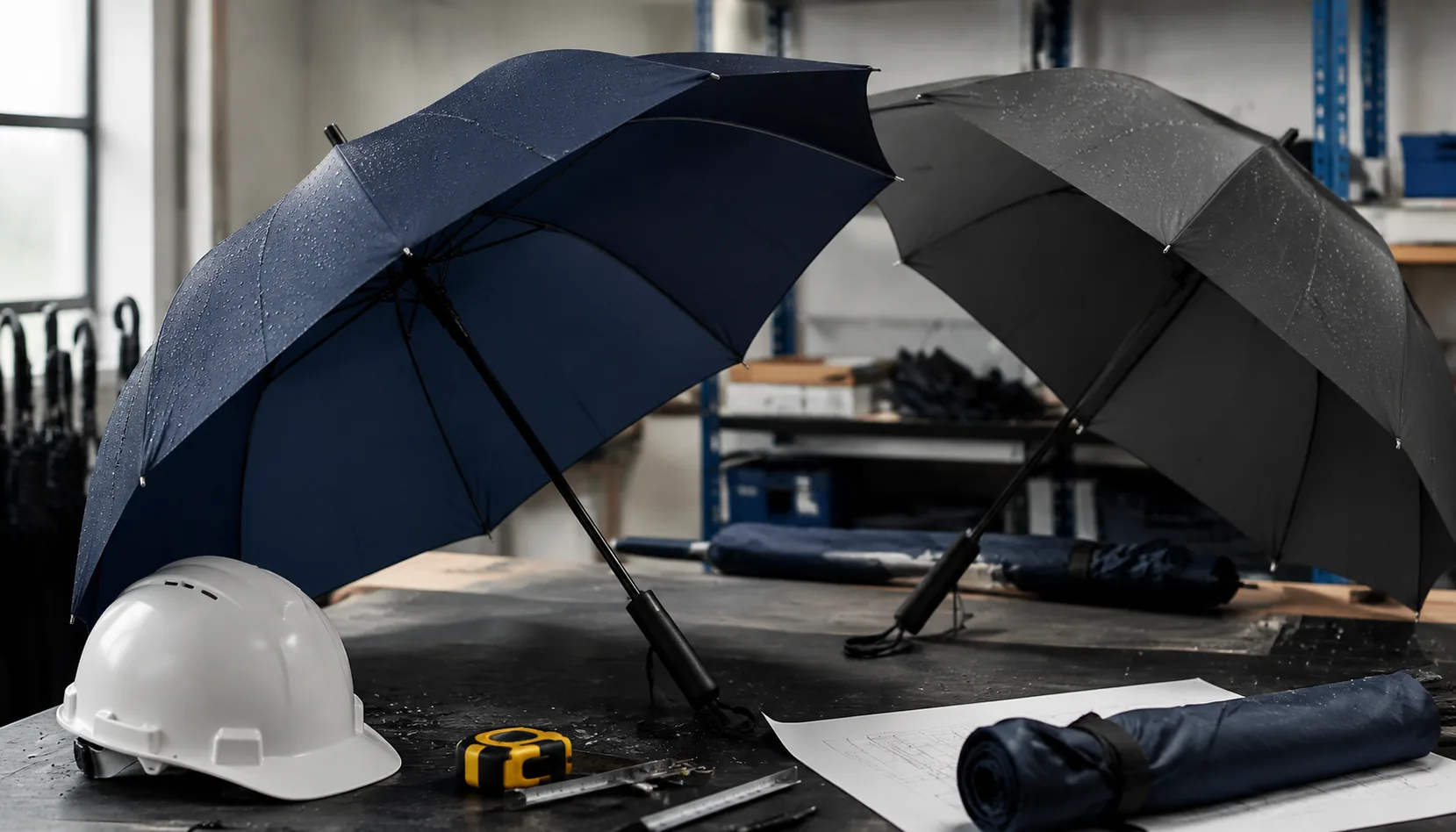
Branded Umbrellas for Insurance Claims Field Teams
Specify umbrellas for insurance adjusters with durable frames, fast deployment, professional branding, QC standards, and...
Read More »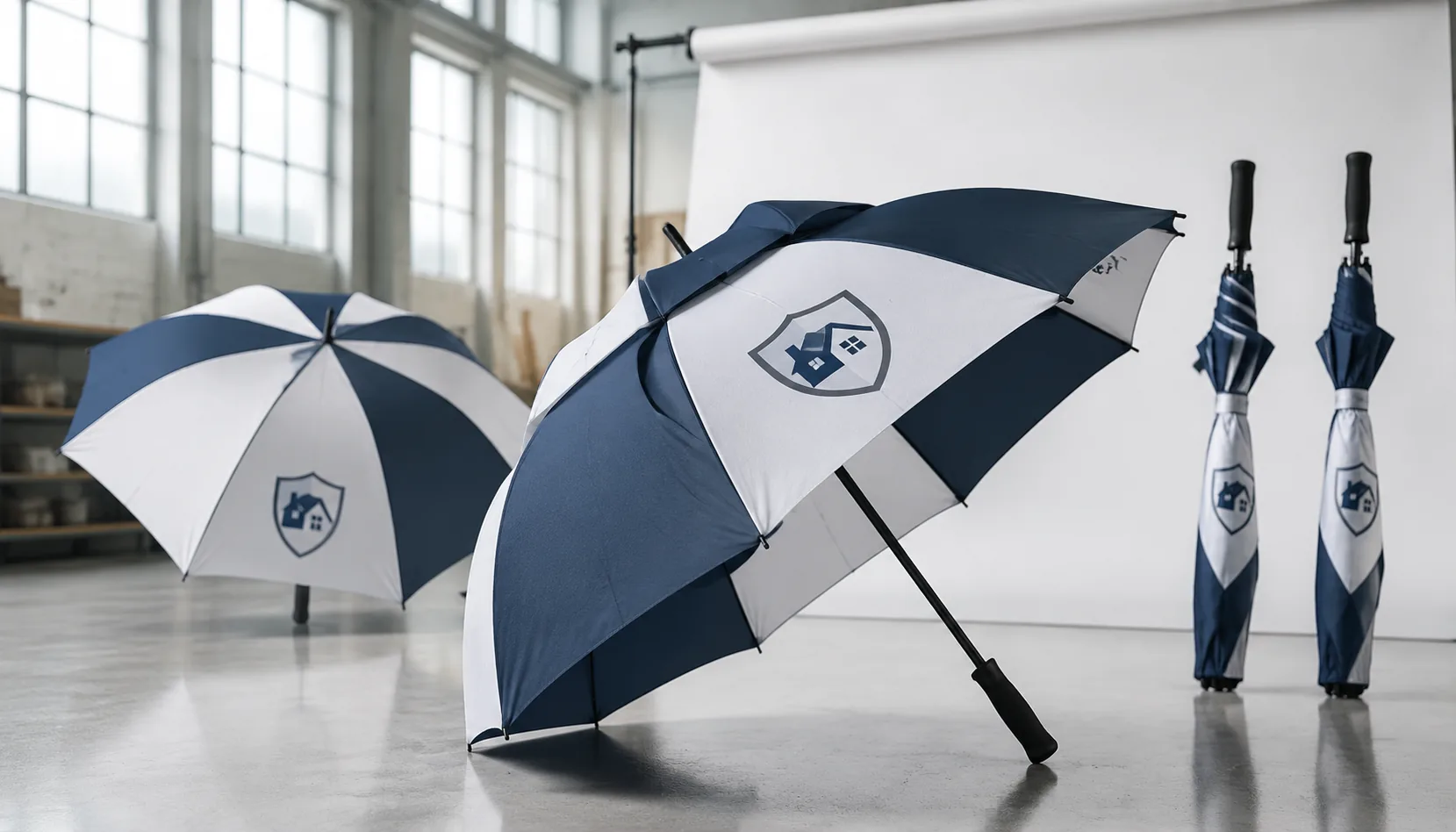
Custom Umbrellas for Insurance Claims and Adjuster Teams
Plan durable branded umbrellas for insurance adjusters, with windproof frames, fast deployment, logo visibility, MOQ, le...
Read More »