Custom Umbrellas for Logistics Yards and Warehouse Teams
Rain gear for a warehouse team has to survive more than a sidewalk commute: yard checks, dock walks, trailer inspections, and shuttle waits all expose umbrellas to wind, forklift traffic, oil mist, and low-light conditions. When buyers specify logistics yard umbrellas, the real questions are rib strength, canopy visibility, reflective logo placement, MOQ discipline, and how each lot is checked before cartons leave the factory floor.
Where Umbrellas Fit in Logistics Operations
Place logistics yard umbrellas at stop-and-verify points where staff must keep one hand dry, not as universal PPE for every outdoor role. Gatehouse teams use them while checking BOLs, seal numbers, driver IDs, appointment windows, and visitor badges. Yard supervisors and jockey coordinators need coverage when confirming trailer numbers, inspecting landing gear, recording exceptions, and radioing dispatch between dropped trailers. Dock leads use them for short office-to-bay walks, inbound quality checks at open doors, and carrier escorts from security to receiving. They also fit employee shuttle stops, security patrols, and visitor escorts that involve badge scans or checklist reviews. Specify 27" or 30" golf-style canopies when the user must cover a clipboard, tablet, or Zebra/Honeywell scanner; choose 23" to 27" models for gatehouses, guard shacks, and escort carts where storage space is tighter.
Umbrellas should complement warehouse team rain gear, not replace it. Rain jackets remain the base layer for forklift spotters, yard switcher drivers, and employees exposed for long periods, but hoods do little to protect paperwork and handheld screens. Once sleeves soak through, PODs curl, thermal labels smear, and scanner displays become hard to read. A manual or auto-open umbrella can deploy in about two seconds, letting the user hold coverage above the device while the other hand handles a manifest, badge, seal log, or mobile app. For dock operations umbrellas and gatehouse duty, specify fiberglass ribs instead of low-cost steel ribs; open yards create gusts that bend steel frames during repeated apron walks and trailer checks.
Build visibility into the spec before adding logos. High visibility umbrellas in fluorescent yellow, orange, or lime, with reflective tape around the canopy edge, help drivers see pedestrians at dawn, in rain glare, and under sodium yard lighting. Branded safety umbrellas can carry a company mark, but keep printing to one or two panels so most of the canopy remains bright. For logistics yard umbrellas, 190T or 210T pongee with a water-repellent coating is usually more durable and practical than clear POE unless the user needs overhead line-of-sight. A sound QC plan should verify reinforced tips, straight glove-friendly handles, rib alignment, opening force, and canopy seam leakage; ZheBrella applies AQL 2.5 inspection to these builds.
Durability Specs for Wet and Windy Yards
For wet, windy yards, specify fiberglass shafts and ribs before debating canopy artwork. Fiberglass controls corrosion better than steel in rain-heavy dock environments and flexes under gust load instead of taking a permanent bend. For staff issue, a 23" 8K or 10K frame keeps logistics yard umbrellas compact enough for drivers, pickers, and supervisors moving between trailers. For shared guardhouse, loading-bay, or dispatch stations, step up to a 27" or 30" 16K frame; the extra ribs improve canopy stability but also add sewing points that must be inspected. Use a double-canopy windproof construction on station umbrellas so wind can vent through the top layer instead of flipping the frame inside out. That design costs more than a single canopy, but it reduces breakage risk where umbrellas are opened dozens of times per shift.
Small hardware failures cause most early returns in warehouse team rain gear. Reinforced tips should use stitched pockets or metal/plastic end caps locked cleanly into the canopy edge, preventing ribs from punching through after repeated open-close cycles. Dock operations umbrellas also need thicker rib joints, clean rivets, and a runner that slides firmly without wobble; loose runners are an early rejection point during AQL 2.5 inspection. On 16K branded safety umbrellas, check every rib attachment because more ribs mean more opportunities for skipped stitches, uneven canopy tension, and weak pull points. ZheBrella’s standard approval process cycle-tests production samples before bulk release, then checks frame alignment, tip security, canopy tension, and water repellency after repeated opening and closing. For durable high visibility umbrellas, standardize two SKUs: a 23" 8K or 10K staff model and a 27" or 30" 16K shared-station model with double canopy and reinforced tips.
Safety Colors, Reflective Details, and Branding
Specify canopy color as a safety requirement before artwork. For logistics yard umbrellas, fluorescent yellow and fluorescent orange panels give the fastest visual pickup around reversing trucks, wet asphalt, and low-bay dock lighting. White panels work well in night yards because they reflect headlamps and tower lights without shifting the logo color as much as neon fabric. For supervisors, security guards, and forklift spotters, use 190T or 210T pongee with PU or Teflon water-repellent finish; it dries faster than cotton blends and supports cleaner screen-print edges. A 23" or 27" frame usually fits warehouse team rain gear: wide enough to cover a clipboard, scanner, or radio, but not so wide that it becomes a collision risk at dock doors. For exposed ramps, choose simple two-color layouts, such as alternating fluorescent orange and white, instead of complex eight-panel prints that become visual noise in rain.
Use reflective details to define the worker’s outline, not to overload the brand area. A 5 mm to 10 mm reflective piping edge gives 360-degree visibility as staff move between trailers, while the main logo stays readable. Reflective heat-transfer logos can work on high visibility umbrellas, but they must be tested on the specified canopy material, whether 190T/210T pongee, POE, or PVC, because adhesion and cracking depend on press temperature, dwell time, and coating chemistry. For dock operations umbrellas, frame choice affects control as much as color does: fiberglass ribs with a steel shaft flex better than an all-steel frame in gusty trailer lanes. Where wind exposure is high, a double-canopy vented structure can meet 50+ mph wind-tunnel testing when the runner, tips, and rib joints are correctly matched. Manual open is usually safer than auto-open in crowded loading areas.
Brand standards should support safety markings, not compete with them. Corporate guidelines may require exact Pantone logo colors, but branded safety umbrellas already rely on dominant fluorescent panels; adding a full-color logo, slogan, QR code, and department name across several panels makes the umbrella harder to read from 20 to 30 feet. Keep the main logo on one or two panels, place reflective transfer on the opposite panel or canopy edge, and avoid artwork that crosses rib seams unless the buyer accepts registration tolerance. Screen printing is the lower-risk option for bold one- or two-color marks; heat transfer supports gradients but adds cost and requires wash and flex testing. For logistics yard umbrellas, a clean 500-unit run inspected to AQL 2.5 carries less operational risk than 500 overprinted units that look sharp in a mockup but confuse workers in wet dock traffic.
Deployment Models by Site Type
Issue logistics yard umbrellas individually to roles that cannot detour to a rack: yard supervisors, security guards, trailer checkers, maintenance leads, and staff crossing between the gatehouse, weighbridge, dock office, overflow parking, and trailer rows 20+ times per shift. Specify 23" or 27" auto-open stick umbrellas with fiberglass ribs, 190T or 210T pongee, reflective tape on two panels, and a straight EVA or rubberized handle that grips well with work gloves. Steel ribs lower unit cost, but open yards create gust channels between containers and trailers; fiberglass flexes and recovers better, reducing early rib and joint failures. Manage these umbrellas like issued warehouse team rain gear: serialize by department, shift, or employee ID, and add a small name label or heat-transfer ID block near the strap to reduce “borrowed” stock that never returns.
Use shared racks only where trips are short and demand is predictable: dock doors, guard gates, smoking shelters, shuttle stops, visitor entrances, and warehouse-to-parking walkways. For dock operations umbrellas, choose 27" or 30" manual-open models so workers can cover a radio, clipboard, handheld scanner, or carton label without tilting the canopy into wind. Avoid 21" folding umbrellas in outdoor racks unless storage is fully indoors and wind exposure is low; wet users often collapse them roughly and force them into bins, which damages folding shafts and joints. For branded safety umbrellas, use high visibility umbrellas in yellow, orange, or lime with reflective binding, but keep at least two panels in the company color so supervisors and security can identify site-owned stock. Sites reporting gusts over 35 mph should upgrade to reinforced tips, thicker runners, and a vented double canopy.
Set reorder quantities from headcount, rack count, loss rate, and rainy-season consumption, not last year’s guess. For individually issued logistics yard umbrellas, buy 110% of eligible users: 40 supervisors, guards, and trailer checkers require 44 units to cover new hires, shift changes, and rollout damage. For shared racks, budget 6–10 umbrellas per active dock zone and 4–6 per gate or shuttle point, then hold 15% reserve stock in the maintenance cage. Shared stock typically loses or breaks 3%–5% per month during rainy season, with higher shrinkage where visitors can leave the site with umbrellas. East Coast and Midwest U.S. distribution centers often consume stock before spring storms and again before hurricane remnants, so place custom-print replenishment POs 45–60 days ahead. For urgent top-ups, reduce variables: one-color logo, stock canopy color, AQL 2.5 inspection, and FOB or DDP terms confirmed before production.
Procurement Specs, Inspection, and Delivery Terms
Treat logistics yard umbrellas as PPE-adjacent work equipment, not giveaways. For guard booths, trailer lanes, fuel islands, and dock doors, specify fiberglass ribs where crosswinds are common; thin steel ribs reduce unit cost but increase breakage risk in cross-dock use. Use 23 inch frames for personal carry and 27 inch frames when supervisors, yard jockeys, or dock leads need broader coverage. Set 190T pongee as the entry canopy and upgrade to 210T pongee with a water-repellent coating for daily outdoor duty. MOQ should match build complexity: 500 units for one canopy color with a one-position logo, 1,000 units when adding reflective tape or multiple logo panels, and 2,000 units for custom PMS fabric, molded handles, or mixed 23 inch and 27 inch production. For warehouse team rain gear, keep logos outside reflective zones so branding does not reduce visibility contrast on high visibility umbrellas.
Start the lead-time clock only after sample approval. With clean vector artwork and confirmed Pantone references, plan 5 to 7 days for a pre-production sample, then 25 to 35 days for bulk production after approval of canopy color, logo placement, opening force, and carton marks. Before shipment, inspect to AQL 2.5 on field-critical defects: frame opening and closing, rib alignment, shaft lock function, fabric leakage after spray testing, print durability by rub test, and carton labeling against the packing list. For branded safety umbrellas, add checks for reflective strip position and fluorescent yellow-green shade consistency under warehouse lighting; mixed fabric lots can create visible shade shifts across teams and weaken program compliance. Require the inspection report to include photos of open-frame alignment, print placement, leakage results, carton marks, and packed cartons before the release decision.
Match Incoterms to the receiving model. FOB Ningbo or Shanghai works best when the buyer ships to one central warehouse and already consolidates PPE, rainwear, and facility supplies by container or LCL; procurement keeps control of freight, insurance, customs entry, and final routing, especially on 1,000 to 2,000 dock operations umbrellas. DDP is better for multi-site rollouts where 20, 50, or 100 cartons must reach separate DCs, branch yards, or event locations without local teams handling duties, port charges, customs bonds, or last-mile exceptions. The landed unit price is higher, but it reduces receiving friction and missed-delivery risk. For seasonal logistics yard umbrellas, confirm carton dimensions and gross weight before production so parcel, LTL, or pallet delivery can be priced before goods are packed.
Frequently Asked Questions
Are metal ribs acceptable for warehouse and logistics umbrellas?
Steel ribs can reduce unit cost, but fiberglass is usually better for wet yards because it is lighter, more flexible, and less prone to corrosion. Use steel only for budget programs with lower wind exposure.
What umbrella size works best for dock and yard teams?
A 23-inch or 27-inch stick umbrella works well for shared stations and escorts. Compact umbrellas are better for supervisors who keep one in a vehicle or backpack.
What umbrella specifications work best for logistics yards and dock operations?
For yard checks and dock walks, buyers usually specify 23 to 27 inch straight umbrellas with fiberglass ribs, pongee or polyester canopy fabric, wind-resistant frames, and reflective trim or high-visibility panels. A manual or auto-open design can be selected depending on safety policy and glove use.
Can reflective logos or safety colors be added to warehouse team umbrellas?
Yes. Common options include screen-printed logos, reflective strip printing, fluorescent yellow or orange canopy panels, and contrast binding. For safety-focused programs, confirm reflectivity requirements during sampling because decorative silver printing is not always the same as reflective material.
What MOQ and lead time should distributors expect for branded safety umbrellas?
Typical OEM MOQ is often 500 to 1,000 pieces per design, depending on canopy fabric, frame type, and printing method. Sampling usually takes 5 to 10 days, with bulk production commonly around 25 to 40 days after artwork and pre-production sample approval.
Looking to Launch Your Custom Umbrella Line?
ZheBrella is a Zhejiang-based OEM/ODM umbrella manufacturer with 17 years of export experience. Free design, low MOQ from 100 pieces, windproof construction, full-color print.
Get Free Quote Now »People Also Search For
Related Articles
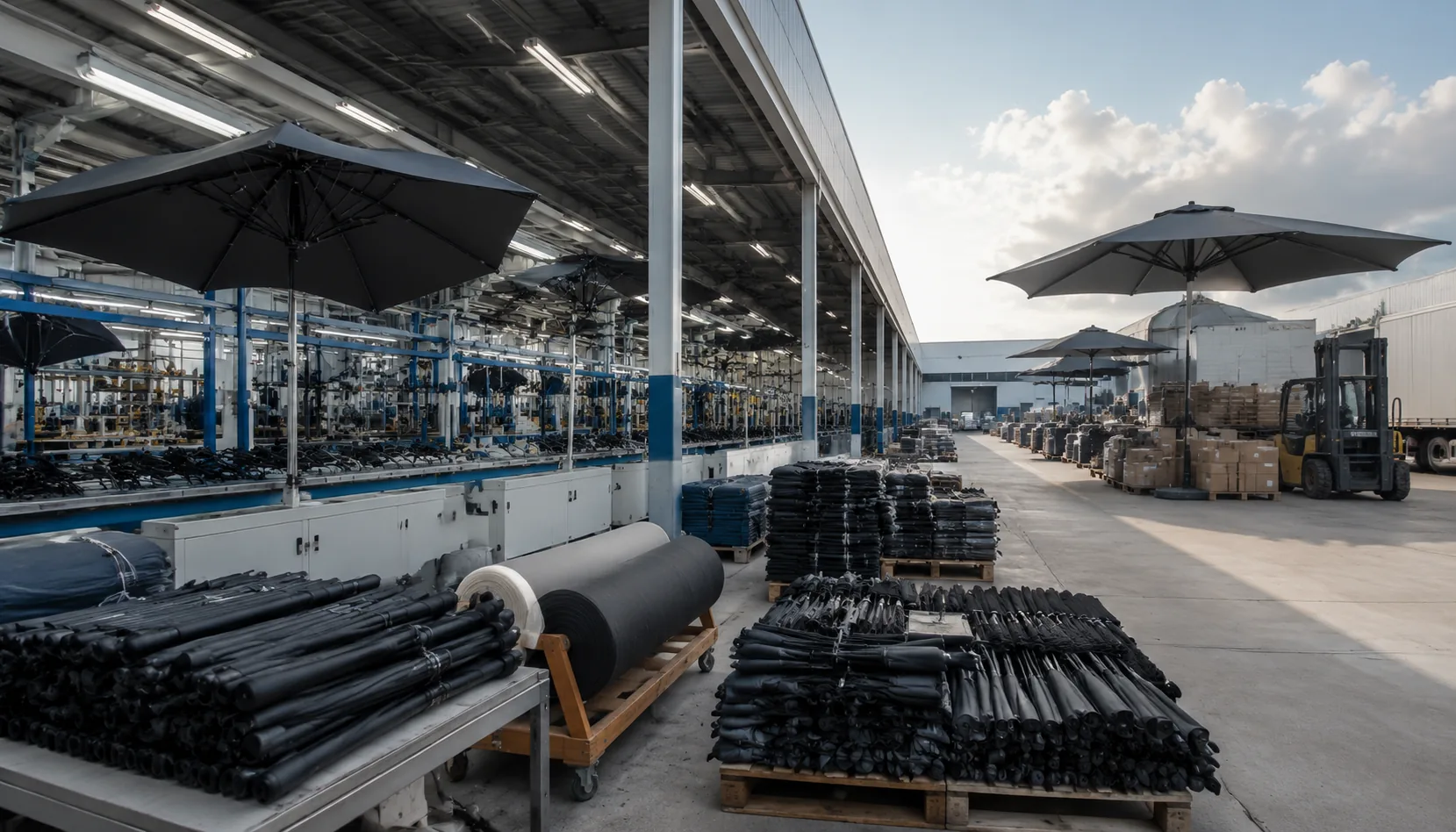
Branded Umbrellas for Logistics Yards and Warehouse Teams
Source durable branded umbrellas for yard marshals, dock teams, and warehouse staff with fiberglass ribs, safety colors,...
Read More »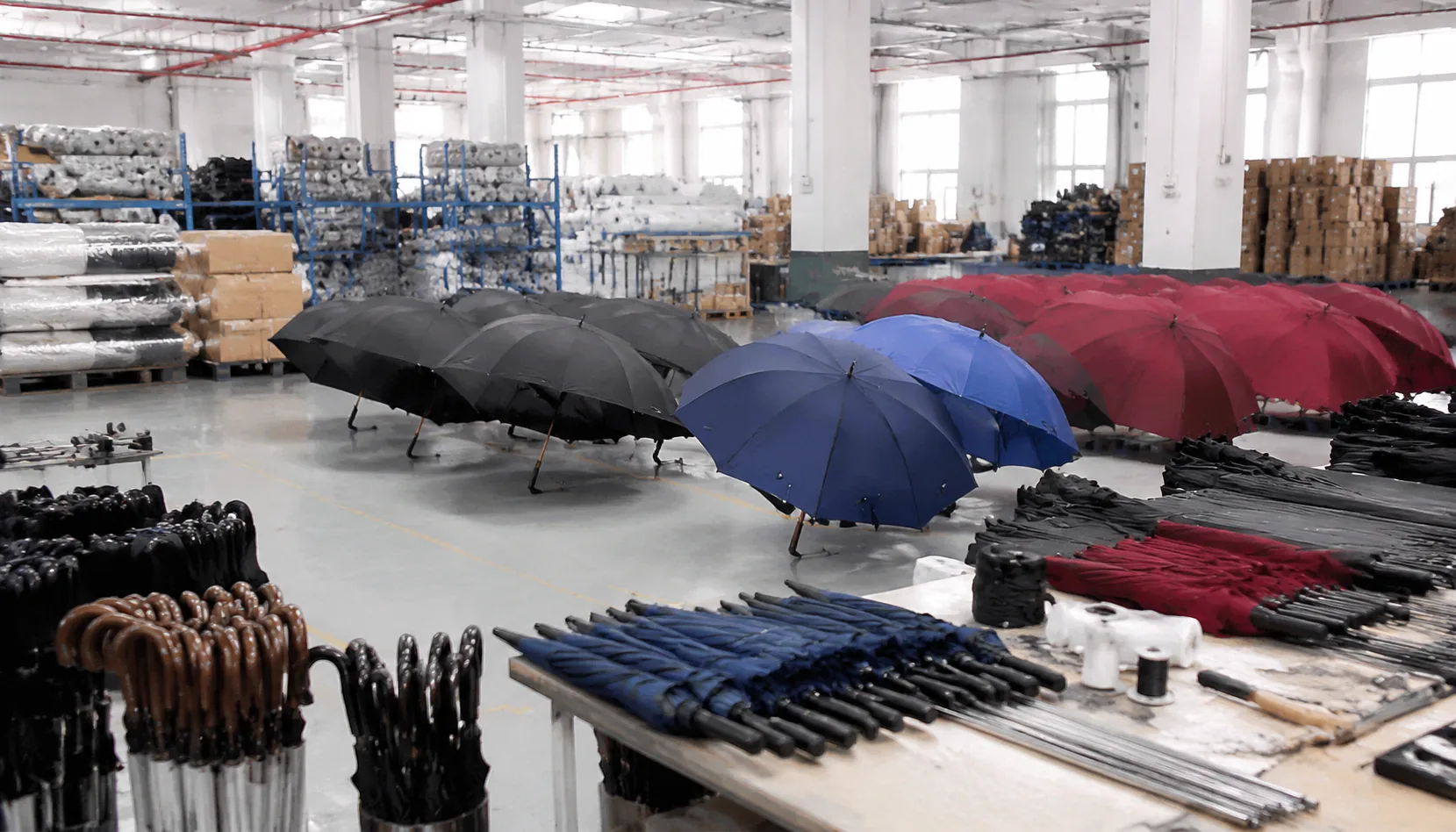
Umbrella Programs for Logistics Yards and Warehouses
Source umbrella programs for logistics yards, warehouses, and dock teams with windproof specs, safety colors, QA checks,...
Read More »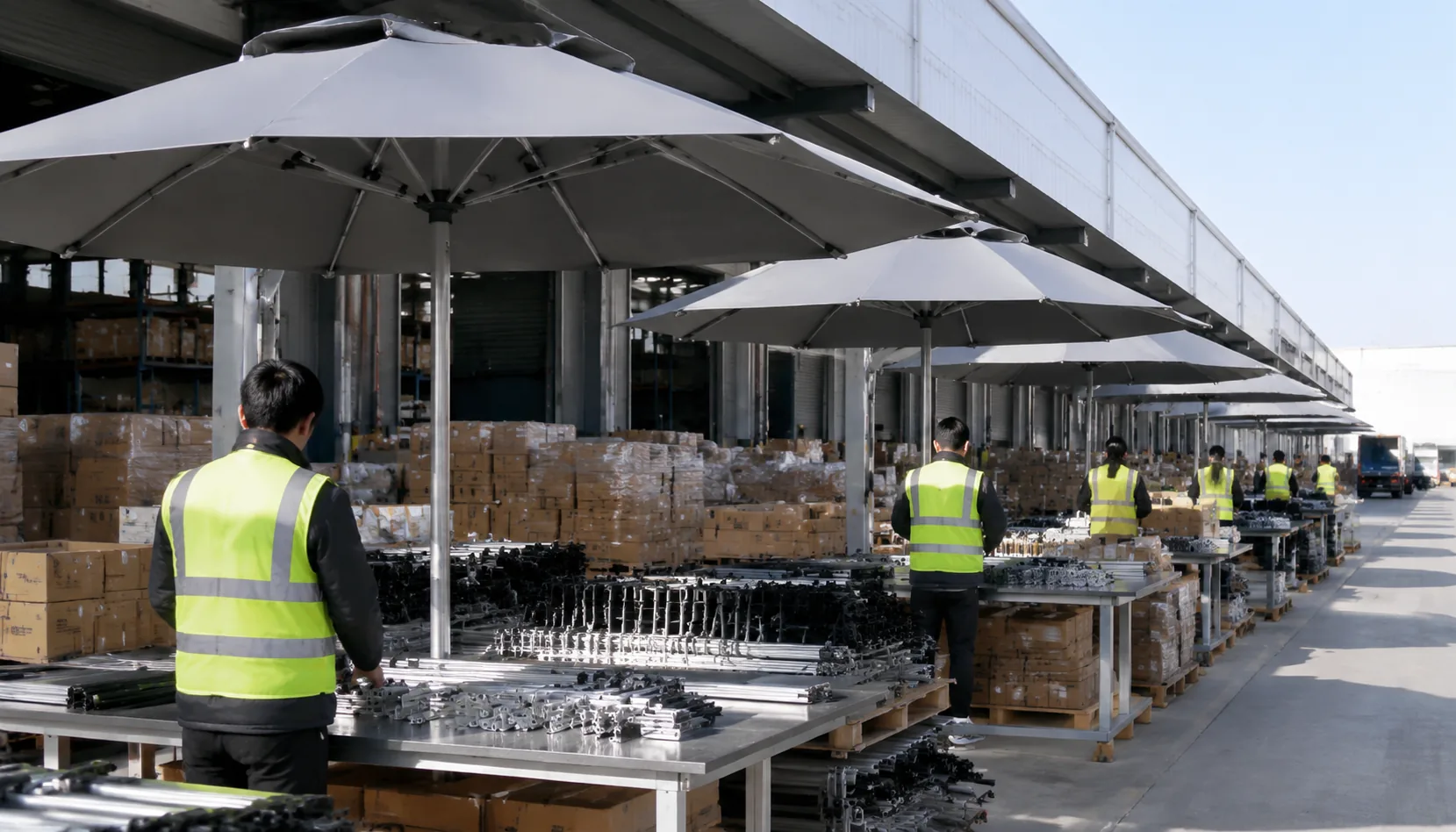
Umbrellas for Logistics Yards and Warehouse Operations
Build practical umbrella programs for logistics yards with rugged ribs, high-visibility panels, MOQ planning, FOB/DDP de...
Read More »