FOB vs DDP Umbrella Production: Cost Drivers at the Factory
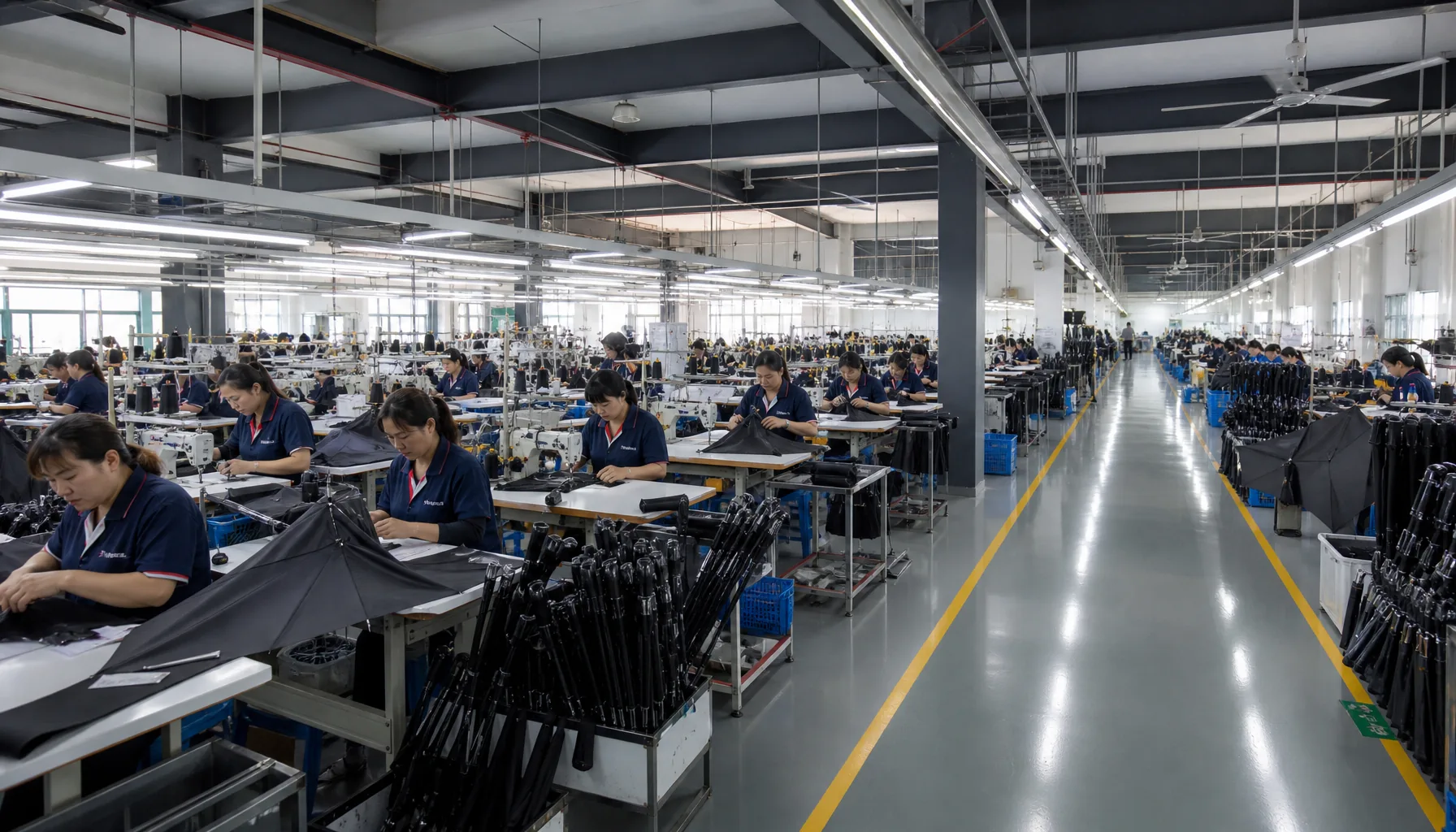
For umbrella buyers, the real cost is not just the quoted unit price but where responsibility shifts between the factory and the destination. FOB umbrella pricing can look straightforward until material grades, labor efficiency, carton specs, freight, duty, and local delivery are traced back to the production floor. At our factory, those variables are measured in real output, not theory, so the difference between FOB and DDP becomes a question of who controls each cost driver and when.
What Changes Between FOB and DDP on Umbrella Orders
FOB changes the factory’s job to getting the umbrellas out of the plant, cleared for export, and loaded onto the vessel the buyer nominated. In practice, that means the factory price covers production, packing, carton labeling, export declaration, and delivery to the port, but not ocean freight, destination customs, duty, or final delivery. For umbrella factory cost drivers, this is the cleanest way to quote because the quote tracks real factory work: frame cost, canopy fabric, printing, labor, carton spec, and inland trucking to the port. FOB umbrella pricing is useful when the buyer already has a freight forwarder, wants control over carrier selection, or needs to compare suppliers on the same basis without freight noise.
DDP pushes the supplier to own the full door-to-door move, so the quote has to absorb more than factory cost. Under DDP umbrella shipping, the supplier usually handles export paperwork, origin haulage, ocean freight, destination brokerage, import duty, VAT or GST where applicable, and last-mile delivery to the buyer’s address. That turns the quote into a landed-cost number, not just a manufacturing number. The risk is that the seller has to price in route volatility, port congestion, customs delays, and local delivery charges, which are all export umbrella terms buyers often underestimate. If the shipment has a bulky carton spec, mixed SKUs, or a remote delivery point, the DDP margin can move faster than the product cost itself.
For purchase orders, the practical question is not which term sounds cheaper, but which side is better equipped to manage the moving parts. FOB works when the buyer has a freight team and wants transparency on freight invoices, duty, and delivery timing. DDP works when the buyer wants one number and one accountable party, especially for smaller promo runs or first-time imports where landed cost planning matters more than freight optimization. The important detail is that the same umbrella can produce very different totals depending on carton size, loading efficiency, destination tariff rate, and whether the order ships in a full container or consolidates with other cargo. On a real PO, that difference can easily outrun the manufacturing delta between two umbrella specs.
Factory Cost Drivers Behind the Unit Price
The biggest mistake buyers make with FOB umbrella pricing is treating the canopy as a simple color choice. It is not. 190T pongee, 210T pongee, POE, PVC, and EVA all sit at very different cost levels because of resin content, weave density, coating, and cutting waste. A 23" stick umbrella in 190T pongee is usually the baseline for export umbrella terms; moving to 210T adds cost, but it also improves hand feel, opacity, and tear resistance. Add Teflon water repellency or UPF 50+ UV coating and you increase material cost, process time, and sometimes defect risk. Print coverage matters too: a small logo on one panel is one thing, full-panel sublimation or multi-color screen print is another, because ink consumption, registration, and rejection rates all move the needle. On the factory floor, fabric choice is one of the most visible umbrella factory cost drivers, and it usually sets the floor for the ex-works price before hardware is even discussed.
Ribs and shaft hardware are the next major cost block. Fiberglass ribs cost more than plain steel in many specs, but they are the right choice when the buyer wants flex and wind resistance instead of a cheap rigid frame that bends permanently. An 8K manual-open umbrella with steel ribs will price differently from a 10K or 16K build with fiberglass components, reinforced connectors, and a heavier shaft. Once you move into double-canopy vented windproof construction, the sewing and assembly time also increase because the top and inner canopy must be aligned and tensioned correctly. Handle type looks minor on paper, but EVA, rubberized, wooden, and straight plastic handles all change tooling, finish, and packing requirements. In FOB umbrella pricing, these hardware choices often explain more of the spread than the buyer expects, especially when comparing a promotional giveaway spec with a retail-grade frame.
Mechanism complexity is where labor starts to compound. A manual open umbrella is cheaper to assemble and test than an auto-open model, and an auto-open-close system adds more springs, buttons, failure points, and inspection time. That matters because even a small increase in reject rate pushes up the unit cost under AQL 2.5 control. For landed cost planning, buyers should separate ex-works cost from DDP umbrella shipping, duty, and inland delivery, because the factory quote only covers the build. A lower unit price on paper can disappear once carton size, gross weight, and route change. Our standard practice is to quote by exact spec, not by umbrella family name, because a 21" compact with manual open and steel ribs is not comparable to a 27" auto-open-close model with fiberglass ribs and full-panel print. If the brief is precise, the pricing becomes defensible instead of vague.
Packing Density, Carton Design, and Freight Efficiency
Closed length is the first packing variable I check, not canopy diameter. A 21-inch 3-fold in 190T pongee with a normal plastic handle usually folds to 28 to 30 cm, and that often lets you pack 48 pieces in a master carton around 60 x 32 x 30 cm, or roughly 0.058 CBM. Change the mechanism to auto-open-close, add a larger ABS handle, or move from 8K to a fatter 10K frame, and the fold length can stretch to 33 or 34 cm. That small sample-room change usually forces a longer shipper and drops the carton to 36 or 42 pieces. Straight umbrellas are harsher on cube: a 27-inch or 30-inch golf frame with fiberglass ribs and an EVA handle commonly needs a 100 to 102 cm carton, so freight volume per unit can be nearly double a compact 3-fold. That is why FOB umbrella pricing often looks fine on paper while the larger SKU quietly burns money in cubic meters.
Carton count is only half the story; the master carton spec decides whether those pieces travel efficiently or waste space all the way to the destination warehouse. One of the most overlooked umbrella factory cost drivers is a carton that fits the product but stacks badly in a 40HQ. If you use a 61 x 33 x 31 cm shipper instead of tightening it to 60 x 32 x 30 cm, the difference is only 0.0027 CBM per carton, but across 1,000 cartons that is 2.7 CBM you are paying to move air. Under real export umbrella terms, that extra cube shows up in ocean freight, destination handling, pallet count, and warehouse storage, even when the FOB line on the PI looks unchanged. For landed cost planning, I care about pieces per cubic meter, carton crush strength, and pallet footprint together. A 5-ply BC flute carton can be enough for 36 compact umbrellas, but long 27-inch straight umbrellas usually need stronger board and tighter end protection because the ferrules act like punches during rough handling.
Retail packaging changes both cube and claims. A single OPP polybag keeps density tight and is usually the best answer for bulk promotional orders, but it gives less protection against shaft rub, tip puncture, and handle scuffing, especially on auto-open-close umbrellas with heavier top springs. Add a retail box, hanger, and 250 gsm insert card, and you can easily push master carton volume up 10 to 18 percent or lose one full row in the shipper. The tradeoff is lower transit damage if the box is properly sized and the tip is blocked; if the box is too loose, the umbrella still moves inside and you pay for extra cube without reducing claims. DDP umbrella shipping makes these mistakes more expensive because you are absorbing the full chain from origin loading to destination delivery. I would rather approve packaging after a drop test and an AQL 2.5 final inspection than accept a pretty box that collapses in humid-season freight.
Why Landed Cost Can Diverge from the Quote
The quote is usually clean; the landed cost is not. FOB umbrella pricing only covers the product up to the named port, so buyers who stop there miss the biggest drift points: inspection rework, export documentation fixes, inland trucking, port fees, and currency movement between PO approval and payment. On umbrellas, rework is not abstract. If a carton fails drop tests, if canopy color is off by one shade, or if AQL 2.5 inspection triggers sorting, the factory may need to open, reseal, and replace stock before shipment. That adds labor, packing material, and days. At the same time, duty classification can move the total by a surprising amount. A 21-inch manual umbrella, a 23-inch auto-open model, and a golf-style vented frame may not be treated the same way in every destination market, so export umbrella terms should be checked against the actual HS code before you release the PO.
DDP umbrella shipping looks simple because the supplier quotes a delivered number, but the risk just shifts into assumptions. Inland trucking from the factory to Ningbo or Shanghai, port congestion charges, container rollover, customs clearance, and destination delivery can all change week to week. If the shipment is split across sizes or colors, consolidation costs also rise. Exchange-rate movement is another common trap: a 2% swing in USD/CNY or the destination currency can erase the margin on a large order if the buyer is paying on a delayed schedule. In practice, the umbrella factory cost drivers are not just materials like 190T pongee, fiberglass ribs, or Teflon coating. They also include logistics timing, port calendar risk, and whether the buyer is asking for cartons, barcodes, and master packing that match retail compliance.
A usable landed cost framework is straightforward: factory unit price, plus inland freight to port, plus export handling, plus ocean or air freight, plus insurance, plus duty and VAT, plus destination trucking, plus any inspection or rework allowance, plus a currency buffer. For landed cost planning, I tell buyers to set a separate line for quality risk, usually 1% to 3% of order value for a first run, because first-production issues are common on new canopies, print placements, and auto-open mechanisms. Then compare that total against the true delivered budget, not just the FOB quote. ZheBrella uses this same model when quoting because a low FOB umbrella pricing number can still be a poor purchase if the buyer has not priced duty class, carton volume, or transit time risk. If the full landed total is not locked before PO release, the final invoice will usually be higher than expected.
How Buyers Should Quote Like a Factory Partner
If you want a real quote, not a placeholder number, give the factory the commercial details up front: target market, Incoterm, delivery port or door code, artwork count, exact canopy size, frame type, and whether you need manual, auto-open, or auto-open-close. For FOB umbrella pricing, the factory needs to know whether you are buying a 21" compact with 6K steel ribs, a 23" golf model with fiberglass ribs, or a 27" vented auto-open style with a double canopy. Those choices change the metal bill, cutting yield, sewing labor, and carton dimensions fast. If you leave those open, you are not quoting a product; you are asking the factory to guess your spec and eat the risk.
Color is another place where buyers underquote their own complexity. One Pantone solid on a 190T pongee canopy is straightforward; four-panel matched printing, gradient sublimation, or white over black POE changes ink usage, setup time, and reject risk. The factory also needs test requirements in writing: UV coating with UPF 50+, Teflon water repellency, wind resistance target, and any AQL 2.5 inspection requirement. In umbrella factory cost drivers, testing is not a side note because sample destruction, compliance reports, and extra reinforcement all add labor and material. Good export umbrella terms always specify artwork count, panel layout, and whether the frame must pass a certain wind-tunnel or flex-cycle standard before mass production.
Forecast volume matters because umbrella production is full of fixed setup costs. A 500-piece order and a 20,000-piece order do not share the same cutting efficiency, screen setup, or carton optimization, so the unit price moves a lot with volume. If the buyer gives a 90-day forecast and confirms the reorder window, the factory can reserve fiberglass, ribs, shafts, and canopy fabric instead of buying spot material at a higher rate. That is the difference between a clean FOB umbrella pricing offer and a padded quote with hidden risk. For DDP umbrella shipping, the same discipline helps with landed cost planning because carton count, gross weight, destination duty, and last-mile delivery all depend on the final construction. Our standard practice is to quote only after the buyer locks the spec sheet, because every late change becomes a change order that burns schedule and margins.
Frequently Asked Questions
Is DDP always more expensive than FOB for umbrellas?
Not always on the invoice, but DDP usually includes more services and risk coverage, so the quoted unit price is commonly higher. The real comparison should be landed cost, not just the factory line item.
Which umbrella features most affect freight cost?
Folded length, packed weight, and carton density matter most because they drive cubic volume and pallet efficiency. Larger shafts, non-collapsible models, and heavy retail packaging can raise freight cost even if the factory price stays stable.
What factory costs usually change the most between FOB and DDP umbrella quotes?
The biggest swing usually comes from freight, duty, and destination handling fees, not the umbrella itself. On a typical 3,000 to 10,000 piece order, packaging upgrades and carton count can also move the quote by 5% to 15% because they affect cube and shipping class.
How should a buyer compare FOB and DDP when requesting umbrella factory quotes?
Ask for the same product spec, carton count, and delivery address on both quotes, then compare landed cost per unit. A proper DDP quote should show whether it includes ocean freight, customs clearance, duty, and last-mile delivery, while FOB should stop at the named port.
What lead time difference should a distributor expect for FOB versus DDP umbrella orders?
Production time is usually the same, often 20 to 35 days after sample approval for standard custom umbrellas. DDP can add 7 to 20 days depending on the destination, customs clearance speed, and whether the shipment moves by sea or air.
Looking to Launch Your Custom Umbrella Line?
ZheBrella is a Zhejiang-based OEM/ODM umbrella manufacturer with 17 years of export experience. Free design, low MOQ from 100 pieces, windproof construction, full-color print.
Get Free Quote Now »People Also Search For
Related Articles
Umbrella MOQ and Lead Time Planning for Seasonal Orders
Learn how umbrella MOQ, fabric choice, and factory lead times affect seasonal launches, freight planning, and landed cos...
Read More »
How Umbrella MOQ and Packaging Specs Affect Factory Pricing
Understand how MOQ, canopy size, rib count, packaging, and carton specs change umbrella unit cost, sample cost, and frei...
Read More »
Custom Umbrella Production Lead Times from Sample to Shipment
See how umbrella sampling, material sourcing, sewing, assembly, and freight choices shape lead times, so buyers can plan...
Read More »