How Umbrella MOQ and Packaging Specs Affect Factory Pricing
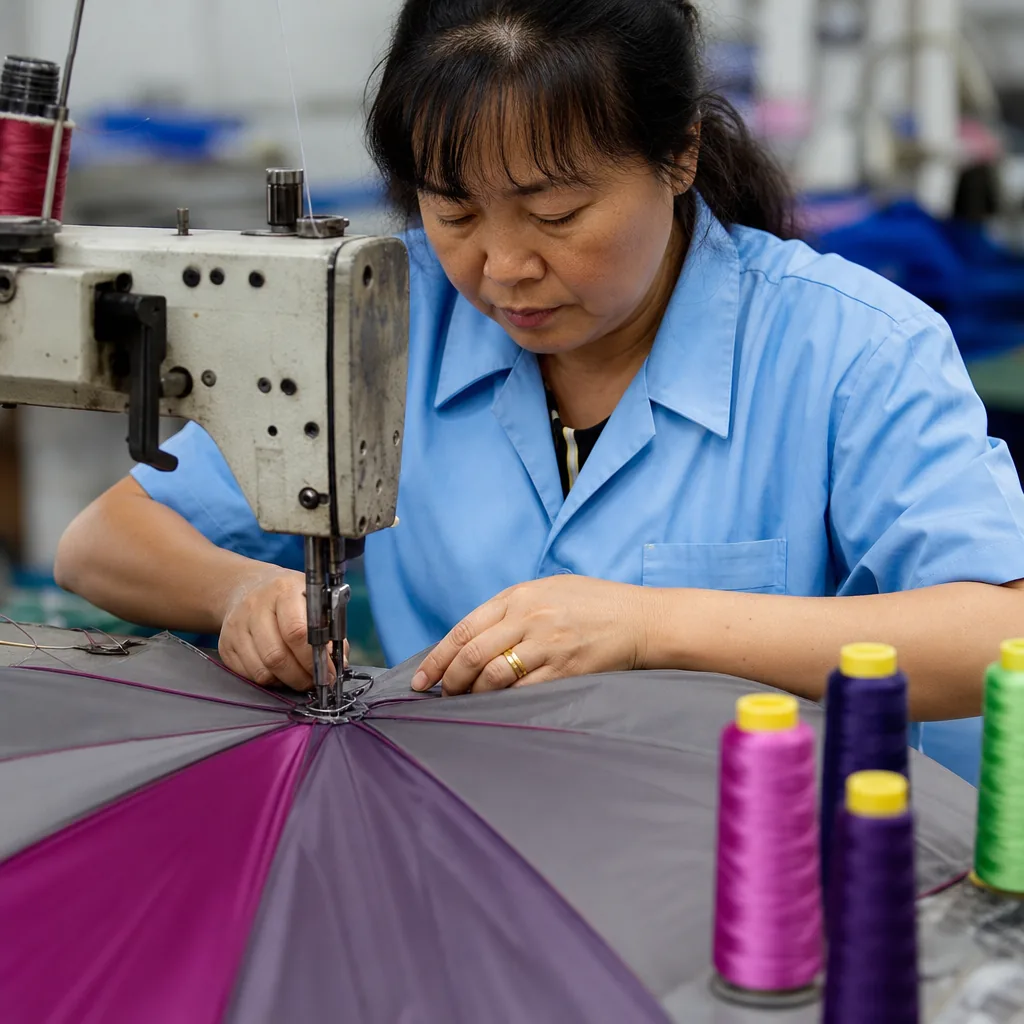
Buying umbrellas at scale is rarely just about the fabric or logo; the real price shifts come from MOQ, canopy size, rib count, packaging, and how well the cartons cube out for shipping. A low custom umbrella MOQ can raise unit cost fast if the spec is complex, while tighter packaging can cut freight waste and reduce handling damage. From the factory floor, the key is matching the product build to the order size and the carton plan before quoting.
What Actually Drives MOQ
MOQ is not a single number because the cost base changes the moment you move away from a standard build. For a stock black frame with a black steel shaft, off-the-shelf ferrule, and a common 190T pongee canopy, the factory can spread setup across existing inventory, so umbrella factory pricing stays tighter and the custom umbrella MOQ can be relatively low. Once you ask for a specific canopy color, custom logo placement, or a nonstandard panel count, the order starts consuming separate fabric dye lots, cutting layouts, and print screens. That is where bulk order planning matters: the more unique variables you stack into one SKU, the more each unit has to absorb setup waste, sampling, and line changeover time.
Accessories are another reason MOQ moves. A plain EVA hook handle, a stock straight handle, or a standard plastic J-shape can often be pulled from regular supply, but a molded custom handle, two-tone grip, metal tip cap, or branded sleeve usually requires dedicated tooling or at least a special sourcing run. That is why OEM umbrella cost jumps faster on the accessory side than many buyers expect. The same logic applies to packaging options: a loose bulk pack, polybag, or plain inner carton is easy, while printed box sets, hang tags, barcode labels, and retail-ready inserts create separate production steps. If you want the factory to combine these into one shipment cleanly, you usually need a higher MOQ to keep waste and handling cost under control.
Model choice also changes the math. A manual umbrella is mechanically simpler, so a factory can support a lower custom umbrella MOQ for testing colors, prints, or packaging combinations. Auto-open and especially auto-open-close models need extra spring components, more assembly time, and more inspection points, so the minimum rises because the factory has more parts to source and more chances for failure on the line. In practice, a stock black manual frame with standard packaging is the easiest starting point, while an auto-open model with custom handles, branded sleeve, and special canopy color pushes the order into a higher MOQ tier. That is the real driver behind umbrella factory pricing: not just the umbrella itself, but how much of the build you are asking to move away from standard supply.
Cost Impact of Rib Count and Frame Materials
Rib count is one of the first things I look at when quoting umbrella factory pricing, because it changes both the metal content and the time spent in frame assembly. An 8K frame is simpler: fewer ribs, fewer stretcher joints, less labor at the riveting and tip-insertion stages, and a lower breakage rate during sampling. A 16K frame uses twice as many ribs, so the canopy has more support points and a smoother round shape, but every extra rib adds ferrules, hub work, and more chances for alignment errors. That matters in custom umbrella MOQ planning, because at small quantities the setup and hand-assembly time can outweigh the raw material delta. In practice, the jump from 8K to 16K is not just a material upgrade; it changes the whole OEM umbrella cost structure, especially when the buyer wants tight tolerances, colored plating, or matched handle finishes.
Frame material is the second major cost lever. Fiberglass ribs cost more than plain steel components, but they are usually the better choice for wind resistance, flex recovery, and lower return rates on broken tips or snapped stretchers. Steel still has a place in low-cost promotional umbrellas, especially if the design is a basic 21-inch manual open model, but once the spec moves to larger sizes like 23-inch or 27-inch, steel frames can get heavy and prone to permanent deformation in gusts. That adds hidden cost in QC and claims, not just in the bill of materials. Our standard practice is to price fiberglass upgrades against the intended use case, because a cheaper frame that fails in use is not actually cheaper. For bulk order planning, buyers should compare unit price against expected field performance, packaging damage, and replacement risk, not just the front-end quote.
Vented canopies and double-canopy construction also push cost up faster than many buyers expect. A vented windproof top needs extra cutting, seam alignment, and reinforcement at the vent edges, while a double-canopy design adds another fabric layer, more stitching passes, and more inspection time around the ribs and tips. If the canopy uses pongee 190T or 210T with Teflon or UV coating, the sewing line has to handle slippery fabric and keep panel tension consistent, which slows output compared with simple POE or PVC clear umbrellas. These choices also interact with umbrella packaging options: a higher-end frame and canopy usually needs better sleeves, carton dividers, and compression control to avoid bent tips and scuffed prints. For buyers managing custom umbrella MOQ, the real question is whether the spec justifies the added labor and packaging cost, because the price increase is coming from both the frame build and the handling burden, not only the fabric.
Packaging Choices That Raise or Lower Unit Cost
The fastest way to distort umbrella factory pricing is to change the packaging after the sample is approved. A bare umbrella in a polybag is the cheapest route because the labor is basically one fold, one insert, one seal, and that is it. Once you add a printed sleeve, hang tag, or barcode sticker, you are paying for extra handling at the packing line and more QC touches, which matters more at a low custom umbrella MOQ than buyers expect. For promotional distribution, polybags are usually the right choice because they keep OEM umbrella cost down and let us pack tight in master cartons. For retail, the packaging has to do more work: it needs to survive shelf handling, convey brand value, and stay consistent with the product positioning, which means the cost increase is not just the box itself but the time spent matching insert size, print registration, and final carton count.
Retail boxes are where unit cost starts climbing quickly. A rigid paper box, folding carton, or window box adds die-cutting, gluing, inner support, and often manual insertion because umbrella shapes are awkward compared with flat products. If the set includes a sleeve, tissue wrap, or molded tray, carton labor rises again. That is why gift packaging makes sense for retail channels, corporate gifting, and premium event programs, but not for mass giveaways where the receiver will open it once and throw it away. In bulk order planning, the key question is whether the packaging creates a sell-through advantage that can justify the added labor and freight cubic volume. If the umbrella is a 23-inch auto-open-close model with a higher perceived value, gift packaging can support a better retail price; for a basic 21-inch promo stick umbrella, it usually just eats margin.
Master carton density is the part buyers underestimate. A loose pack with oversized retail boxes can cut carton counts in half, which means more cartons, more pallet space, and higher ocean or air freight per unit. At our standard practice, umbrella factory pricing is often lower when we can fit more pieces per carton without crushing the canopy or bending the shaft, because both packing labor and cubic meters drop together. For example, moving from a compact polybag pack to a boxed set can change the carton from efficient cube utilization to dead air, and that dead air gets charged in freight. The right packaging options depend on channel: promotional buyers should optimize for density and speed, while retail buyers should optimize for presentation and shelf readiness. If the order is small and the custom umbrella MOQ is tight, every packaging choice has a bigger effect on OEM umbrella cost because setup labor is spread across fewer units.
FOB, DDP, and Landed Cost Planning
The biggest mistake in umbrella sourcing is comparing a factory quote without matching the trade term. Ex-works only covers the canopy, frame, assembly, and carton at the factory gate, so the buyer still pays inland trucking, export docs, ocean freight, duty, customs clearance, and final-mile delivery. FOB moves the handoff to the port of loading, which is usually the cleanest way to compare umbrella factory pricing across suppliers because the factory includes export clearance and local port charges, but not the destination side. For a custom umbrella MOQ, that distinction matters because a 1,000-piece run with a 21-inch manual umbrella and printed sleeve can look cheap on paper and still become expensive once a 20-foot container is split across freight, brokerage, and duty. ZheBrella usually prices these terms separately so buyers can see where the real cost sits instead of hiding it inside a vague unit price.
DDP is a different animal because the quote is intended to be delivered to the buyer’s door, duty paid, which makes it easier for retail brands and distributors to budget landed cost but harder to compare line by line. Ocean freight can swing a low-MOQ order by several cents to over a dollar per piece depending on carton density, destination, and season; a bulky 30-inch golf umbrella in a non-compacted carton will cost more to move than a tighter 8K folding model, even if the OEM umbrella cost at the factory is similar. Packaging choices also change the number the buyer should compare: individual polybag, color box, hang tag, master carton strength, and palletization all affect cube, breakage risk, and final-mile charges. In bulk order planning, I tell buyers to compare ex-works for pure manufacturing cost, FOB for port-level comparison, and DDP for true landed cost when the delivery address is fixed.
How to Build a Costed Spec Sheet
The fastest way to get a real quote is to send a costed spec sheet, not a loose inquiry. At minimum, I need the open size, folded length, canopy fabric, rib count, handle style, print coverage, packaging, and target delivery date. A 21-inch 8K manual umbrella with 190T pongee and a plastic J-handle is a different cost base from a 23-inch 10K auto-open-close model with fiberglass ribs and a rubber-coated handle. If you only say "promo umbrella," the answer will be a broad range, not umbrella factory pricing. For a custom umbrella MOQ, the spec has to be complete enough that the factory can price fabric consumption, frame hardware, labor time, and packing materials in one pass.
The parts that move OEM umbrella cost the most are usually the frame and the print method, not the logo itself. Fiberglass ribs cost more than steel but reduce breakage claims; vented double-canopy construction adds material and sewing time; and full-panel print coverage changes cutting yield and finishing waste. A small change, like switching from 190T to 210T pongee or moving from one-color screen print to all-over sublimation, can shift the quote by several percent because it affects fabric sourcing, setup, and inspection time. Handle style matters too: EVA, foam, wood, and hook handles all carry different tooling and assembly costs. If the buyer does not define these details, the factory is forced to price for risk, and that usually inflates the number.
Packaging needs to be written with the same discipline as the umbrella itself. State whether you want each piece in an OPP bag, a color box, a paper sleeve, a hang tag, or a master carton with inner dividers, because umbrella packaging options change both material cost and packing labor. A retail-style box for a 30-inch umbrella can add more than a simple polybag, and barcode labeling or carton marks also affect the packing line. Bulk order planning should include the target delivery date, because rush production can force air freight, overtime, or smaller batch scheduling, all of which move pricing. If you want a stable quote, include quantity, packaging spec, print file status, and destination terms such as FOB or DDP, then the factory can price the order instead of guessing at it.
Frequently Asked Questions
Why does the same umbrella style get different MOQ quotes from different factories?
Factories price MOQ based on stocked parts, sewing complexity, and how much custom sourcing is required. A factory with matching frames or fabric in inventory can usually offer a lower MOQ than one that must open new material lots.
How much can packaging change the total cost?
Simple bulk packing may add only a small amount per unit, while retail boxes, inserts, and hang tags can materially raise labor and carton volume. Packaging also changes freight cost because larger cartons reduce container efficiency.
What MOQ usually gives the best factory price for custom umbrellas?
For many OEM orders, pricing improves noticeably once you reach 500 to 1,000 pieces per style and color. If you want mixed colors or multiple logo versions, factories often need a higher total order, such as 1,000 to 3,000 pieces, to keep the unit price stable.
How much does packaging add to umbrella unit cost?
Basic polybag packaging is usually the lowest-cost option, while printed sleeves, hang tags, and retail boxes add more labor and material cost. In many cases, upgrading from simple bulk packing to retail-ready packaging can add about $0.20 to $0.80 per unit, depending on materials and print complexity.
Why do carton specs matter for freight pricing?
Carton size affects how many umbrellas fit per master carton and how much cubic space your shipment uses. A tighter carton layout can reduce volumetric weight and lower ocean or air freight cost, especially on large orders with long-shaft or automatic umbrellas.
Looking to Launch Your Custom Umbrella Line?
ZheBrella is a Zhejiang-based OEM/ODM umbrella manufacturer with 17 years of export experience. Free design, low MOQ from 100 pieces, windproof construction, full-color print.
Get Free Quote Now »People Also Search For
Related Articles
MOQ, Sampling, and Lead Time for Custom Umbrella Orders
Plan custom umbrella orders with realistic MOQ, sample timing, and production lead times so buyers can avoid delays and ...
Read More »How Custom Umbrella Molds Affect Cost, MOQ, and Lead Time
Learn when new umbrella molds make sense, what tooling changes cost, and how they affect MOQ, sampling, and production t...
Read More »Umbrella Factory PFMEA: Preventing Defects Before Bulk Production
Use PFMEA in umbrella manufacturing to identify high-risk failure points early, improve process control, and cut defect ...
Read More »