Hotel Guest Loaner Umbrellas: Durability Buyer Guide
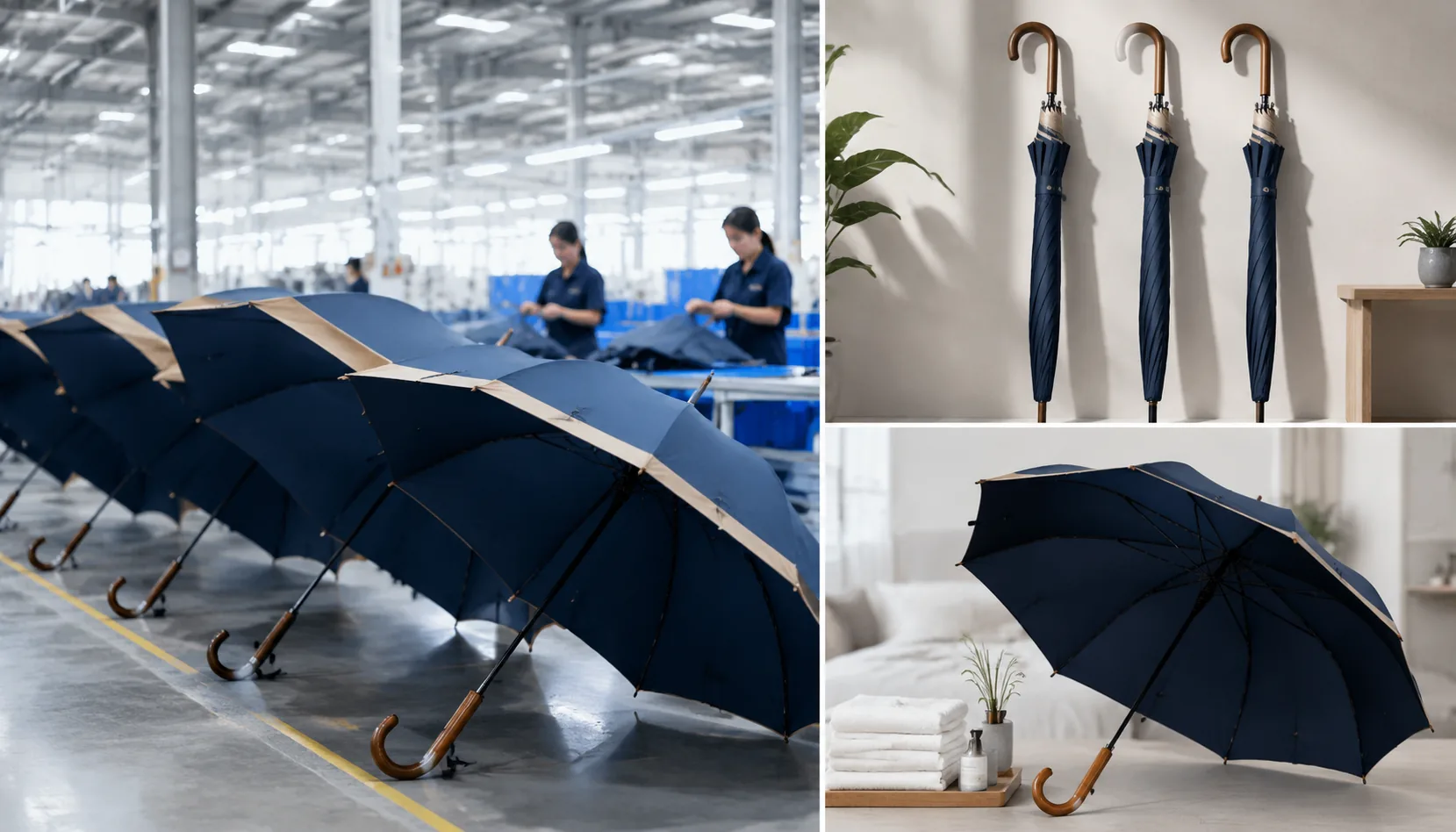
When hotel guest loaner umbrellas come back bent, missing caps, or with logos scuffed after one rainy week, the issue is usually specification, not luck. On our Songxia production floor, we see durability decided early: rib gauge, shaft material, runner fit, canopy tension, print position, and the inspection points written into the order. Buyers also need MOQ and delivery terms planned around seasonal demand, not rushed after the first storm forecast.
Define Lobby, Suite, and Concierge Use Cases
Compact in-room umbrellas are not the same product as front-desk loaners, and mixing the two is where many hotels waste money. A suite umbrella usually sits in the wardrobe, minibar cabinet, or luggage bench area, so the buyer should prioritize clean storage, low snag risk, and controlled cost. A 21" or 23" auto-open straight umbrella with 190T pongee, 8K steel ribs, and a J-handle is usually enough for one guest walking from valet to restaurant. For higher room categories, I prefer fiberglass ribs over painted steel because housekeeping carts bang these umbrellas around, and rust at the runner or rib tips looks cheap after one wet season. Branding should be restrained: woven label on the sleeve, one-panel logo, or tonal heat transfer. Full-canopy printing is unnecessary for a room amenity unless the property treats the umbrella as a retail souvenir.
Lobby umbrellas carry the real abuse, so they need a stronger specification than in-room units. These are the hotel guest loaner umbrellas taken outside during rain bursts, returned wet, shoved into stands, and sometimes left in taxis. A practical lobby size is 23–25" straight, usually 8K or 10K ribs, with 190T or 210T pongee plus a water-repellent coating. If the hotel entrance has open exposure, go to fiberglass ribs and a metal shaft with a reinforced runner; if wind regularly funnels between towers, a double-canopy vented build is worth the added cost. I would avoid ultra-light folding models for lobby umbrellas because the hinges become the failure point. A hotel umbrella supplier should quote spare sleeves, carton labeling by property, and AQL 2.5 inspection for seam tension, tip attachment, print alignment, and open-close cycling, not just show a pretty mockup.
Concierge and doorman models should feel more substantial because guests notice them at the exact moment service quality is being judged. For premium branded hotel umbrellas, a 27" straight umbrella gives better shoulder and luggage coverage than a standard 23", especially when a doorman walks a guest to the car. Resorts and five-star city hotels often choose 27" or 30" golf-style frames with 10K or 16K fiberglass ribs, EVA or wood-look handles, 210T pongee, and UPF 50+ or Teflon-style water-repellent coating. These durable guest umbrellas can be built for 50+ mph wind-tunnel performance if the frame geometry, rib material, and canopy tension are specified correctly. Our standard practice at ZheBrella is to separate room, lobby, and concierge SKUs in the tech pack, because MOQ, replacement rate, FOB/DDP costing, and lead time are different for each use case.
Build for Repeated Guest Handling
For hotel guest loaner umbrellas, the frame should be specified for abuse first and elegance second. Guests twist handles, shake water off sideways, lean umbrellas against luggage carts, and sometimes force the canopy closed against the runner. I recommend fiberglass ribs because they recover after bending much better than painted steel ribs, especially on 23" and 27" stick umbrellas used as lobby umbrellas. Pair them with a steel shaft if the budget needs control: a 12 mm or 14 mm steel center pole gives cost-effective vertical strength, stable opening action, and better impact resistance than light aluminum in daily hotel circulation. For premium branded hotel umbrellas, a fiberglass shaft is lighter and more corrosion-resistant, but it usually adds cost without solving the main failure point, which is rib deformation from rough handling.
An 8K frame is the practical default for standard hotel use because it balances weight, cost, and repair risk. Eight ribs support a 190T or 210T pongee canopy evenly enough for normal rain, valet handoff, and short guest walks from lobby to taxi. With fiberglass ribs and a steel shaft, a well-built 8K umbrella can survive repeated open-close cycles and moderate gusts around 35–45 mph when the rib tips, runner, and spring are correctly fitted. I would rather see a clean 8K build with tight rivets and a smooth manual or auto-open mechanism than a cheap 10K frame using thin, soft ribs. More ribs do not automatically mean more durable guest umbrellas if the rib gauge and joint hardware are weak.
A 16K frame makes sense when the hotel is positioning the umbrella as part of the guest experience, not just a courtesy item. Resorts, coastal hotels, mountain properties, and five-star city hotels often choose 16K because the canopy shape looks fuller, branding prints more evenly between ribs, and wind load is distributed across more support points. The tradeoff is higher material cost, slightly more weight, and more sewing points to control during canopy attachment. As a hotel umbrella supplier, our standard practice is to recommend 16K for 27" or 30" umbrellas in windy locations, especially with 210T pongee, Teflon water-repellent coating, and AQL 2.5 inspection on frame opening, rib flex, and runner locking before shipment.
Choose Fabric, Color, and Branding Specs
Fabric choice decides whether hotel guest loaner umbrellas still look sharp after one rainy season or start showing creases, dye rub, and seam stress. For most lobby umbrellas, I specify 190T pongee because it balances cost, water shedding, and print stability better than cheap polyester taffeta. It dries faster than cotton-feel fabrics, folds cleanly into a sleeve, and handles repeated opening by guests who are not gentle with loaner items. For premium properties, 210T pongee has a denser hand feel and slightly better drape, which matters when the umbrella is part of the arrival experience. If the frame is 23" or 27" with 8K or 10K fiberglass ribs, the fabric upgrade is noticeable; on a weak steel frame, the buyer is spending money in the wrong place.
Dark canopy colors are the safer hotel standard: black, navy, charcoal, deep green, and burgundy hide road spray, hand oil, and minor dye variation between production lots. White or beige looks elegant in a mockup but comes back stained quickly when guests use it between the lobby, taxi stand, and parking lot. For branded hotel umbrellas, keep the logo discreet: one-panel screen print, tonal heat transfer, or a small woven label near the tie strap usually looks better than a loud six-panel print. A good hotel umbrella supplier should confirm Pantone color, print size in centimeters, and placement from the rib seam before bulk cutting, because curved canopy panels distort oversized artwork.
Sleeve branding is often more practical than heavy canopy branding because staff see the sleeve when counting returns, and guests see it at handover. We usually use a matching pongee sleeve with a printed logo, woven side label, or barcode/room-control tag if the hotel tracks durable guest umbrellas at the concierge desk. Optional UPF 50+ coating is worth considering for resorts, beach hotels, golf properties, and valet teams who use the same umbrellas in sun and rain. Ask the factory to test coating compatibility before production; some silver UV coatings can stiffen the canopy and affect folding, especially on compact 21" auto-open-close models. For AQL 2.5 inspection, I check color shade, logo adhesion, seam puckering, sleeve fit, and water repellency before approving FOB shipment.
Compare Manual and Auto-Open Options
For hotel guest loaner umbrellas, auto-open is usually the better front-door experience because the guest is often carrying a suitcase, phone, or takeaway coffee. A 23" or 27" stick umbrella with a clean push-button release opens fast at the lobby threshold and feels more premium than a manual runner. The important detail is not just “auto-open,” but spring tuning: too weak and the canopy hesitates halfway; too aggressive and the shaft shocks the guest’s hand or loosens the runner rivet after repeated use. On good lobby umbrellas, I look for a button that has a firm 1.5–2.5 kg press force, no gritty travel, and a positive click. For branded hotel umbrellas, the mechanism should be tested after printing and final assembly, not only at frame incoming inspection, because canopy tension from 190T or 210T pongee can change opening speed.
Manual-open designs are less glamorous, but they remove the most common failure point: the compression spring and trigger system. In a busy hotel, umbrellas may be opened wet, shaken hard, dropped into stands, and forced closed by guests who do not read instructions. A manual 8K or 10K frame with fiberglass ribs, a steel shaft, and a smooth plastic or metal runner can survive that abuse better than a cheap auto-open frame. For durable guest umbrellas, the runner should slide without catching on the notch, the safety catch should not bite fingers, and the top cap should stay tight after repeated twisting. If the property uses a hotel umbrella supplier for high-volume replacement orders, manual-open models also make color matching and spare-part control easier because there are fewer mechanism variants across batches.
Opening-cycle testing is where buyers should separate showroom samples from real hotel stock. Our standard practice at ZheBrella is to cycle auto-open frames at least 500 times for basic promotional use and 1,000+ times for hospitality programs, checking spring rebound, button return, runner lock, rib deformation, and canopy seam stress. Manual frames should also be cycled, because weak rivets or poor notch polishing still show up after repeated opening. For coastal hotels or windy entrances, I would pair either mechanism with fiberglass ribs, 190T/210T pongee with water-repellent coating, and a vented double canopy if the size is 27" or larger. Auto-open works best for premium front-desk lending and valet stands; manual-open works best for pool areas, back entrances, and high-loss programs where replacement cost and low failure rate matter more than one-hand convenience.
Set Procurement Terms and QC Standards
Procurement terms should be built around property count, not just a single opening order. For hotel guest loaner umbrellas, I usually plan MOQ by consolidating all locations under one specification, then splitting carton marks by hotel code, city, and delivery address. A realistic factory MOQ is often 300–500 pieces per color/logo for 23" and 27" stick umbrellas, while custom molded handles or special Pantone canopy dyeing can push that to 1,000 pieces. For operating stock, set one umbrella per 3–5 rooms for city hotels, one per 2–3 rooms for resorts or rainy destinations, plus a 10–15% spare ratio for loss, bent ribs, and guest takeaways. Multi-location programs should define whether replenishment is shipped FOB Ningbo/Shanghai in master cartons or DDP direct to each property, because inland sorting, duty, and last-mile delivery can change the landed cost more than the umbrella itself.
QC standards need to be written into the purchase order before the hotel umbrella supplier cuts fabric. Use AQL 2.5 for major defects and AQL 4.0 for minor visual issues, with critical defects set to zero tolerance: sharp rib tips, failed runner locks, exposed wire ends, and cracked handles. For durable guest umbrellas, I want handle pull tests at 15–20 kg for straight wood, EVA, or rubberized plastic handles, plus open-close cycling of at least 300 operations for manual and auto-open frames. Rib alignment checks matter because lobby umbrellas are handled roughly; all 8K or 10K ribs should sit evenly on the same arc, with no twisted stretcher, loose rivet, or canopy tension pocket. On branded hotel umbrellas, inspectors should also check logo position within ±5 mm, color consistency against the approved sample, and printing adhesion using a dry rub and light tape test.
Carton labeling sounds basic, but it prevents expensive receiving problems across hotel groups. Each export carton should show PO number, SKU, hotel location code, umbrella size, color, logo version, quantity, gross/net weight, carton dimensions, and made-in-China marking where required. For mixed-property shipments, avoid combining two hotel locations in one carton unless the packing list calls it out clearly; warehouse teams do not have time to sort loose umbrellas during a pre-opening rush. Typical sample timing is 5–7 days for stock-frame branded hotel umbrellas using screen print or heat transfer, and 10–15 days for custom canopy color, special handle, or full-panel sublimation. Bulk lead time is usually 25–35 days after sample approval and deposit, then add 3–7 days for China export handling under FOB or 25–45 days total transit and customs time for DDP, depending on destination and season.
Frequently Asked Questions
How many loaner umbrellas should a hotel order?
A practical starting point is 10–20% of room count, adjusted for rainy-season occupancy and loss rate. Multi-property groups should consolidate orders to reach better MOQ pricing.
Should hotel loaner umbrellas use sleeves?
Yes for in-room placement and premium presentation, but lobby baskets may work better without sleeves. If sleeves are used, specify drainage tolerance and matching logo placement.
What frame specifications work best for hotel guest loaner umbrellas?
For repeated guest use, specify a fiberglass shaft and ribs, reinforced runner, and an automatic open mechanism tested for at least 500 open-close cycles. A 23-inch or 27-inch canopy is common for single-guest coverage, while 30-inch golf-style umbrellas work better for doorman or valet use.
What is a realistic MOQ for branded hotel umbrellas?
Typical OEM MOQs start around 500 pieces per color for standard models with one-position logo printing. Custom canopy colors, molded handles, woven labels, or special packaging may require 1,000 pieces or more depending on the material and component changes.
What quality checks should a hotel buyer request before shipment?
Ask for pre-shipment inspection using AQL 2.5 for major defects and AQL 4.0 for minor defects, including canopy stitching, logo registration, rib strength, opening function, and carton drop condition. For large hotel group orders, request inline inspection after the first 20-30% of production is complete.
Looking to Launch Your Custom Umbrella Line?
ZheBrella is a Zhejiang-based OEM/ODM umbrella manufacturer with 17 years of export experience. Free design, low MOQ from 100 pieces, windproof construction, full-color print.
Get Free Quote Now »People Also Search For
Related Articles
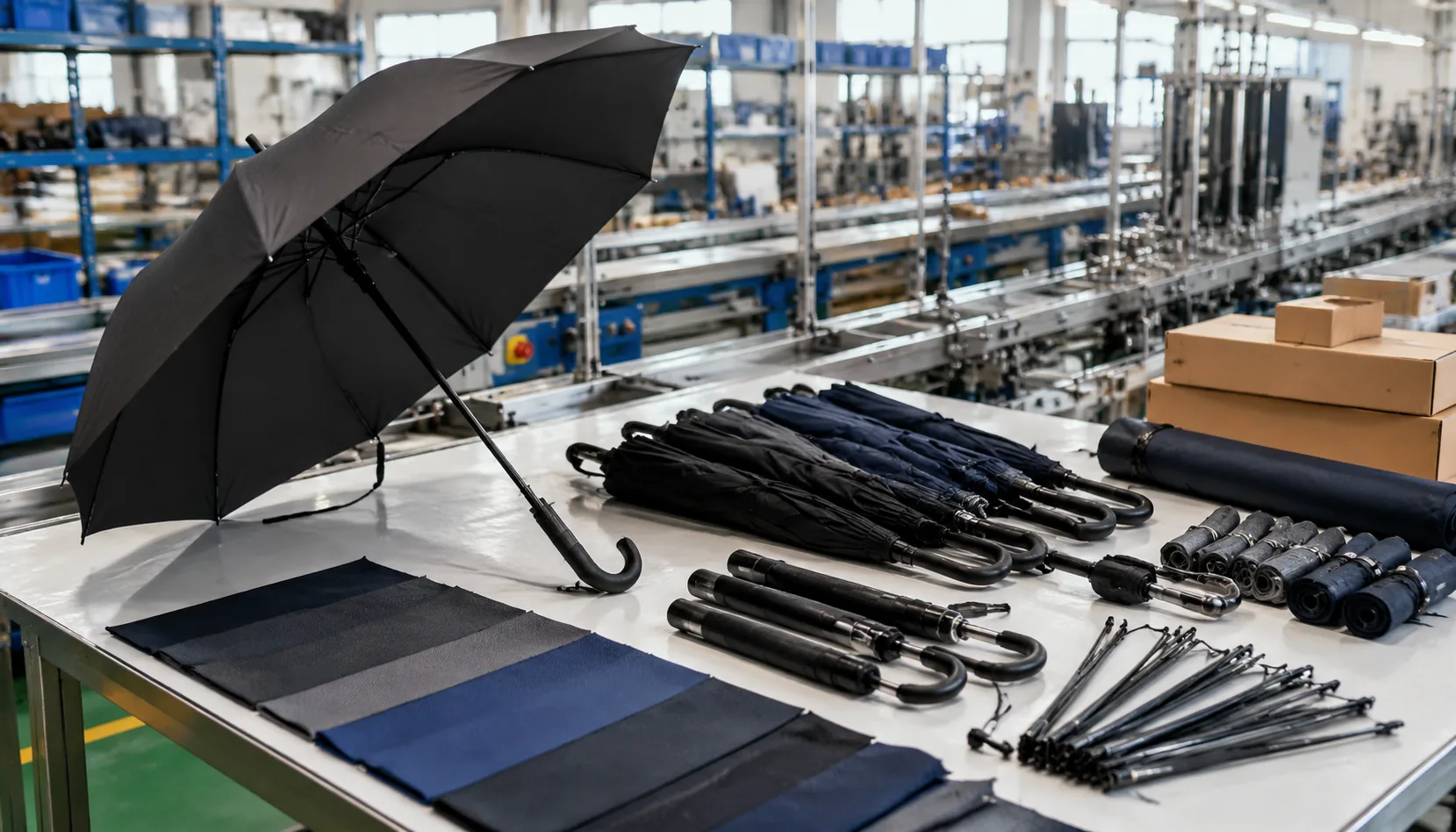
Hotel Guest Umbrellas: Buyer Guide for Durable Loaner Programs
Specify hotel guest umbrellas with durable ribs, 190T/210T pongee, logo placement, QC checks, MOQ, lead time, and FOB/DD...
Read More »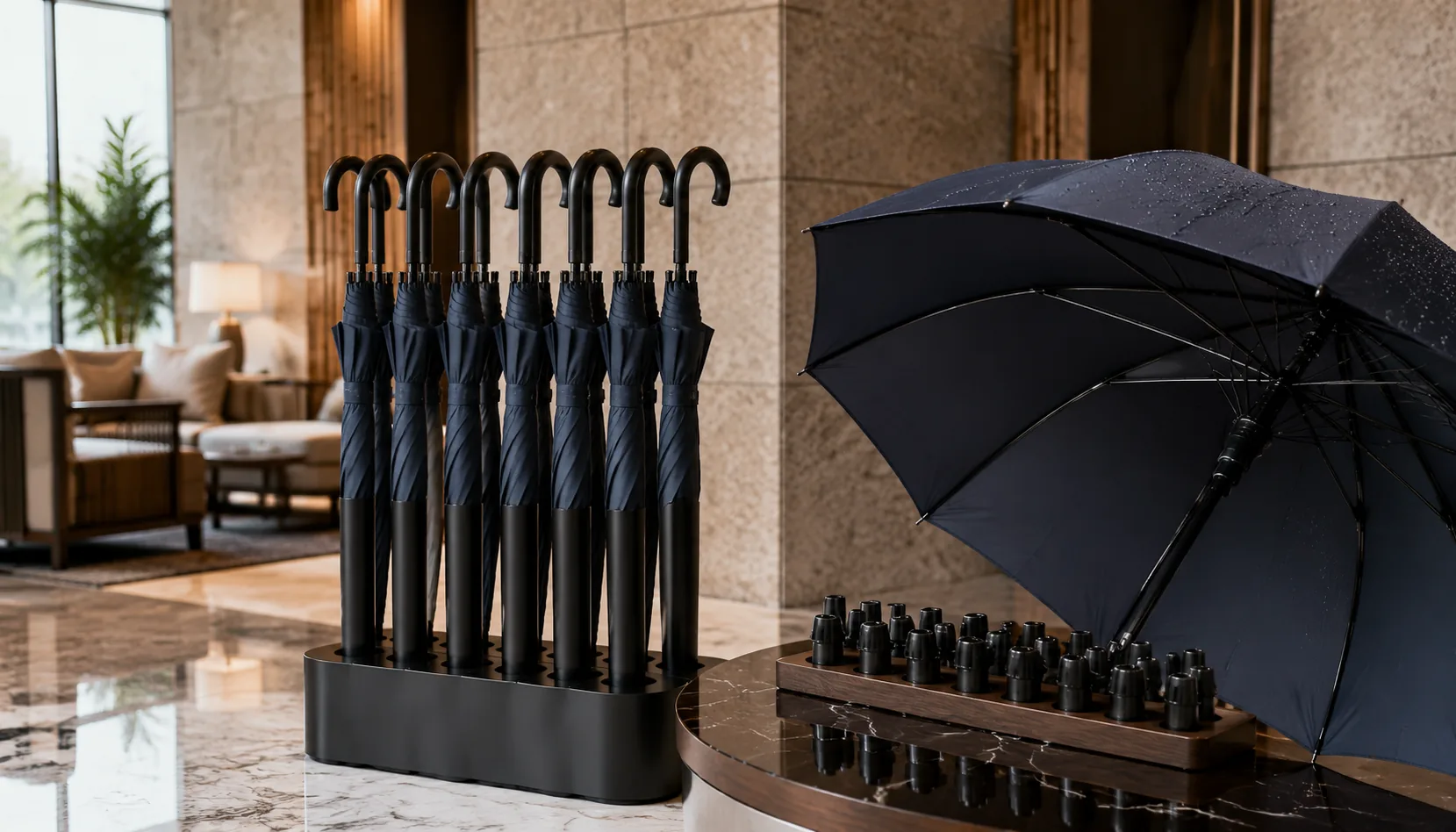
Hotel Guest Umbrellas: Buyer Specs for Durable Loan Programs
Specify hotel guest umbrellas for loan programs with durable frames, easy handling, logo placement, QC checks, and reord...
Read More »
Hotel Guest Room Umbrellas: Buyer Spec Guide for Brands
Plan hotel guest umbrellas with durable frames, branded canopies, room-ready packaging, AQL 2.5 inspection, MOQ planning...
Read More »