How to Choose a 2-Fold Umbrella for Retail Programs
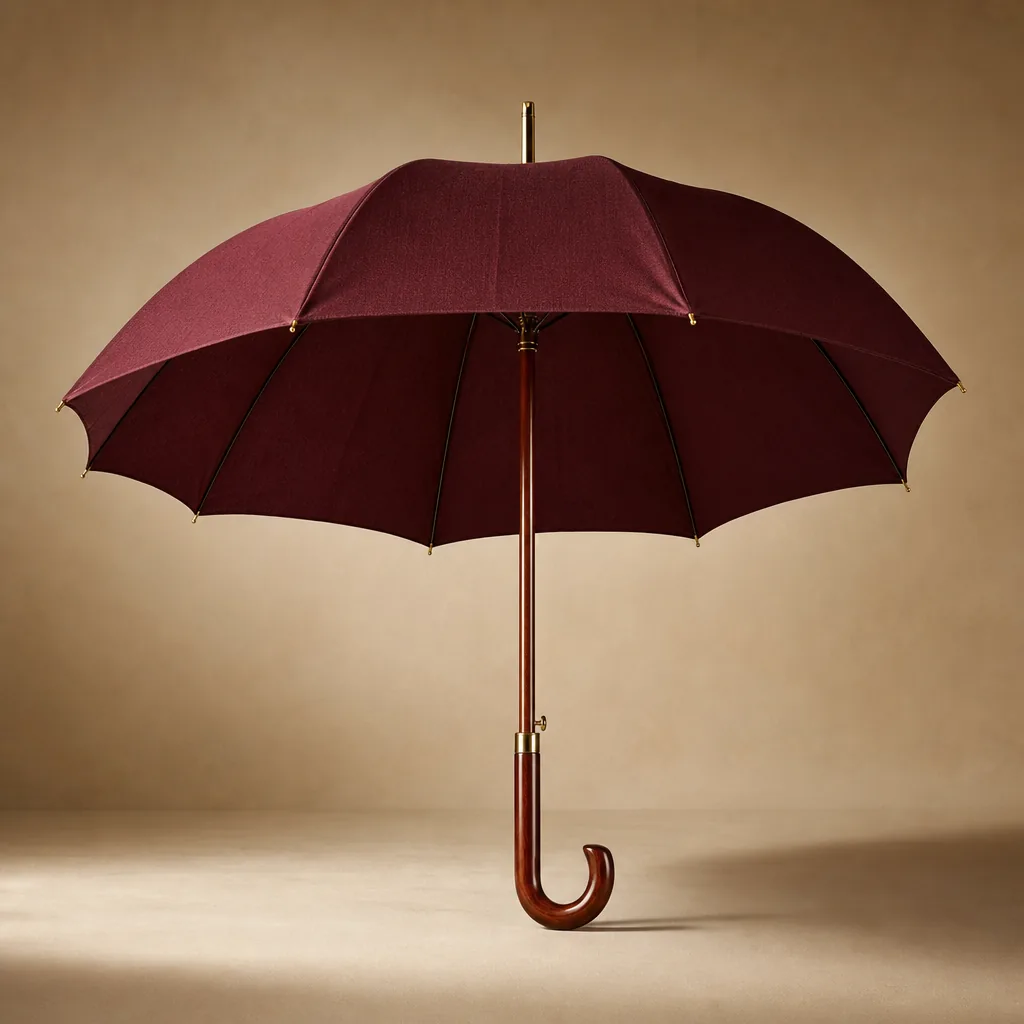
Choosing a retail-ready umbrella is less about the sample card and more about what survives repeat use, shelf handling, and customer returns. A solid 2-fold umbrella buyer guide starts with the parts buyers can verify on the factory floor: frame geometry, rib count, canopy fabric, open-and-close feel, and packed size. When those details are matched to the price point and program volume, quality problems usually show up before shipment instead of after.
What a 2-fold umbrella is and where it fits
A 2-fold umbrella is the compact folding format that breaks the shaft into two sections, so it sits between a full-length stick umbrella and a smaller 3-fold travel umbrella. In practice, the usual open diameter runs about 36 to 43 inches for 21" and 23" sizes, with some retail programs pushing to 48 inches on stronger 25" or 27" builds. For a 2-fold umbrella buyer guide, the key point is simple: you get a larger canopy and a more substantial hand feel than a tiny pocket umbrella, but without the bulk and price of a full-size stick.
This format fits retail programs because it looks like a real consumer umbrella, not a giveaway item. Buyers usually ask for 2-fold umbrella specs such as automatic open, fiberglass ribs, and pongee canopy fabric at 190T or 210T, because those details support better shelf appeal and lower breakage returns. Compared with larger folding styles, the 2-fold profile is easier to merchandise in convenience stores, pharmacy chains, gift sets, and seasonal checkout displays, where customers want something compact enough to carry but still robust enough for commuting and daily rain.
I prefer the 2-fold format when the program needs a stronger perceived value without jumping to a 16K premium frame or oversized canopy. The umbrella rib count is usually the deciding factor: 6K or 8K is fine for price-driven retail, while 10K or 12K gives a sturdier opening feel that buyers notice immediately. For custom retail umbrellas, this size also keeps printing, packaging, and freight efficient, and the OEM umbrella MOQ is often more manageable than with larger stick umbrellas, which helps retailers test a colorway or logo program before committing to deeper volume.
Frame and rib specs buyers should compare
For a 2-fold umbrella buyer guide, the first thing I tell retail teams is to stop treating all frames as interchangeable. Fiberglass ribs are lighter, quieter in hand, and they spring back better after a gust; steel ribs are cheaper and stiffer, but once they bend, they usually stay bent. In a 2-fold umbrella, that matters more than in a golf style because the shorter folded length puts more stress into the joints and slider. If you are comparing 2-fold umbrella specs for store shelves or promotional assortments, ask for the rib material, stretcher thickness, center shaft gauge, and ferrule construction, not just the canopy print.
Rib count is the next trap. A 6K frame usually uses six main ribs, which keeps cost and weight down, but the canopy panels span farther between support points and can flutter more in wind. An 8K umbrella rib count gives you more load distribution and a more rounded canopy profile, which usually reduces panel slap and improves recovery after a gust. The tradeoff is obvious on the bench: more parts, more sewing points, slightly higher weight, and more assembly time. For custom retail umbrellas, I would not choose by rib count alone; I would match it to the expected selling price, wind exposure, and whether the buyer wants a compact carry piece or a more durable shelf item.
Failure risk usually shows up at the rib tips, joint rivets, and the stretcher-to-rib connection, not in the marketing copy. Fiberglass lowers the chance of permanent set because it flexes under load, while steel can feel stronger at first but tends to kink when the canopy is pushed past its limit. If the brief includes pongee canopy fabric, a 190T or 210T cloth with decent stitching can hold the shape better, but it will not compensate for an underbuilt frame. Our standard practice is to specify frame material, rib diameter, and opening cycle targets together, then set the OEM umbrella MOQ and price tier after that, because cheap frames create returns that wipe out any savings on paper.
Canopy fabric, coating, and UV options
For a 2-fold umbrella buyer guide, the first fabric decision is usually 190T versus 210T pongee. Both are polyester plain-weave canopies, but 210T has a tighter yarn density, so it feels a little denser in hand, closes up better around the frame, and generally gives a cleaner print surface for logos. In practical retail work, I treat 190T as the value option for price-sensitive custom retail umbrellas and 210T as the safer default when the product needs better drape, less light bleed, and a more premium hand feel. If the brief also cares about umbrella rib count and overall 2-fold umbrella specs, the canopy choice should match the frame quality; a thin canopy over a weak frame is where returns start.
Water-repellent coating matters more than buyers think. A standard PU or simple DWR finish will shed a normal shower, but if the umbrella is expected to open and close daily, I prefer a coating that holds water beads without making the cloth stiff or sticky at the seam lines. For retail programs, the right call is usually a balance: enough repellency to dry fast in store displays and commuter use, but not so much finish that the canopy becomes noisy or difficult to fold neatly. ZheBrella’s standard practice is to test coated pongee on the actual frame, because a fabric that looks fine on a swatch can behave differently once it is tensioned over the ribs and stretched at the tips.
UPF 50+ treatment is worth specifying when the same 2-fold umbrella has to work as both rain protection and a sun product, especially for outdoor promotions, travel retail, and regions with strong summer exposure. The extra treatment is not free in cost or lead time, so I only recommend it when the program will be sold on shade performance, not just weather protection. On dual rain-and-sun products, UPF 50+ also helps justify a higher shelf price, but it should be paired with a dark or tightly woven canopy and a coating system that does not wash out after repeated wet-dry cycles. If the project also has an OEM umbrella MOQ to meet, confirm the fabric spec early, because changing from basic pongee to treated UPF fabric can move sampling, color matching, and production timing.
Function details that change user experience
For a 2-fold umbrella buyer guide, the first decision that changes real user experience is the opening mechanism. Auto-open is faster at the door and looks better in demonstrations, but it adds a spring assembly that can feel abrupt if the frame is cheap; manual release is slower, yet on lower-cost custom retail umbrellas it is often more reliable and easier to keep within target pricing. In practice, buyers should match the mechanism to the channel: convenience stores and travel assortments usually sell more auto-open units, while gift sets and value programs can tolerate manual release if the rest of the 2-fold umbrella specs are solid.
Handle style matters more than most spec sheets admit. Straight plastic handles are easy to stack and print on, but a curved hook handle gives better grip and is what many consumers expect when they hang the umbrella on a cart, desk, or coat rack. For pongee canopy fabric, the touch point is still the handle and the strap closure: a weak elastic strap or sloppy snap makes the whole product feel cheap, even if the canopy and umbrella rib count are acceptable. I tell buyers to inspect how the runner locks, how the strap sits when folded, and whether the handle finish matches the retail tier they are targeting.
Compactness drives shelf appeal and repeat use. A true 2-fold frame should close tight enough to sit cleanly in a blister, carton, or side-hanging display without fighting the package, but not so short that the ribs bind and the canopy wrinkles permanently. That balance is where many OEM umbrella MOQ discussions go wrong: factories can shrink length by trimming shaft sections, but if the fold geometry is cramped, the user notices the awkward closing force after the first storm. For retail programs, the better product is the one that folds neatly, stores easily, and still opens smoothly after repeated use.
MOQ, QC, and shipping terms for importers
For a 2-fold umbrella buyer guide, the first numbers that matter are not decoration—they are MOQ, sampling time, and how many units you can actually inspect before shipment. For standard custom retail umbrellas, OEM umbrella MOQ is often 500–1,000 pieces per colorway when the frame and print are already proven; if you want a new handle mold, special packaging, or multiple canopy prints, 2,000 pieces is a more realistic starting point. On the factory floor, I treat 2-fold umbrella specs as a package, not a line item: umbrella rib count, shaft diameter, open size, and pongee canopy fabric all affect cost, yield, and packing density. If a buyer wants retail-ready presentation with barcode labels and hangtags, build that into the MOQ discussion from day one.
QC should be written to AQL 2.5, not left as a vague promise. For importers, the practical target is to inspect opening/closing function, rib alignment, stitching at the tips, print registration, water-repellency finish, and carton packing against the approved golden sample. AQL 2.5 is reasonable for appearance and function on mainstream programs, but if the customer is launching a premium line or doing a tight retail reset, I push for a higher control level on critical defects like broken ribs, inverted canopy seams, and failed auto-open mechanisms. Lead time is usually 20–30 days for repeat orders and 35–50 days for new custom retail umbrellas, depending on artwork approval and whether canopy fabric or frame parts need to be sourced first.
FOB makes more sense when the importer already has freight control, a customs broker, and a warehouse team that can handle origin charges and destination clearance; it keeps pricing cleaner and usually gives better visibility on landed cost. DDP is better for smaller retail programs, test markets, or buyers who need one invoice and no surprises at delivery, but it shifts more risk onto the factory and usually adds margin for inland haulage, duty handling, and last-mile delivery. In a real 2-fold umbrella buyer guide, the right choice depends on shipment size and staff capacity: if you are moving palletized volume to one port, FOB is usually the sharper commercial term; if you are distributing mixed SKUs to multiple stores or e-commerce nodes, DDP can save time even when the unit cost looks higher on paper.
Frequently Asked Questions
Is a 2-fold umbrella durable enough for daily retail use?
Yes, if the frame spec matches the price point. For better daily performance, buyers should ask for fiberglass ribs, reinforced joints, and a canopy weight appropriate to the market.
What canopy fabric is usually best for a 2-fold umbrella order?
190T pongee is common for value programs, while 210T pongee better supports premium handfeel and stronger print presentation. If the umbrella will also be used for sun protection, specify UPF 50+ testing.
What rib count is most suitable for a retail 2-fold umbrella?
For most retail programs, 8 ribs is the standard balance of cost, stability, and pack size. Premium models may use 10 ribs, but buyers should confirm the added weight and folded diameter before approving samples.
What folded length should buyers target for a 2-fold umbrella?
A typical 2-fold umbrella folds to about 32–38 cm, depending on canopy arc, handle style, and frame material. If the umbrella must fit into shelf trays, gift boxes, or travel bags, confirm the packed length and carton dimensions during sampling.
How should a buyer compare pongee canopy fabric options?
Common retail choices include 170T, 190T, and 210T pongee, with 190T often used for mid-range programs. Buyers should check water repellency, color fastness, logo print compatibility, and whether the fabric is silver-coated, black-coated, or uncoated.
Looking to Launch Your Custom Umbrella Line?
ZheBrella is a Zhejiang-based OEM/ODM umbrella manufacturer with 17 years of export experience. Free design, low MOQ from 100 pieces, windproof construction, full-color print.
Get Free Quote Now »People Also Search For
Related Articles
How to Specify a Stick Umbrella for Retail and Hotel Buyers
Learn how to spec stick umbrellas for retail and hotel programs, including ribs, canopy fabric, handle options, MOQ, QC,...
Read More »How to Choose a Compact Umbrella for Retail Programs
Compare compact umbrella sizes, frame builds, and order terms to pick a retail-ready model with reliable quality and fas...
Read More »
Travel Umbrella Specs for Airline, Hotel, and Retail Buyers
Compare travel umbrella specs that affect resale and guest use, from folded length and weight to frame materials, canopy...
Read More »