How Umbrella Factories Control Fabric Shade Consistency
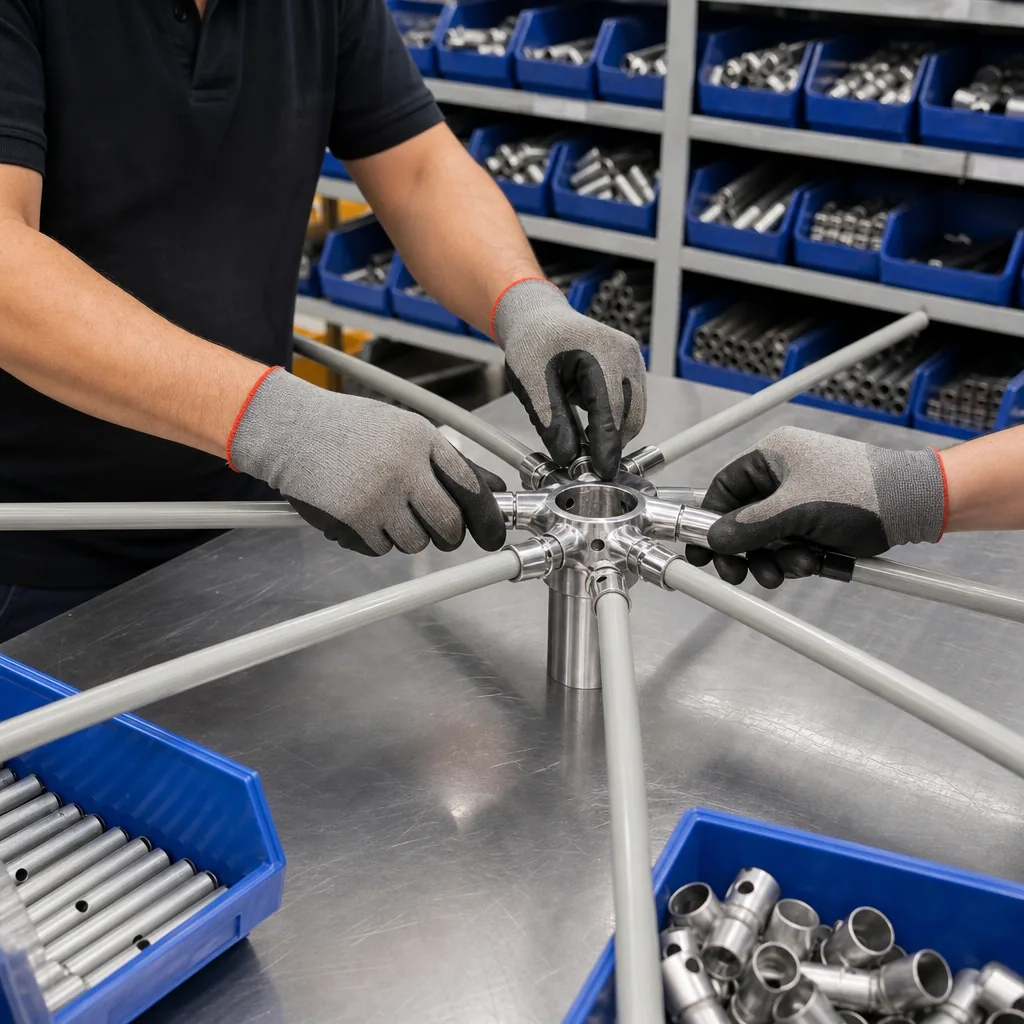
Color drift across bulk umbrella orders usually shows up too late, after cutting, sewing, or final packing, when panels from different dye lots start reading off under daylight. At our factory in Songxia, Shangyu, we control umbrella fabric shade consistency by checking 190T and 210T pongee lot cards, matching face and back tone before spreading, and locking panel-cutting sequences so the canopy stays uniform from sample approval to production run.
Why Shade Variation Becomes a Bulk-Order Problem
Shade variation becomes a bulk-order problem when identical umbrellas are viewed together. A 500-piece promotion can hide small color drift; a 50,000-piece branded run cannot. On a retail floor, at an outdoor event, or in daylight, mismatch is obvious when 8K or 10K canopies are opened side by side. The risk starts with fabric. Pongee 190T and 210T from different dye lots can miss each other visually even when both were approved to the same Pantone target, and the shift often looks stronger after sewing because the round canopy reflects light differently than a flat swatch. Dark colors are not safe: navy can swing from neutral to blue-cast, black can read warm or cool, and red can move from clean scarlet to a browner tone. Finishing changes the result again. UV coatings and Teflon finishes alter surface reflectivity, so a lab dip that passes on the roll can fail once 2,000 finished umbrellas are stacked open for retail review. That is why umbrella fabric shade consistency affects sell-through, brand presentation, and replacement cost, not just appearance.
Replacement lots carry the highest commercial risk because repeat orders rarely run under identical mill conditions. A first shipment may be dyed in May and a replenishment in August using a new greige batch, different dye-house humidity, or a second finishing mill; any one of those variables can shift shade enough to break retail sets, event branding, or visual standards across countries. For buyers managing 3-piece family sets, hotel programs, or multi-country replenishment over 6 to 12 months, later FOB or DDP shipments must match inventory already in market. That makes dye lot control a planning issue as much as a manufacturing QC issue. Pongee color matching on the roll is only the first checkpoint. Canopy panel variation can still appear within one production run if cutting spreads mix center and edge sections from inconsistent rolls, and finished umbrellas may read differently once radial seams, rib tension, or vented double-canopy construction change light reflection. The practical control is to approve retained shade standards, then inspect both flat fabric and finished umbrellas before bulk cutting, not after packing, when the stock is already committed.
Fabric Variables That Influence Color Matching
Color approval fails when buyers treat canopy fabric like ink on paper. In an umbrella factory, shade starts with construction. A Pantone-approved lab dip can shift after a change from 190T to 210T pongee because the tighter 210T weave absorbs and reflects light differently across the canopy. In production, 210T usually reads deeper and cleaner in the same nominal shade, while 190T can read slightly chalkier because its more open surface scatters more light. Yarn batch matters before dyeing is even finished: filament thickness, luster, and base polymer tone all affect pongee color matching and can move bulk fabric away from the approved standard. That is why disciplined dye lot control checks the approved fabric on the actual umbrella, not only as a loose swatch. Once panels are cut, sewn, and tensioned over the frame, canopy panel variation can show from crown to edge, especially on larger uninterrupted canopies such as 27 inch and 30 inch golf umbrellas. If the buyer wants reliable umbrella fabric shade consistency, 190T versus 210T, yarn batch, and frame-mounted visual approval must be locked before bulk cutting starts.
Coating and print base drive a large share of color disputes in manufacturing QC because they change how the same dye reads under light. A clear PU finish, silver UV backing, black-out coating, or Teflon treatment can all alter perceived depth; navy and red show these undertone shifts fastest. Matte surfaces diffuse light and often look flatter and lighter, while coated or calendered surfaces reflect more light and can appear darker, sharper, or glossier under retail LEDs than in daylight. White needs equally tight control because small differences in optical brightness, resin tint, or backing opacity are obvious immediately, especially on large 27 inch and 30 inch canopies. Black, navy, red, and white therefore need the strictest visual controls: black shows streaking and abrasion shine, navy reveals red or green undertones, red swings across dye lots and light sources, and white shows oil, adhesive mist, and dirty handling fast. The practical control method is to segregate rolls by lot number, approve bulk, coated, and printed panels to one standard before sewing, and inspect finished umbrellas under at least two light sources at AQL 2.5. That is cheaper than discovering a shade claim after 5,000 canopies are sewn and packed.
Factory Controls for Dye Lots, Relaxation, and Panel Cutting
Most shade claims start in the cutting room, not at final inspection. To protect umbrella fabric shade consistency, the factory should treat each dye lot as separate inventory rather than one shared SKU across cartons. Every 190T or 210T pongee roll should carry the mill lot number, arrival date, usable width, coating type, and a retained swatch from the approved lot. Release fabric to cutting only after shade checks under D65 light and direct daylight; navy, red, and black reactive shades often pass under warehouse lighting and then separate outdoors. Surface finish also changes how color reads, so PU, Teflon, and UV-coated rolls cannot be mixed on the assumption that the color code alone is enough. For solid-color umbrellas, especially 23-inch auto-open and 27-inch golf styles, the lowest-risk method is to issue one production bundle from one approved roll whenever yield allows. That removes operator substitution at the table and reduces the chance that a nearby panel from the same nominal shade code shows visible mismatch once the canopy is fully opened.
Relaxation is a production control with direct impact on fit, yield, and canopy appearance. After dyeing, coating, rewinding, and transit, pongee retains tension; if the roll is cut too soon, panel length can drift enough to cause sewing mismatch, skewed arc coverage, and canopy panel variation along the seams. Standard practice is to open rolls and relax them flat for 12 to 24 hours, depending on fabric weight, coating, and shop humidity, before spreading and cutting. Lay direction must also stay consistent, because face-up versus face-down reflection can make adjacent panels look different even when the shade is still within tolerance. For 8K and 10K canopies, planners should keep all panels for one umbrella from the same roll where possible; on 16K styles, that rule matters even more because additional seams make mismatch easier to detect. Replenishment orders need the same dye lot control. If the original lot is gone, the factory should compare new lab dips or strike-offs against the sealed approval sample, disclose the achievable tolerance before bulk dyeing, and avoid promising an exact match. On repeat orders below the usual MOQ of 500 to 1,000 pieces per color and frame specification, buyers may need to accept the nearest mill match or adjust the design with a black trim panel, sleeve, or binding. AQL 2.5 still applies at final inspection, but manufacturing QC has to prevent mixed-lot risk before sewing because end-line checks cannot correct a finished canopy built from mismatched rolls.
Approval Methods: Pantone Standards, Light Boxes, and Tolerances
Approval is the control point for umbrella fabric shade consistency, and the usable standard is the approved lab dip on the exact canopy fabric, not the Pantone chip by itself. A Pantone reference is only the starting target because 190T or 210T pongee can shift after dyeing, coating, and finishing; yarn lot, weave density, and PU, UV, or Teflon treatments all affect the final shade. Require at least three lab dips on the production substrate: a center match, one slightly redder, and one slightly bluer. That gives the buyer a practical range for pongee color matching and avoids disputes driven by screen color or paper-chip expectations that a mill cannot hold in bulk. The approval record should link the selected dip to the physical swatch, fabric spec, finish, and mill source. For repeat programs, seal the approved swatch and log the dip code, order date, supplier name, and any finish details. Without that record, later dye lot control claims are difficult to resolve because the Pantone chip does not prove what shade was approved on coated polyester.
Visual approval only works under controlled light, so compare the approved swatch and bulk fabric in a light box under D65 daylight and TL84 retail light, with an incandescent check for dark navy, red, and green where metamerism is common. This matters more on 8K, 10K, and 16K umbrellas because small roll-to-roll shade drift becomes visible when adjacent canopy panels are sewn together. Most canopy panel variation complaints come from mixed rolls rather than stitching, so manufacturing QC should keep each order within one mill dye lot where possible and inspect every roll before cutting. Before mass production, buyers should sign a written tolerance standard instead of approving a vague note such as "close to Pantone." That standard should name the approved lab dip code, attach the physical swatch, define the viewing condition, and state whether slight side-to-center variation after coating is acceptable. For large runs or split shipments, add a pre-production shade confirmation and define whether more than one visible grade difference on an assembled canopy is rejectable.
Inspection, Reorder Planning, and Claim Prevention
Most shade claims are preventable before bulk cutting starts. The hard control point is PP sample approval on actual production fabric from the intended mill lot, not a paper lab dip. For umbrella fabric shade consistency, the factory should match the approved Pantone or signed swatch against the full roll set under both D65 daylight and store lighting before release to cutting. This is critical on 190T and 210T pongee, where minor dye-lot drift becomes visible once eight panels are sewn into a 23-inch or 27-inch canopy, especially on white-ground prints and large solid-color designs. Record roll numbers, face direction, and lay sequence before spreading; canopy panel variation usually begins when mills or lays are mixed, not at sewing. If the style uses screen print, heat transfer, or sublimation, approve the strike-off on the same base cloth and against the same sealed shade standard. Approving artwork on one fabric tone and producing on another creates a predictable claim risk.
Inline controls cost less than sorting finished umbrellas. During production, manufacturing QC should pull cut panels and sewn canopies every 1 to 2 hours and compare them side by side under controlled lighting within the same style. Effective dye lot control means one lot per color per PO where possible, clear lot segregation, and no feeding leftover rolls into the middle of a run just to improve yield. On a 5,000-piece order, a small fabric utilization loss is cheaper than retailer-facing shade variation across packed cartons. Keep reserve fabric from the approved lot for damage replacements and late makeups; pongee color matching after the mill moves to a new dye kettle is rarely exact, even when spectro readings are close. At final AQL 2.5 inspection, open samples from early, middle, and late production, then compare them to the sealed approval standard and to each other across cartons, including 30-inch golf and double-canopy styles where tone shift shows faster.
Repeat-order claim prevention starts with purchasing, not just factory inspection. If the same navy is required every 60 to 90 days, book enough volume up front, ask the mill to reserve greige or finished stock, and align repeat PO timing before the first shipment leaves. Small fragmented buys below fabric MOQ sharply increase shade risk because the next run will likely come from a different dye kettle or a new lot. The lower-risk approach is to lock planned volume, hold fabric reserves, and align mill, printer, and umbrella factory lead times around a stable 35- to 50-day replenishment cycle. That matters under both FOB and DDP terms: when timing slips, factories are more likely to substitute near-match fabric to protect ship dates. Buyers running repeat programs should treat this as a cost-control decision as much as a quality decision, because stable planning protects umbrella fabric shade consistency and reduces rework, claims, and delayed replenishment.
Frequently Asked Questions
Can a repeat umbrella order perfectly match the first order's fabric color?
Not always. Even with the same Pantone target, dye-lot variation and fabric base differences can create slight visual shifts, so buyers should approve a tolerance standard and keep a sealed reference sample.
Does printing hide canopy shade variation?
Only partly. Large unprinted areas and seam-to-seam panel transitions can still reveal base-fabric differences, especially on light colors and step-and-repeat event umbrellas.
What approval standard should a buyer use before bulk umbrella production starts?
Use a sealed shade standard based on the approved fabric swatch or strike-off, then require the factory to match all bulk rolls to that reference under a defined light source such as D65. For repeat orders, buyers should also confirm whether the standard is tied to a previous production lot or a new dye lot.
Can 190T and 210T pongee show different shade results even when the dye formula is the same?
Yes. The weave density and surface reflectance of 190T versus 210T pongee can make the same color recipe read slightly different, especially in navy, red, and black tones. Buyers should approve color on the exact fabric specification being ordered, not only on a generic lab dip.
How do factories reduce visible color differences between canopy panels during cutting and sewing?
A common control method is to keep panels from the same roll or same dye lot together for one production batch and avoid mixing lots on a single canopy. Many factories also do inline panel matching checks before sewing, which is especially important for light colors and large golf umbrellas where contrast is easier to see.
Looking to Launch Your Custom Umbrella Line?
ZheBrella is a Zhejiang-based OEM/ODM umbrella manufacturer with 17 years of export experience. Free design, low MOQ from 100 pieces, windproof construction, full-color print.
Get Free Quote Now »People Also Search For
Related Articles
How Umbrella Factories Control Colorfastness and Dye Migration
Learn how factories test umbrella fabric colorfastness, prevent dye migration, and control print defects before bulk pro...
Read More »Umbrella Canopy Cutting Tolerances for Consistent Production
See how panel cutting tolerance, fabric shrinkage, and marker layout affect canopy fit, print alignment, and rework in O...
Read More »
Umbrella Canopy Panel Cutting Tolerances for OEM Production
Learn how panel cutting tolerances, fabric relaxation, and die control affect canopy fit, print alignment, leak risk, an...
Read More »