Matching Logo Methods to Umbrella Order Quantities
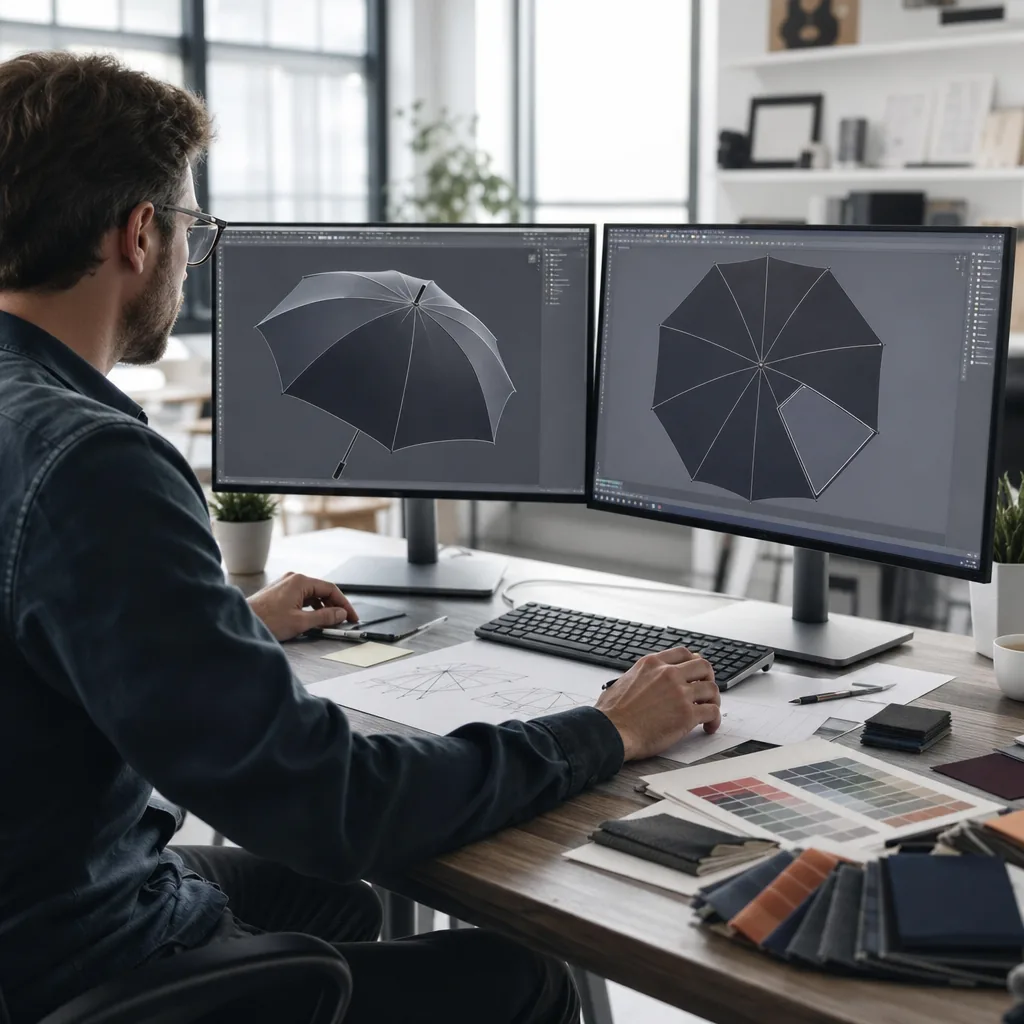
Choosing a logo method for umbrellas gets expensive fast when order quantity, setup cost, and lead time are out of sync. On our production floor in Songxia, we see buyers lose margin by forcing screen printing onto short runs or underestimating how umbrella logo printing MOQ shifts between digital, heat transfer, and plate-based methods once fabric color, panel count, and repeat orders are factored in.
Why Order Quantity Changes the Best Logo Method
Order quantity should decide the logo method before sampling, because on umbrellas the setup charge usually moves the quote more than the ink. At the sample stage and pilot runs under 100 pieces, digital logo umbrella orders are usually the practical choice for gradients, fine text, and multi-color files. The advantage is speed: no screen charge, faster approvals, and easier artwork changes. The tradeoff is unit cost. Each canopy panel still needs alignment, printing, heat-setting, and inspection, so the per-piece price stays high even on a simple 21 inch or 23 inch folding style. The umbrella logo printing MOQ usually changes at 300 to 500 units. For a 1-color or 2-color spot logo on 190T or 210T pongee, silk screen logo umbrellas often produce the lowest unit cost on standard 8K folding umbrellas because the screen setup starts to spread across enough pieces to matter. At 1,000+ units, that cost curve becomes clearer: setup is already absorbed, print speed improves, and the savings per piece usually outweigh the flexibility of digital for repeatable spot artwork.
Artwork complexity can override volume because umbrellas are segmented print surfaces with cut panels, seam allowances, and canopy tension. A bold one-position logo with solid fills is usually a clean match for screen printing. Gradients, tonal fades, fine detail, or all-over graphics usually push the job toward heat transfer or sublimation, provided the canopy fabric supports it. Sublimation generally performs best on polyester pongee and gives better repeatability on digital logo umbrella orders, while POE, PVC, and EVA clear canopies require different ink and adhesion systems and allow less registration tolerance. Reorder frequency is the final filter. For a one-time event order of 100 to 200 pieces, paying a higher unit price can make sense because you avoid unused screens and excess stock. For quarterly programs, MOQ for logo umbrellas should be planned around first runs of 300 to 500 pieces and replenishment at 1,000+ units, where unit economics improve faster. Lock the artwork, Pantone targets, canopy fabric, and frame spec early, inspect to AQL 2.5, and confirm FOB or DDP before approval; freight terms can change landed cost as much as print method. Typical lead times are 7 to 10 days for samples and 25 to 35 days for production.
Best-Fit Branding Options for Small and Large Runs
The first decision point is usually volume, because umbrella logo printing MOQ determines whether setup cost stays manageable or turns into avoidable waste. On standard 21 inch and 23 inch umbrellas, single-color screen print is usually the lowest-cost method once you reach about 300 to 500 pieces per design, per color. At that level, screen charges are spread across the run, registration stays stable, and solid fills print cleanly on both 190T and 210T pongee. Screen print is the best fit for silk screen logo umbrellas with one spot color, bold marks, and text strokes above 2 mm. It is a weak option for gradients, hairline serif details, or small reversed copy on a curved canopy that may later be folded wet; those elements can fill in or distort, which increases rejection and rework risk. If your MOQ for logo umbrellas is below 200 pieces, or the same artwork is split across several canopy colors, heat transfer is usually the more practical choice because it avoids separate screen setups for each version.
Heat transfer works best in the middle range: smaller runs, multi-color art, and logos with fine outlines or light gradient transitions. Because the image is printed onto transfer film and pressed onto the cut panel before assembly, it gives tighter edge control than printing directly on a finished umbrella canopy. That makes it more reliable for thin outlines, small taglines, and fades that would require multiple screen passes. The tradeoff is feel and durability. A large transfer can stiffen one panel, and lower-grade cloth may show a visible film edge after repeated use. Fabric choice matters: 210T pongee usually holds cleaner edges and more even color density than 190T because the tighter weave reduces ink scatter, so blacks read denser and reds stay cleaner. Digital logo umbrella orders make sense when artwork requires exact gradients, fine lines, photographic detail, or full-panel OEM umbrella branding. They perform best on white or light-color 190T or 210T pongee prepared for sublimation or ink acceptance; on dark fabric, color accuracy is less forgiving than many buyers expect. For repeat artwork in the 500 to 1,000 piece range, digital can be efficient, but for one-color solid fills it usually adds cost without improving the result.
How Frame and Canopy Specs Influence Print Execution
Frame spec determines usable print area before color count or artwork complexity does. On a 23-inch or 27-inch straight umbrella with an 8K canopy, each panel is typically wide enough to hold a 180-220 mm logo without pushing into the seam allowance, so 1-color silk screen logo umbrellas on 190T pongee are usually the lowest-risk, lowest-setup option. A 16K canopy splits the same circumference into sixteen narrow panels, which reduces printable width and changes how the logo reads when the umbrella opens. Artwork that fits cleanly on 8K often has to be scaled down, shifted higher, or moved to a different placement to avoid rib distortion and seam crowding. That is why umbrella logo printing MOQ changes with construction, not only with print colors. On 16K fashion frames, the same mark may require transfer or digital placement instead of standard screen printing, which increases setup handling and raises the MOQ for logo umbrellas. Clear POE or EVA canopies are less tolerant still: canopy curvature and transparency make minor centering errors visible immediately, so even a sharp print can look off-balance if registration drifts.
Mechanism also affects print repeatability, handling time, and defect risk. Straight-stick manual and auto-open frames are easier to control through cutting, sewing, printing, and final inspection because the panels stay flatter, which improves logo position consistency from unit to unit. Folding umbrellas, especially 21-inch or 23-inch 3-fold auto-open-close designs, are harder to process because the canopy collapses over several joints; heavy ink near fold lines can crack, telegraph, or shift slightly after heat setting and repeated opening cycles. That is why digital logo umbrella orders on compact frames often carry a higher umbrella logo printing MOQ even when the canopy fabric is still 190T or 210T pongee. Double-canopy windproof construction adds a separate alignment issue. On a 27-inch or 30-inch golf umbrella with fiberglass ribs and a vented outer canopy, artwork must clear vent openings, stitch lines, and inner-canopy attachment points or the logo will read off-center once assembled. For OEM umbrella branding, approve panel templates before sampling and confirm placement against AQL 2.5 before shipment under FOB or DDP terms.
Approval, Inspection, and Defect Limits for Branded Orders
Lock approvals before fabric cutting. For any branded run, the minimum control set is a pre-production mockup, a physical strike-off on the actual canopy material, and a written logo placement sign-off that states panel number, print width and height in mm, and the exact distance from the seam or canopy edge. A flat PDF is not enough for curved umbrella panels: a 180 mm logo can look centered on screen but shift visually once sewn on a 21 inch or 23 inch canopy, especially near seams or vent edges. For silk screen logo umbrellas, approve the print on final material, not a substitute swatch, because 190T pongee, 210T pongee, and clear POE take ink differently and change edge sharpness, opacity, and color density. This is where umbrella logo printing MOQ directly affects risk. On smaller runs, factories often work within existing screen sizes or digital setup limits, so oversized artwork, tight placement tolerances, and unusual panel positions need written confirmation before mass production. The writer should present approval as a sequence of sign-offs that locks artwork, material, and placement before production starts.
Use AQL 2.5 only after the defect standard is written. For logo umbrellas, major print defects usually include Pantone mismatch beyond the agreed tolerance, upside-down logos, multi-color misregistration, pinholes in solid fills, smeared edges, ghosting after heat transfer, and placement drift that makes open panels look uneven across the canopy. Minor defects are typically isolated ink specks, light edge fuzz, or shade variation that is not visible at arm’s length. On OEM umbrella branding orders, inspection should cover both print and function in the same lot: opening and closing action, rib symmetry on 8K or 10K frames, runner lock strength, and canopy sewing quality. Buyers should also define acceptable color variance before production starts by naming one standard: Pantone coated reference, signed strike-off, or Delta E under D65 lighting, then sealing one approved sample as the shipment standard. For MOQ for logo umbrellas, especially 300 to 500 pieces, batch variation is usually wider than on a 3,000-piece order. Digital logo umbrella orders need separate acceptance language because sublimation and heat transfer can shift hue on dark or coated canopies compared with screen printing on white pongee. State rejection criteria plainly: red reading orange, navy reading purple, or any visible white underbase shadow is not acceptable.
Commercial Terms Buyers Should Confirm Before Placement
Lock the commercial terms before artwork approval because the decoration method drives both unit cost and setup loss. Confirm the umbrella logo printing MOQ by print method, not as one generic factory minimum. For silk screen logo umbrellas on standard 190T or 210T pongee, a practical MOQ is usually 300 to 500 pieces per colorway for 1 to 2 logo positions with normal panel registration. Digital logo umbrella orders, including heat-transfer or full-panel sublimation, can start around 100 to 300 pieces, but short runs carry higher unit pricing because file prep, color calibration, and reject allowance do not disappear. OEM umbrella branding raises the MOQ for logo umbrellas when the build moves beyond stock parts: custom handles, molded tips, woven labels, or non-standard 8K or 16K frames often push the workable minimum to 1,000 pieces or more because upstream component suppliers require their own run sizes. Put those thresholds in the quotation with the canopy material, frame size, and logo count so procurement can compare offers on the same basis.
Write sampling fees, lead times, and freight terms into the PO. A blank pre-production sample on a stock 21-inch or 23-inch auto-open frame is often low cost or credited back; a printed sample using actual screen exposure, film output, or transfer paper typically adds about $50 to $150 per logo per color. Custom mold samples can cost several hundred dollars and extend the schedule. Standard timing is 3 to 7 days for a stock sample, 7 to 12 days for a revised printed sample, and roughly 25 to 35 days for bulk production after deposit and artwork approval on standard umbrellas; custom ribs, double-canopy vented construction, UPF 50+ coating, or POE/EVA clear canopies often extend production to 35 to 50 days, especially in peak shipping months. Also fix FOB Ningbo or Shanghai versus DDP to a named warehouse: FOB gives the buyer control over booking and consolidation, while DDP simplifies landed-cost budgeting and can reduce delivery risk for promotions. For repeat orders with unchanged artwork, print size, Pantone targets, frame spec, and handle molds, ask for the reorder policy in writing; buyers can often avoid new tooling charges and trim several approval days. Include deposit terms, AQL 2.5 inspection, and the final cutoff for artwork changes.
Frequently Asked Questions
What logo method is usually best for lower-volume umbrella orders?
For lower volumes, digital print or transfer methods are often more flexible because setup is lighter than traditional screen printing. The right choice still depends on logo colors, fabric type, and required durability.
Does MOQ change if I choose a windproof or UV umbrella?
Often yes, because a double-canopy windproof build or UPF 50+ canopy may already have a higher base MOQ than a standard model. Branding MOQ and product MOQ should be confirmed together at quotation stage.
When does digital printing make more sense than silk screen for umbrella orders?
Digital printing is usually the better fit when the order is under about 300-500 pieces, the artwork has gradients or multiple colors, or the buyer needs quick sampling. It avoids separate screen charges, but the unit price is normally higher than silk screen on larger repeat orders.
Can one logo method be used across the same design in multiple umbrella sizes?
Yes, but the artwork often needs to be resized and re-positioned for each canopy size, such as 21-inch folding umbrellas versus 27-inch golf umbrellas. Buyers should confirm whether new screens or file adjustments are required, because that can affect setup cost and add 1-3 days to pre-production.
How should buyers plan repeat orders if they expect the same logo program every season?
For repeat programs, silk screen or transfer-based methods are often more cost-effective once the artwork and color approvals are locked in. Many factories can retain approved print files or screens for a defined period, which helps reduce repeat setup charges and keeps replenishment lead times closer to 25-35 days instead of a full new-development timeline.
Looking to Launch Your Custom Umbrella Line?
ZheBrella is a Zhejiang-based OEM/ODM umbrella manufacturer with 17 years of export experience. Free design, low MOQ from 100 pieces, windproof construction, full-color print.
Get Free Quote Now »People Also Search For
Related Articles
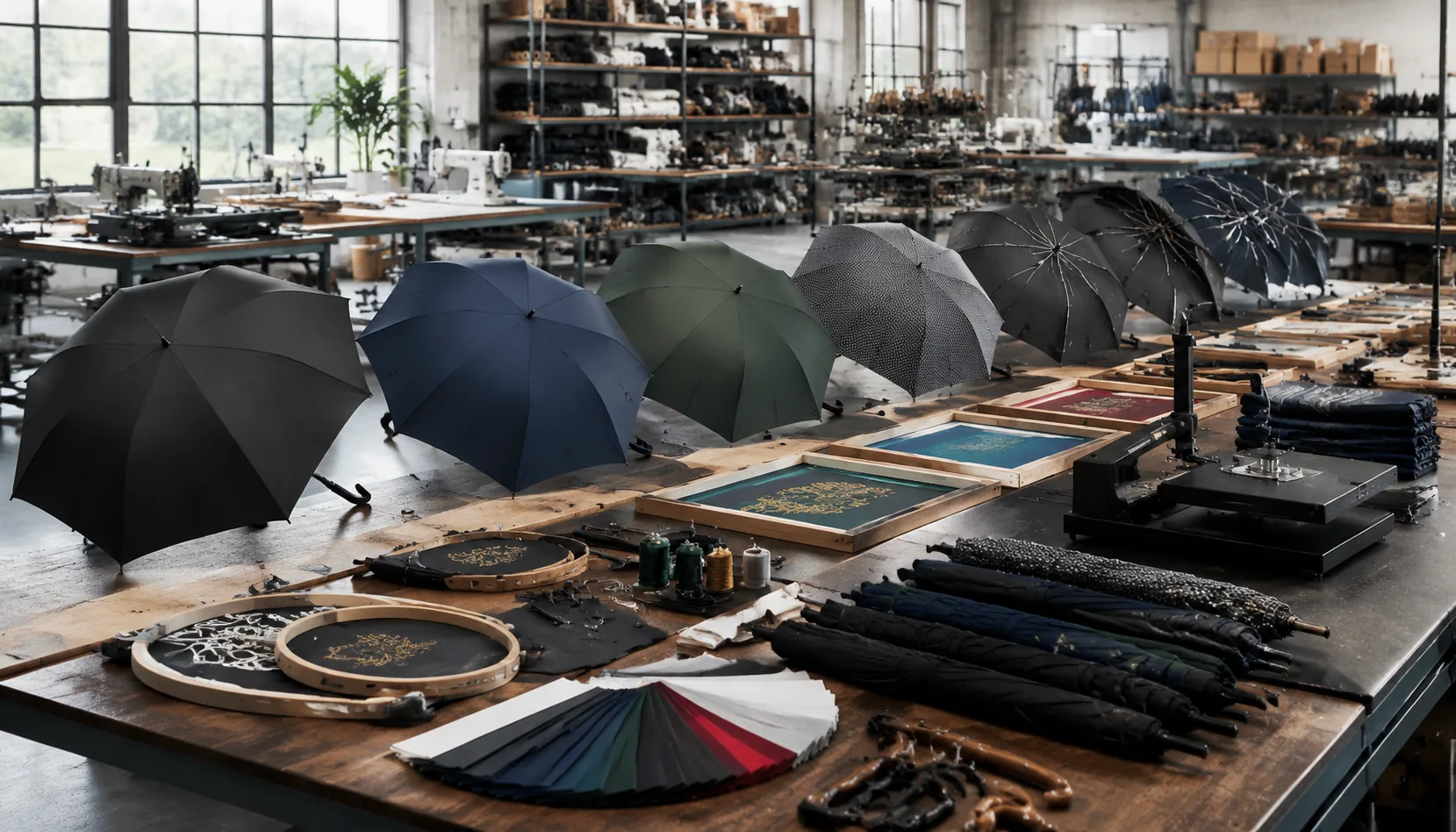
Matching Logo Methods to Umbrella Order Volume and SKU Mix
Compare logo methods by MOQ, SKU count, and lead time so buyers can choose a cost-efficient umbrella branding setup for ...
Read More »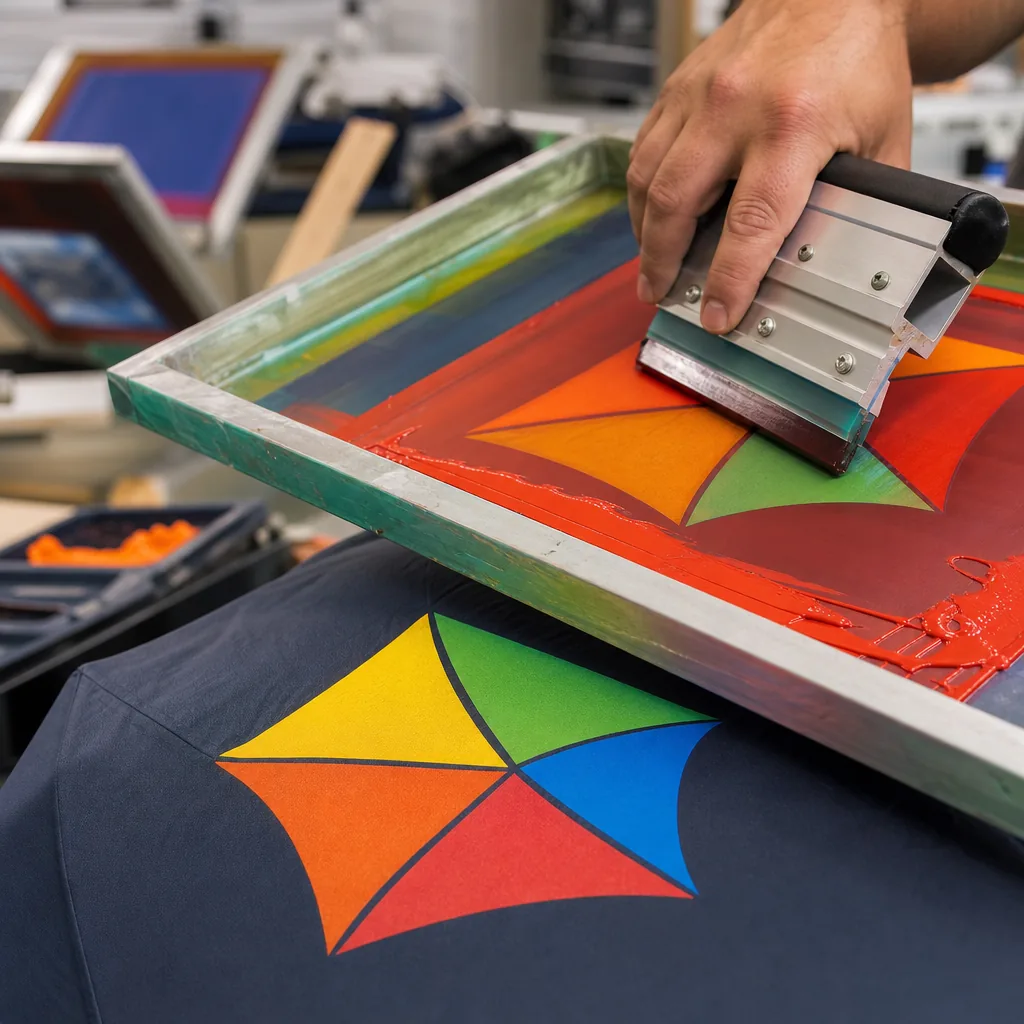
Screen Print, Digital Print, or Heat Transfer for Umbrella Branding
Compare umbrella logo printing methods by cost, MOQ, color range, and fabric compatibility so buyers can choose the righ...
Read More »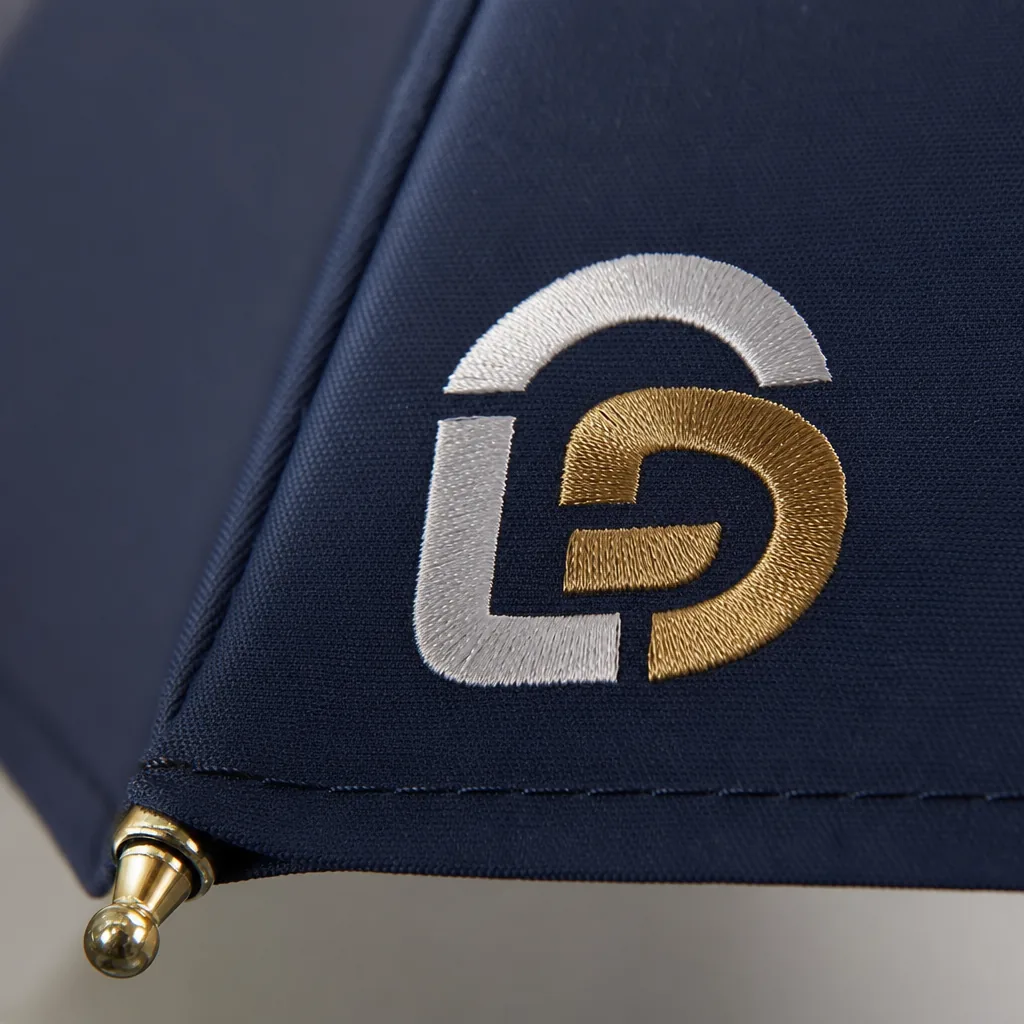
Umbrella Sleeve Logo Design for OEM Retail and Promo Orders
Plan umbrella sleeve branding with the right print area, fabric, MOQ, and QC standards to improve retail presentation wi...
Read More »