Pre-Production Umbrella Engineering Reviews That Prevent Mass Defects
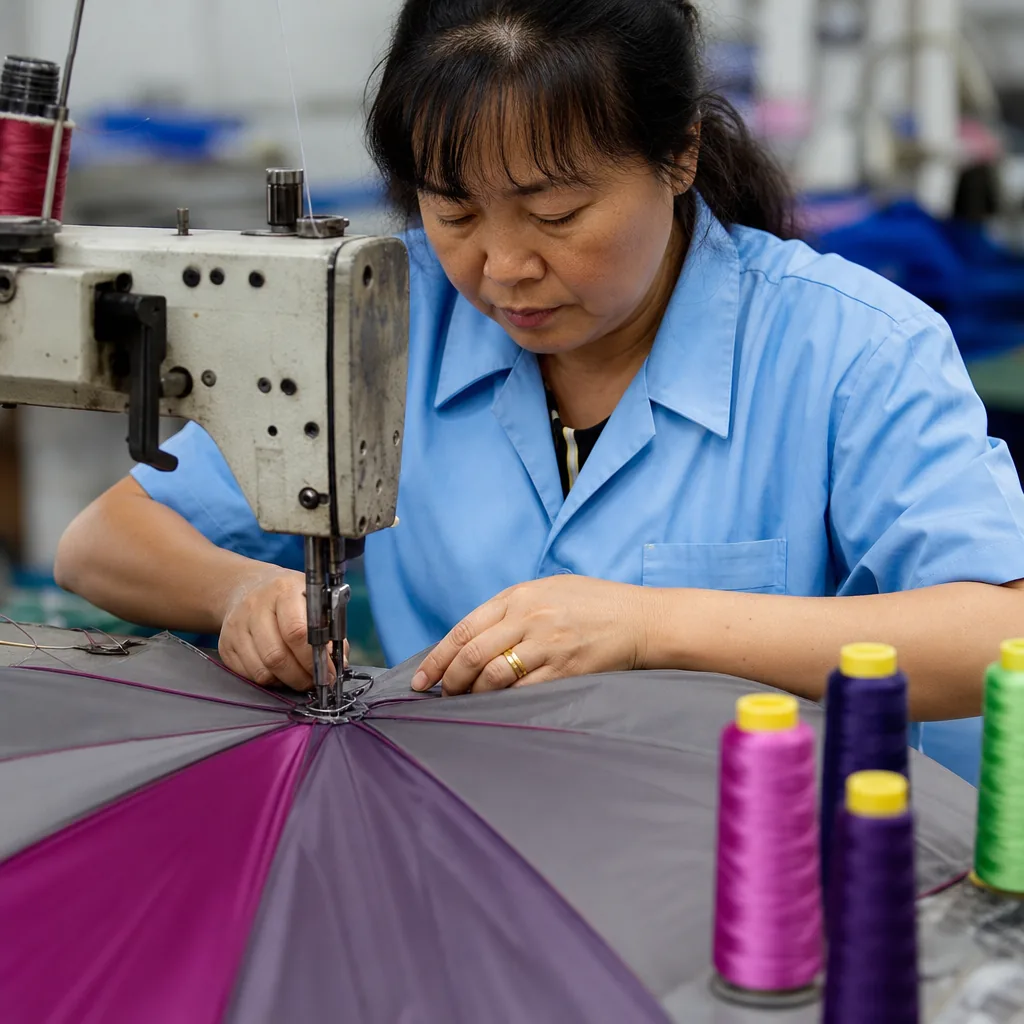
When an umbrella program moves from approved sample to bulk production, the biggest risks are rarely obvious on paper—they show up in rib clearances, runner travel, fabric tension, tip alignment, and carton fit once the line starts moving. A solid umbrella pre-production review lets buyers catch material substitutions, mechanism interference, and tolerance stack issues before steel is cut, fabric is spread, and thousands of units repeat the same defect.
Why Pre-Production Reviews Matter in Umbrella Manufacturing
An umbrella pre-production review matters because the cheapest defect is the one caught before line setup. If a canopy pattern is wrong, the auto-open spring force is weak, or purchasing swaps an approved 8K fiberglass frame for a lower-cost mixed steel/fiberglass version, the problem does not stay isolated; it can run through 3,000 to 10,000 units before the factory stops cutting, sewing, frame assembly, and packing. Before bulk launch, the correction is usually narrow: revise the pattern file, update the BOM, or rebuild one pre-production sample. After launch, the same error becomes scrap, rework labor, repacking, delayed inspections, and missed vessel space. For FOB programs, that can mean missing the ETD window; for DDP shipments, it can escalate into retail chargebacks, stock-out exposure, and margin loss. The writer should make this cost gap explicit: fixing one sample costs hours, while fixing bulk defects damages unit cost, lead time, and delivery reliability at the same time.
The best proof points are engineering failures that look minor at sample stage but scale badly in production. A canopy approved in 190T pongee can be replaced with a lighter fabric that prints similarly yet wrinkles more, changes handfeel, and leaks under spray testing; a 21-inch auto-open compact can pass visual approval but fail to open cleanly after a week in a tight carton because spring force is marginal; an approved frame material can be substituted without notice, changing flex and fatigue behavior. That is why pre-production sample approval should follow an umbrella engineering checklist, not a visual signoff alone. Lock the approved BOM, confirm rib and stretcher material, verify 190T versus 210T pongee, check color shade and panel alignment, confirm cap-to-runner fit, and cycle the opening mechanism before release to bulk. This is practical OEM umbrella defect prevention: one checklist catches one purchase-line or sample mismatch before it turns into finished-goods rework and umbrella manufacturing risk.
The Core Engineering Checklist Before Bulk Release
Frame geometry is the first bulk-release gate because small dimensional errors scale into full-lot defects. In an umbrella pre-production review, measure the approved sample against the tech pack before checking color or print: arc, open diameter, rib length, stretcher length, crown height, notch angle, and top-cap height. Do it by size, not by appearance. A 21-inch compact, 23-inch straight umbrella, and 27-inch or 30-inch golf umbrella each carry different tolerance pressure, so visual approval alone misses risk. Frame type matters too. An 8K fiberglass frame deflects differently from an 8K or 10K steel frame, and a 16K fashion frame leaves less room for panel-width error and tip-spacing drift. Even a 2-3 mm shift in notch angle or top-cap height can twist the canopy, change runner travel, and lock wrinkled panels, weak tension, or broken tips into bulk production. Any practical umbrella engineering checklist starts with geometry because stopping a bad frame set at sample stage costs less than recutting fabric or rejecting finished goods under AQL 2.5.
The second gate is component verification at every moving and load-bearing point. Confirm rib material from the actual BOM or component spec, not supplier shorthand: fiberglass main ribs with steel stretchers are common, full-steel frames cut cost but add weight, and mixed-lot substitutions increase umbrella manufacturing risk in wind performance and service life. Then check shaft outer diameter, shaft wall thickness, runner inner diameter, spring force, and opening feel across manual, auto-open, and auto-open-close mechanisms. Cycle several frame sets, not one golden sample, and inspect rivet flare, runner lock engagement, scratching from plating or paint build, and handle attachment security after repeated opening and carton-vibration simulation. Finish the umbrella pre-production review with canopy controls: verify panel dimensions against frame curvature, lock fabric as 190T or 210T pongee with approved color, coating, basis weight, and shrink behavior, and confirm seam placement plus logo distortion for screen print, heat transfer, or sublimation. If the design uses UPF 50+ coating or a double-canopy vented construction, require separate pre-production sample approval because both change canopy weight, drape, tension balance, closing force, and final fit.
Sample Validation Tests to Run Before Production Starts
Most repeat umbrella defects are visible before bulk cutting, so the umbrella pre-production review should test the approved sample under realistic use, not just visual sign-off. For a 21 inch or 23 inch folding umbrella, run 200 to 500 manual open-close cycles and log lock engagement, runner travel, strap closure, and any shaft hang-up by cycle count. On auto-open-close frames, check button response and spring force consistency on every cycle; weak notches, poor rivet flare, or rough runner fit become warranty issues across the full MOQ. For 27 inch or 30 inch golf umbrellas, especially vented double-canopy designs, verify rib alignment, tip seating, and recovery after inversion. Frame construction matters here: fiberglass ribs usually recover better than mixed steel-rib frames, so the approved sample, BOM, and production frame must match exactly. This is the practical value of OEM umbrella defect prevention—finding motion, fit, and durability failures before raw-material release, when corrections still protect lead time and FOB unit cost.
Water resistance, print control, and pack-out need separate checks because a sample can look acceptable and still fail in use or transit. Run a sustained water spray test on 190T or 210T pongee to confirm wet-out behavior, coating consistency where Teflon is specified, and whether seam needle holes leak under spray. On POE, PVC, or EVA canopies, inspect the opened sample for weld haze, panel distortion, and edge-binding marks under tension. Print review should confirm logo registration panel to panel, color match to the signed standard, and safe clearance from seams, vents, and stitch lines. Add seam appearance under tension, thread trimming, top-cap seating, and canopy symmetry to the umbrella engineering checklist. If retail pack-out is fixed, approve sleeve fit, handle orientation, carton count, barcode placement, and a basic carton drop review before production, especially for FOB shipments with multiple handling points or DDP parcel delivery. Pre-production sample approval reduces umbrella manufacturing risk, but it complements rather than replaces AQL 2.5 final inspection, which still verifies lot-level execution after production.
Documents and Approvals Buyers Should Lock In
Lock the documents before paying the deposit. An effective umbrella pre-production review is a controlled build file, not a rendering, and it should define the full BOM by component: canopy fabric such as 190T or 210T pongee, POE or EVA gauge for clear styles, 8K fiberglass ribs or 10K steel/fiberglass frame construction, shaft finish, handle material, and mechanism type—manual, auto-open, or auto-open-close. Add the specs buyers often leave vague but later dispute: Teflon water-repellent finish, UPF 50+ treatment, open diameter, closed length, and measurable tolerances, such as a 23-inch auto-open frame with finished arc tolerance of ±1 cm. Color control should use Pantone references for both fabric and logo print, because the same artwork can shift noticeably across black pongee, white POE, and different print methods. If wind resistance affects the program, define the target up front—for example, a standard commuter frame versus a vented double-canopy frame tested above 50 mph—so durability, unit cost, and replacement exposure are aligned before production.
Artwork, packaging, and approvals need the same level of control. Your umbrella engineering checklist should freeze panel-by-panel artwork, print size in millimeters, orientation to seams and tips, and the print process—screen print, heat transfer, or full sublimation—because print placement errors trigger more OEM umbrella defect prevention claims than minor cosmetic frame issues. Lock the packaging method as well: polybag or no polybag, hangtag punch position, carton pack count, export carton size, barcode files in vector format, shipping marks, country-of-origin wording, and retail labeling requirements. Define acceptable tolerances before cutting and printing, not at AQL 2.5 final inspection: print registration, color deviation, handle alignment, strap position, and carton quantity should all be signed off in the pre-production sample approval package. Approved golden samples and signed PP samples then make those documents enforceable on both OEM and ODM orders. The golden sample becomes the master for repeat POs, while the PP sample confirms the exact mass-production build using bulk-intended materials, print method, and packaging, reducing umbrella manufacturing risk and limiting disputes over substitutions such as lower-grade pongee, thinner plating, or steel replacing fiberglass outer ribs.
How PP Review Decisions Affect MOQ, Lead Time, and Shipping Terms
An umbrella pre-production review only protects production if PP approval freezes the bill of materials, print method, and frame spec. After pre-production sample approval, even a minor revision can reopen sourcing, fit checks, and validation. A change from steel ribs to fiberglass, 190T pongee to 210T pongee with Teflon coating, or a 21-inch manual frame to a 23-inch auto-open-close frame is not a line edit; it can require fresh component matching and another round of opening-cycle, strength, or assembly checks before canopy cutting and rib assembly start. If the change touches molded handles, tip profiles, runner parts, or a custom 10K or 16K frame, tooling lead time returns as well. Make the sequence explicit for the buyer: once PP is signed off, a spec change can add 7 to 15 days for resourcing, then another 3 to 7 days for sample reconfirmation and QA release at AQL 2.5. That is the real schedule risk behind umbrella manufacturing risk, not just a paperwork delay.
The umbrella engineering checklist should also connect PP decisions to MOQ and shipping exposure. MOQ is usually approved against confirmed availability of fabric, frame, and trim, so a switch from stock black 190T pongee to custom-dyed 210T, or from a standard EVA handle to a private mold, can break the original MOQ because mills require higher fabric minimums and component suppliers batch output by rib count or shaft diameter. That is the commercial side of OEM umbrella defect prevention: stable PP specs reduce substitute-material risk, dead stock, and mixed-lot production. Tie that directly to shipment terms. Under FOB, a delayed umbrella pre-production review typically means missed vessel bookings, higher rebooking risk, and tighter warehouse intake windows for the buyer. Under DDP, the same delay also compresses export paperwork, line-haul scheduling, customs timing, and final-mile delivery. Buyers should lock PP decisions only after checking MOQ feasibility and whether their FOB or DDP timeline still holds if approval is reopened.
Frequently Asked Questions
What is the difference between a development sample and a PP sample for umbrellas?
A development sample checks concept feasibility and appearance, while a PP sample confirms the exact bulk-ready materials, construction, and packaging. Buyers should not start mass production until the PP sample is approved against the BOM.
Should buyers ask for testing on every umbrella style before bulk production?
Yes, especially when the order includes different mechanisms, fabrics, or frame structures. An auto-open compact umbrella with fiberglass ribs does not carry the same production risks as a manual 8K steel-frame promotional model.
What should be frozen after the pre-production umbrella engineering review?
At minimum, freeze the BOM, panel pattern, frame specification, shaft and runner dimensions, logo placement file, and approved color standard. B2B buyers should also require a signed reference sample or golden sample before the factory releases bulk materials.
How many opening and closing cycles should be checked before approving a bulk umbrella order?
For pre-production approval, many buyers ask for a functional cycle test of 200 to 500 open-close cycles on sample units, depending on frame type and price tier. If the umbrella is promotional grade, 200 cycles may be acceptable, while retail programs often require higher internal standards.
Can a pre-production review still help if the canopy fabric has already been ordered?
Yes, but the review should focus immediately on high-risk items that can still be corrected, such as rib length match, sewing tolerances, tip alignment, and print registration. If fabric is already booked, changes to panel shape or print layout may add 3 to 7 days and create replacement material costs.
Looking to Launch Your Custom Umbrella Line?
ZheBrella is a Zhejiang-based OEM/ODM umbrella manufacturer with 17 years of export experience. Free design, low MOQ from 100 pieces, windproof construction, full-color print.
Get Free Quote Now »People Also Search For
Related Articles
Umbrella Factory PFMEA: Preventing Defects Before Bulk Production
Use PFMEA in umbrella manufacturing to identify high-risk failure points early, improve process control, and cut defect ...
Read More »
Umbrella PPAP-Style Approval Process for OEM Quality Control
Learn how to structure a PPAP-style umbrella approval process to catch fit, print, and mechanism defects before mass pro...
Read More »
Umbrella Factory PPAP: How to Approve Parts Before Mass Run
Learn how umbrella PPAP-style approvals reduce defects by locking materials, dimensions, and golden samples before bulk ...
Read More »