Umbrella PPAP-Style Approval Process for OEM Quality Control
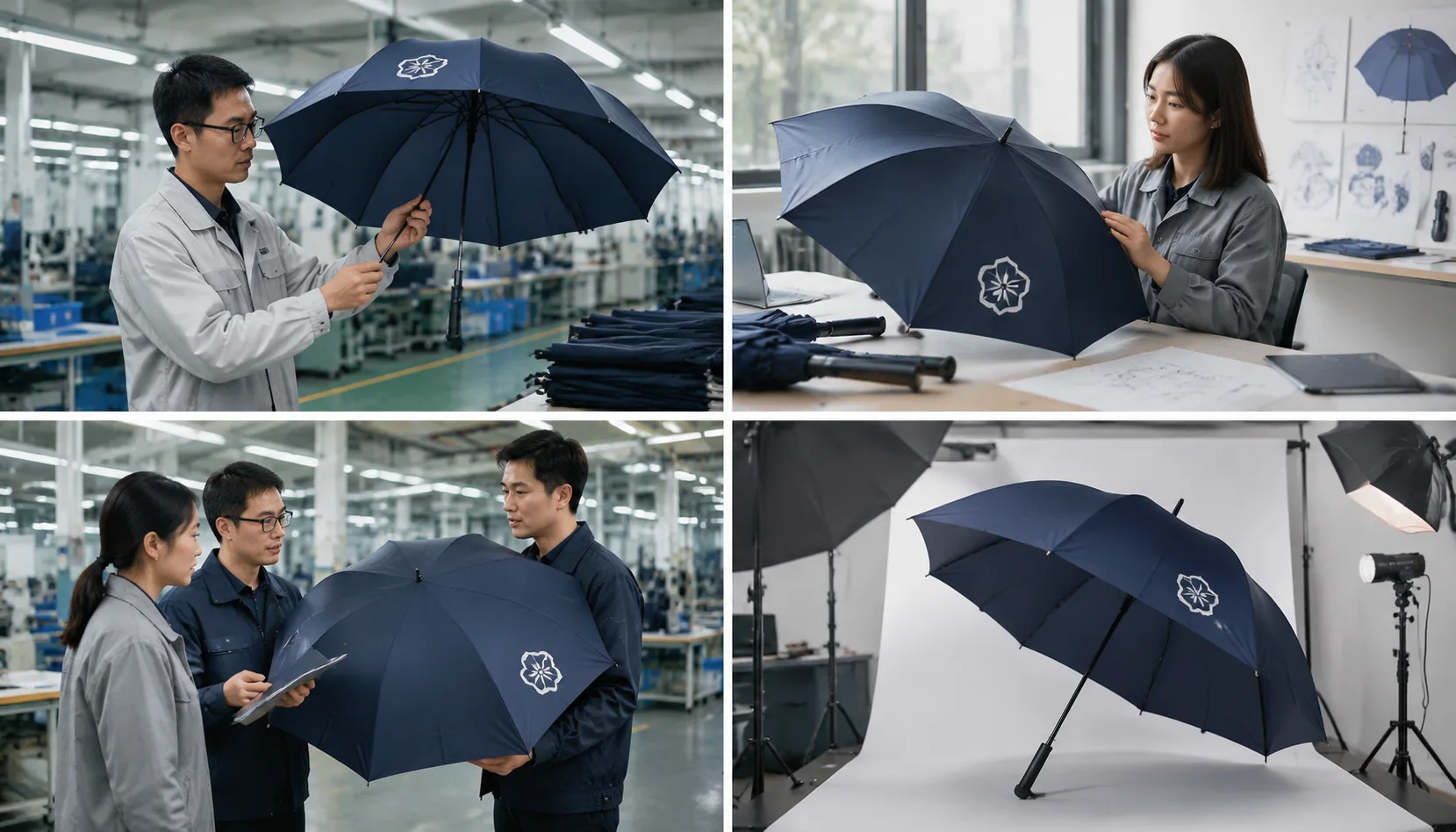
When an umbrella program goes wrong, it usually starts long before shipment—with an unchecked logo position, a runner that binds under load, or canopy fabric that behaves differently in humid weather than it did on the sample table. In our Songxia production lines, a disciplined umbrella pre-production approval process built around drawings, sealed samples, print sign-off, and mechanism checks is what prevents expensive surprises once cutting, stitching, and assembly move to volume.
- 1. Why a Pre-Production Approval Gate Reduces Umbrella Defects
- 2. What Buyers Should Lock Before Bulk Production Starts
- 3. How to Build a Golden Sample and Sign-Off Checklist
- 4. Which Factory Tests Belong in Pre-Production Validation
- 5. How to Connect Approval Records to AQL, Lead Time, and Shipment Terms
Why a Pre-Production Approval Gate Reduces Umbrella Defects
Most umbrella manufacturing defects are locked in before the first bulk canopy panel is cut. The usual failure points are not dramatic factory accidents; they are small specification misses that compound at scale: a buyer approved 190T pongee in concept but the PO says 210T, Pantone callout was loose so the navy prints too purple, the frame was quoted with fiberglass ribs but production pulls plated steel stretchers, or the 23-inch auto-open spring force is too soft to fully deploy after a few cycles. On the floor, I see another common issue with 8K and 16K frames: the canopy pattern is drafted too flat or too tight, so the cover either wrinkles between ribs or pulls excessively at the tips and runner. Once that happens, no final inspection can turn a bad fit into a good umbrella.
A formal umbrella pre-production approval process stops those errors before they become container-level problems. The approval gate should freeze the bill of materials, frame geometry, canopy pattern, printing method, and opening performance on one signed sample set before bulk cutting, rib assembly, and sewing start. For OEM umbrella quality control, that usually means confirming exact fabric type such as 190T or 210T pongee, POE or EVA where relevant, Pantone-to-fabric color tolerance, handle and shaft finish, rib material by position, and mechanism performance for manual, auto-open, or auto-open-close designs. The spring force check matters more than many buyers realize: if an auto-open unit feels weak on the golden sample, it will only get worse after transit vibration and repeated use.
The practical payoff is lower rework, shorter lead-time drift, and fewer post-shipment claims. An approved umbrella golden sample gives production, QC, and the buyer one physical standard to match, instead of three different interpretations spread across artwork files, chat messages, and purchase orders. Our standard practice is to hold bulk production until that sample passes fit, color, open-close cycling, and cosmetic review, then inspect finished goods again under AQL 2.5 during umbrella pre-shipment quality checks. That front-end discipline is cheaper than replacing printed canopies, reworking 10K or 16K frames with the wrong rib set, or discounting goods because the canopy shape looks uneven at retail. For OEM buyers, the cost of the approval gate is minor; the cost of skipping it is usually measured in delays, airfreight, and avoidable claim negotiations.
What Buyers Should Lock Before Bulk Production Starts
Lock the approved sample before you release any deposit for mass production. In practical terms, the umbrella pre-production approval process should freeze every component that can drift once purchasing starts: frame material, rib count, shaft finish, canopy fabric, handle, strap, and carton pack-out. For frame spec, buyers should not accept vague wording like “metal ribs”; call out steel versus fiberglass, rib construction such as 8K, 10K, or 16K, and mechanism type: manual, auto-open, or auto-open-close. Shaft finish also needs a defined standard, whether black electrophoresis, chrome plating, or powder coating, because finish inconsistency shows up fast across mixed lots. On canopy material, specify exact fabric and weight class such as 190T or 210T pongee, or POE/EVA if it is a transparent style, plus any coating requirement like Teflon water-repellent treatment or UV coating tied to a UPF 50+ claim.
Print approval is where a lot of OEM umbrella quality control failures start, especially on repeat artwork across multiple panels. The golden sample should show exact logo size, panel location, print method, and color standard, whether screen print, heat transfer, or full sublimation. Buyers should write measurable tolerances directly from the approved sample: logo position within plus or minus 3 mm, canopy panel seam alignment within 5 mm, open diameter within 10 mm, and closed length within 5 mm. If the umbrella has a double-canopy vented construction, the top and bottom canopy registration should also be checked so vents do not expose raw mismatch when opened. For UPF 50+ claims, do not approve based on a sales statement alone; lock the test basis, whether it is fabric-lab data on 190T/210T pongee before printing or finished-canopy test data after coating and printing, because ink coverage and finishing can change performance.
The trim details create more trouble than buyers expect, so they belong on the approval sheet, not in email threads. Handle shape, material, color, and surface feel should match the umbrella golden sample approval exactly, especially for rubberized ABS, wooden crook, or EVA foam grips where substitutes are common. The same goes for wrist strap width and attachment method, tip and ferrule color, Velcro tie length, woven label placement, and export carton configuration such as units per inner, units per master, carton dimensions, and target gross weight. Our standard practice is to convert all of this into a signed pre-production checklist and then inspect against it again during umbrella pre-shipment quality checks under AQL 2.5. That is the cleanest way to catch umbrella manufacturing defects like mixed handles, wrong rib gauges, print drift, and carton count errors before bulk goods leave the factory under FOB or DDP terms.
How to Build a Golden Sample and Sign-Off Checklist
The golden sample only works if you freeze the product in stages, not all at once. For the umbrella pre-production approval process, I push buyers to approve three physical milestones: prototype, PP sample, and sealed reference sample. The prototype confirms structure and appearance choices like 21 inch or 23 inch size, 8K or 10K rib count, steel shaft versus fiberglass ribs, canopy fabric such as 190T pongee or POE, and print layout. The PP sample is different: it must be made with production-intent materials, actual tooling, and the same sewing, printing, and assembly flow the line will use. If the prototype was hand-tuned by technicians but the PP sample comes off normal line conditions, you catch real OEM umbrella quality control risks early, especially runner fit, spring strength, tip alignment, and canopy panel match.
A proper umbrella golden sample approval needs named sign-off from both sides, not vague email comments. At minimum, the factory QA lead, production manager, and buyer or brand representative should sign the PP sample record, with dated photos taken from top view, side view, inside frame view, handle close-up, strap closure, and any printed logo positions. Our standard practice is to attach a measurement sheet covering arc size, closed length, shaft diameter, rib length, canopy diameter, handle orientation, and unit weight tolerance, then log pass or fail notes against each checkpoint in a shared file or PLM record. Once approved, one sealed reference sample stays in the factory sample room and one goes to the customer; both should carry the same sample code, BOM revision, fabric lot reference if relevant, and approval date so later disputes do not turn into arguments over the wrong sample.
The sign-off checklist should focus on failure points operators actually create on the floor. Check that the runner travels smoothly without snagging, the manual or auto-open mechanism cycles consistently over repeated openings, and auto-open-close models lock positively without partial rebound. On double-canopy vented umbrellas, confirm the upper and lower canopy vent alignment is even across all panels, the stitching is straight with no skipped seams or puckering, and the binding tape sits flat at the edge. You also want a hands-on safety check: no sharp edges at notch or ferrule joints, no exposed wire ends at rib tips, no loose top cap, no cracked plastic handle, and no fabric pinholes after printing. Those notes become the baseline for umbrella pre-shipment quality checks and make it much easier to separate random damage from repeat umbrella manufacturing defects during AQL 2.5 inspection.
Which Factory Tests Belong in Pre-Production Validation
The tests that matter before mass production are the ones that expose failure modes early, before you have 5,000 units packed and no practical way to fix them. In an umbrella pre-production approval process, I would not sign off a sample on appearance alone. The minimum validation set should include opening and closing cycle tests on the actual mechanism being sold: manual runners, auto-open springs, or auto-open-close shafts do not fail the same way. For a standard 21 inch or 23 inch folding umbrella, a factory should run repeated cycles to check runner smoothness, spring consistency, notch engagement, handle loosening, and whether the canopy tips stay seated after use. For straight umbrellas, we also watch for top cap looseness, ferrule cracking, and rib stretch at the canopy tie points. These are basic OEM umbrella quality control gates, not optional extras, because early mechanical weakness usually turns into field returns.
Wind and canopy performance need their own validation, especially on double-canopy vented models that are sold as windproof. A pre-production check does not need to be a full lab certification every time, but it should include a controlled wind-resistance test on the approved frame geometry, rib material, and canopy construction. Steel ribs can pass initial opening tests and still take a permanent set after gust loading, while fiberglass ribs recover better but can split at poorly finished joints or crack where the end caps are forced in. On 27 inch or 30 inch golf umbrellas, I would want the factory to confirm vent alignment, stitch strength around the vent opening, and whether the frame still tracks straight after gust simulation; if a supplier claims 50+ mph survival, that claim needs evidence tied to the exact sample. This is also where umbrella golden sample approval matters: the approved sample should lock rib count, such as 8K or 16K, stretcher thickness, and canopy tension so the mass-production build cannot quietly drift into weaker parts.
Fabric and coating tests should be matched to the sales claim, not applied blindly. For 190T or 210T pongee, check colorfastness on the actual dyed or printed lot, especially for dark panels, edge binding, and promotional umbrellas with heavy screen printing, heat transfer, or sublimation artwork; poor fastness shows up first as crocking, panel shading, or logo distortion. Water repellency should be tested after finishing, because a nice-looking canopy can still wet out quickly if the coating is light or uneven. If the umbrella carries UV or UPF 50+ claims, or uses Teflon, black UV coating, silver coating, or pearlized finishes, adhesion testing becomes critical; the coating should not flake at fold lines or peel near seam allowance after handling. Material approval should therefore split by component: steel shafts and ribs need plating, wall thickness, and corrosion review; fiberglass ribs need diameter, elasticity, and fracture checks; POE, PVC, or EVA clear canopies need film thickness and cold-fold behavior review. Do this before bulk cutting and rib assembly, and the later umbrella pre-shipment quality checks become a confirmation step instead of a rescue mission for umbrella manufacturing defects.
How to Connect Approval Records to AQL, Lead Time, and Shipment Terms
The approved sample is not a formality; it becomes the inspection master for production. In a disciplined umbrella pre-production approval process, the signed golden sample, BOM, pantone callouts, panel layout, handle/runner/top details, carton spec, and test notes should be locked before bulk material cutting starts. That reference then drives OEM umbrella quality control at three points: incoming material checks on 190T or 210T pongee, frame and mechanism checks during rib assembly, and inline audits during sewing, printing, and finishing. If the approved sample shows an 8K auto-open 23-inch umbrella with fiberglass ribs, matte black shaft, and vented double canopy, QC cannot later accept a mixed lot with steel ribs, a glossy handle, or a tighter canopy shape just because it still opens. Most umbrella manufacturing defects I see in disputes start exactly there: reference drift between what sales approved and what the line actually built.
Inline QC only works if approval timing is realistic. Buyers should finish color, artwork, construction, and packaging approval during sampling, then leave enough buffer before mass production—typically 7 to 12 days for revised samples, 25 to 35 days for bulk production on standard models, and longer if you are opening new molds or testing auto-open-close mechanisms. At ZheBrella, our standard practice is to attach approved records to the production order so final inspection at AQL 2.5 is checking against the same file set, not a salesperson's memory. That final audit should cover count, dimensions, open-close function, canopy alignment, print position, water repellency, stitching, carton marks, and random carton drop review where required. The same documentation should also define umbrella pre-shipment quality checks such as wind-resistance verification on the approved frame spec, salt-spray expectations for metal parts if requested, and pass/fail photos for cosmetic tolerances.
Shipment terms decide who must document what when something goes wrong. Under FOB, the buyer should make sure the approval pack includes final unit spec, export carton spec, shipping marks, inspection standard, rework limits, and the exact release condition for booking cargo, because risk transfers once goods are on board. Under DDP, the supplier's responsibility runs further, so the records should also cover outer carton durability, barcode accuracy, pallet rules if any, and replacement or claim handling if arrival inspection finds a mismatch with the umbrella golden sample approval. If shipment differs from the approved reference—wrong canopy fabric like POE instead of EVA, missing UPF 50+ coating, or a manual frame substituted for auto-open—the dispute is much easier to resolve when the signed sample photos, revision history, inspection reports, and shipment release record all match. That paper trail is what turns arguments into objective decisions.
Frequently Asked Questions
What is the minimum approval package an umbrella buyer should request before production?
At minimum, request a signed PP sample, a spec sheet with dimensions and materials, approved artwork, carton details, and a defect standard tied to AQL 2.5. For auto-open or double-canopy styles, add a short function test record and photos of key components.
Should the same golden sample be used for both QC and claim handling?
Yes. The sealed golden sample should be the reference for inline checks, final inspection, and any post-shipment quality claim. Keep dated photos, measurements, and approved material notes so disagreements can be resolved against one standard.
What should be included in an umbrella golden sample approval file?
A complete approval file should include the signed golden sample, fabric swatches, Pantone references, print position artwork, frame and handle specifications, packaging details, and an approved measurement tolerance sheet. Buyers should keep one sealed sample at the factory and one at the buyer’s office for comparison during production and final inspection.
At what production stages should umbrella quality checks be performed?
For OEM umbrella orders, checks are usually done after material arrival, after frame assembly, during printing or panel sewing, at inline production around 20–30% completion, and before shipment when goods are packed. This helps catch fabric color errors, logo misalignment, weak ribs, poor opening action, and carton labeling issues before the full order is finished.
Can a PPAP-style approval process reduce inspection failures for custom umbrellas?
Yes. By locking specifications before mass production and comparing bulk goods against the approved sample, buyers can reduce repeat defects such as incorrect canopy size, loose stitching, print color variation, faulty auto-open mechanisms, and wrong packaging. For large OEM orders, this process is especially useful before starting quantities above 1,000–3,000 pieces.
Looking to Launch Your Custom Umbrella Line?
ZheBrella is a Zhejiang-based OEM/ODM umbrella manufacturer with 17 years of export experience. Free design, low MOQ from 100 pieces, windproof construction, full-color print.
Get Free Quote Now »People Also Search For
Related Articles
Umbrella Frame Riveting Process Controls for OEM Durability
See how rivet diameter, setting force, washer fit, and in-line pull tests prevent loose ribs, noisy frames, and AQL 2.5 ...
Read More »
Umbrella Shaft Straightening and Runout Checks in Production
Define shaft runout, tube forming, rolling checks, and packing controls that reduce wobble, poor auto-open action, carto...
Read More »
OEM Umbrella Sampling Workflow: From Tech Pack to PP Approval
Map the OEM umbrella sampling flow, from tech pack review to PP approval, so buyers cut revisions, lock specs, and avoid...
Read More »