Premium Umbrella Logo Finishing for Retail Brands
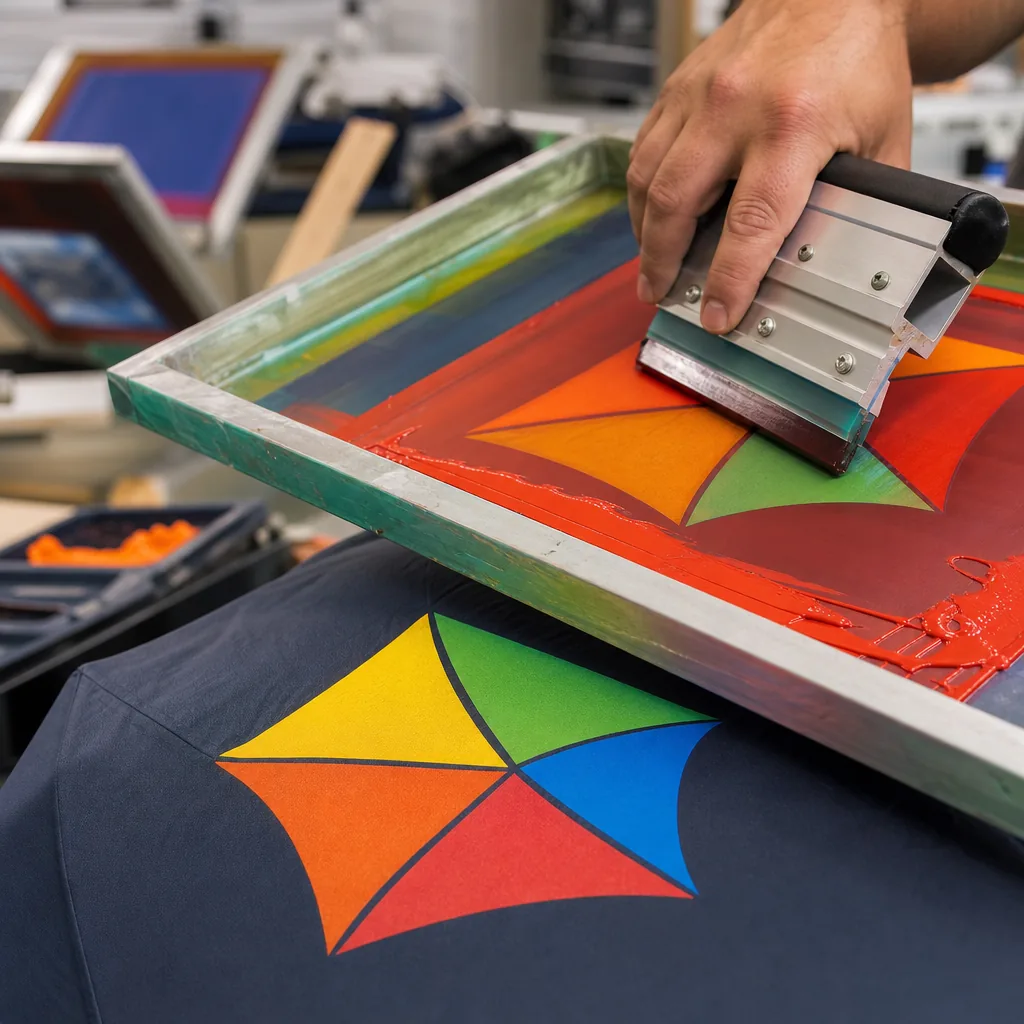
Retail buyers know the problem: a good umbrella can still look off-brand when the logo finish is too glossy, too thin, or inconsistent from one production run to the next. At the factory floor, that comes down to how artwork, fabric weave, ink laydown, and label construction interact under real sewing and curing conditions, which is why the right umbrella logo finishing choice has to balance appearance, durability, and repeatable color control.
Why finish selection changes brand perception
On a retail umbrella, the logo finish does more than identify the brand; it tells the customer whether the product was thought through or just printed cheaply at the last minute. Good umbrella logo finishing can make a 23" or 27" umbrella feel closer to a premium accessory than a throwaway promo item, especially when the mark is placed where shoppers actually notice it: one panel on the canopy, the tie strap, or the sleeve. For retail umbrella branding, the canopy is the highest-visibility location, but the strap and sleeve carry more tactile value because people touch them at the point of sale and again every time they store the umbrella. ZheBrella’s standard practice is to match the finish to the fabric and sales channel, because the wrong texture or ink density will make even a well-built frame look lower grade.
A subtle finish works best when the product already has a refined base, such as a matte 190T or 210T pongee canopy in black, navy, or forest green. In that case, a tone-on-tone print, low-gloss embossing, or a woven logo label on the strap reads as controlled and expensive, not loud. By contrast, a high-contrast finish is better on light fabrics like silver, beige, or white, where a sharp black or Pantone-matched mark needs to stand off the cloth to stay legible from 10 to 15 feet away. An embossed logo umbrella is usually strongest on the sleeve or strap tab, while a woven logo label gives cleaner edge definition for custom umbrella decoration when the buyer wants durability over visual impact.
The placement choice should follow use, not habit. A canopy logo works when the umbrella is sold as a fashion item or private-label retail piece, but a strap logo often performs better on compact models because it stays visible after folding and survives more handling. Sleeves are where premium details pay off fastest: a woven logo label, debossed patch, or small heat-transfer mark can turn packaging into part of the product instead of an afterthought. For retail umbrella branding, I would avoid oversized graphics unless the client wants a bold promotional look; restrained finishes usually hold price perception better and get fewer complaints about ink cracking, edge fray, or mismatched color on repeat orders.
Embossed, printed, and woven options compared
For umbrella logo finishing, the right choice starts with the canopy material, not the artwork. An embossed logo umbrella works best on PVC-coated or POE panels because the heat and pressure create a crisp raised mark without adding ink that can crack; it also gives a premium tactile read that buyers notice in hand, especially on clear or translucent canopies. Screen print is still the cheapest route for simple spot colors on pongee 190T or 210T, but it depends on a smooth lay-flat panel and decent ink adhesion. If the fabric is heavily textured, coated, or repeatedly flexed, a print can look fine on day one and start to lose edge sharpness after use.
Digital print is the better choice when the design has gradients, small type, or full-color retail umbrella branding, because it reproduces detail without making a separate screen for each color. On 190T pongee, it handles photographic or multi-color custom umbrella decoration well, but you need to watch ink penetration and hand feel; too much ink load can make the panel stiff and dull the fabric. On 210T pongee, digital output usually holds cleaner because the cloth is denser and less prone to distortion during curing. The tradeoff is cost: digital is usually less attractive at high volume if the artwork is simple, while screen print becomes the practical choice when MOQ is high and the logo count is limited to one or two colors.
Woven logo label is the most durable option when you want a consistent branded finish without relying on ink or heat transfer. It is usually sewn into a tie strap, ferrule tag, or canopy seam, so it avoids direct abrasion from folding and opening cycles, and it works across almost any canopy construction. The downside is that it reads as branding hardware rather than part of the artwork, so it is less suitable when the goal is a large graphic on the canopy surface. In practice, we use woven label for higher-end retail umbrella branding, embossed or screen print for PVC-coated panels, and digital print when the design complexity justifies the extra setup. The cleanest buying decision is to match the decoration method to the fabric, then set MOQ around the process: woven labels and screen print support lower tooling risk, while embossed and full digital options usually make more sense once the order size is stable.
Matching decoration to frame and canopy structure
Panel count and frame geometry decide whether umbrella logo finishing looks crisp or gets stretched into a mess. On an 8K canopy, each panel is wider, so a logo can sit cleanly across one panel or bridge two panels without fighting too many seam interruptions. A 16K build gives you more but narrower panels, which is better for small repeating marks, woven logo label placement, or an embossed logo umbrella style on the sleeve or strap, but it raises the risk of letters landing on seams and distortion zones. For retail umbrella branding, I always check the panel layout first, then size the art to the actual printable flat area instead of the nominal canopy diameter.
Fiberglass ribs bend and recover better than steel, so they hold panel shape more consistently in wind and reduce registration drift during use. Steel frames are stiffer, but once they take a set or twist under load, the print can look off-center even if the artwork was placed correctly in production. Double-canopy windproof builds are the worst place to be careless: the vented top changes how panels breathe, so large graphics need enough clearance from the vent edge and seam apexes to avoid curling or visual breaks. With custom umbrella decoration, the safest approach is to keep critical text away from the highest-stress panel corners and use the inner canopy or tie strap for secondary branding if the main canopy is crowded.
Auto-open mechanisms also matter because the runner and shaft travel can steal usable print space. On compact 21-inch and 23-inch folds, the lower panel area near the shaft is often interrupted by a button housing or a tight release path, so we avoid placing fine text or barcodes there; otherwise the art gets crushed when the canopy snaps open. That restriction is less severe on larger 27-inch and 30-inch sticks, but the shaft zone still limits full-wrap graphics and anything that needs perfect symmetry across panel centers. For umbrella logo finishing, I treat the mechanism as part of the artwork boundary, not an afterthought, because the wrong print zone is what turns a good proof into a rejected retail sample.
Quality control targets for repeat orders
For repeat programs, umbrella logo finishing needs hard approval checkpoints before the factory cuts the first panel. I would lock the artwork file, placement dimensions, Pantone target, and the exact decoration method—screen print, heat-transfer, sublimation, embroidered patch, or woven logo label—because each method shifts edge sharpness and perceived size differently on pongee 190T versus 210T canopies. For a retail umbrella branding program, the right spec is not “match the sample”; it is a measurable tolerance sheet with logo width/height, panel seam offset, and a color standard stated as Delta E or a visible-swatch limit under D65 lighting. If the brand wants a raised effect, an embossed logo umbrella sample should also define emboss depth and edge softness, since that changes between POE, PVC, and EVA materials.
Stitch alignment matters more than most buyers expect because canopy distortion and seam take-up can move the logo after sewing. On sewn patches and woven logo label applications, I set the approval to include stitch-to-artwork alignment, border width, and no broken stitches at panel corners, especially on 8K and 10K folding umbrellas where panel curvature is tight. For recurring orders, acceptable registration drift should be written down by panel type—typically a small mm window for repeat placement, not a vague “close enough” standard—so every lot lands in the same visual zone. That is the only way custom umbrella decoration stays consistent when production switches between frames, operators, or print tables.
For inspection, I would use AQL 2.5 on the finished lot and check decorated samples from the first, middle, and last cartons, not just the golden sample at the start. The inspection sheet should track logo fading, print bleed, off-center placement, thread tension, label peel strength, and carton-to-carton color variation, because those are the defects that show up in retail returns. For umbrella logo finishing on repeat orders, color tolerance should be tied to the same approved master and the same substrate, with a re-approval trigger if ink batch, fabric lot, or coating changes. That keeps the decoration stable across production lots instead of letting each run become a new interpretation of the artwork.
Lead times, MOQ, and trade terms for branded programs
For retail programs, umbrella logo finishing changes the schedule more than the base umbrella does. A simple screen print on a 1-color panel is usually the fastest path, with samples in about 3 to 5 days and bulk production in 15 to 20 days after approval; a woven logo label or hang tag usually adds a few extra days because the label needs separate sourcing and stitching. An embossed logo umbrella, heat-transfer mark, or full-panel sublimation pushes harder on tooling and color control, so I plan on 7 to 10 days for samples and 20 to 30 days for bulk if the artwork is already clean. MOQ follows the same logic: basic printing can start at 300 to 500 pieces per colorway, while more involved custom umbrella decoration often needs 1,000 pieces or more to keep setup costs sensible.
Retail buyers should not compare decoration methods on price alone; compare them by landed cost and failure risk. FOB quoting is cleaner when you already have freight forwarders, because it isolates the factory price for the umbrella logo finishing and lets you control ocean or air freight yourself. DDP is easier for smaller launches because it rolls in duty, brokerage, and final delivery, but it can hide cost inflation if the supplier is padding the logistics side. For branded umbrellas, I usually ask buyers to request both FOB and DDP so they can see whether a lower unit price on paper still wins after freight, import duty, and local delivery are added.
The real schedule killer is artwork revision, not sewing. If the logo is vector-ready and the brand has approved Pantone references, sample turnaround stays tight; if the file needs cleanup, registration fixes, or a re-cut of an embossed plate, add 3 to 7 days without arguing about it. Our standard practice is to lock decoration approval before canopy cutting, because changing a woven logo label or print after production starts creates scrap and delays the whole PO. For seasonal retail umbrella branding, a realistic buying window is 30 to 45 days total from approved sample to warehouse receipt, and that is only when the quote, art, and trade terms are all settled early.
Frequently Asked Questions
Which logo finish is best for a premium retail umbrella line?
For premium lines, embossed or woven branding usually feels more elevated than simple print. The final choice should match the canopy material, expected wash or abrasion exposure, and the brand's target price point.
Can a logo finish be kept consistent across multiple umbrella models?
Yes, but the artwork spec should lock down size, placement, and color tolerance for each model. Frame style, rib count, and canopy construction can change how the same decoration looks on different umbrellas.
Which logo finishing method gives a retail umbrella the most premium look?
Embossing on leather-look handle wraps, PU straps, or carry sleeves usually gives the most premium appearance because it is subtle and durable. For visible shelf branding, many retail buyers combine embossing with a woven label or a small precision print on one canopy panel.
What files are needed for embossed or woven umbrella logos?
Vector artwork is required, usually in AI, EPS, or PDF format with outlined fonts. For woven labels, Pantone references are recommended because thread colors may not match CMYK print colors exactly.
Can different logo finishes be combined in one umbrella order?
Yes, a common retail specification is canopy printing plus a woven label on the closure strap and an embossed logo on the handle or sleeve. Combined decoration is usually easier to manage from 500 to 1,000 pieces per design, depending on fabric, frame, and label requirements.
Looking to Launch Your Custom Umbrella Line?
ZheBrella is a Zhejiang-based OEM/ODM umbrella manufacturer with 17 years of export experience. Free design, low MOQ from 100 pieces, windproof construction, full-color print.
Get Free Quote Now »People Also Search For
Related Articles
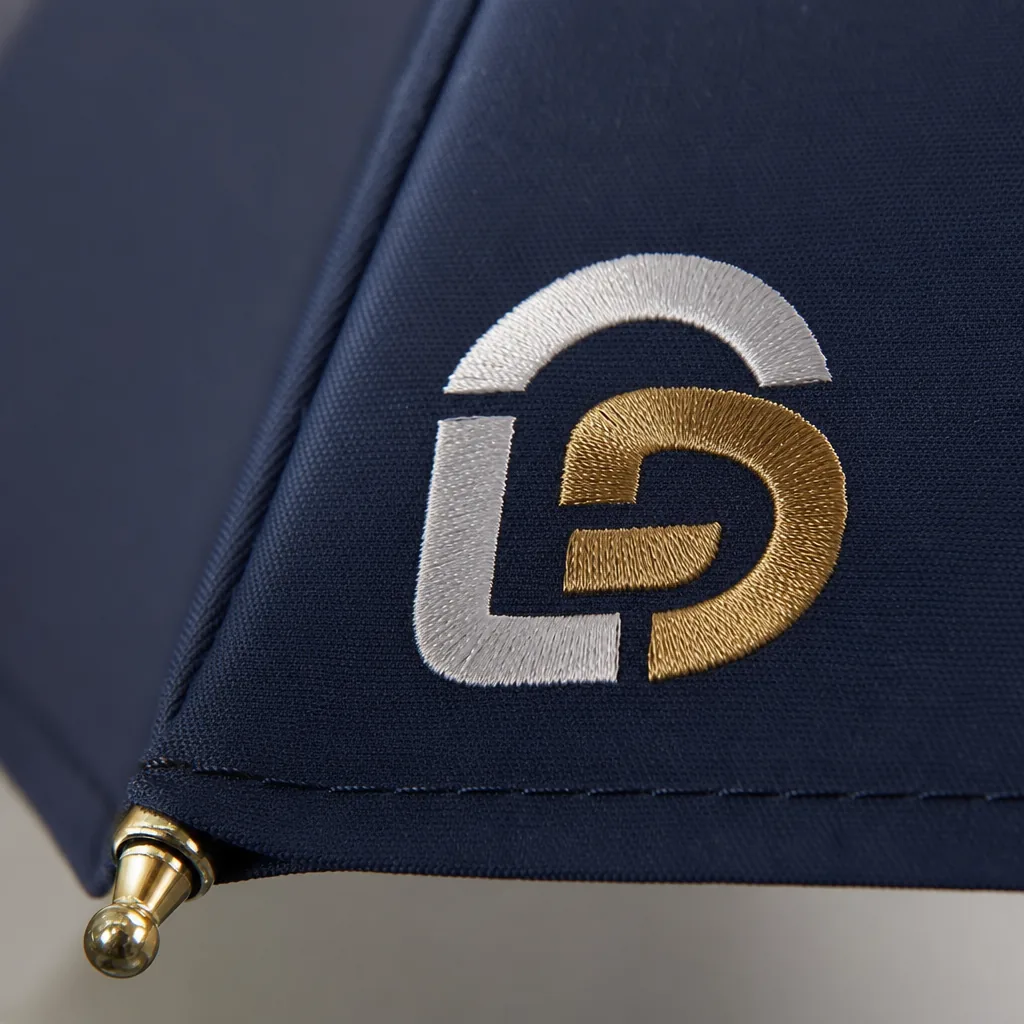
Debossed and Embossed Branding for Premium Umbrella Handles
Compare debossed and embossed handle branding for premium umbrellas, including tooling, MOQ, tactile finish, and cost im...
Read More »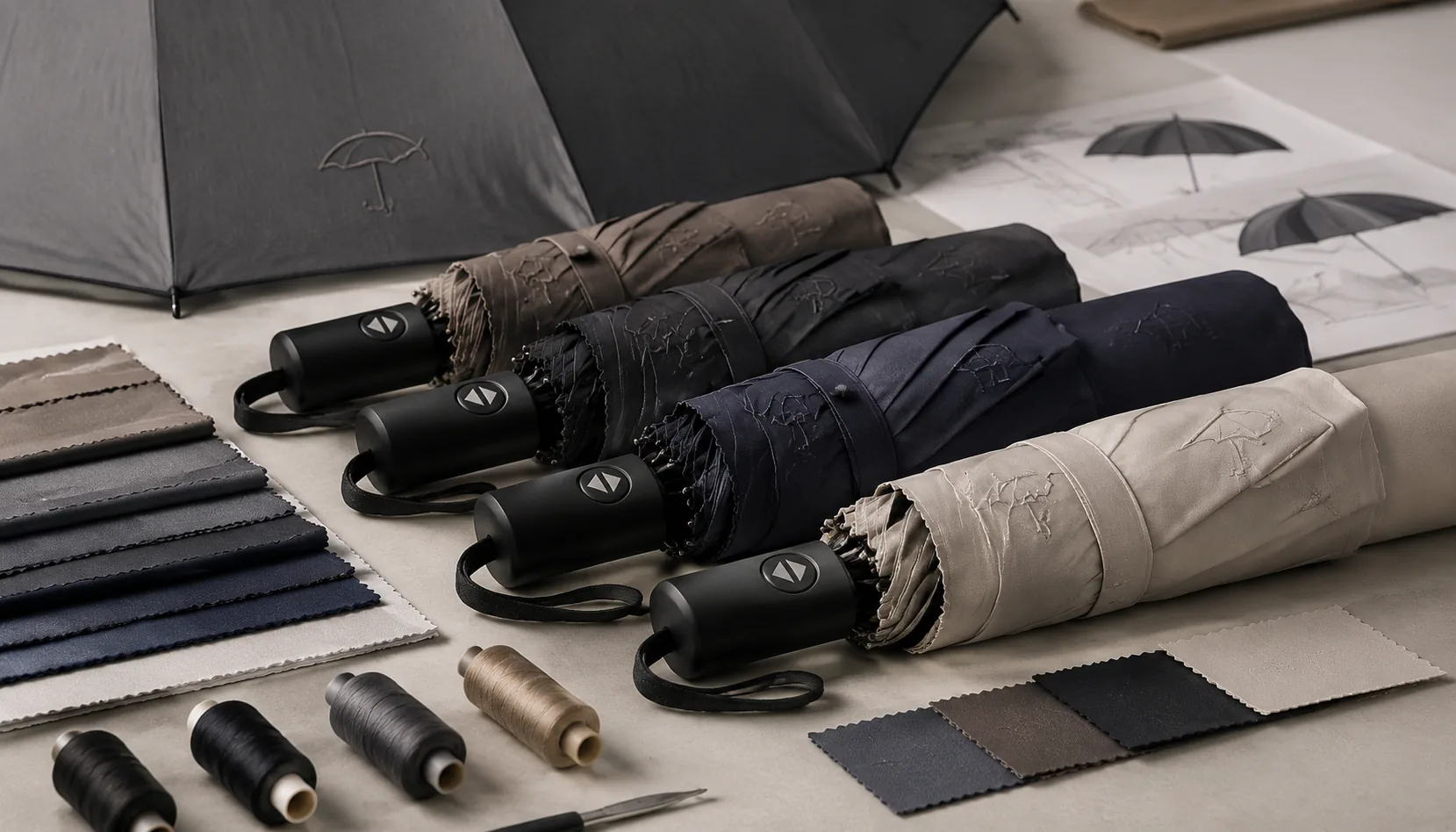
Tone-on-Tone Umbrella Logos for Premium Retail Branding
Use tonal logo printing to create premium umbrellas with controlled contrast, fabric choices, QC checks, and repeatable ...
Read More »
Tone-on-Tone Umbrella Branding for Premium Retail Lines
Use tone-on-tone umbrella branding to create premium retail programs with controlled logo contrast, fabric choices, samp...
Read More »