Pricing Custom Umbrellas for Resale: Margins, Markups, and MAP

Pricing custom umbrellas for resale starts with the factory reality, not the retail shelf: panel count, frame grade, canopy fabric, print method, packaging, and freight all change landed cost before a buyer sees margin. For distributors and resellers, custom umbrella pricing resale only makes sense when markups are tied to channel expectations and a clear MAP strategy that protects brand value without squeezing volume.
Build price up from true landed cost
The only honest starting point for custom umbrella pricing resale is landed cost, not FOB alone. A 23" or 27" umbrella may look cheap at factory gate, but by the time you add ocean or air freight, import duty, brokerage, carton labels, inner pack conversion, and last-mile fulfillment, the real cost base is very different. If you are buying a 1,000-piece run, the spread between FOB Ningbo and true landed cost can easily be 20% to 45% depending on shipping mode and destination. That is where umbrella markup gets misread: buyers think they have a 3x margin when they really have a thin 1.6x after freight and domestic handling. On the factory side, ZheBrella usually separates the quote into FOB unit price, decoration charge, and pack-out charge because blending them hides the real economics and makes reseller pricing strategy sloppy. For resale, you need the full stack before you decide what you can actually charge.
Print and fulfillment are not minor add-ons; they are part of the product cost if the umbrella leaves your warehouse ready to sell. A single-color screen print on a pongee 190T canopy is one cost profile, while full-panel sublimation on a vented double-canopy umbrella is another, and the difference matters when you calculate umbrella margin. Add kitting, barcode labels, polybags, master cartons, and any retail-ready insert, then test the result against your target MAP pricing umbrella floor. If your landed cost is $5.80 and your channel needs a 2.2x gross markup to survive returns, promotions, and chargebacks, your resale price cannot be $11.99 without breaking the model. custom umbrella pricing resale works only when you treat freight, duty, decoration, and fulfillment as fixed inputs, then build margin from there instead of guessing from the FOB quote alone.
Typical markups by channel
Promo distribution is usually the thinnest channel because the buyer cares more about landing price than sell-through. On a basic 21" or 23" manual umbrella with 190T pongee, steel shaft, and fiberglass ribs, a distributor might target a 20% to 35% gross umbrella margin if they are reselling to corporate end users, but their own umbrella markup can be higher on setup fees, art, and packaging. Once you move to auto-open, 210T fabric, or a Teflon and UV coating, the landed cost rises fast, so the room for discounting tightens. In practice, custom umbrella pricing resale in promo is usually built around volume breaks, freight, and decoration method, not a flat multiplier. ZheBrella’s standard practice is to quote FOB and let the distributor decide whether they want to hold 25% to 40% gross margin or trade margin for a lower bid.
Retail is a different game because the product has to carry the store’s overhead, returns, and inventory risk. For branded umbrellas sold through gift shops, sporting goods, or department stores, the retailer often needs a 50% to 60% gross margin to make the shelf space worth it, which usually means a wholesale price around 2x to 2.5x factory landed cost and a final shelf price at 4x to 6x cost depending on the brand position. A vented double-canopy windproof umbrella with 8K or 10K fiberglass ribs can support a higher ticket, but only if the perceived quality is obvious in hand. For MAP pricing umbrella programs, the distributor has to protect the channel spread or the retailer will refuse to carry the line. That is why umbrella reseller pricing strategy matters as much as the spec sheet.
DTC e-commerce can look attractive on paper, but it is the most unforgiving channel because paid traffic, pick-pack, damage, and returns eat the margin fast. A DTC seller usually needs at least 65% to 75% gross margin before marketing just to survive, and after ads the real contribution margin may drop to 15% to 30% unless the average order value is lifted with bundles, customization, or premium features like auto-open-close, UPF 50+, or a branded sleeve. That is why custom umbrella pricing resale for DTC often starts with a landed-cost target, then adds a markup of 3x to 5x depending on size, decoration, and perceived quality. If the umbrella is a commodity 23" product with no story, the math breaks quickly; if it is a 27" or 30" premium piece with clear weatherproof claims and clean decoration, the margin can hold.
Tiered pricing and quantity breaks
The cleanest `custom umbrella pricing resale` model is to line up your price breaks with the factory’s real cost steps, not with arbitrary retail psychology. On the production side, the big jumps usually happen at MOQ points tied to printing setup, canopy cutting yield, and carton packing efficiency. For example, ZheBrella and similar factories often price differently at 100, 300, 500, and 1,000 units because a 2-color screen print on 190T pongee, a UV-coated 210T canopy, or a full-color sublimation run all create different labor and waste profiles. If you mirror those tiers, the buyer sees a logical ladder: the first break covers setup cost, the second improves umbrella margin, and the higher breaks create real room for umbrella markup without forcing you to cut corners on fiberglass ribs, vented double-canopy construction, or auto-open-close mechanisms. That is better `umbrella reseller pricing strategy` than pretending every unit has the same economics.
The mistake I see most often is flattening the price grid too early, which destroys incentive to scale. A reseller should feel a clear drop in landed cost when moving from 200 to 500 pieces, and another meaningful drop at 1,000 or 3,000 pieces if the decoration stays stable. Keep the low tiers high enough to protect your MAP pricing umbrella position, then widen the spread as quantity rises so the buyer can improve sell-through without undercutting the market. For example, a 21-inch compact manual umbrella can support a different break structure than a 30-inch golf model with fiberglass shaft and Teflon coating, because freight cube, packaging, and defect risk are not the same. The right approach is to quote each tier against AQL 2.5, give the reseller a clear `umbrella margin` at retail, and reserve the deepest concessions for repeat orders or mixed-SKU programs that reduce changeover time and carton complexity.
MAP and protecting brand value
Minimum advertised price is not about squeezing dealers; it is about keeping the market from eating itself. For custom umbrella pricing resale, the problem starts when one channel partner advertises a 23" auto-open model at a discount that ignores decoration, freight, and warranty reserve, then everyone else is forced to chase that number. A MAP policy sets the floor for public ads, not the wholesale invoice, so a reseller can still make money with a sensible umbrella markup while avoiding a race to the bottom. The policy needs to be tied to spec level, because a 190T pongee manual umbrella with steel ribs is not the same product as a 210T fiberglass vented auto-open-close model with Teflon coating and UV protection. If the advertised price does not respect the build, the brand loses price discipline and the customer starts treating every umbrella like a commodity.
The practical part of an umbrella reseller pricing strategy is enforcement and exceptions. MAP pricing umbrella programs work best when the rules cover marketplaces, paid search, email blasts, and social posts, not just website product pages, because sellers will always look for the easiest loophole. We usually see better compliance when the policy is written around size and construction bands, such as 21" compact, 23" golf, and 30" storm models, with separate MAP levels for 8K, 10K, and 16K rib counts and for manual versus auto-open mechanisms. That keeps umbrella margin predictable for the reseller and protects brand value across channels. If a buyer wants deeper discounting, the answer is usually a private offer, not a public price cut, because public undercutting trains the market to wait for clearance instead of paying for the real specification.
Pricing the intangibles
If you are serious about custom umbrella pricing resale, stop bundling service work into the product price. Setup is not free: art file cleanup, panel layout, screen or transfer preparation, carton labeling, and order confirmation all take labor. On a small run, that work can exceed the hardware cost, especially on 21" or 23" manual umbrellas with simple pongee 190T canopies. A clean umbrella reseller pricing strategy separates the blank unit, decoration, and order handling so your umbrella margin does not disappear on the first low-MOQ order. The same logic applies to sampling. A production sample, pre-production proof, or color strike-off should be charged as a line item or credited only after volume is committed. Otherwise you train customers to treat engineering time as complimentary.
Rush orders need a separate price because they actually consume factory capacity. Moving a 10K fiberglass frame order ahead of a standard lead-time job can disrupt cutting, sewing, frame assembly, and packing across the whole line, so the premium should reflect real overtime, changeover losses, and freight upgrades. A rush fee also protects MAP pricing umbrella programs by preventing dealers from undercutting each other with last-minute discounting. If the buyer wants auto-open-close mechanisms, double-canopy vented construction, or UV coating added to a standard program, that is not a minor tweak; it changes component sourcing and QC. Treat those changes as engineering charges, not invisible favors. That is how you keep umbrella markup rational instead of guessing after the fact.
Design work is another place where sellers give away profit. Vector redraws, color separations, print matching for screen or heat transfer, and packaging mockups should all be priced explicitly, especially when the customer has no usable artwork. For custom umbrella pricing resale, the cleanest model is product cost plus decoration plus service fees, then margin on top, not one blended number that hides all the labor. If the buyer wants a faster sample turnaround or a revised logo after approval, charge for the revision. ZheBrella’s standard practice is to quote these items separately so AQL 2.5 inspection, FOB or DDP logistics, and production timing stay clear. Buyers accept that structure when it is presented early, and it prevents service-heavy accounts from dragging down the whole program.
Frequently Asked Questions
What margin should I add to custom umbrellas?
It varies by channel: promotional distributors often work on roughly 30–50% gross margin, retail can be higher, and commoditized online sales lower. Always build the price up from full landed cost (including duty, freight, and print) rather than marking up the FOB price alone.
What is MAP and do I need it?
MAP (minimum advertised price) is a policy setting the lowest price resellers may advertise. If you sell a branded umbrella line through multiple partners, a MAP policy protects margins and brand perception by preventing a price-cutting spiral.
What markup range is typical for custom umbrellas sold through distributors?
A common starting point is 2.0x to 2.5x landed cost for wholesale resale, with higher pricing on small runs or complex decoration. If the order includes special packaging, split shipments, or longer payment terms, many buyers need 30% to 40% gross margin just to stay profitable.
How should MAP be set for an umbrella reseller program?
Set MAP above the lowest sustainable advertised price, not just above factory cost. In practice, many brands set MAP at about 15% to 25% below MSRP so dealers can still discount selectively without collapsing the market.
What MOQ and lead time should a buyer expect when pricing custom umbrellas?
For most OEM/ODM umbrella factories, MOQ is often 500 to 1,000 pieces per style or color, depending on printing and frame options. Standard production lead time is usually 30 to 45 days after artwork approval, with extra time needed for ocean freight and customs.
Looking to Launch Your Custom Umbrella Line?
ZheBrella is a Zhejiang-based OEM/ODM umbrella manufacturer with 17 years of export experience. Free design, low MOQ from 100 pieces, windproof construction, full-color print.
Get Free Quote Now »People Also Search For
Related Articles
Promotional-Distributor Margins on Custom Umbrellas Explained
How promotional-products distributors actually make money on custom umbrellas: supplier net pricing, EQP, setup and run ...
Read More »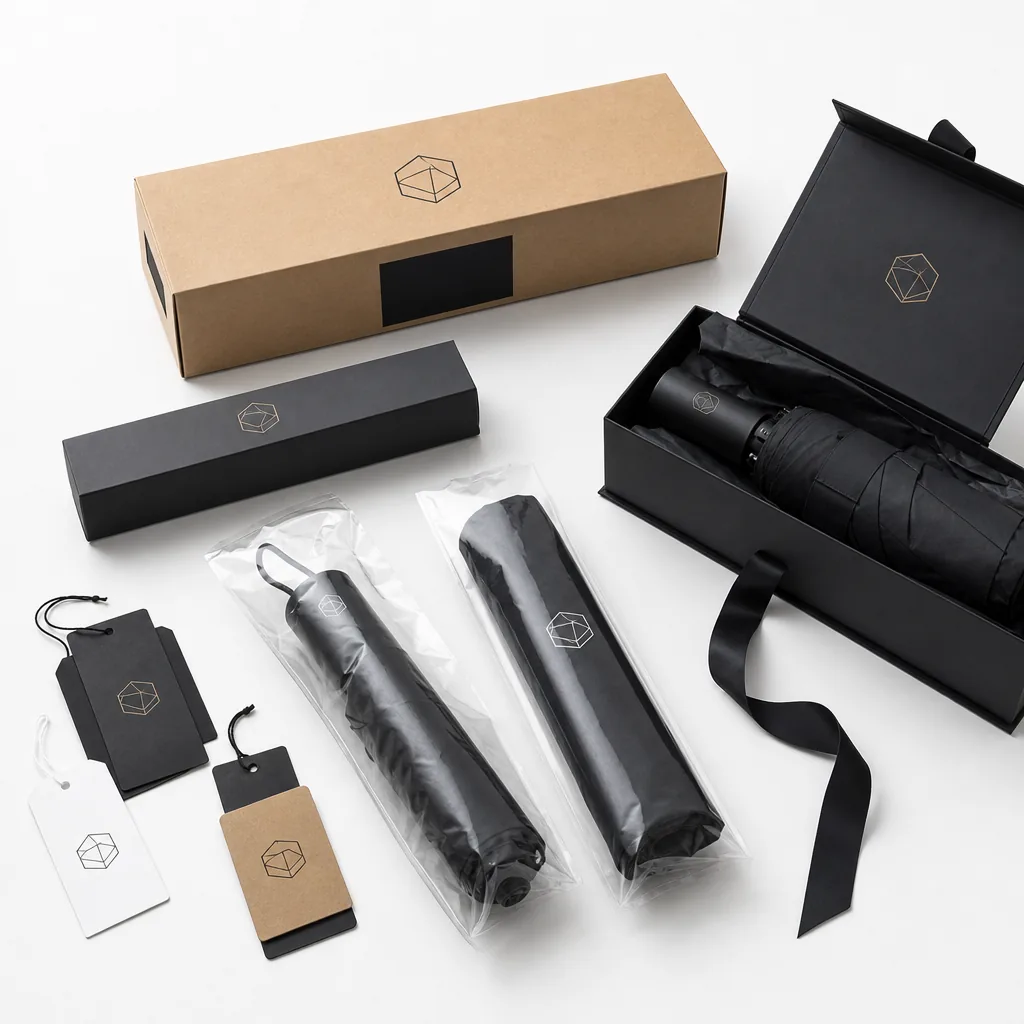
Branded Umbrellas for Retail Merchandising and Storefront Sales
Plan a retail-ready umbrella line with the right sizes, materials, and display mix to improve sell-through, margins, and...
Read More »
How Tariffs and Freight Volatility Affect Umbrella Sourcing Costs
See how tariffs, freight swings, packaging, and order timing change landed umbrella cost so buyers can quote more accura...
Read More »