QR Code Printing on Branded Umbrellas for Campaign Tracking
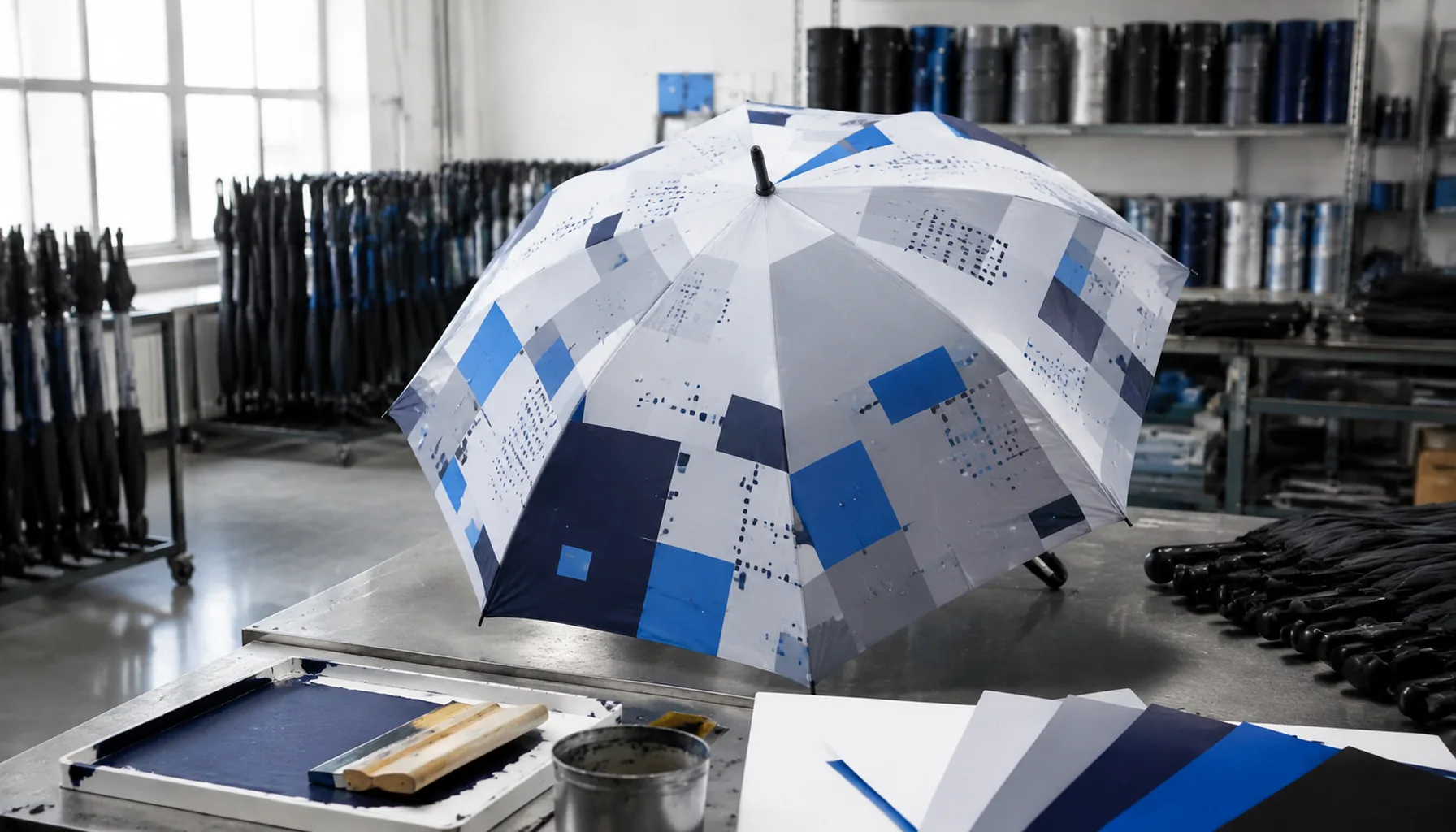
A QR code on an umbrella is only useful if customers can scan it after the canopy has been stretched, sewn, packed, shipped, and opened in the rain. On our Songxia production floor, QR code umbrella printing is treated as both artwork and a quality-control item: code size, panel placement, fabric coating, ink density, and final scan checks all decide whether a campaign gets real data or just a decorated canopy.
Best Use Cases for QR Code Umbrellas
Retail loyalty, product registration, and distributor campaigns are where QR code umbrella printing can show real ROI after the shipment leaves China. A fashion retailer can connect each umbrella to a loyalty sign-up page; an insurance company can use branded campaign umbrellas to drive claims-app downloads; a beverage distributor can assign different QR codes to regional sales teams and compare scan volume by city. For higher-control programs, variable QR printing can be done by panel, carton, or PO batch, but buyers should confirm this before production because it affects artwork control, plate setup, inspection time, and packing separation. On export orders, the practical workflow is simple: approve the umbrella sample, approve the printed QR scan result under indoor light and daylight, then lock the URL or dynamic redirect before mass production. Typical MOQ for custom printed umbrellas is 500–1,000 pieces per design, with 25–35 days production after sample approval, plus FOB Ningbo/Shanghai or DDP delivery depending on the destination market. The QR should never replace the brand mark; it should sit beside it with enough quiet zone to scan cleanly.
Scannability Rules for Canopy Printing
QR code umbrella printing fails most often because the code is treated like artwork instead of a machine-readable target. For a standard 23" or 27" canopy panel, I do not approve a QR smaller than 35 mm square for close-range event use, and 45–60 mm is safer when people scan from arm’s length in rain or crowd movement. The quiet zone matters as much as size: keep at least 4 modules of blank space around the code, and do not let panel seams, rib tips, piping, or logo text touch that border. On 190T or 210T pongee, ink spread is small but real, especially with screen printing; on POE/PVC/EVA transparent canopies, glare can reduce edge recognition. For branded campaign umbrellas, place the QR on a flat outer panel away from the fold line, not across a stitched seam or vent overlap on a double-canopy windproof model.
Black-on-white or dark-on-light prints scan better because phone cameras need sharp contrast between modules, not brand harmony. Low-contrast combinations like navy-on-black, gold-on-white, red-on-gray, or tone-on-tone Pantone matches may look premium on a proof but often fail under wet fabric reflection, cloudy daylight, or LED event lighting. For scannable umbrella logos, I recommend 70% or higher contrast, matte ink where possible, and no gradients inside the QR field. Use a short URL or dynamic tracking link so the QR matrix stays less dense; a 25-character redirect scans cleaner than a long UTM-heavy destination. Error correction should usually be Q or H level when a logo is inserted in the center, but do not overdo decoration. Our standard practice at ZheBrella is to test-scan printed samples on iPhone and Android from 30–80 cm before bulk event umbrella printing.
Promotional umbrella tracking works only if the printed code survives real handling, not just the digital mockup. Heat-transfer labels can hold crisp edges for small batches and full-color designs, while screen printing is cost-effective for MOQ 500–1,000 pieces but needs careful mesh selection and ink viscosity to avoid filled modules. Sublimation on white polyester gives excellent sharpness, but it is unsuitable on dark dyed panels unless a white base area is built into the design. For AQL 2.5 inspection, I like to add a functional scan check to the visual checklist: scan from three distances, under indoor and outdoor light, on both dry and lightly misted canopy surfaces. If the campaign depends on attribution, use one dynamic QR per event, city, distributor, or SKU so promotional umbrella tracking can separate impressions instead of dumping every scan into one generic landing page.
Placement by Umbrella Type and Rib Count
QR codes read best when they sit on a flatter visual field, not across a seam or near a rib tip where canopy tension creates distortion. On 21" and 23" folding umbrellas, I usually keep the code on one single panel, centered between two ribs, with at least 25–30 mm clearance from the stitched seams. Most compact folders are 8K, so each panel is relatively wide but more curved when opened because the short shaft pulls the canopy into a steeper dome. For QR code umbrella printing on folding models, a 45–60 mm code is the practical lower limit if the scan distance is handheld at street level. Below that, raindrops, wrinkles in 190T pongee, and slight panel sag after repeated open-close cycles start to reduce readability.
Golf umbrellas give the cleanest scanning area because a 27" or 30" canopy has larger panels and lower curvature across the print zone. On an 8K golf frame, one panel can carry a 70–90 mm QR code with a logo lockup above or below it, as long as the artwork avoids the seam allowance and does not cross the rib line. A 16K golf umbrella looks premium and wind-stable, but the panels are narrower, so the code must be smaller or shifted carefully into the widest part of the wedge. For branded campaign umbrellas, I prefer placing the QR on two opposite panels rather than all panels; it keeps screen-print registration manageable and gives pedestrians a scannable face from more than one direction.
Straight umbrellas sit between folders and golf models. A 23" straight 8K umbrella has enough panel width for scannable umbrella logos, but the canopy angle is still steep near the ferrule, so the QR should sit in the lower-middle third of the panel, not close to the top cap. With event umbrella printing, the common mistake is pushing the code toward the hem for visibility; that area flaps more in wind and can curl when the binding tape shrinks after drying. For promotional umbrella tracking, use high-contrast black-on-white or dark-on-light artwork, avoid glossy PVC glare if possible, and run a sample scan test at 1 m, 2 m, and under wet-canopy conditions before bulk production. Our standard practice is to inspect printed QR panels under AQL 2.5 and reject codes broken by seam creep, ghosting, or heat-transfer edge lift.
Fabric, Ink, and Logo Integration
The fabric choice decides whether a QR code stays readable after rain, folding, and repeated handling. For most branded campaign umbrellas, I prefer 190T pongee for budget 21" and 23" models, and 210T pongee when the buyer wants a tighter weave, smoother hand feel, and cleaner print edge. A coated UPF 50+ canopy is fine, but the print method must match the coating: heavy UV or Teflon water-repellent treatments can reduce ink adhesion if the panels are printed after coating. Our standard practice at ZheBrella is to test QR code umbrella printing on the actual production fabric, not a plain lab swatch, because the coating, fabric color, and rib shadow all affect scan contrast. White, light gray, and pale yellow panels give the safest scan results; navy, black, red, and forest green usually need a white underbase before printing the code.
Screen print is still the most stable choice for large, simple scannable umbrella logos, especially when the QR code is one color plus a white base. It gives strong opacity on 190T/210T pongee and holds up well through normal folding abrasion, but it needs a clean file, correct mesh, and enough quiet zone around the code. Digital print gives more freedom for gradients, campaign artwork, and multi-color event umbrella printing, but small QR modules can soften if the artwork is scaled too small or printed over textured seams. For reliable promotional umbrella tracking, I do not recommend placing the code near the panel tip, seam allowance, strap, or ferrule area. A practical minimum is about 45 x 45 mm for short URLs, larger if the destination link is long or the QR contains embedded data.
The logo and QR code should work as a hierarchy, not fight for the same square of canopy. On an 8K 23" straight umbrella, the cleanest layout is usually the brand logo centered on one panel and the QR code placed below or on the adjacent panel with a short call-to-action such as “Scan for offer” or “Scan to register.” For retail-style branded campaign umbrellas, I keep the logo at 180–220 mm wide and the code at 50–70 mm, separated by at least 15–20 mm of clear space. On golf umbrellas, especially 27" or 30" double-canopy models, there is more room, but the same rule applies: do not crowd the branding area with website text, social handles, QR code, slogan, and logo all on one panel. Good QR code umbrella printing looks intentional from three meters away and scans quickly from arm’s length.
Proofing, QC, and Delivery Planning
For QR code umbrella printing, proofing should be treated like a scan-performance test, not just an artwork approval. I would tell the writer to specify a printed sample before bulk production, preferably on the same 190T or 210T pongee canopy fabric and the same print method planned for mass production: screen print for solid one-color codes, heat transfer for sharper multi-color logos, or sublimation when the design needs full-panel graphics. The QR code should be scanned at 12 in, 24 in, and 48 in, because a campaign umbrella is often viewed on a street, at a queue line, or across an event booth. Test both iPhone and Android cameras, with and without the brand’s landing-page redirect active. If the artwork combines scannable umbrella logos with brand icons, keep a strong quiet zone around the code and avoid placing it near rib seams, canopy tips, or folds where distortion kills readability.
Wet-canopy checks matter because umbrellas are used in glare, rain, and moving crowds. A good proofing process should include scanning after spraying the canopy with water, then again after opening and closing the umbrella 20–30 times to confirm the printed QR area does not crack, blur, or crease across the fold line. Dark codes on white or light panels scan best; metallic inks, glossy PVC, and low-contrast tone-on-tone branding look premium in a showroom but often fail outdoors. For branded campaign umbrellas, the writer should mention that every production lot needs AQL 2.5 inspection covering print registration, code clarity, canopy stitching, frame operation, and packaging labels. On auto-open or auto-open-close models, inspectors should also cycle the mechanism and check ribs, stretchers, tips, and handle alignment, because a perfect QR code on a weak frame still creates a poor campaign impression.
Delivery planning should connect the QR deadline to the event date, not just the factory production schedule. Our standard practice at ZheBrella is to allow 7–10 days for printed samples after artwork confirmation, then 25–35 days for bulk production depending on MOQ, frame type, and printing coverage. MOQ planning is different for event umbrella printing: a simple 23 in manual 8K steel-frame model may start around 500–1,000 pcs, while custom handles, fiberglass ribs, double-canopy vented windproof frames, or individual QR serialization may push MOQ and lead time higher. For promotional umbrella tracking, buyers should freeze the final URL before mass printing or use a dynamic QR platform so the destination can be changed after shipment. FOB Ningbo or Shanghai normally works for buyers with forwarders; DDP by air can take about 7–12 days after completion, while sea freight commonly needs 25–40+ days depending on destination and customs clearance.
Frequently Asked Questions
What is the safest QR code size for an umbrella canopy?
For most promotional umbrellas, a QR code of about 60–80 mm is safer than a small label-sized code. Larger golf umbrellas can support bigger codes for easier scanning at events.
Should the QR code be printed on every panel?
Not always. One or two panels can be enough if they face foot traffic or camera angles, while all-panel QR printing raises cost and increases the chance of visual clutter.
What is the minimum QR code size recommended for umbrella printing?
For reliable scanning, a QR code should usually be at least 3 x 3 inches on a standard umbrella panel, with a quiet zone around the code. Larger sizes, such as 4 x 4 inches, are safer for outdoor events where users scan from arm’s length.
Which printing method works best for scannable QR codes on umbrellas?
Screen printing can work for simple, high-contrast QR codes on polyester, but heat transfer or UV digital printing is often better for sharper edges and smaller details. Buyers should request a pre-production sample and scan test before mass production.
Can each umbrella have a unique QR code for campaign tracking?
Yes, unique QR codes can be printed, but they require variable data printing and stricter file management. This usually increases unit cost and production time, so it is best planned for orders above the factory MOQ and confirmed during sampling.
Looking to Launch Your Custom Umbrella Line?
ZheBrella is a Zhejiang-based OEM/ODM umbrella manufacturer with 17 years of export experience. Free design, low MOQ from 100 pieces, windproof construction, full-color print.
Get Free Quote Now »People Also Search For
Related Articles
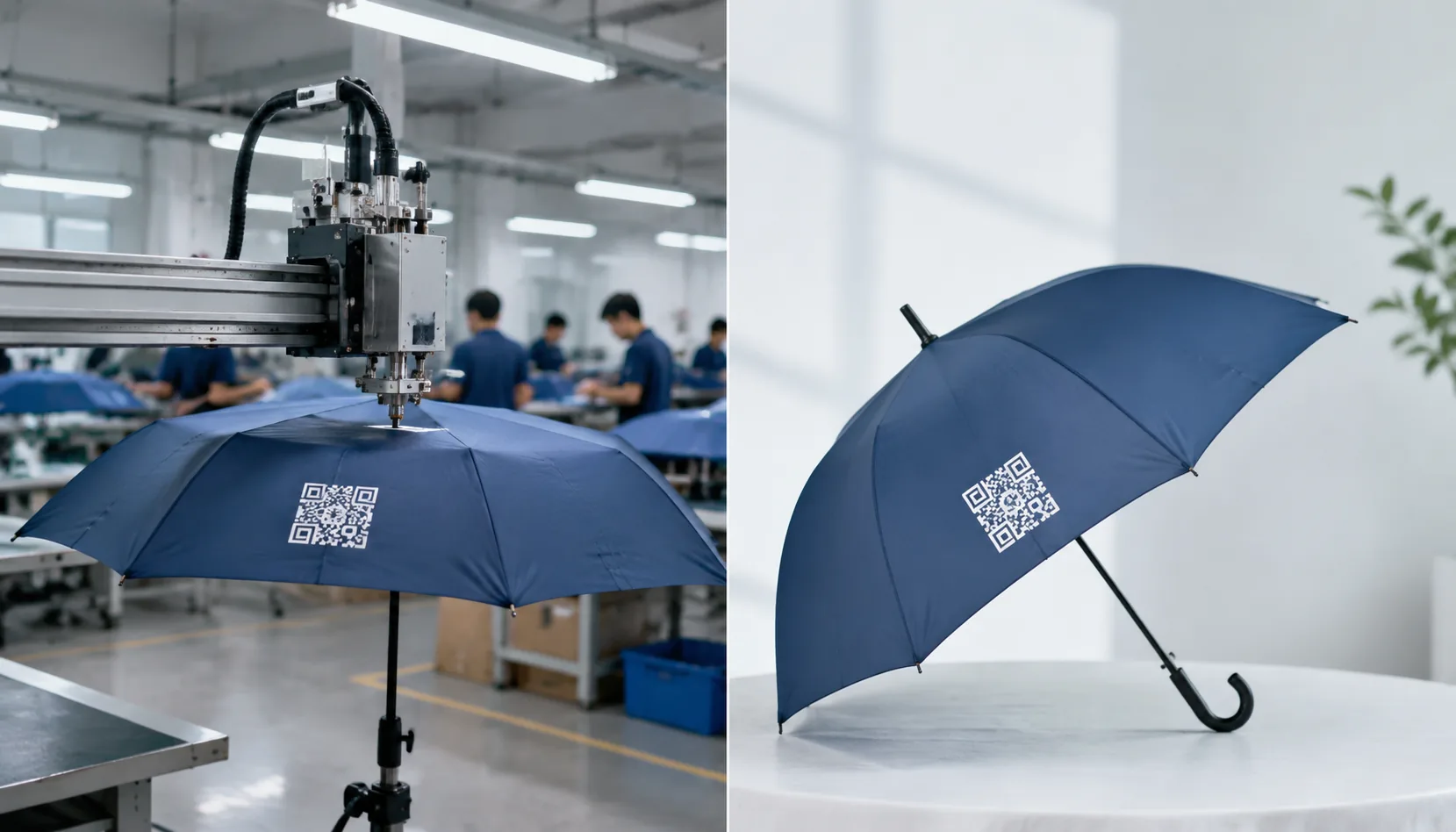
QR Code Printing on Umbrellas for Campaign Tracking
Use QR code umbrella printing with readable sizing, durable placement, and QC checks so event and retail campaigns can d...
Read More »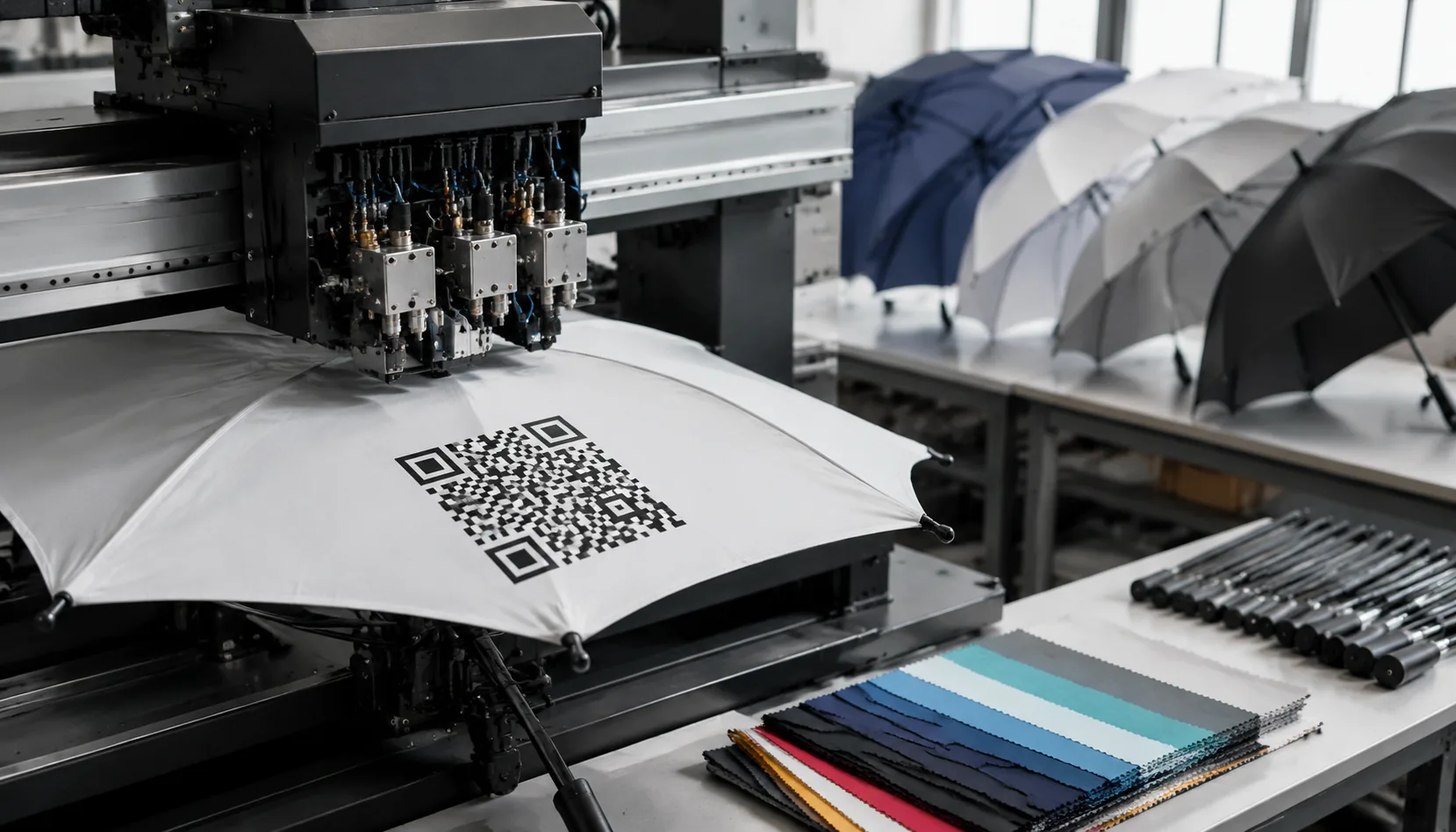
QR Code Printing on Promotional Umbrellas for Campaigns
Plan scannable QR code umbrella printing with the right panel size, contrast, fabric, testing, MOQ, and delivery terms f...
Read More »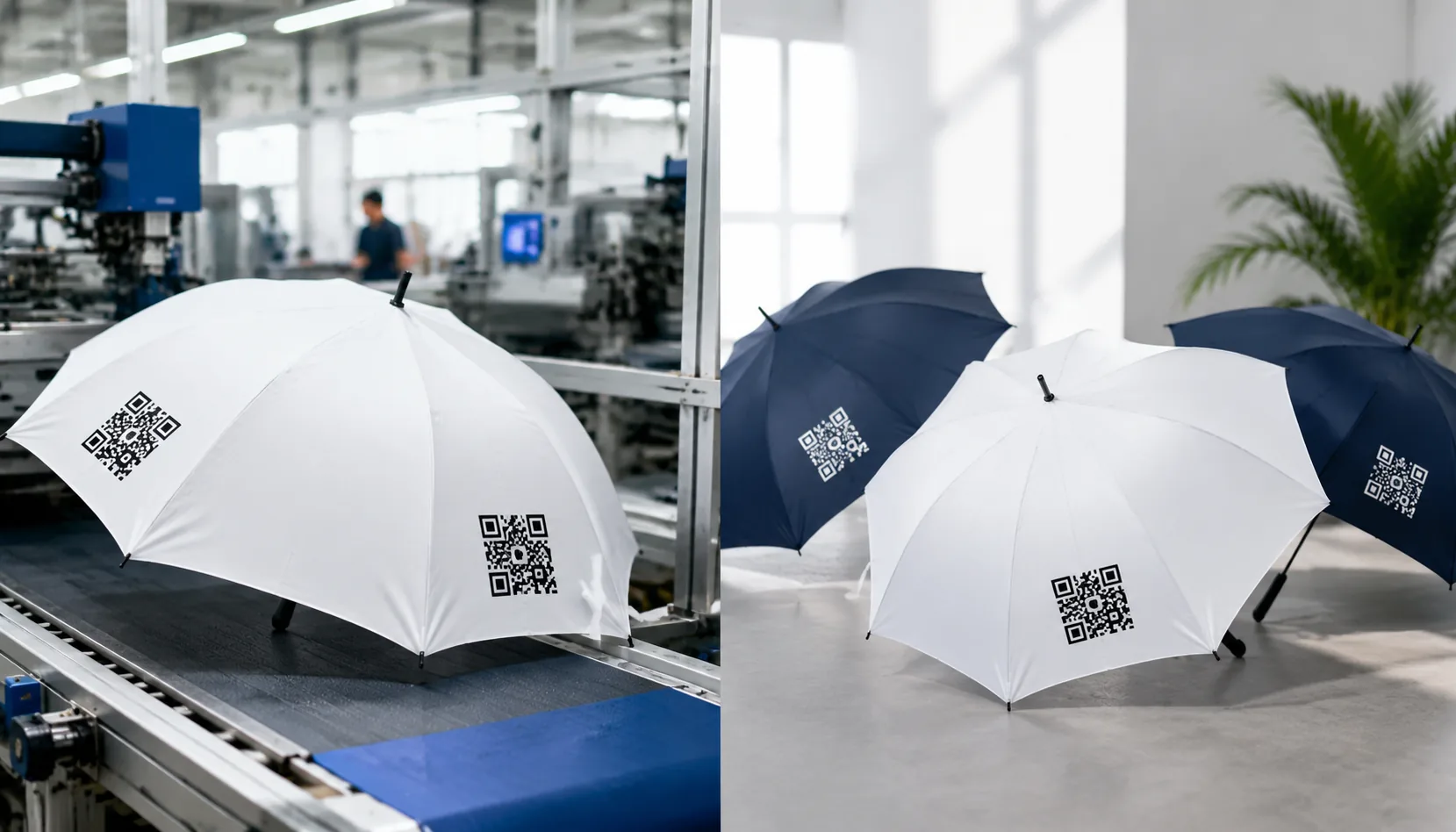
QR Code Printing on Branded Umbrellas for Event Tracking
Create scannable QR code umbrellas with the right logo size, contrast, print method, fabric choice, proofing steps, and ...
Read More »