QR Code Printing on Umbrellas for Trackable Promotions
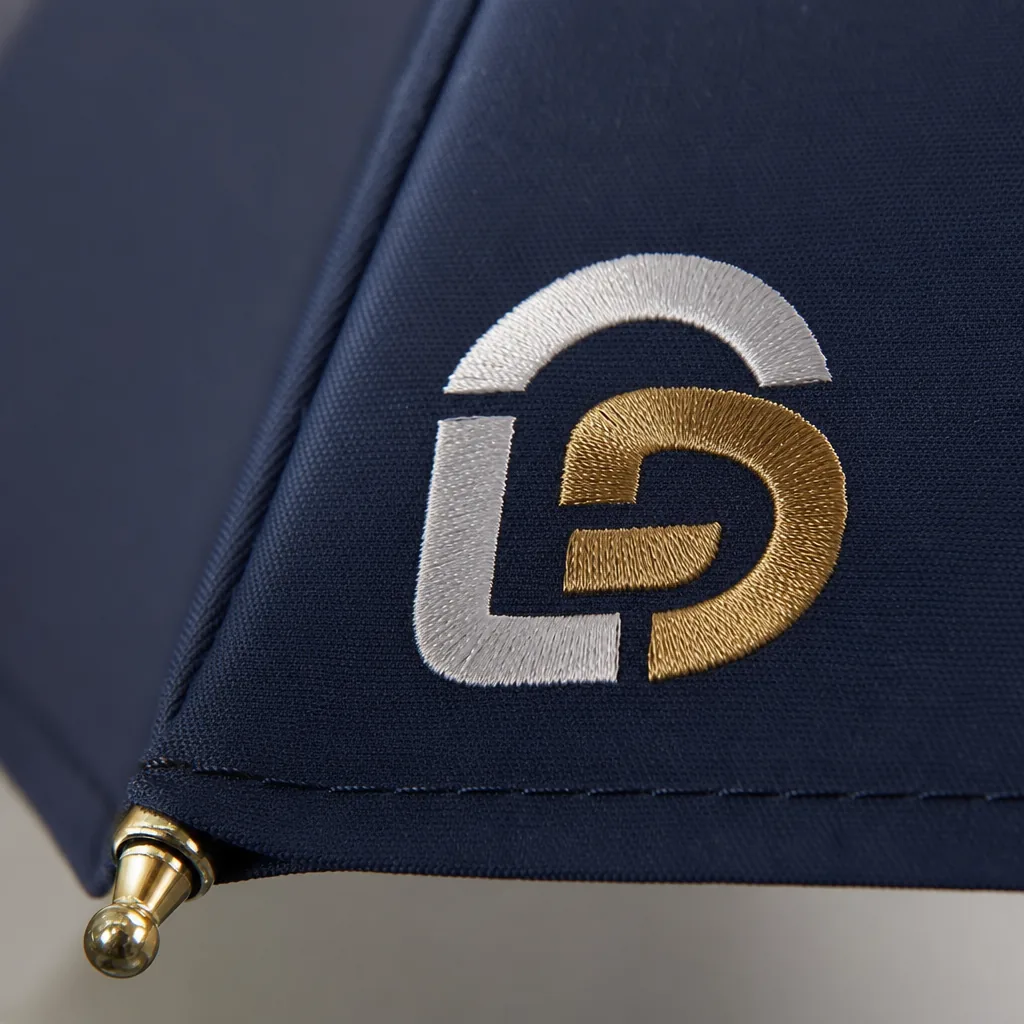
Promotional umbrellas can drive traffic long after the event ends, but only if the QR code scans cleanly in changing light, on curved fabric, and after repeated handling. At the factory floor, QR code umbrella printing has to balance ink coverage, logo placement, and production repeatability so every unit matches the approved artwork and links users to the right landing page. That means thinking about substrate, print method, and tolerance before the first bulk run.
Best Use Cases for QR Codes on Branded Umbrellas
The strongest use case for QR code umbrella printing is an event where rain gear solves an immediate problem and the scan has a clear reward. Trade shows, outdoor concerts, marathons, golf outings, and city festivals all work because people keep the umbrella open in public for hours, not minutes like a brochure. For event umbrella printing, I prefer a 23" auto-open stick umbrella or a 21" compact with 190T pongee; both give enough panel area for a readable code without making the product too expensive for giveaway volumes. Put the QR code on one or two white or light-color panels, not across seams, and keep at least 25 mm of quiet space around it. A code printed over dark navy, red, or busy artwork often scans poorly after the canopy curves under tension. If the campaign needs scan tracking, use different URLs by event gate, sponsor, or city so the buyer can see which distribution point actually performed.
City tours, museum routes, campus campaigns, and transportation programs benefit from branded QR code umbrellas because the umbrella becomes a moving signpost. A walking-tour operator can link to an audio guide, map, discount ticket, or multilingual landing page. A university can connect students to orientation schedules, safety alerts, or club registration. For campus and municipal orders, I normally recommend fiberglass ribs over low-cost steel ribs if the umbrella will circulate for a full season; an 8K fiberglass frame with a vented canopy is more forgiving in gusts and reduces breakage complaints. For scannable logo umbrellas, the print method matters. Screen printing is economical for one-color codes on 190T or 210T pongee, while heat transfer gives sharper edges for smaller QR modules. Sublimation works well on full-color white panels, but the factory must test distortion after sewing because a perfect flat print can become marginal once stitched into a curved canopy.
Hotels, resorts, and retail loyalty programs are where trackable promotional umbrellas keep working long after the original handout. A hotel guest umbrella can link to room service, spa booking, local restaurants, shuttle schedules, or a review page; a retail umbrella can point to loyalty enrollment, warranty registration, or a seasonal coupon. The important point is that umbrellas do not expire with the event date. A decent 27" golf umbrella or 23" straight umbrella may be used for one to three years, creating repeated impressions on sidewalks, parking lots, school pickups, and commuter routes. For QR code umbrella printing, our standard practice at ZheBrella is to run a pre-production scan test on a finished sample at arm’s length and again under indoor light, not just approve the digital artwork. For larger orders, buyers should specify AQL 2.5 inspection, confirm the landing page before mass production, and avoid changing URLs after printing unless the QR redirects through a controlled tracking platform.
Sizing, Contrast, and Placement for Reliable Scanning
Reliable scanning starts with size, not decoration. For QR code umbrella printing, I treat 35 mm x 35 mm as the absolute minimum for close hand scanning on a sleeve label or strap tab, but that is too small for event staff, trade show visitors, or commuters walking past. On the canopy, 80–120 mm square is a practical range if the scan distance is 1–2 meters; for 3 meters, go closer to 150 mm. The code must sit on a flat visual field with a proper quiet zone, normally at least four modules wide, meaning no logo text, border stitching, raindrop pattern, or panel seam should crowd the edges. High contrast matters more than brand color matching: black or dark navy code on white, light gray, or yellow pongee scans better than low-contrast tone-on-tone printing. On 190T or 210T pongee with water-repellent or Teflon coating, ink gain and fabric texture can soften tiny modules, so we avoid over-dense QR designs and test-scan printed strike-offs before bulk production.
A single canopy panel gives the best scan visibility for trackable promotional umbrellas, but it also has the most production risk because the fabric is cut, sewn, tensioned over ribs, and then curved under use. For 8K and 10K umbrellas, I prefer placing the QR code in the lower third of one panel, away from the rib seam and not too close to the hem binding; this keeps it flatter when the umbrella is open. Centering a code high on the panel may look clean in artwork, but the crown curvature can distort module geometry, especially on 21-inch and 23-inch compact models. For golf umbrellas, 27-inch and 30-inch sizes give more room, and a 120 mm code on one panel can scan well from a booth aisle. With double-canopy vented windproof models, never bridge the code across the vent overlap, because the upper layer can shift and break the scan pattern.
Sleeves, strap labels, and hangtags work differently from canopy placement. A sleeve print is good for post-event use because the umbrella is handled at close range, but it is poor for live traffic capture when the umbrella is open and moving. Strap labels are durable and inexpensive, yet the printable area is usually narrow; they suit short URLs or small branded QR code umbrellas meant for product registration, not distance scanning. Hangtags are the safest choice when scan accuracy is more important than permanent branding, since we can print on smooth coated card with crisp edges, strong quiet zones, and campaign-specific UTM links. For event umbrella printing, I often recommend pairing a large canopy code for visibility with a hangtag code for dependable conversion tracking. Our standard practice at ZheBrella is to test scans under daylight, warehouse LED light, and phone angles from roughly 30 degrees, because scannable logo umbrellas fail most often from glare, curvature, or undersized codes rather than from the QR data itself.
Print Method and Fabric Choices That Protect Code Edges
For QR code umbrella printing, edge definition matters more than almost any decorative effect. A code that looks fine at arm’s length can fail on a phone if the modules are fuzzy, the quiet zone is crowded, or the contrast drops on a wet day. Our standard practice at ZheBrella is to treat the QR as a functional graphic first and a logo second: keep it flat, keep the corners sharp, and place it on a panel with enough uninterrupted area so the code is not broken by seams, vents, or panel tension. On 190T or 210T pongee, the smoother 210T face usually gives cleaner module edges, while 190T is still workable if the weave is tight and the print size is generous. Heavy texture, dark base coatings, or high-gloss water-repellent finishes can all reduce scan reliability because they distort the edge contrast the phone camera needs to detect.
Screen printing is the most reliable choice when the artwork is mostly black-and-white and the repeat quantity is high. It lays down an opaque film that holds sharp edges on pongee, especially for larger scannable logo umbrellas where the QR is not tiny. The downside is that very small modules can gain ink and close up, so the mesh count, squeegee pressure, and stencil quality have to be controlled carefully. Heat transfer is better when the code includes multiple brand colors or needs placement on a small patch area; it gives cleaner detail than screen printing on low-run jobs, but the transfer edge can lift if the film is overbaked or the canopy flexes too much. Digital printing works for event umbrella printing with variable data or mixed artwork, but the ink spread must be tested on the exact fabric lot, because a pretty proof is not the same as a scannable code after stitching and tensioning.
If you are making trackable promotional umbrellas, the fabric choice should support the print method instead of fighting it. On 210T pongee, a QR code can usually be printed a little smaller because the surface is tighter and more uniform; on more open weaves or coated PVC, the code often needs to be enlarged by 10–20 percent to preserve scan speed. Curved seams are a common mistake: when the code crosses a panel join, the modules stretch unevenly and the phone sees a warped matrix instead of a clean square. I would keep the code on one panel whenever possible, leave a plain border around it, and avoid placing it near the tip pocket or rib stress points. For branded QR code umbrellas, that is the difference between a marketing item that tracks real scans and one that just looks technical in a photo.
Testing QR Codes Before Mass Production
A QR code that scans on a designer’s monitor can fail badly once it is printed across 190T pongee, a curved panel seam, or a coated POE canopy. Before mass production, proof scanning should be done with at least three phone types: recent iPhone, mid-range Android, and an older Android with a weaker camera. We test at practical distances, usually 12, 24, and 36 inches for handheld umbrellas, and farther for golf umbrellas with 27" or 30" panels used at outdoor events. Lighting matters just as much: indoor LED, cloudy daylight, direct sun, and low-light evening conditions can expose poor contrast or glare from Teflon-coated fabric. For QR code umbrella printing, I prefer a minimum quiet zone of 4 modules, dark ink on a light background, and no placement over rib tips or heavy seam allowance.
Sample approval should include the actual production method, not a digital mockup. Screen printing gives strong opacity on 190T/210T pongee but can thicken fine QR modules if the mesh count, squeegee pressure, or ink viscosity is wrong. Heat-transfer printing can keep edges sharper, but cheap films may crack when folded repeatedly along 8K or 10K frame lines. Sublimation works well on white polyester, yet light gray modules or decorative gradients often reduce scan reliability. For branded QR code umbrellas, the sample should be opened fully, folded, rubbed lightly, sprayed with water, and scanned again after drying. Our standard practice at ZheBrella is to mark the approved strike-off with panel position, QR size in millimeters, Pantone reference, print method, and scan destination before cutting bulk fabric.
Pre-production checks must catch defects before thousands of panels are sewn into frames. Inspectors should compare the first 20 to 50 printed panels against the approved sample, checking for broken modules, ink spread, pinholes, ghosting, registration shift, and poor contrast between the QR code and canopy color. During AQL 2.5 final inspection, trackable promotional umbrellas need both visual and functional scan tests, not just logo measurement. I would pull units across cartons and scan from normal user angles because ribs, canopy tension, and panel curvature can distort scannable logo umbrellas after assembly. For event umbrella printing, also verify that the QR destination is live, mobile-friendly, and matches the campaign URL or UTM tracking code. A perfectly printed code is still a failed promotion if it points to a dead page.
Campaign Logistics, Privacy, and Reorder Planning
Dynamic QR links are the safest way to run trackable promotional umbrellas because the printed code stays the same while the landing page can be changed after shipment. I have seen buyers waste a full reorder because the original QR sent users to an expired event page; that is avoidable. Use a short dynamic URL controlled by your brand or agency, not a free generator account owned by an intern. The physical artwork should be tested at the final print size, usually no smaller than 25–30 mm square on a panel, with enough quiet zone around the code so sewing seams, dark fabric texture, or a curved canopy do not break scanning. For QR code umbrella printing, we normally ask for vector artwork plus a live test link before sampling, then scan from 3–5 feet on both iPhone and Android after printing. If the campaign involves different cities or sponsors, one printed QR can route by date, geography, or UTM parameters without changing the umbrella canopy.
Shipment planning needs to match the campaign calendar, not just the factory schedule. For most branded QR code umbrellas, realistic production lead time is 30–45 days after artwork approval and deposit, depending on frame type, canopy fabric, printing method, and inspection requirements. A simple 23-inch 8K auto-open umbrella with 190T pongee and one-panel screen print moves faster than a 30-inch golf umbrella with double-canopy venting, fiberglass shaft, and multi-panel heat-transfer artwork. MOQ is usually lower for standard frames and stock fabric colors, often 500–1,000 pieces, while custom-dyed fabric or special handles may push MOQ higher. FOB Ningbo or Shanghai works well when the buyer has a forwarder; DDP is better for event teams that need cartons delivered directly to a warehouse, hotel, or convention center. Build in time for AQL 2.5 inspection, carton labeling, and barcode or SKU segregation if different QR campaigns ship together.
Reorder control is where many scannable logo umbrellas fail. Keep the QR code file, destination URL, UTM naming rules, print size, placement, color values, and scan-test notes inside the brand spec sheet, not buried in an old email chain. The spec should state whether the code is printed in solid black, brand color, or reversed out; I strongly prefer high-contrast dark ink on a light panel unless the sample scan proves otherwise. For repeat event umbrella printing, record the exact umbrella model, rib count, fabric weight, coating, handle, carton quantity, and approved sample photos so the next PO does not drift from the first batch. If ZheBrella handles a reorder, our standard practice is to compare the new layout against the retained production spec before plate making or digital proofing. That small discipline protects scan reliability, keeps analytics clean, and lets procurement reorder under the same FOB or DDP plan without rebuilding the project from zero.
Frequently Asked Questions
What is the safest place to print a QR code on an umbrella?
A single outer canopy panel with minimal seam distortion is usually safest. For small codes, a sleeve, pouch, or hangtag may scan more reliably than the curved canopy.
Should a promotional umbrella use a static or dynamic QR code?
Dynamic QR codes are usually better for campaigns because the destination URL can be changed later. They also allow tracking by channel, event, or region.
What QR code size works reliably on an umbrella canopy?
For dependable scanning, buyers usually spec a QR code at least 3.1-3.9 inches wide on one panel with strong contrast and a quiet zone around the code. On compact canopies or heavily textured fabric, a larger code is safer for event use.
Which umbrella styles are best for QR-based promotions?
Golf umbrellas and full-size straight umbrellas usually give the cleanest scan area because they have larger panels and less visual distortion than mini folding styles. If portability matters, a 21-23 inch folding umbrella can still work, but the print area and code size need tighter control.
Can the factory test scan performance before mass production?
Yes, most OEM orders can include a pre-production sample or photo confirmation with live scan testing before bulk printing. Buyers typically approve the print file, panel position, and contrast first, then confirm final production after sample review; sample lead time is often 5-7 days.
Looking to Launch Your Custom Umbrella Line?
ZheBrella is a Zhejiang-based OEM/ODM umbrella manufacturer with 17 years of export experience. Free design, low MOQ from 100 pieces, windproof construction, full-color print.
Get Free Quote Now »People Also Search For
Related Articles
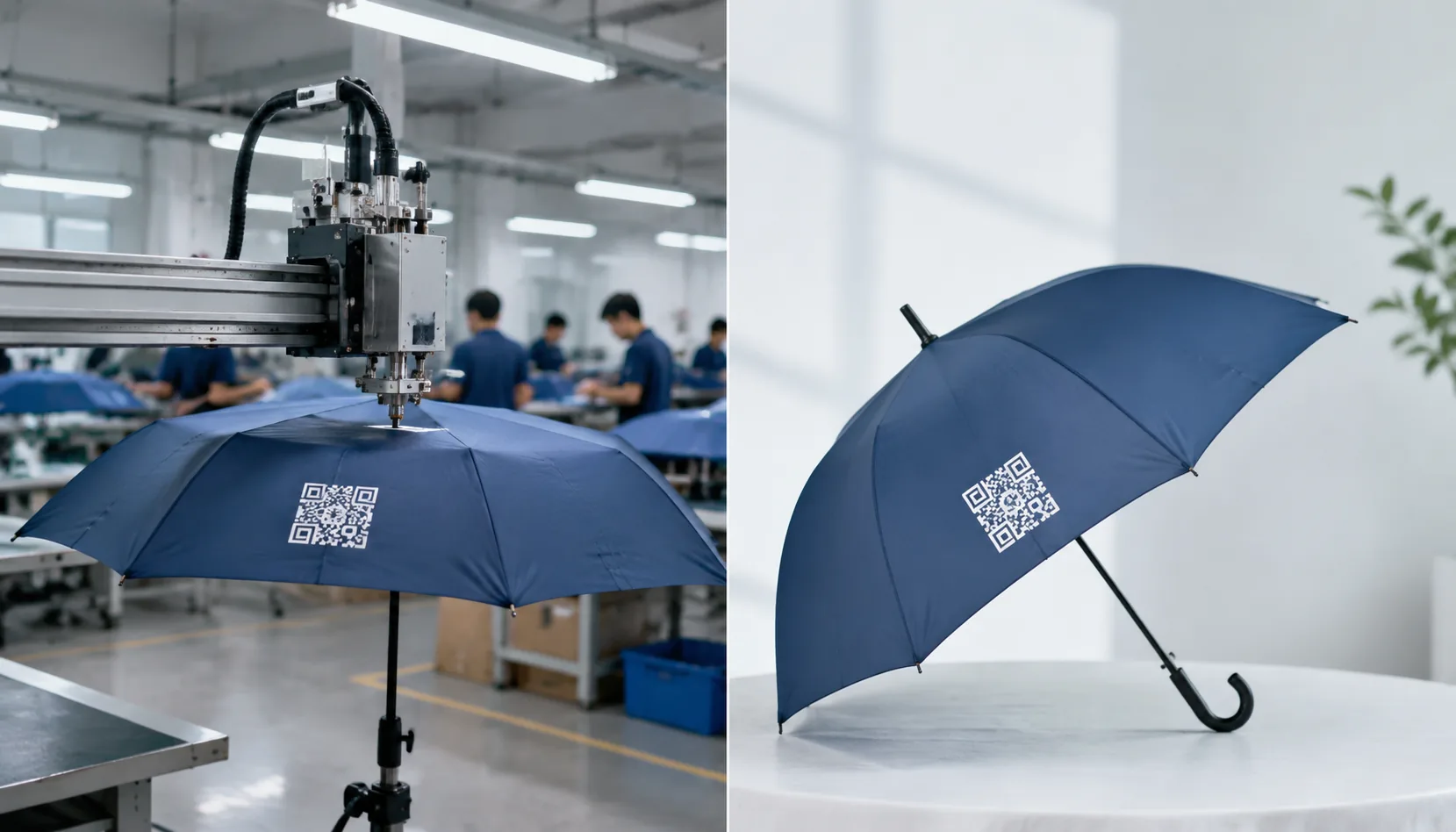
QR Code Printing on Umbrellas for Campaign Tracking
Use QR code umbrella printing with readable sizing, durable placement, and QC checks so event and retail campaigns can d...
Read More »QR Code Umbrella Printing: Specs for Reliable Scanning
Plan scannable QR codes on umbrella panels with size, contrast, placement, fabric, and QC rules that protect event and r...
Read More »
QR Code Printing on Branded Umbrellas for Event Campaigns
Design scannable QR code umbrellas with the right print size, contrast, fabric, and QC checks for event campaigns and pr...
Read More »