Reflective Logo Printing for Branded Safety Umbrellas
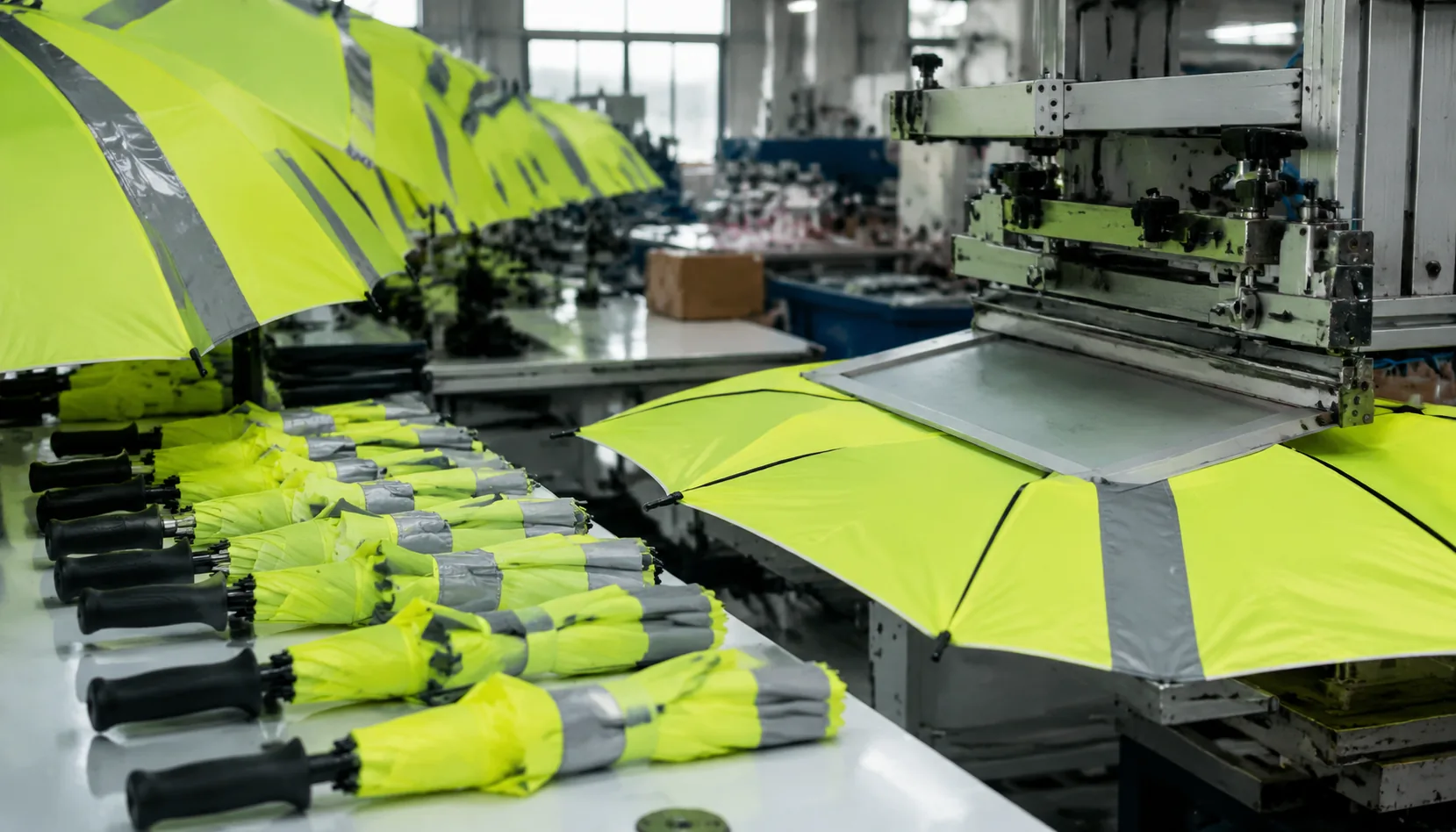
For safety umbrella buyers, the challenge is not just making a logo shine at night; it is keeping that reflective mark readable after rain, folding stress, carton compression, and repeated handling. On our Songxia production floor, reflective logo umbrella printing is specified around fabric coating, ink adhesion, panel placement, curing, and pull-test checks before bulk packing. Getting these details right early prevents dim reflection, cracked prints, and inconsistent brand visibility across a large order.
Best Use Cases for Reflective Umbrella Branding
Reflective logo umbrella printing makes the most sense where the umbrella is carried in low light and still has to look like a normal promotional item. Construction firms use it for supervisors, survey crews, and site visitors because a silver reflective print on a dark 23" or 27" stick umbrella catches headlights without turning the umbrella into a gimmick. Schools and campus security teams use the same idea for evening events, bus stops, and parent pickup lines, where a reflective panel or trim can be seen faster than a plain screen print. For these buyers, the value is not fashion; it is simple visibility. APOE, pongee, or polyester canopy still works as a weather tool, while the logo stays readable at day and night.
Insurance brands and transit campaigns usually want the umbrella to behave like a walking signboard, but safety comes first. That is where safety branded umbrellas with reflective edging or a reflective center logo work better than full-area bright ink, because they keep the umbrella usable in rain and wind while improving visibility from the side and rear. Delivery fleets also benefit, especially riders moving through traffic after dark. In our shop, reflective promotional umbrellas are usually paired with auto-open frames and fiberglass ribs, since the frame has to survive daily abuse and the branding has to stay intact after repeated folding. If the canopy is too stiff or the print cracks, the promotion is wasted.
For running events, charity walks, and commuter programs, the best setup is a compact 21" or 23" umbrella with reflective logo umbrella printing on one or two panels plus a small trim line around the vent or edge. That gives sponsors enough branding space for custom rain umbrella logos without covering the whole canopy in ink, which keeps the umbrella lighter and easier to carry. OEM safety umbrellas for these campaigns should be ordered with the final lighting condition in mind: a reflective logo works best when hit by car headlights, street lamps, or phone flash, so it complements transit use instead of replacing standard safety gear. The practical rule is simple: if people will be outdoors after sunset, reflective branding earns its place; if not, regular print is enough.
Reflective Print Methods and Material Limits
Reflective piping, binding tape, or sewn-on reflective tape is the most durable choice for edge accents because it is mechanically stitched instead of relying only on ink or adhesive. It suits safety branded umbrellas where visibility matters more than a perfect corporate mark: golf umbrellas with 27 inch or 30 inch panels, stick umbrellas for construction teams, and event umbrellas used near traffic. The trade-off is design precision. Piping can outline the canopy edge or vent line, but it cannot reproduce small logos; reflective tape can carry simple repeated marks, but every stitch hole and curve affects appearance. Large simple artwork performs better because umbrellas bend, fold, rub against ribs, and stay wet for hours. A 1-color reflective shield, 120 mm company name, or wide edge band survives real use better than a complicated 6-color badge. For reflective logo umbrella printing, the practical rule is simple: print the brand, sew the visibility.
Placement Choices for Visibility and Brand Control
The first decision in reflective logo umbrella printing is not ink color; it is where the logo can be seen at night without turning the umbrella into a billboard. For safety branded umbrellas, I usually recommend one or two canopy panel logos facing the main traffic direction, then a restrained reflective perimeter band near the edge for 360-degree movement visibility. On a 23" or 27" umbrella, an 8K frame gives eight larger triangular panels, so a 180–220 mm logo can sit cleanly on pongee 190T or 210T without crossing rib seams. That matters because reflective heat-transfer film and silver screen-print ink both lose sharpness when forced over stitched ridges. For corporate fleets, security teams, and road-event staff, this layout keeps custom rain umbrella logos readable from 10–20 meters while preserving enough plain fabric for brand control.
A 16K frame changes the strategy. Sixteen ribs create narrower panels, so I would not force a large rectangular logo into each wedge; it looks chopped up and raises registration risk during printing. The smarter layout is repeated smaller marks, such as 70–100 mm logos on alternating panels, paired with a slim reflective arc or segmented perimeter band. This gives reflective promotional umbrellas more frequent visibility points as the user walks or turns, which is useful for parking attendants, campus patrols, and outdoor event crews. On double-canopy vented windproof models, keep the reflective elements on the lower outer canopy rather than the vent overlap, because moving fabric layers can rub the print during wind loading. For OEM safety umbrellas, we also check whether fiberglass or steel ribs cast shadows under nighttime testing, especially on black, navy, and dark green canopies.
Do not ignore the small branding surfaces, because they control the product when the umbrella is closed. Strap branding works well for a short logo, safety slogan, or department name, but the artwork should stay within 12–18 mm height so the hook-and-loop stitching does not cut through the mark. Sleeve branding is better for retail sets, giveaways, and transport kits: a reflective logo on the sleeve can be seen in a truck cab, warehouse rack, or event check-in table before the umbrella is opened. Our standard practice at ZheBrella is to make a placement sheet showing open-canopy view, closed-strap view, and sleeve view before sampling, then inspect alignment under AQL 2.5 with daylight and low-light checks. For reflective logo umbrella printing, this prevents clutter and keeps the final product useful as both rain gear and safety equipment.
Frame and Mechanism Specs for Safety Programs
For safety branded umbrellas, the frame spec should be set before anyone talks about artwork size. I normally recommend fiberglass ribs with a steel shaft for most commuter and site-visitor programs: fiberglass gives better recovery in gusts, while the steel center shaft keeps unit cost under control and feels solid in hand. An 8K frame is enough for a 21" folding umbrella or 23" straight umbrella, but exposed parking lots, ports, utilities, and construction entrances should move to 10K or 16K if the budget allows. For canopy, 190T pongee is acceptable for promotional runs, while 210T pongee with Teflon water-repellent finishing holds shape better and dries faster. If the buyer wants reflective logo umbrella printing, the frame must keep the canopy under even tension so the reflective ink or heat-transfer film does not wrinkle across rib lines.
Auto-open is the practical choice for commuter safety programs because one-hand operation matters when staff are carrying bags, radios, samples, or access cards. Manual open is cheaper and fine for giveaways, but it gets used less in real rain. Auto-open-close on 21" or 23" folding models is convenient, though the spring force and runner clearance must be checked after decoration, especially if reflective transfer film is placed near the closing folds. For custom rain umbrella logos, I avoid putting thick reflective panels directly over seam intersections, rib tips, or the crown area. Those points already carry stress during opening and closing, and added film thickness can pull the canopy off balance or create a hard crease after carton compression.
Double-canopy windproof construction is worth specifying for exposed sites where umbrellas see side gusts, not just vertical rain. A vented 23" or 27" straight umbrella with fiberglass ribs can realistically be built to survive 50+ mph wind-tunnel testing when the rib joints, runner, and top notch are matched correctly; a cheap steel-rib frame will usually invert and stay bent. Reflective promotional umbrellas for road crews, campuses, logistics yards, and nighttime events should keep reflective decoration on clean canopy panels where airflow and fabric flex remain predictable. For OEM safety umbrellas, our standard practice at ZheBrella is to test opening, closing, shake, and canopy tension after printing, then inspect finished goods under AQL 2.5 before packing for FOB Ningbo or DDP delivery.
Testing, QC, and Order Planning
Reflective logo umbrella printing should be tested harder than standard custom rain umbrella logos because failure usually starts at the fold lines, not in the open canopy photo. I would specify a dry rub and wet rub test on the reflective ink or heat-transfer film, then open-close cycling for at least 20–30 rounds to see whether the logo cracks where the 190T or 210T pongee collapses around the ribs. For folding umbrellas, check every panel crease; for 23 inch and 27 inch straight umbrellas, inspect the crown area and rib-end tension points. A short rain exposure test is also useful: spray the printed canopy for 10–15 minutes, let it dry naturally, then check edge lifting, whitening, tackiness, and color migration onto neighboring panels.
Low-light brightness review is the step many buyers skip, and it is the whole point of safety branded umbrellas. Put one approved sample and one bulk sample under the same weak light source, such as a flashlight or vehicle headlamp from 10–20 meters, and compare reflectivity by eye plus photo record. Reflective promotional umbrellas do not need to shine like road signs, but the logo should pop clearly against black, navy, gray, or fluorescent canopy colors. For bulk inspection, use AQL 2.5 for major defects and define critical defects separately: peeling reflective film, unreadable logo, wrong logo position, broken auto-open mechanism, bent steel ribs, cracked fiberglass ribs, and canopy leakage at seams.
Order planning should lock the artwork, print method, canopy material, frame spec, and packaging before the pre-production sample is approved. For OEM safety umbrellas, typical MOQ is often 500–1,000 pieces per design for stock frames and higher for custom handles, special POE/PVC/EVA panels, or molded accessories. Our standard practice at ZheBrella is to approve one pre-production sample with the buyer’s logo size, reflectivity, panel placement, hangtag, carton mark, and barcode before cutting bulk fabric. Bulk production usually takes 30–45 days after sample approval and deposit, depending on print workload and frame availability. FOB Ningbo or Shanghai works for buyers with their own forwarder; DDP is better when distributors need landed cost for events, retail rollouts, or municipal safety campaigns.
Frequently Asked Questions
Does reflective logo printing replace certified safety gear?
No. Reflective umbrellas can improve visibility for branding and general safety awareness, but they are not a substitute for certified PPE unless tested and labeled to the required standard.
Can reflective printing be combined with a full-color brand logo?
Yes, many orders use a standard color logo on one panel and reflective trim or a reflective secondary mark on another. Sampling is recommended because reflective materials can shift the perceived brand color.
What print method works best for reflective logos on safety umbrellas?
For most OEM orders, reflective heat-transfer film or reflective screen-print ink works best because both hold visibility well on polyester canopies. Transfer film is usually preferred for finer logo detail, while screen print is better for simpler 1-color marks in larger bulk runs.
Where should a reflective logo be placed for the best visibility?
The most common placement is on one or two panels facing traffic or pedestrians, usually around the upper-mid canopy area so the logo is visible when the umbrella is open. For walking umbrellas, many buyers also request a second mark on the sleeve or strap for extra branding.
What durability tests should bulk buyers request before approving production?
Ask for abrasion, water-spray, and colorfastness checks, plus open-close cycle testing on the printed area. For a bulk order, many importers also approve one pre-production sample and one inline inspection lot before mass release.
Looking to Launch Your Custom Umbrella Line?
ZheBrella is a Zhejiang-based OEM/ODM umbrella manufacturer with 17 years of export experience. Free design, low MOQ from 100 pieces, windproof construction, full-color print.
Get Free Quote Now »People Also Search For
Related Articles
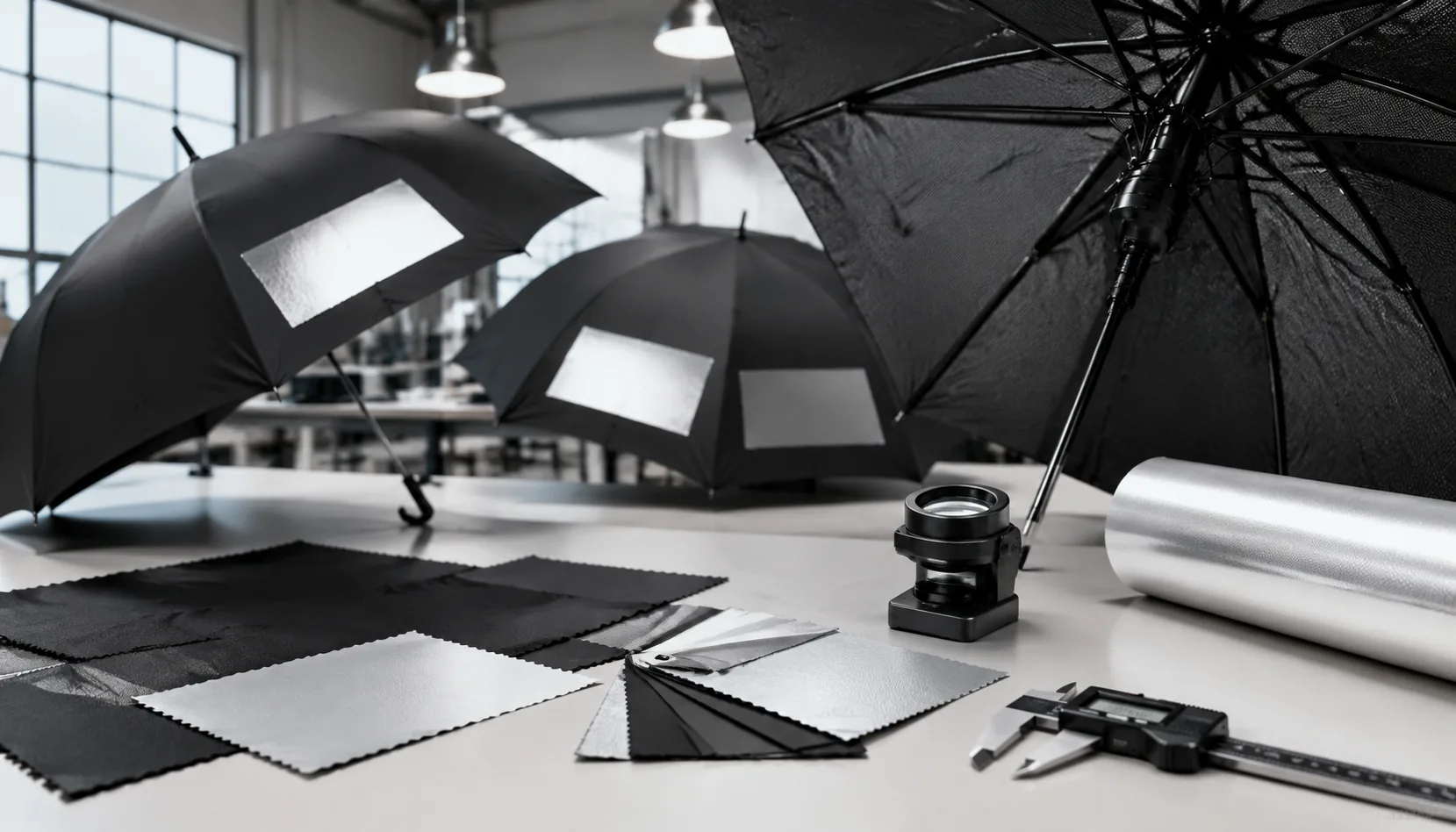
Reflective Umbrella Logos for Safety Brand Campaigns
Specify reflective logo films, panel locations, and AQL checks for promotional umbrellas used in night events, campuses,...
Read More »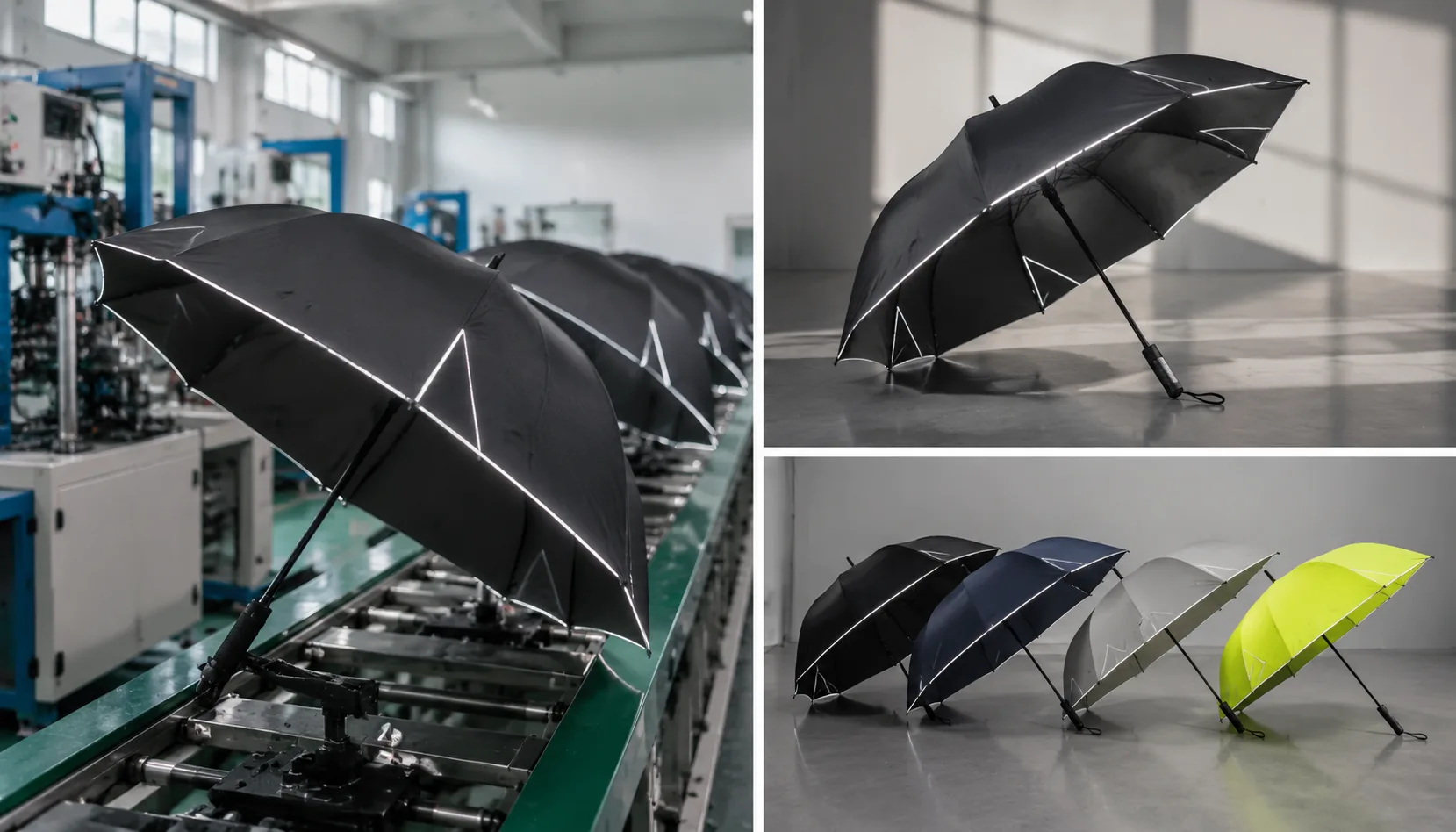
Reflective Umbrella Printing for Safety-Focused Branding
Plan reflective branded umbrellas with print placement, tape options, 190T pongee choices, AQL checks, MOQs, and lead ti...
Read More »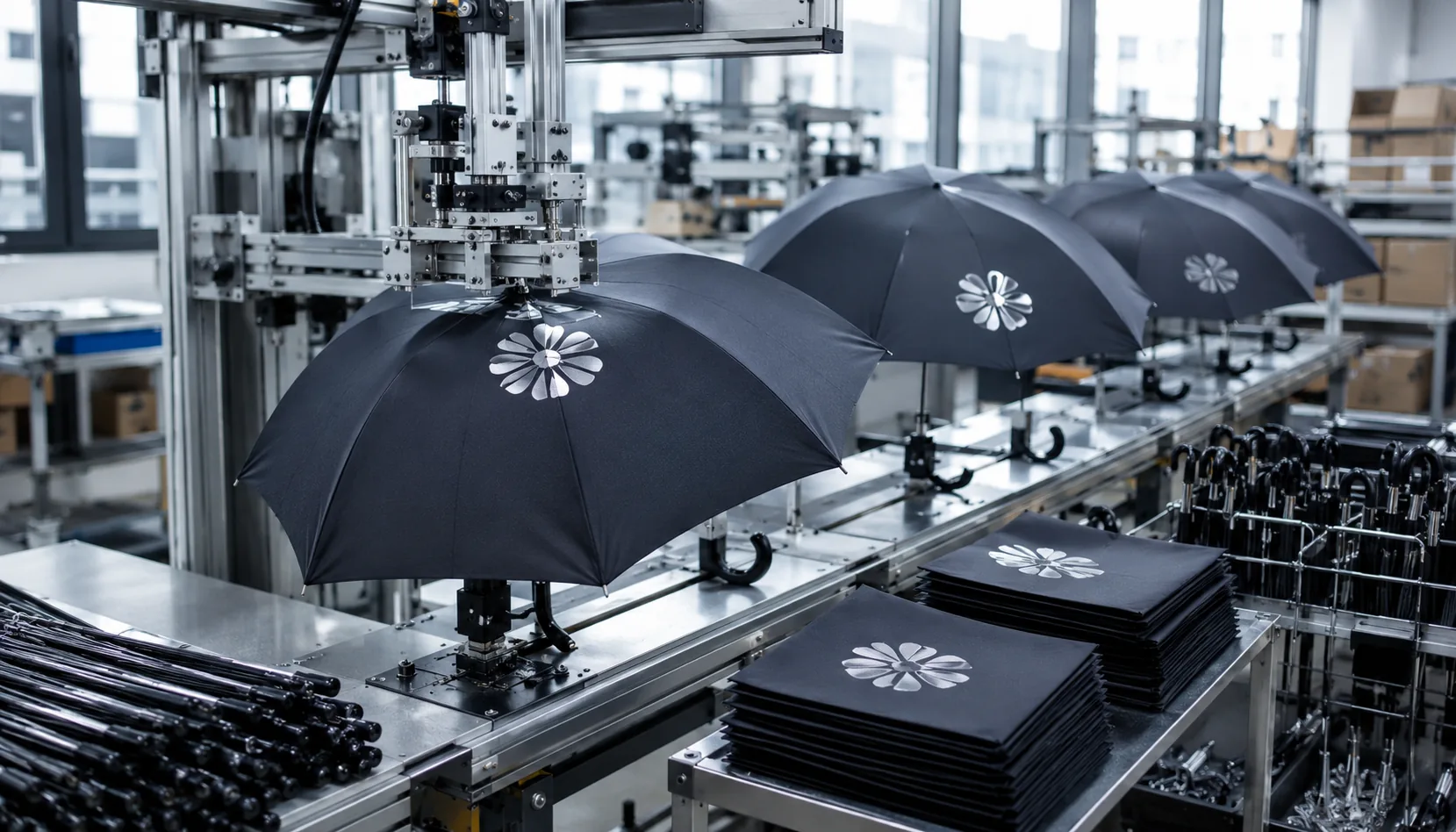
Reflective Logo Printing for Branded Rain Umbrella Programs
Plan reflective logo umbrellas with the right ink, trim, fabric, and QA checks so safety-focused promotions stay visible...
Read More »