Reflective Umbrellas for Safety Campaigns and Commuter Brands
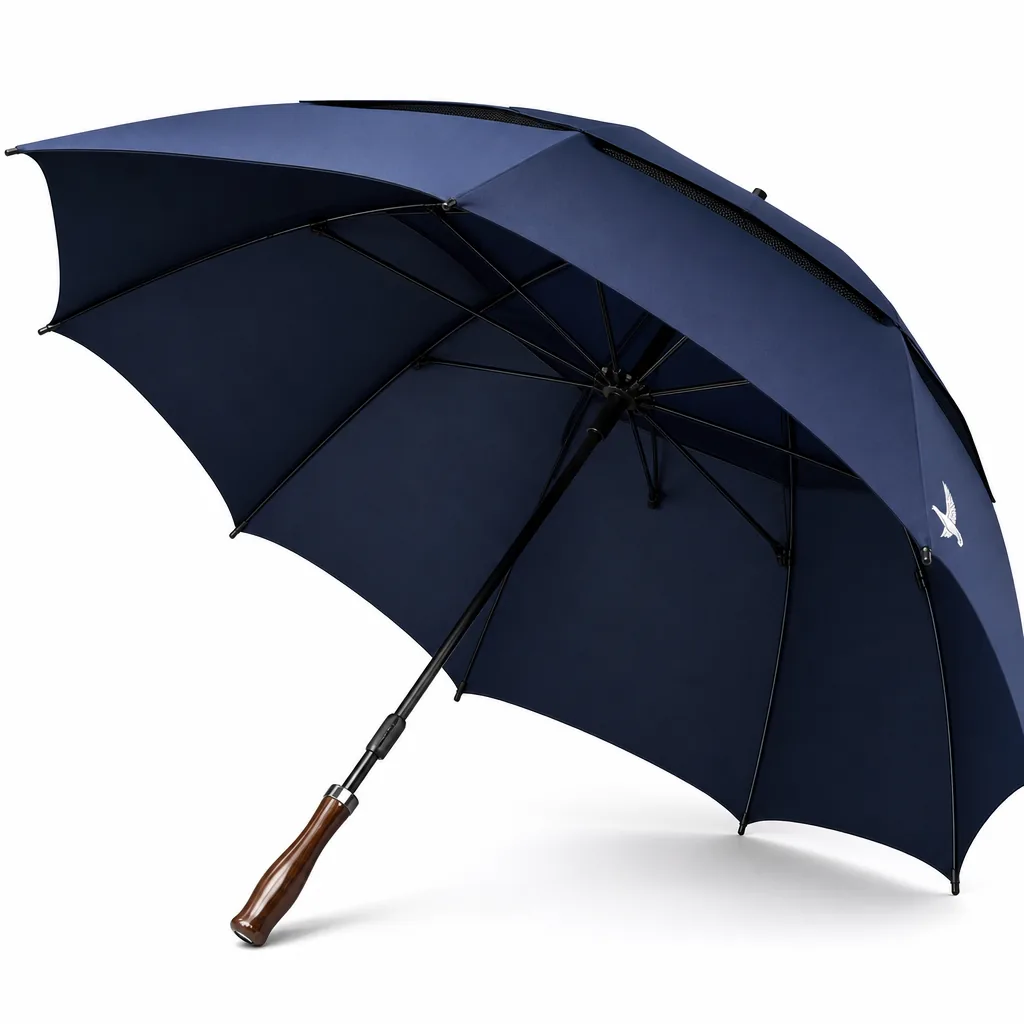
For safety campaigns and commuter retail lines, a reflective umbrella has to do more than catch headlights—it must keep the tape bonded after rain, fold cleanly without cracking the print, and survive gusts on the way to the subway. As a reflective umbrella manufacturer working on the factory floor in Songxia, we see the common failure points early: mismatched canopy coatings, low-grade reflective strips, weak ribs, and print methods that look good in sampling but fail in bulk production.
Define the Safety Use Case First
The first mistake buyers make is asking for “a reflective umbrella” before defining where it will be used. A roadside safety event for police, road crews, or utility contractors needs high visibility from vehicle headlights, so I would prioritize a 23" or 27" umbrella with reflective tape on at least 4 panels, preferably around the canopy edge where motion is easiest to catch. School walking programs are different: children need lighter frames, safer tips, and controlled opening force, so an 8K fiberglass frame with manual open and rounded plastic tips is more practical than a heavy steel shaft golf umbrella. Transit giveaways sit in the middle. They must pack easily, survive daily subway or bus use, and still carry a campaign message, which usually points to a 21" or 23" folding model with reflective print umbrellas rather than stitched reflective bands.
Durability requirements also change by use case. For commuter retail, a buyer should not accept the same specification used for low-cost safety promotional umbrellas handed out at a one-day event. Daily commuters open and close the umbrella hundreds of times in wind, stairwells, and crowded stations, so I prefer fiberglass ribs, reinforced rib joints, 190T or 210T pongee, and an auto-open-close mechanism tested to at least 500 cycles. For a roadside campaign, wind resistance may matter more than compact size; a double-canopy vented design with 8K or 10K fiberglass ribs can survive 50+ mph wind-tunnel testing if the runner, tips, and rib thickness are specified correctly. As a reflective umbrella manufacturer, we also check whether the reflective area remains visible after wet folding, because cheap reflective film can crack where the canopy creases.
Budget should be tied to risk, not just quantity. A school district ordering 5,000 custom safety umbrellas may need bright colors, child-safe components, and AQL 2.5 inspection more than premium handles or gift packaging. A commuter umbrella supplier serving retail chains may need barcodes, hang tags, color consistency across black/navy/gray canopies, and stricter carton drop testing for DDP delivery. For transit authorities, the sweet spot is often a 21" 3-fold auto-open model with reflective piping, 190T pongee, a rubberized handle, and one-color logo printing; it balances cost, portability, and nighttime visibility. For roadside or construction-related programs, I would move up to a 27" stick umbrella or 30" golf umbrella, even if the FOB price is higher, because larger reflective surface area matters more than saving a few cents per unit.
Choose Reflective Tape or Reflective Printing
Choose the reflective method by where the umbrella will be seen first: from a car headlight at the canopy edge, from the side profile at a crosswalk, or in the user’s hand on a dark platform. Stitched reflective piping around the canopy perimeter gives the cleanest 360-degree outline and is my first choice for safety promotional umbrellas used by school programs, road crews, and transit campaigns. On 23" and 27" umbrellas, we usually run the piping along all panel edges or the outer hem, depending on budget and fabric tension. It adds a small sewing step but does not interfere with opening force on manual or auto-open frames. For stronger side visibility, reflective panel tape can be stitched along every other seam, typically on 8K or 10K canopies, creating vertical light lines that drivers notice earlier than a logo printed only on one panel.
Reflective ink logos are better when branding matters more than maximum outline visibility. A reflective umbrella manufacturer should test the ink system against the canopy fabric: 190T pongee accepts reflective screen printing well, while coated polyester or Teflon-finished fabric may need surface treatment or a different adhesive binder. Reflective print umbrellas can carry a safety message, transit logo, or corporate mark on one to four panels without changing the umbrella’s silhouette or fold behavior. The tradeoff is angle: glass-bead reflective ink flashes well under direct headlights but is less visible from shallow side angles than stitched tape. It is also less flexible in large solid blocks, so I avoid oversized reflective logos near fold lines on compact auto-open-close models because repeated creasing can cause micro-cracking after cycle testing.
Durability depends more on construction than the sales sheet. Stitched piping and seam tape survive normal rain use and repeated drying better than most reflective inks, but the needle holes, thread choice, and seam allowance must be controlled; loose tape edges catch during folding and look bad after 500 open-close cycles. Sleeves are often overlooked: adding a reflective band around the sleeve is cheap, visible when the umbrella is carried, and useful for commuter umbrella supplier programs where the umbrella spends half its life folded. Our standard practice at ZheBrella is to approve reflective placement with a dark-room headlight check, then run rub, fold, and water-spray tests before bulk production. For custom safety umbrellas, I usually recommend perimeter piping plus a modest reflective logo, not a full reflective print panel, because it balances visibility, flexibility, and wash durability.
Match the Frame to Outdoor Conditions
The frame choice matters more than the reflective logo when the umbrella is used on dark, windy streets. Steel ribs are cheaper and give a solid hand feel, but they bend permanently after repeated side gusts, especially on 21" and 23" folding models with thin middle shafts. Fiberglass ribs cost more, yet they flex back instead of kinking, which is why I specify fiberglass for safety promotional umbrellas used by crossing guards, transit staff, campus security, and night-shift workers. For most custom safety umbrellas, an 8K fiberglass frame is the practical baseline: 8 ribs, good canopy tension, manageable weight, and stable printing alignment on 190T or 210T pongee. A 16K structure looks premium and spreads stress better across the canopy, but it adds weight and cost; it makes sense for retail commuter programs or corporate gifts where durability and appearance justify the upgrade.
Auto-open mechanisms should be matched to the user, not chosen because they sound more premium. A 23" straight umbrella with manual or auto-open operation is usually more reliable than a compact folding frame when people are opening it dozens of times per week at bus stops, parking lots, and job sites. Straight frames have fewer joints, a stronger center shaft, and better rib geometry, so they tolerate wind better and keep reflective tape or reflective print umbrellas facing outward instead of twisting. Compact auto-open-close umbrellas are convenient for office commuters and drivers, but the extra springs, sliders, and folding ribs create more failure points if the buyer pushes for the lowest FOB price. As a reflective umbrella manufacturer, I would rather reduce handle decoration than downgrade the runner, spring, or rib material on a safety campaign order.
For exposed outdoor routes, double-canopy windproof construction is worth the added sewing time. The vent lets pressure escape between the upper and lower canopy layers, so the umbrella resists inversion instead of turning inside out at the first crosswind. On a 23" straight umbrella with fiberglass 8K or 10K ribs, a properly cut double canopy can survive 50+ mph wind-tunnel testing if the shaft, runner, and tips are not underspecified. A 16K double-canopy build gives a stronger dome and more premium look, but it is not always the best choice for mass distribution because freight weight rises quickly. A commuter umbrella supplier should recommend 23" straight frames for public safety teams, transit programs, and outdoor staff, while compact folding umbrellas fit retail commuter kits where bag storage matters more than maximum wind resistance.
Specify Fabric, Color, and Coating
Fabric choice controls both the hand feel and the print result, so I usually start reflective programs with 190T or 210T pongee instead of cheap polyester. 190T pongee is cost-effective for safety promotional umbrellas where the target is a broad giveaway campaign, while 210T pongee has a tighter weave, smoother surface, and better recovery after wet folding. For a 23" auto-open stick umbrella or a 21" auto-open-close folding model, 210T also helps reflective print umbrellas keep cleaner logo edges because the fabric shifts less during panel sewing and heat-transfer positioning. As a reflective umbrella manufacturer, we normally check fabric weight, yarn consistency, and color fastness before cutting, because poor dye lots show up immediately under reflective tape or silver ink.
Canopy color is not only a branding decision; it affects nighttime visibility. Black, navy, charcoal, and deep green can give the strongest contrast with reflective strips because the dark field makes the retroreflective material read brighter under headlights. Fluorescent yellow, orange, and lime are better for daytime hazard recognition, especially for road crews, school programs, and transit campaigns, but they need careful matching because fluorescent dye can look different on 190T versus 210T pongee. For custom safety umbrellas, I often recommend a dark outer canopy with reflective edge piping or panel graphics for commuters, and fluorescent panels with black logo blocking for construction or public safety use.
A water-repellent coating is standard, but buyers should specify the performance level instead of just saying “waterproof.” Most commuter umbrella supplier projects use a basic WR coating that beads rain well for daily use; higher-end models can add Teflon treatment for better oil and dirt resistance, especially on black canopies that show stains. Optional UPF 50+ treatment is worth adding for retail commuter brands, outdoor events, and municipal safety campaigns where the umbrella must work in both rain and sun. The coating stack must be tested before mass production, because heavy UV treatment or silver backing can change fabric stiffness, affect folding on 3-section frames, and slightly reduce the softness buyers expect from 210T pongee.
Inspect Reflective Umbrellas Before Shipment
Inspection for reflective umbrellas should start with the parts that make the product a safety item, not with the carton label. Reflective tape adhesion must be checked after opening and closing cycles because weak heat-pressing often looks fine on a flat table but lifts near rib tips and panel seams after tension. For reflective print umbrellas, we test tape edges by light fingernail pull, 3M tape peel, and rubbing with a damp white cloth to catch poor curing or ink migration. Seam strength is equally important: the canopy should not split at the crown, tips, or vent overlap when pulled by hand with moderate force. On 190T or 210T pongee, loose stitching around reflective bands is a common failure point because the tape stiffens the fabric and changes needle feeding during sewing.
Logo alignment should be measured panel by panel, especially when a safety campaign requires reflective graphics to face traffic or sit opposite a printed sponsor logo. A serious reflective umbrella manufacturer will not approve a batch only because the artwork is centered on one sample; inspectors should check multiple pieces across cartons and confirm the print angle after the canopy is fully opened. Opening force, runner lock, and shaft stability also need practical testing. Manual umbrellas should open smoothly without thumb strain, auto-open models should deploy cleanly without hesitation, and auto-open-close commuter umbrellas should not rebound halfway. Runner locks must hold under light shaking, since commuters often open umbrellas one-handed while carrying bags or stepping off buses.
For safety promotional umbrellas and custom safety umbrellas, I recommend AQL 2.5 final inspection with added low-light visibility review, not just standard appearance checks under warehouse lamps. Random samples should be viewed from 20 to 30 meters with a flashlight or vehicle headlamp angle to confirm the reflective area is bright, continuous, and not blocked by folds. Canopy leakage must be tested by water spray for at least 2 to 3 minutes, with attention to seams, top notch, and stitched reflective tape lines. As a commuter umbrella supplier, ZheBrella’s standard practice is to include functional opening tests, leakage checks, carton drop review, barcode verification, and reflective visibility photos in the shipment report before FOB or DDP release. Safety orders fail in the field when inspection treats them like ordinary rain umbrellas.
Frequently Asked Questions
Is reflective tape better than reflective ink on umbrellas?
Reflective tape usually gives stronger edge visibility and cleaner inspection results. Reflective ink is useful for logos or graphics but should be tested for cracking on folded areas.
What umbrella type works best for commuter safety programs?
A 23 inch auto-open straight umbrella with fiberglass ribs and reflective edging is a strong balance of coverage, durability, and perceived value. Compact models are easier to carry but provide less visible surface area.
What reflective option holds up better in daily commuter use: printed ink or sewn reflective tape?
Sewn reflective tape usually lasts longer in repeated open-close cycles and abrasion, especially on commuter umbrellas used 2-4 times per day. Reflective ink can work for large logo areas, but buyers often choose tape on panel edges plus a standard logo print for better durability and visibility.
Which umbrella construction is most practical for city transit campaigns: folding or stick umbrellas?
For giveaway campaigns, 21-23 inch 3-fold umbrellas are easier to distribute and carry on buses and trains, while 23-27 inch stick umbrellas offer larger reflective exposure for visibility messaging. Many B2B buyers pick folding models for commuter programs and stick models for public safety events.
Are there MOQ or production impacts when adding reflective trim to a custom umbrella order?
Yes, reflective trim typically adds a trim setup step and may increase lead time by about 3-7 days depending on tape width and sewing position. A common OEM MOQ is 500-1,000 pieces per design, but exact minimums depend on frame, canopy fabric, and whether the reflective material is stocked or custom sourced.
Looking to Launch Your Custom Umbrella Line?
ZheBrella is a Zhejiang-based OEM/ODM umbrella manufacturer with 17 years of export experience. Free design, low MOQ from 100 pieces, windproof construction, full-color print.
Get Free Quote Now »People Also Search For
Related Articles
Custom Reflective Umbrellas for Safety and Commuter Brands
Specify reflective piping, panel prints, 190T/210T pongee, and windproof frames for branded safety umbrellas built for c...
Read More »Reflective Umbrellas for Commuter Safety: Buyer Spec Guide
Learn how to specify reflective umbrellas with safe trim placement, 190T/210T canopies, windproof frames, print areas, a...
Read More »
Reflective Safety Umbrellas for Commuter and Worksite Use
Specify reflective umbrellas for commuters, campuses, and worksites with trim placement, fabric choices, windproof frame...
Read More »