Custom Reflective Umbrellas for Safety and Commuter Brands
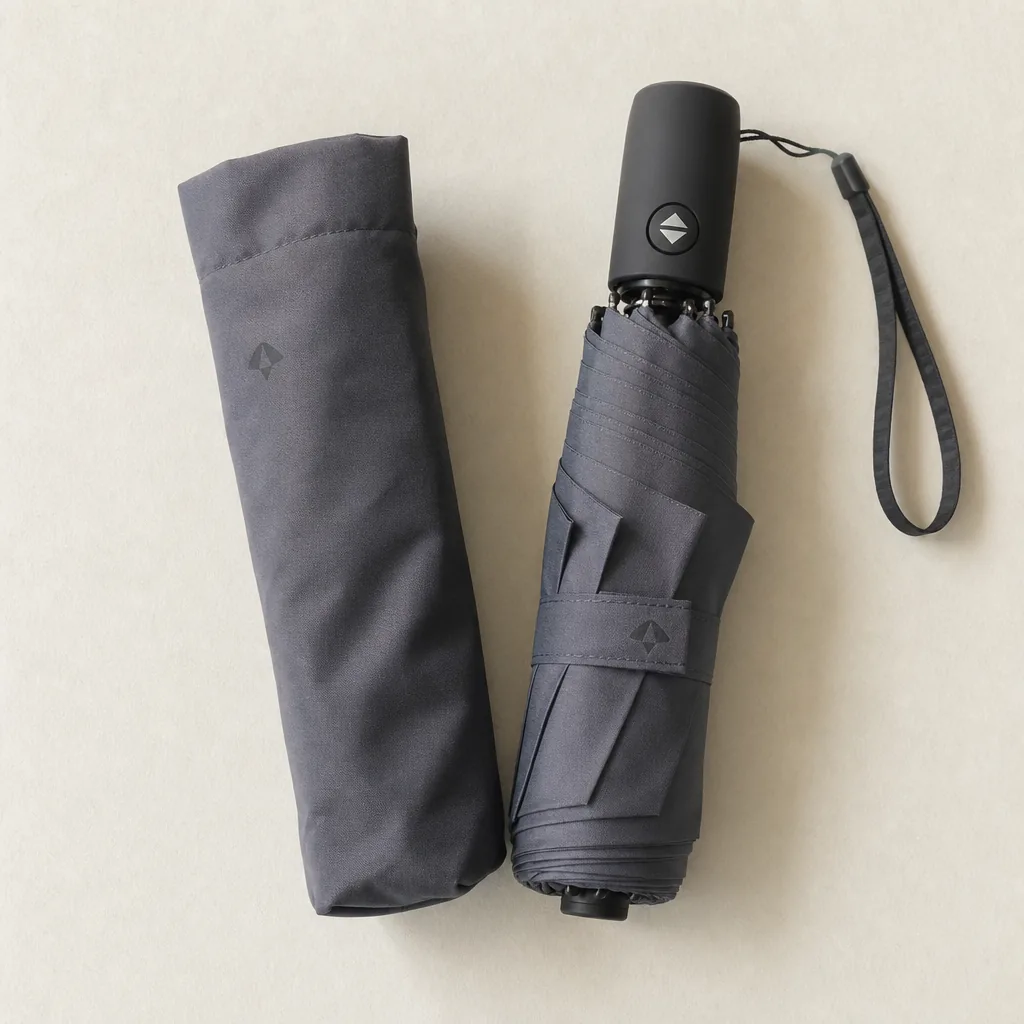
For commuter and safety brands, visibility is only useful if the umbrella still opens smoothly, sheds rain, and survives gusts after months in the field. On our factory floor in Songxia, we build custom reflective umbrellas by matching reflective piping and panel prints with 190T or 210T pongee, reinforced stitching, and windproof frames so the branding stays clear and the safety function holds up in real weather.
Where Reflective Umbrellas Fit in B2B Programs
Reflective umbrellas make the most sense where the buyer is not just handing out a logo item, but trying to reduce risk during dark, rainy movement. For commuter retail, that means 21" and 23" folding umbrellas with reflective tape around the canopy edge, auto-open-close shafts, and 190T or 210T pongee that still looks retail-clean on a shelf. For corporate safety gifts, I would push a stronger 23" or 27" model with fiberglass ribs instead of thin steel, because the umbrella will be used by employees walking between parking lots, bus stops, warehouses, and offices. Construction crews need larger stick umbrellas, usually 27" or 30", with high visibility umbrellas in fluorescent yellow, orange, or lime, plus reflective piping visible from multiple angles. A reflective umbrella manufacturer should treat these as safety-adjacent products, not fashion umbrellas with a silver stripe added at the end.
Schools, insurers, transit agencies, and road safety campaigns buy custom reflective umbrellas because the message is visible exactly when the risk is highest: rain, low light, and crowded traffic. School programs often choose child-safe manual open models with rounded tips, POE clear panels, and reflective borders so drivers can see students near crossings. Insurance companies and transport operators usually prefer commuter umbrella branding on compact auto-open models, because the product stays in daily circulation instead of being thrown into a drawer like a flyer. For these programs, the print position matters as much as the canopy color. A logo printed opposite the reflective band may look good in a mockup, but it disappears at night; we normally recommend contrast printing, reflective edge continuity, and a light-colored panel if the brand allows it.
The higher unit cost is justified when the umbrella is specified as a durable visibility tool rather than a cheap giveaway. Reflective tape, reflective printing ink, or segmented reflective piping adds material and labor cost, especially if it must survive folding abrasion, rain exposure, and AQL 2.5 inspection without peeling. A standard promotional umbrella might use 8K steel ribs and basic polyester; a safety umbrella OEM program should consider fiberglass ribs, 10K or 16K frames for stronger stability, water-repellent coating, and wind-tunnel testing around 40 to 50+ mph depending on the frame. On a 5,000-piece order, the added cost per unit is usually easier to defend than a failed campaign where the umbrella inverts on the first storm. Well-built custom reflective umbrellas also support a longer service life, which lowers cost per impression for retail, municipal, and employer safety programs.
Reflective Options: Piping, Panels, Logos, and Tape
Reflective edge piping is the most durable low-cost option for custom reflective umbrellas because it lives on the perimeter and takes abuse better than a big printed field. On a 23" or 27" umbrella, a 3M-style silver piping or heat-bonded tape along the canopy hem gives strong return at car-headlight angles without changing the whole design. A reflective umbrella manufacturer will usually recommend piping for commuter umbrella branding when the artwork must stay clean and the umbrella still needs to fold tightly. Heat-transfer reflective logos work well on flat panels, but they need a smooth, tightly woven pongee 190T or 210T surface and enough blank area to avoid seam intersections. Put logos on the mid-panel, not across the vent edge, and keep them away from the center shaft pocket and tip reinforcement. If the design crosses a seam, expect a shorter life because repeated folding creates stress at the bonded edge.
Segmented reflective strips and full-panel safety prints are better when the brief calls for high visibility umbrellas instead of just decorative reflectivity. Segmented strips can run vertically on alternate panels or diagonally across a single face, but they should stop short of the canopy tips, seam allowances, and rib fold lines; otherwise the film cracks after repeated opening and closing, especially on auto-open-close frames. Full-panel reflective or high-contrast prints create the strongest visual impact at night, but they add cost, weight, and more rejection risk during AQL 2.5 inspection because any wrinkle, misregistration, or heat damage shows immediately. As a safety umbrella OEM, the practical rule is simple: use large reflective fields only on the flattest canopy zones, keep at least 8 to 12 mm away from stitching, and avoid placing tape over the top of a vented double canopy where flex is constant. That is the difference between a product that looks good in photos and one that survives daily commuting.
Frame and Fabric Specs That Support Daily Use
For commuter-grade custom reflective umbrellas, I would start with 190T or 210T pongee, not cheap polyester. Those fabrics hold a tighter weave, print cleaner, and shed water faster when paired with a proper water-repellent coating. On a production floor, the difference shows up in drying time and how often the canopy creeps after repeated wet/dry cycles. For high visibility umbrellas, the reflective print or tape has to sit on a stable substrate; if the base cloth is too loose, the graphic distorts after a few open-close cycles. ZheBrella typically specifies pongee for this reason, especially when buyers want commuter umbrella branding that still looks sharp after a season of daily use. For most urban programs, 21" and 23" canopies in 190T are the practical sweet spot; 210T is worth the upcharge when the client wants a denser hand feel and a cleaner premium finish.
Fiberglass ribs are the right call for wind resistance because they flex instead of folding permanently, which matters more than people think when an umbrella gets shoved through subway entrances and curbside gusts. For a safety umbrella OEM program, I would avoid full steel structures unless the buyer is chasing the lowest unit price; steel is stiffer, but it transmits shock and is more likely to stay bent after a bad wind hit. An 8K frame is fine for compact commuter models, while 10K gives a better balance of canopy tension and daily durability without making the umbrella feel bulky. That rib count also helps keep reflective panels aligned so the branding stays visible from a distance. In my experience, 8K and 10K are the most efficient structures for custom reflective umbrellas sold into transit, campus, and delivery-use channels.
For premium safety programs, a double-canopy vented windproof build is worth recommending because it releases pressure instead of letting the canopy invert in a gust. The vent gap is not decoration; it is the reason these umbrellas survive rougher conditions and still close cleanly after repeated use. If the buyer wants one-hand convenience, auto-open is the minimum useful mechanism, and auto-open-close makes sense for commuters carrying bags or phones, though it adds cost and a few more wear points in the button assembly. I would position that upgrade only when the account is ordering for retail or corporate field teams, where perceived quality matters as much as survival in rain. As a reflective umbrella manufacturer, the real job is matching frame strength, canopy weight, and opening mechanism to the actual commute profile, not overspecifying parts that never get used.
Testing, Inspection, and Compliance Points
Reflective decoration should be tested like a functional component, not treated as normal logo printing. For custom reflective umbrellas, the weak point is usually adhesion at panel seams and fold lines, especially when reflective heat-transfer film is applied over 190T or 210T pongee with water-repellent or Teflon coating. A proper factory test includes cross-hatch adhesion, 3M tape pull, wet rub, dry rub, and repeated folding after 24 hours of curing. We also check whether the reflective strip cracks after the canopy is opened and closed 200 to 500 times, because a clean sample on a flat table can fail quickly once the umbrella is packed into a sleeve. If the buyer specifies EN 17353, ANSI-style visibility targets, or a minimum retroreflective value, the reflective material must be sourced with a test report and the finished umbrella should be checked after printing, not only before assembly.
Auto-open and auto-open-close mechanisms need cycle testing before shipment because commuter buyers will blame the brand, not the spring supplier, when a shaft jams at the subway entrance. For compact high visibility umbrellas, our standard practice is to test opening speed, lock engagement, runner smoothness, and closing force across random units from bulk production. A basic manual umbrella may pass with simple functional checks, but an auto-open-close model should run at least 300 to 500 open-close cycles during pre-shipment testing, with special attention to the button, spring, middle shaft, and plastic runner. Fiberglass ribs generally recover better than steel ribs in wind, but misaligned rib tips or loose stretchers can still twist the canopy and throw off reflective print position. For commuter umbrella branding, the frame must support both repeated use and clean visual presentation under street lighting.
Final inspection should follow AQL 2.5 for major defects, with separate checkpoints for stitching, rib alignment, reflective transfer placement, canopy stains, pinholes, print registration, handle scratches, sleeve fit, carton labeling, and barcode accuracy. A reflective umbrella manufacturer should measure logo and reflective strip position against an approved production sample, not against a sales rendering, because panel curvature changes the apparent alignment once the umbrella is opened. For safety umbrella OEM orders, I recommend adding buyer-specific inspection lines for reflective width, continuity around the canopy, color contrast, and visibility from front, back, and side angles. If the product is marketed as safety equipment rather than a promotional giveaway, the purchase order should state the required reflective performance, test method, and acceptable tolerance. Without that language, the factory can only inspect workmanship, not guarantee safety claims for custom reflective umbrellas.
MOQ, Lead Time, and Cost Drivers
MOQ is driven less by the umbrella shape than by how the reflective effect is built. A simple silver reflective tape on a standard 23" automatic umbrella can start at a lower MOQ, while full-panel reflective printing, segmented reflective piping, or custom-woven high visibility umbrellas usually push the order higher because the materials need separate cutting and heat-press setup. Frame type matters too: a basic steel 8K frame is cheaper to source than a fiberglass 10K or 16K windproof frame, and mixed-frame orders are annoying on the line because every BOM changes. For custom reflective umbrellas, a factory will usually require a physical sample first, especially if you want a specific Pantone canopy color, a matte black shaft, or commuter umbrella branding that must align with reflective placement. Our standard practice is one pre-production sample per construction, then bulk after approval; sample lead time is typically 7-10 days, and bulk production runs 30-45 days depending on material stock.
Cost drivers are predictable if you know where the money goes. Reflective fabric, silver transfer film, or glass-bead coating adds real unit cost, but so does canopy color. A stock black, navy, or silver-gray pongee 190T canopy is easy; a dyed custom color in 190T or 210T pongee often requires MOQ by dye lot, and that can be the difference between 500 and 3,000 pieces. If the order also needs UV coating, Teflon water repellency, or a double-canopy vented windproof build, the cost climbs again because of extra sewing steps and more rejected panels during inspection. A safety umbrella OEM also has to price in defect control: reflective alignment, color consistency, and AQL 2.5 sorting on every lot. Buyers often underestimate labor on these jobs because one misregistered reflective strip ruins the whole visual effect. That is why custom reflective umbrellas are rarely a commodity order; they are a controlled-production item with more setup than a plain promo umbrella.
FOB and DDP planning should be chosen by who owns the deadline risk. FOB works better if the buyer already has a freight forwarder, knows the carton count, and can absorb ocean or air transit variance; DDP is safer for corporate deliveries, retail launches, or event programs where the goods must arrive on a fixed date with duty and last-mile handling prepaid. Carton size and weight matter more than most people think: a 23" auto-open umbrella packed 24 pcs per carton may weigh around 14-16 kg gross, while a 27" golf style with fiberglass ribs can exceed 18 kg and trigger higher freight cost. If you are shipping high visibility umbrellas to a conference or commuter campaign, build time backward from the event date, then add 5-7 days for packing and inland export handling, plus sea transit if you are not using air. A reflective umbrella manufacturer should give you carton measurements, gross/net weight, and pallet count before you confirm, because a cheap unit price means nothing if the cubic meter cost blows up the budget.
Frequently Asked Questions
Can reflective printing be added to both folding and straight umbrellas?
Yes, but placement differs. Folding umbrellas need smaller reflective zones that do not crease heavily, while straight umbrellas can support longer reflective piping or wider panel accents.
Do reflective umbrellas require special inspection beyond normal AQL?
AQL 2.5 can cover general defects, but buyers should add checks for reflective tape adhesion, logo position, and cracking after repeated folding. A pre-production sample should be approved before bulk production.
What reflective options are most practical for commuter and crew umbrellas?
The most common B2B choices are reflective piping along the panel seams, 1-2 reflective edge bands, or selected reflective print areas on alternating panels. Piping is usually the most durable for daily use, while reflective prints give more branding space but should be tested for fold abrasion.
Does reflective detailing limit logo printing or color selection?
Yes, reflective areas need reserved placement, so buyers usually keep logos on non-reflective panels or combine standard silk screen with separate reflective trims. Dark canopy colors such as black, navy, and fluorescent yellow are commonly selected because they improve contrast and nighttime visibility.
What specs should buyers confirm for a windproof reflective umbrella program?
For commuter use, buyers typically confirm 190T or 210T pongee, a fiberglass or fiberglass-metal frame, automatic open, and a 23-27 inch canopy size. MOQ often starts around 500-1000 pieces per color, with production lead times of about 35-50 days depending on reflective materials and print approvals.
Looking to Launch Your Custom Umbrella Line?
ZheBrella is a Zhejiang-based OEM/ODM umbrella manufacturer with 17 years of export experience. Free design, low MOQ from 100 pieces, windproof construction, full-color print.
Get Free Quote Now »People Also Search For
Related Articles
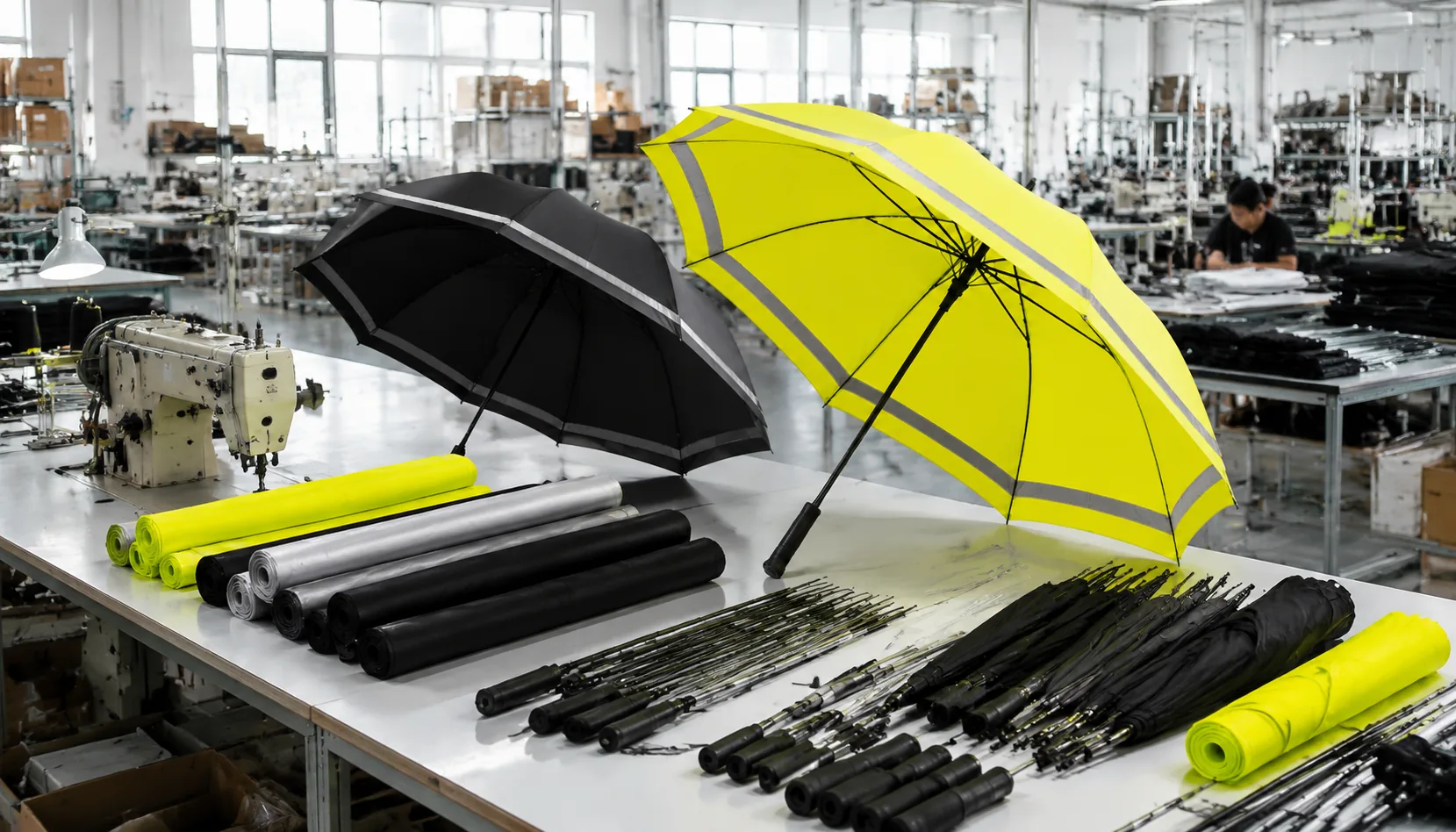
Reflective Safety Umbrellas: Sourcing Guide for Brands
Specify reflective umbrellas for commuter, school, and event programs with fabric, rib, print, QC, MOQ, and delivery poi...
Read More »
Reflective Safety Umbrellas: OEM Buyer Selection Guide
Compare reflective piping, panels, logos, frame builds, fabrics, and QC tests for umbrellas used in commuter, school, ev...
Read More »
Reflective Safety Umbrellas for Commuter and Worksite Use
Specify reflective umbrellas for commuters, campuses, and worksites with trim placement, fabric choices, windproof frame...
Read More »