Reflective Safety Umbrellas: OEM Buyer Selection Guide
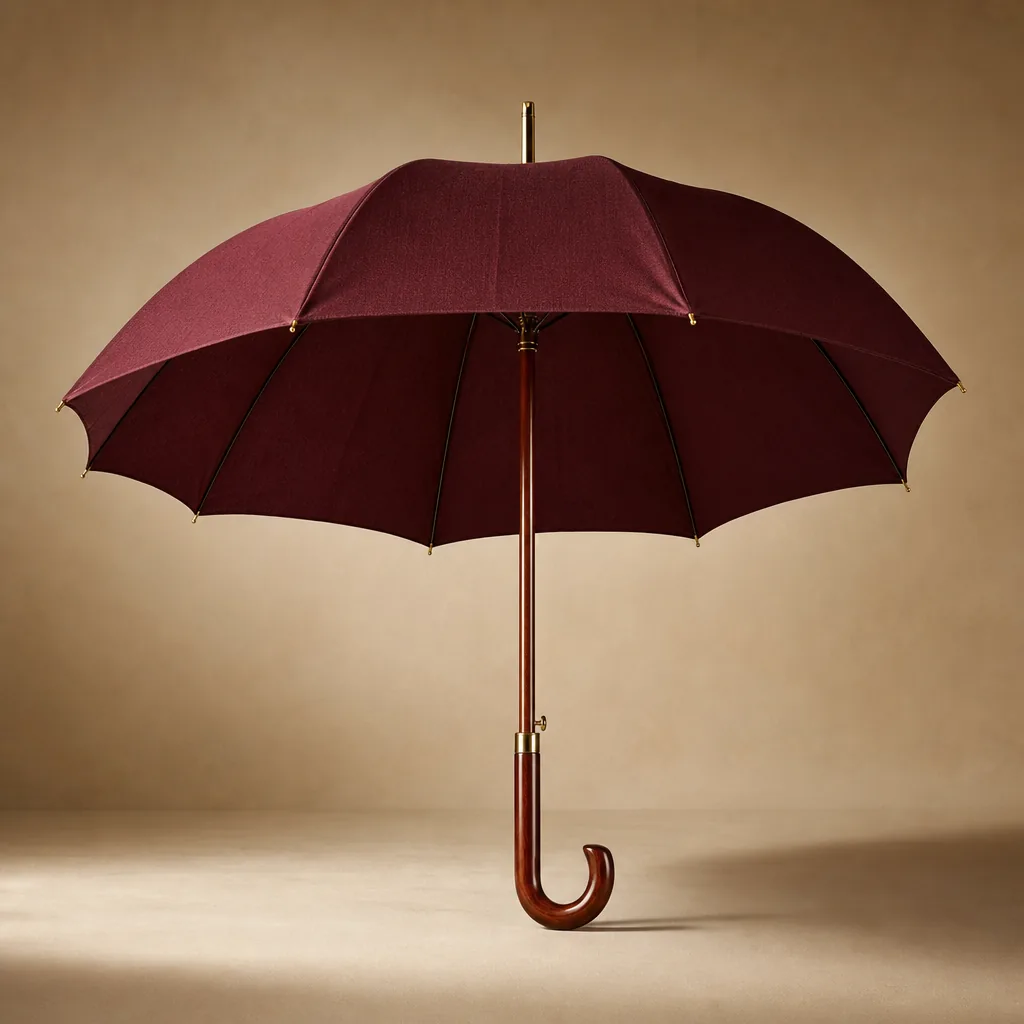
Buying reflective safety umbrellas is less about picking a bright trim than matching visibility, durability, and print quality to how the umbrellas will actually be used. For reflective safety umbrellas wholesale orders, we look at where the piping sits, how panels return light, whether logos stay legible after flexing, and if the frame and fabric can pass wind and abrasion checks on the factory floor. Those details decide whether a commuter, school, event, or safety program product holds up after delivery.
Where Reflective Umbrellas Fit Best
Reflective umbrellas fit best where people are walking near vehicles in poor light, not where they are standing under stadium floodlights. The strongest use cases are commuters leaving subway exits, bus stops, office parks, school gates, factory dormitories, and residential compounds during rain at dusk. A normal black 23" auto-open umbrella disappears quickly against wet asphalt; adding reflective umbrella trim on the canopy edge, strap, or one panel gives headlights something to catch from the side. For commuter safety umbrellas, I usually recommend a 23" or 27" stick umbrella with 190T or 210T pongee, fiberglass ribs, and a straight handle that can take repeated daily use. Folding models work for briefcases and backpacks, but the reflective area is smaller, so the trim width and logo placement matter more.
School programs and road-safety campaigns are also good fits because the message is practical, visible, and not thrown away after one weekend. For children, a 21" manual or 23" lightweight auto-open model with rounded tips, POE or bright pongee panels, and reflective edging is easier to justify than a generic gift umbrella. Municipal road-safety teams often choose high visibility umbrellas in yellow, orange, lime, or white because reflective tape alone does not help much before headlights hit it. For reflective safety umbrellas wholesale, buyers should confirm whether they need EN-style reflective tape, standard polyester reflective piping, or printed reflective ink; these are different materials with different brightness, wash resistance, and costs. I have seen buyers approve a sample under office lighting and then complain at night because the reflective strip was too narrow.
Security teams, parking staff, valet crews, and nighttime event giveaways need a slightly tougher specification because the umbrella becomes part of the worker’s equipment, not just a souvenir. A 27" or 30" 8K/10K frame, fiberglass ribs, and a double-canopy vented windproof design are better for open parking lots where gusts can exceed 40–50 mph. For OEM reflective umbrellas, place the reflective trim around the canopy perimeter and add one or two reflective print zones facing traffic; a large dark logo panel may look premium in a catalog but reduces real visibility on site. Event planners ordering reflective safety umbrellas wholesale should separate VIP giveaway models from staff-use models, because the staff version may need stronger ribs, darker stain-resistant fabric, and AQL 2.5 inspection focused on runner smoothness, rib alignment, and reflective tape adhesion.
Reflective Placement Options and Visibility
Reflective placement matters more than the buyer’s spec sheet usually admits. Reflective piping on the canopy seams gives a clean retail look and is the safest default for commuter safety umbrellas because it creates multiple vertical sight lines when the umbrella is tilted forward in rain. Edge tape around the perimeter is more visible from the side and rear, especially at crosswalk height, but it takes more abrasion during folding and sleeve insertion. For reflective safety umbrellas wholesale programs, I normally separate “seen by headlights” from “looks reflective in a showroom.” Piping catches light in broken segments; edge tape gives a continuous ring. On a 23 inch or 27 inch umbrella, that ring is useful for drivers approaching from 30 to 80 feet, but only if the tape is stitched flat and not buried under binding.
Full reflective panel inserts deliver the strongest visibility, but they change the umbrella’s hand feel and folding behavior. A reflective fabric panel is usually stiffer than 190T or 210T pongee, so it can create thicker folds near the rib tips and more stress at the top notch after repeated opening. On 8K and 10K frames this is manageable; on compact auto-open-close models, the extra stiffness can make closing less smooth. Printed reflective logos are a good compromise for OEM reflective umbrellas when the buyer wants branding without turning the whole canopy silver. The print should be tested after wet folding, dry folding, and rubbing against the runner, because reflective ink can crack if applied too thick or cured at the wrong temperature.
Sleeve accents are often overlooked, but they add practical visibility when the umbrella is carried closed on a bag, stroller, or commuter backpack. A reflective umbrella trim on the sleeve, wrist strap, or snap tab can be valuable before the umbrella is opened, while canopy reflection only works after deployment. For high visibility umbrellas, I like combining perimeter edge tape with two opposite reflective logo prints; that gives coverage from front, rear, and oblique angles without overloading the canopy. Our standard practice at ZheBrella is to inspect reflective parts after 20 open-close cycles, sleeve insertion, and a basic AQL 2.5 visual check for peeling, twisting, and skipped stitches. The weak point is rarely the reflective material itself; it is usually the stitch tension, binding alignment, or heat-transfer adhesion after the canopy has been folded under pressure.
Fabric, Color, and Coating Choices
For reflective safety umbrellas wholesale programs, fabric choice should start with 190T or 210T pongee, not cheap polyester taffeta. 190T pongee is acceptable for event giveaways and city commuter safety umbrellas where the target FOB price is tight, but 210T gives a denser hand feel, cleaner printing surface, and better water beading after coating. On the cutting table, 210T also distorts less when panels are stacked 80 to 120 layers high, so the canopy sews more evenly around the tips. If the order uses reflective umbrella trim on every panel seam, I normally recommend 210T because the extra fabric stability helps the reflective tape sit flat after stitching and heat exposure.
Color is not only a branding decision; it affects visibility and perceived quality. Fluorescent yellow, lime green, orange, and safety pink give the best daytime recognition for high visibility umbrellas, especially near traffic, parking lots, schools, and construction entrances. Black or navy contrast panels are useful when buyers want a more retail-looking umbrella, but I would keep the reflective trim on the outside edge, panel seams, or alternating ribs so it remains visible at night under headlights. For OEM reflective umbrellas, we usually test colorfastness before bulk production because fluorescent dyes can shift if the fabric mill uses weak finishing or if the umbrella is later packed wet during warehouse handling.
A standard waterproof coating is usually enough for rain-only umbrellas, but it should be specified clearly: water pressure rating, beading performance, and whether the coating is basic PA, silver coating, or a higher-grade water-repellent finish. Teflon-style repellent can be added when the buyer wants faster shake-dry performance and less staining on light fluorescent canopies. UPF 50+ coating makes sense when the same umbrella will be sold for rain and sun use, such as school patrol, outdoor events, resort staff, and utility crews. The tradeoff is cost and sometimes a slightly firmer canopy feel, so for reflective safety umbrellas wholesale orders, I would add UPF 50+ only when the retail label or tender document specifically requires dual rain-sun protection.
Frame Specs for Daily Commuter Use
For daily commuting, I usually separate reflective safety umbrellas wholesale projects into two frame families: 21" or 23" compact 3-fold models for bags and backpacks, and 23" to 27" straight umbrellas for office, school, and transit security programs. A 21" 3-fold frame gives a canopy diameter around 95–98 cm, enough for one adult, while a 23" 3-fold reaches roughly 102–105 cm but adds weight and folded length. Straight models are more stable because the shaft is not segmented; a 23" straight umbrella with an iron shaft and fiberglass ribs is a practical commuter safety umbrella for sidewalks, parking lots, and station exits. For reflective umbrella trim, keep the tape sewn on panel seams or canopy edge, not only printed, because sewn reflective piping stays visible when the umbrella tilts under rain and street lighting.
Steel ribs are cheaper and give a firm open shape, but they bend permanently when a user fights wind at a subway entrance. Fiberglass ribs cost more, yet they flex back better and are worth specifying for OEM reflective umbrellas expected to survive daily use. An 8K frame is standard for compact and straight commuter models; it is lighter, faster to assemble, and usually passes normal rain testing. A 16K build looks stronger and holds a rounder canopy, but it adds labor, fabric tension points, and weight, so I recommend it mainly for 27" straight umbrellas or retail high visibility umbrellas where a premium hand feel matters. For real wind resistance, spend budget on fiberglass ribs, a stronger runner, and correct canopy tension before simply increasing rib count.
Double-canopy vented construction is the right choice when the brief includes windproof performance, but it needs careful sewing tolerance. If the vent gap is too tight, wind cannot escape; if too loose, rain blows through and buyers complain. A good 23" straight double-canopy with fiberglass ribs can be built to survive 50+ mph wind-tunnel testing, while most 3-fold models should be rated more conservatively because the telescopic shaft and folding joints are the weak points. Manual open is the most durable and lowest-return option for bulk transit, school, and corporate safety programs. Auto-open improves convenience for commuters carrying a laptop bag, but the spring and button must pass repeated cycling. Auto-open-close on 3-fold umbrellas is convenient but heavier, so our standard practice at ZheBrella is to use it only when the buyer accepts a higher unit cost and tighter AQL 2.5 functional inspection.
Testing, MOQ, and Production Controls
Reflectivity has to be approved before bulk cutting, not after the first carton is packed. For reflective safety umbrellas wholesale orders, I ask buyers to approve a physical trim sample under both daylight and low-angle flashlight conditions, because a strip that looks bright on a desk may fail when stitched around a curved canopy edge. Common options include silver reflective umbrella trim, segmented heat-transfer reflective tape, or reflective piping sewn into the panel seam. We check the returned light visually from 30 to 50 meters and, for retail programs, can use a retroreflectometer reading when the buyer provides a minimum cd/lux/m² target. Adhesion is tested before production by cross-hatch tape pull, repeated folding on the canopy seam, and a wet rub check after 24 hours. Heat-transfer reflective film on 190T or 210T pongee needs correct dwell time, pressure, and cooling; if the operator peels too early, the edge will lift after 200 to 300 open-close cycles.
Mechanical testing matters as much as brightness, especially for commuter safety umbrellas used daily in rain and wind. For manual, auto-open, and auto-open-close frames, we normally run open-close cycle testing on pre-production samples: 300 cycles for basic promotional models and 500 to 1,000 cycles for retail-grade OEM reflective umbrellas. The failure points are usually not the reflective trim itself but the runner spring, rib tip stitching, top cap leakage, or a fiberglass rib joint on 23 inch and 27 inch frames. Windproof double-canopy models should be tested opened and inverted several times, then inspected for cracked tips, loose stretchers, and seam tearing around the vent. High visibility umbrellas with 8K or 10K fiberglass ribs perform better than low-cost steel ribs when the buyer wants a 40 to 50+ mph wind claim, but that claim should be based on a defined lab or wind-tunnel method, not a catalog sentence.
MOQ depends on how the reflective element is made. A stock reflective border on black, navy, or yellow 190T pongee may start around 500 to 1,000 pieces per color, while custom-width trim, printed reflective logos, or color-matched handles usually push MOQ to 2,000 to 3,000 pieces because the trim supplier and frame line both need setup volume. For ZheBrella production, AQL 2.5 final inspection covers canopy stains, print position, trim adhesion, frame operation, rib symmetry, seam puckering, carton marks, and water leakage sampling; critical defects such as sharp exposed rib ends or failed open-close mechanisms are not treated as acceptable minor issues. Normal lead time is 25 to 35 days after sample approval for standard reflective safety umbrellas wholesale programs, and 40 to 55 days if custom trim extrusion, UPF 50+ coating, or retail packaging is involved. FOB Ningbo or Shanghai is cleaner for experienced importers; DDP works when buyers need landed cost control but requires accurate carton dimensions, HS code confirmation, and destination compliance documents before production closes.
Frequently Asked Questions
Is reflective printing the same as reflective tape?
No. Reflective tape or piping is usually sewn onto the canopy edge, while reflective printing is applied to fabric or panels. Tape often gives stronger edge visibility, while printing allows more flexible logo placement.
Can reflective umbrellas also be windproof?
Yes. Buyers can combine reflective trim with fiberglass ribs, reinforced stretchers, and a double-canopy design, especially for commuter or staff-use models exposed to gusts.
What reflective configuration is most practical for commuter and school programs?
For daily visibility, buyers usually choose 360-degree reflective piping around the canopy plus 2 to 4 reflective panel accents. This balances nighttime visibility, cleaner production, and lower cost than full reflective panel coverage.
Which QC tests matter most when sourcing reflective safety umbrellas for public-use programs?
Ask suppliers for opening and closing cycle tests, wind resistance checks, salt spray testing for metal parts, and adhesion or stitch-hold testing for reflective trim. For institutional orders, many buyers set AQL inspection terms and require pre-shipment checks on reflection placement, logo alignment, and frame function.
How do reflective features affect MOQ and lead time on OEM umbrella orders?
Reflective piping or sewn trim usually adds less complexity than fully customized reflective panels or printed reflective logos. Many factories quote OEM MOQs starting around 500 to 1,000 pieces per style, with production lead times often in the 35 to 50 day range depending on materials, print approvals, and frame availability.
Looking to Launch Your Custom Umbrella Line?
ZheBrella is a Zhejiang-based OEM/ODM umbrella manufacturer with 17 years of export experience. Free design, low MOQ from 100 pieces, windproof construction, full-color print.
Get Free Quote Now »People Also Search For
Related Articles
Custom Reflective Umbrellas for Safety and Commuter Brands
Specify reflective piping, panel prints, 190T/210T pongee, and windproof frames for branded safety umbrellas built for c...
Read More »
Reflective Umbrellas for Commuter Safety: OEM Buyer Guide
Source reflective umbrellas for commuters with guidance on trim placement, canopy fabric, frames, testing, MOQ, and deli...
Read More »Reflective Umbrellas for Commuter Safety: Buyer Spec Guide
Learn how to specify reflective umbrellas with safe trim placement, 190T/210T canopies, windproof frames, print areas, a...
Read More »