Repeatable Umbrella Branding Across Multiple SKUs and Sizes
When a buyer sources compact, stick, and golf umbrellas from different runs or factories, brand details can drift fast: the logo shifts, the color reads differently, and the handle or panel layout no longer matches the approved sample. Achieving consistent umbrella branding across SKUs takes more than one artwork file; it requires locked specs for fabric, ink, placement, seam construction, and inspection points so every size and style lands within the same brand standard.
Set the Non-Negotiable Brand Elements First
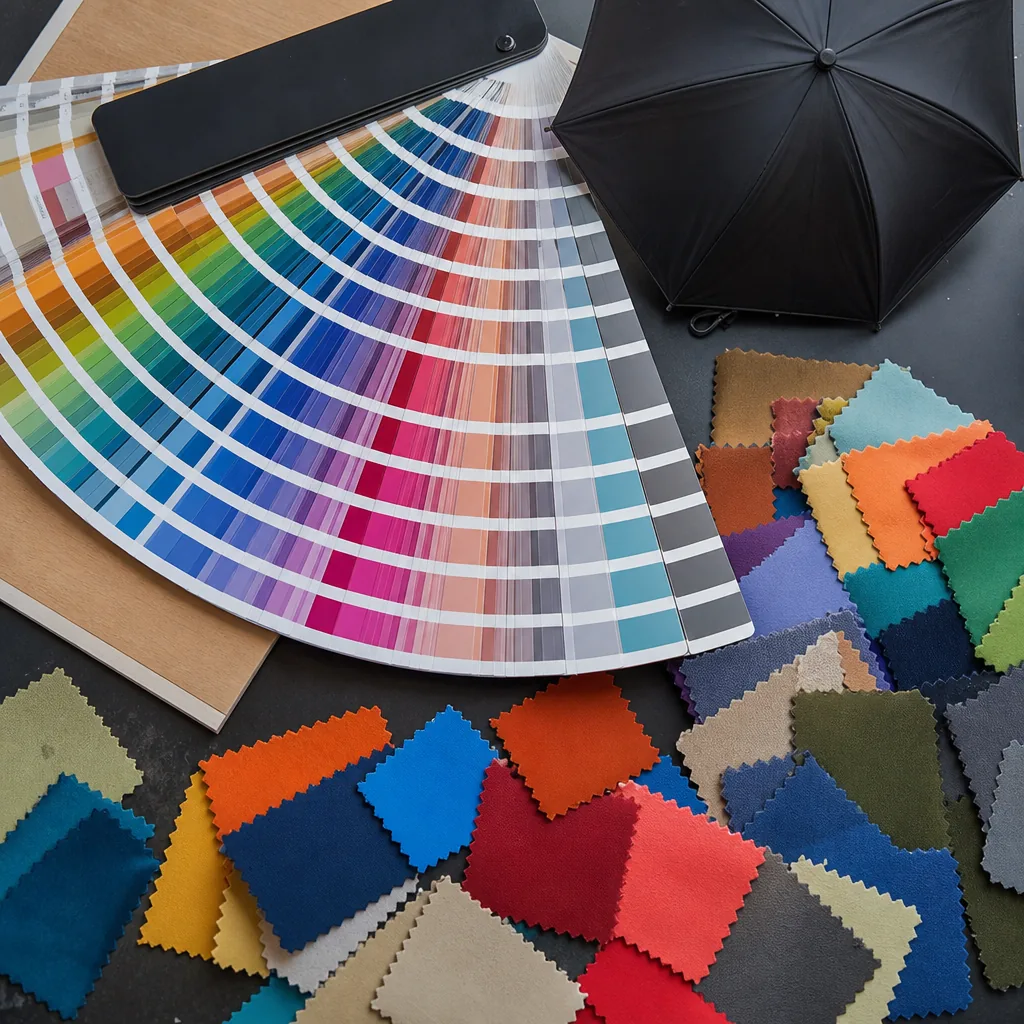
For consistent umbrella branding across SKUs, lock the non-negotiables before quoting or sampling: logo size logic, approved color values, canopy fabric class, and decoration zones. Put them in a one-page spec with measurable limits, not “balanced” or “prominent” language. Use a size-to-logo table tied to frame type and panel width: a 21" compact auto-open-close usually needs a smaller mark so it clears the fold line and closure strap, while a 27" or 30" golf frame can take a larger logo without crossing seams, vents, or edge binding. In a multi SKU umbrella program, that table should also state what can change by SKU—panel count, open diameter, and rib length—and what cannot, such as logo aspect ratio and approved Pantone targets. This cuts art revisions, print reruns, and sewing changes during repeat umbrella production. Color control needs the same level of discipline for umbrella brand consistency. Lock Pantone or Lab targets for the canopy, handle, shaft finish, tie strap, and ink, then define the approved fabric class: 190T pongee, 210T pongee, POE, or PVC. If a substitute material is allowed, write the acceptable match in advance instead of approving it case by case. The rules must differ by product family because the proportions are not the same: compact umbrellas have tight folds and small print windows; stick umbrellas usually allow a cleaner uninterrupted field on the lower canopy or sleeve; golf umbrellas offer more surface area but also more seam lines and vent openings. For OEM umbrella color consistency, note where color drift is most visible—large panels on golf frames, narrow gores on compact models, and long shafts on stick umbrellas—so the factory knows where matching has to be strict.
Map decoration zones by umbrella type instead of applying one universal placement rule. For compact umbrellas, keep logos away from the closure point, last rib arc, and bag-contact area, because those zones take the most compression and abrasion. For stick umbrellas, specify the lower canopy or sleeve as the primary decoration field, since the open structure gives you more usable height and less distortion. For golf umbrellas, allow larger side-panel graphics or a double-hit logo only where vent panels, fiberglass ribs, and seam layout leave enough flat area for clean registration. State the print method as part of the zone rule—screen print, heat transfer, or embroidery—so the factory can size the art correctly at the start. If you want reliable consistent umbrella branding across SKUs, these limits have to be fixed before sampling; otherwise the supplier will quote the wrong decoration setup and you pay for another round of approvals, artwork edits, and sample corrections.
Standardize Materials Without Over-Specifying
The most reliable way to achieve consistent umbrella branding across SKUs is to lock the parts customers see and touch, then tier the structure behind them. Standardize the canopy on 190T pongee for entry-level programs and 210T pongee for higher-opacity retail, gift, or resale lines; that keeps print sharpness, dye uptake, and handfeel consistent across 21" compact, 23" stick, 27" walking, and 30" golf sizes. Use one approved handle finish across the program — matte EVA, rubberized ABS, or wood-grain coating — and do not mix finishes by accident between sizes. For OEM umbrella color consistency, approve a physical pre-production sample and hold every repeat umbrella production run to that sealed standard, since fabric lot variation and coating differences are more likely to drift than a written color name.
Build the multi SKU umbrella program around one core frame family, then use fiberglass vs steel ribs as the main cost lever. Fiberglass ribs and stretchers should be the default for auto-open and promotional models because they flex better and resist rust bleed; steel is acceptable when the target price is tight or the frame is small. Use 8K or 10K for standard corporate giveaways, and reserve 16K or reinforced wind structures for premium or high-wind SKUs. Make UPF 50+, Teflon water repellency, and double-canopy windproof construction optional on the line unless the entire collection is sold on performance. Those features add cost, can push lead time from about 20–30 days to longer, and may raise MOQ pressure, so they belong on hero SKUs, outdoor-event umbrellas, or higher-margin retail programs, not on every umbrella in a consistent umbrella branding across SKUs plan.
Create a Good-Better-Best Framework That Still Looks Unified
The most reliable way to achieve consistent umbrella branding across SKUs is to standardize everything the customer can see and vary only the structure underneath. For a good-better-best line, lock the canopy panel count, PMS targets, logo placement window, seam spacing, trim tape, handle family, and carton graphics before you split the range into entry, mid, and premium tiers. A 21" compact and a 30" golf umbrella will never have the same silhouette, but they can still read as one program if the artwork scale, fabric sheen, and finishing details stay fixed. In a multi SKU umbrella program, approve a master sample for each size and store one physical reference for repeat umbrella production, so future orders match the same visual standard instead of drifting by supplier or season.
Differentiate the product by build, not by brand face. An entry SKU can use 8K steel ribs with manual open to control cost, while a premium version can step up to 16K fiberglass ribs with auto-open or auto-open-close for better wind resistance and higher perceived value; the middle tier usually sits at 10K or 12K with 190T or 210T pongee and auto-open. If the canopy color, logo ink, ferrule shape, and packaging layout stay controlled, OEM umbrella color consistency holds even when one model is a compact folder and another is a full-size umbrella. For rainwear-style coverage or blackout use, POE or PVC makes sense; for a cleaner retail look, pongee with a Teflon-style water-repellent finish is usually the better choice. Freeze the print file early, check lab dips under the same light source, and inspect against AQL 2.5 before release. Confirm MOQ, lead time, and FOB or DDP terms up front so cost, durability, and delivery stay aligned across the line.
Use Master Samples and QC Gates for Reorders
For consistent umbrella branding across SKUs, each size and frame type should have a sealed master sample on file; a PDF or Pantone callout is not enough. Freeze the BOM in writing: canopy fabric (pongee 190T/210T, POE, or PVC), rib material (fiberglass or steel), rib count (8K, 10K, or 16K), handle style, runner size, tip finish, and packaging stack. Add tolerance notes for logo placement, seam allowance, stitch density, and acceptable color delta, so a 21" folding umbrella and a 23" auto-open stick are judged to the same standard. In a multi SKU umbrella program, that physical reference cuts argument at reorder time and gives procurement a clear basis for OEM umbrella color consistency.
Set QC gates at AQL 2.5 before mass print, after trim application, and at final assembly to reduce drift across seasons or replenishment cycles. On print, check placement, registration, ink density, and color match against the sealed sample; on trim, verify binding width, tie-band length, label alignment, and thread tension; on assembly, confirm rib symmetry, open/close action, canopy tension, point finish, and handle fit. Lock those checkpoints to the approved BOM so the factory cannot swap components between runs without signoff. That matters when the first order ships in spring and the replenishment lands months later: frozen specs keep repeat umbrella production from drifting in shade, logo height, or trim details.
The commercial benefit is lower reorder risk and faster approvals. With sealed samples, BOM control, and tolerance notes in place, buyers can split volume across 21", 23", 27", and 30" frames without rebuilding the spec each season. The inspector checks the same AQL 2.5 criteria for print, trim, and assembly on every lot, while the factory knows exactly which canopy cloth, coating, rib count, and accessory package belongs to each SKU. That protects consistent umbrella branding across SKUs even when a replenishment cycle uses a different dye lot or production week, and it shortens dispute resolution because shade, logo position, and assembly quality are measured against one master reference instead of negotiated on every PO.
Plan Production and Shipping for Multi-SKU Programs
For a multi-SKU umbrella program, treat 21", 23", and 27" models as one branding system, not separate artwork jobs. Lock one artwork file, one Pantone reference, one logo position, and one decoration method before sampling starts, then split MOQ by SKU based on forecast and carton multiples. That matters because the smallest canopy usually has the tightest logo window: 190T or 210T pongee on a compact umbrella leaves less room between seams, vents, and ribs, so even a 5 mm shift can hurt umbrella brand consistency. Approve the canopy fabric first, then confirm whether each SKU uses screen print or transfer print. If one model changes from steel ribs to fiberglass ribs, or from 8K to 10K construction, expect a lead-time change of about 5 to 10 days and recheck placement before repeat umbrella production moves into bulk.
Write the PO so carton planning is explicit. A mixed-model purchase order should list MOQ by SKU, inner pack count, carton quantity, carton dimensions, and whether cartons stay SKU-pure or can be mixed for warehouse efficiency. For international freight, keep each carton tied to one size and one handle type unless the buyer approves mixed packing in advance; a 23" auto-open-close umbrella and a 27" manual golf umbrella can share the same print spec, but they should not share the same carton logic. Use AQL 2.5 for first-article approval on every SKU, then compare all sizes against the same color standard so consistent umbrella branding across SKUs does not drift between lots. Round orders to carton-friendly quantities instead of leaving half-cartons that raise freight cost per unit and create stranded inventory.
FOB usually works better for consolidated international shipments when the buyer already has a freight forwarder and wants one pickup across several SKUs under one branding standard. It gives more control over consolidation when carton sizes differ or release dates are staggered by SKU. DDP makes more sense for smaller promotional programs or buyers that need one landed price and do not want customs handled separately, but it becomes less efficient as SKU count and split deliveries increase. For a standard multi SKU umbrella program, approve artwork once, then schedule production by the longest lead-time SKU and release the others in sequence. A canopy-only change may add 3 to 5 days; a frame or mechanism change can add 10 to 15 days. If the order reaches 5,000 pieces or more, consolidate under one PO only when the buyer can accept partial shipment by SKU; otherwise, the freight savings and production efficiency disappear.
Frequently Asked Questions
How can a buyer keep branding consistent if compact and golf umbrellas use different frame structures?
Use one approved brand standard for color, logo scale rules, and core trim details, then adapt placement to each canopy size. Frame differences like fiberglass versus steel should affect product tier, not the visible identity system.
Is it realistic to keep the same fabric across all umbrella SKUs?
Often yes, especially with 190T or 210T pongee across a coordinated program. But compact models may need different folding tolerances or coatings, so consistency should be defined by approved material class rather than identical sourcing in every SKU.
How do you keep logo placement consistent across compact, stick, and golf umbrellas?
Use one master artwork file with separate placement rules for each canopy size and panel count. Most OEMs lock this into a tech pack with exact distances from the seam, vent, and edge, usually measured in millimeters.
What should be standardized before placing repeat umbrella orders?
The key items are Pantone color references, canopy fabric grade, frame finish, handle style, logo method, and packaging artwork. A buyer should also approve a golden sample so the factory can match future production to the same standard.
How many samples are usually needed to confirm multi-SKU umbrella consistency?
For a multi-SKU program, buyers often review one pre-production sample per size or model, then one signed-off master sample for archive. If colors are critical, request lab dips or fabric swatches before bulk production to reduce shade variation.
Looking to Launch Your Custom Umbrella Line?
ZheBrella is a Zhejiang-based OEM/ODM umbrella manufacturer with 17 years of export experience. Free design, low MOQ from 100 pieces, windproof construction, full-color print.
Get Free Quote Now »People Also Search For
Related Articles
Color Consistency Across Umbrella Branding Programs
Build repeatable umbrella branding with controlled canopy colors, trim rules, and approval steps that keep retail and co...
Read More »How to Build a Strong Umbrella Branding Program Across SKUs
Create a repeatable umbrella branding system across styles, colors, and packaging so every SKU looks consistent and fact...
Read More »
Logo Size Scaling Across Umbrella SKUs and Canopies
Build consistent logo sizing across folding, stick, golf, and UV umbrellas with templates, rib counts, print limits, and...
Read More »