Logo Size Scaling Across Umbrella SKUs and Canopies
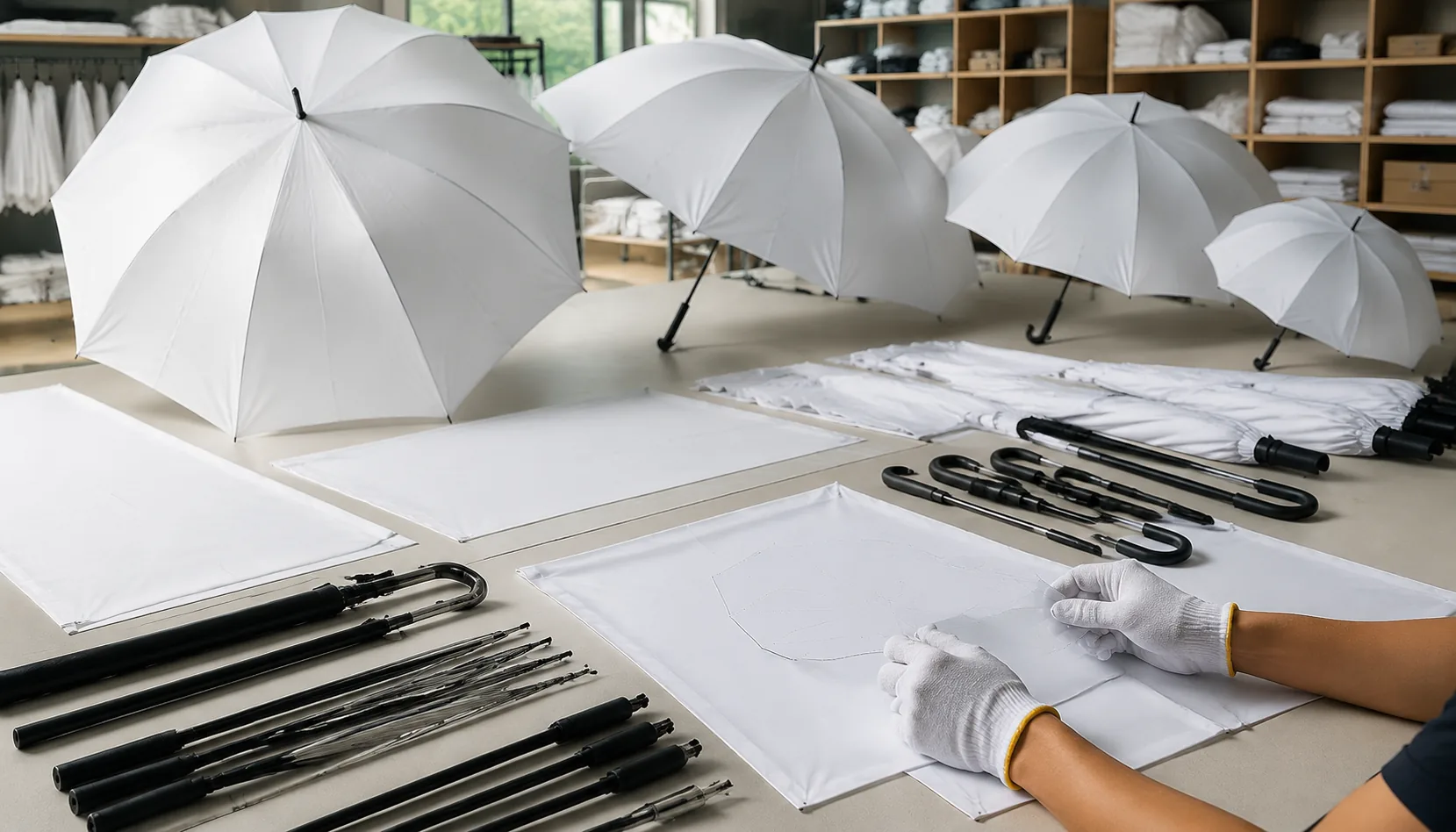
Logo sizing gets messy fast when one brand mark has to move from a 21-inch folding umbrella to a 30-inch golf canopy, across different rib counts, panel shapes, and print methods. On our Songxia production floor, the misses usually come from scaling by eye instead of working from panel templates, seam allowances, ink behavior, and approval samples. A practical umbrella logo size guide keeps each SKU consistent before screens, films, or digital files reach production.
Why One Logo Size Does Not Fit Every Umbrella
The first mistake in a branded umbrella SKU program is approving one 180 mm wide logo and pushing it across every model. A 21" 3-fold umbrella usually has shorter panel height, tighter fabric tension near the seams, and two or three fold lines that cross the printable field when the canopy is packed. A 23" straight umbrella gives more usable panel height and a cleaner triangular print zone, so the same logo can often increase by 15–25% without looking crowded. A 27" or 30" golf umbrella has a wider arc and deeper canopy panels, but the viewer sees the logo from farther away, often at an event or course, so the artwork may need larger letter height rather than just wider scaling. That is why a practical umbrella logo size guide starts with panel geometry, not the buyer’s brand manual.
Folding umbrellas are the least forgiving for logo scaling umbrellas because the ribs, stretchers, and storage creases decide where ink survives repeated opening and closing. On 190T or 210T pongee, we normally keep screen-printed logos away from the main fold valleys by 10–15 mm, especially on auto-open-close frames where the canopy compresses hard into the case. Straight umbrellas with 8K steel or fiberglass ribs allow a taller mark near the lower panel center, but the logo still needs clearance from seam stitching and tip reinforcement. Golf umbrellas with 8K, 10K, or 16K frames can carry big umbrella canopy branding, but an oversized logo near the panel edge may distort because the panel is cut on a curved arc, not a flat rectangle.
Bubble umbrellas change the rule again because POE, PVC, or EVA canopies are transparent, curved, and viewed through reflection. A logo that looks correct on a flat AI or PDF proof can appear stretched on a dome, especially when placed high above the eye line. For OEM umbrella artwork, I prefer checking the print at full size on a paper panel template before making the screen or heat-transfer film; it catches problems that digital mockups hide. Our standard practice at ZheBrella is to set separate maximum logo boxes by SKU: compact folding, standard straight, golf, and bubble, then confirm with a pre-production sample before bulk cutting. That is the only reliable umbrella logo size guide for buyers managing multiple SKUs under one campaign.
Set Size Rules by Canopy and Rib Count
Set the logo rule from the rib geometry first, not from a flat Illustrator mockup. On a standard 23" straight umbrella with 8K steel or fiberglass ribs, one canopy panel usually gives you a safe print width of 7.5" to 9.5" when using 190T or 210T pongee; go wider and the logo starts fighting the seam allowance and panel curve. On a 27" golf umbrella, the same 8K layout can carry 10" to 13" on one panel, especially with screen printing or heat transfer. For compact 21" auto-open-close models, I normally hold single-panel logos to 6" to 7.5" because the shorter rib arc and tighter fold lines distort artwork faster after packing.
A 16K canopy changes the math because each panel is narrower, even though the umbrella may look more premium. For 23" or 27" 16K umbrellas, a single-panel logo often needs to drop 15% to 25% compared with an 8K version, so a mark that looked balanced at 10" on 8K may need to be 7.5" to 8.5" on 16K. This is where many branded umbrella SKU program files go wrong: buyers approve one master logo size, then apply it across 8K, 10K, and 16K frames. A practical umbrella logo size guide should specify logo width by open diameter, rib count, and print position, not just by product name.
Single-panel branding is cleaner for corporate marks, but multi-panel branding can work if the spacing follows the ribs. For umbrella canopy branding across two opposite panels, keep the same width on both panels and align the baseline to the lower third of the canopy, usually 4" to 6" above the edge binding on a 23" umbrella. For repeating logos around 8 panels, reduce each logo to about 60% to 70% of the single-panel size so the canopy does not look crowded when open. Our standard practice at ZheBrella is to check OEM umbrella artwork on a printed panel template before bulk cutting, because logo scaling umbrellas by diameter alone misses the visual pull created by seams, vents, and rib spacing.
Account for Fabric, Color, and Print Method
Readable logo size starts with the fabric, not the artwork file. On 190T pongee, the weave is slightly more open and the surface has a little more texture, so very small type, thin strokes under 0.5 mm, and tight registration marks can start to look soft after curing or heat pressing. 210T pongee gives a denser, smoother face, which is why I prefer it for retail programs using small crest logos, QR-like graphic blocks, or multi-line sponsor marks. For a practical umbrella logo size guide, I usually treat 190T as needing 10–15% larger minimum artwork than 210T when the buyer wants clean readability from 6–8 feet away. The same logo that works at 80 mm wide on 210T may need 90–95 mm on 190T, especially on a 21 inch folding umbrella where each panel is narrow and seam distortion is more noticeable.
Canopy color changes the readable limit more than many buyers expect. White, beige, yellow, and other light 190T/210T pongee can hold fine dark logos well, but light ink on navy, black, bottle green, or burgundy normally needs thicker strokes and sometimes an underbase to avoid a dull, absorbed look. UPF 50+ coatings complicate this further because the coated face can reduce ink bite or change heat-transfer adhesion if the temperature, dwell time, or pressure is wrong. For umbrella canopy branding on sun umbrellas, I ask artwork teams to avoid hairline typography and pale gray logos on silver-coated or black-backed panels. A minimum 1 mm line weight is safer for dark coated fabrics, and reversed text should be enlarged by 15–20%. This is where logo scaling umbrellas across a branded umbrella SKU program becomes a production rule, not a design preference.
Print method sets the final boundary. Screen printing is still the most reliable for solid one- to three-color logos on pongee, but every color needs a screen, registration tolerance, and enough gap from ribs and seams; small text below 6–7 pt often fails AQL 2.5 visual inspection on curved panels. Digital printing handles gradients and full-color OEM umbrella artwork better, but fine edges can feather slightly on 190T and color density varies between light and dark canopies. Heat-transfer printing gives sharper small logos and Pantone-like consistency, but thick films can crack on fold lines if placed too close to rib tips or panel creases. At ZheBrella, our standard practice is to approve one logo size per umbrella size—21 inch, 23 inch, 27 inch, and 30 inch—then adjust by fabric, color, and method before bulk cutting. That keeps the umbrella logo size guide practical for production, not just pretty in a PDF proof.
Create a Master Artwork Template System
A master template system is the only reliable way to keep a branded umbrella SKU program consistent when the same logo moves from a 21" folding umbrella to a 30" golf umbrella or from 190T pongee to clear POE. Writers should tell buyers to request SKU-specific AI and press-ready PDF files for every model, not one generic “umbrella logo size guide” pasted into all orders. A 23" 8K auto-open canopy may need a 180 mm wide panel print, while a 27" double-canopy vented golf umbrella can often carry 230–260 mm without looking crowded. The template should show each panel outline, seam allowance, rib position, top notch, runner direction, and safe print zone, because artwork that looks centered on a flat file can shift visually after sewing and tensioning.
Every template should lock Pantone references, logo clear space, and placement coordinates in millimeters. For example, mark “logo center 145 mm from panel tip, 0 mm from vertical centerline” instead of saying “print in the middle.” Pantone C and U references matter because screen printing on 210T pongee, heat transfer on Teflon-coated polyester, and UV printing on EVA or PVC do not produce identical color. If the logo has a 10 mm clear space rule on retail packaging, it may need 15–20 mm on umbrella canopy branding because ribs, stitching, and canopy curvature visually compress the design. OEM umbrella artwork should also specify print method, mesh count or transfer film type, coating limitations, and whether the artwork is approved for single-panel, opposite-panel, or all-panel placement.
Repeat orders should be controlled with photos, not memory. Include factory sample photos showing the umbrella open, closed, sleeve packed, and one close-up of the printed panel under neutral light; attach those photos to the AI/PDF template set and the approved pre-production sample record. Our standard practice at ZheBrella is to keep the final artwork file, Pantone callout, print coordinates, and sample images under the SKU code so a reorder six months later does not depend on a salesperson remembering whether the last logo was 200 mm or 220 mm. This is where logo scaling umbrellas becomes practical: the buyer can approve a size matrix by SKU, and QC can check production against fixed coordinates during AQL 2.5 inspection instead of arguing over subjective placement.
Control Consistency in Production and Reorders
Consistency on reorder is controlled before bulk cutting, not after cartons are sealed. For a mixed 21-inch folding, 23-inch straight, and 27-inch golf umbrella program, I want one approved pre-production sample per SKU, with the logo measured on the actual canopy panel angle, not just on a flat AI file. A 90 mm chest-print style mark that looks clean on a 23-inch 8K pongee canopy may need to scale to 110-120 mm on a 30-inch double-canopy golf umbrella, while a compact 21-inch auto-open-close may only carry 70-80 mm before the ribs visually crowd it. A practical umbrella logo size guide should lock the logo width, panel placement from seam to seam, print method, Pantone target, and viewing orientation for every SKU. For OEM umbrella artwork, we also specify whether the logo is centered on one panel, repeated on alternating panels, wrapped across seams, or positioned near the valance edge, because each choice changes cutting and sewing tolerance.
Tolerance sheets are the factory’s memory when buyers reorder six months later. Our standard practice at ZheBrella is to issue a production tolerance sheet showing logo size tolerance, usually plus or minus 2 mm for screen print and plus or minus 3 mm for heat transfer on curved sewn panels, plus placement tolerance from the panel centerline and lower hem. For umbrella canopy branding, color control must be checked by lot: 190T or 210T pongee, POE, PVC, and EVA all absorb or reflect ink differently, and Teflon or UV UPF 50+ coatings can shift the apparent shade under D65 light. On the line, QC compares bulk panels against the signed sample, Pantone chip, and first-off print before sewing. During final inspection, AQL 2.5 should include logo defects such as pinholes, ink bleeding, ghosting, wrong scale, crooked placement, heat-transfer edge lifting, and obvious color mismatch between SKUs in the same branded umbrella SKU program.
MOQ planning matters because logo scaling umbrellas across SKUs creates more setup work than many buyers expect. A mixed-SKU OEM program may have 500 pieces of 23-inch manual steel-rib umbrellas, 300 pieces of 21-inch auto-open-close compact umbrellas, and 200 pieces of 27-inch fiberglass windproof golf umbrellas, but each size still needs its own film, fixture, print approval, and packing mark if the logo dimensions differ. For stable cost and fewer mistakes, I prefer grouping by canopy fabric and print method, then running the largest quantity color first to stabilize ink viscosity. Normal lead time is 7-10 days for artwork checking and sample approval, then 25-35 days for bulk production after deposit and confirmed materials; complex double-canopy vented models or 16K frames can add another 5-10 days. FOB Ningbo or Shanghai is straightforward, but DDP programs need carton-level SKU labeling and reorder codes tied to the approved tolerance sheet, otherwise the next shipment slowly drifts from the original brand standard.
Frequently Asked Questions
What logo size is safest for most promotional umbrellas?
A single-panel logo between 120-180 mm wide is usually safe for many folding and stick umbrellas. Golf umbrellas can often support larger logos because the panel area is wider.
Should the same logo file be used for every umbrella SKU?
The master logo file can stay the same, but each SKU needs its own scaled placement template. This prevents logos from looking too large on compact umbrellas or too small on golf umbrellas.
How should logo size change between folding, stick, and golf umbrella SKUs?
Most B2B programs scale the logo by visible panel area rather than using one fixed size. For example, a folding umbrella may use a 7–9 inch wide logo, a stick umbrella 8–10 inches, and a golf umbrella 10–13 inches, depending on canopy diameter, panel shape, and print method.
What artwork files are needed to approve logo scaling across multiple umbrella canopies?
A factory usually needs vector AI, EPS, or PDF artwork, Pantone color references, and a placement mockup for each SKU. For multi-SKU programs, buyers should approve a full print layout sheet showing logo width, panel position, rib count, and safe margin before bulk production.
Can the same screen print setup be used for all umbrella sizes in a branded SKU program?
Not always. If the logo size changes between folding, stick, golf, or UV umbrellas, separate screens may be required; if the same logo size is used across compatible panels, one screen can sometimes be shared to reduce setup cost and sampling time.
Looking to Launch Your Custom Umbrella Line?
ZheBrella is a Zhejiang-based OEM/ODM umbrella manufacturer with 17 years of export experience. Free design, low MOQ from 100 pieces, windproof construction, full-color print.
Get Free Quote Now »People Also Search For
Related Articles
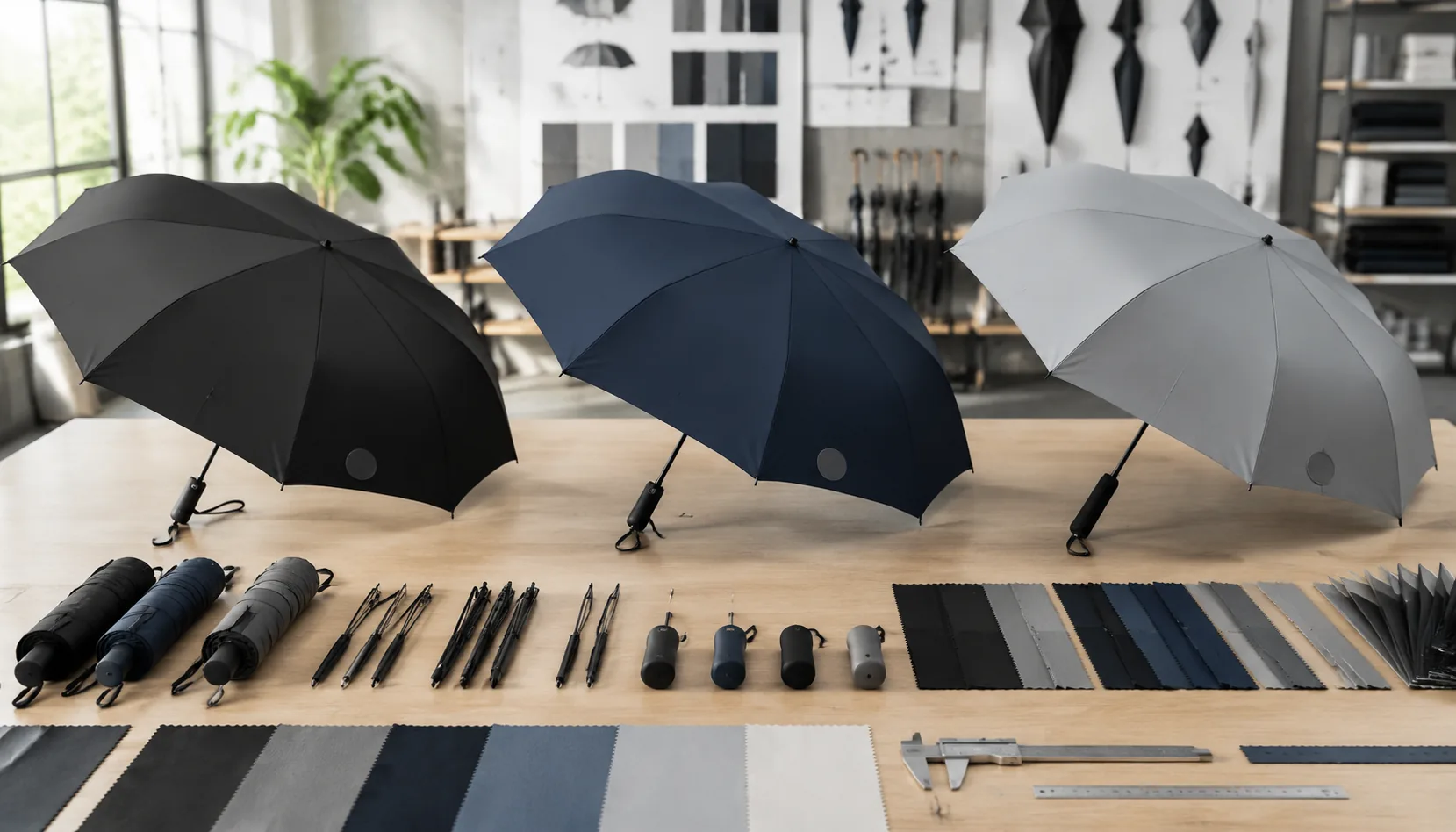
Scaling Logo Sizes Across Folding, Golf, and Stick Umbrellas
Set practical logo size rules across 21-inch folding, 23-inch stick, and 30-inch golf umbrellas without losing visibilit...
Read More »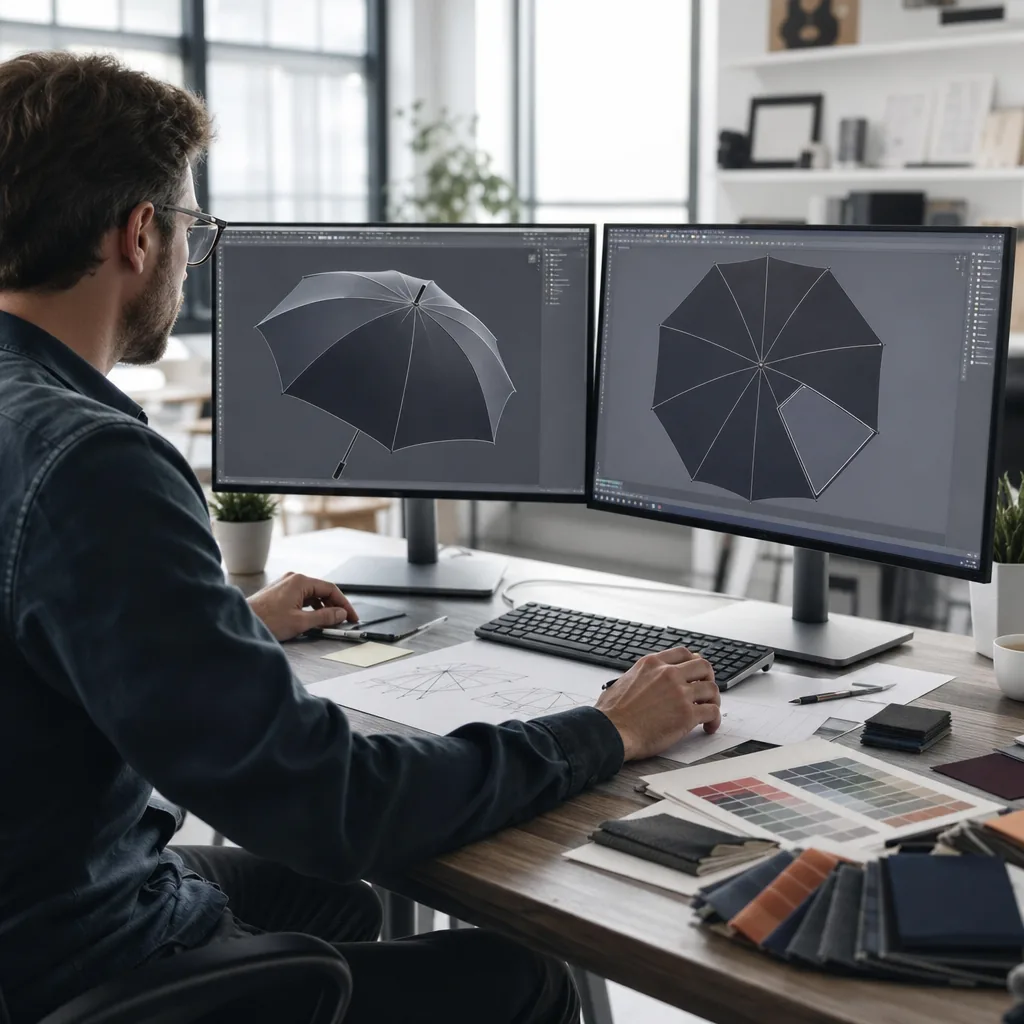
Scaling Umbrella Logos Across Folding, Stick, and Golf Models
Set logo sizes that translate across folding, stick, and golf umbrellas while protecting readability, print quality, app...
Read More »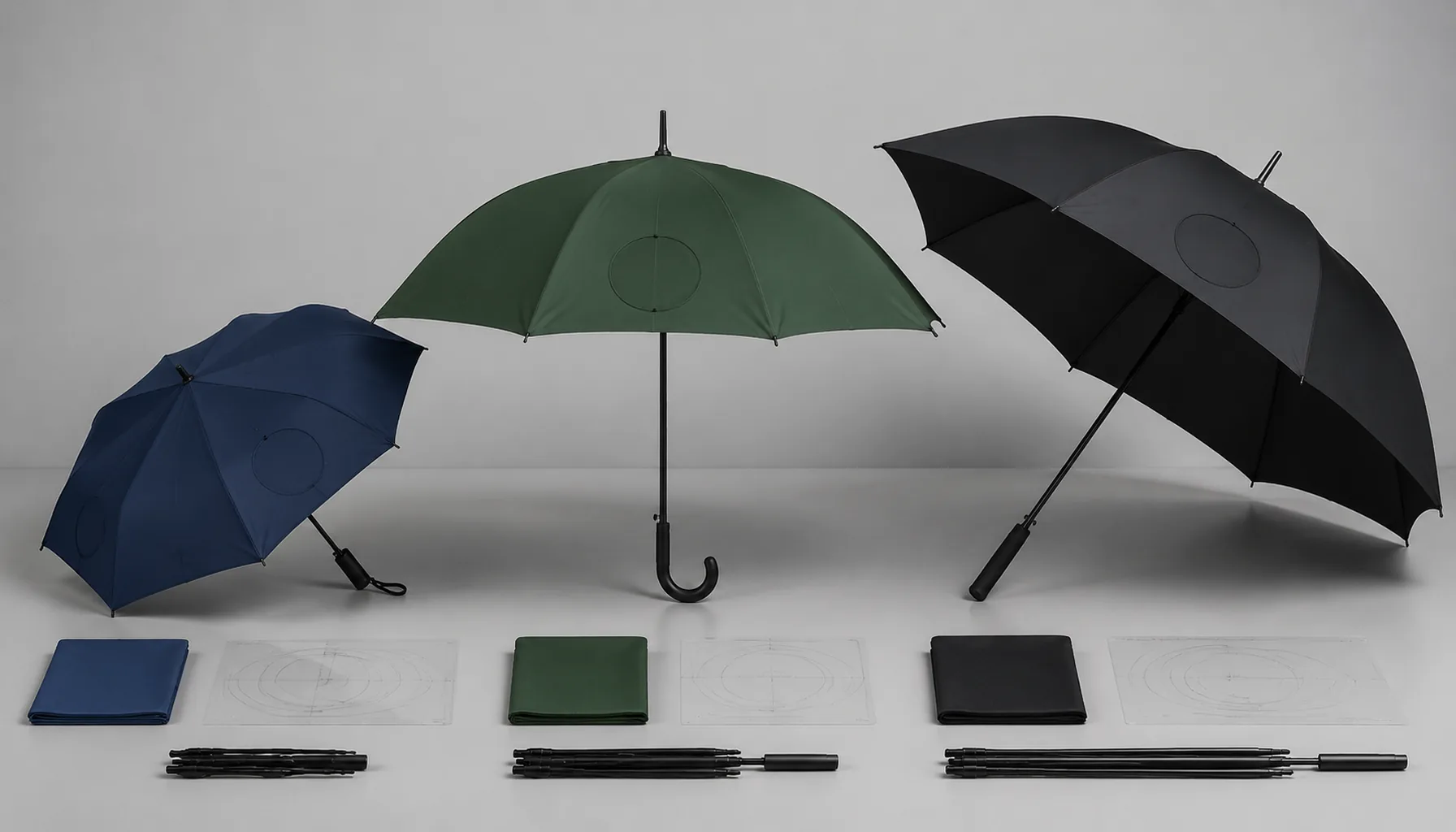
Logo Scaling Across Folding, Stick, and Golf Umbrellas
Set logo size rules across 21-inch folding, 23-inch stick, and 30-inch golf umbrellas so brand assets stay consistent th...
Read More »