Retail Umbrella Collection Guide for Entry, Mid, and Premium
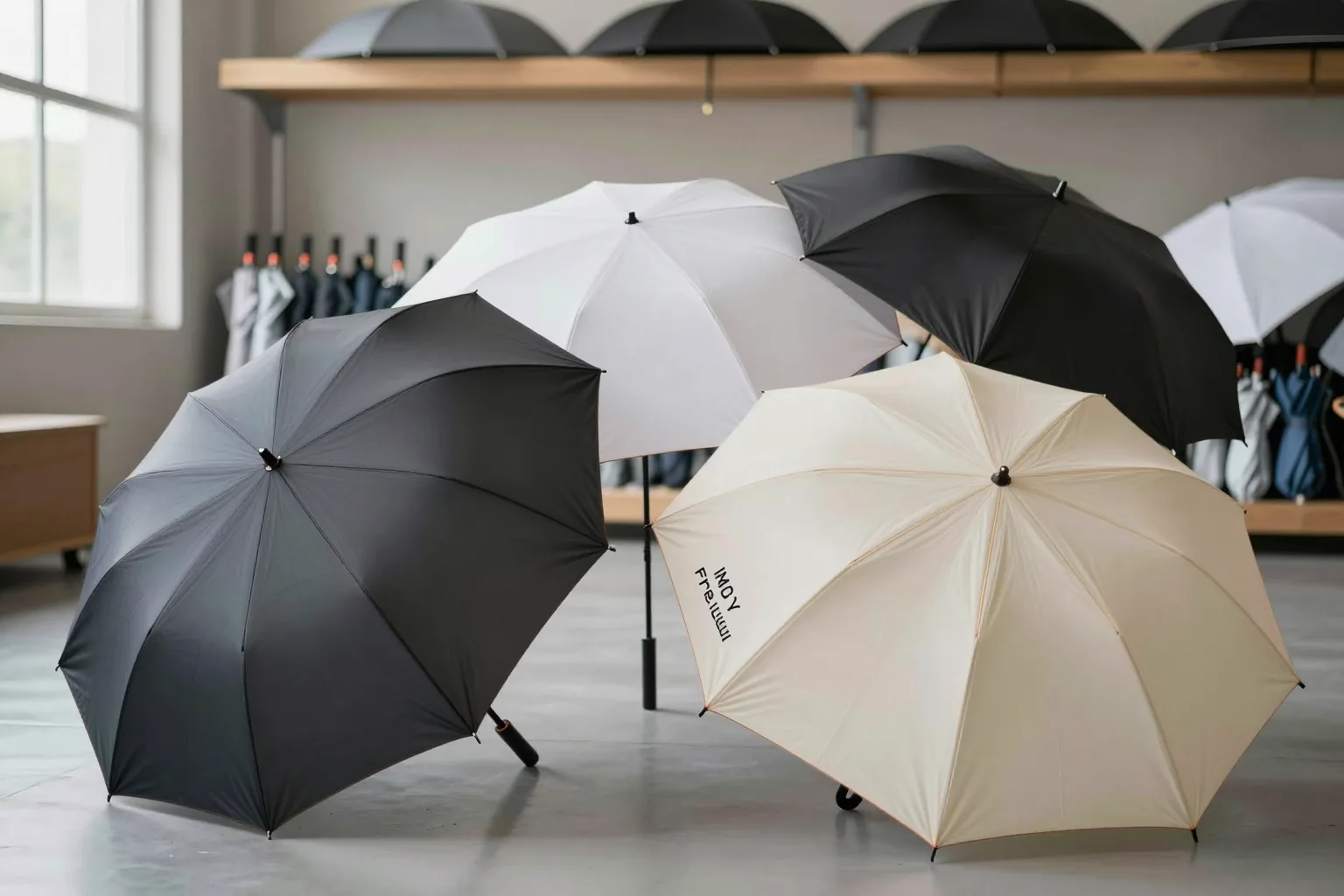
Building a retail umbrella collection that spans entry, mid, and premium tiers requires more than just picking different fabrics. The real challenge is balancing margin with meaningful differentiation—using frame materials, fabric grades, and QC standards that actually justify the price jump. Without a structured guide, most buyers end up with a line that blurs together or bleeds margin.
Map the Collection to Target Retail Price Points
For entry-tier shelf prices of $9.99–$14.99, cap FOB at $3.00–$5.00 (30–40% of shelf). Spec 8K steel ribs, 190T pongee canopy with basic water-repellent coating, and a manual-open mechanism. Drop windproof claims; use a straight rubber or plastic handle. A compact 21" arc works here, but maintain AQL 2.5—cutting rib gauge to save $0.30 often drives return rates above 5%. This tier competes on value: tighter margins, lean feature set, and no frills.
Mid-tier shelf prices of $19.99–$29.99 support FOB of $6.00–$10.00. Upgrade to 10K fiberglass ribs, 210T pongee with Teflon and UPF 50+ coating, and auto-open mechanism. A 27" arc with double-canopy vented design resists wind up to 50 mph. Balance assortment 60/40 compact to straight to cover commuters and outdoor events. Avoid auto-close unless shelf exceeds $24.99; it adds $1.20–$1.80 to FOB and risks breaking the bracket. Feature stacking here must stay disciplined—adding too many extras inflates cost without proportional perceived value.
Premium tier at $34.99–$49.99 shelf requires FOB of $12.00–$18.00. Spec 16K fiberglass or carbon-fiber ribs, 230T micro-weave pongee with Teflon and UV coatings (UPF 50+), and full auto-open-close mechanism. Double-canopy vented design tested to 60+ mph. A 30" straight with leather-wrapped handle or 23" compact with aluminum shaft signals quality. For private label umbrellas, custom color-matched frames and sublimation printing add 7–10 days lead time but justify the price. Shift assortment to 40% compact, 60% straight—premium buyers expect a statement piece. This retail umbrella collection guide prevents over-featuring mid-tier and under-delivering on premium.
Define Frame and Rib Specs by Tier
For entry-tier retail umbrella collection guide planning, 8K or 10K electroplated steel ribs with a 6mm steel shaft keep FOB costs under $3, targeting one-season impulse buys. But corrosion and rib snap above 25 mph are real risks: fashion retail programs using 190T pongee canopies report 5-8% AQL 2.5 failure rates on rib breakage by second use. Stick with 8K steel and never claim wind resistance beyond 25 mph—returns spike when a 21-inch canopy catches a gust. For private label umbrellas under $5 retail, this frame is cost-effective but high-risk for durability.
Mid-tier umbrella price point planning shifts to mixed-frame construction: a steel shaft paired with 12K or 16K fiberglass ribs delivers 50+ mph wind tunnel performance without the weight penalty. Everyday utility programs benefit from 16K fiberglass ribs, a 10mm steel shaft, 210T pongee canopy, and UPF 50+ coating at $5-$8 FOB, enabling Teflon treatment and manual auto-open mechanisms. This reduces return rates by 40% versus steel in retail umbrella sourcing, though fashion retailers often skip fiberglass for its less sleek profile. For private label umbrellas targeting durability, this tier balances cost and performance.
Premium-tier specs demand full fiberglass or carbon-fiber frames: 16K fiberglass ribs with tapered aluminum or carbon shafts, double-canopy vented designs tested to 70+ mph, auto-open-close mechanisms, and 230T microfiber canopies with Teflon+UV coatings. At $12-$18 FOB with 45-60 day lead times, these premium umbrella features justify the price only with rigorous wind tunnel testing and full-carton QC—anything less undercuts the investment for brands needing a 3-year lifecycle and zero AQL 2.5 defects on ribs. For retail umbrella collection guide planning, this tier requires strict compliance to avoid returns.
Select Canopy Fabrics and Performance Upgrades
190T pongee, at about 65 g/m², is the right base fabric when you are building an entry-level retail umbrella collection guide around lower FOB targets and simple promotion use. It gives acceptable opacity, takes screen and heat-transfer printing cleanly, and keeps unit cost down. For private label umbrellas that need a cleaner logo edge and a fuller hand feel, 210T pongee at about 75 g/m² is the better step up. The tighter weave reduces ink spread, improves print sharpness, and usually adds only $0.30-$0.50 per unit, which is easier to absorb once the retail price moves into the mid-tier range. As a rule, 190T works when the umbrella is price-led; 210T is the safer choice when the buyer is selling on finish, not just function.
Water-repellent finishing should sit in the base spec for most retail umbrella sourcing programs. A C6 or C8 DWR treatment adds only about $0.15 per canopy and prevents the wet, heavy feel that hurts repeat purchase rates. From there, upgrade only when the price point supports it: UPF 50+ coating belongs on sun umbrellas and higher-end lines where UV protection is part of the selling story, while double-canopy windproof construction is the right answer for stronger retail umbrella features and exposed-market use. A vented top panel helps air pass through the canopy instead of lifting it, which can raise wind survival from about 35 mph to 55+ mph in testing. Pair that with 210T fabric and a coated steel or fiberglass frame when the product has to justify a higher retail bracket.
Seam construction and fabric weight should match the frame, or the spec will look better on paper than it performs in store. Double-fold French seams with hot-melt tape are a stronger choice than basic single-fold construction, especially on 210T and premium umbrellas where leakage and edge wear are visible failure points. Teflon-coated canopies add another $0.90-$1.10 per unit and improve water beading, which matters for auto-open-close models positioned in the $35-$50 range. For 8K frames, 190T is usually enough if the product is entry priced; for 10K or 16K ribs, 210T gives better tension and less flapping. That fabric-frame match is the part of umbrella price point planning that keeps premium umbrella features believable and protects margin without overbuilding the product.
Match Opening Mechanisms and Trim Details
Manual open belongs at entry tier because it has fewer moving parts, lower tooling cost, and fewer spring failures. In a retail umbrella collection guide, that usually means 21" or 23" folding umbrellas with steel ribs, a basic ABS or PP handle, and a simple straight shaft. Auto-open fits the middle tier: buyers pay a little more for one-handed use, so the mechanism should be paired with a steel-fiberglass hybrid or fiberglass ribs, cleaner button feel, and better canopy tension. Auto-open/close belongs at the top of the assortment because the added spring, slider, and button assembly increases part count, assembly time, and warranty risk. In umbrella price point planning, that extra cost only makes sense when the customer can see and use the convenience immediately, so the premium should be tied to stronger materials and tighter build control, not just a higher ticket.
Trim details drive return rates as much as the frame. A molded EVA, TPR, or wood handle improves perceived quality, but buyers notice loose ferrules, uneven tips, and rough rib ends fast. For private label umbrellas, the small defects matter: a ferrule that is poorly crimped, a tip cap that shifts, or stitching that wanders at the panel seam reads as weak workmanship even if the frame opens correctly. Consistent thread tension, even canopy binding, and clean tip finishing reduce “arrived cheap” complaints, which is why these checks should sit beside opening mechanism decisions in retail umbrella sourcing. Premium umbrella features should include a more substantial handle, aligned panel seams, reinforced ferrules, and neat trim that holds up after repeated open-close cycles.
A good-better-best assortment should separate convenience from finish. Entry SKUs can stay with manual open, painted steel tips, and a basic hook handle. Mid-tier products work better with auto-open, smoother stitching, and a denser grip that feels stable in hand. Premium SKUs should add auto-open/close, tighter panel alignment, reinforced ferrules, and handle materials such as wood, soft-touch TPR, or dense EVA, because those details justify the higher price and lower the chance of cosmetic complaints. ZheBrella inspects these trims under AQL 2.5 so weak stitching, loose tips, and handle defects are caught before shipment; that matters because trim failures usually surface as returns and low reviews, not as obvious breakage in the warehouse.
Control Risk With Sampling, AQL, and Delivery Planning
A retail umbrella collection guide should treat sampling as a gated process. Start with a development sample to confirm frame geometry, canopy pattern, and finished size, whether the program is built around 21-inch, 23-inch, 27-inch, or 30-inch umbrellas. Lock color with a physical standard sample under D65 light before bulk approval, especially for 190T pongee, 210T pongee, or jacquard fabrics. Then use a pre-production sample to verify stitch density, rib rivet strength, auto-open button travel, logo position, and panel alignment. For private label umbrellas, add test points for open-close cycling, tip fit, water repellency, and wind resistance on fiberglass or steel ribs. If the sample misses the approved color chip or fails durability checks, it should stay out of production. That protects umbrella price point planning from avoidable scrap, rework, and delay.
Final inspection should be written to AQL 2.5 at normal inspection level II, with defect classes defined before production starts. For a 5,000-piece lot, that means a 315-piece sample, with critical defects at zero tolerance and major defects controlled by the AQL table. Define the rejection points that matter in retail umbrella sourcing: bent ribs, loose stitching, misprinted panels, weak welds, poor canopy tension, and leakage on POE or PVC models. Typical MOQ ranges are 1,000-3,000 pieces per SKU for manual umbrellas and 2,000-5,000 pieces for auto-open or windproof styles, with higher unit cost on smaller runs because setup, fabric waste, and packaging are spread over fewer units. Buyers should ask for the same test list on every style so the retail umbrella collection guide stays comparable across entry, mid, and premium programs.
Delivery planning depends on the incoterm. FOB Shanghai or Ningbo gives the buyer control over ocean freight, customs clearance, and destination delivery, while DDP shifts those steps to the factory and adds brokerage, duties, and final-mile transport into the quoted price. FOB usually works best when the retailer already has a freight forwarder; DDP is simpler for smaller programs or first-time importers, but it commonly adds 10%-15% to the landed cost. Plan on 45-60 days for production, then another 14-21 days for ocean transit and inland delivery under FOB, or a shorter but more expensive DDP schedule. For seasonal retail launches, place orders early enough to allow a second inspection or rework window, because a failed AQL 2.5 release can push an entire assortment past the selling season.
Frequently Asked Questions
Is 16K always a premium retail upgrade over 8K?
Not always. A 16K frame creates a denser, more refined look, but an 8K fiberglass frame can still outperform a 16K steel frame in wind resistance and long-term durability.
What is a common mistake when building a private-label umbrella line?
Many buyers add too many upgrades to the entry tier, which compresses margin without improving sell-through enough. It is usually better to reserve features like 210T pongee, double-canopy construction, or advanced mechanisms for mid and premium SKUs.
How should a retailer split entry, mid, and premium umbrella SKUs?
A practical starting mix is 50% entry, 35% mid-range, and 15% premium by SKU count, then adjust after sell-through data. Entry SKUs usually focus on price and basic durability, while premium SKUs justify higher margins with fiberglass ribs, pongee fabric, auto open/close mechanisms, and stronger packaging.
What MOQ should buyers expect for a private-label retail umbrella collection?
Typical factory MOQs often start around 500 to 1,200 pieces per model or color for standard umbrellas, with higher minimums for custom molds, special fabrics, or exclusive packaging. Buyers should confirm whether logo printing, hangtags, sleeves, and carton marks are included in the MOQ or quoted separately.
Which specs matter most when planning umbrella price points?
The biggest cost drivers are frame material, rib count, canopy fabric, shaft material, handle type, mechanism, and packaging. For example, moving from polyester to 190T pongee fabric and from metal ribs to fiberglass ribs can shift a SKU from entry to mid or premium positioning, depending on the quote and target retail margin.
Looking to Launch Your Custom Umbrella Line?
ZheBrella is a Zhejiang-based OEM/ODM umbrella manufacturer with 17 years of export experience. Free design, low MOQ from 100 pieces, windproof construction, full-color print.
Get Free Quote Now »People Also Search For
Related Articles
Retail Umbrella Collection Guide: Entry, Mid, and Premium
Build a better umbrella assortment by defining entry, mid, and premium specs across frame materials, fabric grades, mech...
Read More »Private Label Umbrella Assortment Planning by Price Tier
Plan a retail umbrella line with good/better/best specs, MOQ targets, fabrics, ribs, handles, packaging, and lead times ...
Read More »
Retail Umbrella Assortment Planning: Specs by Price Tier
Plan a private-label umbrella range with 3-fold, stick, and golf models, clear good-better-best specs, realistic MOQs, F...
Read More »