Retail Umbrella Collection Guide: Entry, Mid, and Premium
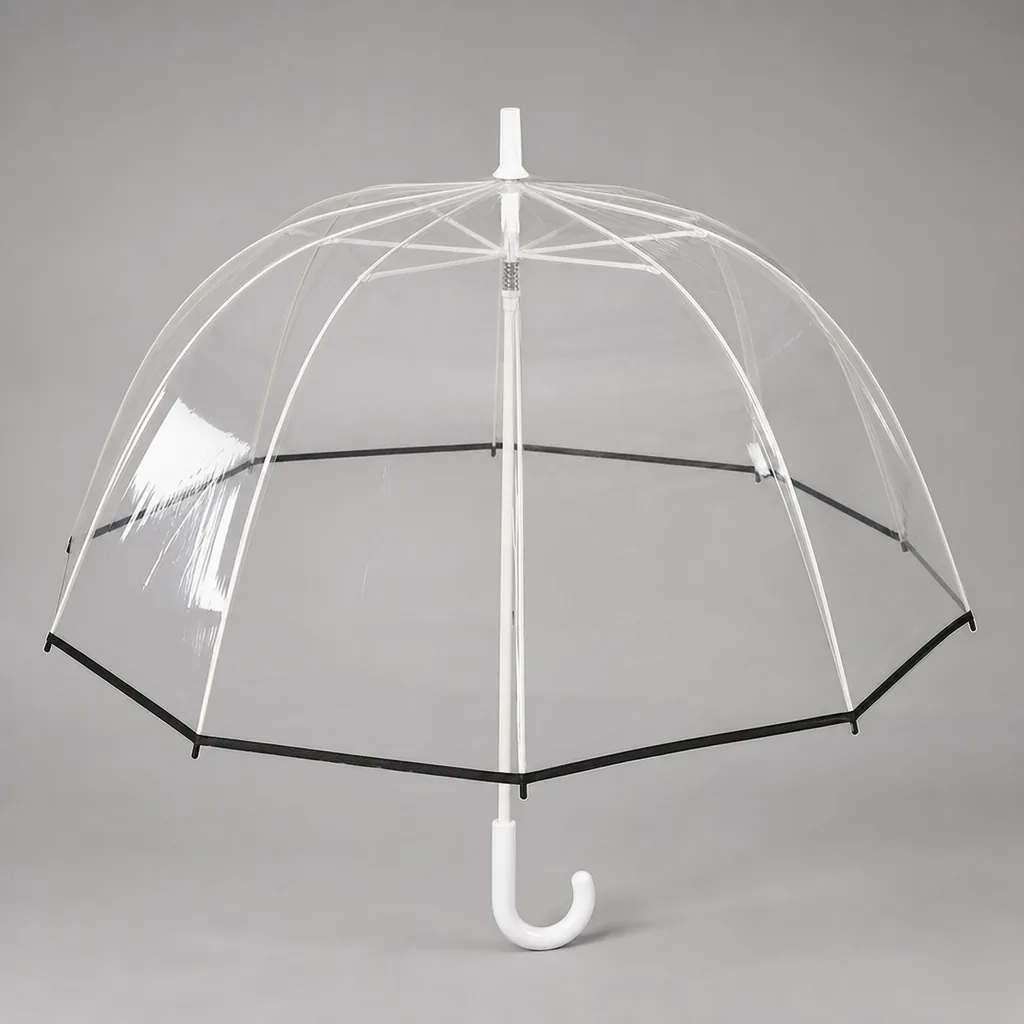
A weak assortment usually comes from mixing price points without locking the underlying specs, so buyers end up comparing umbrellas that look similar on paper but fail differently in stores. On our production lines in Songxia, the cleanest way to build a retail umbrella collection guide is to separate entry, mid, and premium tiers by frame steel or fiberglass mix, canopy fabric grade, opening mechanism, and shelf-ready packaging before sampling starts.
Define Good-Better-Best Tiers Before You Source
Start with price architecture, then write the spec grid around it. A strong retail umbrella collection guide separates entry, mid, and premium tiers before you compare factories, because single-SKU buying usually produces near-identical umbrellas fighting for the same retail band. For most programs, entry level umbrellas cover opening-price demand: 21-inch 3-fold manual compacts, 21-inch auto-open compacts, and 23-inch straight 8K styles built with steel shafts, steel ribs, and 190T pongee or POE canopies. The target shopper is a replacement buyer purchasing for immediate rain, school commute, convenience, or impulse use. That makes entry tier right for supermarkets, drugstores, campus stores, and seasonal front-end displays, where the requirement is reliable rain coverage at the lowest practical ex-factory cost. The sourcing decision is not color first. Decide whether this tier is meant to win on price, fast replenishment, or volume, then lock canopy size, frame material, rib count, and fabric so every supplier is quoting the same umbrella instead of soft-spec substitutions.
Mid and premium tiers must show a visible step-up in both feel and performance. A practical mid tier umbrella design usually centers on 23-inch auto-open sticks, 21-inch auto-open-close compacts, and selected 27-inch golf umbrellas upgraded to fiberglass ribs, 190T or 210T pongee, cleaner stitching, rubberized handles, and optional vented canopies. This is the core of umbrella assortment planning because it serves commuters, family buyers, and gift purchasers without moving into luxury pricing. Premium umbrella specs need wider separation: double-canopy vented construction, fiberglass or fiberglass-aluminum frames, 10K or 16K rib counts, Teflon water-repellent finish, UPF 50+ coating, wood or matte-finish handles, and wind-resistance claims such as 50+ mph when backed by internal testing. Common premium silhouettes are 23-inch executive sticks, refined auto-open-close compacts, and 30-inch golf styles. Set each tier by shopper, shelf role, target retail band, and target ex-factory cost first; then finalize trims and materials so margin, durability, and product distinction stay aligned across the line.
Assign Technical Specs to Each Price Tier
Start tiering with the frame, because frame material drives FOB cost, failure rate, and how much cosmetic upgrade the umbrella can support. For entry level umbrellas, the safest opening-price spec is still a 21-inch or 23-inch, 8K frame with a black steel shaft, steel ribs, and a manual-open runner. That build controls unit cost for chain retail and usually survives store-floor handling better than feature-heavy specs built on a weaker frame. Keep the canopy practical: 190T pongee or basic polyester for standard rain programs, and POE instead of low-grade PVC for clear umbrellas because it manages fold memory and odor better after packing. Position this tier as daily rain coverage, not storm protection, unless the frame has verified performance in roughly 35 to 40 mph gusts. In a retail umbrella collection guide, the value story at entry level is straightforward: stable handle balance, aligned rib tips, consistent assembly, and fewer nonessential features that add cost without improving durability.
For mid tier umbrella design, spend the upgrade budget on materials and operation first. The most commercial step-up is a steel shaft with fiberglass end ribs, or full fiberglass ribs on stronger 23-inch straight umbrellas and 21-inch foldables, paired with auto-open, 10K or 12K construction, 210T pongee, and optional Teflon water-repellent finishing. A 16K frame can fit this band when the goal is a tighter, more refined silhouette, but buyers should treat 16K as a styling and canopy-tension choice, not proof of better wind performance. Premium umbrella specs should move to 23-inch or 27-inch frames with full fiberglass ribs, reinforced joints, stronger spring sets in auto-open or auto-open-close mechanisms, and 210T pongee with UPF 50+ coating or a branded water-repellent finish. Double-canopy vented construction belongs here or in a performance sub-line, especially on golf umbrellas and commuter sticks targeting 50+ mph wind resistance without rib inversion. For umbrella assortment planning, this is also where AQL 2.5 visual inspection and tighter cycle checks matter: shoppers paying a mid or premium ticket expect clean stitching, covered top notches, and consistent open-close action with lower return risk.
Select Fabric and UV Features That Support the Margin
Canopy fabric affects retail margin more than handle trim, so a retail umbrella collection guide should treat 190T and 210T pongee as separate tools, not interchangeable options. For entry level umbrellas, 190T pongee is the cost-control baseline for 21 inch and 23 inch manual or auto-open styles because it delivers a lighter hand, softer drape, and lower fabric cost that protects opening price points. It works for spot-color logos and simple repeat prints, but it is less forgiving on large dark flood areas, where seam grin-through and tension variation show sooner on the cutting table and after months on a store hook. By comparison, 210T pongee has a tighter weave and crisper hand, so it typically gives better ink holdout, cleaner panel color, and a stronger first-touch impression at retail. In mid tier umbrella design, that advantage shows up on all-over graphics, full-panel heat-transfer, and sublimation programs where print clarity and shelf impact directly affect sell-through. The denser cloth also performs better at rib tips and other stretch points, which supports the higher unit cost with fewer appearance complaints and better perceived value.
For umbrella assortment planning, 210T pongee is usually the right step-up fabric on 8K and 10K frames, especially auto-open-close constructions that cycle harder than basic manual frames. It generally resists pinholing and abrasion better than 190T and tends to sew more consistently, which helps panel matching across production lots and reduces QC rework risk. Add UV features only when the product position justifies them: sun-and-rain use, light-color canopies that need lower transmission, or a retail claim such as UPF 50+. In those cases, specify the exact build—such as a black or silver UV undercoating on pongee—and align every claim with finished-material testing, not just greige fabric data. Premium umbrella specs should not carry a UPF 50+ hangtag or package claim unless the finished canopy, including coating weight, dye depth, and print coverage, has passed the applicable lab test. Lock the tested fabric specification before bulk production, control mill-lot consistency, and inspect to an agreed standard such as AQL 2.5, or margin disappears through relabeling, chargebacks, and compliance failures.
Differentiate the Collection Through Finish Details
Finish details usually create a clearer good-better-best ladder than frame changes because shoppers judge hand feel, trim weight, and shelf presence before they count ribs. In a practical retail umbrella collection guide, entry level umbrellas typically use straight PP or EVA-coated handles, plated steel ferrules, molded plastic tips, and a proven 8K manual or auto-open frame. The mid-price step is easier to defend when the upgrades are visible and touchable: matte ABS or rubberized grips, wood-grain transfer, real beech or maple hook handles, brushed aluminum ferrules, color-matched tip sets, and a stitched canopy strap instead of a heat-cut strap. Those changes add perceived value without adding moving parts, extra tooling, or the production risk that comes with a more complex frame geometry. For most retail programs, a consistent 23-inch fiberglass-and-steel frame across two price bands is the safer move; put the price delta into finish details the customer notices immediately rather than a structural change the shopper will never evaluate at shelf.
Sleeve and packaging construction are where buyers can widen price gaps with low execution risk. A basic self-fabric sleeve with one side seam and no reinforced opening may be acceptable for promotional use, but in retail it looks thin fast, especially in 190T pongee. A stronger mid tier umbrella design typically shifts to 210T pongee, adds piping or binding tape at the sleeve opening, a bartacked carry strap, and tighter color control across canopy, sleeve, and handle parts. On clear POE dome umbrellas, clean edge binding, well-set snap tabs, and neat tip caps do more for perceived quality than adding extra panels. Premium umbrella specs are then easiest to support through presentation: a folded coated-stock hangtag with fiber string, care icons, and clearly stated claims such as wind rating or UPF 50+ reads stronger than a plain barcode label; from there, woven labels, debossed PU handle wraps, tip protectors, or a rigid gift box with an E-flute insert create a bigger visible jump than converting the frame to auto-open-close. For umbrella assortment planning, these trim upgrades usually protect MOQ, lead time, and factory yield better than frame complexity while giving retail buyers a cleaner reason for the higher ticket.
Control Risk With Samples, AQL, and Reorder Planning
Pre-production samples are the lowest-cost point to catch failures, so approve every SKU against the real build, not artwork or a screen proof. For a retail umbrella collection guide, require three checkpoints before bulk starts: a canopy swatch with the exact fabric and finish, a pre-production sample built on the final frame, and a packed sample in the exact retail polybag or master carton. That matters most on entry level umbrellas, where small substitutions change both cost and field performance: 190T pongee does not drape or abrade like 210T pongee, steel ribs deform differently from fiberglass ribs, and a 21-inch 8K manual frame will not open, balance, or recover in wind like a 23-inch 8K auto-open frame. Make approval measurable on the sign-off sheet: opening and closing force, runner travel, tip alignment, canopy symmetry, stitch consistency, logo position by panel, strap length, and carton condition after a basic drop check. If the approved sample does not match the BOM, trim, and packaging, it is not production-ready.
Set inspection terms before production, not after defects appear. AQL 2.5 is a practical default for most retail programs, but only when defects are tied to the golden sample and BOM in writing. Define critical defects as sharp burrs, exposed wire ends, failed lock mechanisms, and obvious print errors; major defects as broken ribs, severe panel skew, wrong handle material, and packaging mismatch; minor defects as light shade variation or slight sewing waviness within tolerance. For mid tier umbrella design and premium umbrella specs, add functional checks: 20-30 open-close cycles on sampled units, water-spray checks for seam leakage, and confirmation that vented double-canopy or fiberglass-rib construction matches the approved build. Replenishment planning should protect margin as much as in-stock rate. Repeat programs typically run 35-45 days ex-factory after deposit and sample reconfirmation, while new molds, custom packaging, or mixed-print assortments can push lead times to 50-65 days before FOB booking. In umbrella assortment planning, set MOQ by SKU strategy first: 500-1,000 pieces per color per SKU is a common starting point on basic styles, and every added color, handle finish, sleeve print, hangtag, or gift box increases changeover time, inventory complexity, and slow-stock risk across the collection.
Frequently Asked Questions
Is 210T pongee always better for a retail umbrella line?
Not always. 210T pongee usually gives a denser hand feel and can support a more premium presentation, but 190T can be sufficient for entry and mid-tier programs where cost targets are tight and performance requirements are moderate.
When should a retail brand add UPF 50+ to an umbrella assortment?
UPF 50+ makes the most sense when the product is positioned for sun-use, resort, commuting, or outdoor lifestyle categories. Buyers should confirm fabric and coating performance through testing before making packaging or online claims.
What spec upgrades usually justify moving a style from mid-tier to premium?
Buyers typically upgrade three areas at once: frame strength, canopy fabric, and handle finish. A common premium jump is fiberglass ribs plus a higher-density pongee canopy and a branded handle or gift box, which usually raises landed cost by about 15% to 30% versus a basic mid-tier model.
How many SKUs are practical for a first umbrella assortment launch?
For a new retail program, 6 to 12 SKUs is usually enough to cover compact, stick, and golf formats without overloading inventory. Many distributors start with 2 entry styles, 2 to 4 mid-tier styles, and 2 premium styles, then expand based on sell-through after the first season.
Can one factory run entry, mid, and premium umbrellas in the same program?
Yes, if the spec matrix is clearly separated by shaft, rib, fabric, mechanism, and packaging standards. In OEM programs, buyers often keep one size family or print theme across all tiers while setting different MOQs, such as 500 pieces for simpler models and 1,000 pieces for premium packaged versions.
Looking to Launch Your Custom Umbrella Line?
ZheBrella is a Zhejiang-based OEM/ODM umbrella manufacturer with 17 years of export experience. Free design, low MOQ from 100 pieces, windproof construction, full-color print.
Get Free Quote Now »People Also Search For
Related Articles
Retail Umbrella Collection Guide for Entry, Mid, and Premium
Build a retail umbrella line with clear entry, mid, and premium specs using frame materials, fabric grades, QC standards...
Read More »
Retail Umbrella Assortment Planning: Specs by Price Tier
Plan a private-label umbrella range with 3-fold, stick, and golf models, clear good-better-best specs, realistic MOQs, F...
Read More »Private Label Umbrella Assortment Planning by Price Tier
Plan a retail umbrella line with good/better/best specs, MOQ targets, fabrics, ribs, handles, packaging, and lead times ...
Read More »