Private Label Umbrella Assortment Planning by Price Tier
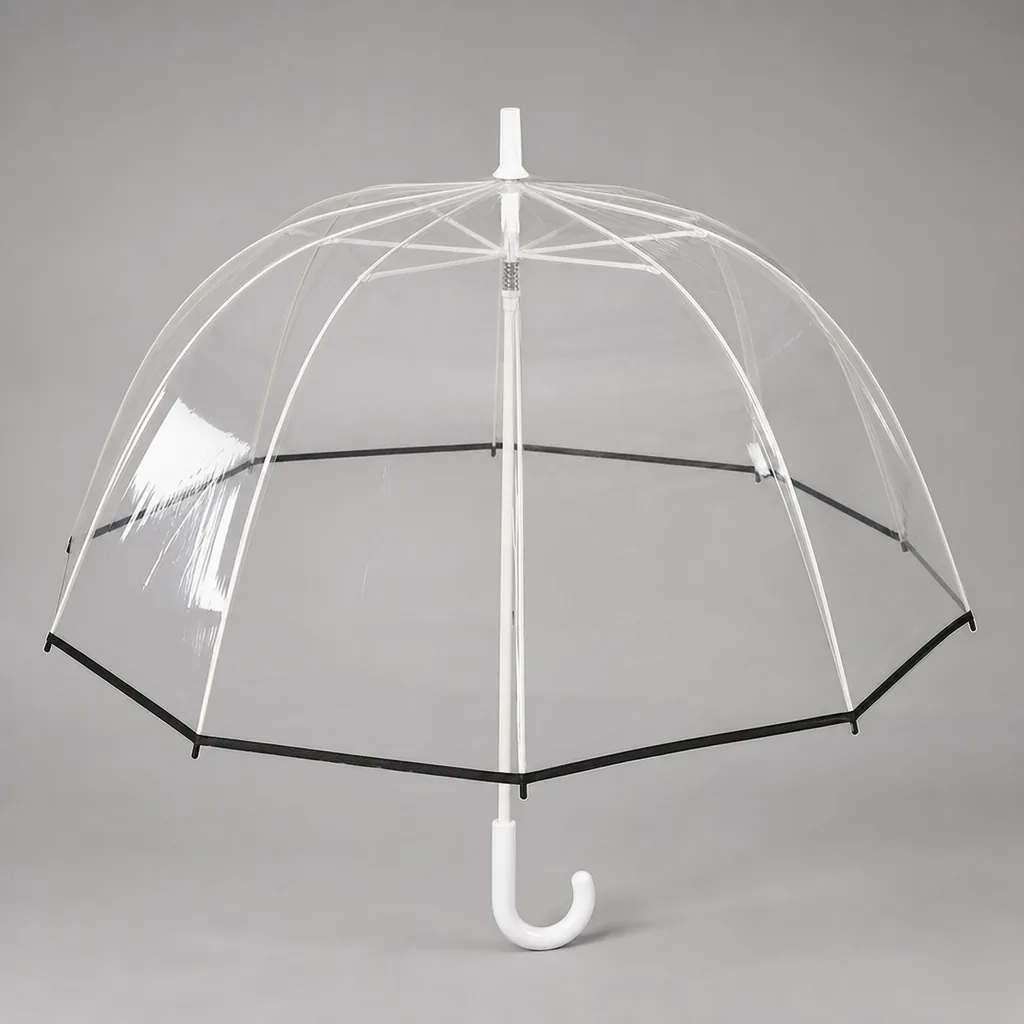
A profitable private label umbrella assortment is not built by picking three colors and asking for the lowest FOB price; it starts with matching each price tier to real-world construction, MOQ, packaging, and lead-time limits. On our Songxia production floor, the difference between good, better, and best shows up in fabric coating, rib material, shaft tolerance, handle finishing, and how the carton survives export handling.
Map the Buyer, Channel, and Target Retail Price
Start the private label umbrella assortment with the selling environment, not the catalog photo. Convenience stores need fast-grab 21" or 23" compact umbrellas, usually auto-open or manual, packed in a slim sleeve with a hang tag or counter display carton; their margin depends on low cube, quick replacement, and a retail price around $6.99–$12.99. Department stores can support 23" fashion folding umbrellas, 27" stick umbrellas, better handles, woven labels, and gift-ready belly bands because the shopper is comparing color, fabric hand-feel, and brand presentation. Travel retailers care about pack size, weight, and weather credibility: a 21" 3-fold auto-open-close with 190T pongee, fiberglass ribs, and a decent zipper pouch often sells better than a large stick umbrella that does not fit carry-on behavior. Corporate shops and campus stores usually want logo visibility, so 30" golf umbrellas, 8K or 10K fiberglass frames, and clean screen printing matter more than retail shelf density.
The math must be built backward from target retail price. A simple example: if a retailer wants a $9.99 compact umbrella and needs a 55% gross margin after freight and duty, the landed cost should stay near $4.50. If ocean freight, duty, inland delivery, and compliance add $0.80–$1.20 per unit, the FOB target may be only $3.30–$3.70. That points to a manual 21" 3-fold, steel shaft, steel ribs, 170T or light 190T polyester, basic sleeve, and one-color logo if any. For a $24.99 retail SKU with the same margin target, a landed cost around $11.25 can allow FOB $8.50–$9.80, which opens the door to 210T pongee, fiberglass ribs, auto-open-close, Teflon water repellent coating, better runner and spring tolerances, color-matched pouch, UPC labeling, and carton drop-test packaging. These umbrella price tier specs are not cosmetic differences; they change tooling, material purchasing, assembly time, and defect risk.
A $5 promo umbrella cannot use the same frame as a $25 retail SKU because the cost structure breaks before production even starts. The promotional item may tolerate a 6K or light 8K steel frame, thin fabric, loose sleeve stitching, and AQL 2.5 inspection focused on major functional defects. A retail umbrella sourcing program for department stores or travel shops usually needs smoother open-close action, stronger rib joints, lower fabric leakage, color consistency by lot, barcode accuracy, and packaging that survives distribution center handling. Our standard practice at ZheBrella is to separate the wholesale umbrella mix by frame platform first, then assign canopy, print, and packaging levels after the FOB band is confirmed. For an OEM umbrella program, that prevents the common mistake of approving a pretty pre-production sample that is impossible to repeat at volume without either raising FOB by 15%–25% or downgrading the ribs, runner, fabric denier, or coating during mass production.
Build Good, Better, Best Umbrella Specifications
For an entry private label umbrella assortment, I would not over-engineer the product: use a 21" or 23" manual or auto-open straight umbrella with 8K steel ribs, a steel shaft, and 190T polyester canopy. This tier is for checkout counters, campus bookstores, event giveaways, and emergency rain purchases, so the buyer cares more about landed cost and acceptable appearance than wind-tunnel claims. A basic plastic J-handle or straight PP handle is enough, and the sleeve should be the same 190T fabric with one-color logo printing to avoid waste. If you need compact models, a 21" 3-fold manual with steel ribs is the lowest safe spec, but I do not recommend ultra-light thin-gauge frames for retail unless your AQL inspection is strict. For umbrella price tier specs, entry goods should pass normal open-close cycling, seam tension, and water repellency checks, but you should not promise 50+ mph wind resistance on steel-only frames.
The better tier is where retail umbrella sourcing usually becomes profitable instead of just cheap. A strong mid-tier spec is 23" or 27" auto-open with 8K fiberglass ribs, a steel or fiberglass shaft depending on target price, and 190T pongee canopy with better hand feel than polyester. Pongee prints cleaner for logo panels, especially with heat transfer or screen printing, and it dries faster in store-use tests. I prefer EVA or rubberized handles here because they reduce returns from cracked plastic grips, especially in cold markets. Add a matching sleeve with piping or a woven label, and use a metal tip and decent runner instead of the cheapest ABS fittings. For an OEM umbrella program, this tier can support color blocking, contrast binding, and UPF 50+ coating without making the product too expensive for department stores or corporate distributors.
The best tier should visibly justify the price before the customer even opens the canopy. Use 16K fiberglass ribs for a dense, stable silhouette, or choose an 8K/10K double-canopy vented windproof frame if your market has coastal rain and gusts. A 210T pongee canopy with Teflon water-repellent finish feels tighter, sheds rain better, and gives a cleaner edge after sewing than low-grade polyester. For premium golf umbrellas, 30" double-canopy with fiberglass shaft and ribs is a practical spec; for executive compact models, choose 21" auto-open-close with reinforced ribs and a three-section plated steel shaft. Handles should be real wood, PU leather wrap, or high-density EVA, not hollow shiny plastic. Our standard practice at ZheBrella is to separate this tier during AQL 2.5 inspection because premium buyers notice loose caps, uneven sleeve stitching, and slow auto-open mechanisms. A balanced wholesale umbrella mix usually carries fewer premium SKUs, but they protect brand perception.
Choose Colors, Prints, and Packaging for Shelf Impact
Color planning should start with core solids, not prints. For a private label umbrella assortment, I normally build the base around black, navy, charcoal, forest green, and one warm neutral because these colors sell across men’s, women’s, travel, and corporate use without creating slow inventory. For seasonal drops, Pantone matching is worth the extra control: spring can take sage, cream, lavender, or sky blue, while fall usually supports burgundy, olive, camel, and deep teal. The important detail is fabric lot consistency. A 190T pongee canopy from one dye lot and a 210T pongee canopy from another will not look the same under store lighting, even if both are called “navy.” For retail umbrella sourcing, approve a fabric swatch under D65 light and lock the Pantone number, fabric denier, coating, and handle color in the spec sheet before bulk cutting.
Logo placement should match the price tier and the way the umbrella sits on shelf. On value 21" and 23" manual or auto-open models, one-panel screen printing is usually enough: clean, cheap, durable, and efficient for MOQs around 500 to 1,000 pieces per color. Put the logo on the lower outside panel if the umbrella is sold folded, or on the opposite panel from the closure strap if it will be displayed open. Mid-tier 23" and 27" auto-open umbrellas can support two-panel prints, contrast binding, or a small woven label on the sleeve. For a premium OEM umbrella program, sublimation or all-over print makes sense when the artwork drives the sale: florals, city maps, licensed patterns, museum graphics, or brand storytelling. Sublimation works best on polyester pongee and gives sharper gradients than screen printing, but it requires tighter color proofing and higher minimums because every panel must be aligned before sewing.
Packaging is where many brands either protect margin or waste money. A basic wholesale umbrella mix may only need a matching fabric sleeve, UPC barcode sticker, and hangtag with size, mechanism, canopy fabric, and care instructions. Retail-boxed umbrellas are better for gift programs, department stores, and higher price points, but the box must be designed around the folded length: a compact 21" auto-open-close umbrella needs very different carton dimensions than a 30" golf umbrella with fiberglass ribs and EVA handle. Hangtags should state practical specs buyers understand, such as 210T pongee, UPF 50+ coating, windproof double canopy, or fiberglass 8K frame, but only if the factory has tested and built to that spec. Our standard practice at ZheBrella is to scan every barcode during final packing and include packaging checks in AQL 2.5 inspection, because a perfect umbrella with the wrong barcode still becomes a retail chargeback.
Set MOQ, Sampling, and Production Rules by SKU Count
MOQ is not only about total order quantity; it is driven by how many unique canopies, handles, frames, tips, sleeves, and logo setups you create. A 5,000-piece private label umbrella assortment sounds efficient until it becomes 10 colors across 3 handle styles and 2 print positions. Now the factory is buying separate 190T pongee fabric lots, molding or sourcing different handles, changing screen-print fixtures, and holding odd leftover components. For a practical retail umbrella sourcing plan, I would rather see 3 core colors at 1,200 to 1,500 pieces each than 9 colors at 300 pieces each. Most component suppliers in Shangyu quote better when one shaft, one runner, one rib set, and one handle can feed multiple SKUs. If the line includes 21-inch compact auto-open-close, 23-inch stick auto-open, and 27-inch golf umbrellas, keep common colors, common logo artwork size, and one packaging format wherever possible.
Sampling rules should be tied to SKU complexity. A plain stock-frame sample with logo print usually takes 5 to 7 days after artwork approval, while a new handle color, custom molded grip, special POE/PVC/EVA canopy, or sublimation all-over print can take 10 to 18 days. Pre-production samples should confirm fabric weight, rib count, mechanism feel, coating, barcode label, sleeve, and carton marks before bulk cutting starts. For an OEM umbrella program, I do not recommend approving only a digital mockup; check one opened sample, one closed sample, and one packed sample because many buyer complaints come from sleeve fit, crooked heat-transfer logos, weak snap buttons, or carton labeling errors. Our standard practice at ZheBrella is to lock the approved sample with a signed spec sheet, then inspect bulk against that control sample under AQL 2.5 for major defects.
Bulk lead time is usually 25 to 35 days for repeat items using stocked frames and standard 190T/210T pongee, but 40 to 55 days is safer when the assortment includes custom colors, UV UPF 50+ coating, Teflon treatment, double-canopy vented windproof construction, or retail packaging. Carton planning matters early: compact umbrellas often pack 50 pieces per export carton, 23-inch stick umbrellas around 24 to 36 pieces, and 27-inch or 30-inch golf umbrellas around 12 to 24 pieces depending on handle and sleeve. Good umbrella price tier specs consolidate hidden parts: use the same fiberglass rib system across mid-tier colors, the same steel shaft on entry items, and one hangtag family across the wholesale umbrella mix. That lets procurement add visible variety while keeping MOQ, spare parts, inspection standards, and inventory exposure under control.
Control Quality Across Multiple Price Tiers
Tier-specific QC starts with writing the standard against the price point, not against a wish list. For a private label umbrella assortment, I would split opening-cycle targets by mechanism: manual umbrellas should survive at least 500 open/close cycles, auto-open models 1,000, and auto-open-close styles 1,500 or more before button failure, spring loss, or shaft wobble appears. Seam strength should be tested on a 25 mm strip, with entry-level goods held to a minimum that avoids panel separation under normal rain use, while premium tiers need tighter pull strength and less stitch slippage. Water repellency should be specified by spray rating and dry-down time, not vague “waterproof” language. Rib alignment matters too: canopy panels should track the frame line, and the tip-to-tip offset should stay within a defined tolerance, especially on 8K and 10K frames. For retail umbrella sourcing, AQL 2.5 is the right baseline for critical and major defects, with separate checks for appearance and function during the final lot audit.
On entry-level goods, some cosmetic noise is acceptable if it does not affect use. That means small thread tails, minor panel shade variation, slight heat-transfer edge softness, or a faint crease from packing can pass on a budget wholesale umbrella mix. What cannot pass at any tier is a hole in the canopy, broken rib, inverted ferrule, missing tip, sharp wire exposure, failed opening, or a seam that bursts under normal hand tension. For an OEM umbrella program, I also reject button sticks, shaft binding, and ribs that do not lock symmetrically because those problems turn into returns fast. At the low end, a small amount of print misregistration may be tolerated if the artwork still reads cleanly; at mid and premium tiers, that same defect becomes a miss because the buyer is paying for tighter umbrella price tier specs and a cleaner private label finish. The rule is simple: if the defect affects rain protection, safety, or basic operation, it is not acceptable anywhere.
The QC plan should be written as three separate gates: incoming materials, in-process assembly, and finished-goods inspection. Our standard practice is to verify fabric GSM, coating consistency, rib straightness, and spring force before mass production, then recheck sample lots during stitching and frame assembly so problems are caught before packing. For a private label umbrella assortment, that lets you loosen only the cosmetic limits on entry-level SKUs while holding the same functional floor across the whole line. I would also define reject photos for rib misalignment, seam puckering, panel twist, and canopy tilt, because inspectors need visual references, not just words. During final inspection, run AQL 2.5 by lot, but separate critical defects from minor ones; a cheap promotional umbrella may allow a tiny mark on the canopy, but it should never ship with skewed ribs, poor snap action, or water that sheets through the seam after a spray test. That is how you protect the program without overbuilding the lowest tier.
Frequently Asked Questions
How many umbrella SKUs should a new private label program start with?
Most buyers should start with 3 to 6 SKUs: one compact, one straight umbrella, one premium windproof model, and 2 to 3 color variations. This keeps MOQ and inventory manageable while still covering common retail needs.
Can different price tiers share the same logo tooling?
Yes. The same logo film, heat-transfer artwork, or woven label can often be used across compact and straight umbrellas if the print size is planned early. This reduces setup cost and improves brand consistency.
How should a buyer split MOQ across good, better, and best tiers for a first assortment?
A practical opening mix is 50-60% entry tier, 30-35% mid tier, and 10-15% premium tier, with MOQ often built around 500-1,000 units per SKU. If the factory allows color pooling on shared frames, buyers can test 3-5 designs without overcommitting to slow-moving premium units.
Which specs usually move a private label umbrella from mid tier to premium tier?
The biggest upgrades are fiberglass or reinforced ribs, pongee or recycled fabric, auto open-close mechanics, rubberized or wood-look handles, and retail-ready packaging. These changes typically add both perceived value and cost, so buyers should confirm target FOB bands before locking artwork.
Can different price tiers share components to simplify sourcing and reduce inventory risk?
Yes, many importers standardize parts like shafts, tips, closures, or handle molds across tiers while changing canopy fabric, print coverage, or frame strength. This can shorten development by 7-10 days and helps consolidate component purchasing for better MOQ efficiency.
Looking to Launch Your Custom Umbrella Line?
ZheBrella is a Zhejiang-based OEM/ODM umbrella manufacturer with 17 years of export experience. Free design, low MOQ from 100 pieces, windproof construction, full-color print.
Get Free Quote Now »People Also Search For
Related Articles
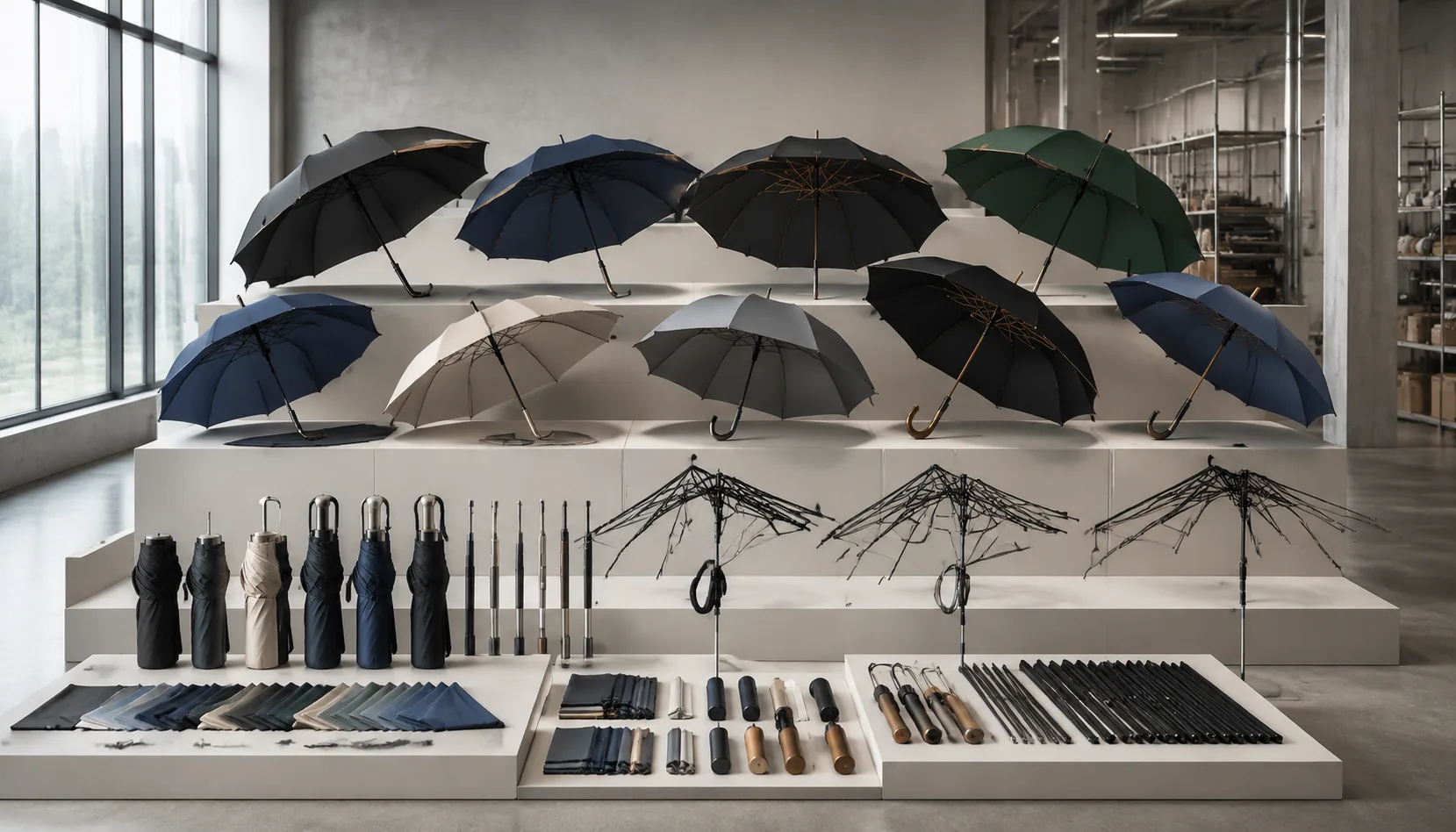
Retail Umbrella Assortment Planning: Specs by Price Tier
Plan a private-label umbrella range with 3-fold, stick, and golf models, clear good-better-best specs, realistic MOQs, F...
Read More »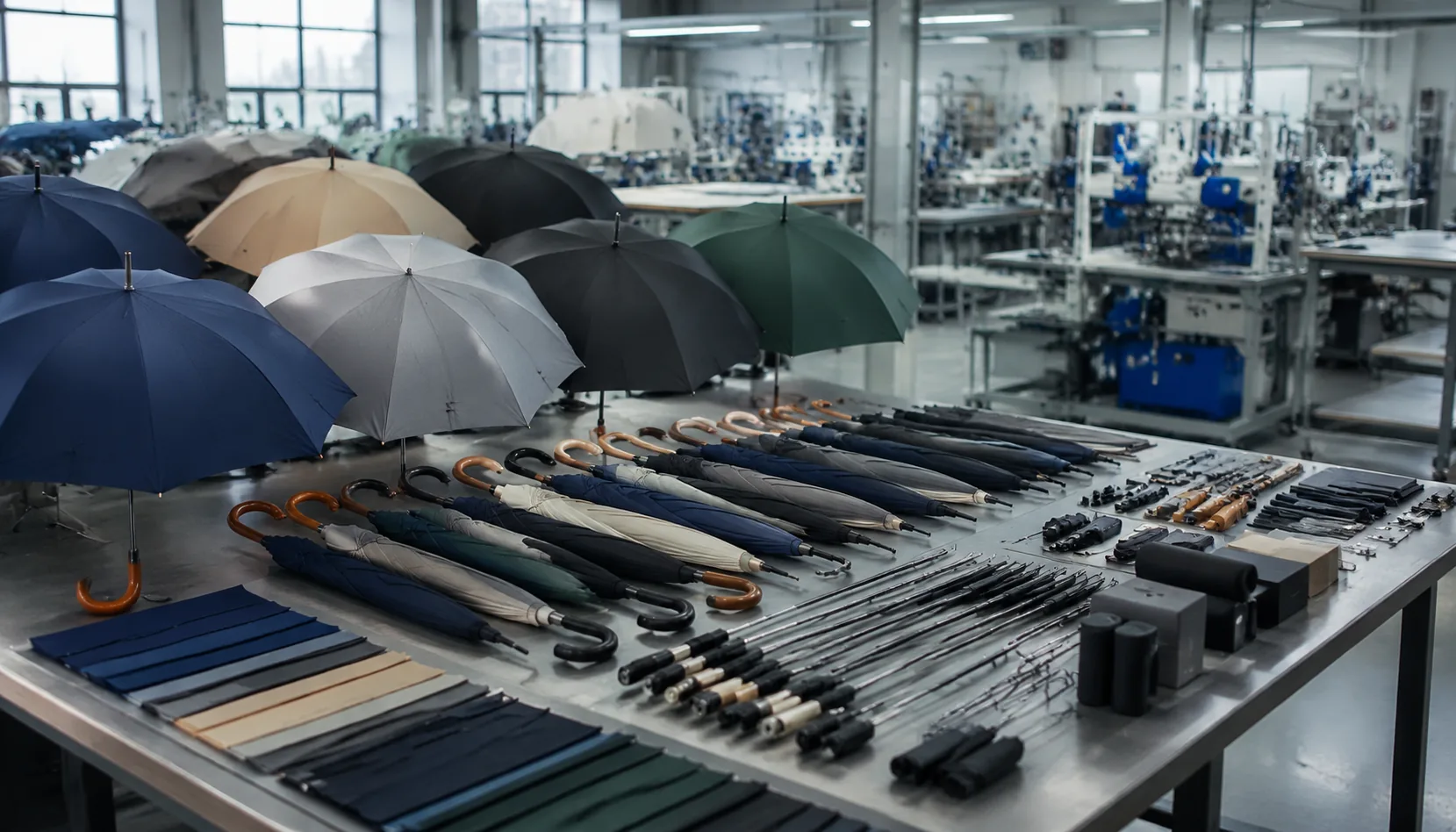
Retail Umbrella Assortment Planning: SKU Specs That Sell
Plan retail umbrella SKUs by size, rib count, fabric, packaging, and MOQ to balance shelf price, durability, and repleni...
Read More »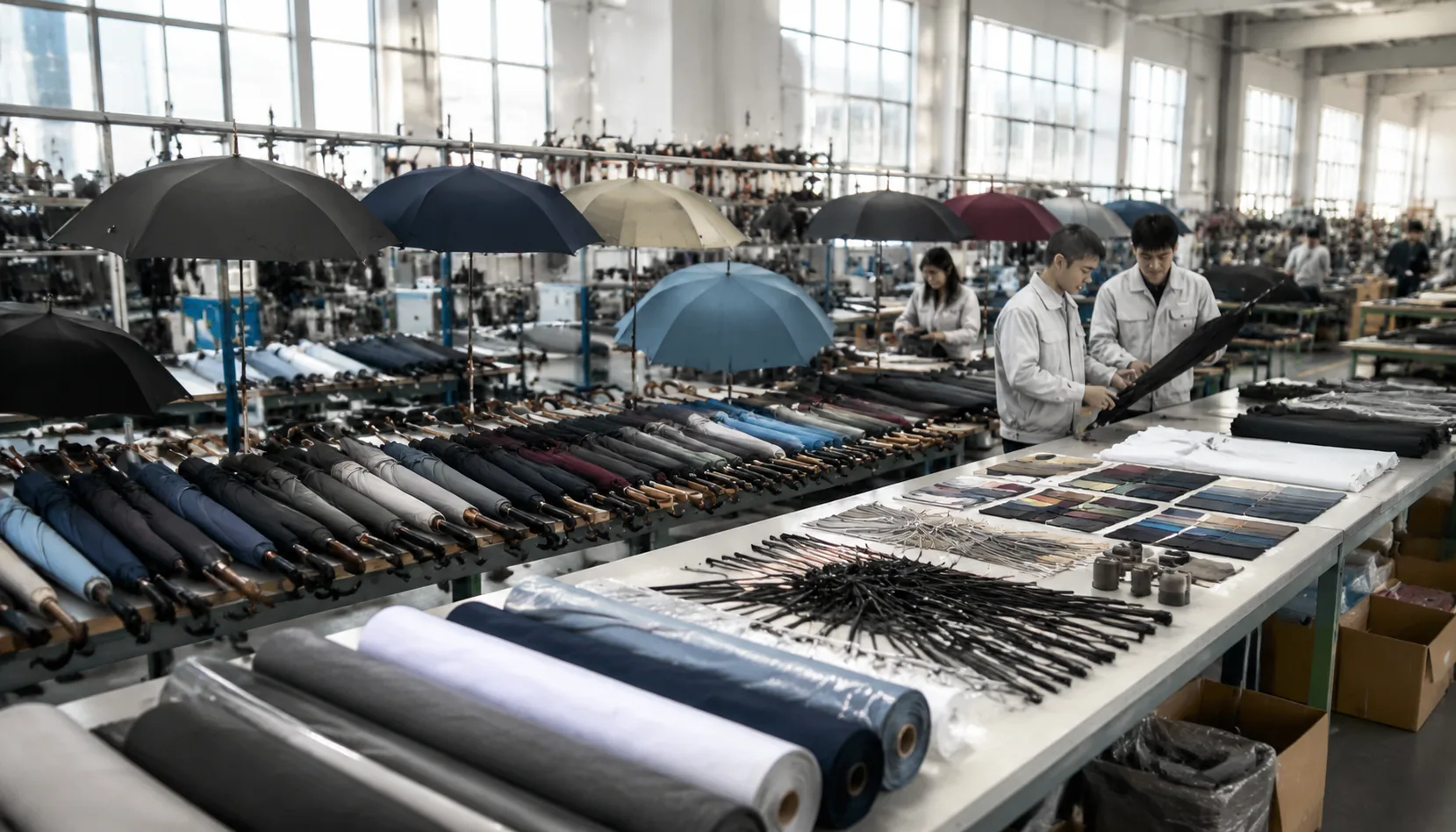
Private Label Umbrella Line Planning for Retail Buyers
Plan a retail-ready umbrella line with good-better-best specs, MOQ tiers, fabrics, rib counts, packaging, and lead-time ...
Read More »