RPET Recycled Umbrellas for Retail and Corporate Orders
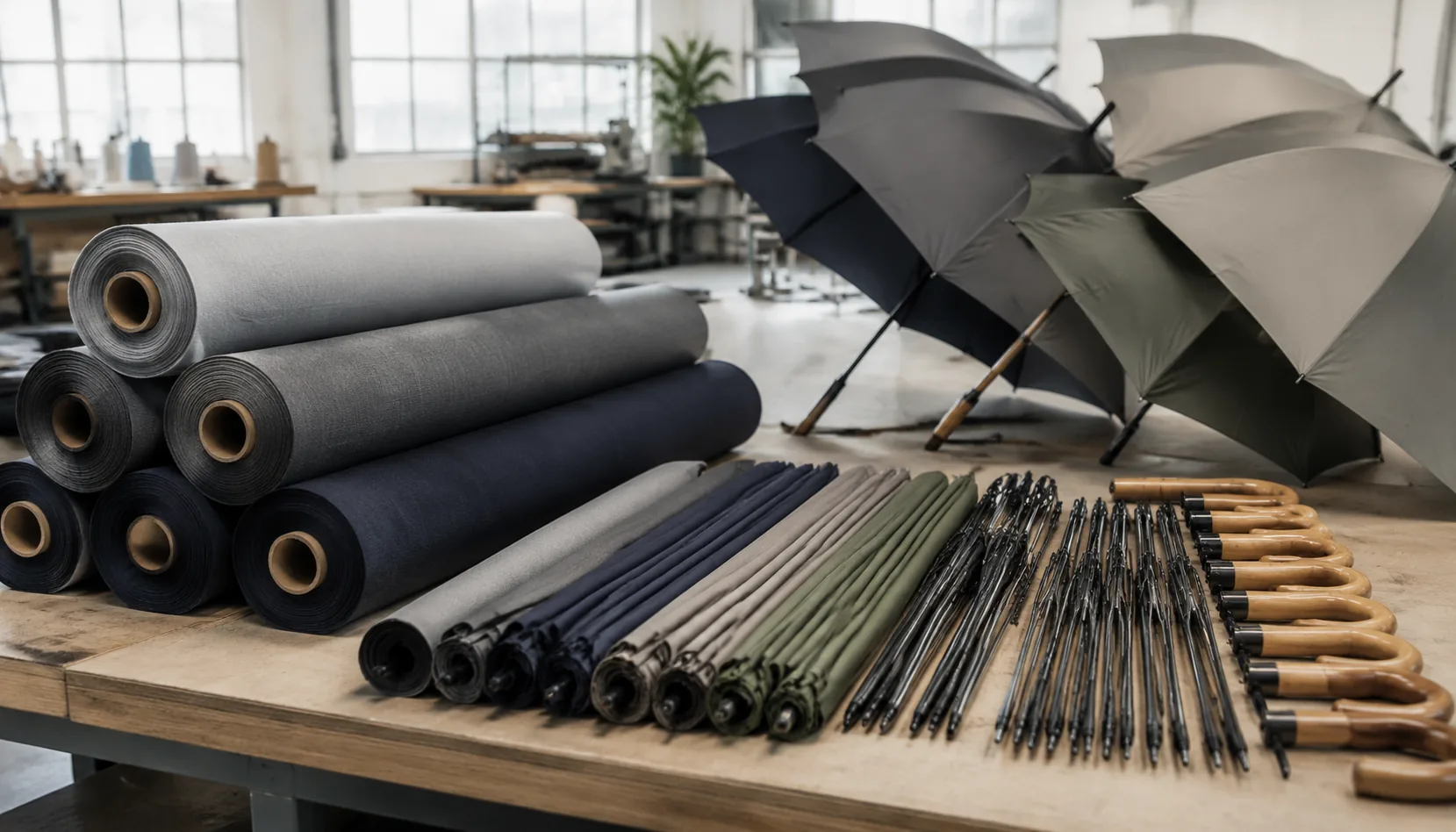
Retail and corporate buyers often ask for sustainable umbrellas, but the real risk is ordering a “green” product without clear fabric traceability, print limits, or durability checks. On our Songxia factory floor, RPET recycled umbrellas start with verified yarn and fabric specs, then move through frame matching, logo sampling, color control, and rain/wind testing before bulk production. Getting those details right early keeps launch schedules, compliance files, and brand presentation under control.
What RPET Means in Umbrella Production
RPET yarn is polyester made by melting, filtering, and re-spinning post-consumer PET, usually clear beverage bottles, into filament suitable for weaving umbrella canopy fabric. In practical buyer terms, it is not paper-like, weak, or visibly “recycled”; it is still polyester, but the raw chip source changes from virgin petroleum-based resin to certified recycled PET flake or pellet. For umbrellas, the yarn is typically woven into recycled pongee, then dyed, finished, and coated much like standard pongee. A reliable RPET umbrella manufacturer should be able to match canopy fabric to a transaction certificate or GRS/RCS documentation, because “green fabric” without chain-of-custody proof will not pass serious retail or corporate compliance review.
Most retail and promotional RPET recycled umbrellas use 190T or 210T recycled pongee umbrellas as the canopy base. The “T” refers to thread density, not thickness alone: 190T is lighter, folds cleaner on compact 21 inch and 23 inch umbrellas, and is usually enough for giveaways, conferences, campus stores, and mid-price corporate programs. 210T has a tighter hand feel, better opacity, and a smoother print surface, so I prefer it for retail sticks, golf umbrellas in 27 inch or 30 inch sizes, and projects using fine logos or edge-to-edge sublimation. Both can take PU, PA, Teflon-style water-repellent finishing, and UV coatings up to UPF 50+ when specified correctly.
Compared with virgin polyester, RPET canopy fabric behaves very similarly in cutting, sewing, printing, and rain performance, but it needs tighter incoming inspection because recycled yarn batches can vary slightly in shade, shrinkage, and surface uniformity. On the factory floor, the biggest mistakes happen when buyers approve a virgin 190T pongee sample and later switch to RPET without rechecking color, logo registration, and coating hand feel. For eco friendly umbrellas wholesale, I recommend confirming GSM, colorfastness, hydrostatic pressure or spray rating, and whether the canopy will be screen printed, heat transferred, or sublimated before pricing. A sustainable umbrella supplier should also separate fabric claims from full-product claims: the canopy may be RPET, while ribs, shaft, runner, handle, tips, and sleeve may still use steel, fiberglass, ABS, EVA, or virgin polyester unless specified otherwise.
Frame Choices That Match Sustainable Positioning
For retail buyers, the frame should support the sustainability story without creating warranty headaches. Fiberglass ribs are my first recommendation for most RPET recycled umbrellas because they flex instead of permanently bending, which matters when customers abuse umbrellas in city wind. A 23" stick umbrella with 8K fiberglass ribs and a steel shaft can pass a 50+ mph wind-tunnel target if the rib thickness, runner fit, and tip stitching are controlled. Steel is heavier and can rust if plating is poor, but it gives a solid hand feel and keeps cost stable for corporate programs. Aluminum is lighter and reads “premium,” yet thin aluminum ribs deform faster than fiberglass under side gusts, especially on compact auto-open-close models.
Recyclability messaging needs to be honest. Steel and aluminum are easier to explain as recyclable metals, but an umbrella frame is not a single-material product; springs, rivets, plastic runners, handles, and canopy stitching make end-of-life separation difficult. For recycled pongee umbrellas, I prefer saying “RPET canopy with recyclable metal frame components” instead of claiming the whole umbrella is recyclable. Fiberglass is not recyclable in normal municipal streams, but it extends product life, which is also part of a responsible specification. A sustainable umbrella supplier should help buyers avoid false claims, especially for EU and North American retail packaging where environmental wording may be reviewed by compliance teams.
Rib count changes both performance and positioning. An 8K frame is the workhorse for eco friendly umbrellas wholesale: clean silhouette, good pricing, and enough strength for 21" compact, 23" stick, and 27" golf styles when paired with 190T or 210T RPET pongee. A 16K frame looks more premium and spreads canopy tension better, but it adds weight, sewing time, and inspection points; it fits better on 23" executive sticks and 27"–30" golf umbrellas than on pocket compact models. As an RPET umbrella manufacturer, our standard practice is to match fiberglass ribs with steel shafts for value programs, fiberglass ribs with aluminum shafts for lighter retail lines, and full steel only when the buyer prioritizes low MOQ cost over windproof positioning.
Coatings, Waterproofing, and Sun Protection
For RPET recycled umbrellas, the coating decision matters as much as the recycled yarn certificate. A 190T or 210T recycled pongee canopy normally starts with a water-repellent finish on the face side, then we choose whether to add PU, silver coating, or black glue on the back. Standard water repellency is enough for promotional 21" and 23" auto-open models, but retail programs usually ask for better beading after 3–5 spray tests and no sticky hand feel after packing. In production, we check coating uniformity before cutting because thin spots show up as light patches after sewing, especially on dark navy, forest green, and black panels.
Black glue gives the best opacity and is the usual route for UPF 50+ claims because it blocks light more consistently than a light PU back coating. Silver coating is cheaper and reflects heat well, but it can feel crisper, crease more visibly, and sometimes shows pinholes around stitch lines if the fabric is over-tensioned on 8K or 10K frames. For recycled pongee umbrellas sold as sun umbrellas, buyers should request a lab report against AS/NZS 4399 or AATCC 183 instead of relying on a hangtag statement. Our standard practice at ZheBrella is to confirm UPF after the final coated fabric is approved, not from an uncoated greige sample.
Coating also affects printing, and this is where many eco friendly umbrellas wholesale orders get messy. Screen printing sits well on the outer pongee face, but heavy back coatings reduce fabric flexibility, so large logos across seam areas can crack if the umbrella is folded tight for 30" golf sizes. Heat transfer needs controlled temperature because RPET yarn and coating can shrink differently, while sublimation works best on white or light recycled polyester before any dark backing is applied. A serious RPET umbrella manufacturer should lock the canopy fabric, coating weight, Pantone target, and print method in the pre-production sample, then run AQL 2.5 inspection for coating stains, print adhesion, water repellency, and light leakage before shipment.
Branding, Labels, and Packaging Specs
Branding on RPET recycled umbrellas should be specified at artwork level, not left as “eco logo printed.” For retail and corporate orders, the cleanest options are 1–2 color screen printing on 190T or 210T recycled pongee panels, heat-transfer for tight gradients, and sublimation only when the canopy fabric is white or very light. On a 23" 8K straight umbrella, we usually keep a panel logo inside a 180 x 120 mm safe area to avoid distortion near the rib seams; on 21" folding models, 140 x 90 mm is safer. If the umbrella has a Teflon or UV UPF 50+ coating, confirm print adhesion after coating because some inks sit poorly on treated fabric. For repeat retail programs, ask for a signed strike-off before bulk cutting, then check logo position, Pantone match, and rub resistance during inline inspection, not only at final AQL 2.5.
Labels need the same discipline as canopy branding. A woven RPET label can be sewn into the sleeve seam, handle strap, or inner canopy edge, but the purchase order should state label size, fold type, yarn color, and exact wording. I prefer 25 x 35 mm center-fold labels for sleeves because they do not curl after packing, while a 15 x 50 mm flag label works better on a closing strap. If you call the product “recycled pongee umbrellas,” the buyer file should identify the fabric composition, such as 100% recycled polyester pongee canopy, and attach the RPET yarn or fabric certificate from the nominated mill. Do not mix unverified phrases like “zero waste,” “plastic free,” or “carbon neutral” into hangtags unless you have documents to support them; customs, retail compliance teams, and EU/US distributors are getting stricter on these claims.
Packaging specs should be written as a bill of materials: recycled paper belly band, RPET or matching pongee sleeve, kraft hangtag, master carton, inner polybag if required, and carton marks. For eco friendly umbrellas wholesale, many buyers ask to remove individual OPP bags, but I only recommend that when the sleeve fabric is dark and the carton has a liner; light canopies can pick up carton dust during sea freight. A typical 23" auto-open carton packs 36 pcs, while compact 21" auto-open-close models often pack 48 pcs, depending on handle weight and sleeve thickness. Carton marks should show item number, color, quantity, gross/net weight, carton size, PO number, country of origin, and barcode if retail distribution requires scanning. A sustainable umbrella supplier or RPET umbrella manufacturer should also keep packaging claim documents consistent with the product: recycled paper percentage, FSC status if used, and whether the sleeve is virgin pongee or RPET.
Certification, MOQ, and Quality Control
Certification is where RPET orders either stay clean or become a paperwork problem. For retail and corporate buyers asking for claimable recycled content, ask whether the fabric is made from GRS-certified yarn and whether a Transaction Certificate, usually called a TC, can be issued for the finished fabric or umbrella lot. A hangtag that says “made from recycled bottles” is not the same as traceability. In our factory workflow, the RPET yarn certificate, fabric mill scope certificate, dye lot record, and purchase invoice must line up before we approve production labeling. For RPET recycled umbrellas using 190T or 210T recycled pongee, certified material normally carries a higher MOQ than non-certified recycled fabric because the mill needs to run and document a controlled batch. A practical starting point is often 1,000–3,000 pieces per color for standard corporate umbrellas, but GRS/TC-backed fabric may push that higher depending on canopy color, coating, and printing method.
MOQ should be separated by umbrella structure, not quoted as one flat number. A 23 inch 8K auto-open umbrella with recycled pongee canopy is easier to schedule than a 30 inch golf umbrella with fiberglass shaft, double-canopy venting, UPF 50+ coating, and full-panel heat-transfer printing. For stock frame models, bulk lead time is commonly 30–45 days after artwork approval and deposit; custom handles, matched ribs, special RPET webbing, or retail packaging can move that to 50–65 days. As a sustainable umbrella supplier, ZheBrella normally locks the frame BOM first, then confirms fabric booking, because certified RPET canopy fabric can become the bottleneck. Buyers planning eco friendly umbrellas wholesale should also allow 5–10 days for sample making, print strike-off approval, and color matching, especially when Pantone logos sit on dark navy, black, or bottle-green canopies.
Quality control for recycled pongee umbrellas should be the same as conventional umbrellas; the recycled story does not excuse weak mechanics. Use AQL 2.5 for major defects and define critical failures separately: broken ribs, auto-open malfunction, sharp burrs, canopy leakage, wrong logo placement, or failed seam strength. A proper inspection checks canopy diameter, rib count, runner lock, tips, stitching density, print adhesion, waterproof coating, color shade, carton drop condition, and open-close cycling. For windproof models, specify fiberglass vs steel ribs and whether the design is rated for 50+ mph gust testing or only described as “wind resistant.” FOB/DDP planning should start before mass production, not after cartons are packed. RPET umbrella manufacturer paperwork, carton marks, HS code, retail barcode labels, polybag warnings, and destination compliance documents all affect shipment timing. FOB Ningbo or Shanghai is usually simplest; DDP requires duty, VAT, last-mile delivery, and Amazon or retailer routing rules to be built into the timeline.
Frequently Asked Questions
Is RPET pongee as durable as standard pongee?
For most retail and promotional orders, 190T or 210T RPET pongee performs similarly when yarn quality, coating, and stitching are controlled. Buyers should approve pre-production samples before bulk production.
Can every RPET umbrella order include GRS certification?
Only if certified material and a certified production chain are used. Buyers should confirm documentation needs before quotation because certified RPET can affect MOQ, cost, and lead time.
What fabric specifications should buyers request for RPET recycled umbrellas?
For retail and corporate orders, buyers commonly request 190T or 210T RPET pongee fabric with water-repellent coating. Ask for fabric weight, yarn count, colorfastness results, and whether the material can be supported with GRS or recycled-content documentation.
What is a typical MOQ for custom RPET umbrellas?
MOQ depends on the umbrella frame, print method, and fabric color. A typical custom RPET umbrella order starts around 500 to 1,000 pieces per design, while custom PMS fabric dyeing or private-label packaging may require higher quantities.
Can RPET umbrellas support retail packaging and corporate logo printing?
Yes. Common options include silk screen printing, heat transfer, digital printing, woven labels, hang tags, sleeves, and branded cartons. For retail programs, confirm barcode labeling, carton marks, and packaging artwork requirements before sampling.
Looking to Launch Your Custom Umbrella Line?
ZheBrella is a Zhejiang-based OEM/ODM umbrella manufacturer with 17 years of export experience. Free design, low MOQ from 100 pieces, windproof construction, full-color print.
Get Free Quote Now »People Also Search For
Related Articles
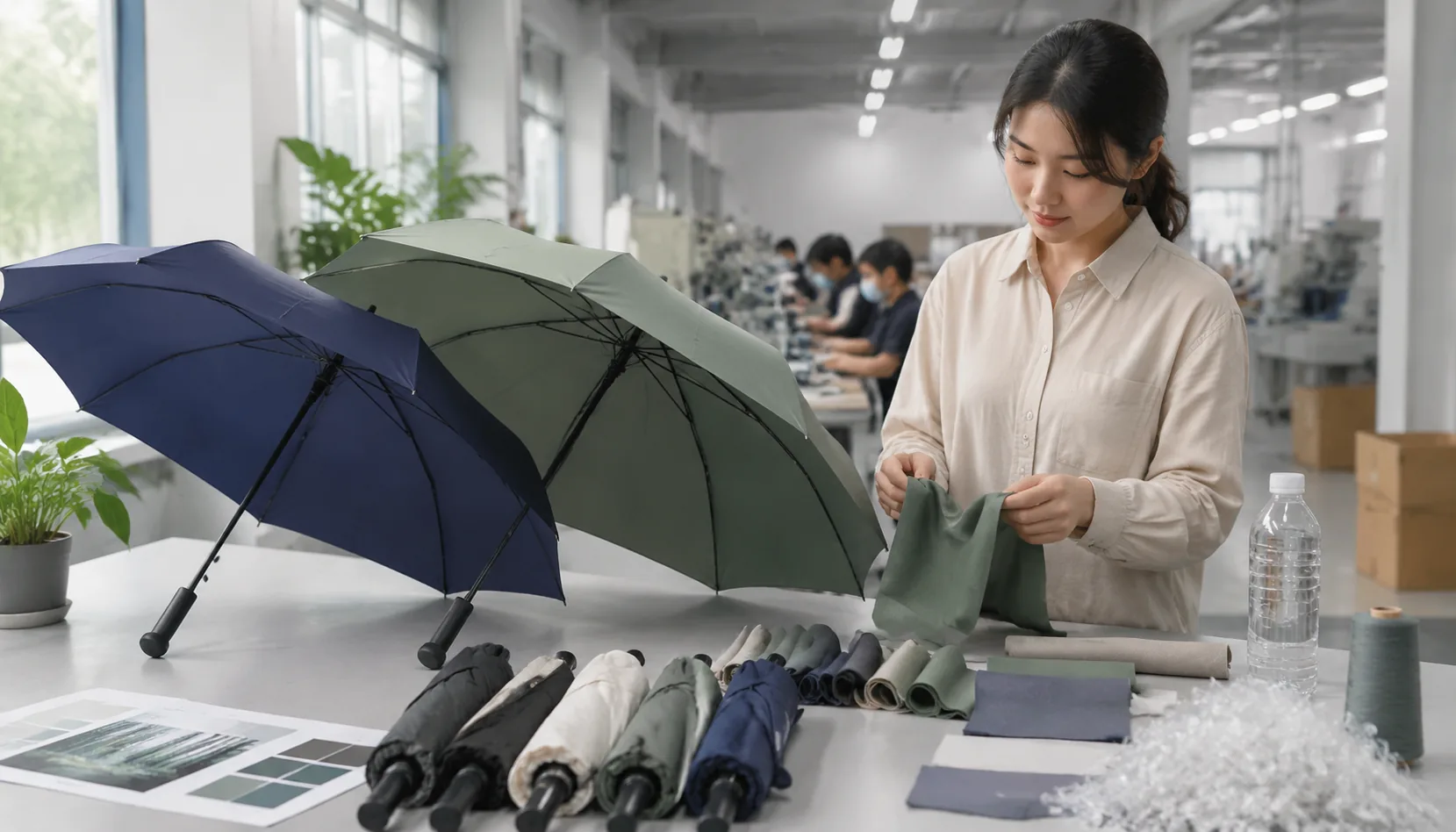
RPET Pongee Umbrellas: Buyer Guide for Sustainable Orders
Source RPET pongee umbrellas with verified recycled fabric, 190T or 210T specs, GRS documents, print options, MOQ planni...
Read More »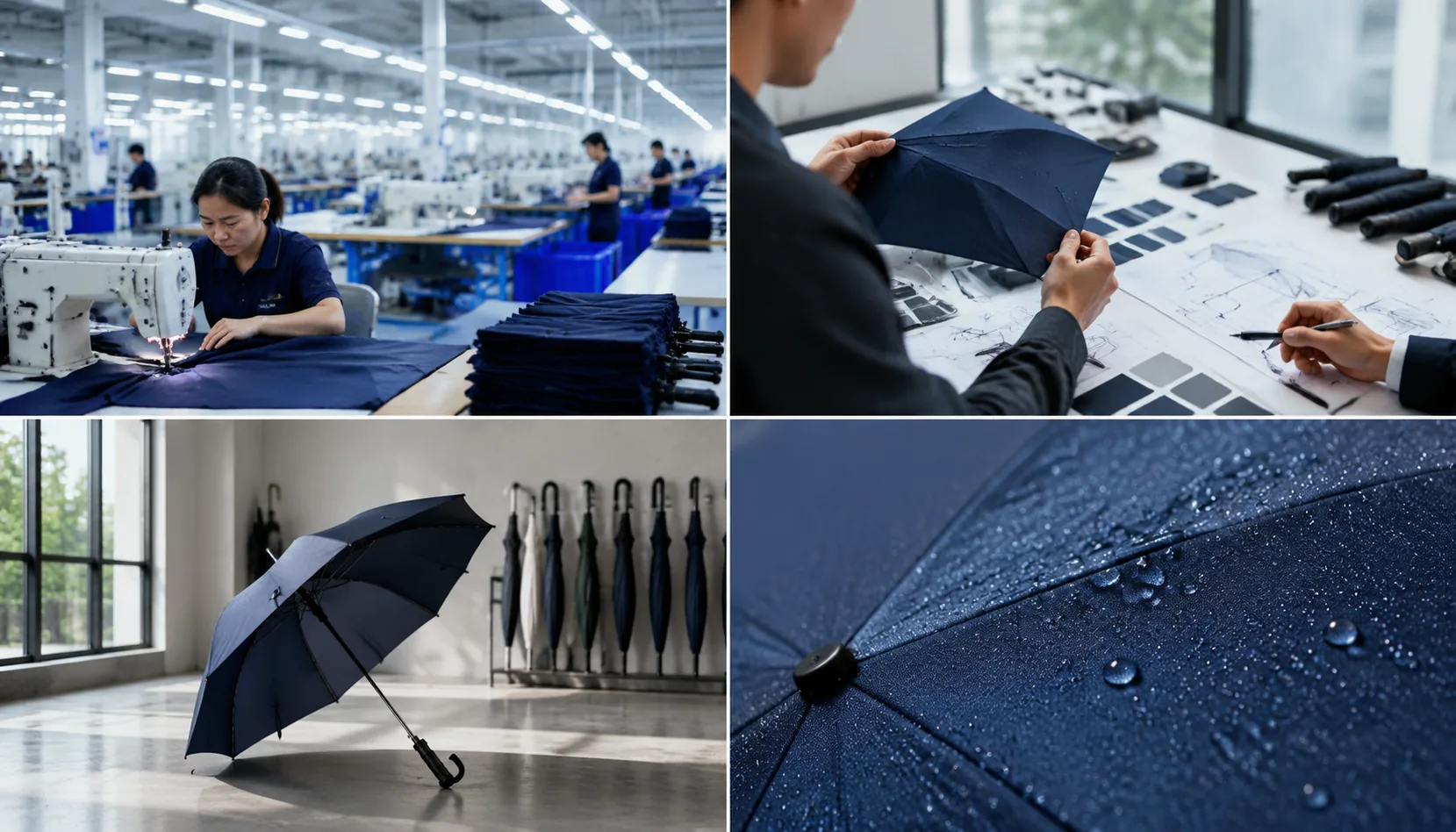
RPET Recycled Umbrellas: Buyer Specs for Brand Orders
Specify RPET recycled umbrellas with certified pongee fabric, frame choices, coating options, MOQ, documentation, AQL 2....
Read More »
RPET Recycled Fabric Umbrellas: OEM Buyer Guide
Learn how to specify RPET umbrella fabric, coatings, frames, labels, MOQ, and QC requirements for sustainable retail and...
Read More »