RPET Recycled Umbrellas: Buyer Specs for Brand Orders
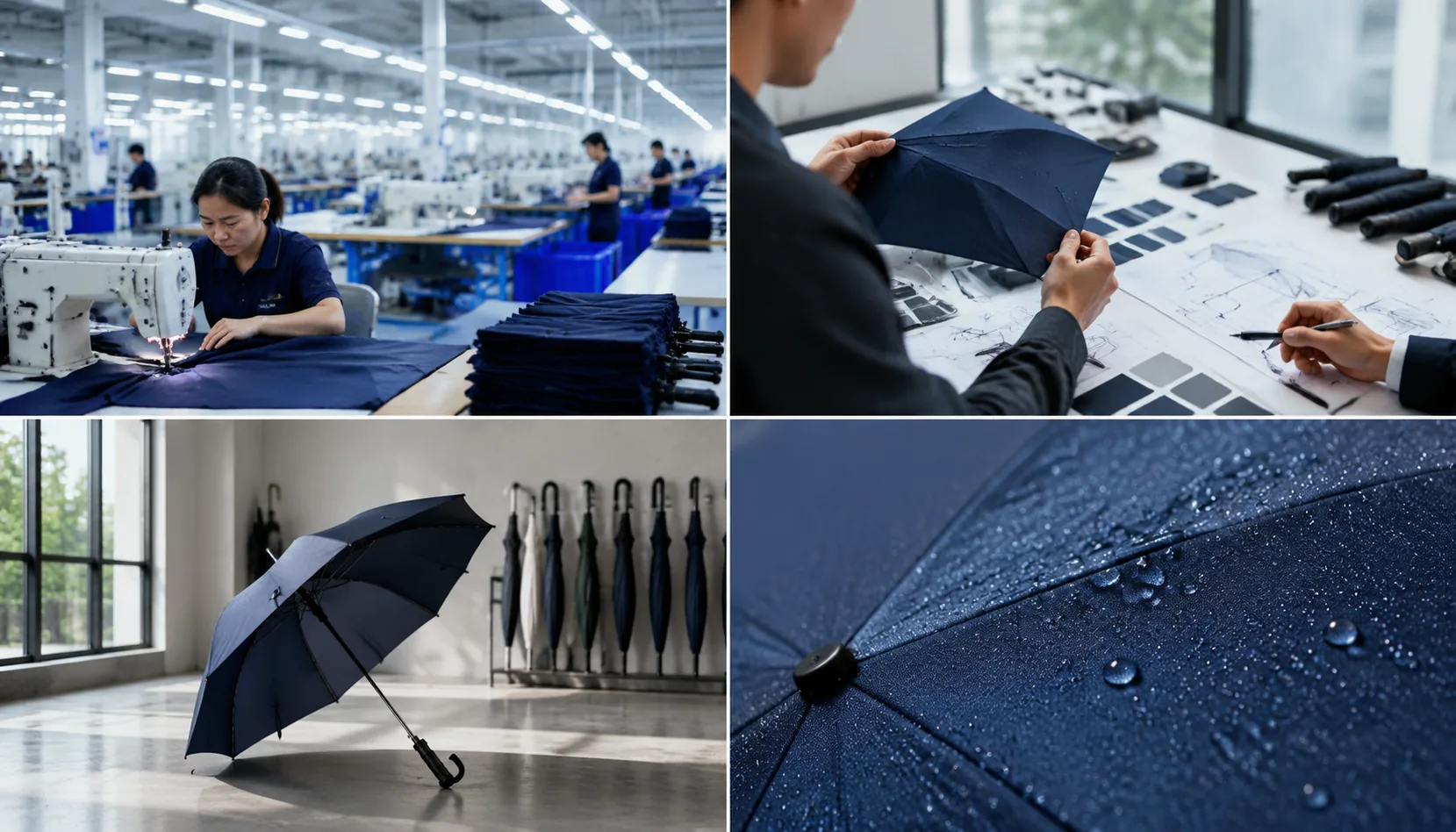
For brand buyers, RPET umbrella sourcing usually fails in the gaps between sustainability claims and production-ready specs: fabric certification, coating performance, frame strength, MOQ, documents, inspection limits, and ship-date reality. As an RPET recycled umbrellas manufacturer in Songxia, we see orders run smoothly when the brief locks down certified pongee, frame materials, AQL 2.5 criteria, and lead-time buffers before sampling starts.
What Makes an Umbrella an RPET Product
An RPET umbrella is usually an umbrella with recycled polyester fabric, not a fully recycled product. The RPET yarn starts with post-consumer PET bottles: bottles are sorted, washed, crushed into flakes, melted into chips, and spun into polyester filament. That yarn is then woven into 190T or 210T pongee, dyed, coated, cut into canopy panels, and sewn just like virgin polyester. In most buyer specs, RPET is used for the canopy and matching sleeve because those parts are textile-heavy and easy to document. The shaft, ribs, runner, tips, springs, and handle are normally still steel, aluminum, fiberglass, plastic, EVA, or wood. A serious RPET recycled umbrellas manufacturer should make this boundary clear on the quotation and product spec sheet instead of implying the whole umbrella is made from recycled bottles.
The fabric claim must be separated from the sustainability claim. Recycled pongee umbrellas can still use a chrome-plated steel shaft, fiberglass ribs, ABS handle, nickel-plated springs, and conventional PU, Teflon, or UV coating. That does not make the order dishonest, but it means the correct wording is “canopy made from RPET fabric” or “RPET canopy and sleeve,” not “100% recycled umbrella.” For promotional programs, I also recommend listing the actual construction: 23 inch 8K auto-open, RPET 190T pongee canopy, fiberglass ribs, steel shaft, RPET sleeve, and printed logo by screen or heat transfer. This keeps marketing, procurement, and inspection teams aligned before mass production starts.
For brand orders, the strongest proof is traceability, not a green hangtag. GRS certified umbrellas require certified material flow from yarn supplier to fabric mill to umbrella factory, with transaction certificates supporting the recycled content. If a buyer only needs eco promotional umbrellas for an event, a supplier declaration plus RPET fabric test report may be enough; if the product goes into retail or ESG reporting, ask for GRS scope certificates and confirm whether the factory can issue the needed TC for your PO. Our standard practice at ZheBrella is to mark RPET content by component, because sustainable umbrella OEM work fails inspection when the claim is too broad. The safest spec says exactly where RPET is used, the fabric weight and coating, and whether packaging is also recycled or simply reduced.
Fabric Specs: Recycled Pongee, Coatings, and Color
For brand orders, RPET 190T pongee is the practical baseline: it keeps cost under control, folds cleanly on 21" and 23" compact frames, and still gives enough yarn density for screen print, heat-transfer, or simple digital logos. RPET 210T pongee is tighter, smoother, and heavier in the hand, so I use it when the buyer wants a retail-grade feel on 23", 27", or 30" golf umbrellas, especially with fiberglass ribs and auto-open frames. The price gap is not only fabric weight; 210T usually needs more careful cutting tension and sewing control because defects show more clearly on a dense, smooth canopy. A serious RPET recycled umbrellas manufacturer should quote both options with fabric GSM, not just “recycled pongee,” because two mills can label fabric 190T while the actual density and hand feel are noticeably different.
Water-repellent finishing matters as much as the recycled yarn. Our standard practice is a durable water-repellent finish that makes rain bead and roll off, followed by aging checks after folding because poor finishing can crack along panel creases. For eco promotional umbrellas, buyers often ask for PFC-free repellency; it is available, but it can cost more and may perform slightly below conventional Teflon-style treatment after repeated wet-dry cycles. UPF 50+ coating is also common for summer campaigns, outdoor events, and retail private label programs, but it changes the fabric hand and can make the inside surface feel more coated. For GRS certified umbrellas, confirm the certification covers the fabric supply chain and transaction certificate, not only the umbrella assembly factory.
Color and printing are where recycled pongee umbrellas need honest limits. Very light colors such as white, ivory, pale yellow, and pastel pink can show rib shadows, seam allowance, or slight yarn variation more than navy, black, forest green, or red. Heavy ink coverage on RPET 190T can stiffen the panel and affect closing, especially on 8K compact umbrellas where the fabric stacks tightly around the shaft. Full-panel sublimation gives better coverage and softer hand, but color matching on recycled yarn still needs lab dips and strike-off samples before mass cutting. For a sustainable umbrella OEM project, I recommend approving one physical pre-production sample under daylight and office light, then locking Pantone targets with tolerance notes before the PO, because “eco fabric” does not excuse poor color control.
Frame and Mechanism Choices for Sustainable Programs
Mechanism choice should follow the use case, not just the sustainability story. Manual open is the most reliable and easiest to repair, so it works well for sustainable umbrella OEM programs focused on long service life, especially straight umbrellas for hotels, campuses, and outdoor events. Auto-open adds convenience with modest cost and is common on 23" stick umbrellas and 21" two-fold or three-fold models, but the spring, button, runner, and plastic handle socket need cycle testing; our standard practice is 500 open-close cycles before shipment approval. Auto-open-close is convenient for commuters, but it raises failure risk if the shaft wall is thin or the closing force is too high for the user. When durability is part of the green brief, I prefer double-canopy vented windproof construction: recycled pongee outer canopy, reinforced vent layer, fiberglass ribs, and AQL 2.5 inspection on seam tension, tip attachment, and runner lock. That combination costs more, but it keeps recycled pongee umbrellas out of the trash after the first storm.
Certification, Labeling, and Buyer Documentation
Certification is where many RPET umbrella programs get sloppy, so buyers should lock the paperwork before approving artwork. For GRS certified umbrellas, the factory’s certificate must cover the actual production scope: weaving or fabric sourcing, cutting, sewing, printing, assembly, and trading if the exporter name appears on the invoice. A certificate for “textile products” is not automatically enough for finished umbrellas. If the order needs a Transaction Certificate, state it in the PO with the recycled content percentage, fabric type such as 190T or 210T RPET pongee, quantity, ship date, and consignee details. As an RPET recycled umbrellas manufacturer, we normally ask buyers to confirm TC requirements before bulk fabric purchase, because the certifying body will not fix vague claims after shipment. If the canopy is recycled pongee but the handle, shaft, ribs, tips, sleeve, and carton are virgin material, the claim must be limited to the canopy or fabric, not the whole umbrella.
Labels and hangtags should say exactly what the product can support under audit. A safe wording is “canopy made with recycled polyester” or “190T RPET pongee canopy,” paired with the recycled content percentage if the supplier can trace it through GRS invoices or equivalent documentation. Avoid broad phrases like “100% recycled umbrella” unless every relevant component and packaging claim has evidence. For eco promotional umbrellas, buyers often want a leaf icon, QR code, hangtag story, and carton printing, but those are marketing materials, not proof. The technical file should include fabric test reports, GRS scope certificate, Transaction Certificate when required, bill of materials, mass-balance records, print approval, and packing list. For retail, also check market-specific rules: U.S. FTC Green Guides, EU Green Claims expectations, and retailer compliance manuals can all reject unsupported wording even when the canopy fabric is genuinely recycled.
Packaging claims need the same discipline as the umbrella label. If the sleeve is RPET pongee, say so; if the polybag is conventional PE, do not imply plastic-free packaging. Kraft paper hangtags, FSC cartons, soy ink, and biodegradable bags each require separate evidence, and mixing them into one “sustainable umbrella OEM” claim can create compliance risk. For brand orders, I recommend a document approval checkpoint after pre-production sample but before mass printing: buyer signs off on the certificate scope, label wording, hangtag copy, polybag warning, master carton marks, and barcode data. This prevents the common factory-floor problem where 5,000 canopies are printed correctly but 5,000 hangtags carry an overclaim that the importer cannot use. A serious RPET program is not only about recycled fabric; it is about traceable documents matching the exact SKUs, colors, sizes, and shipment documents.
MOQ, Sampling, QC, and Shipping Terms
MOQ should be separated by fabric status, not just umbrella style. For stock RPET 190T or 210T pongee, a practical MOQ is usually 500–1,000 pcs per color for straight umbrellas and 1,000 pcs for compact auto-open or auto-open-close models, because the fabric roll, frame, handle, and sleeve can be pulled from existing material plans. For custom-dyed RPET fabric, buyers should expect 3,000–5,000 pcs per color, sometimes higher if the shade requires lab-dip correction or special coating such as Teflon water repellency or UPF 50+. As an RPET recycled umbrellas manufacturer, we tell buyers not to approve MOQ until fabric source, GRS transaction certificate requirements, rib material, and printing method are confirmed together. Recycled pongee umbrellas with a simple 1-color screen logo are easier to schedule than full-panel heat-transfer or sublimation work, especially when the brand also needs color-matched handles, tips, straps, and retail sleeves.
Sampling normally takes 7–14 days after artwork, Pantone numbers, and construction are frozen. A stock-fabric sample with an existing 8K steel shaft frame may be finished in one week, while a custom eco promotional umbrella with fiberglass ribs, double-canopy venting, EVA handle, woven RPET label, and printed sleeve usually needs the full two weeks. For sustainable umbrella OEM orders, buyers should request both a pre-production sample and a packing mockup, not just a photo sample, because carton marks, barcode position, warning labels, hangtags, and polybag language often cause delays at final inspection. Bulk lead time is typically 35–55 days after deposit and sample approval. The shorter end applies to stock RPET fabric and common 21-inch, 23-inch, or 27-inch frames; the longer end applies to custom-dyed fabric, 10K or 16K windproof frames, multi-position logo printing, and retail packaging that needs buyer-side barcode approval.
QC needs to be written into the purchase order, not discussed after production. Standard practice is AQL 2.5 for major defects and AQL 4.0 for minor defects, with checks on canopy stitching, rib alignment, runner lock strength, open-close function, print registration, color shading, water repellency, and carton assortment. For GRS certified umbrellas, documentation control matters as much as workmanship: the buyer should confirm scope certificate validity, transaction certificate timing, RPET fabric composition, and whether recycled claims appear on the product, packaging, or only in sales documents. Shipping terms are usually FOB Ningbo or Shanghai for distributor-controlled freight, while DDP works better for smaller retail or event programs that need landed cost clarity. Carton labeling should include PO number, SKU, color, quantity, gross/net weight, carton size, country of origin, barcode if required, and any retail routing marks before mass packing starts.
Frequently Asked Questions
Can RPET umbrellas be printed the same way as standard pongee umbrellas?
Yes, screen printing and digital printing are both possible on RPET pongee. Buyers should test ink adhesion and color matching because recycled yarn and coating can affect final shade.
Is a GRS certificate required for every RPET umbrella order?
Not always, but it is important for retail and brand programs making formal recycled-content claims. Confirm whether the certificate covers the fabric supplier, production batch, and final product documentation.
What specifications should buyers confirm before ordering RPET recycled umbrellas?
Confirm the RPET pongee fabric weight, GRS transaction certificate availability, frame material, shaft type, handle material, coating option, logo method, packing, and AQL 2.5 inspection standard. For brand orders, buyers should also define color tolerance, barcode labeling, and carton drop-test requirements.
What MOQ is typical for custom RPET umbrella OEM orders?
A practical MOQ is usually 1,000 to 3,000 pieces per style, depending on fabric color, frame choice, and logo process. Custom-dyed RPET pongee or fully customized handles may require higher quantities than stock-color fabric.
How long does production take for GRS certified recycled umbrellas?
Sampling usually takes 7 to 12 days after artwork confirmation, while bulk production commonly takes 30 to 45 days after deposit and sample approval. Add extra time if the buyer requires GRS transaction documents, custom fabric dyeing, or third-party inspection before shipment.
Looking to Launch Your Custom Umbrella Line?
ZheBrella is a Zhejiang-based OEM/ODM umbrella manufacturer with 17 years of export experience. Free design, low MOQ from 100 pieces, windproof construction, full-color print.
Get Free Quote Now »People Also Search For
Related Articles
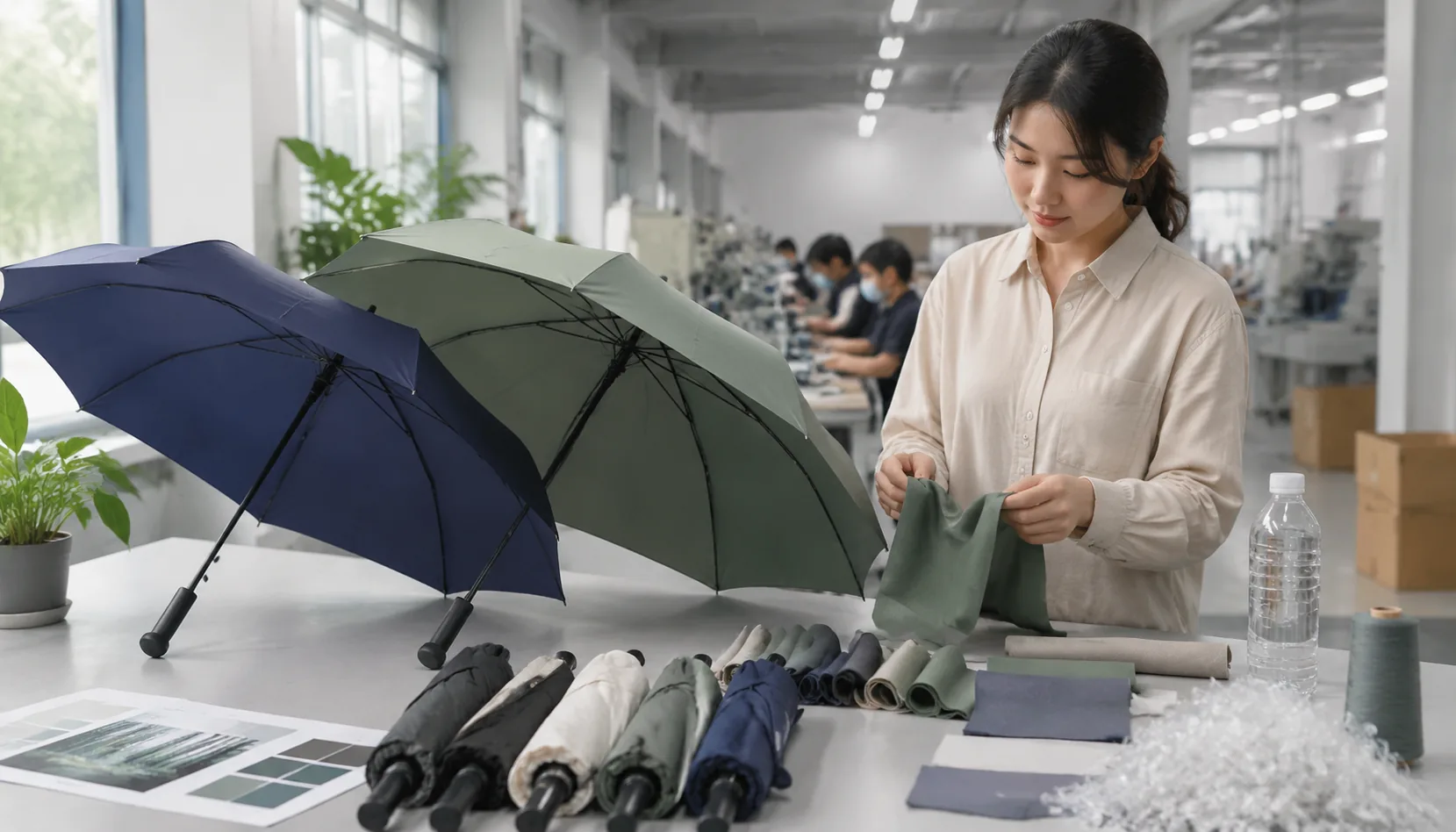
RPET Pongee Umbrellas: Buyer Guide for Sustainable Orders
Source RPET pongee umbrellas with verified recycled fabric, 190T or 210T specs, GRS documents, print options, MOQ planni...
Read More »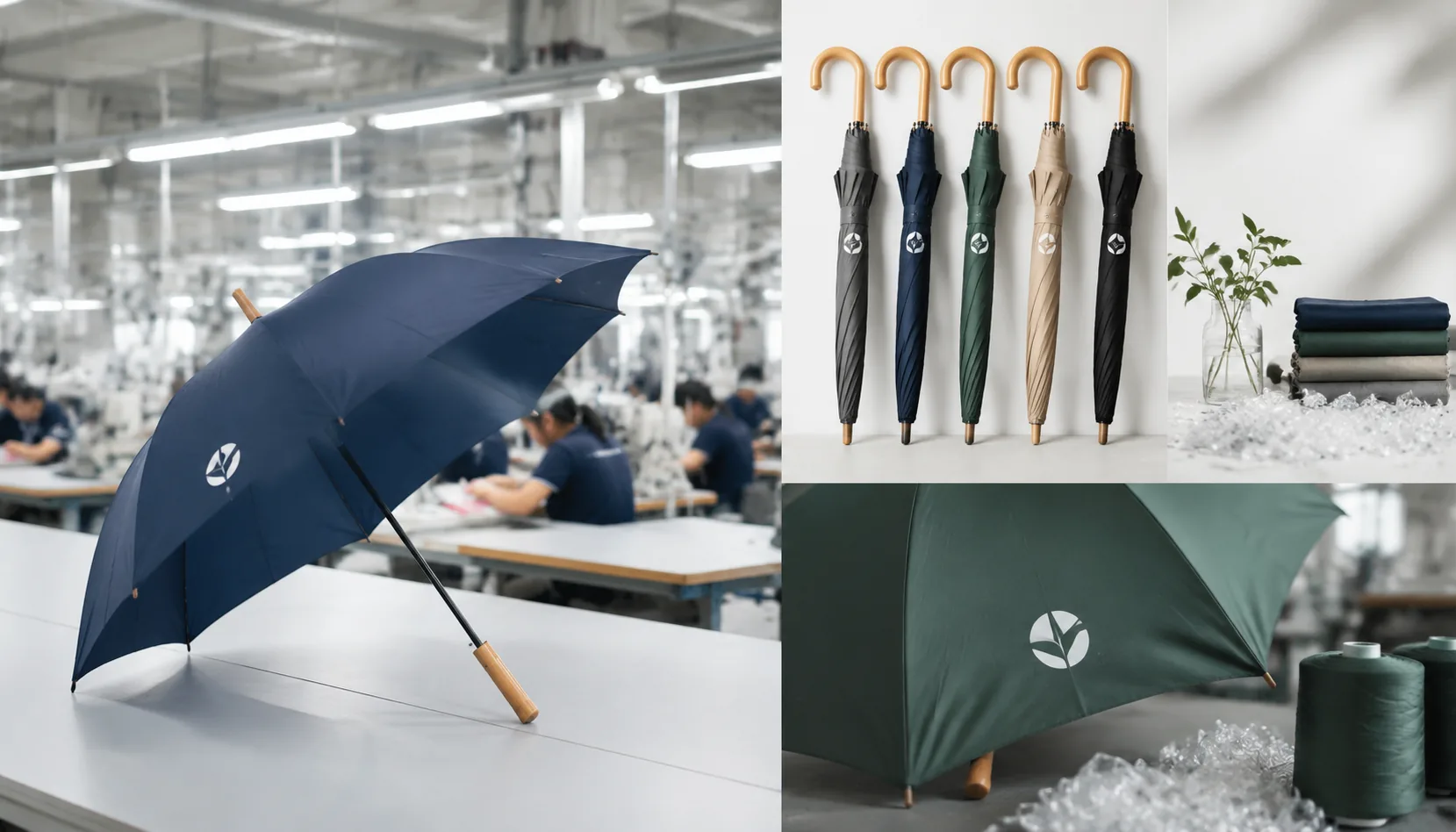
RPET Pongee Umbrellas: Buyer Guide for Eco Programs
Learn how to source RPET pongee umbrellas with verified fabric claims, durable frames, practical MOQs, and retail-ready ...
Read More »
RPET Recycled Fabric Umbrellas: OEM Buyer Guide
Learn how to specify RPET umbrella fabric, coatings, frames, labels, MOQ, and QC requirements for sustainable retail and...
Read More »