Step-and-Repeat Umbrella Patterns for Brand Campaigns
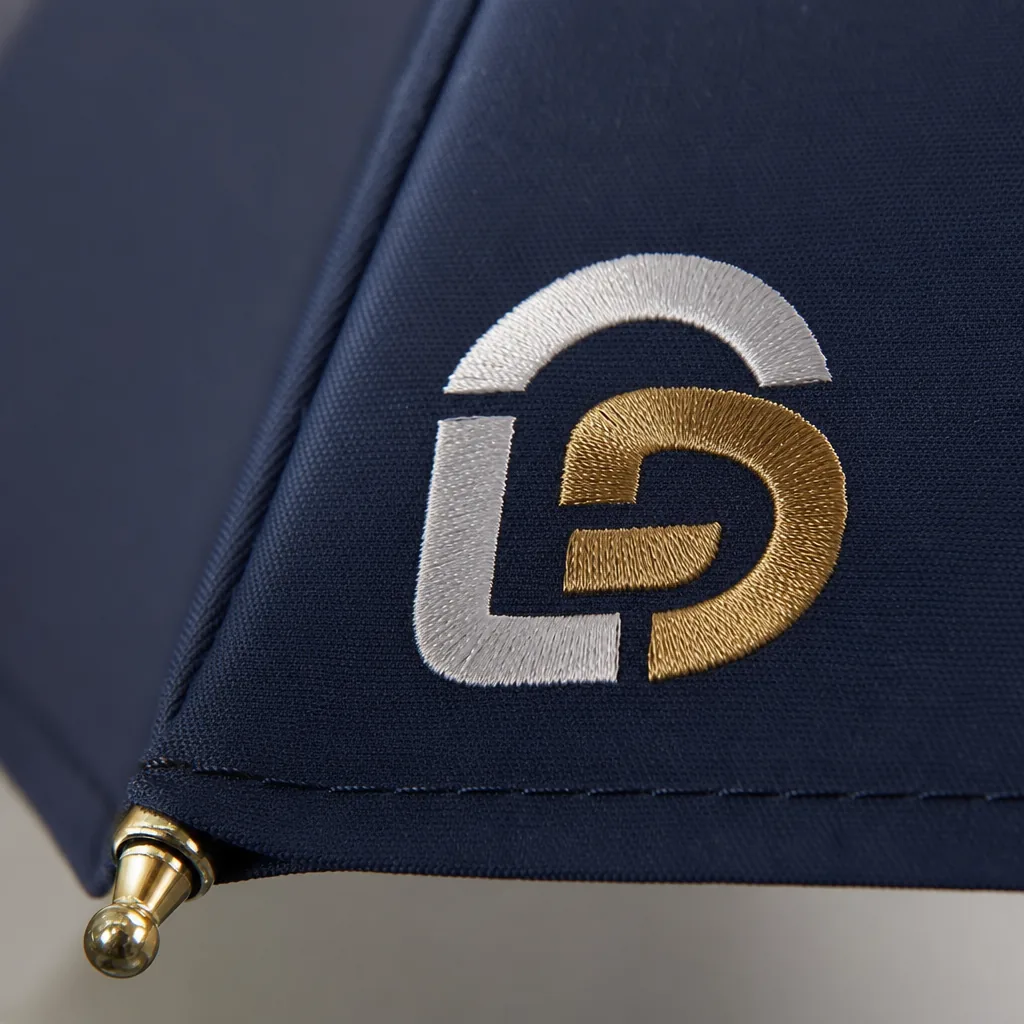
For brand campaigns, a repeating logo on an umbrella looks simple on a mockup but can drift quickly once it hits eight curved panels, seam allowances, and mixed print methods. On our Songxia production floor, step and repeat umbrellas are planned around panel geometry, logo spacing, ink behavior, and QC checkpoints before bulk cutting, because one small layout error becomes thousands of visible rejects.
Pattern Scale and Panel Layout
Pattern scale should be decided after the rib count, not before artwork approval, because an 8K umbrella and a 16K umbrella break the same circle into very different printing windows. On a standard 23" straight umbrella, an 8K frame gives eight wider triangular panels, so a repeating logo umbrella print can breathe: larger marks, fewer seam cuts, and better visibility from 10-20 feet away. A 16K frame creates narrower panels with twice as many ribs, which looks premium in hand but interrupts the repeat more often. For step and repeat umbrellas, I usually keep the main logo height no smaller than 35-45 mm on 190T or 210T pongee; below that, fine type starts to disappear after sewing tension, coating glare, and normal viewing distance.
The seam is the enemy of small typography. Every panel edge loses a few millimeters to folding, stitching, and rib attachment, and the visual break becomes worse when the canopy is stretched over steel or fiberglass ribs. Our standard practice at ZheBrella is to hold critical marks at least 12-15 mm away from sewn seams and 20 mm away from rib tips or the top cap area. If a brand insists on all-over branded umbrella patterns, we shift the repeat so icons cross seams, but logotypes, QR codes, thin taglines, and registered marks stay inside the panel body. This matters especially on 16K layouts, where the narrower wedge angle can chop horizontal logos into awkward fragments.
For OEM umbrella printing, the artwork file should be built as a radial panel layout, not a flat wallpaper tile copied blindly across the canopy. A good promotional umbrella design uses alternating panel offsets: panel 1 can carry the full logo, panel 2 can shift the repeat by half a unit, and so on, so the canopy does not show a harsh vertical stripe when opened. On 8K umbrellas, we can usually place one dominant logo per panel plus smaller repeats around it. On 16K umbrellas, I prefer smaller motifs, diagonal repeats, or simplified icons because the seams become part of the rhythm. Before mass cutting, we print one full-size strike-off and check logo readability on an actual frame, not just on a PDF mockup.
Fabric and Print Method Selection
Digital printing is better for dense, irregular, or photographic promotional umbrella design where the repeat has many colors, shadows, fine type, or randomized logo placement. Sublimation works best on white or light polyester pongee; it bonds into the fiber, keeps the canopy soft, and avoids the raised feel of heavy plastisol-style layers. For dark fabric, heat transfer or digital reactive-style processes may be considered, but buyers should test folding abrasion and wet rub because repeated opening around rib tips can expose weak adhesion. Our standard practice at ZheBrella is to run a strike-off before bulk OEM umbrella printing, then inspect logo sharpness, color shift after UV coating, and panel-to-panel consistency under AQL 2.5. Digital has a higher per-panel cost than screen on simple repeats, but it saves setup time when every panel carries different artwork or when the campaign uses a full-surface pattern across 23", 27", or 30" canopies. For premium step and repeat umbrellas, 210T pongee plus digital sublimation usually gives the cleanest balance of detail and hand feel.
Color Control for Repeating Brand Marks
Color control on step and repeat umbrellas has to start before artwork separation, not after the first printed panels come off the table. For every repeating brand mark, we ask buyers to provide Pantone Solid Coated references, CMYK values only as backup, and a vector file with the logo repeat locked by panel position. A 23" umbrella with 8K ribs gives eight triangular print zones, while a 27" golf umbrella may use 8K or 16K panels with a much wider visual field; the same logo color can look different simply because the viewing angle changes at each seam. Our standard practice at ZheBrella is to run lab dips or strike-offs on the actual canopy fabric, usually 190T or 210T pongee, before bulk cutting. Approval should be based on a physical swatch under D65 light, not a phone photo from the print room.
Production tolerance needs to be written into the purchase order, especially when branded umbrella patterns repeat across every panel. For screen printing, a practical tolerance is usually Delta E 2.0–3.0 for major brand colors, assuming the ink is mixed against the approved Pantone and printed on the confirmed fabric lot. Heat-transfer logos can hold sharper edges on small marks, but film opacity and press temperature still affect dense reds, oranges, and reflex blue. Sublimation is useful for full-panel promotional umbrella design, but it is less suitable when a buyer expects a perfect Pantone match on a black, navy, or bottle-green canopy. If the logo crosses seams, allow 2–3 mm registration tolerance; umbrella panels stretch slightly during sewing, especially on larger 27" and 30" frames.
Dark canopy colors are the main trap in OEM umbrella printing because they absorb light and make printed ink appear duller, even when the ink formula is correct. A white underbase is often necessary for a repeating logo umbrella print on black 190T pongee, but that adds hand feel and can create a faint ridge if the logo repeats densely. UV coatings and UPF 50+ treatments also change perception: silver backing cools the apparent tone, black UV backing deepens contrast, and Teflon water-repellent finishing can add a slight surface sheen after curing. For step and repeat umbrellas used in outdoor events, approve color after coating, drying, and water-repellency treatment, not before. AQL 2.5 inspection should check panel-to-panel color consistency, logo placement, and obvious shade bands across the full opened canopy.
Prototype Sampling and Production Checks
A strike-off sample is where most step and repeat umbrellas are won or ruined, because a repeating logo umbrella print exposes every registration error. For screen printing, I want to see the actual ink, mesh count, squeegee pressure, and curing temperature used on the same canopy fabric planned for bulk, usually 190T or 210T pongee. For heat transfer, the film edge, adhesive bite, and press marks matter more than the artwork PDF. For sublimation, color drift on darker polyester and distortion across curved panels must be checked before anyone approves mass cutting. Typical strike-off timing is 3–5 days after confirmed artwork, or 5–7 days if Pantone matching, Teflon coating compatibility, or UV UPF 50+ treatment is involved.
A pre-production sample should be a complete umbrella, not just a printed fabric swatch, because branded umbrella patterns behave differently once the canopy is sewn, stretched, and mounted on an 8K, 10K, or 16K frame. On a 23" auto-open or 30" golf umbrella, the logo repeat must stay balanced across seams, tips, and the front-facing panels when the umbrella is fully opened. Our standard practice at ZheBrella is to compare the approved strike-off against one finished PPS under D65 light, then check handle color, shaft finish, rib material, open-close function, and canopy tension together. PPS lead time is usually 7–10 days after strike-off approval, longer if custom fiberglass ribs, molded handles, or special POE/PVC/EVA canopy materials are being tooled.
Bulk inspection for step and repeat umbrellas should be written into the PO, not argued about after cartons are packed. Under AQL 2.5 for major defects, inspectors should check print registration at panel seams, logo spacing repeat, ink smudging, ghosting, pinholes, transfer peeling, dye migration, and panel-to-panel color consistency. I also add function tests: 20 open-close cycles for manual, auto-open, and auto-open-close mechanisms; rib alignment; runner lock strength; and canopy leakage after light spray testing. For OEM umbrella printing, normal bulk lead time is 25–35 days after PPS approval for standard pongee models, 35–50 days for custom frames or large retail packaging programs. Final inspection should happen when at least 80% of goods are packed, with carton drop checks and barcode verification before FOB Ningbo/Shanghai or DDP dispatch.
Commercial Specs for Procurement Teams
For step and repeat umbrellas, procurement should separate the artwork cost from the umbrella cost before comparing factories. A normal MOQ for OEM umbrella printing is 500 pcs for a single-panel or two-panel logo layout, 1,000 pcs for all-over repeating logo umbrella print on 190T or 210T pongee, and 2,000-3,000 pcs if the campaign needs custom-dyed fabric, matching sleeve, retail hangtag, or a molded handle insert. Screen printing is usually charged by color and position; expect a setup plate or screen fee for each Pantone color, commonly USD 25-60 per color depending on logo size and mesh count. Heat transfer works better for fine gradients and small text, but the unit cost rises on large coverage. Sublimation gives the cleanest branded umbrella patterns across the full canopy, yet it requires white polyester fabric and tighter color proofing because wet/dry fabric shade can shift under daylight.
FOB and DDP quotes move for reasons that are not visible on a flat product photo. A manual 23" steel-frame umbrella is the baseline, but auto-open adds the runner, spring, and stronger shaft tolerance checks; that can lift unit cost by roughly USD 0.35-0.80 before freight. Fiberglass ribs cost more than black steel ribs, but they reduce breakage claims on outdoor campaigns, especially on 8K and 10K frames used at stadiums, campuses, and beverage activations. A double-canopy vented windproof frame adds fabric, sewing labor, and carton cube, but it is the right choice when the buyer wants a 50+ mph wind-tunnel claim instead of a cheap giveaway. At ZheBrella, we quote these as separate lines because landed cost changes differently under FOB Ningbo/Shanghai versus DDP to a distributor warehouse in California, Rotterdam, or Melbourne.
Carton planning is where many promotional distributors lose margin on step and repeat umbrellas. A 21" compact auto-open-close umbrella may pack 36-48 pcs per export carton, while a 23" stick umbrella is often 24 pcs, and a 27" golf umbrella may drop to 12-24 pcs depending on EVA handle size, sleeve thickness, and whether each unit needs an individual polybag or printed gift box. Double-canopy construction increases carton measurement even when the gross weight looks acceptable, so DDP air or courier quotes can jump by volumetric weight. For campaign deadlines, allow 5-7 days for artwork proofing and strike-off approval, 15-25 days for bulk production after deposit, and 3-5 days for final AQL 2.5 inspection and export packing. Ask the supplier to state carton dimensions, gross/net weight, HS code, and spare ratio in the proforma invoice, not after production is finished.
Frequently Asked Questions
What is the best umbrella rib count for repeating logo patterns?
8K umbrellas are cost-efficient and easier to align for simple repeats. 16K umbrellas create more seams, so logos need smaller scale or careful panel sequencing to avoid broken brand marks.
Can step-and-repeat patterns be printed on windproof umbrellas?
Yes, but double-canopy windproof styles need separate artwork for upper and lower canopy layers. Extra sampling is recommended because vent openings can interrupt the pattern.
What artwork format is best for step-and-repeat umbrella patterns?
Vector files such as AI, EPS, or PDF are preferred because each umbrella panel is cut and printed separately. Include Pantone colors, logo spacing, repeat scale, and a panel-by-panel mockup to reduce sampling revisions.
Can the repeating logo pattern align across umbrella panel seams?
Exact cross-seam alignment is difficult because fabric panels are printed, cut, and sewn with normal tolerances. For reliable production, keep key logos at least 10-15 mm away from seam lines and avoid placing small text across panel joins.
What is the typical MOQ and sample lead time for repeating logo umbrellas?
For OEM printed umbrellas, MOQ is commonly 500-1,000 pieces per design depending on fabric, frame, and print method. A pre-production sample usually takes 7-12 days after artwork approval, with bulk production often around 25-40 days.
Looking to Launch Your Custom Umbrella Line?
ZheBrella is a Zhejiang-based OEM/ODM umbrella manufacturer with 17 years of export experience. Free design, low MOQ from 100 pieces, windproof construction, full-color print.
Get Free Quote Now »People Also Search For
Related Articles
Step-and-Repeat Umbrella Printing for Sponsor Campaigns
Plan sponsor-ready step-and-repeat umbrella prints with logo spacing, panel seams, 190T/210T fabric choices, MOQ, sample...
Read More »
Step-and-Repeat Umbrella Logo Patterns for Campaigns
Plan repeat-logo umbrella layouts across 8K or 16K panels with cleaner seams, better spacing, accurate samples, and smoo...
Read More »
Step-and-Repeat Logo Patterns for Promotional Umbrellas
Plan repeat-logo umbrella artwork with correct scale, panel breaks, 190T/210T fabric choices, proofs, MOQ, lead times, a...
Read More »